Surf trip in Down Under
Australia had been on Charlie’s bucket list for a while. The distance and time difference though made it a bit challenging. When Nomadcruise announced their transpacific journey from Seattle to Sydney, that was her sign. Charlie would be on that cruise, gradually adjust to different time zones, and arrive in Australia without a jetlag. She was planning to be there for three weeks because that year, she wanted to be back in London for the festive season. Three weeks in November seemed like a good period and time of year as it was spring in Down Under.
Deciding on the route
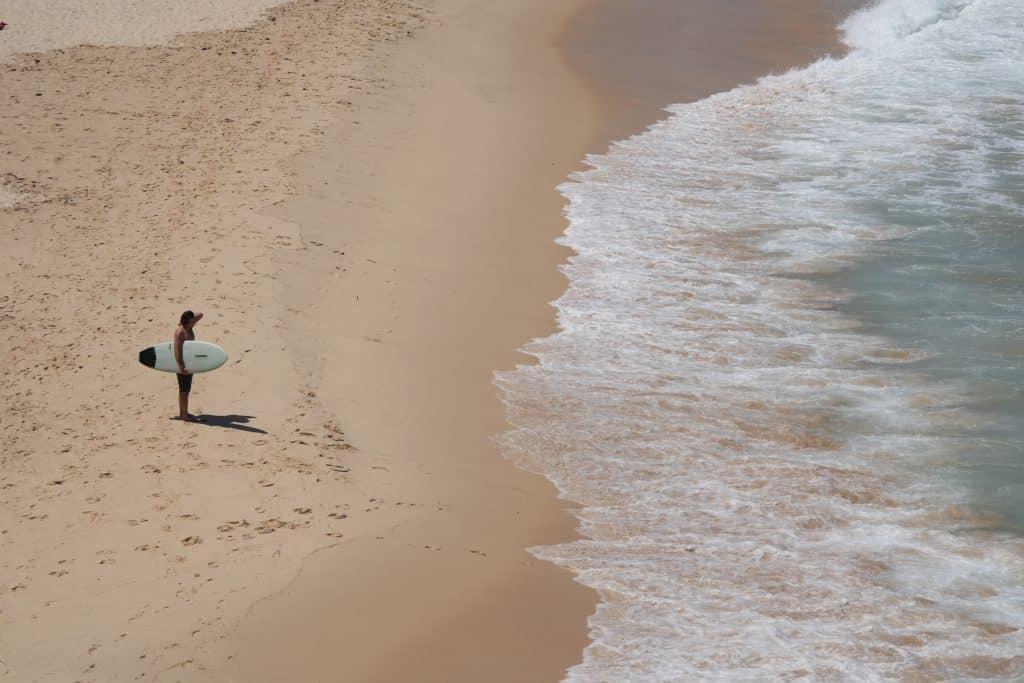
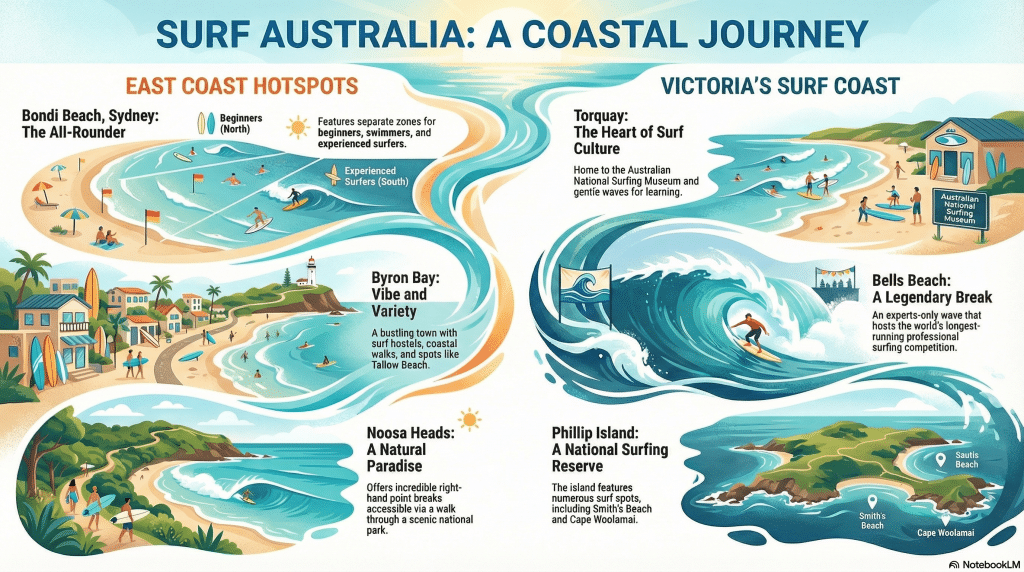
It took a bit of research to plan the trip along the coast, mostly because Charlie didn’t drive and had to rely on public transport. She also wanted to avoid flying to have more flexibility with her luggage. The result of all that research was the following route: She would travel from Bondi Beach in Sydney to the national surfing reserve at Crescent Head, then continue to Byron Bay and the Gold Coast before getting into Brisbane. She had a work conference in Melbourne and therefore wouldn’t have time to get to the surf spots north of Brisbane, Sunshine Coast and Noosa. Melbourne was supposed to have good surfing too!
Bondi Beach
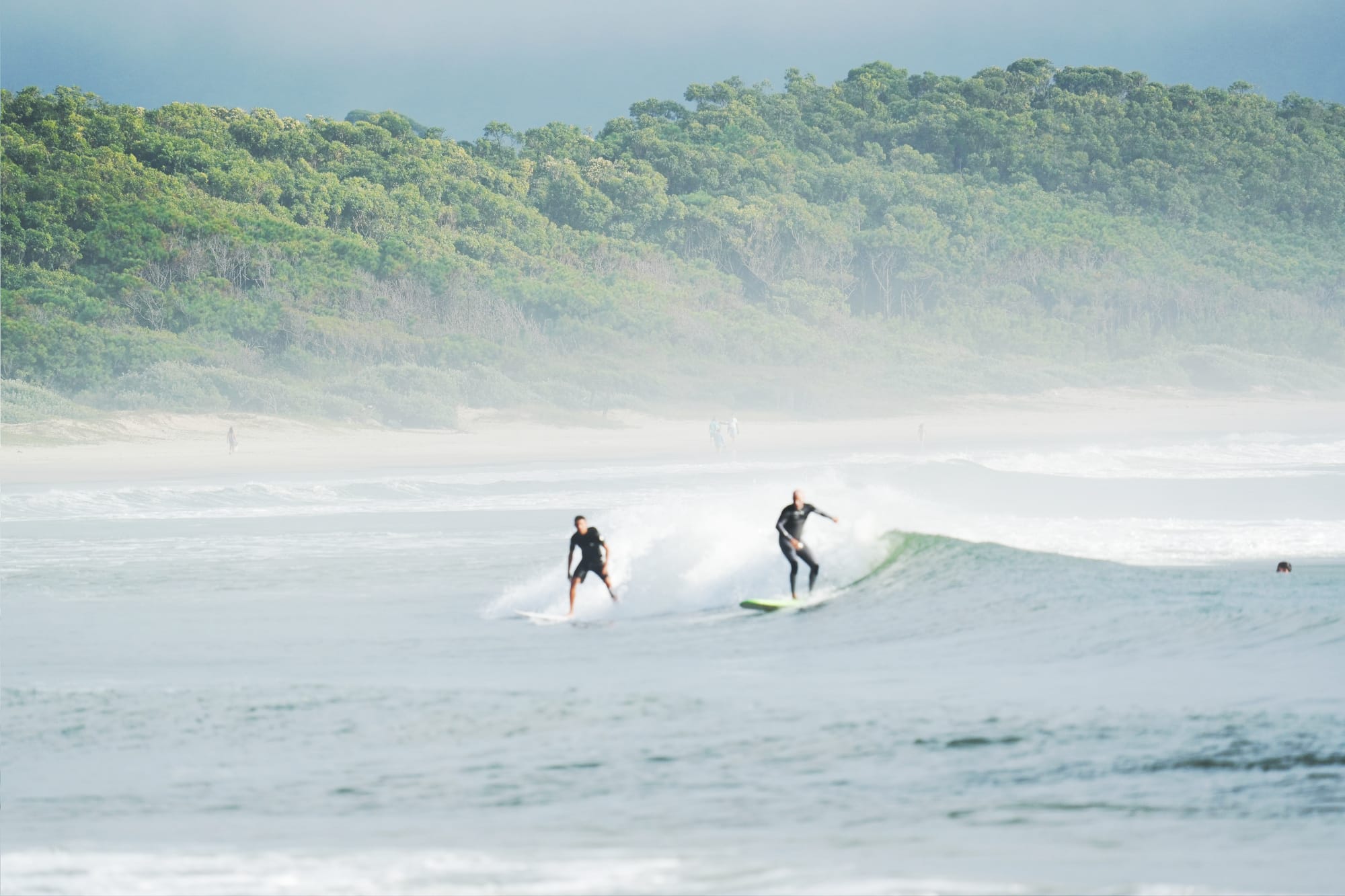
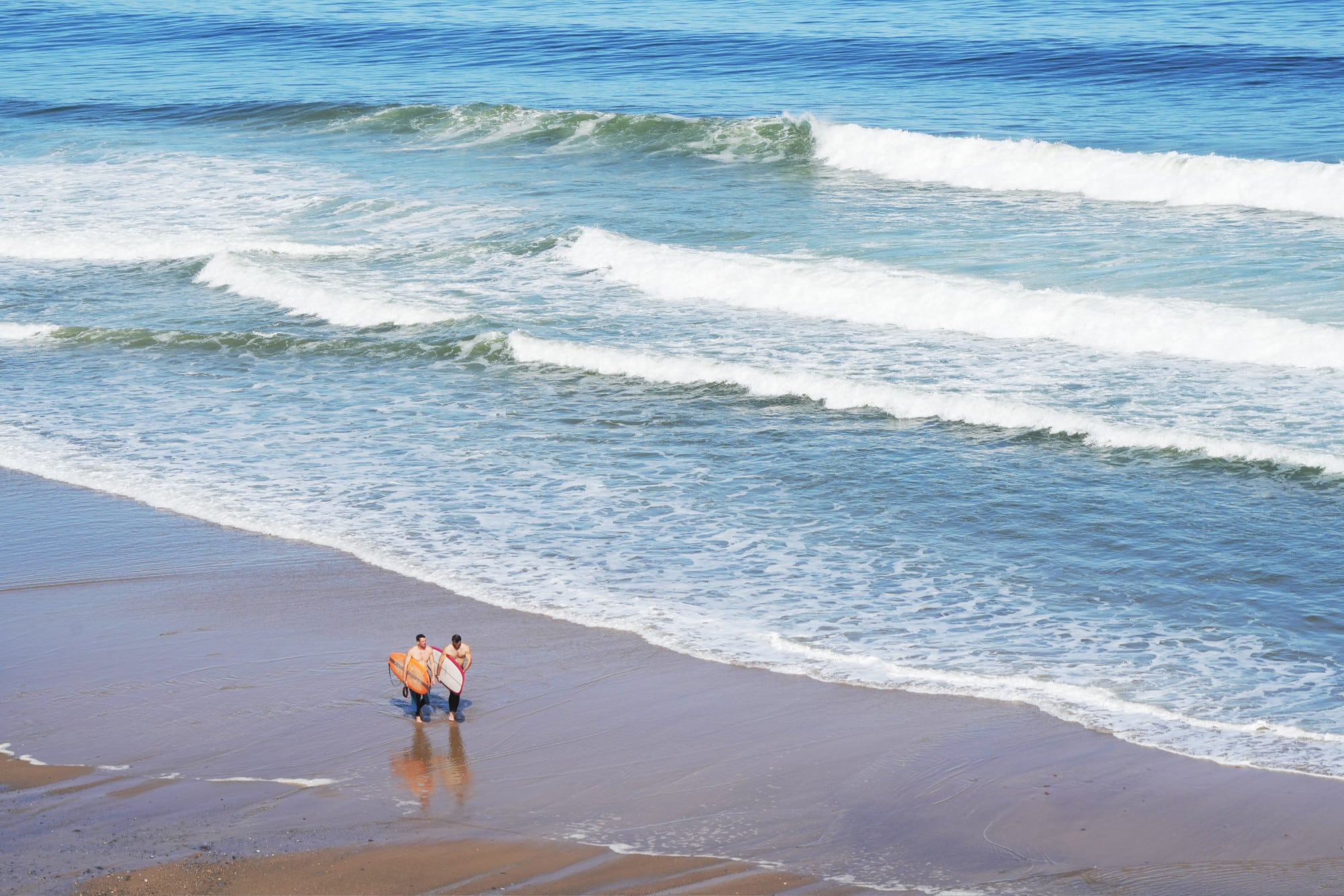
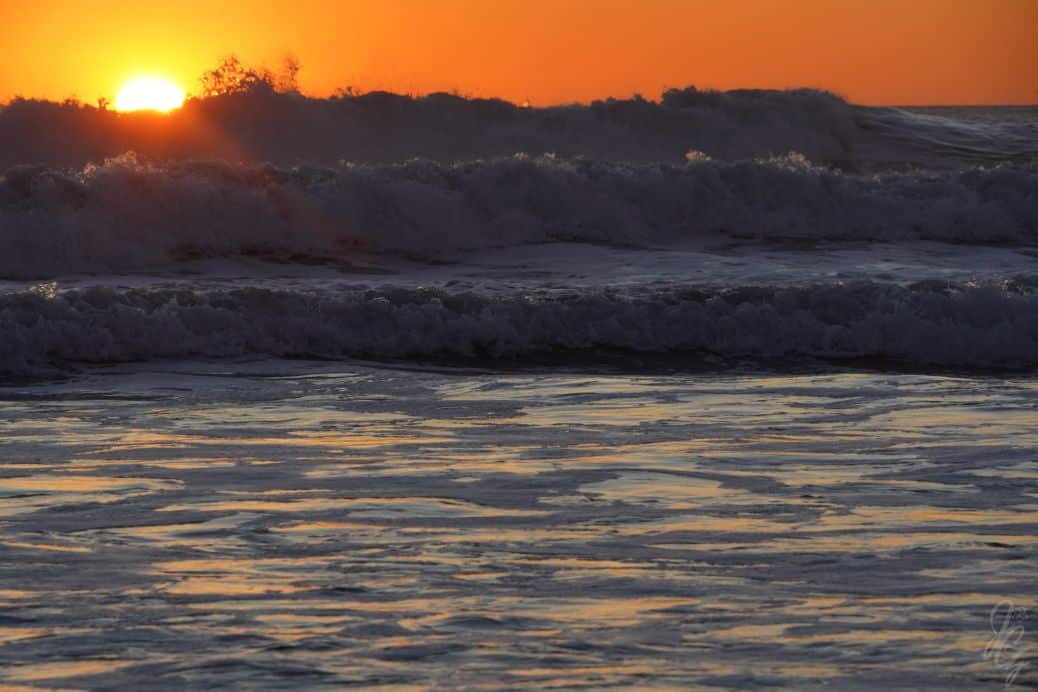
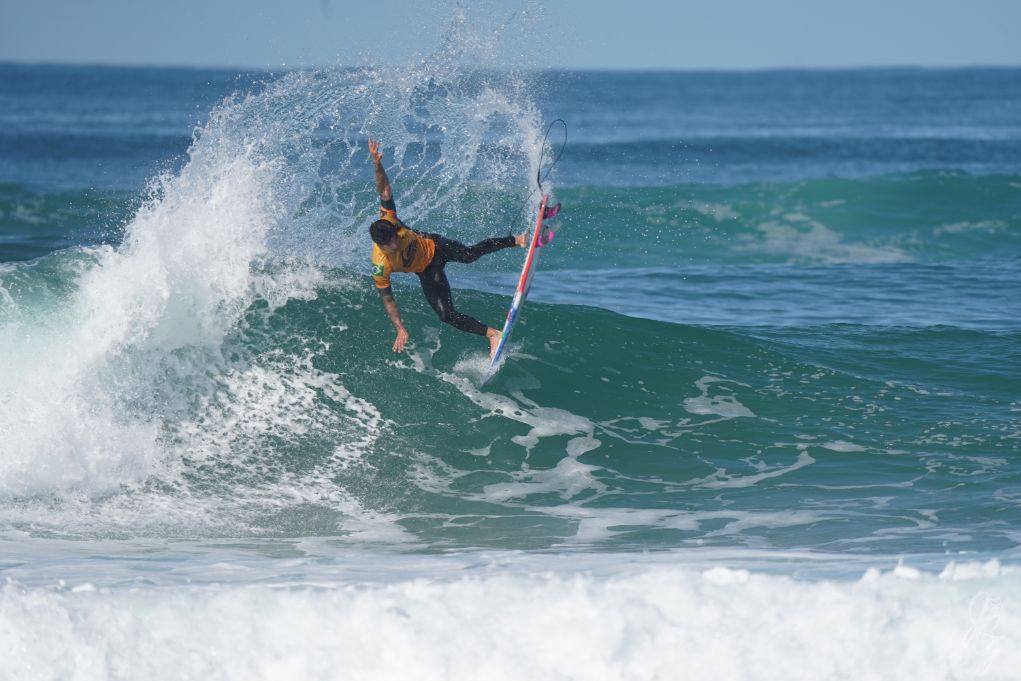
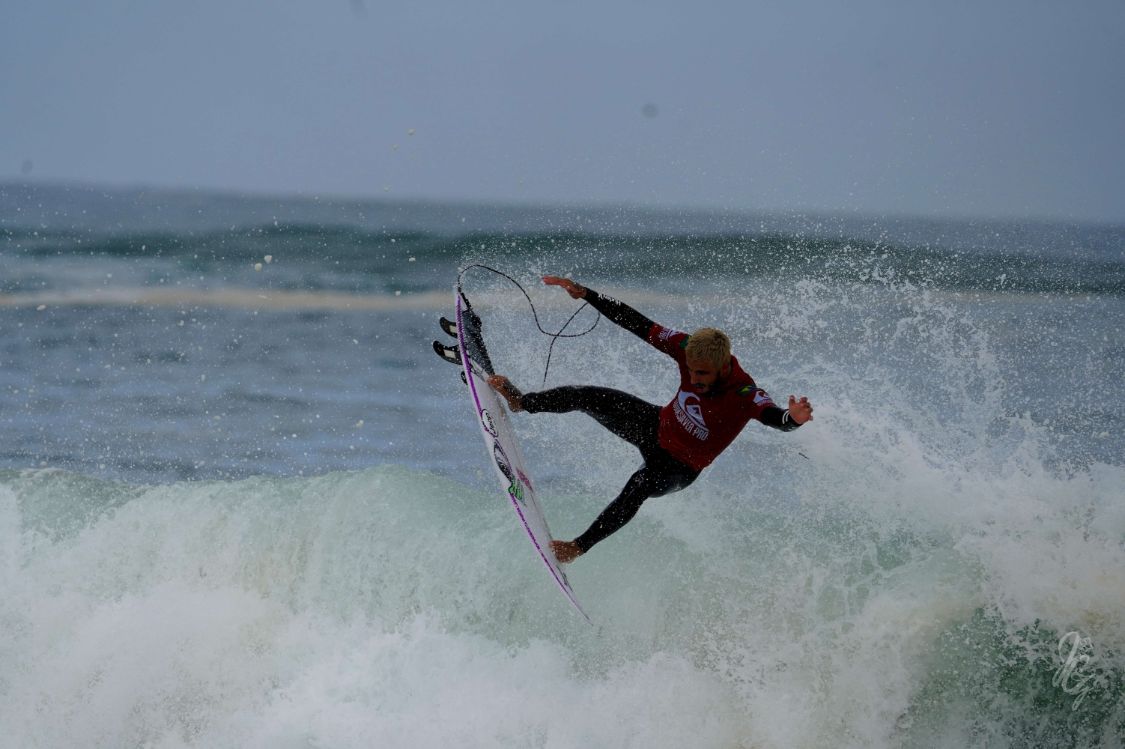
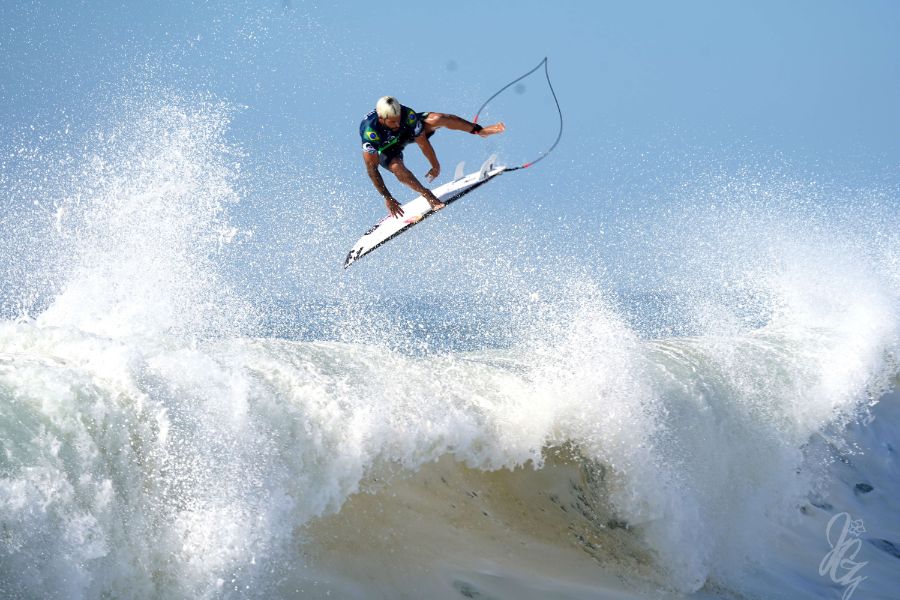
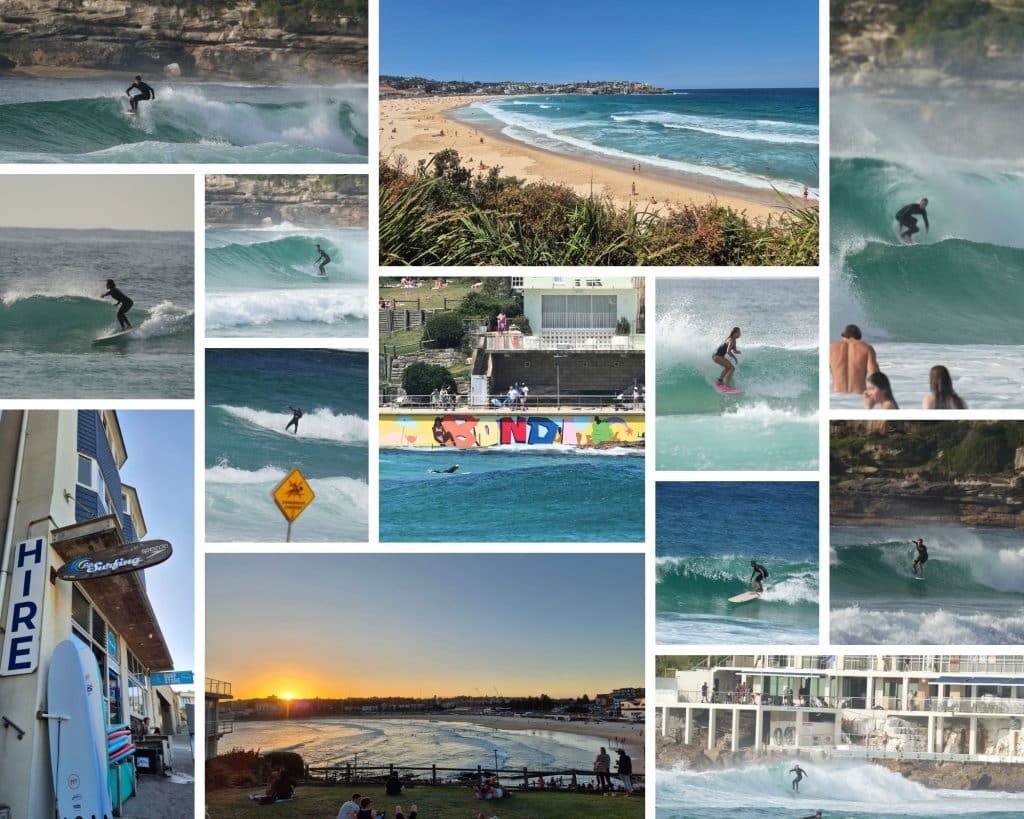
Charlie had booked an Airbnb directly at the iconic Bondi Beach. From the ferry terminal where the cruise ship arrived, it took 45 minutes to get there by bus and the flat was literally across the road from the beach. That was very convenient for the surf photography, and she got some amazing shots. The waves were great those days. It was barrelling at the southern end of Bondi, and the North was ideal for beginners and improvers. Charlie herself surfed at the sandbank in the middle of the beach. She got the equipment, surfboard and wetsuit, from the surf school called “Let’s go Surfing”. They also offer lessons for beginners and intermediates.
At Bondi, you easily find restrooms, showers and water refill stations along the beach. Charlie even spotted a community surfboard that everybody can just take to surf as long as it is returned to the spot next to the showers at North Bondi. It is important to note that fibreglass boards are not allowed at the northern end of the beach. Charlie liked this clear separation of the beach so that everybody could get the most out of it: North Bondi is for those learning to surf, the swim zone is clearly marked by flags. The southern end of Bondi is for experienced surfers and everybody else can use the middle.
Crescent Head
The next stop at Charlie’s surf-themed road trip in Australia was Crescent Head. Getting there by public transport was a bit tricky as she would have to take a 7-hour-long coach ride to a town called Kempsey, stay there overnight and then take a local bus the next morning. That was worth it because Crescent Head is considered a national surfing reserve and therefore promises good surf conditions. Charlie was mostly grateful that there was a public transport connection at all. The really good surf spots are often impossible to reach without a car.
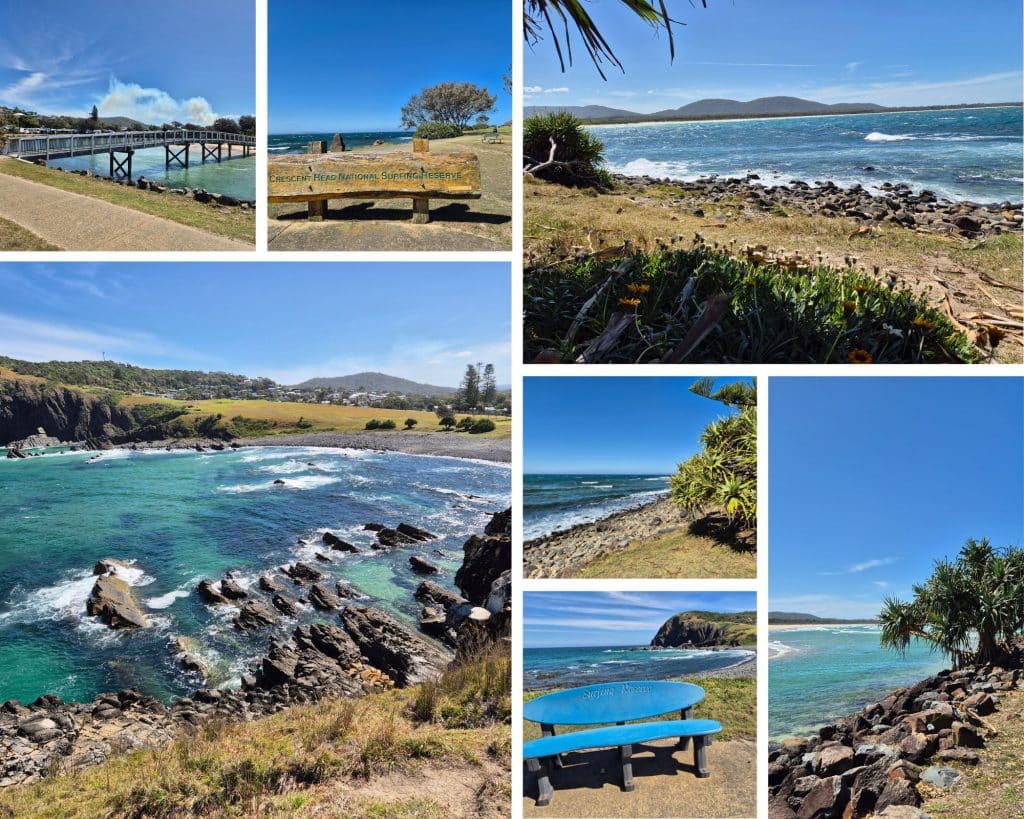
Most visitors in Crescent Head though come by car or van and there is a spacious holiday park near the beach. Charlie had booked an Airbnb about 5 minutes away from the beach. Everything in Crescent Head was close by, supermarket, cafes and restaurants and Charlie was impressed by how friendly and chatty the locals are. The waves those days, unfortunately, weren’t great and there was a strong wind blowing that made it unsurfable. The positive experience with the locals though and the coastal walks made up for it.
Byron Bay
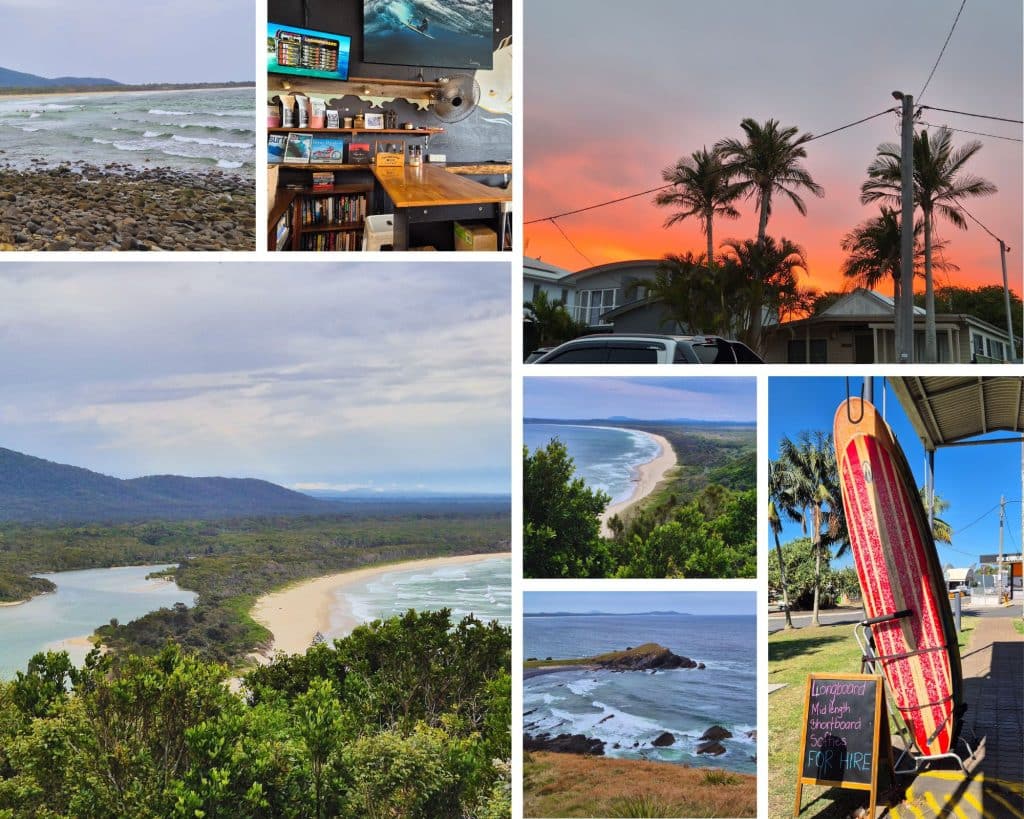
The next stop during Charlie’s surftrip in Australia was yet another famous surf spot: Byron Bay. She arrived in the evening after dark and even though most places were closed at that time, she immediately felt like she was in a touristy town. The high street consisted of mostly clothing shops, cafes and restaurants. It was a Saturday and she could hear that there was some party going on too. She easily found the surf hostel she had booked, The Surf House. It was a beautiful and clean space, and the kitchen was a lot larger than in other hostels she had stayed in before. Here, she wouldn’t have to worry about space in the fridge. Another good thing about this hostel was that the staff seemed to be knowledgeable about the surf and there were surf boards available for free for guests.
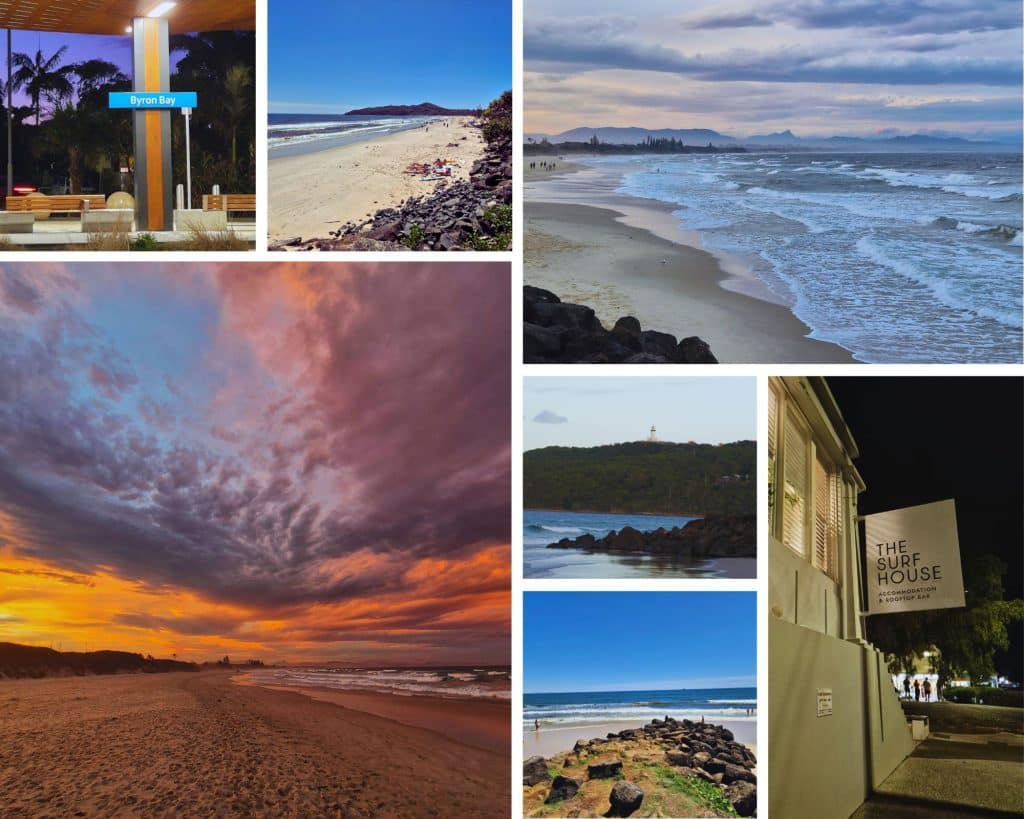
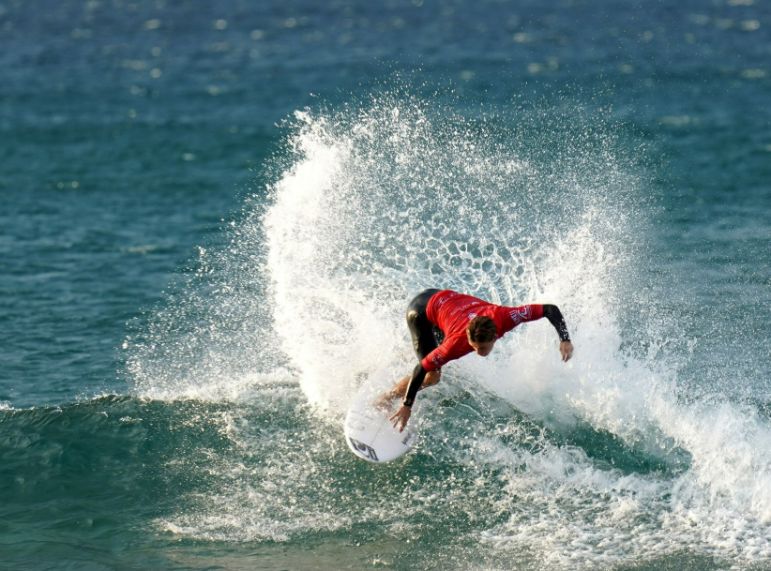
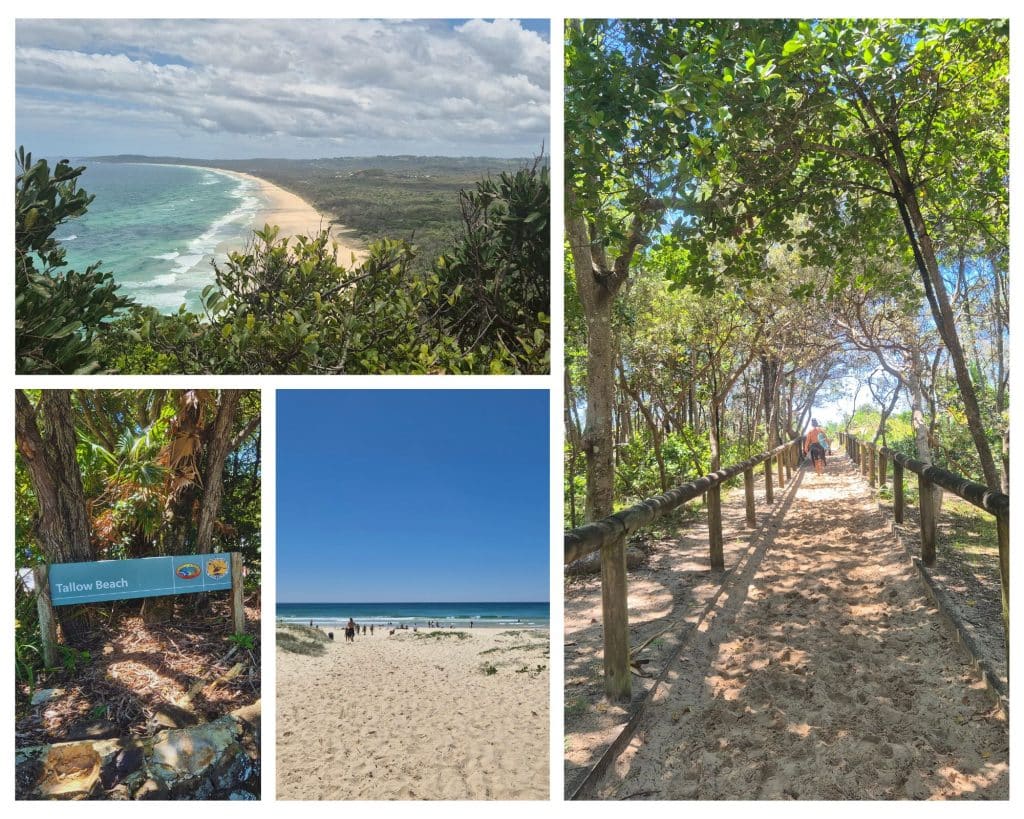
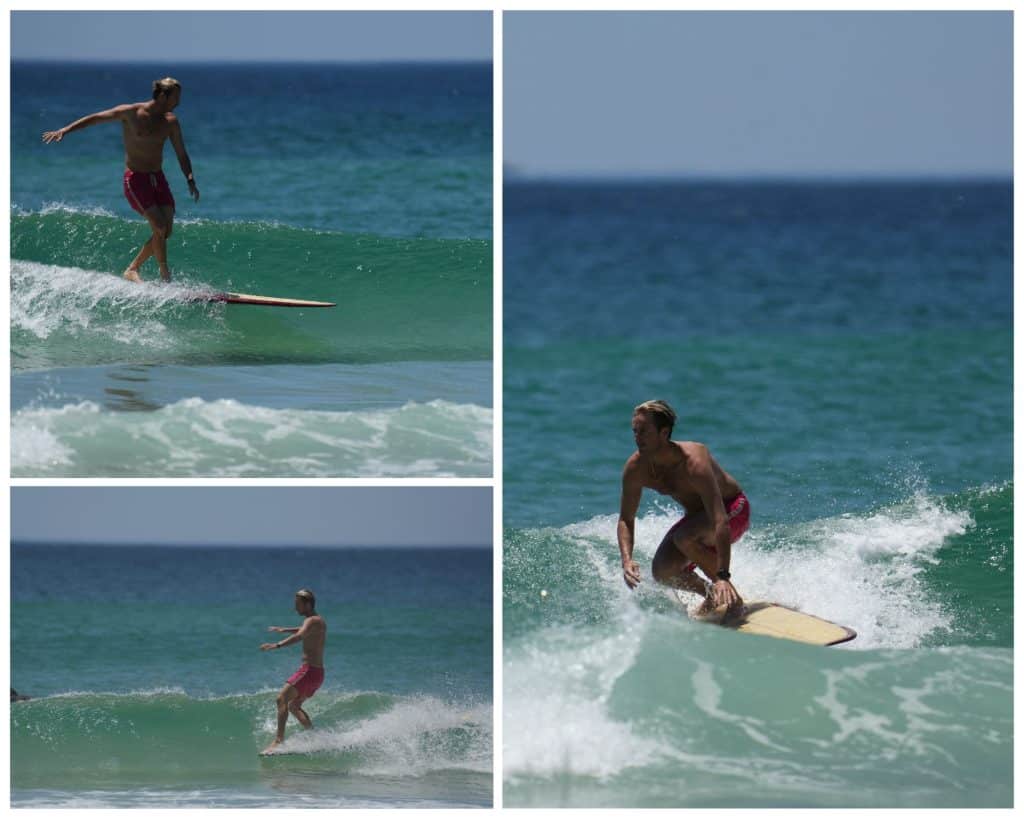
The forecast hadn’t looked great, but still Charlie went to check it out. The free surfboard hire would be useless on this occasion as there were no waves, only wind at Byron Bay. The bartender at the hostel had recommended another spot on the other side of the headland and the lighthouse which was better depending on the direction of the wind. He was right! Tallows (that is the name of the surfspot, the beach is Tallow Beach) did produce a small longboarding wave. It had been a 30-minute walk from the town centre and there was no board hire available on the beach. Therefore, Charlie couldn’t go surfing there, but she got some great shots of cross-steps and hang-fives that day. Tallow Beach is also a good idea if you’re just after a beach day away from the crowds as there are significantly fewer people.
Apart from surfing, Byron Bay is perfect for some shopping, be it souvenirs or a new surf style outfit and there are plenty of cafes and restaurants to spend the day. Keep in mind though that most cafés close at 2 p.m.
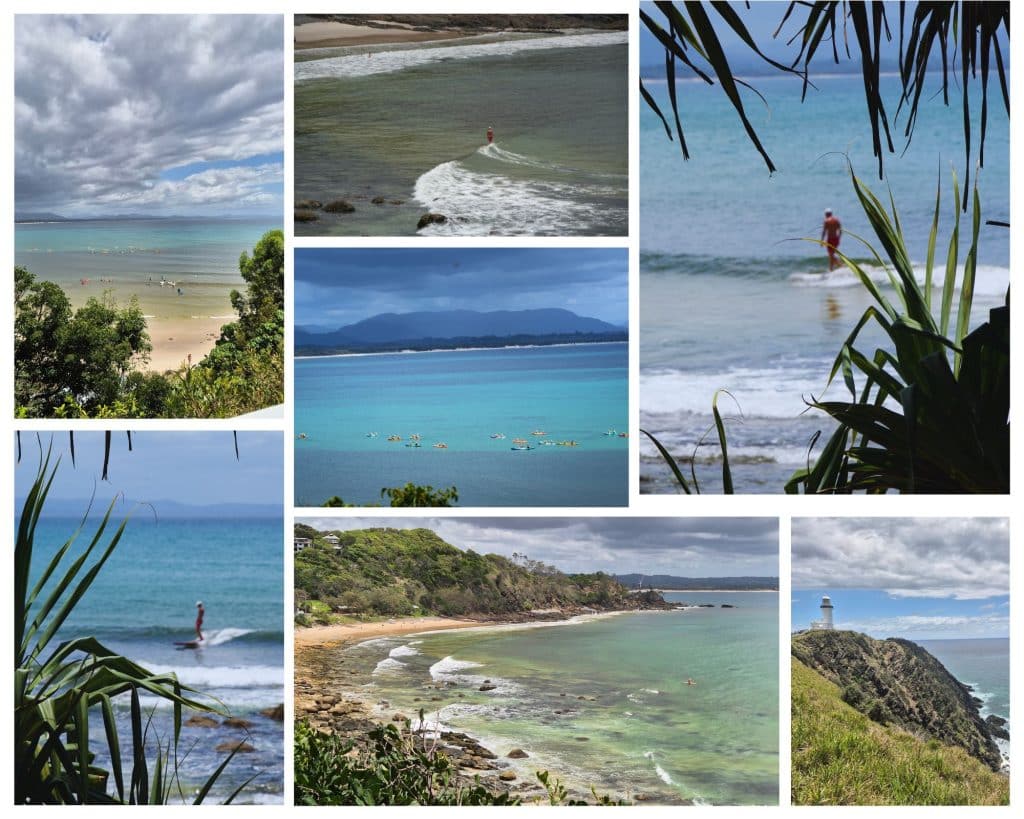
If you want to explore the area a bit more, Charlie recommends a walk to the lighthouse (consider this at sunrise) or a trip to the rainforest to see the glowworms at night and swim under waterfalls. The walk to the lighthouse at Cape Byron is a circular walk and offers great views to both sides of the coast and you might even spot dolphins and koalas. Charlie saw them at the surf spot The Pass in the eucalyptus trees. You are also passing by the most Eastern point of the Australian mainland. There are a café and a museum at the lighthouse, and it is better to start the route from the south and go to Wategos Beach and The Pass on the way back because there a lot of stairs on that side that you might rather walk down than up.
Other popular tours around Byron Bay are a kayak tour to see dolphins and snorkelling at Julian Rocks. You can get to Byron Bay by public transport. For Charlie, it was a train to Casino and from there a coach. It was booked as one ticket via the train company.
Surfers Paradise (Gold Coast)
To say that Charlie has been to the city of Gold Coast would be an exaggeration. She really has been to a tiny part of it called Surfers Paradise. It is the spot that is best accessible by public transport and has a vast variety of accommodation options. It is a long beach with multiple surf spots and surf hire and lessons are easily available. The beach promenade invites for a stroll and there is no shortage in shopping options, cafes and restaurants. This beach city is not only known for world-class surfing that has brought some of the most famous surfers into the world (e.g. Stephanie Gilmore, Mark “Occhi” Ochiluppo and Mick Fanning), but also for skyscrapers and some of the tallest buildings in Australia. Charlie’s first impression was that this is how she imagined Dubai to be, just without the surf.
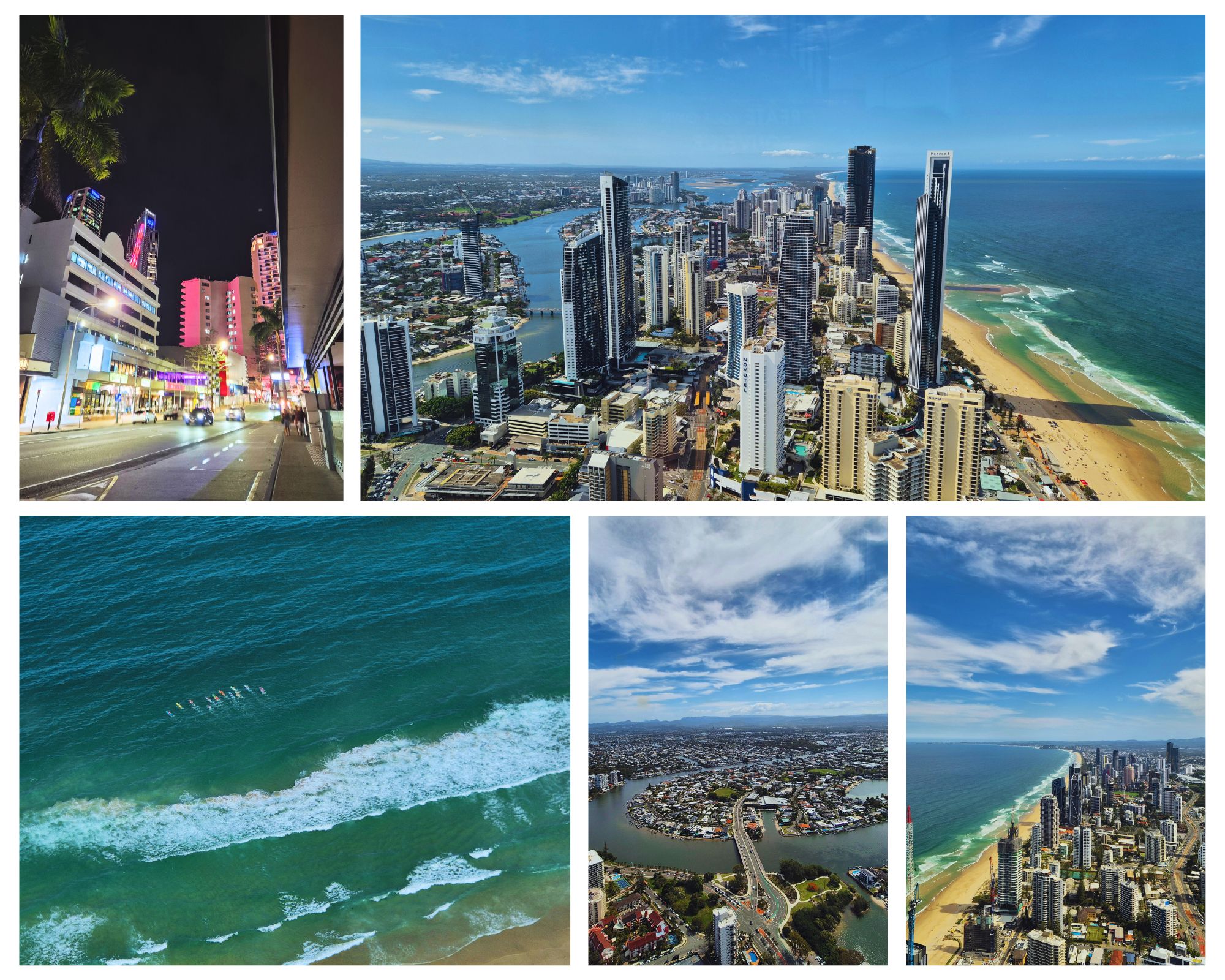
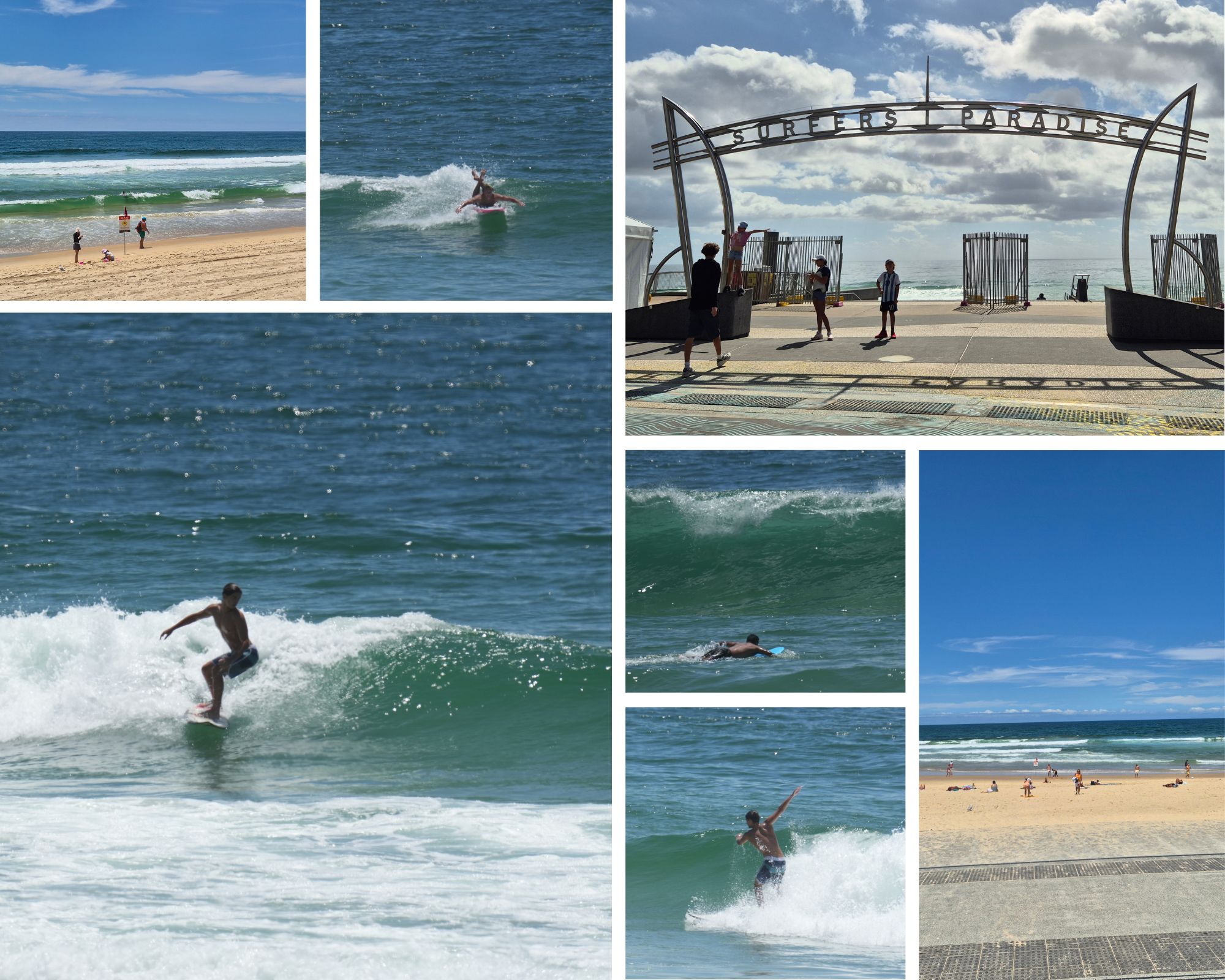
Apart from the beach breaks in Surfers Paradise, you could get to some iconic point breaks such as Snapper Rocks, Kirra and Burleigh Heads. Charlie only had two days in Gold Coast and needed to spend some time on work. She didn’t have time to explore those other spots. If you want city and surf vibes in the same place, then Surfers Paradise is your paradise. Charlie’s definition of paradise however does not include skyscrapers and hundreds of hotels and holiday apartments.
Sunshine Coast and Noosa Heads
Charlie hadn’t really planned on going to the Sunshine Coast because she only had limited time in Australia. She was however planning to be in Brisbane for two days and when she searched for things to do in the city a few days before her arrival a day trip to the Sunshine Coast and Noosa Heads popped up. That was her chance to see those surf spots as well.
The beaches of the Sunshine Coast weren’t a part of the tour, the hinterland was. The group drove through the Glasshouse Mountains, saw a bit of rainforest, a market with around 300 stalls (Eumundi) and the artisan village of Montville. The final stop was in Noosa, and it was the real reason why Charlie had come on this tour.
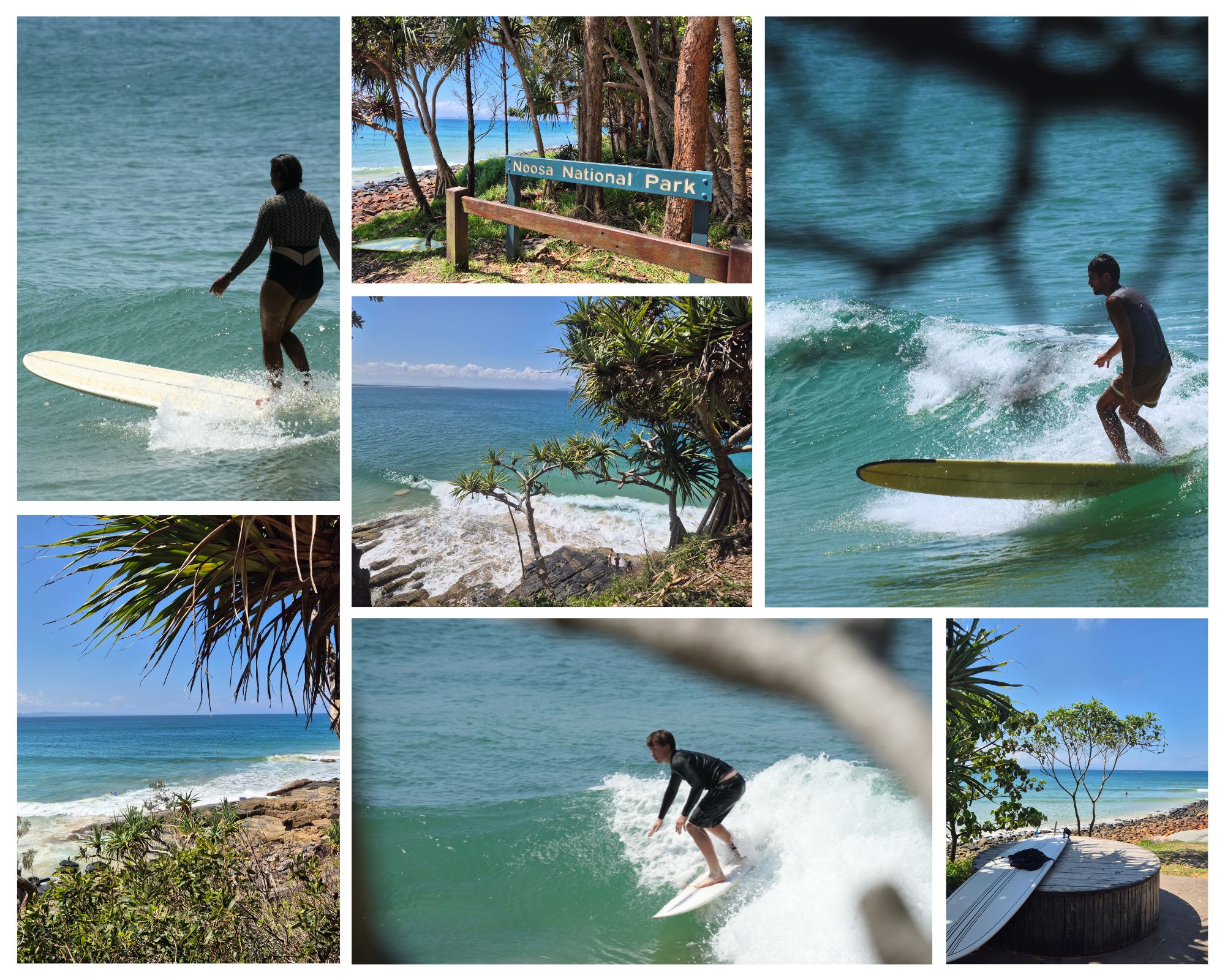
The guide had offered to drop them off either in the town centre to explore the main beach in Noosa and the shops or at the entrance to Noosa Nationalpark. From there, it would be a 20-minute walk along the coast to the town from where they all would be picked up again. Charlie had a look at the map and the surf forecast and the national park was definitely a better option. They had in total two hours in Noosa, and the guide had mentioned the option to walk into the national park as long as everybody was aware of the time. Charlie hadn’t thought of walking into the national park, she only wanted to see the surf.
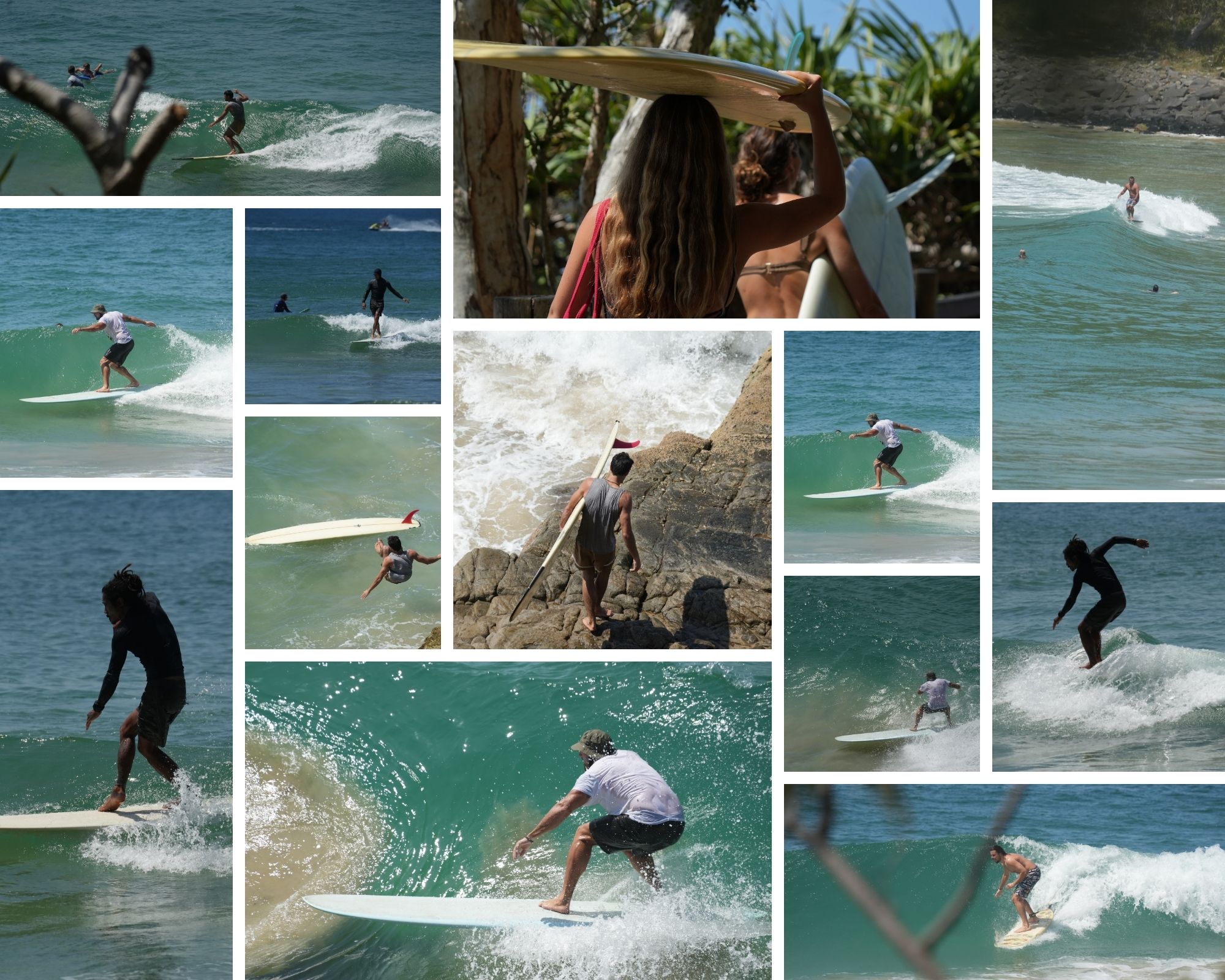
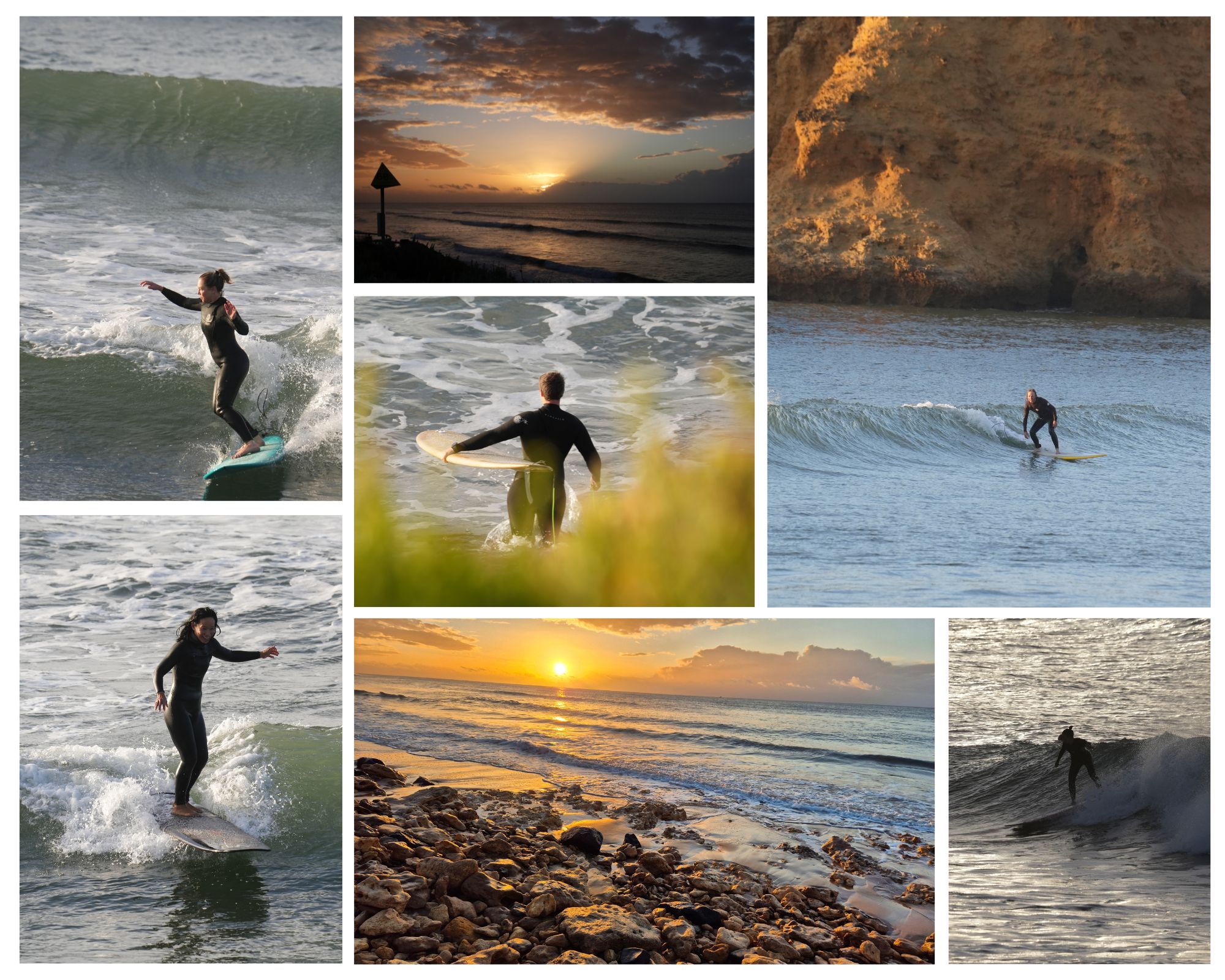
When she hopped off the tour van, two surfers had just come out of the water. Their longboards were resting in the grass and one of them was getting the guitar out to play some tunes. Just in that moment, Charlie saw a longboarder riding a long wave along this window in between the trees. She was in the right spot. She walked over some rocks down to the water to get a better view of the surf. This was the place! The first few shots she got were of talented longboarders doing cross-steps and hang tens.
Just as Charlie thought that she had gotten the perfect shot too quick; another surfer appeared in the distance. He seemed to have an even longer ride. That’s when Charlie decided that she might have to walk into the national park to see if there were more surfers. Around 10 minutes in, a viewpoint revealed another bay with a pointbreak and even more surfers in the water. All she could think was that this place deserved the denomination of “Surfers Paradise” so much more than the place on the Gold Coast. She wished she had had more time in Noosa and will return at some point in the future to get a piece of those amazing right handers herself!
Phillip Island
About an hour south of Melbourne is an island that is a popular travel destination – not for the surf though, but for the Little Penguins that come to the beach every night. When you come over the bridge onto the island, the first thing you see though is not a penguin. It is a wave. There is a surf shop with a perfectly barrelling wave at the front.
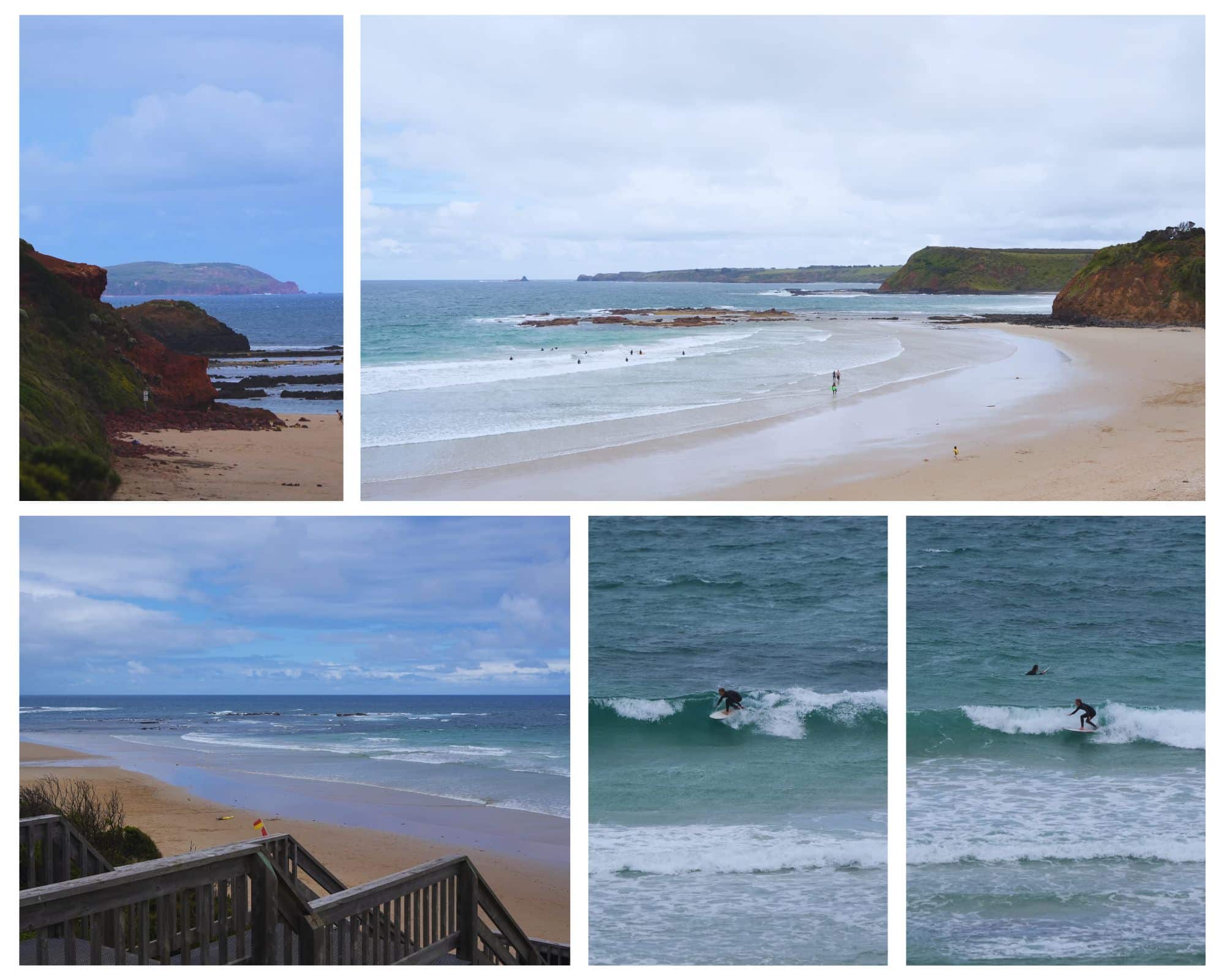
Not far from there is Cape Woolamai with a surf beach. It is one of many on the island that is considered National Surfing Reserve.
A bit further along the south coast of Phillip Island is a town by the name of Surf Beach and there is Surfies Point. The most popular surf spot though is a bit further along the coast: Smith’s Beach. It is also considered National Surfing Reserve. Then there’s the Penguin Parade, the beach where the Little Penguins waddle along the beach every day just after sunset. It also is a National Surfing Reserve.
Around the headland from there and a bit further along the coast is another bay that is more sheltered and facing more West than South: Cat Bay and Shelly Beach. That spot is the best for beginners and Charlie heard that it also is the spot where the local kids learn to surf.
To explore Phillip Island and to surf there, it is best to rent a car. You can get to the island on public transport from Melbourne (you should book in advance online), but there is limited bus service on the island and taxis are hard to find.
Torquay
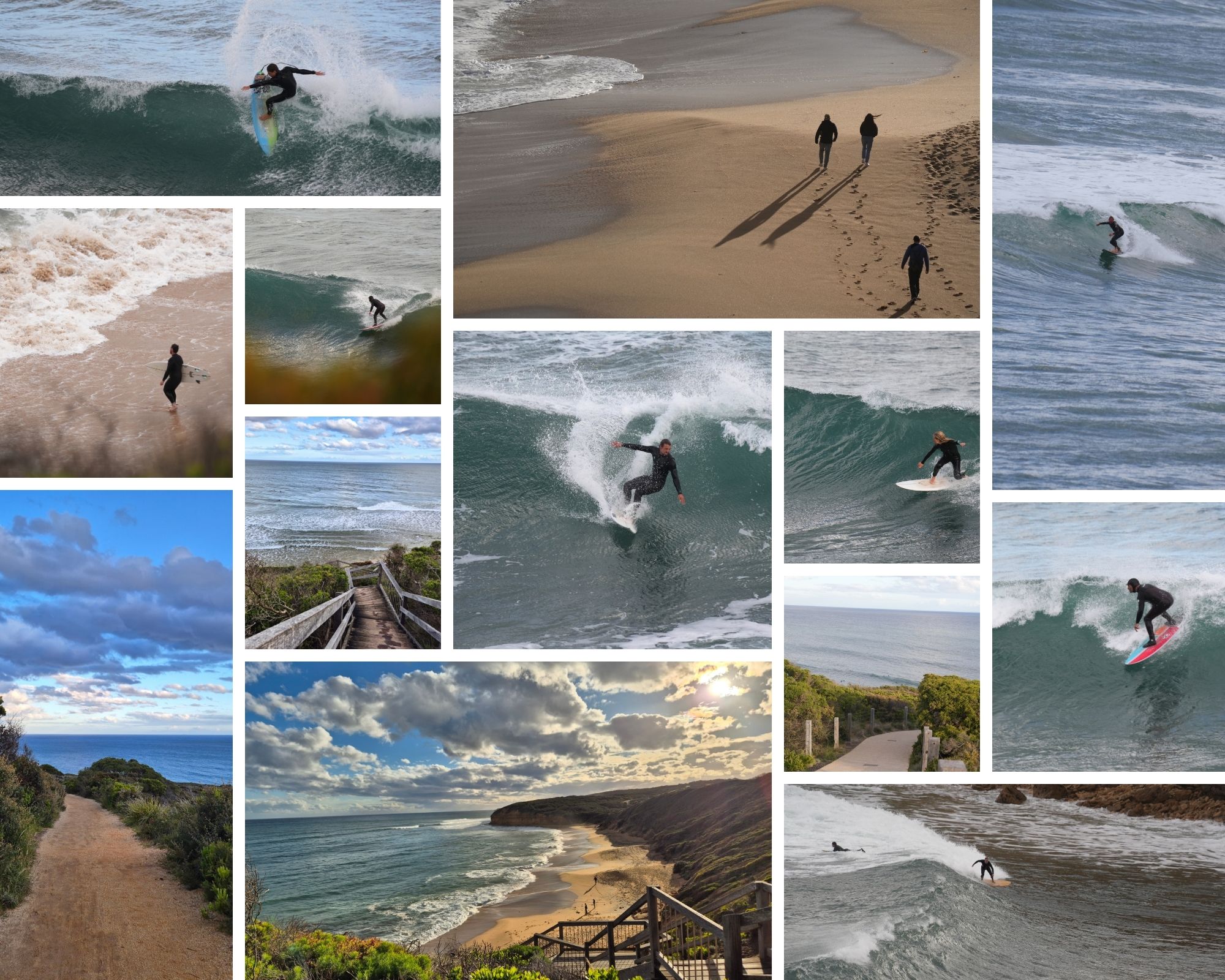
On the other side of the bay Port Phillip is the town Torquay, known for surfing and even easier to get to than Phillip Island. From Melbourne, you take the commuter train to Geelong and from there a bus which runs once per hour. Torquay is known for its surf beaches, one of them in particular: Bells Beach. It was one of the first surf beaches in Australia and the place with the longest running surf competition. It started as a small event in the 1950s and is now a regular stop on the Championship Tour. Every year over Easter, the best surfers in the world compete for the trophy, a bell.
There are no surf rentals at Bells, and the spot is only for experienced surfers. If you just want to see it, you can get there by Uber from Torquay. That’s what Charlie did. After she had taken pictures of the surfers in the water, she walked along the coastal path back to Torquay. It took a bit more than an hour and was an enjoyable walk.
There are other surf beaches closer to the town, and you also find a few surf schools and rentals in Torquay. The waves there are a bit gentler and better suited for beginners and improvers.
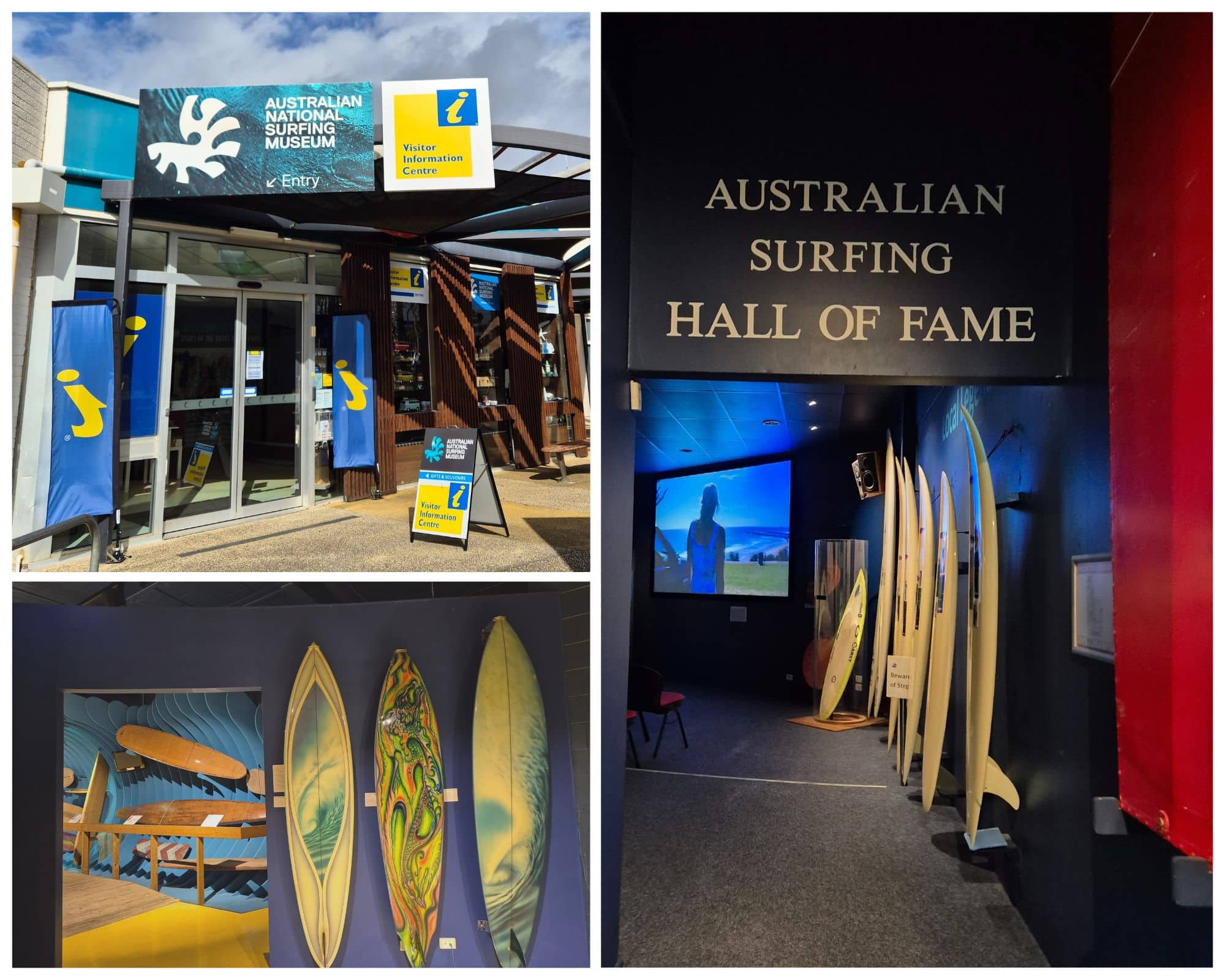
Torquay is also the home of the Australian National Surfing Museum which tells the story of how surfing came to Australia and has a vast selection of all generations of surfboards on display. If you want to learn more about Bells Beach and its history, the museum is the place to go.