Learning Portuguese in Rio de Janeiro
Cultural immersion for digital nomads
Up to this point, Charlie has been mostly nomading in countries where she already spoke the language. Only Portugal had always been a bit tricky. Due to her knowledge of Spanish, she was able to understand most of what she heard. However, her answer was always in Spanish, it wasn’t even a Portunhol. That was about to change!
Charlie knew that the Portuguese in Portugal and in Brazil are different, and yet, close enough to get by in both countries if you spoke the language. She had wanted to see Brazil for a while, especially the carnival. She combined both wishes and booked a two-week language course at Caminhos Language Centre in Rio de Janeiro.
Why learn the local language?
First of all, learning the language of your host country, especially if you are staying as a digital nomad for a bit longer, is a sign of respect. Plus, it opens doors you didn’t know existed. Charlie remembers the tour of the coffee plantation in Monteverde in Costa Rica. She had joined the Spanish speaking tour because that had a lot less people. In the end, the tour was much longer than the English one, the guide shared a lot more details, Charlie made some new friends and they took a detour to a sunset viewpoint on the way back. When you speak the language of the country, the locals are much more willing to share. Your chances to find a hidden gem increase exponentially.
Speaking the local language will also facilitate many things. For example, you might want to see a hairdresser. It’s good when you can explain what you want. You might ask somebody in the streets for the time or a direction. That is much easier when you speak their language.
The language is also a gateway to the culture. You will be able to understand culture and mentality at a much deeper level when you speak the language.

Learning a language abroad
Early on in her life, Charlie had discovered language programmes abroad. It’s usually a school for foreigners to learn the country’s language from native teachers. The last bit is important because there is a different motivation behind them teaching than learning it from somebody who himself learned the language “second-hand”.
At that type of school, you have classes in the mornings and in the afternoons, you can join an activities programme. (By the way, that’s how Charlie discovered surfing. It was part of the activities at a language school in Tenerife.)
If you already have knowledge of a language, you can take a test to assess your level to get placed in the right class. The group classes are usually small, and the teachers create a good learning atmosphere with a lot of fun. (Charlie remembers a class in Sicily where the students listened to a song and had to stand up every time a specific lyric was sung. That of course happened often. They couldn’t stop laughing about this little workout in the classroom.)
The most common programme is that of 20 hours of group classes per week, usually from 9 am to 1pm. Alternatively, you can also take private lessons or specialized classes in the afternoons. (Charlie for example did a course for French in Montreal years ago and had classes for business conversation in the afternoon to prepare her for an internship.)
You can usually book these programmes with or without accommodation. The latter could be a studio apartment or hotel room, a shared flat with other languages students or a host family. For her stay in Brazil, Charlie had chosen the host family. She wanted the full cultural immersion and exposure to the language 24/7.

Full immersion in the culture
It worked. After only a few days, Charlie started to speak. It was now more of a Portunhol; there was still a lot of Spanish in her grammar and vocabulary, but she was able to communicate with the locals. During the Yoga classes that she joined, she had to focus a lot, but she understood what the teacher cued. Conversations at supermarket checkouts or with Uber drivers were no issue either. Her Portuguese wasn’t perfect, yet good enough to get by.
What Charlie liked about Rio as a digital nomad destination is that it was easy to mingle with the locals. They say that the beach is the most democratic place and that is true. Everybody is getting together over a Caipirinha in the sun. Charlie also noticed quickly that it is different than in other places she had been to before. You won’t easily find a Yoga class offered in English. If you want to join, you better learn Portuguese!
The language school Caminhos Language Centre also facilitated integration and cultural immersion. Their activities programme was open for everybody and especially the weekly beach volleyball attracted many people from outside the school. Most of them were locals, one of them was a vendor from the beach who had parked his little shop next to the court. Charlie heard a lot of shouting in Portuguese during the matches. She still had to learn how to shout back in Portuguese!
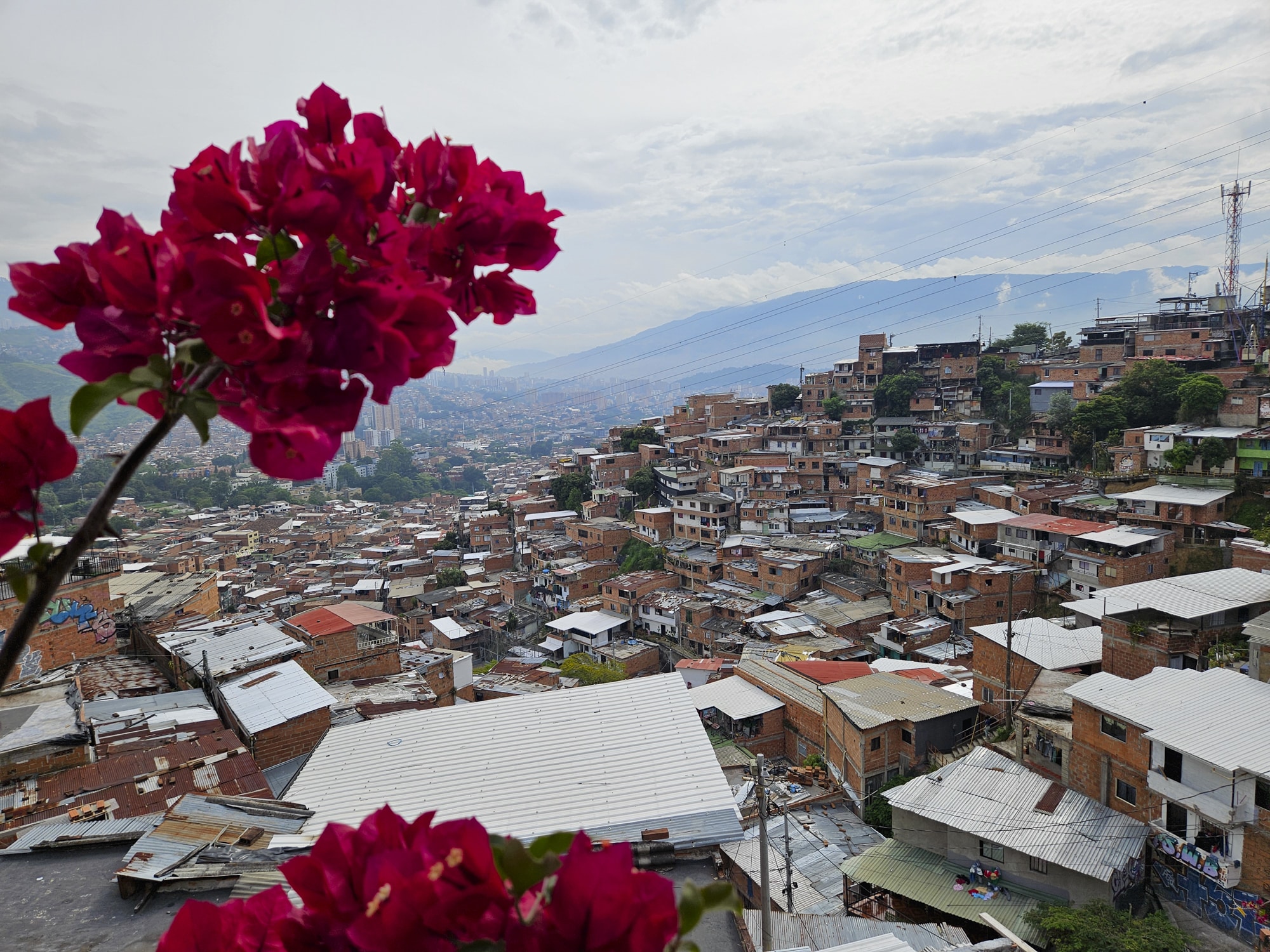
Caminhos also organized for the students to join the carnival parade at the Sambodrome with a local samba school and even though Charlie could only join one of the guided tours, a favela tour, she could tell that it was about integration and truly getting to know the city. They did not get on a bus to drive through the favela as if it was a zoo. They took public transport, ate at a restaurant in the favela and made a donation for a social project.



Giving back to the community
Caminhos is not only a private school and commercial operation, they also have their own social project. Mais Caminhos is a volunteer programme aimed at helping underprivileged youth by teaching them English and other life skills, e.g. gardening, renovations etc. Charlie had met one of the volunteers during the volleyball match. She was German and had spent almost 6 months in Rio. She spoke Portuguese perfectly and knew everybody on the court, including some 18-year-old boys from the programme. They had just completed their own English learning and school and were still fully engaged in Caminhos activities.
The project Mais Caminhos started with an orphanage that was closed in 2012. To keep supporting the kids, the volunteer programme was started. Most of the funds from the programme come from the commercial activities of the school for international students. There is also an option to donate.
Cultural walks in Rio de Janeiro
Apart from Caminhos, there is also Talk Away. The founder, Fernanda, offers guided walks in different parts of town and combines them with Portuguese learning. Depending on your level, she will speak Portuguese with you and give you the opportunity to speak too during the walk.
Charlie did one walk with her in Santa Teresa. They also read some of the graffiti messages out loud to work on her pronunciation and sat down at a local restaurant for a snack. Fernanda had also prepared a poem for Charlie to read and analyse together, and they listened to some traditional Brazilian music. Charlie only discovered Talk Away on her last day in Rio. She will certainly do more of those walks the next time she’s in town.

What digital nomading should be like
What Caminhos provides in Rio is what Charlie had been looking for in a digital nomad programme: socializing with locals and foreigners, cultural immersion, language learning and the option to give something back to the community.
Before she had even left Rio, Charlie was already considering a return to stay a little longer. She would continue taking Portuguese lessons and she would of course keep on joining the tours and social activities. Until then, she’s taking online classes with Caminhos.
Images have been created with AI.