Things to do in Monteverde
Cloud Forest, coffee tour and nights in the jungle
Charlie spent only two days in Monteverde during her trip through Costa Rica and to be honest, there is enough to do and see that you could easily fill a whole week. From Ziplining to horse riding, butterfly gardens, bat jungles and hikes in nature. Here are the things Charlie was able to fit into two days.
Monteverde Cloud Forest
p>Monteverde is famous for it: the Cloud Forest. It is part of the tropical rain forest and almost always cloudy and misty. Not when Charlie was there. She had a very sunny day, and the light was magical.
There was a shuttle from Santa Elena that picked Charlie up from her accommodation in the morning. You should book this shuttle in advance at the reception and it is $6 for a return trip. It was a 30-minute drive to the entrance to the cloud forest. You can buy your ticket online before and skip the queue.
The Cloud Forest is open every day from 7 a.m. to 4 p.m. all year round. These are the prices (as of May 2023):
| Ticket Type | Price |
|---|---|
| Non-National Adults | $ 25 |
| Non-National Children | $ 12 |
| Citizen/Resident Adults | $ 8 |
| Citizen/Resident Children | $ 6 |
| Non-National Students | $ 12 |
| Citizen/Resident Students | $ 6 |
| Parking | $ 5 |
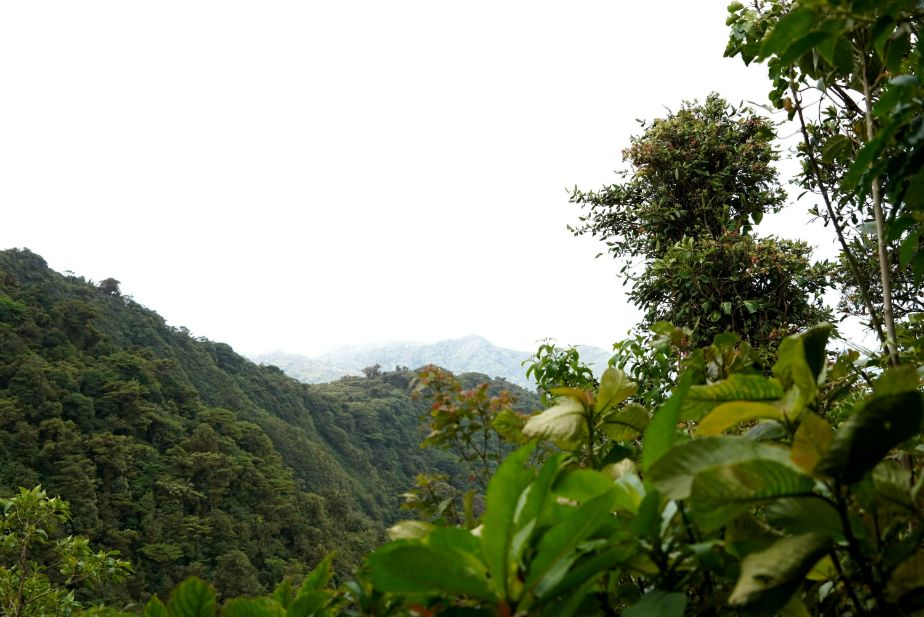
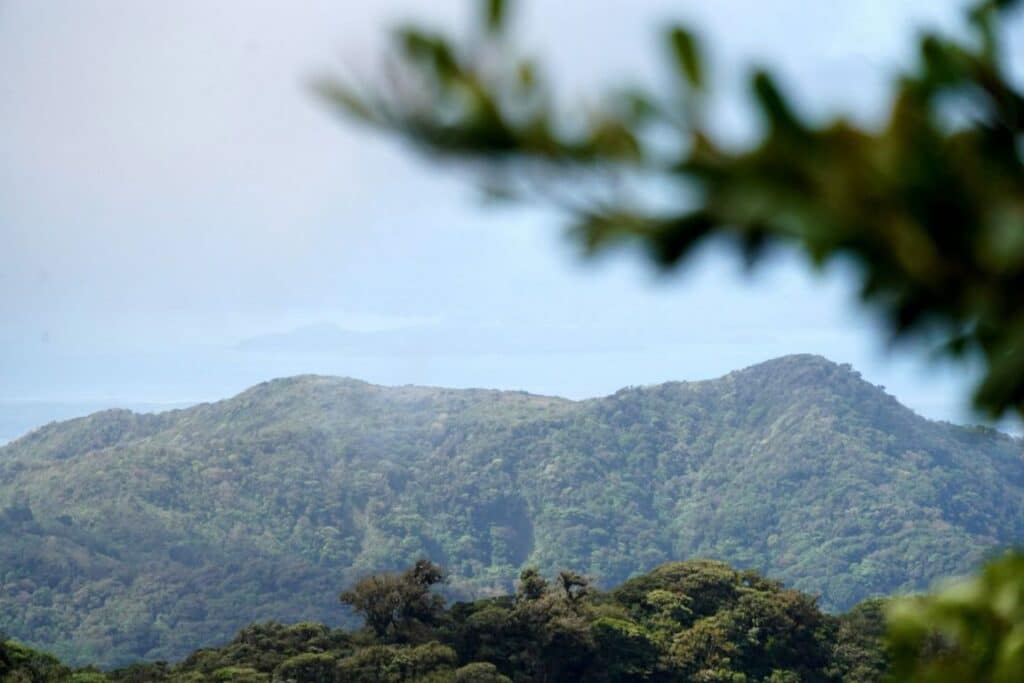
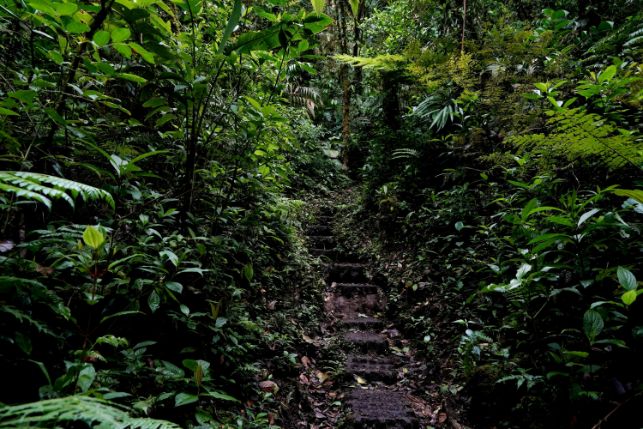
There are several trails leading through the forest, and you find a map at the entrance and at several points inside the forest. Charlie started with the “Sendero Nuboso” and walked to the viewpoint “La Ventana”. From there you can see the Gulf of Nicoya and you are at the point of the continental divide. On one side, water is flowing towards the Atlantic Ocean, and on the other side to the Pacific Ocean.
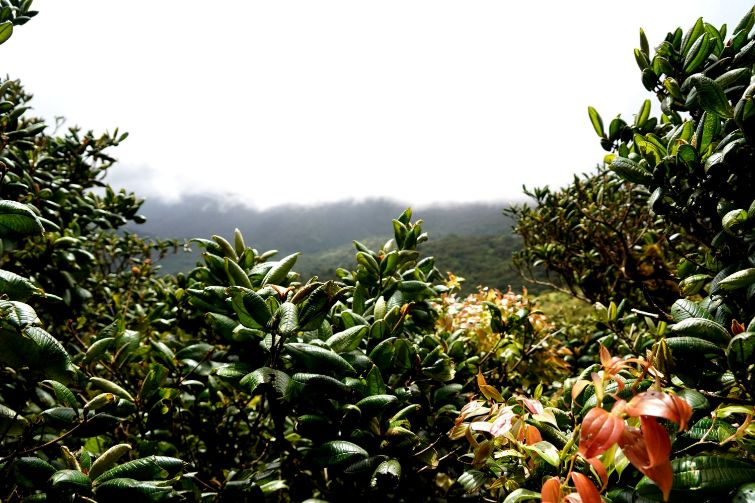
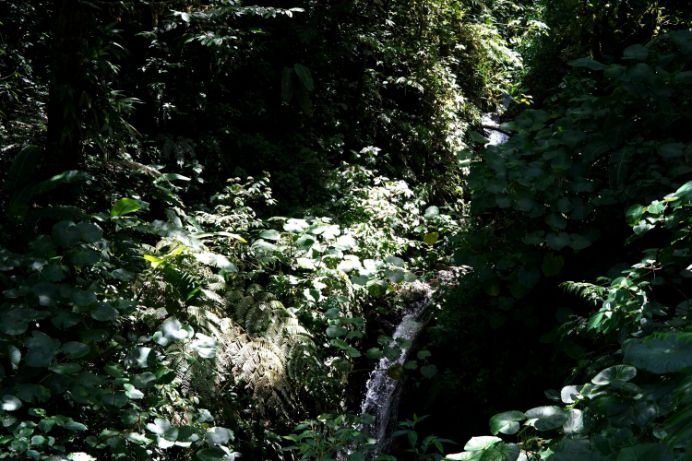
Charlie then walked into the centre of the forest which was a narrow path and a steep incline. On the other side, she took the path that led to a waterfall.
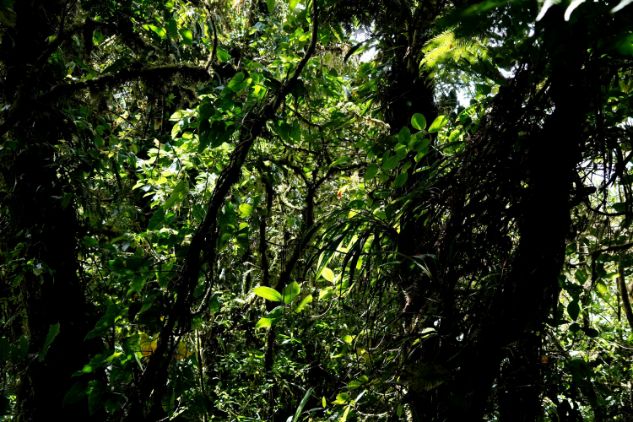
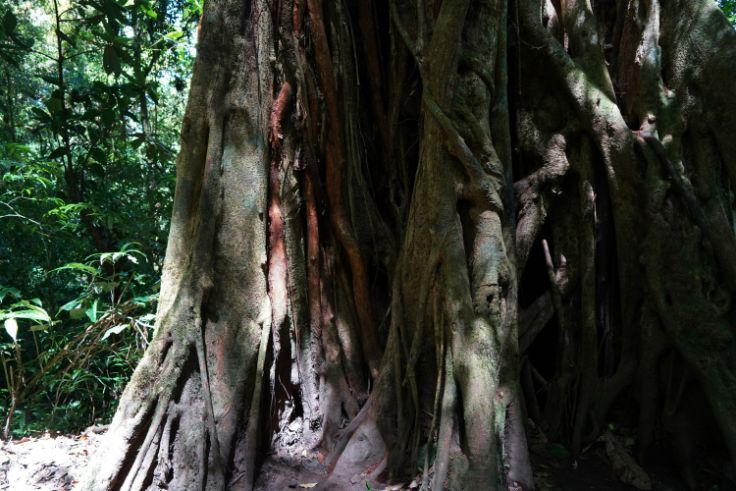
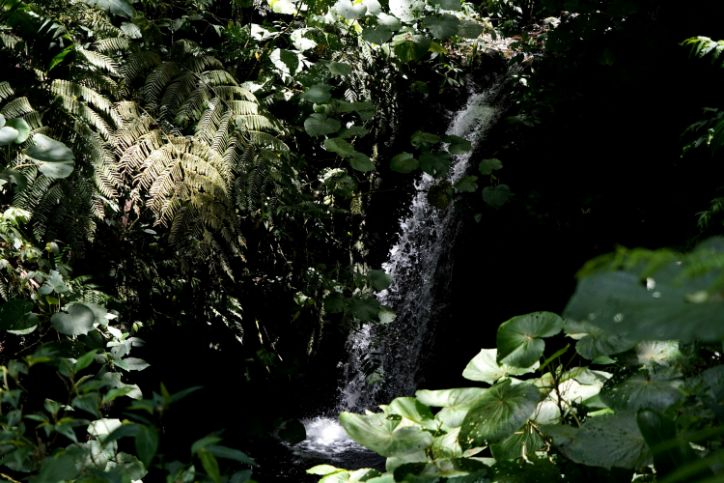
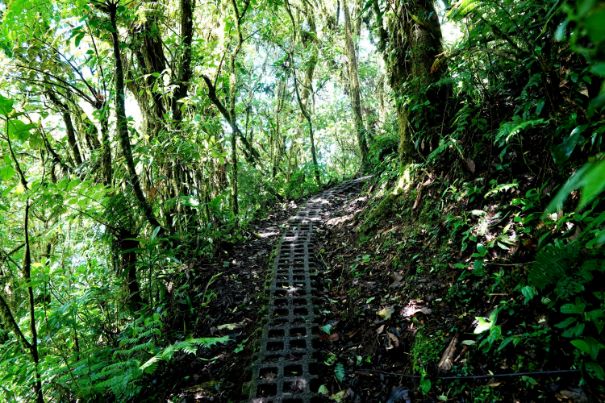
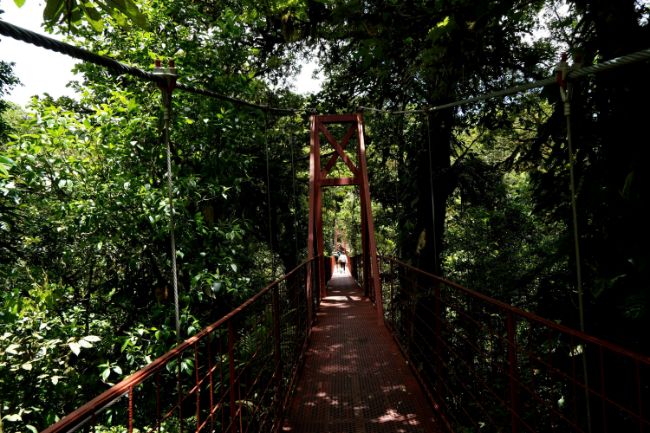
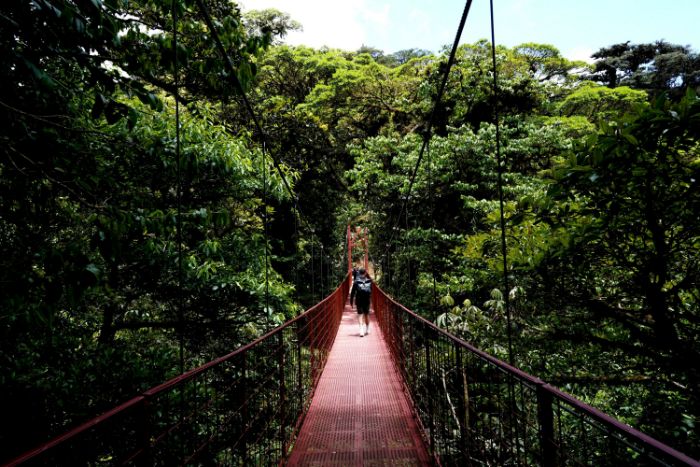
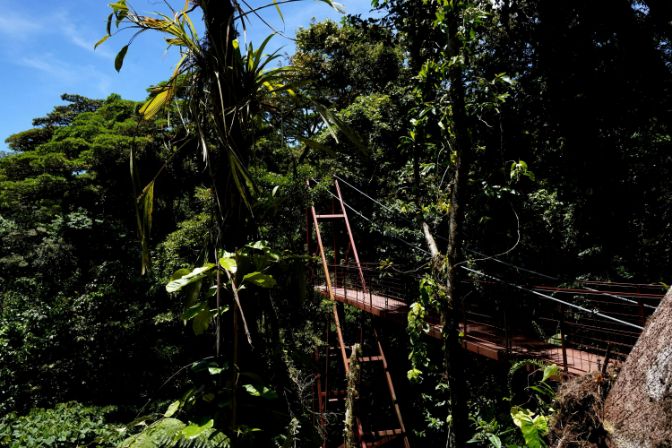
Charlie kept the hanging bridge for the end. It was another loop walk that led her to the bridge and back to the entrance. The bridge looks stable at first, but as you walk across you can feel that it is not fixed in place.
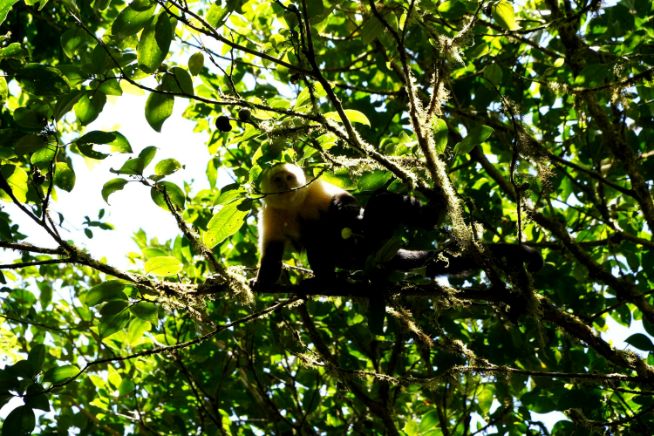
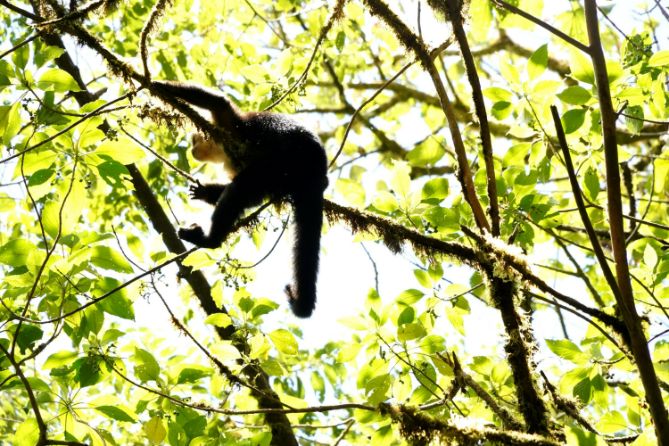
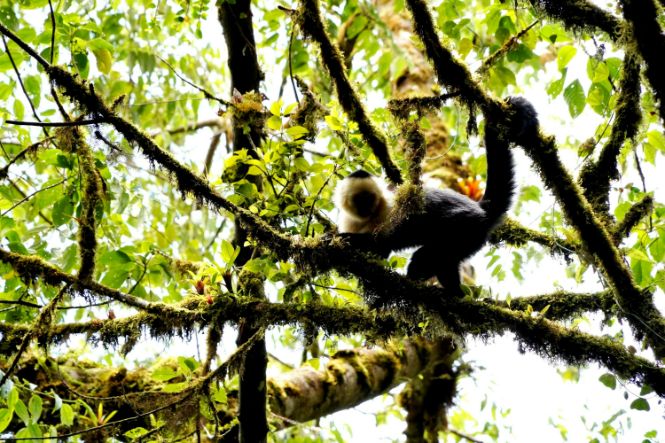
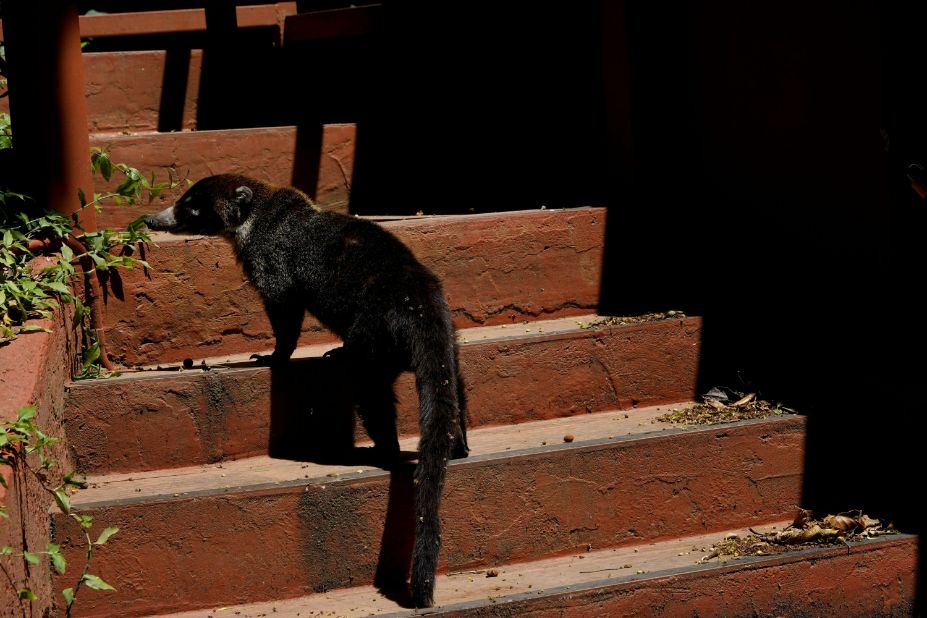
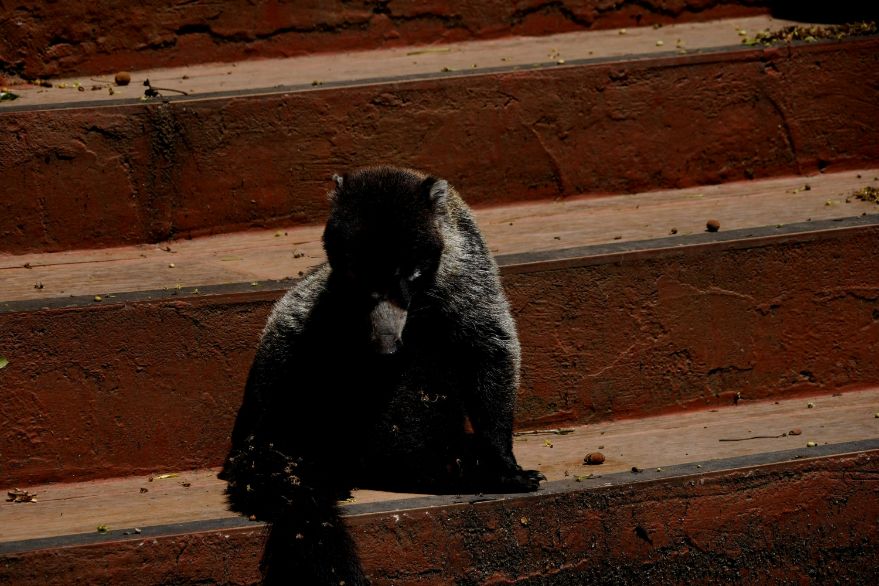
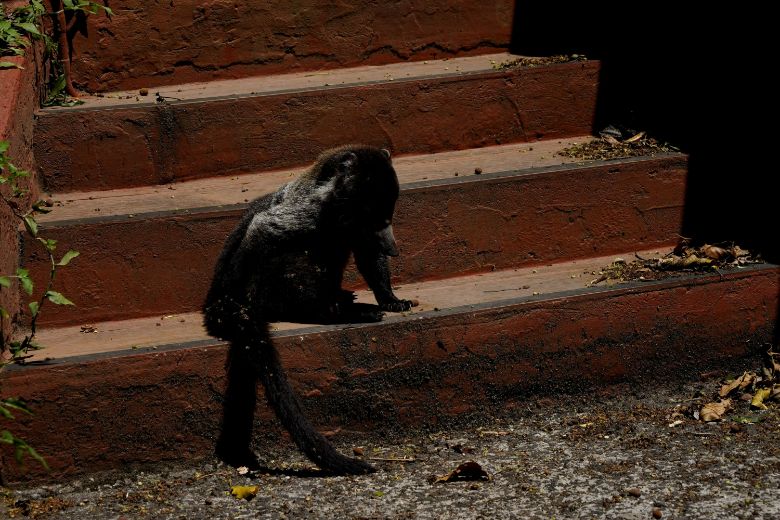
There are wild animals in the forest and Charlie was lucky to see coatis and monkeys. The latter offered quite a show high up in the trees fighting for some juicy fruits for lunch. The first coatis that Charlie saw were digging for food alongside the path. She saw another one as she was about to leave who was chilling in the sun on the steps near the entrance.
Coffee tour
The main source of income in Monteverde is tourism, the second is coffee. The locals combine the two by providing tours to coffee plantations with tastings. Charlie hadn’t pre-booked anything for the day of her arrival and saw that there was a coffee tour in the afternoon. She joined.
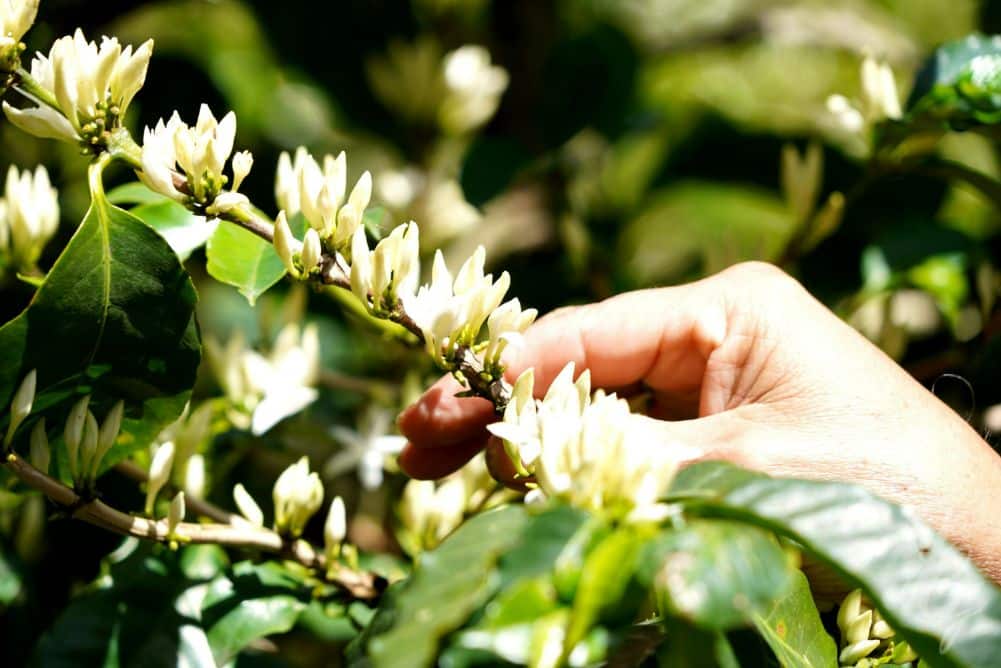
She was picked up from her accommodation at 2 pm and they drove to El Pueblo Coffee plantation. It had been raining when they left, the sun had come out as they arrived at the plantation. At this time of the year, end of March, the coffee plants were in full bloom and carried white flowers that smelled a bit like jasmine.
There were two groups for the tour that day, one in English and one in Spanish. Charlie decided to join the Spanish tour. Why waste a good opportunity to practice? It later turned out to be a good decision. As always, you get a bit more information in the local language.
The guide Julio talked about the history of coffee, the process from the seed to the cup, and its health benefits as an anti-depressant, antioxidant and to treat asthma. He also talked about the two different ways of drying the coffee bean. In an oven at 90°C, it takes 48 hours, and in the sun two weeks. However, when dried in the sun, the coffee bean contains a lot more caffeine and antioxidants. It is no surprise which drying method he preferred and practiced on his own coffee plantation.
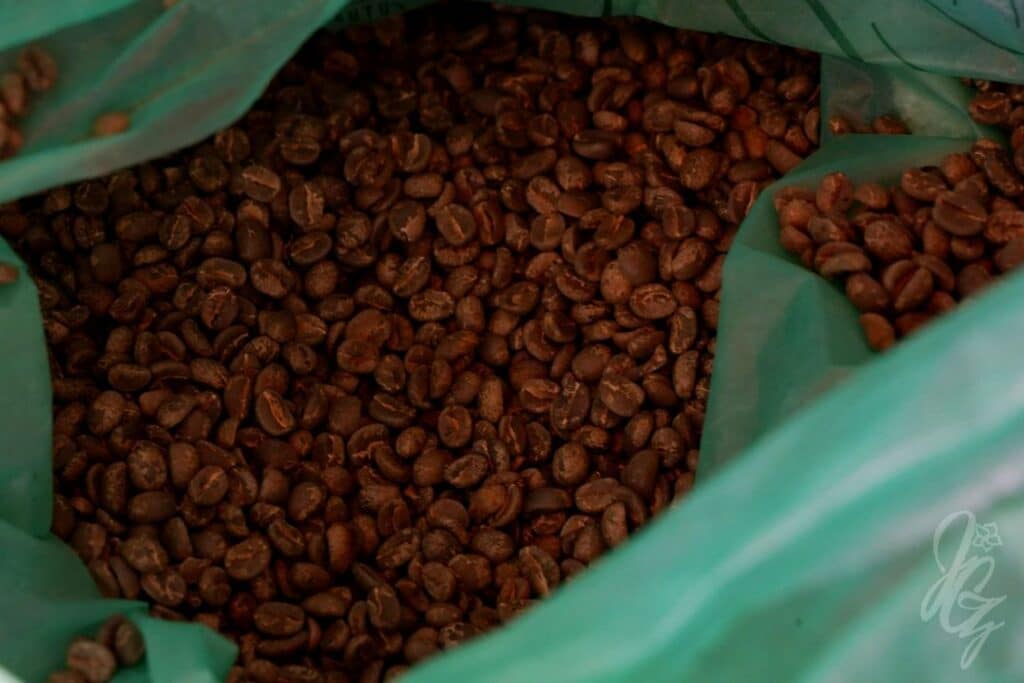
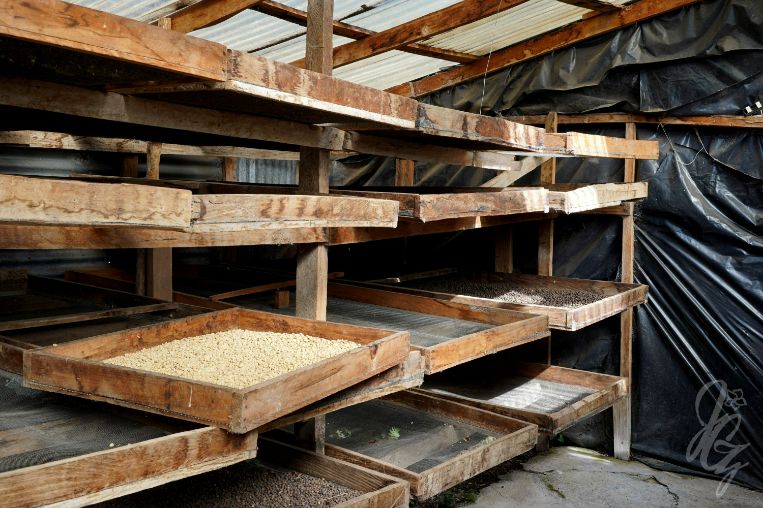
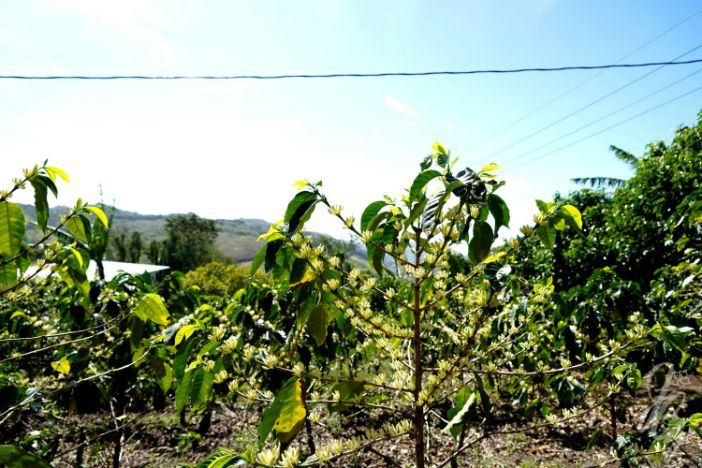
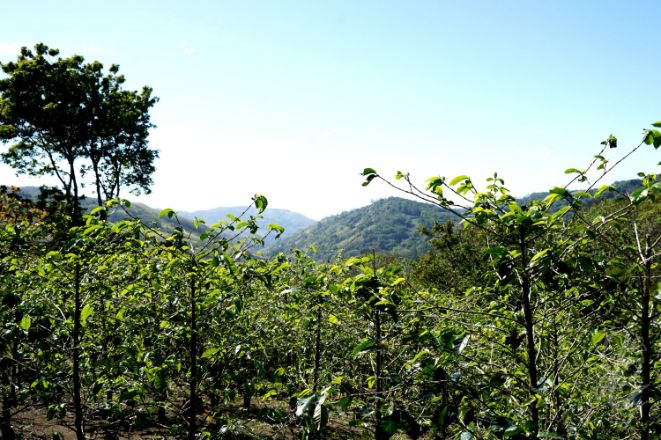
Halfway through the tour, the group was joined by the owner Freddy. He held a sugar cane and a giant knife in his hand. He peeled and chopped the sugar cane in front of the group, and everybody got to try a bit. It was of course very sweet, but also contained plenty of water and fibres. It wasn’t easy to eat at all.
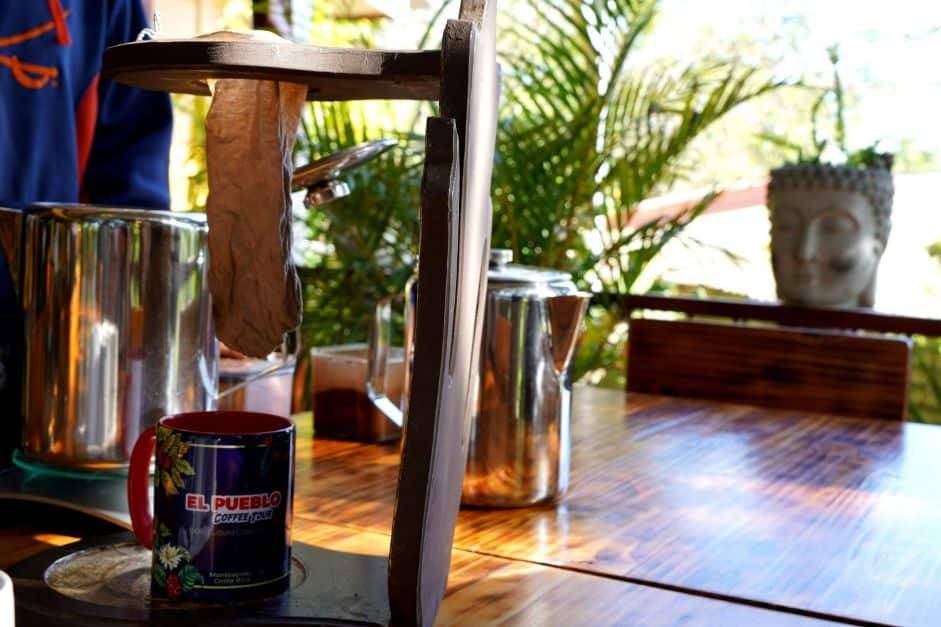
Once they had seen the whole plantation and heard everything about the different types of coffee roast, it was time to sit down and taste it. Julio brewed the coffee freshly on the table and talked about its characteristics. Freddy also served banana bread and picadillo de arracache, one sweet and one salty snack.
At the very end, Charlie was happy to have joined the Spanish group. The English group had already left and was on their way back to their hotels when Freddy served a round of “milk”. Well, the container said milk, but the inside was a homemade, high-percentage spirit. It turned out to be Cachaca. Once they had tried it, he served a round of sugar cane honey, also homemade.
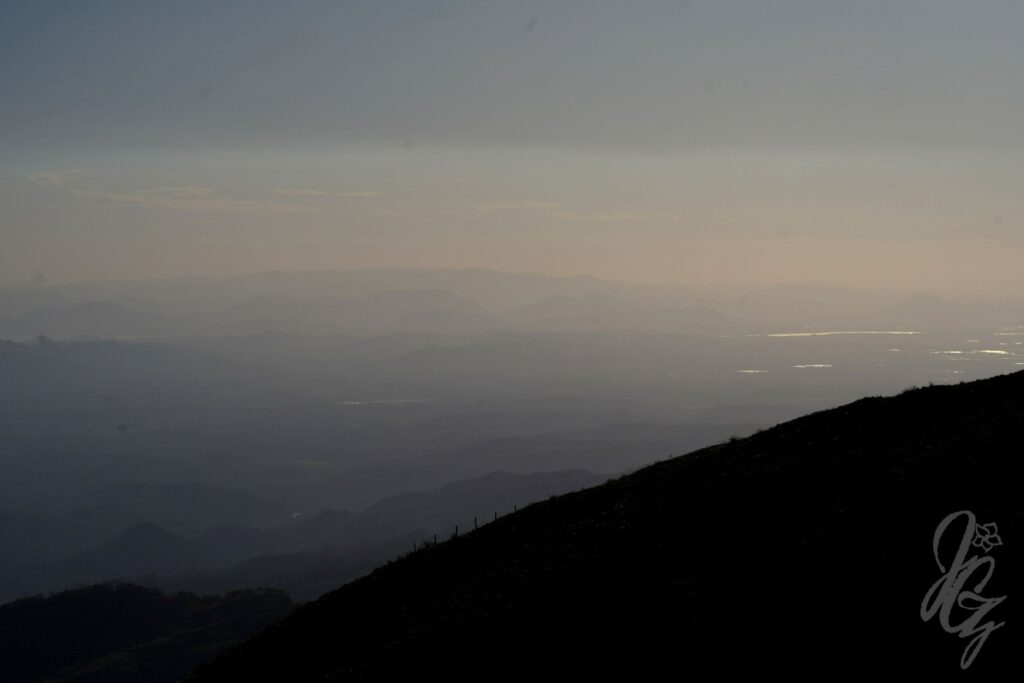
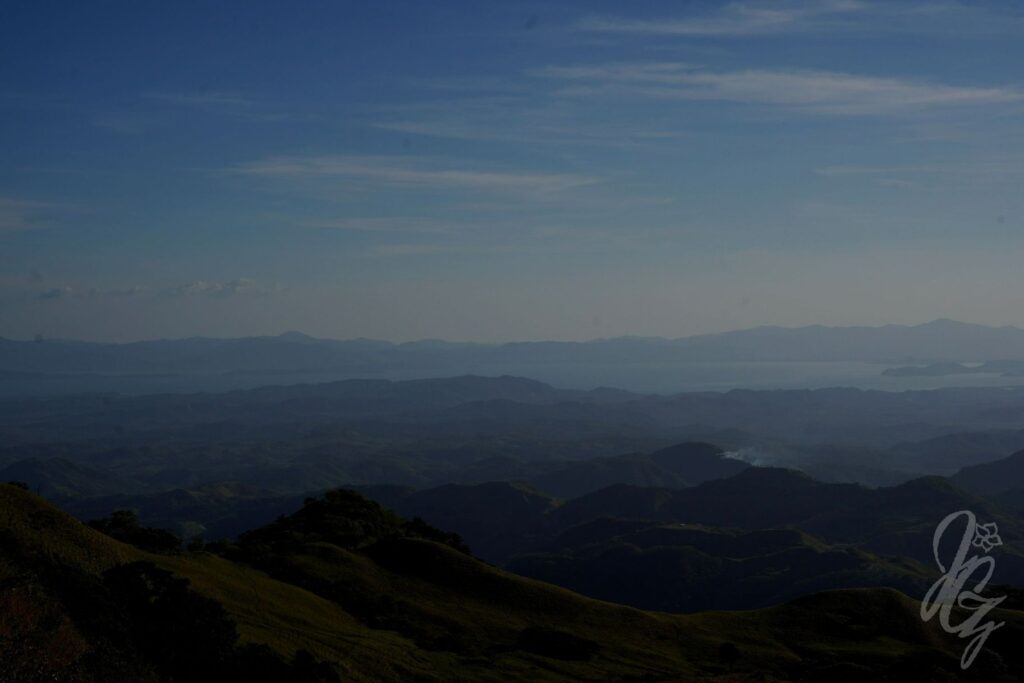
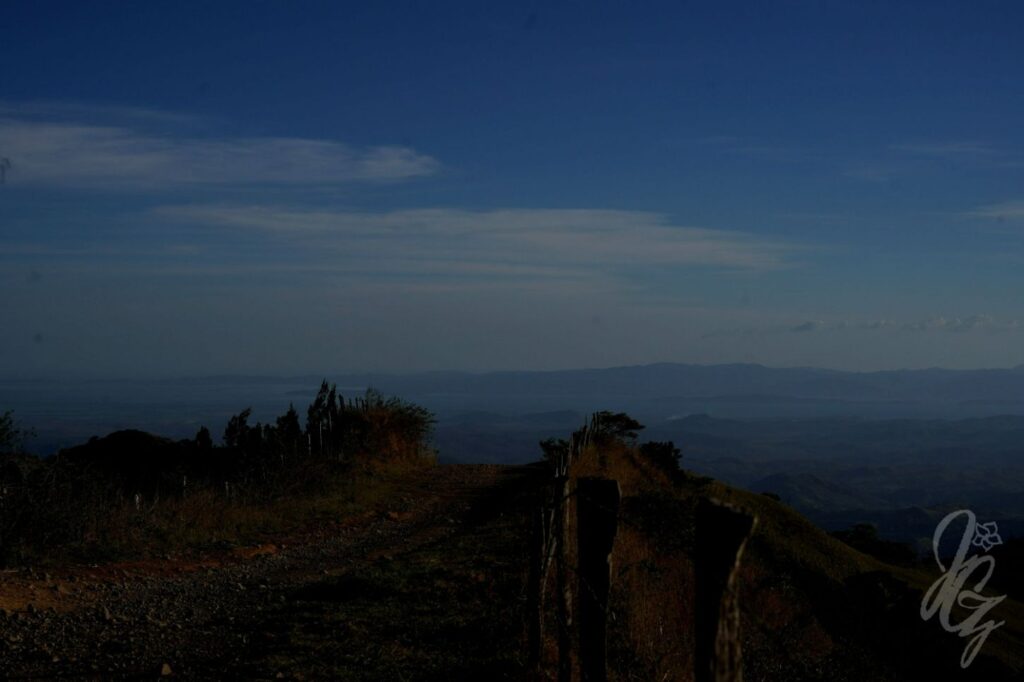
Freddy asked the group whether they were in a hurry and offered a little detour on the way back to town. They made a stop at a viewpoint from where you could see the Gulf of Nicoya and the Cloud Forest on the other side.
Sunset
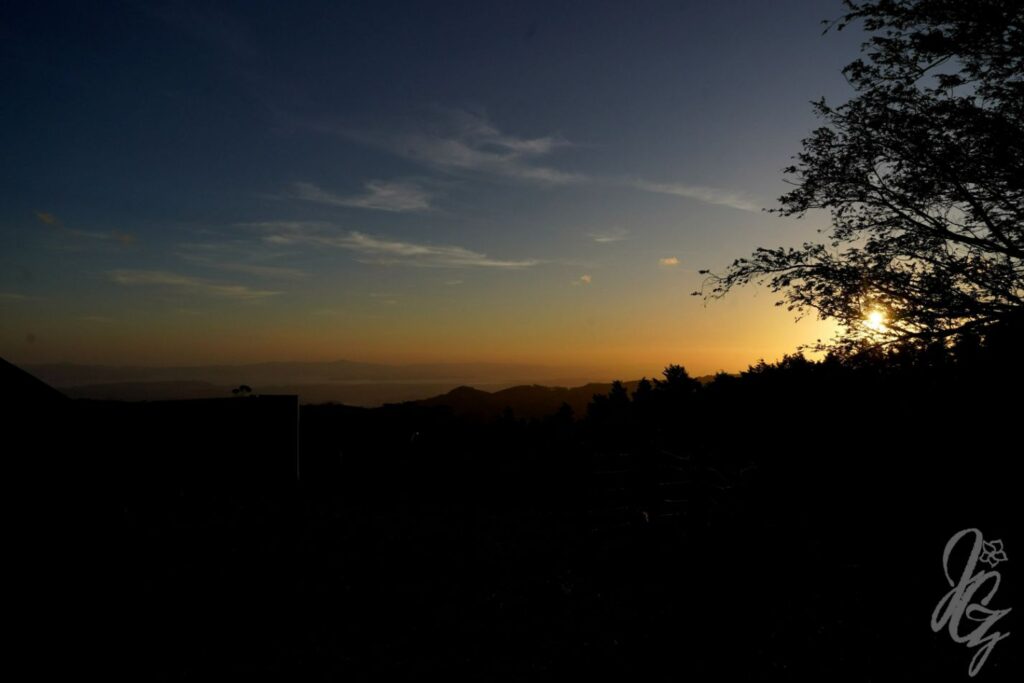
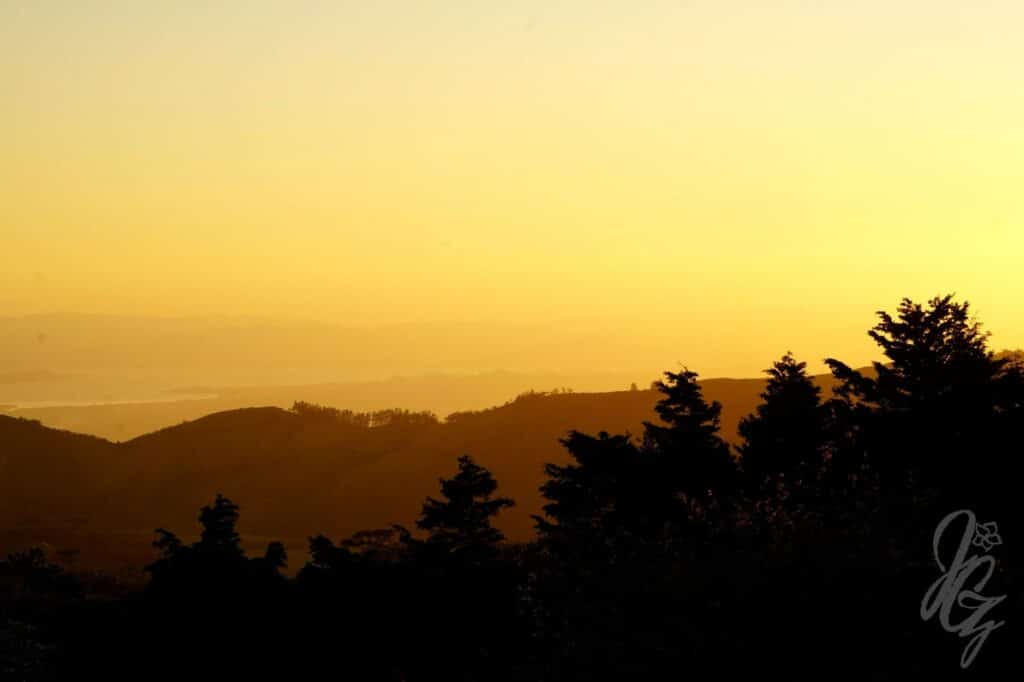
On their way back from the coffee tour, Freddy pointed out a spot from where you could see the sunset that was only 15 minutes by foot from the town. Charlie went there 30 minutes before the sunset when everything was lit up in orange and yellow colours. The actual sunset was behind some trees, but the golden hour was amazing to watch from there with views over the Gulf of Nicoya. If you are looking for the spot, walk up to the cemetery, then turn right and walk up the hill for about 5 minutes.
Night tour
Charlie had been chatting quite a bit with Mona and Rodrigo from Madrid whom she had met during the coffee tour. They had told her about the Kinkajou Night Walk they had booked for the same evening. Charlie was intrigued and decided to join them. From the car, Freddy called Marleny at the guesthouse to book that tour for Charlie. At first, there was no spot left for her, but they made it possible. When Charlie got back to the accommodation after the coffee tour, Marleny looked out of the window and told Charlie that she would be picked up at 6.30 p.m. That was 40 minutes after sunset.
The bus dropped them off at the Kinkajou Wildlife Reserve and they joined a group with the guide David. It was a very small group of only 5 people. Once again, it was beneficial to speak Spanish.
They did a safety briefing, distributed torches, and walked into the forest. David told them that a sloth had just been sighted and they started walking a bit faster to get there quickly. They were lucky and still got to see the sloth hanging in the trees.
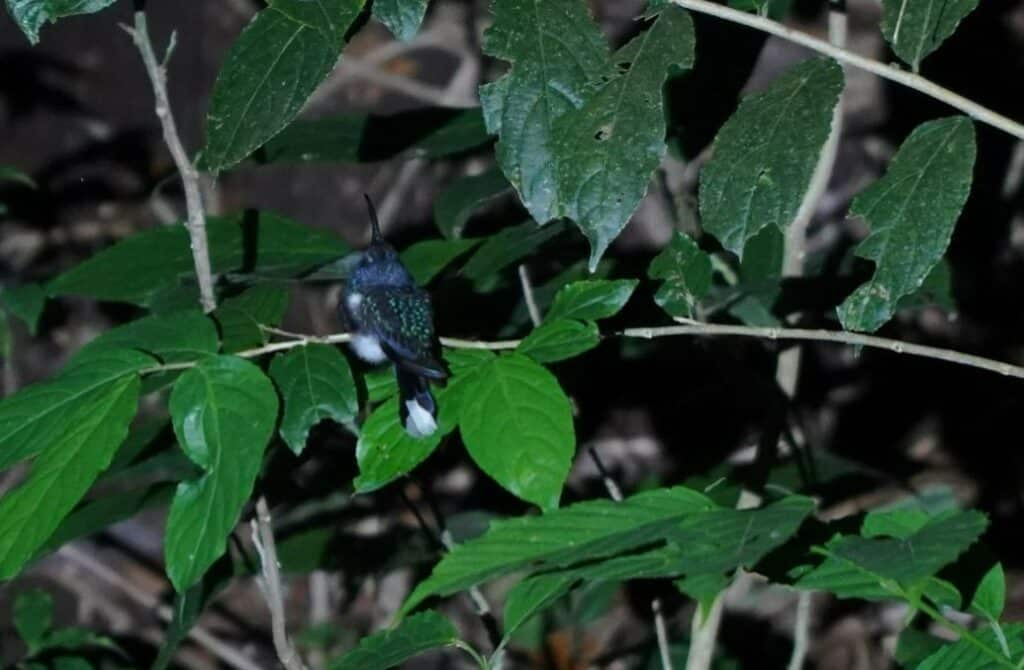
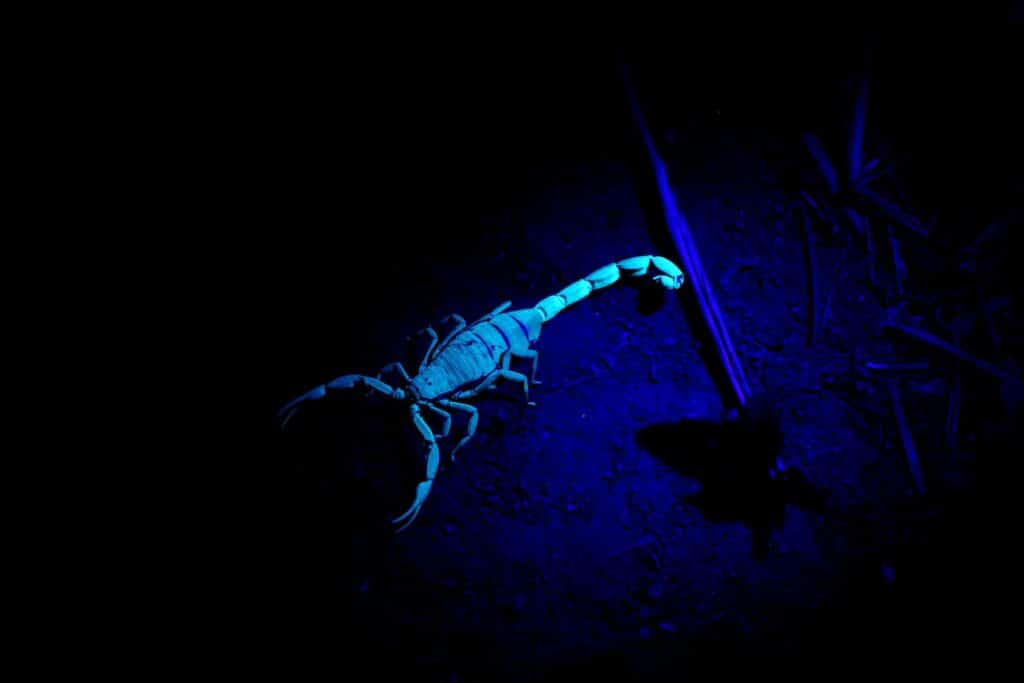
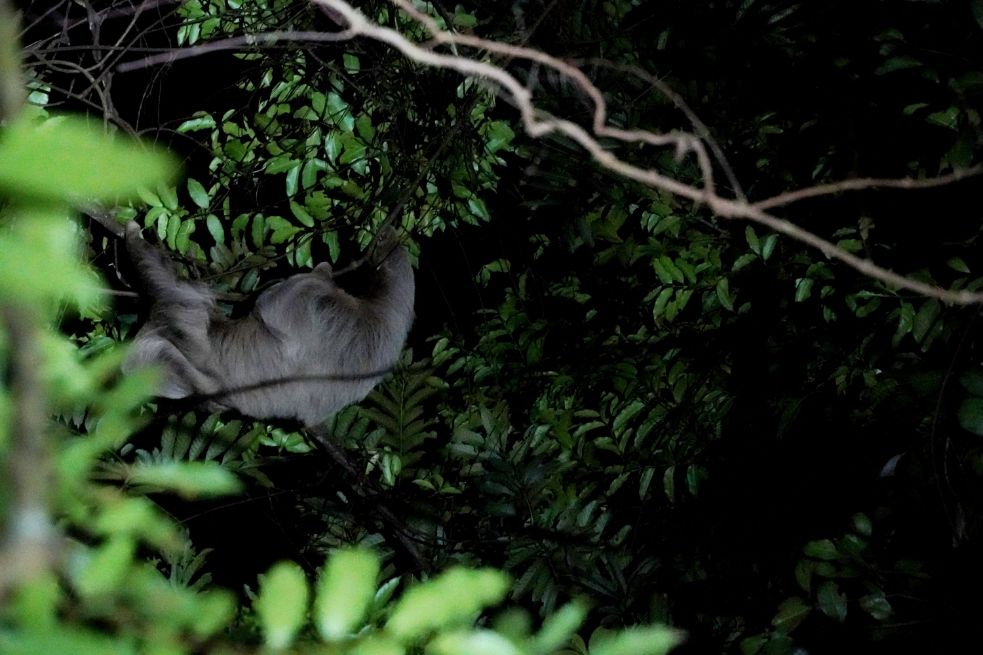
David provided all kinds of information about this type of sloth, the one with two fingers which is active at night, however, rests about 23 hours per day, has four stomachs and a very slow digestion, and only one child. As they continued the tour, they saw a scorpion that shines in fluorescent colours in the darkness, an owl that had laid her eggs on the side of the path, one of the most venomous snakes in the world, a tarantula, a colibri, and a Toucan. David knew where to look for all these animals and how to watch and photograph them in a safe way. Without the guide, Charlie would not have spotted a single animal and to be honest, it would have been quite scary to walk through the forest at night. You cannot imagine how many sounds you can perceive in the darkness.
The night sky from that spot was simply magnificent too!
Orchid Garden
Charlie had some time in the afternoon after her return from the Cloud Forest and decided to check out the Orchid Garden in Monteverde. It was right in the town centre.
The guide that afternoon was Aurora and the tour was in English and Spanish. The other participants were a group of French Canadians and they always got everything translated into French too. Charlie heard all the information three times that afternoon.
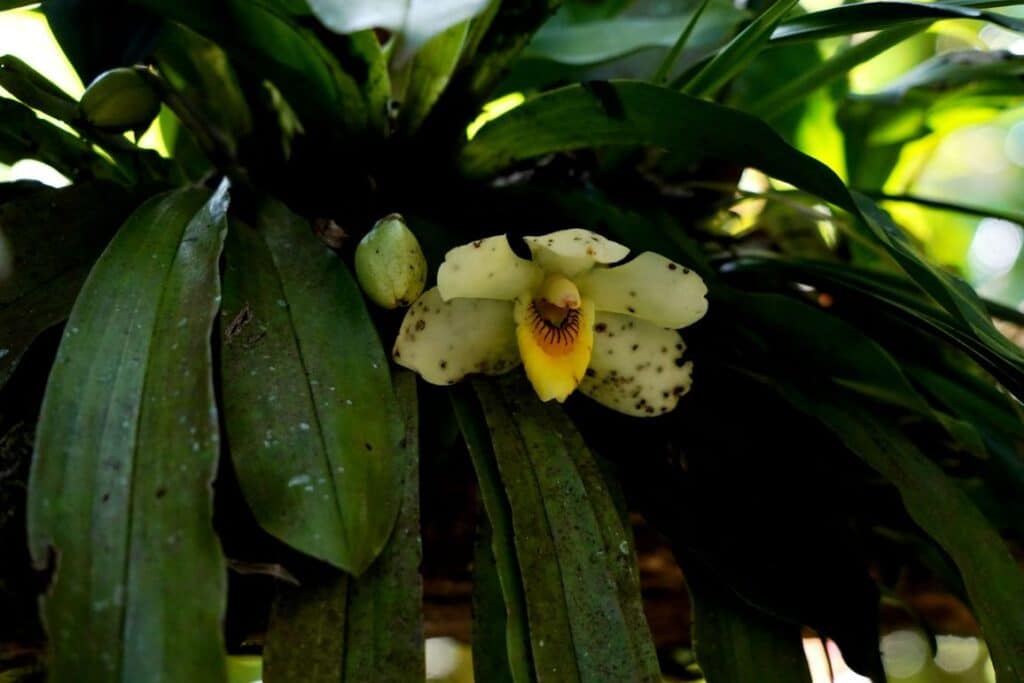
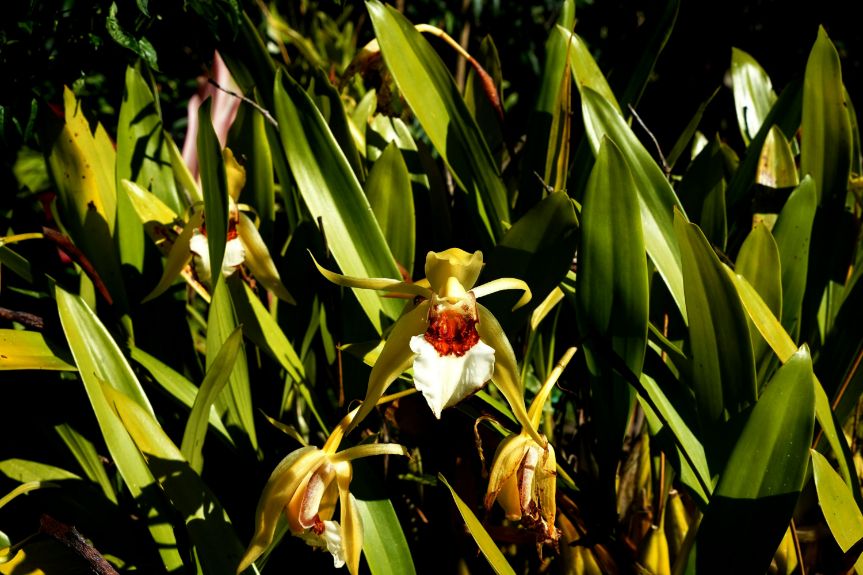
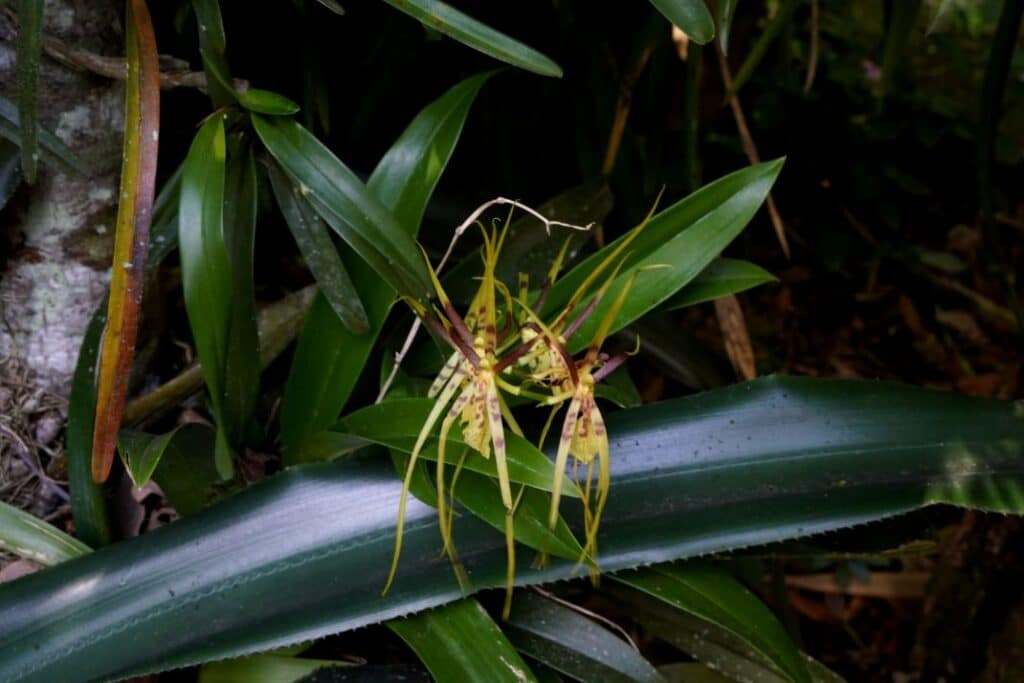
It was good to be with a guide in the garden because most of the orchids are so tiny that you would not spot them. They were also given a looking glass for that same reason.
Aurora provided plenty of information about the different types of orchids in the garden, how and where they grow, how they are pollinated and what the smell reminds of. Charlie confirmed every smell, and the descriptions were always right. The most impressive Orchid in the whole garden was the Guaria Morada, the national flower of Costa Rica.
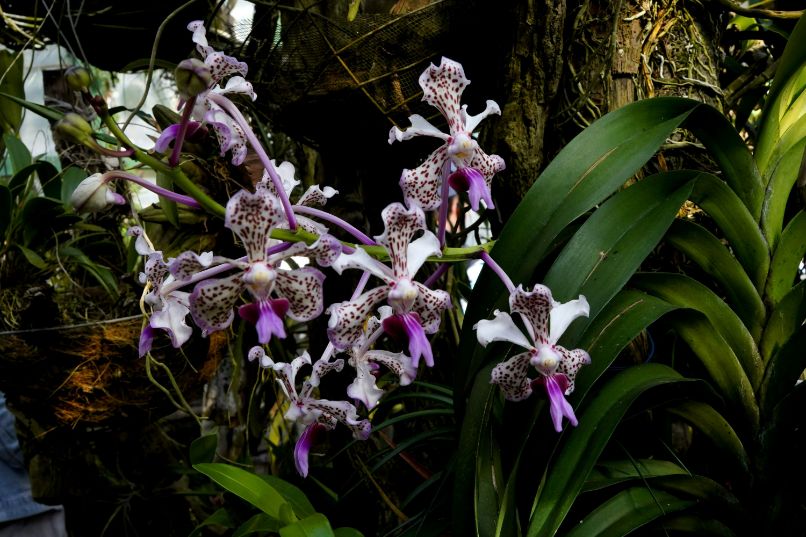
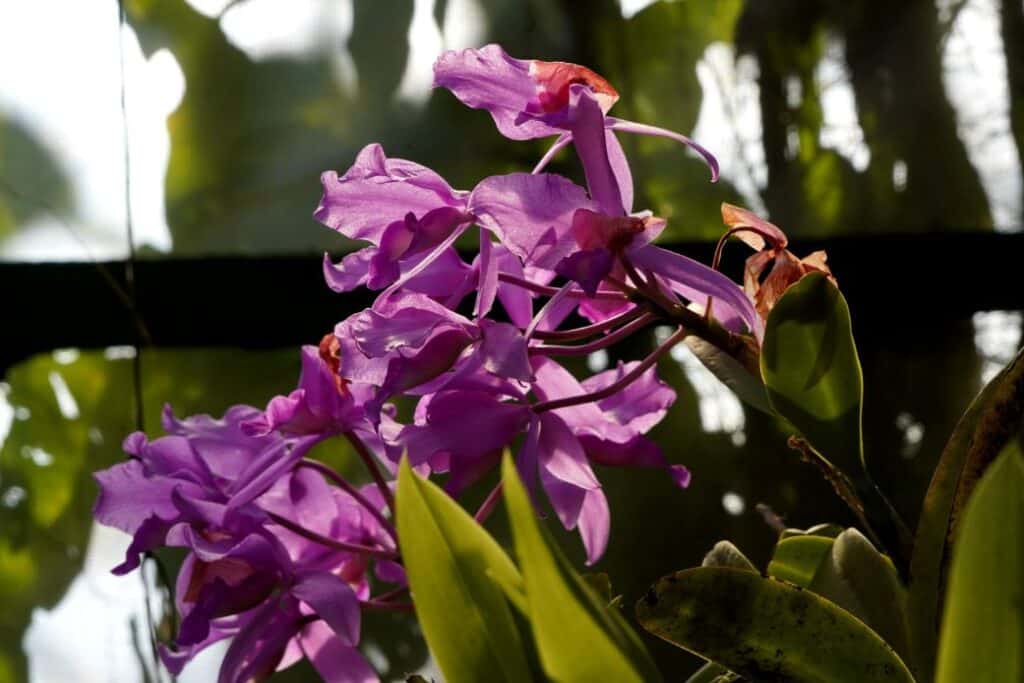
The Monteverde Orchid Garden is open every day from 9 a.m. until 5 p.m. (last guided tour at 4 p.m.) and it is best to book your ticket and time slot on their website. These are the prices (as of May 2023):
| Ticket Type | Price |
|---|---|
| Adults | $ 16 |
| Students | $ 13 |
| Children (6-12 years old) | $ 13 |
| Citizens and Residents | $ 8 |
| Private Tour | $ 160 |
Where to stay in Monteverde
Most travelers stay in the town of Santa Elena and you find plenty of guesthouses and hostels in town. They all offer several tours and also wash your laundry. It’s a true backpacker’s melting pot. There’s also a coffee shop in town called simply “Café Monteverde” with a coworking area upstairs in case you have some emails to reply to. There are some hotels a bit further outside of the town.
Charlie stayed at Cabinas El Pueblo and can only recommend it. It was good value for money, with quiet, comfy beds, amazing breakfast, and a good location and the owners Freddy and Marleny went above and beyond to make Charlie’s stay special. Yes, that is the same Freddy that offered the coffee tour.