A taste of digital nomading
Lessons learned from a surf-workcation
Charlie had been dreaming about this for a long time. She had done partial workcations before when she was in Hossegor for the Quiksilver Pro France 2019 and the year before for an extended New Year’s trip to Fuerteventura. Both trips were meant to be holidays with a bit of work getting done.
This time, when Charlie went to Conil de la Frontera, she had booked a 1-month package that contained surfing, accommodation, and the use of a co-working space. She was meant to work and could go surfing whenever her schedule would allow it. She was planning to stay only one month but ended up spending nearly 3 months at the surf hostel in Conil – partly by choice, partly forced by a pandemic.
Work & Surf: finding the right balance
There is one big challenge when you start freelancing: You either have no work or you have too much work. Charlie wonders if anybody ever finds a good balance. Now, when you’re on a workcation you also want to find time for the fun stuff you wouldn’t do at home – in Charlie’s case, surfing. As it had turned out, Charlie had over-committed herself with work in October. She had to skip quite a few good opportunities to join the others for surfing in Cadiz or Caños de Meca.
In November, Charlie had less work and that’s when she realized that she was in a place where you needed a car to make full use of the opportunity. Charlie didn’t. She always had to rely on others and that is something she never liked. She was always independent and suddenly she found herself in a situation where she accepted more work again because there was nothing else to do. She also started feeling homesick. In the end, for 3 months surfing in Andalucía, she hadn’t surfed as much as she would have liked to because she either had work responsibilities or no chance to get to the surf spot.
Key takeaway: If you go on a workcation, choose a place where you can be independent and create a flexible schedule for a good work-life balance. Don’t overcommit with work!
Accommodation for digital nomads
When Charlie booked the trip to Spain, she booked a special package that combined accommodation and co-working space in a surf hostel. It seemed perfect!
What Charlie hadn’t considered though was that she would share the accommodation with people who were on holiday, not working. It wasn’t a co-living space for digital nomads, but a hostel for surfers. That can cause some disruptions in the group as Charlie wouldn’t always be able to join the others for the fun stuff and would never really become part of the group.
On the other hand, there would be people walking through the co-working space to get surfboards or prepare to go out for drinks when Charlie was on work calls. That is not unexpected, but it is hard to reconcile with a work-focused stay. They often wouldn’t understand why Charlie needed to know the time they would leave for a trip or to the surf school in El Palmar and the time when they were coming back because she had calls and meetings with business partners and clients. That meant that she often had to miss out on surfing because she couldn’t be sure to make it back to a stable Wi-Fi connection for her meetings, even though she would have had time for an extended surf session that day. A workday requires some kind of schedule, a holiday doesn’t.
Sharing a room with other travelers was never a problem for Charlie, but in this case, it proved to be difficult at times. When she had work to do, she would get up early – before everybody else (because they were on holiday). The lights in the kitchen were on a timer and that timer was set to recreational traveling, not work traveling. Having breakfast in a dark communal area was a new experience. Charlie enjoyed that it was quiet even though her alarm clock had woken a few people up.
Plus, hostel rooms aren’t made for long-term stays.
Key takeaway: If you plan to stay for a few weeks and to work from the place, choose a type of accommodation that you either have for yourself (e.g. an AirBnB) or a co-living where everybody is working. Sharing with those who are on holiday can make things difficult.
Sharing the good moments
On her travels, Charlie always tries to stay in shared accommodation. After all, it’s the way to meet people and she had met some amazing human beings along the way. Therefore, also for a workcation, Charlie wouldn’t want to rent a place for herself. Sharing provides so many opportunities. Countless experiences and conversations over the years wouldn’t have been possible if she had locked herself in a room. Besides, when you’re on a workcation as a professional who absolutely loves her work, you sometimes need another person to remind you when it’s time to stop working.
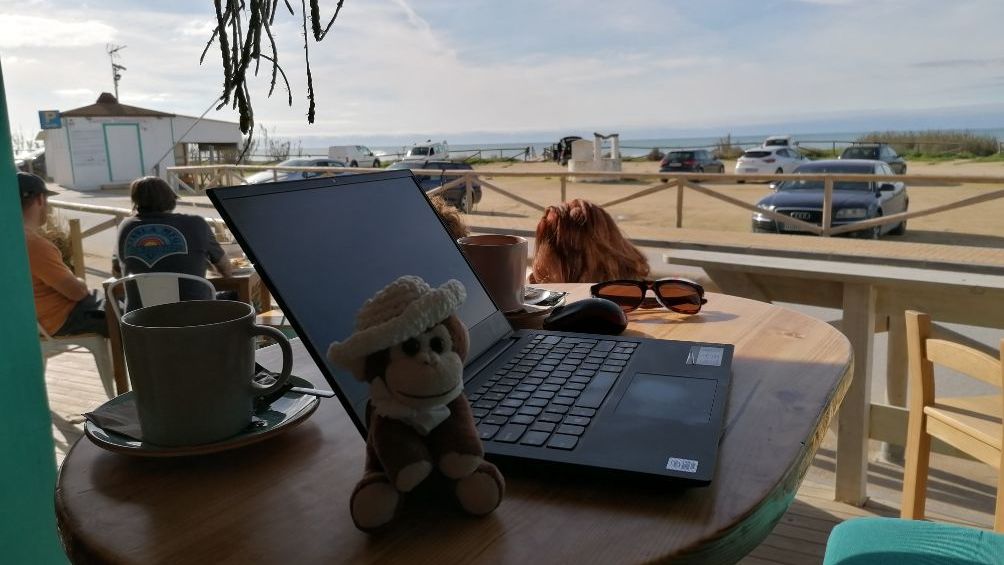
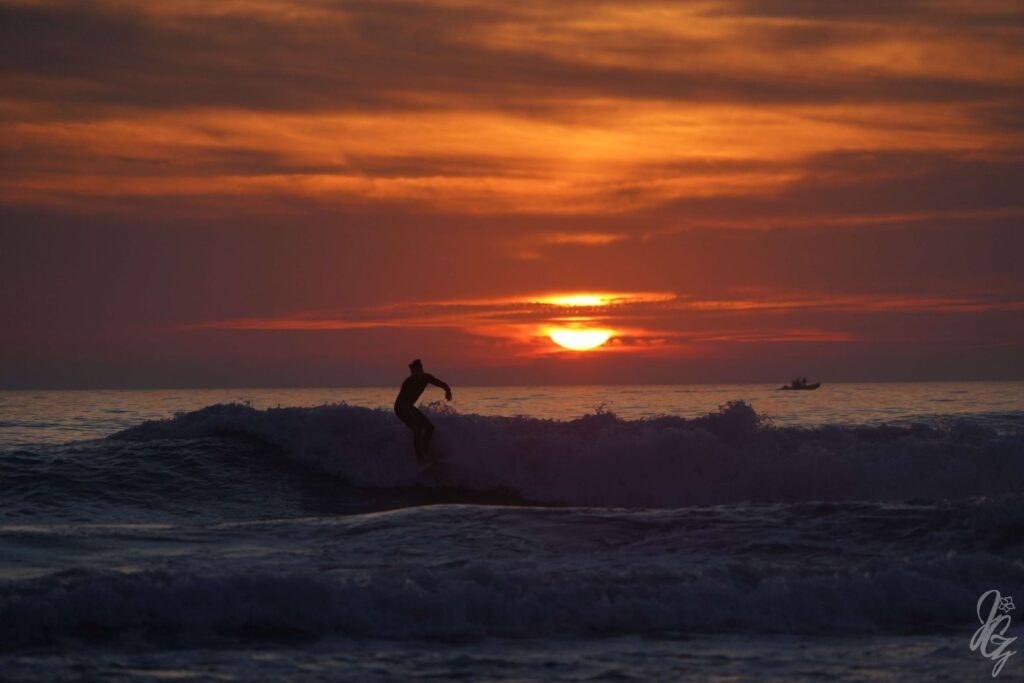
That’s how Charlie ended up having the best surf session so far: It was a Wednesday and Charlie had gone to a coffee shop in Conil to work. That’s when Fede who worked at the hostel messaged Charlie that he would go surfing and asked if she wanted to join. It was a good coincidence that Charlie didn’t have any tight deadlines that day and her work was post-ponable. She packed up, went to the hostel and they were off to Fuente del Gallo. The conditions were perfect for Charlie’s surf skills and they had this stunning spot below the cliffs to themselves that day. It almost was like a private surf lesson for Charlie with Fede and Irene who both worked at the surf school in El Palmar. Charlie had the best time and caught waves like never before. When they finished the day off, sitting on the roof of the van with a few beers, overlooking the beach and the sea, Charlie couldn’t have been more grateful that somebody had made her take the afternoon off.
Key takeaway: Don’t forget to enjoy it!
Inspiring others
During her first few weeks in Conil de la Frontera, Charlie often felt bad for having over-committed herself and she had to let the others down a few times by not being able to join them for a sunrise Yoga session or drinks in the evening. The day before Alberto had to return to his home in Barcelona, he said something that made Charlie think. He said that he was jealous that she could come to Spain, stay however long she wanted to and live life her way.
Oriol was in the common area as well and jumped in on the conversation. He asked Charlie how to learn digital marketing and how to set up a freelancing business that would provide that location independence.
Even though Charlie had a ton of work those days, missed out on most of the fun, was constantly tired, and ate incredibly unhealthily, there were people jealous of her lifestyle. Because she was independent. Because she could do the things she wanted to do. Because she had still gotten a tan (by exposing her laptop to the sun). Because she had been surfing, paddleboarding or skating in her lunch break (instead of eating). Because she had improved her spoken Spanish and was by then able to laugh and joke with the others. She was incredibly blessed. She simply had to accept that everything comes with a price, but it was all entirely in her hands.
It wasn’t until the end of her stay that somebody else made a similar comment. Sabina had arrived a few weeks later than Charlie and was also staying a bit longer. She was working in the tourism industry, mainly in yachting and sailing, and could take a few weeks off after a busy summer season. Her job allowed her to travel all the time, but she considered a change. By the end of her stay, she had decided to return to school to build a future of a job that she fully enjoyed and that she would be able to do from wherever she wanted to. She asked Charlie for a few tips on how to establish a client base. When Charlie asked her where this idea suddenly came from, she heard Sabina say: “You inspired me with your lifestyle.”
Key takeaway: You never know whose life you might be changing by living life your own way.