Street Art in Barcelona
From mural art to installations
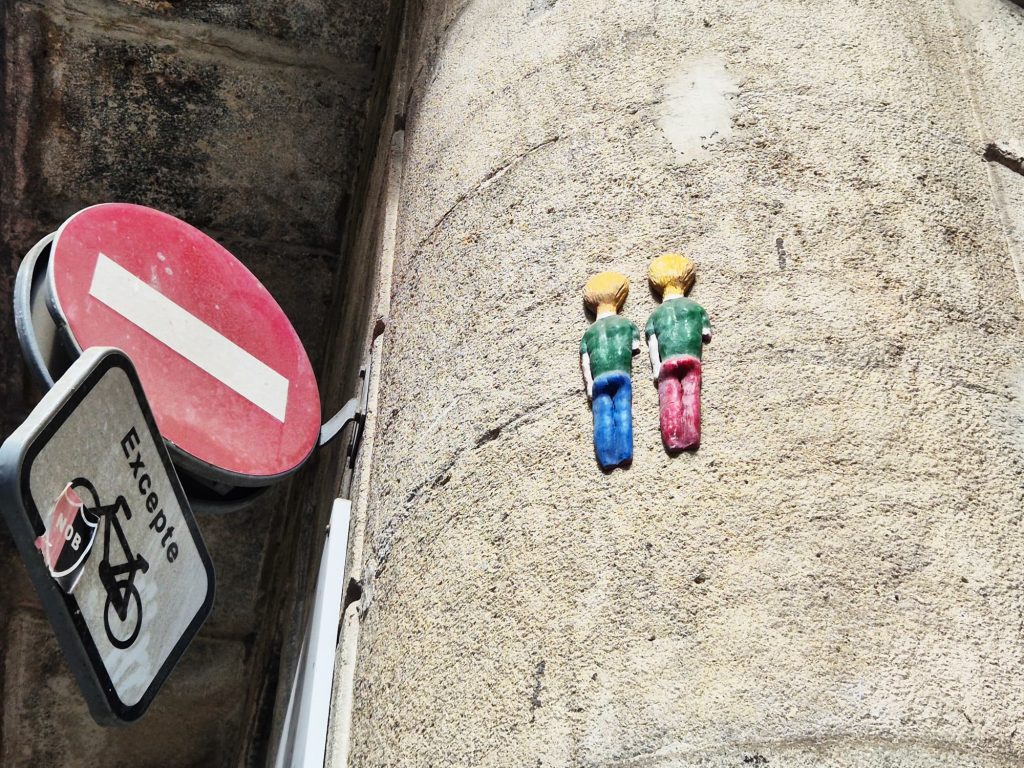
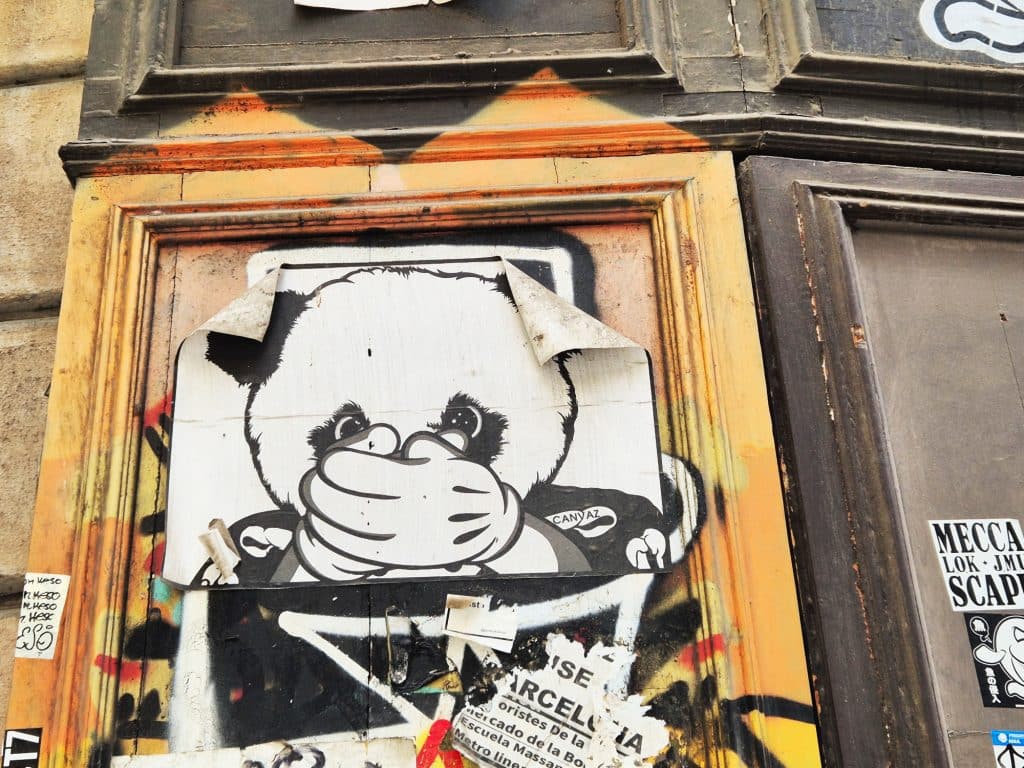
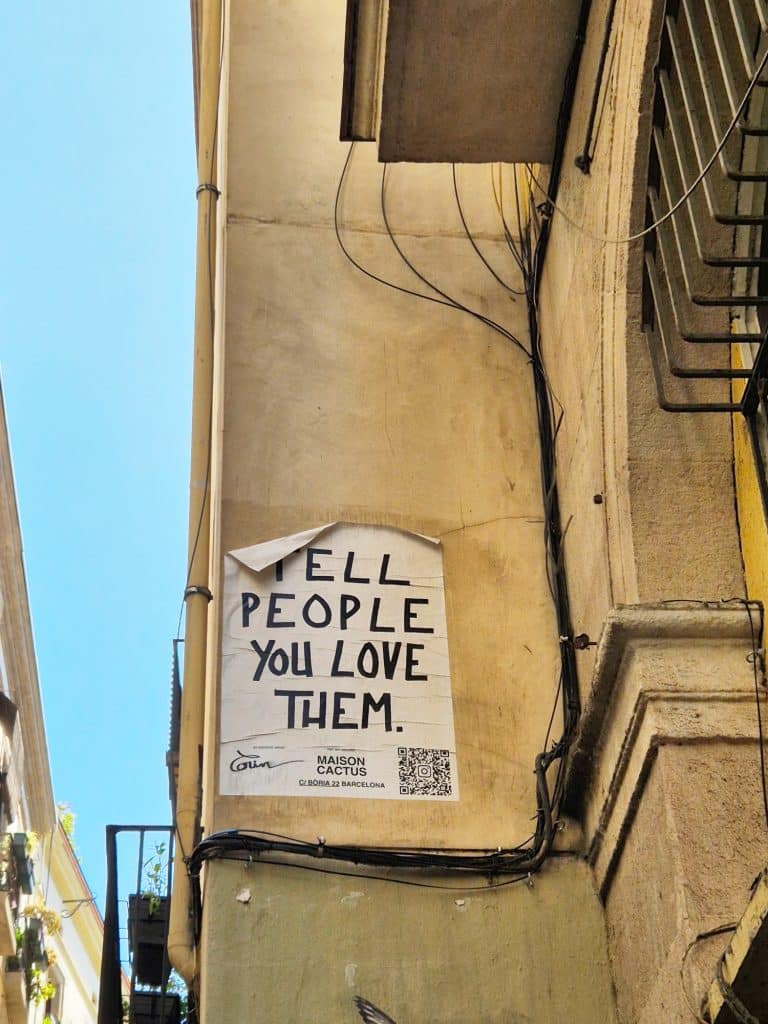
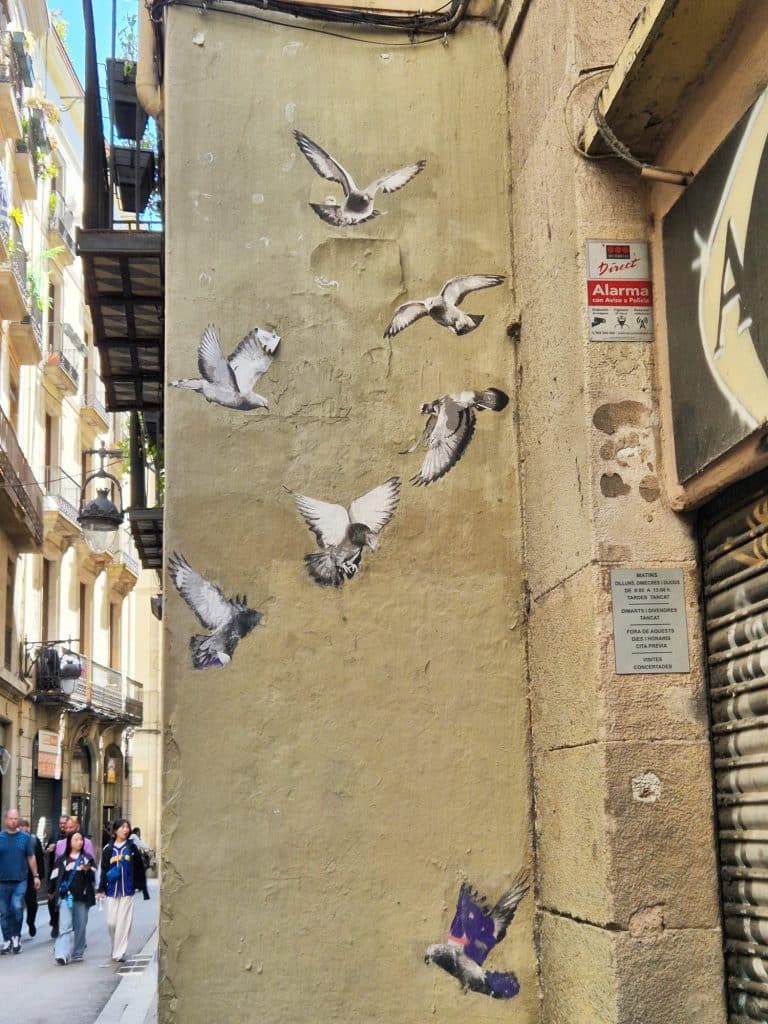
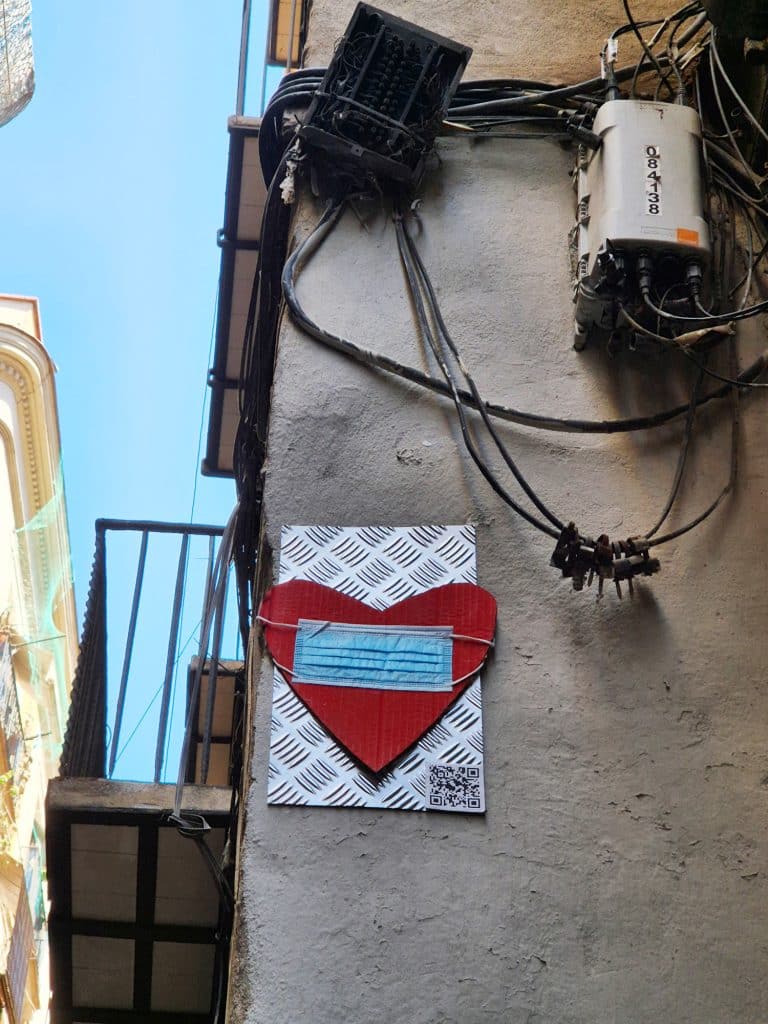
It was once the street art capital of Europe until the increase in tourism required the city of Barcelona to “clean up”. Since 2006, the city issues fines for street art and there is a special cleaning unit that cleans walls that have been painted on illegally. This leads to two phenomena that are significant for street art in Barcelona: the overwhelming number of installations (instead of paintings) and the predominant use of private spaces, mainly store shutters for mural art.
Overall, you could say that street art in Barcelona is happy, bright, colourful, naïve and almost childlike.
Shutter art in Barcelona
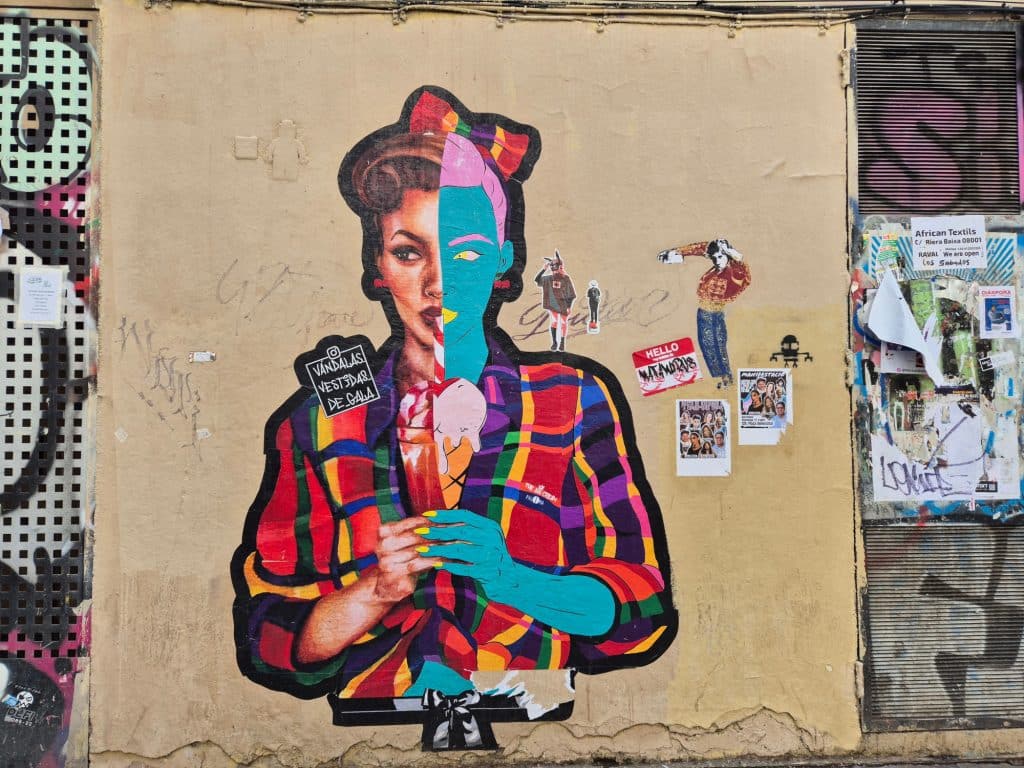
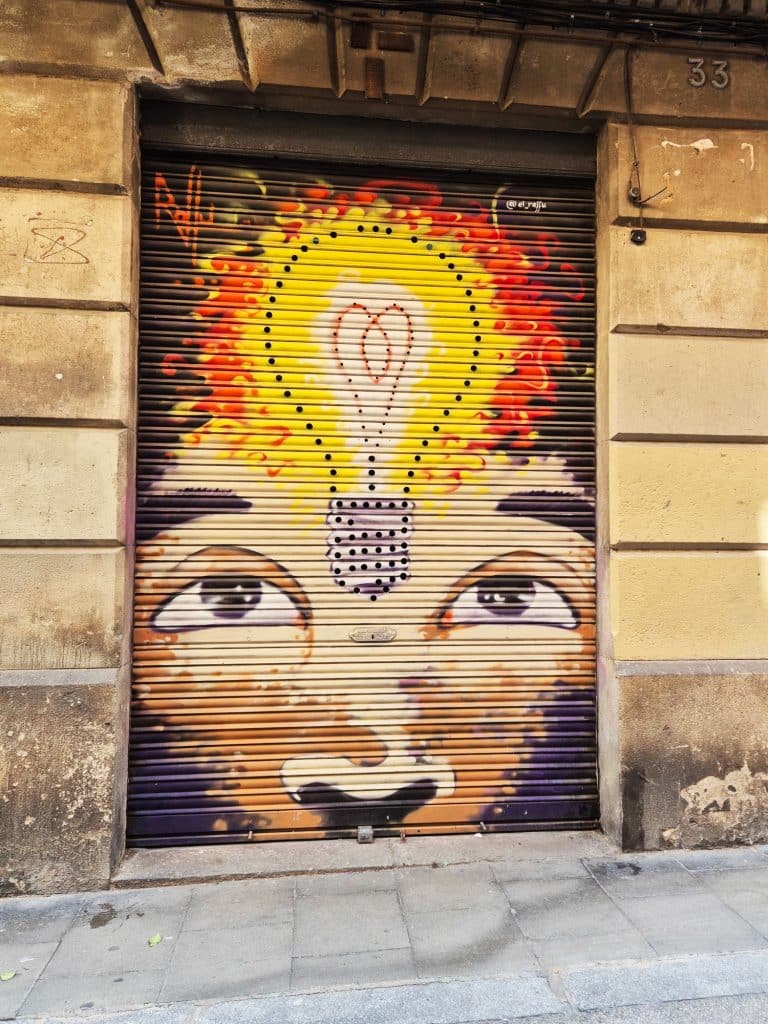
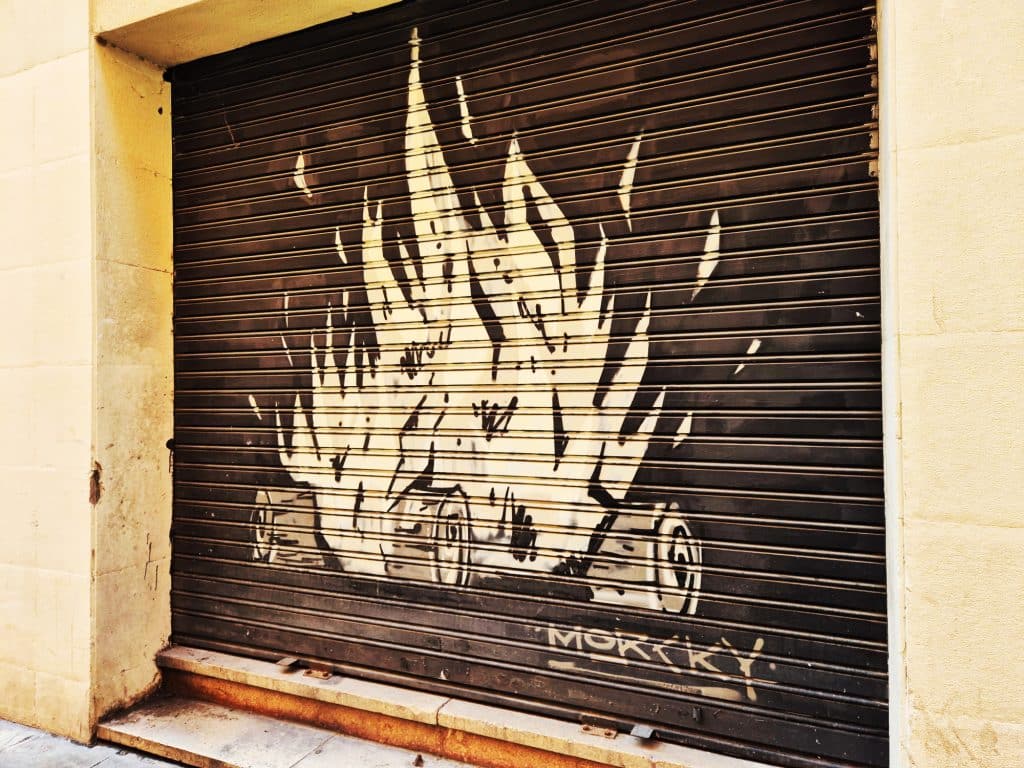
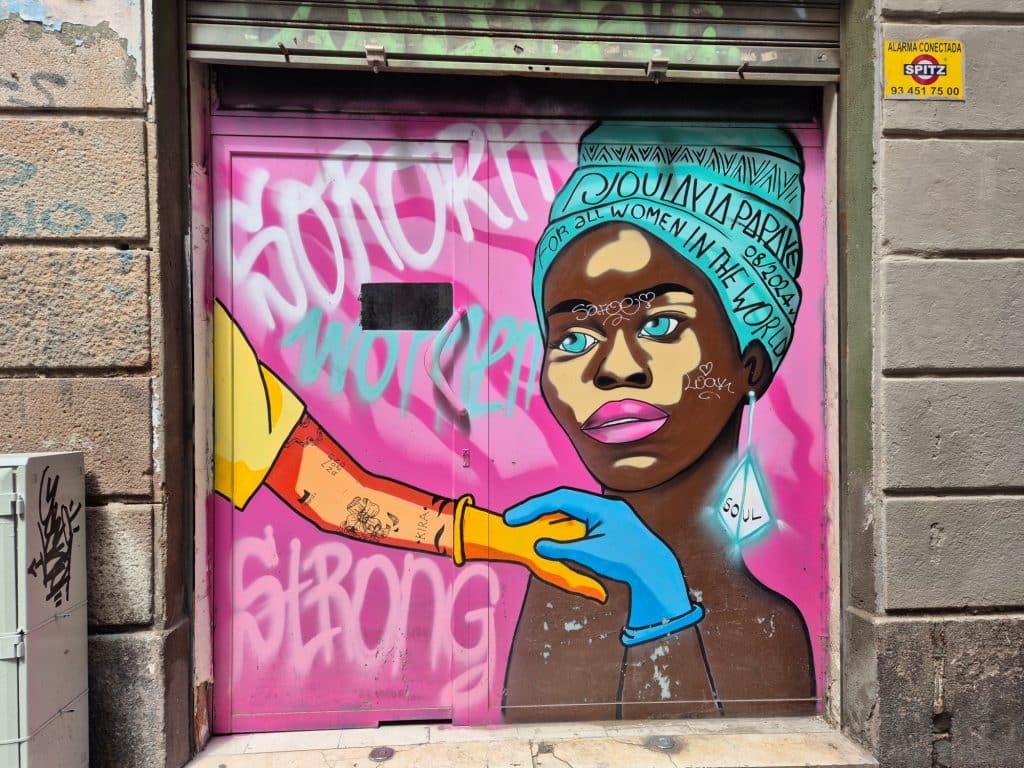
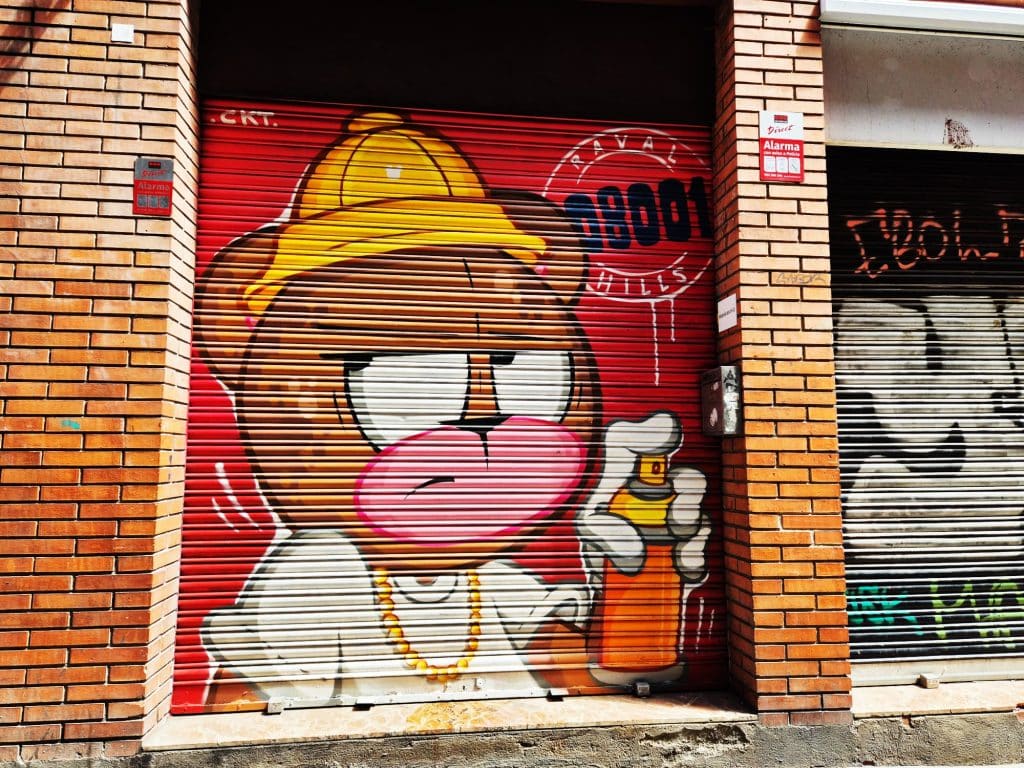
Art on public walls is prohibited in Barcelona and such walls are cleaned up quickly after the appearance of murals or graffiti. Private walls on the other hand are the responsibility of the owner and less likely to be cleaned up. In the historic quarters of Barcelona (Raval, El Borne and the Gothic Quarter), the shops have shutters that are lowered after opening hours, the so-called “persianas” in Spanish. It has become a common thing to use these persianas as a canvas for murals. At the forefront is an artist called Lobizon who went from door to door in Raval to ask the shop owners for permission to paint their persianas. Almost every store you see in the area shows now a painting by Lobizon. Some of them reflect what the store is selling and could be seen as commercial, others are pure art. In that same area, just off La Rambla, you also find lots of vintage shops and bars.
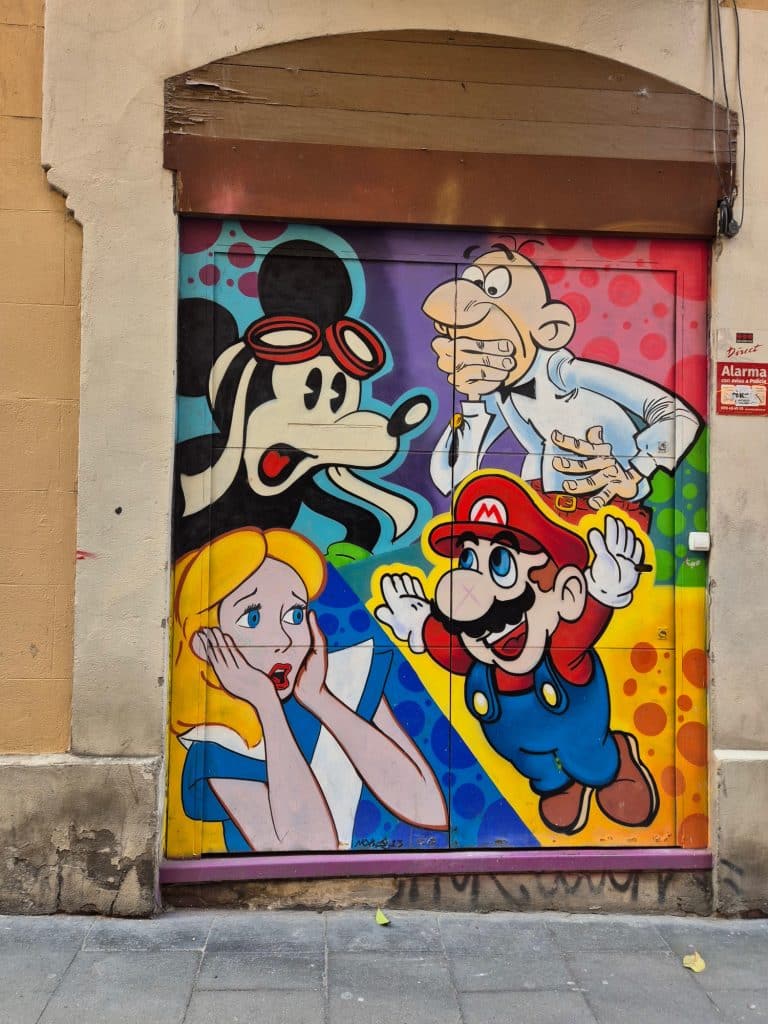
There is another area of Raval between the streets Carrer Nou de la Rambla and Carrer de l’Arc del Teatre that used to be rough and was frequented by drug addicts. It was the initiative of one specific street artist, Morcky, that turned things around in this quarter. He started a movement to paint the persianas in this part too. It is now an area of interest for tourists and no longer considered a rough area. Most of the art is by Morcky and you find other artists represented as well.
Installations in the streets
During her visit, Charlie did see the special cleaning brigade that roams the streets to remove any illegal art. It is not only a story to scare artists away. Instead, the artists of Barcelona discovered alternative ways to present their art in the streets that is less likely to be removed: installations.
Me Lata el Corazón
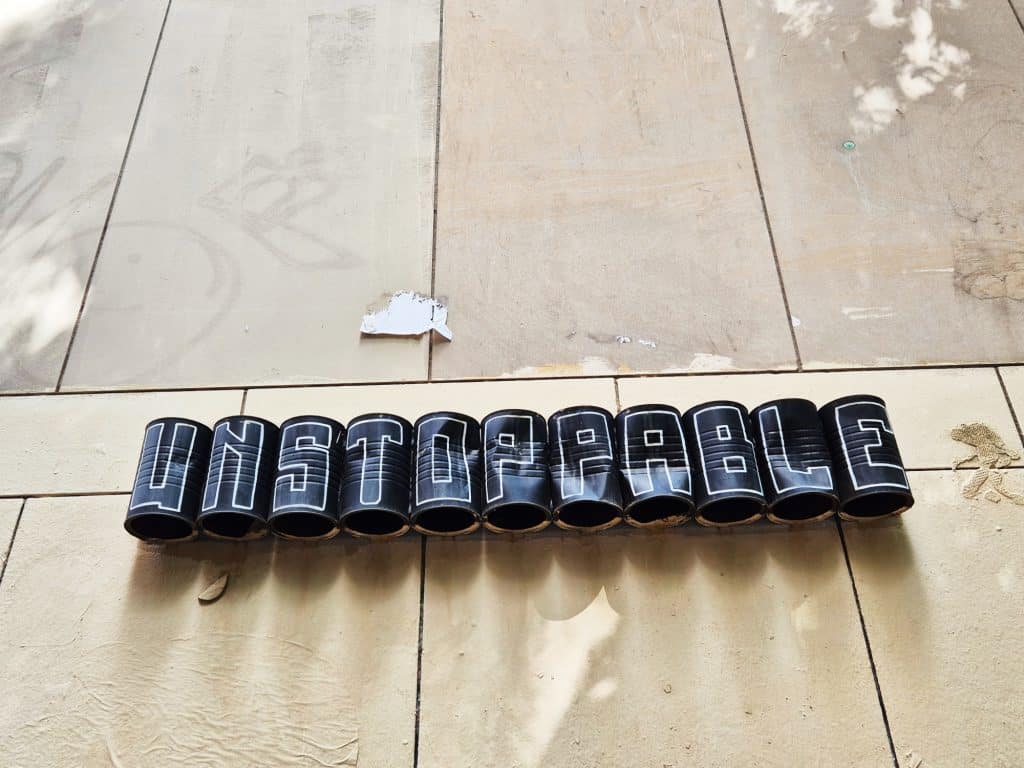
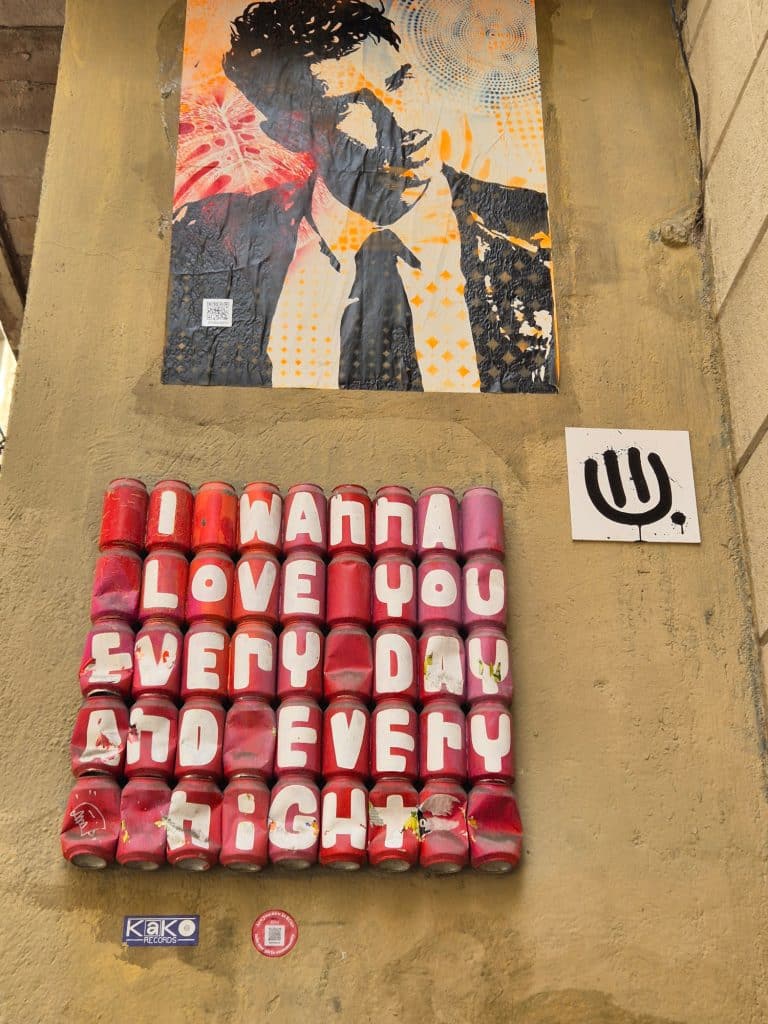
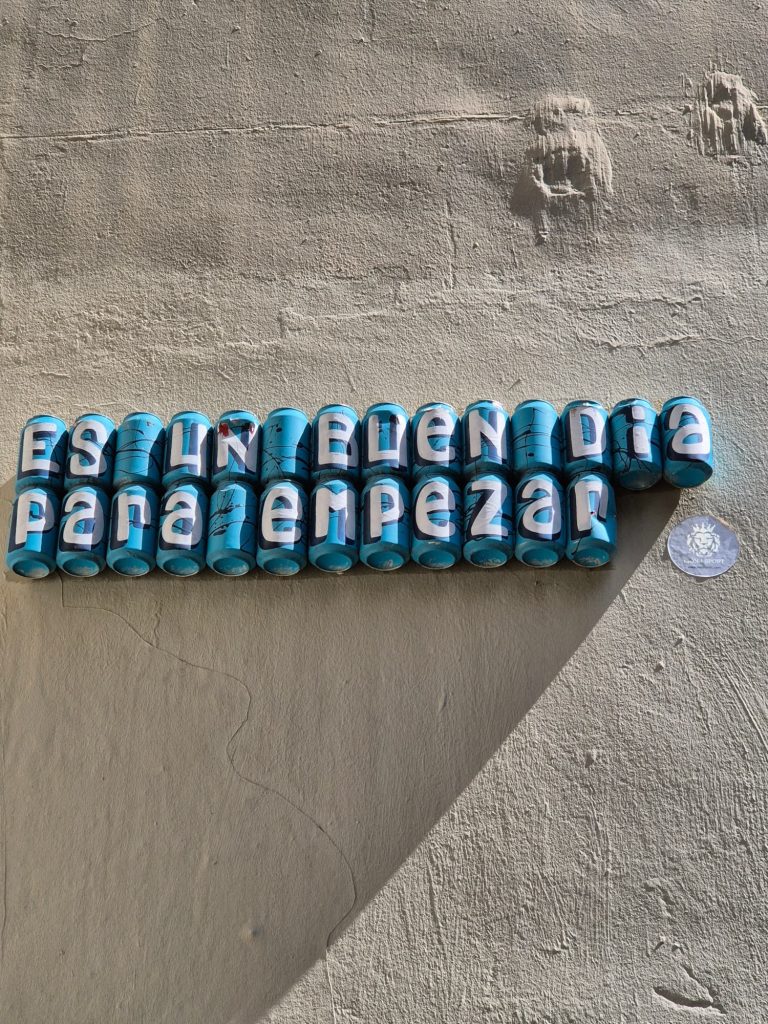
The installations you are likely to spot the most are by an artist called “me lata el corazón”. The Spanish word “lata” means “can” in English and that’s what the art is made of. Old cans are painted in a colour and given a letter each. The installation is not only a way to upcycle old cans but also contains a message. Charlie has seen them in English, Spanish and Catalan. It started as love messages from the artist to a girl and ended in them doing art together to send positivity out to the people in Barcelona.
Tom Brikx
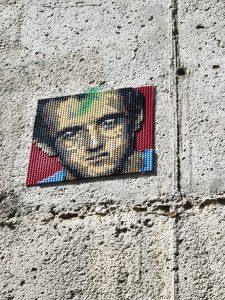
Another installation you can easily spot in Barcelona is the art made of Lego bricks. There is one next to the Keith Haring mural at the MACBA, one of Picasso at the Picasso Museum and another one of Freddie Mercury. The latter was a tribute to the 1992 Olympic Games and is like so many other elements of the event at Montjuïc.
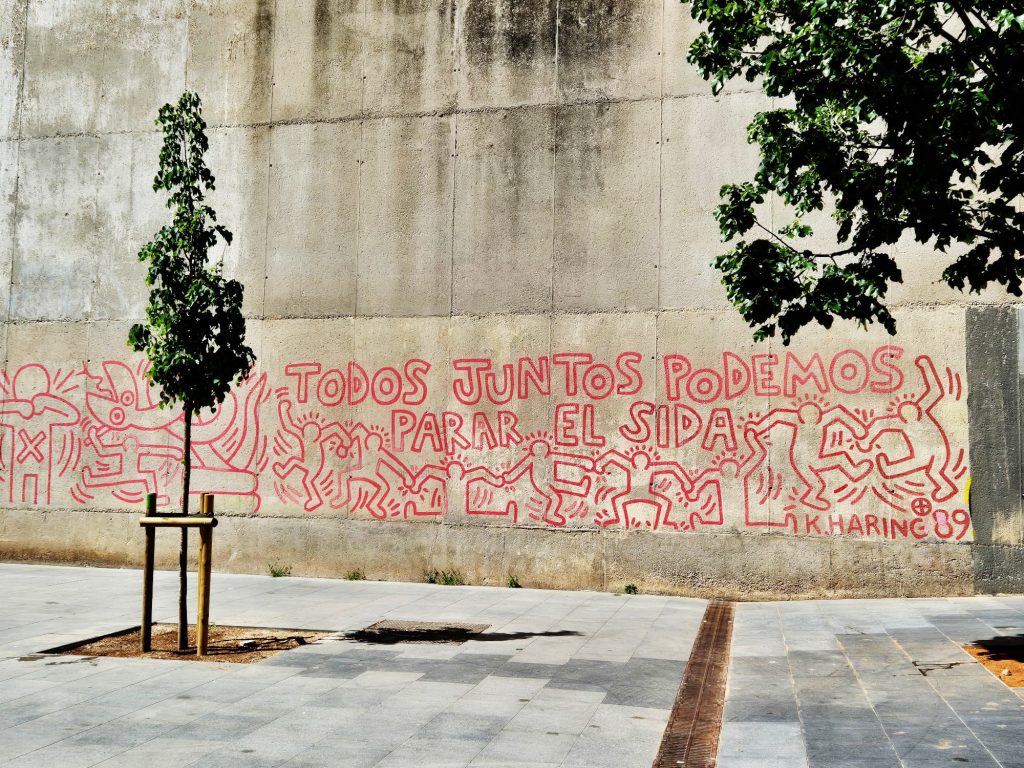
The mural by Keith Haring that stands for the fight against AIDS at the MACBA is not the original, but a reconstruction of the iconic piece.
Franksy
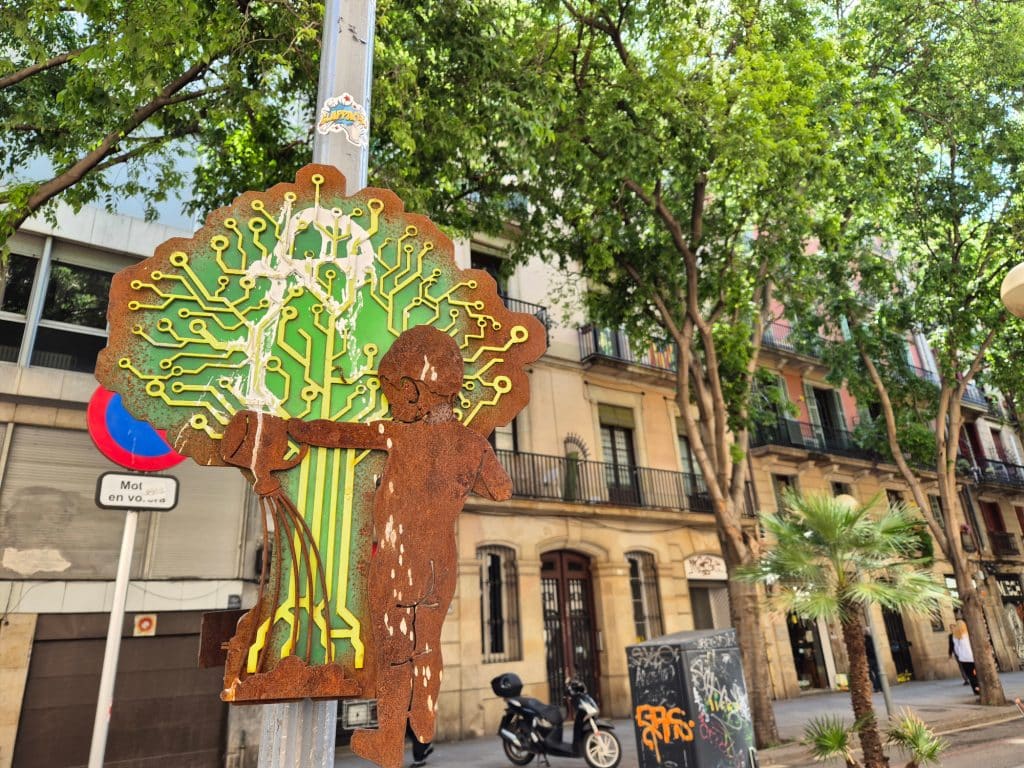
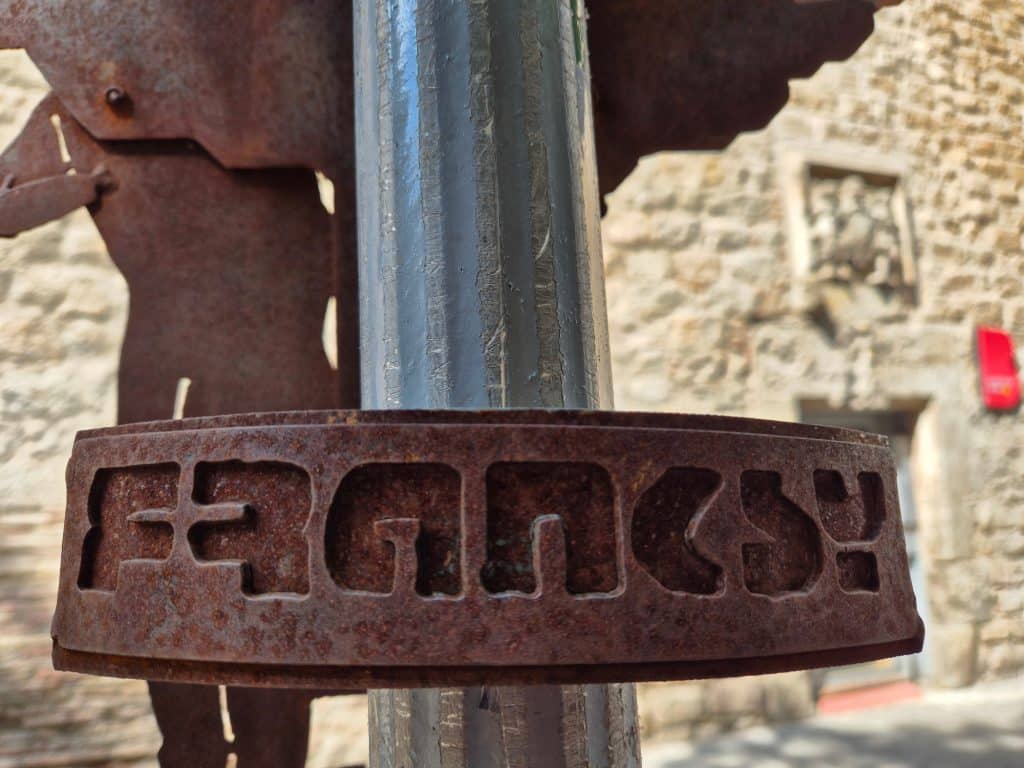
It is not a typo, the name of this artist is Franksy – not to be confused with the popular Banksy, however inspired by him. Franksy focuses on installations that represent a critical view on technology and the impact on society.
Art is trash
Street art is not meant to last and sends a message. This artist takes this definition to another level by creating art out of trash that he finds in the streets. You must be quick to see it because it’s usually gone within a few hours. He tends to post pictures on his Instagram to make it last a little longer. You can also see some of his art at the Base Elements gallery in Barcelona.
Other artists you will notice in Barcelona
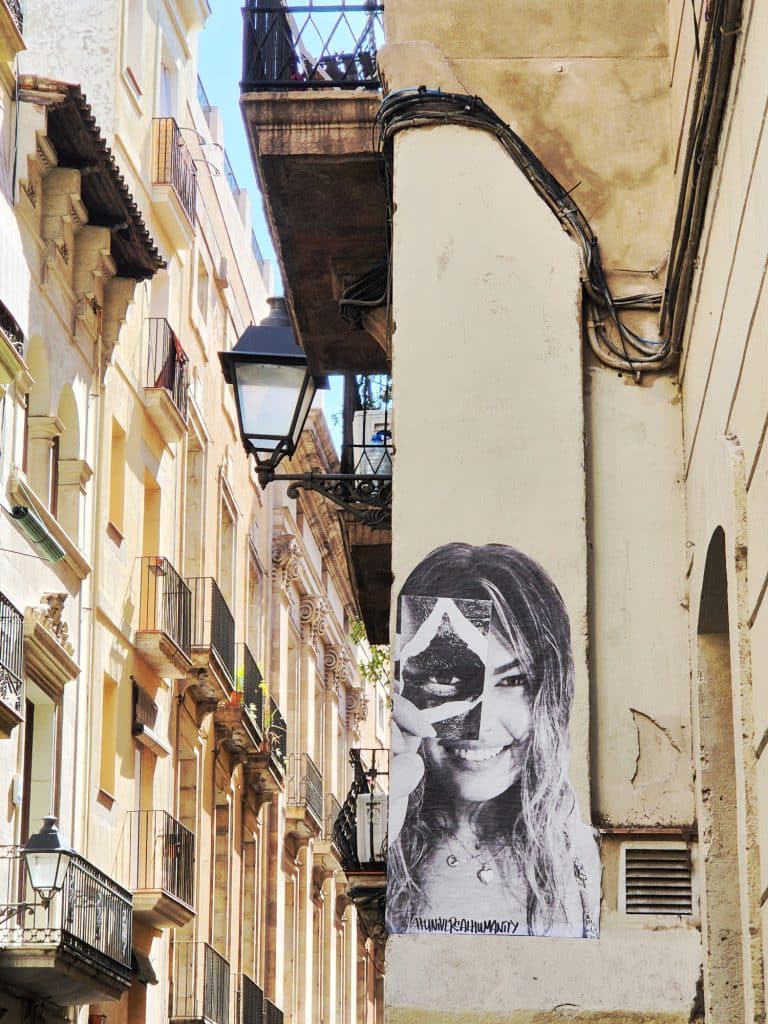
There is one artist whose work Charlie kept on seeing everywhere in Barcelona: paste ups by COLP ONE. It is usually a face and a dog. You see it once; you’ll see it again.
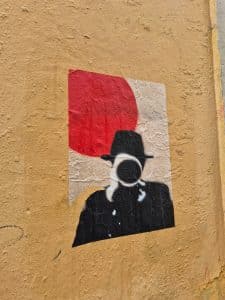
Another one that resonated with Charlie was a small painting of somebody holding a camera. “The photographer was here” is done by a photographer who likes to take pictures of street art and who got inspired to add his own signature to the walls.
Legal walls in Barcelona
Street art is mostly prohibited in Barcelona, however, there is a glimmer of hope for the arts scene: legal walls exist. One might argue now that it is no longer street art if it was legal. However, if you simply want to admire colourful murals and return a week later to find a different set of paintings, check out Plaça de Terenci Moix near the MACBA and Parque de les Tres Xemeneies.
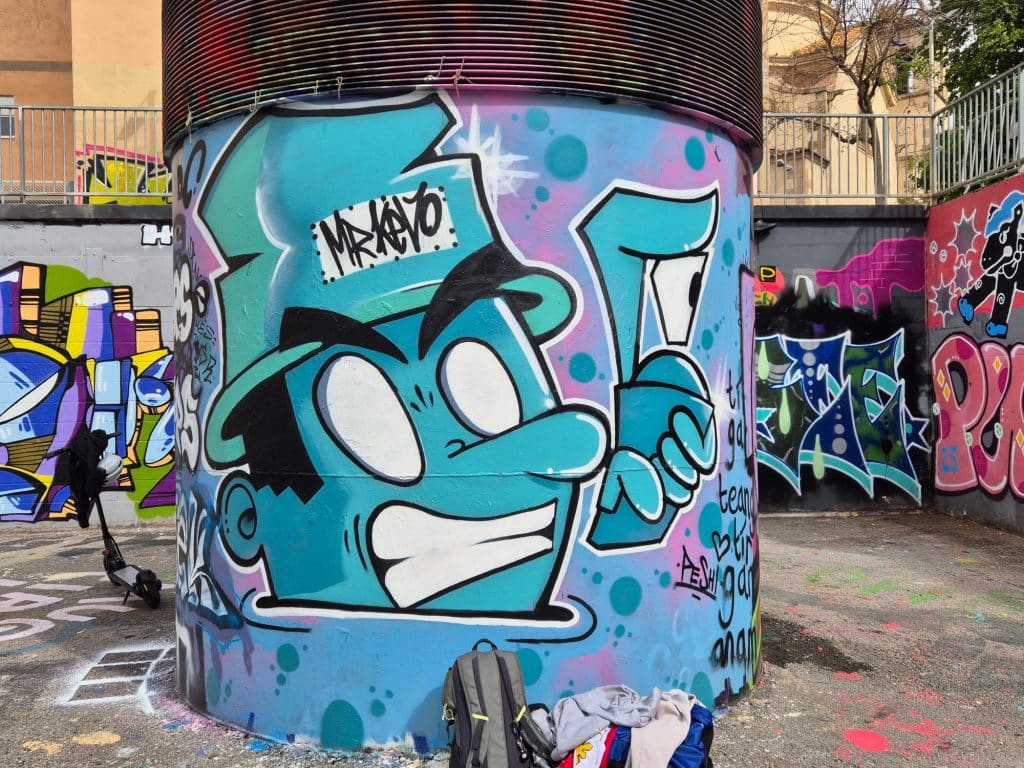
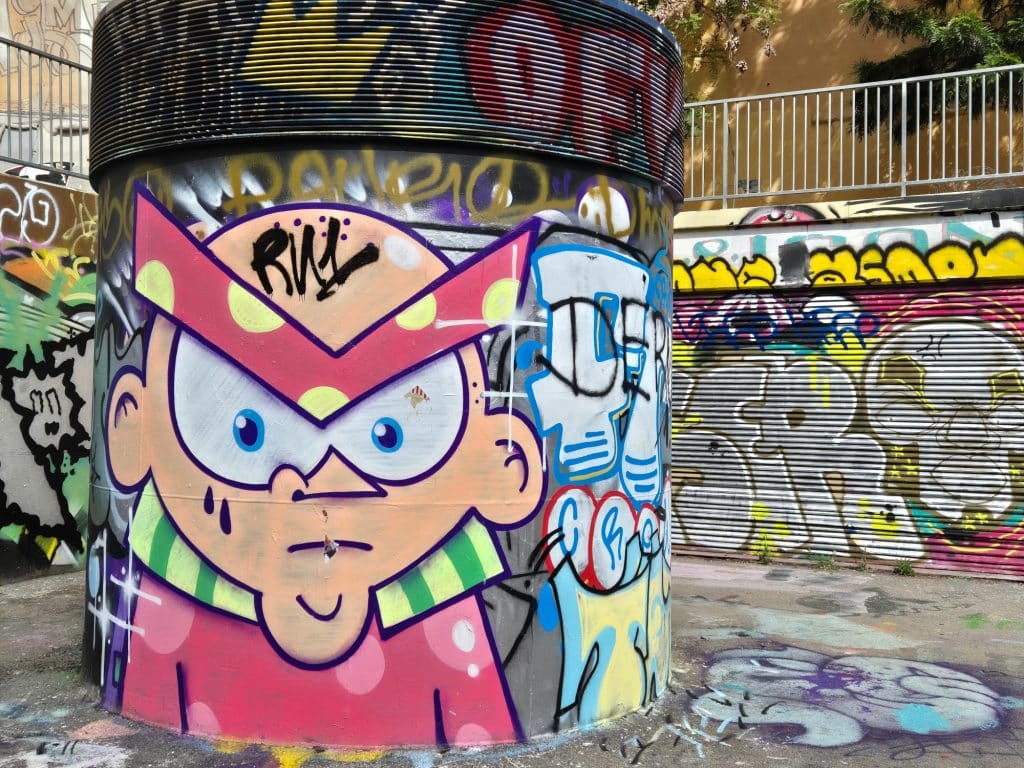
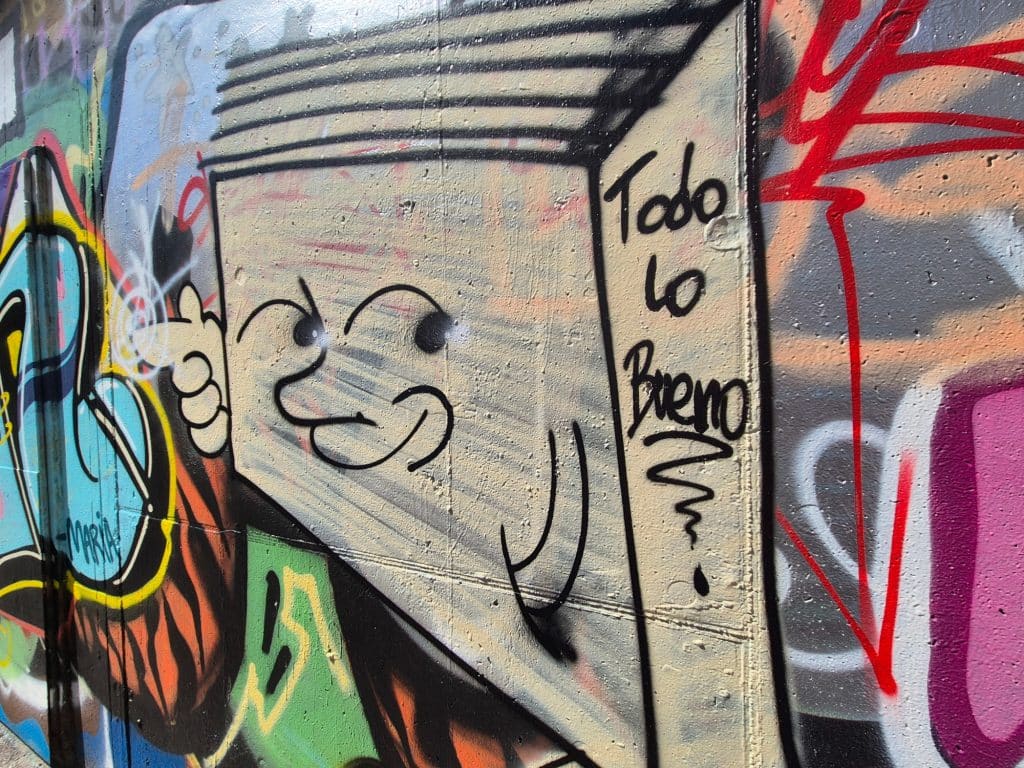
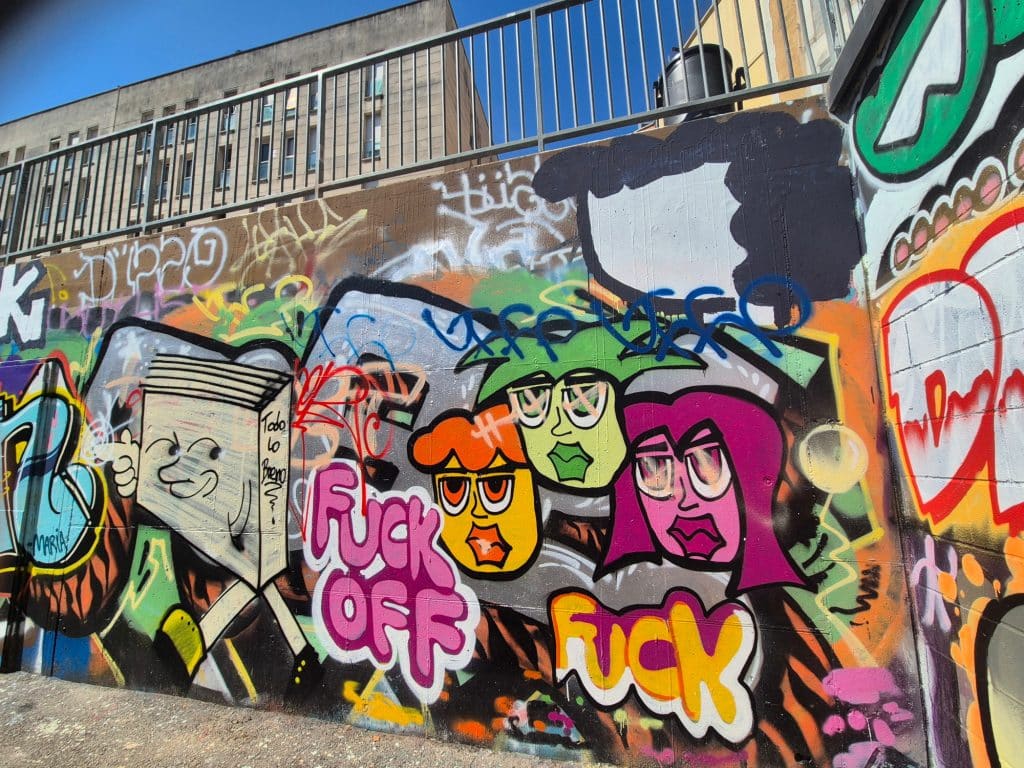
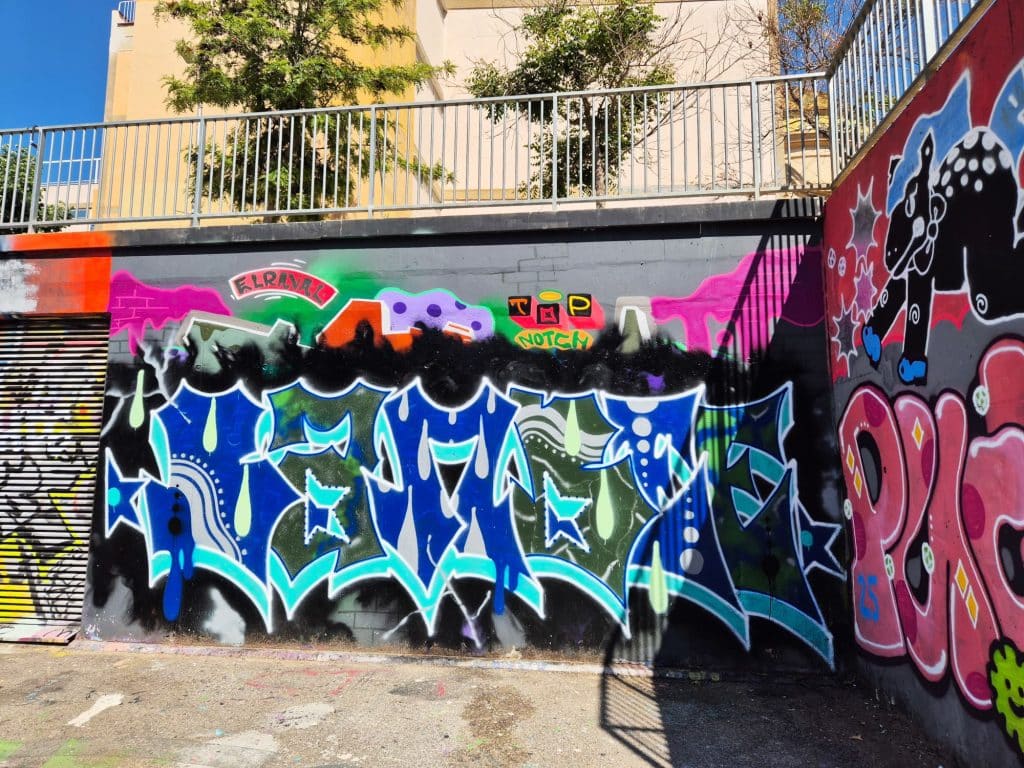
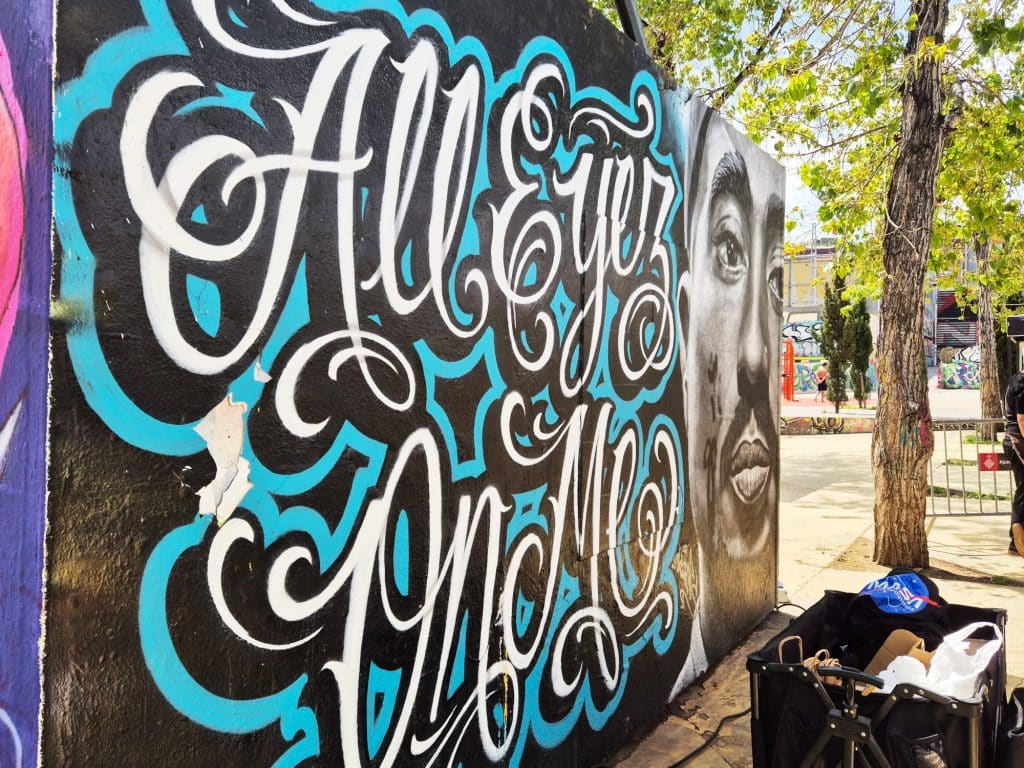
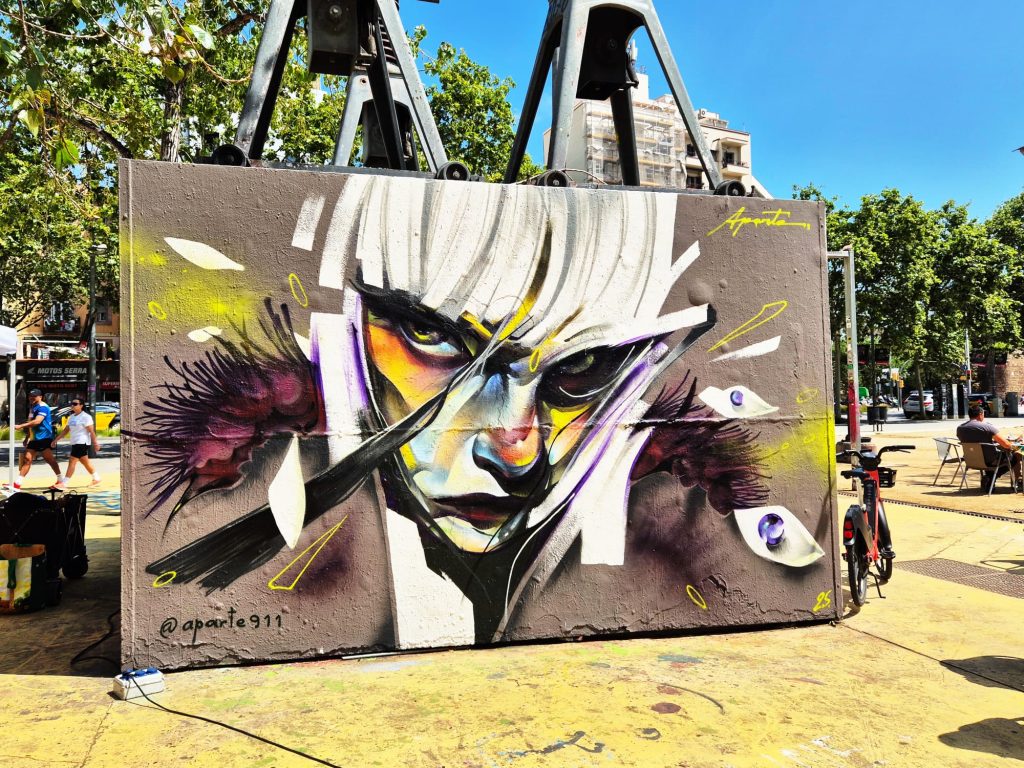
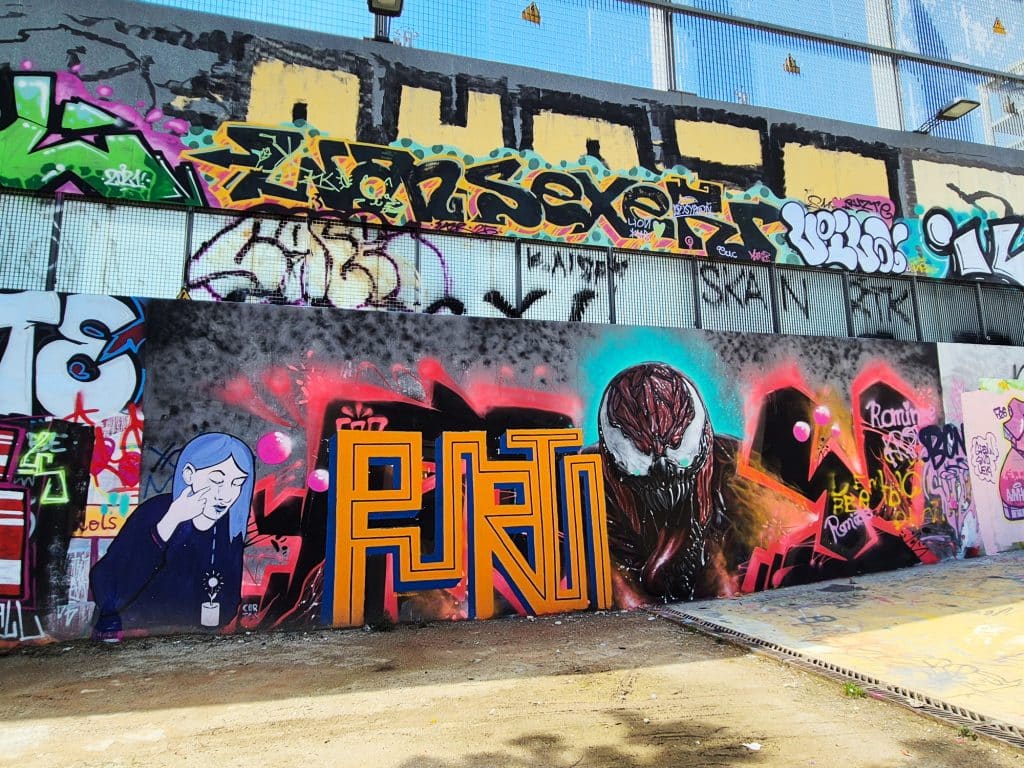
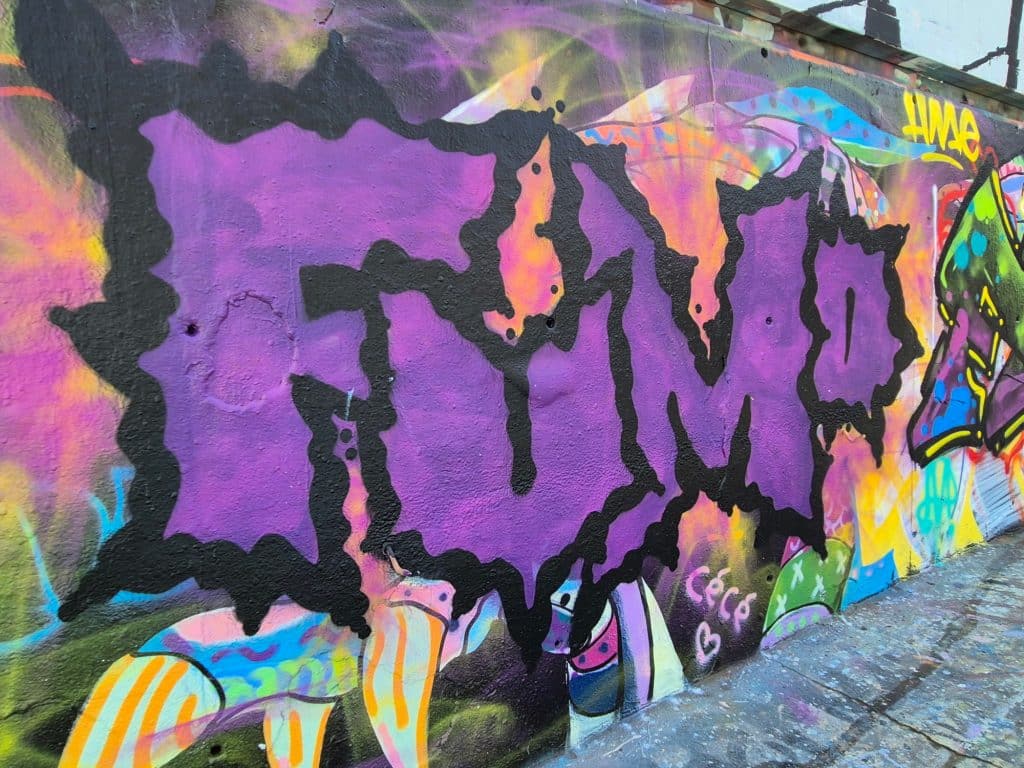
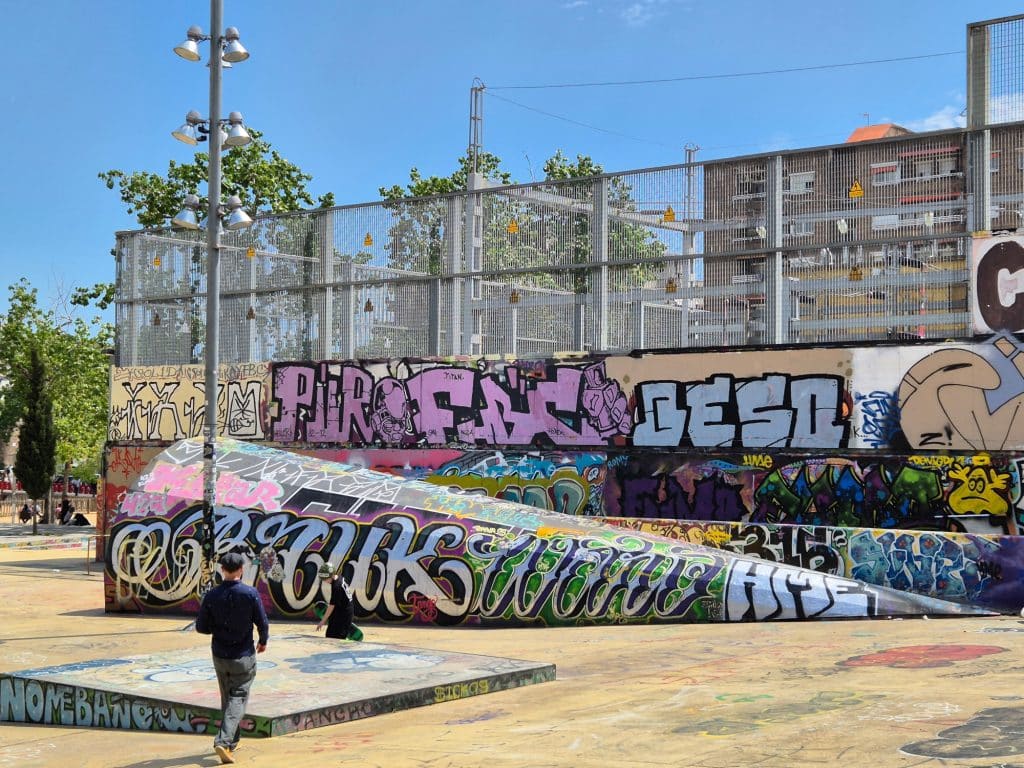
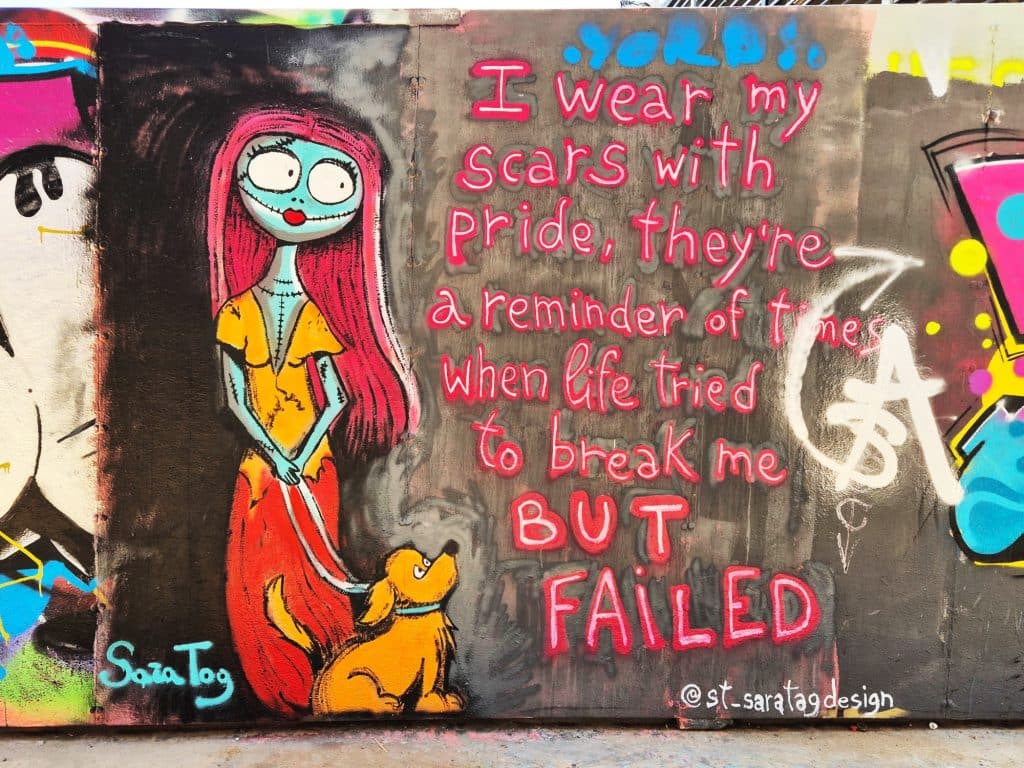
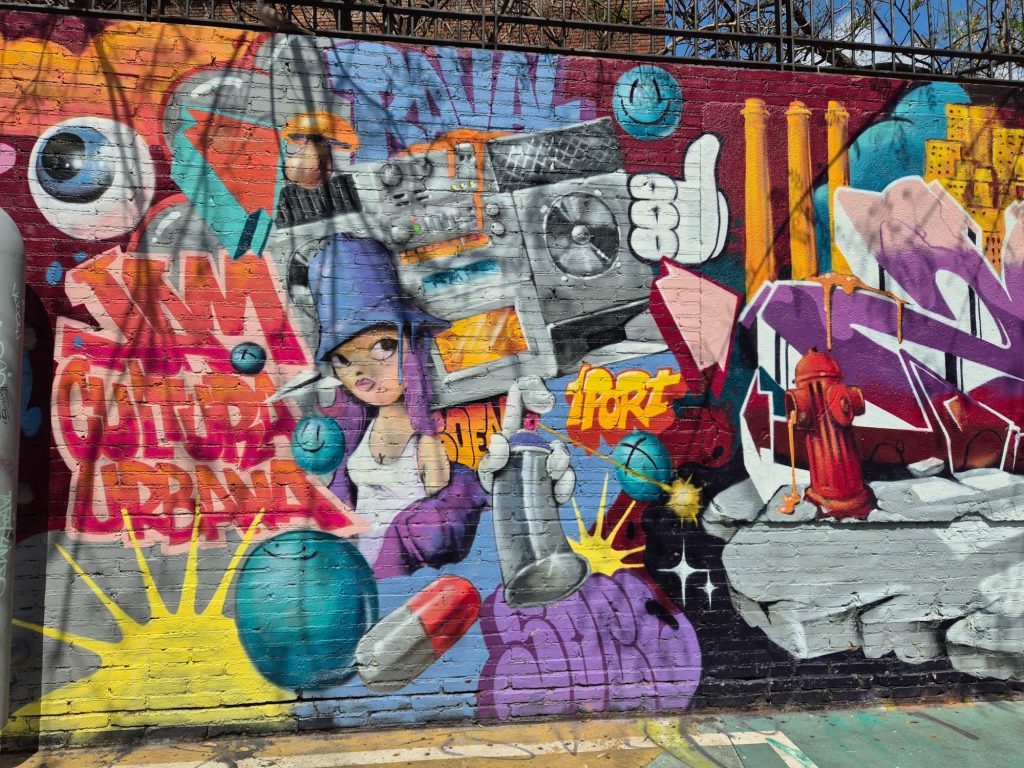
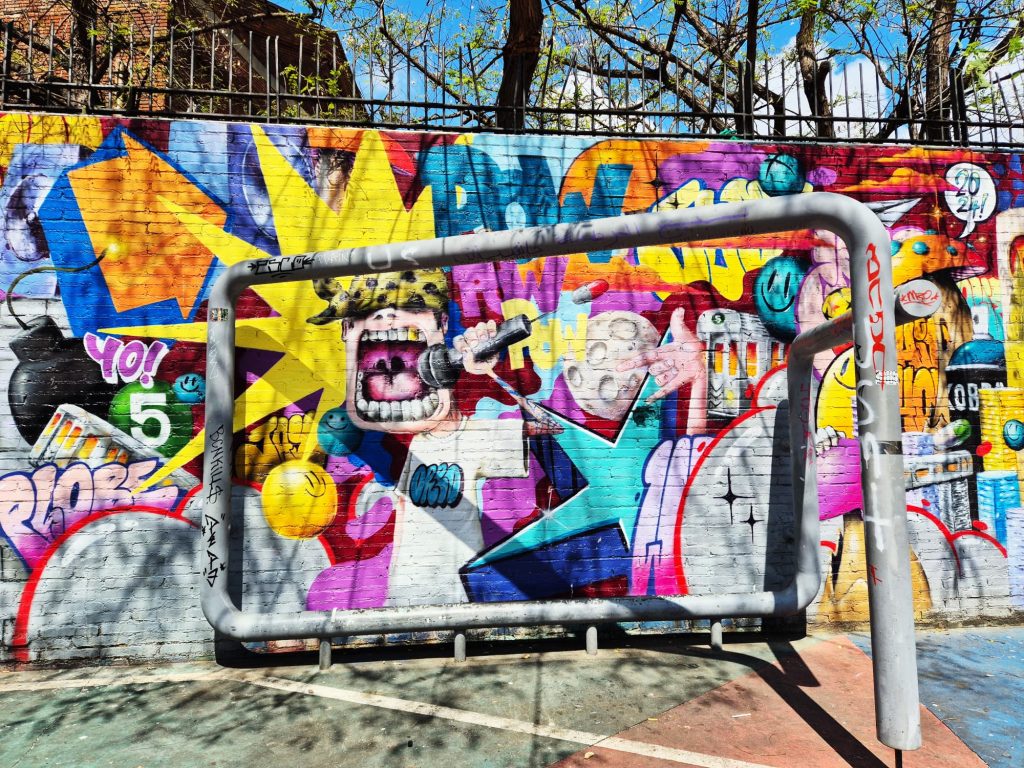
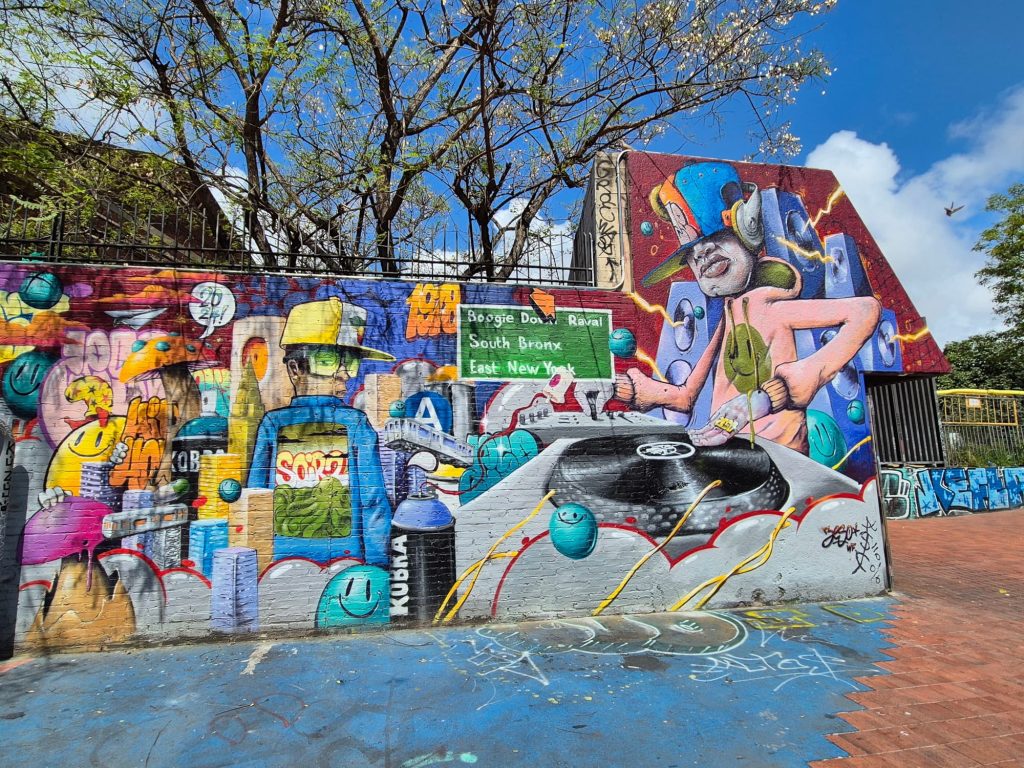
At Parque de les Tres Xemeneies is a food market every Saturday and not far from there is another skatepark (at Plaça de Raquel Meller) where a street art festival was held in the past. The murals there are still in good shape and worth taking a stroll. They’re inspired by the style of the street art in New York in the early days.
A special commemoration in Raval
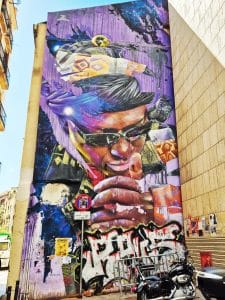
There are two places in Raval that are dedicated to a person. One of them is the mural by Conse in the street Carrer de les Ramellers. It is a a giant mural that shows Makha Diop who used to be the face for all immigrants from Senegal.
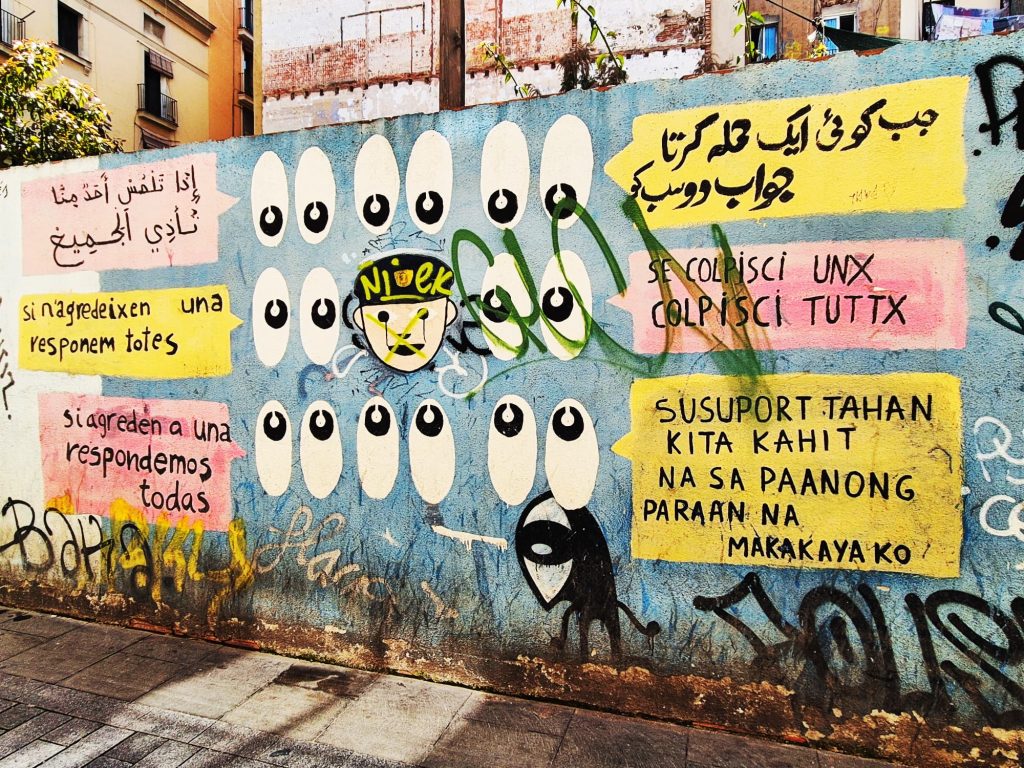
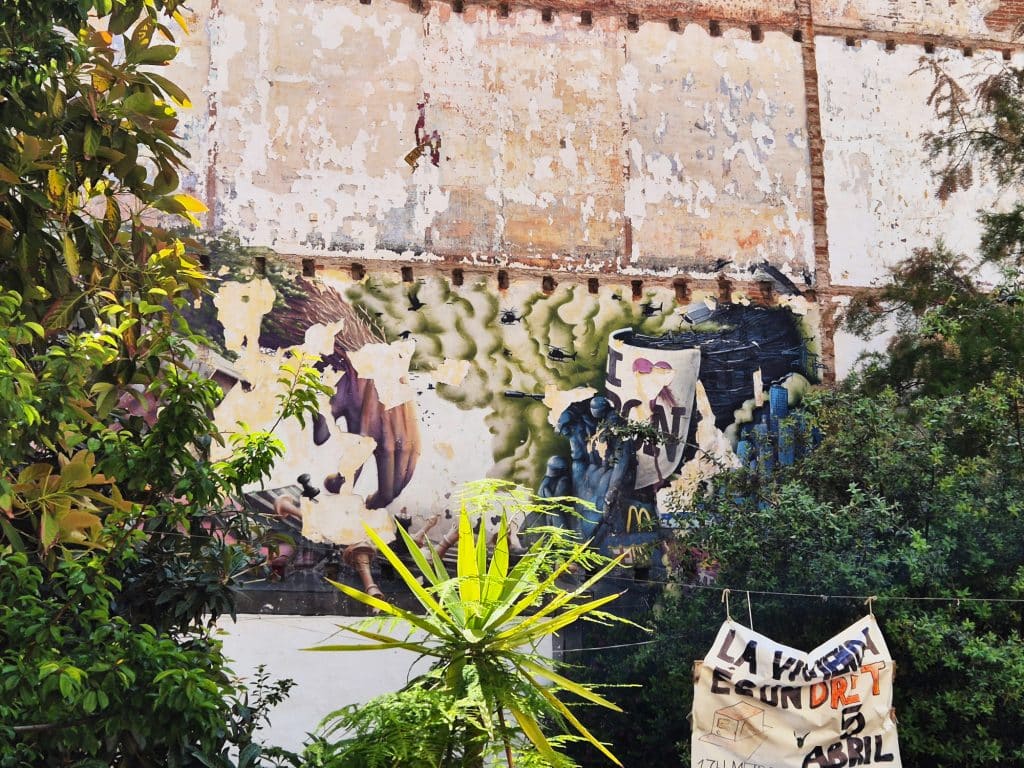
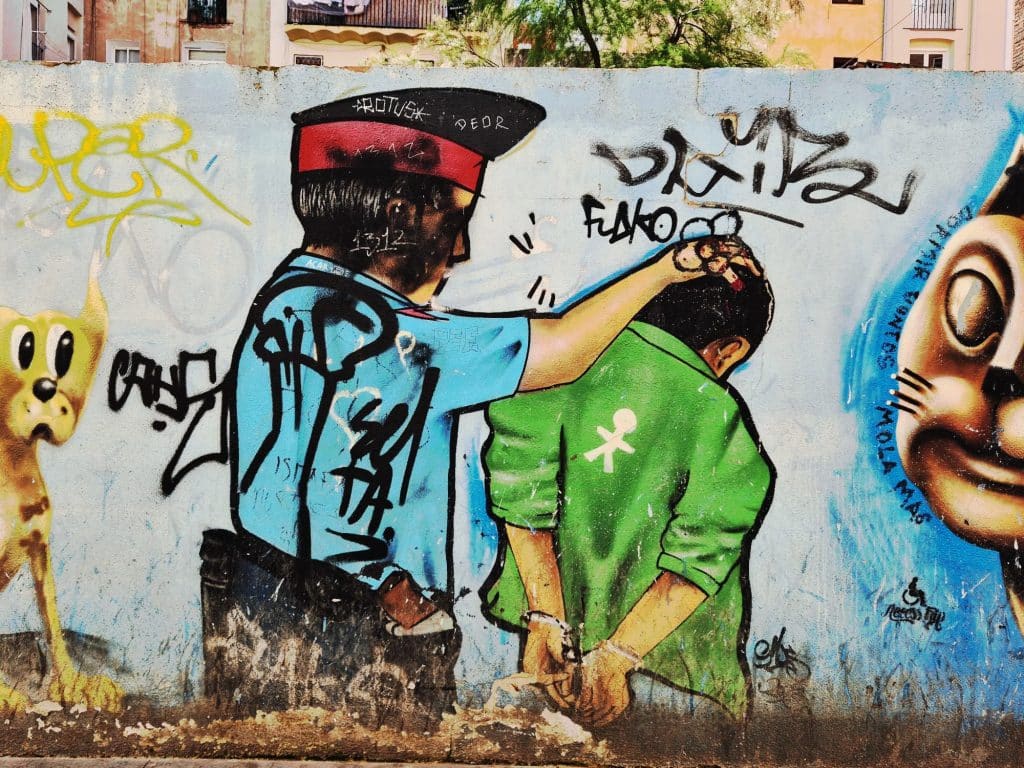
The other is a wall of multiple pieces of art that commemorate the death of Juan Andrés Benítez by the police. It is in Carrer de l’Aurora not far from the giant cat statue by Botero. The wall also commemorates other events that are related to human rights.
How to learn more about street art in Barcelona
The best way to find out more about the urban art in Barcelona is going there, seeing it yourself and taking one of the street art tours by Barcelonstreetstyletours.com Mike knows the street art scene very well and has a wealth of knowledge to share. You might find other street art tours on the usual booking platforms but stick with Mike. All the others might show you street are, but they don’t know all the stories behind it.
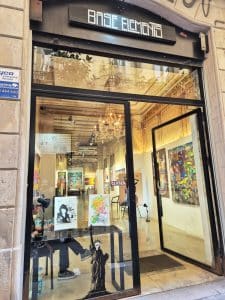
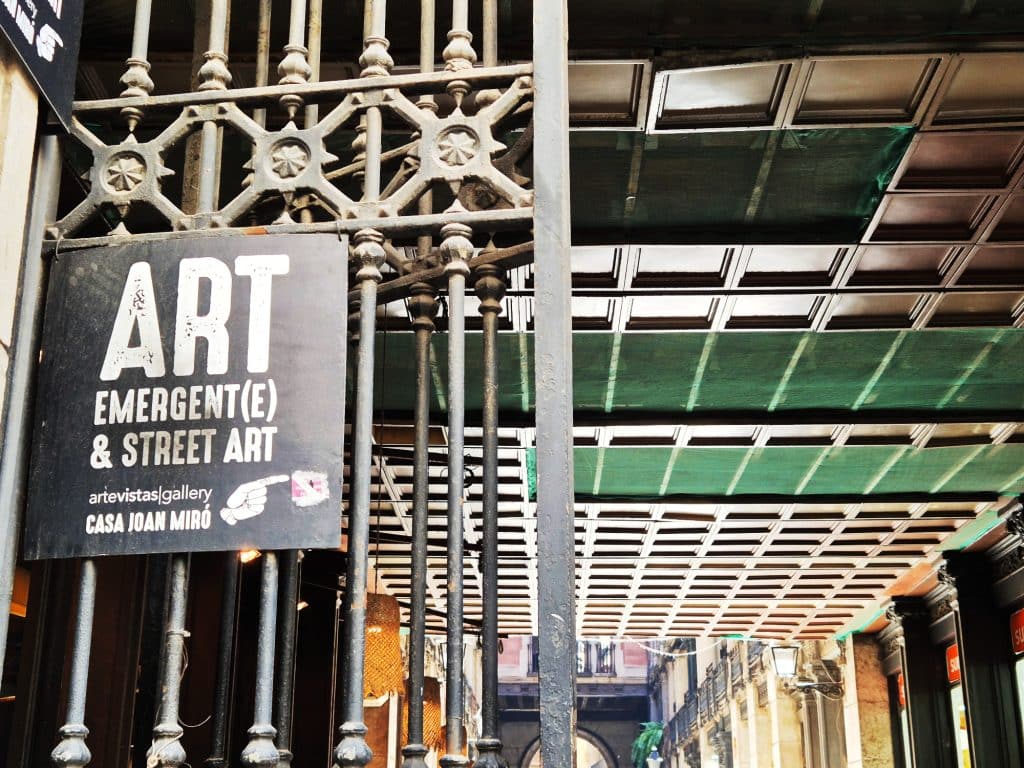
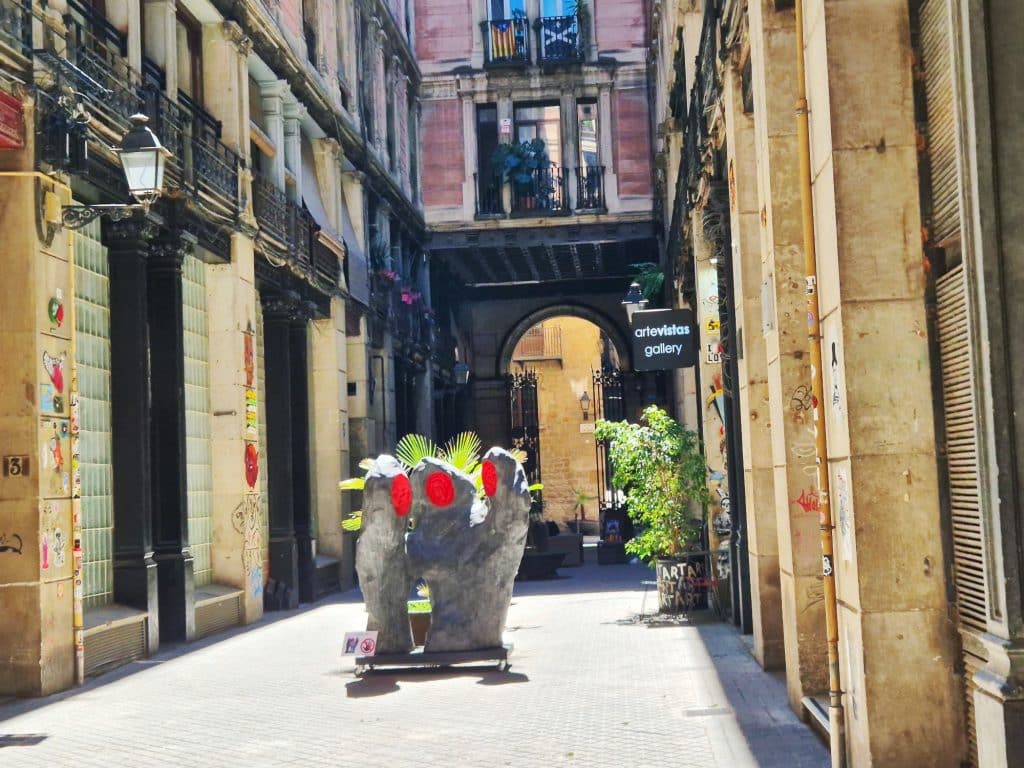
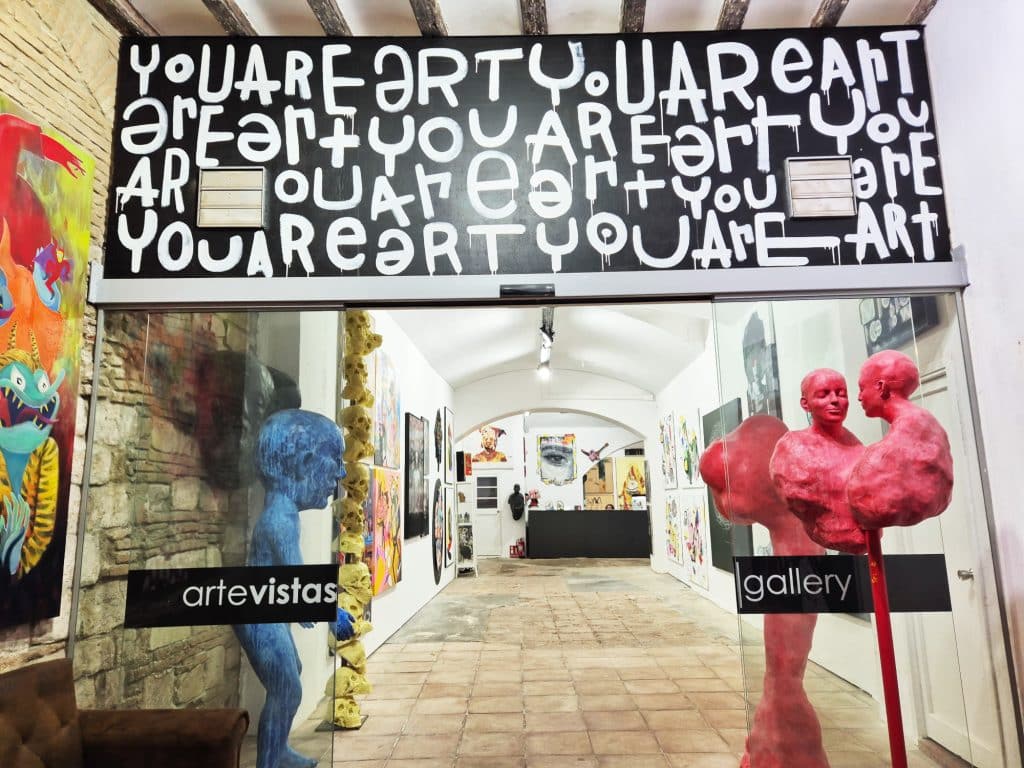
There are two galleries you should visit in the Gothic Quarter: Base Elements and Arte Vista. Both are selling art by street artists and will give you some additional information. You might also bump into some artists there.
If you can’t make it to Barcelona, maybe the documentary BCN Rise&Fall is an option. It tells the history of street art in Barcelona.