Melbourne
Street Art and Laneway Culture
Melbourne was founded in 1835 following a land treaty by a man called John Batman. How cool would it be if the city had also been named after him? Instead, it got its name after a British Prime Minister. The land treaty that made it all possible is questionable and a sign of all the things that came with the colonisation. For the indigenous, land was not something you could own, and they most likely didn’t understand what the treaty was about. However, the city of Melbourne was born.
Melbourne during the gold rush
The most important part of Melbourne’s history followed shortly after Victoria became a separate state in 1851. Gold had been discovered in the area and made the city one of the richest in the world. The gold rush brought wealth and growth into the city. A lot of the buildings are from that time and show grandeur and wealth, e.g. the Victorian Parliament.
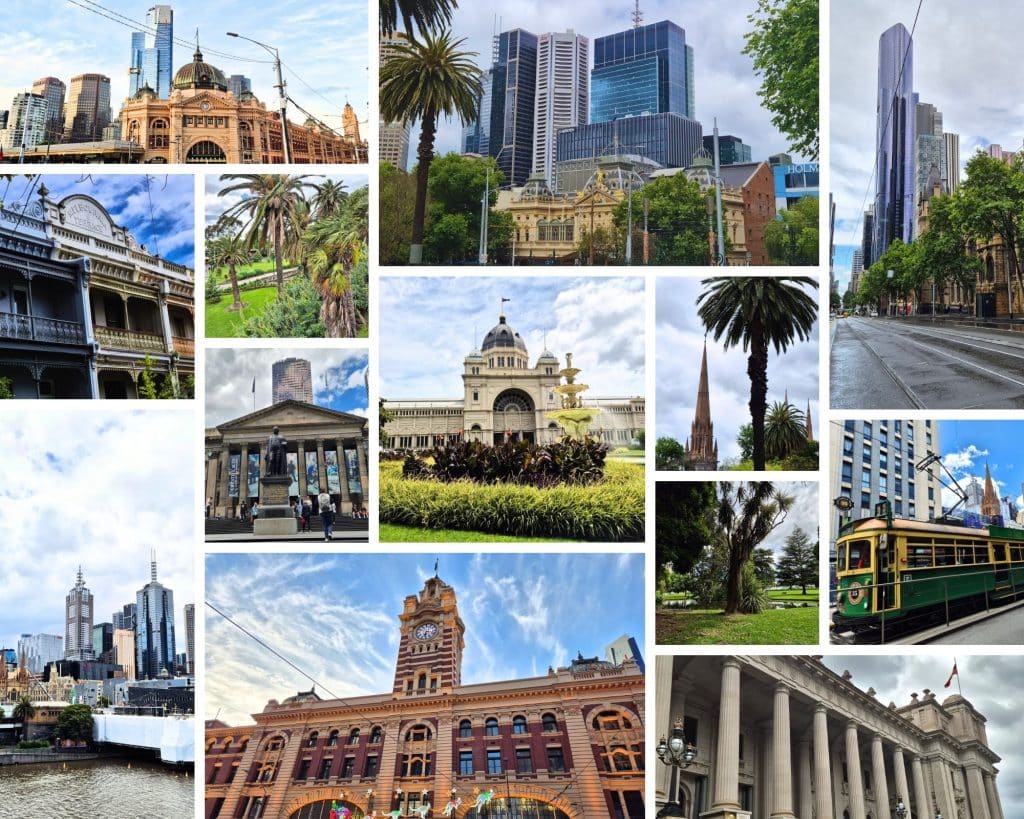
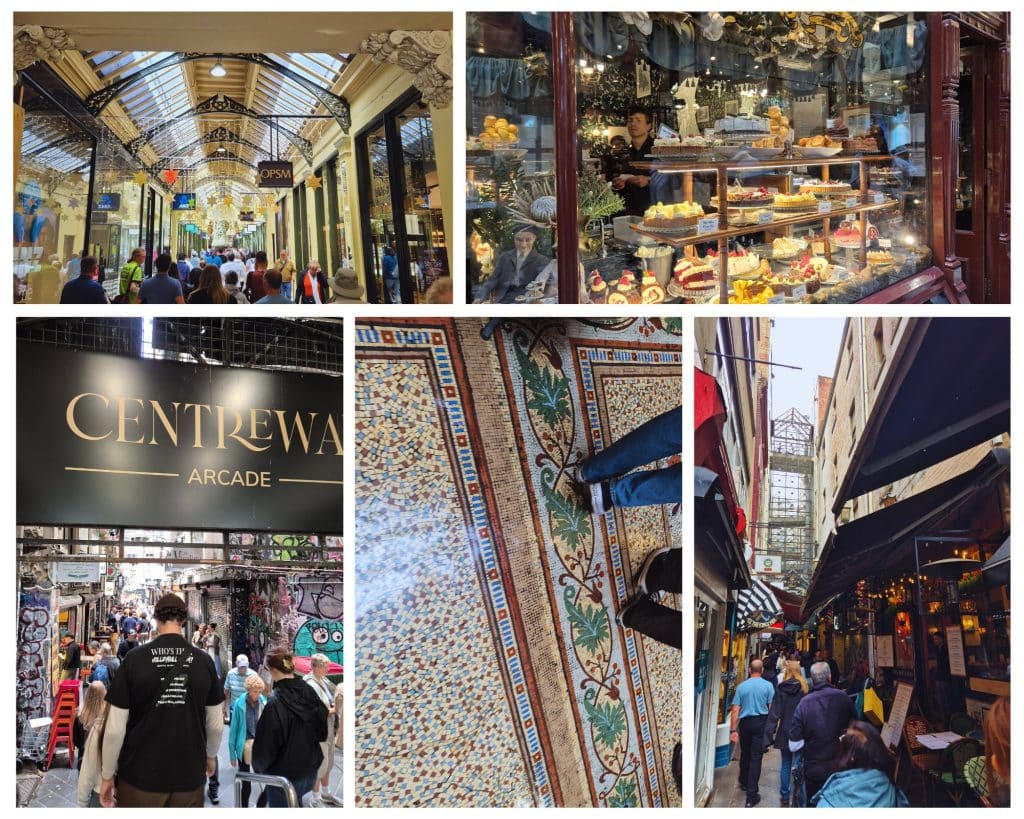
The architecture from that period shows European influence. The Royal Exhibition Building is French and Italian inspired and the first arcade, the Royal Arcade, was modelled after Covent Garden. Another arcade, the Block Arcade, reminded Charlie of Leadenhall Market in London. However, it was modelled after arcades in Milan, and the mosaic floor has been imported from Italy. The cafes in this arcade make it look like a copy of Paris.
Melbourne’s culture
There are approximately 250 laneways dotted around the city, and they gave Melbourne a special kind of culture that includes Laneway Bars, some of which are quite hidden, live music and street art.
Street Art in Melbourne
Melbourne is proud of its street art and there is a special process to get commissioned works approved. On a stroll around Melbourne, you can easily spot QR codes to report illegal art and vandalism. A rapid response team removes unauthorised works quickly. There are only a few places where street art is accepted without a special permission. One of them is Presgrave Place where you can see art installations on the walls formed by frames and paste ups. Therefore, most of the street art in Melbourne is commissioned which does not take away its uniqueness and special character.
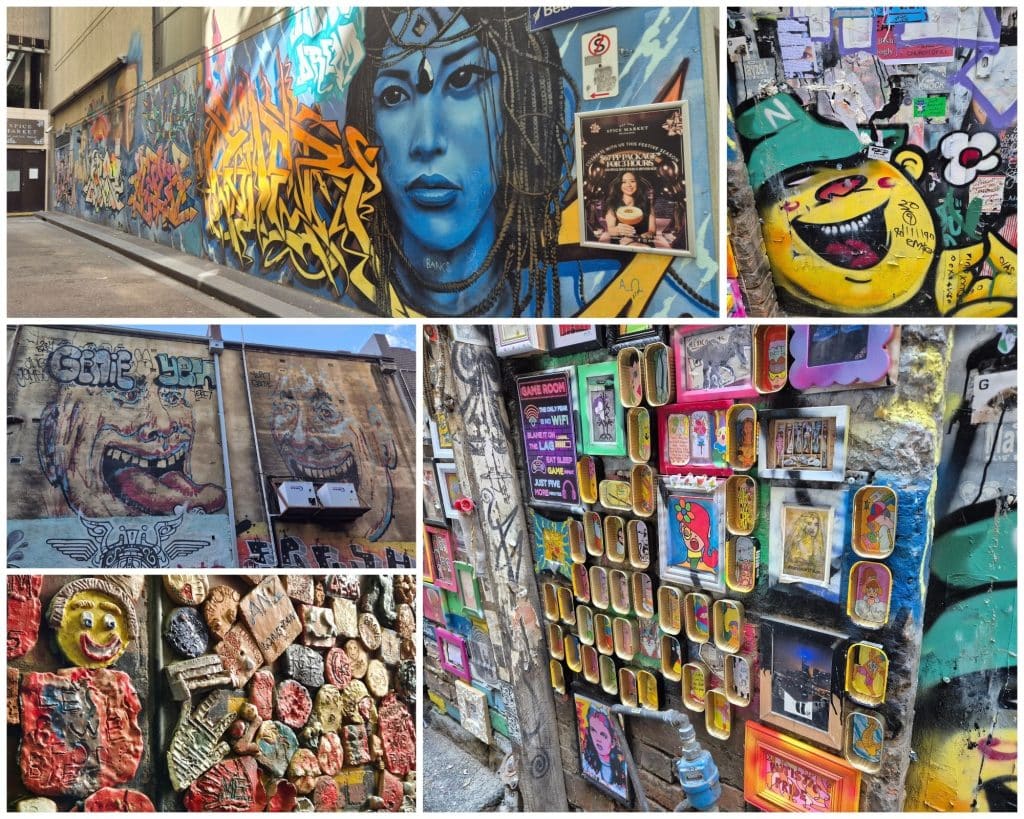
There was a special project in the 1990s with the goal to revive Melbournes city centre which was like a ghost town after office hours. Public art and incentives for legitimate businesses to open late were the main efforts. Once the regulations around the serving of alcohol had been changed, the laneway culture with plenty of bars was born.
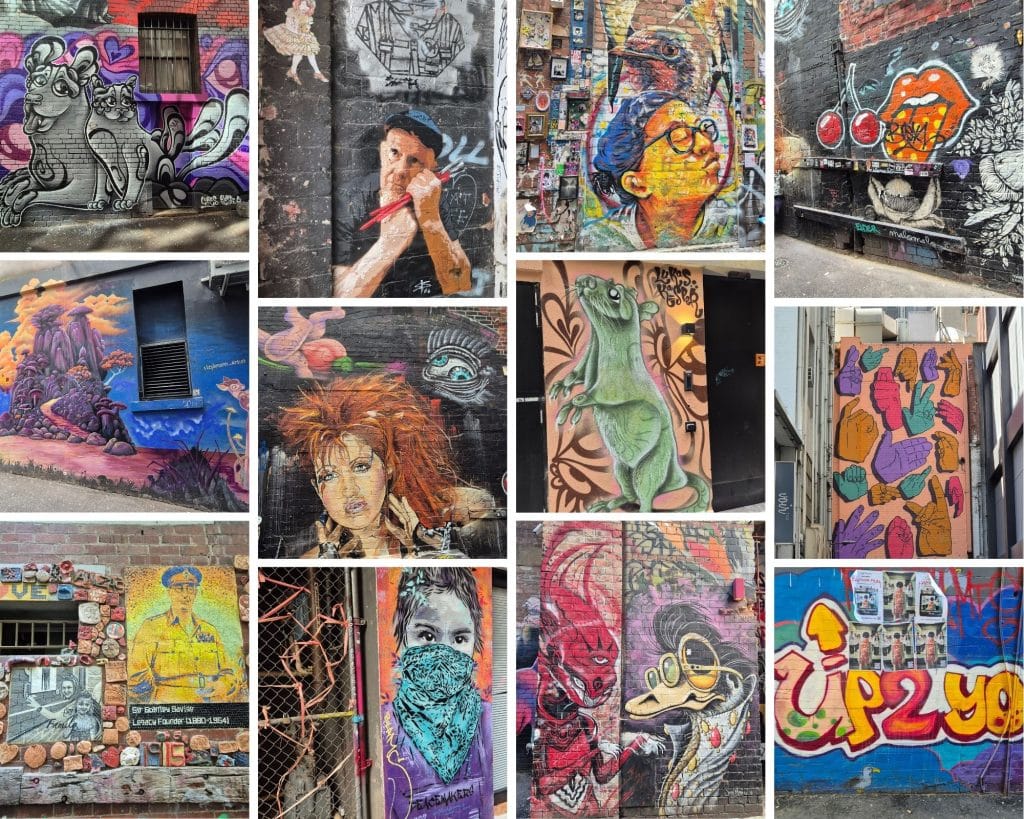
One of the most visible street art campaigns is Flash Forward. It involves giant murals that each represent a community. The one for the Japanese community even involves a light installation that required an electrician to support the artist. Another piece of the series is the Mural for the Deaf in Rainbow Alley.
A noticeable building for its art on the exterior wall is the so-called Legacy Building. The art was created by the children of fallen soldiers, the “Legacy Kids”. Other lanes that are worth checking out for their street art are Caledonian Lane and Hosier Lane.
Live music in Melbourne
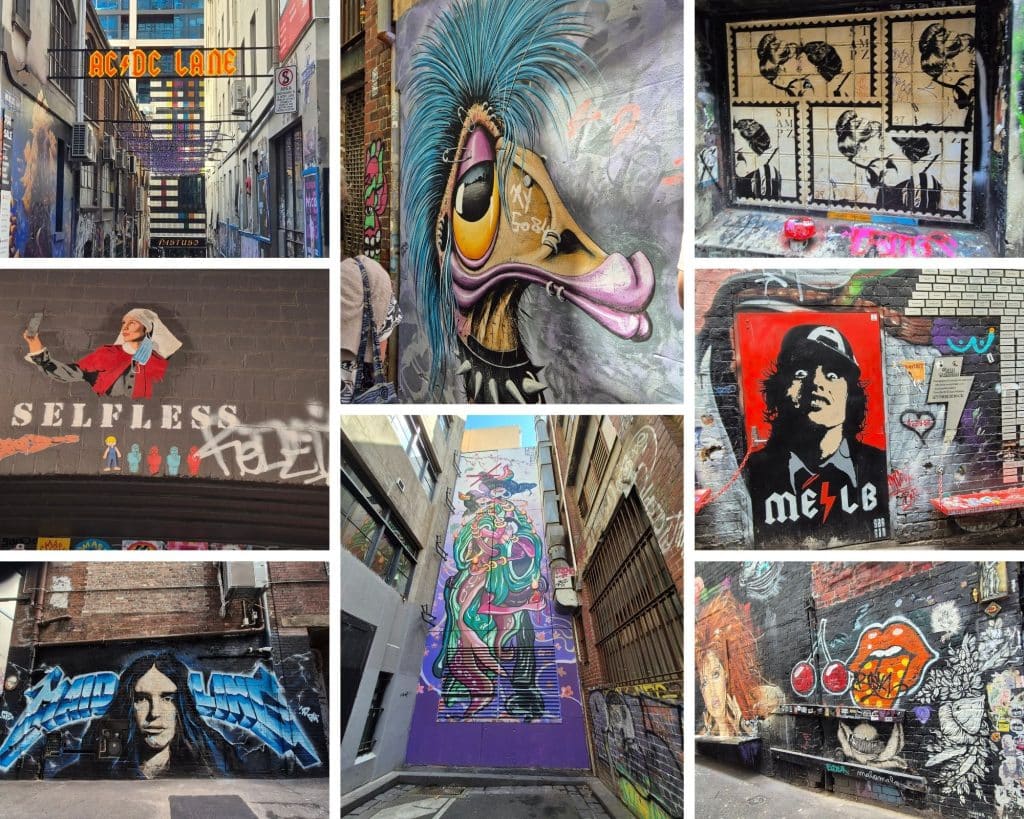
The best-known lane for street art in Melbourne is ACDC Lane, the laneway to heaven, on the backside of the building where the iconic Cherry Bar used to be. It has changed location but is still the best place to get some of Melbourne’s live music. It was this very same bar that led to special laws that protect the music scene. Sound proofing is required for residential buildings in order to keep the music in the laneways alive without disturbing the residents. Melbourne has today the greatest density of live music in the world. It was the crowds that gathered in the lanes behind the bars to listen to the music that brought the Laneway Festival to the cultural agenda.
If you are interested in seeing more of Melbourne, Charlie recommends the free walking tours. The general tour gets you around the city centre and tells the history of the city, the cultural tour gets you into the lanes and on a journey to live music and street art.