Alfama – the original quarter of Lisbon
Outside the city walls and yet so close to the centre
Before Charlie had gone to Peniche to see the Meo Pro Portugal, she had spent one day in Lisbon which was exactly enough for a free walking tour in Lisbon and a trip the Christ Statue. During the tour, she had heard of two other tours to the quarter of Alfama and to Belem. Charlie wanted to see those places but there simply wasn’t enough time!
The surf competition in Peniche was over after just five days and the weather hadn’t been great. Peniche is a small fishing town and apart from surfing, there isn’t much to do and to get to the surf spots, Charlie had to cycle for 30 minutes from her hostel. That would have been okay if it hadn’t been raining and windy. Charlie didn’t enjoy it and decided to return to Lisbon a few days earlier.
Walking in the rain
Lisbon was rainy too, but at least it was less windy and a little warmer than Peniche. The walking tour to Alfama started at 2.30 in the afternoon at Praça do Comercio. And it was raining, raining, raining. There were only 3 participants, and the minimum is usually 4. Rita was still running the tour and they started walking towards the castle in the rain. It had the advantage that it was empty wherever they went – they had the place to themselves.
Castle quarter
The tour started in the quarter around the castle in Lisbon, the Castelo S. Jorge, and they heard where the tradition with the tiles on facades came from and the story of Saint Antonio. Rita told the group that there is a party every June to commemorate the saint. It lasts the whole month, and all houses are decorated. There are pop up stalls that serve wine, beer and sardines in front of every house too. Some of the houses were still decorated from last year.
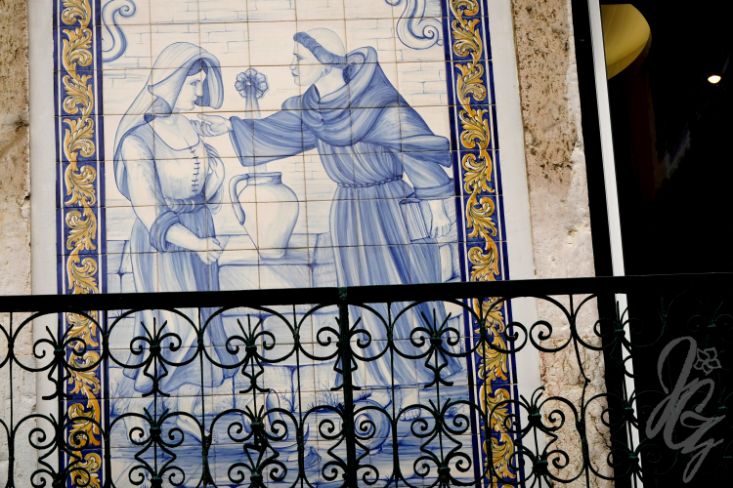
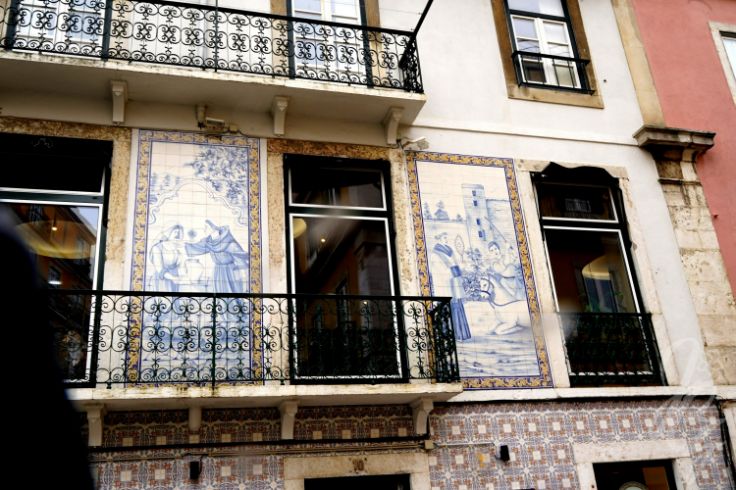
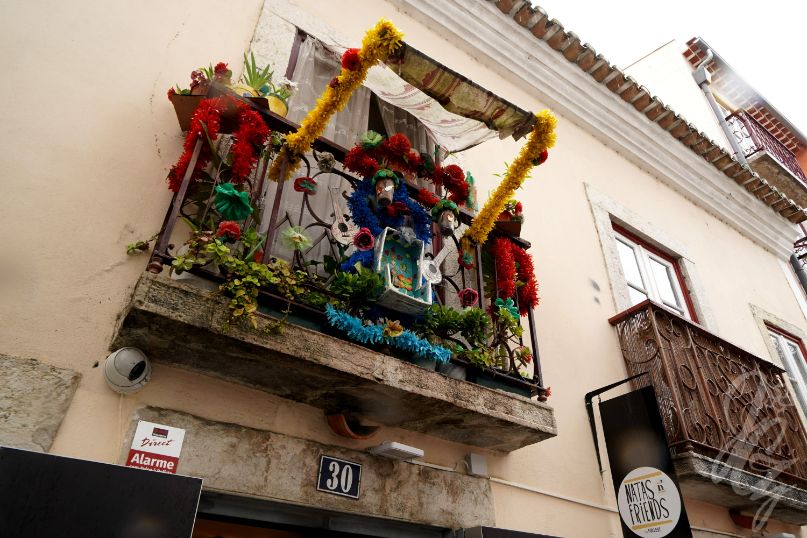
Around the castle, you can also see, and mostly hear, the peacocks. The group spotted one high up on a balcony. What a surprise that must be for the person living there to see a peacock sitting by the window.
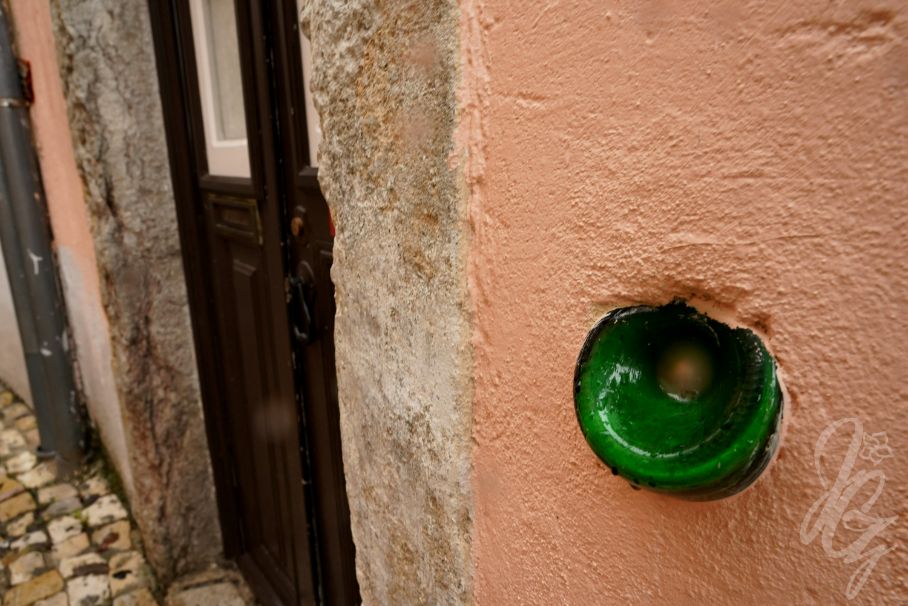
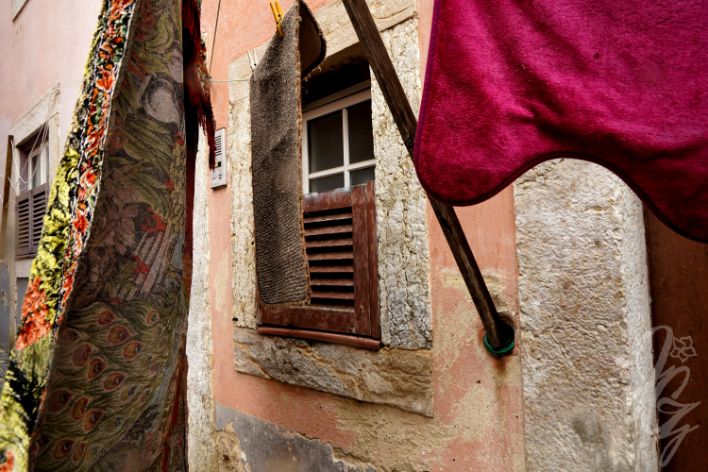
There was another particularity of the houses that Rita pointed out. Every house had the bottom of a glass bottle embedded in the wall near the door. She let the group guess what this might be for. Charlie and the others didn’t guess. Rita showed them: It was to hold a stick that connects clothes lines. Despite the rain that day, there was a lot of laundry hanging in the streets. Rita explained that the houses were too small to dry any laundry inside. There was no other choice than drying it outside.
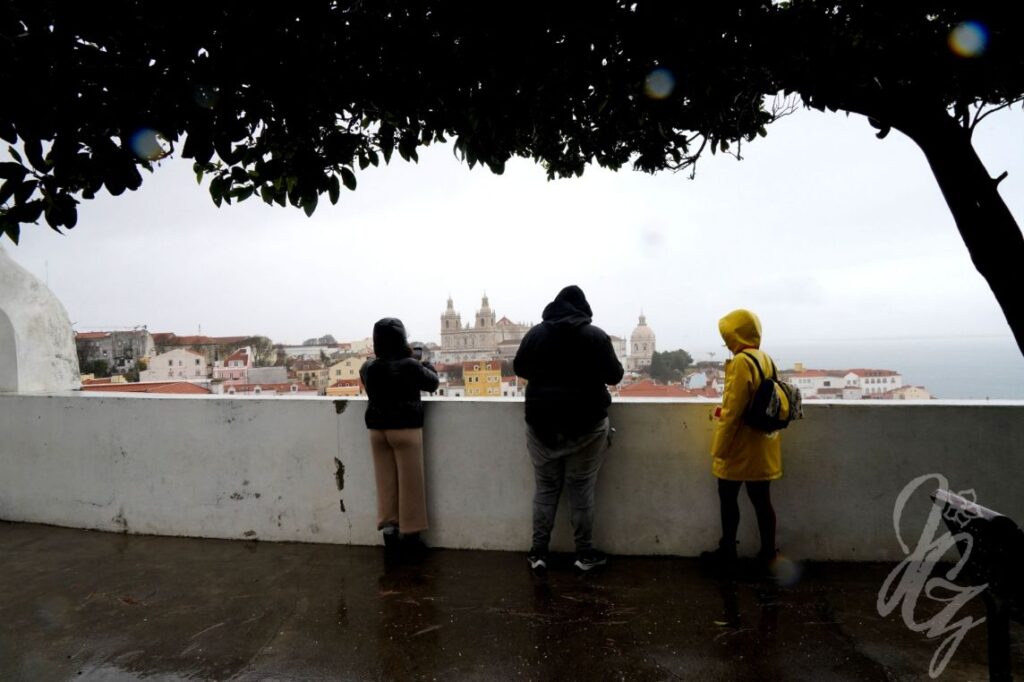
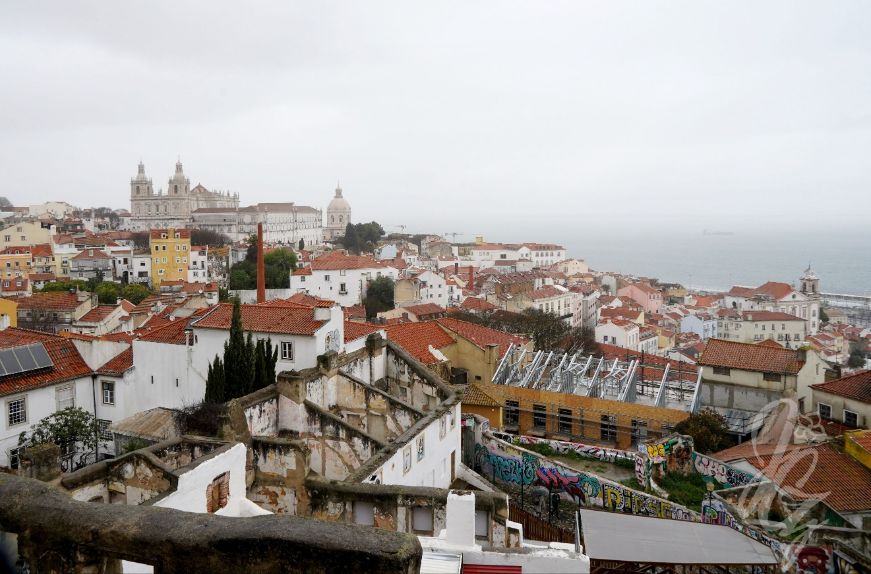
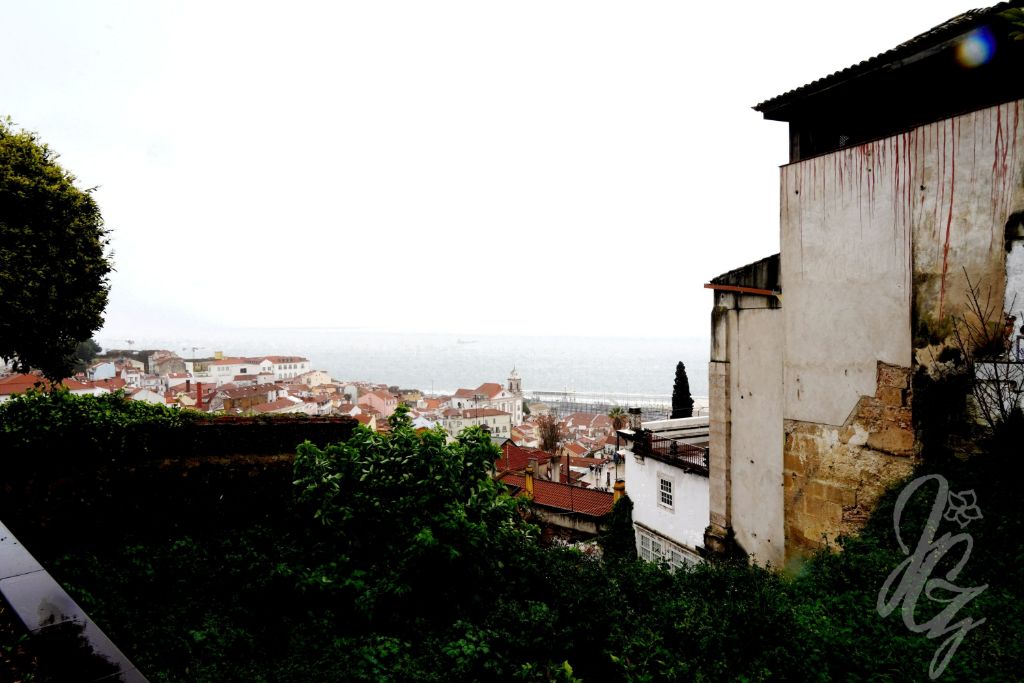
They went to a spot that could have easily been another viewpoint, but it was a children’s playground from where they had a good view over Alfama – the oldest quarter in town that they would visit next. But first, Rita took them a bit off the route as they had asked to see some old Roman remains and street art.
An amphitheatre and urban art
Not far from where they were was an archaeological site where parts of a Roman amphitheatre had been excavated. Next to the site were graffiti that picked up the Roman theme in modern art. Rita took them to another spot where they saw the artwork of Vhils. It was special, a combination of spray-paint and engravings in the walls that formed a face. Charlie was impressed. She had tried to book a street art tour too, but there were none that weekend. She asked Rita for some recommendations and would find her own street art route in Lisbon.
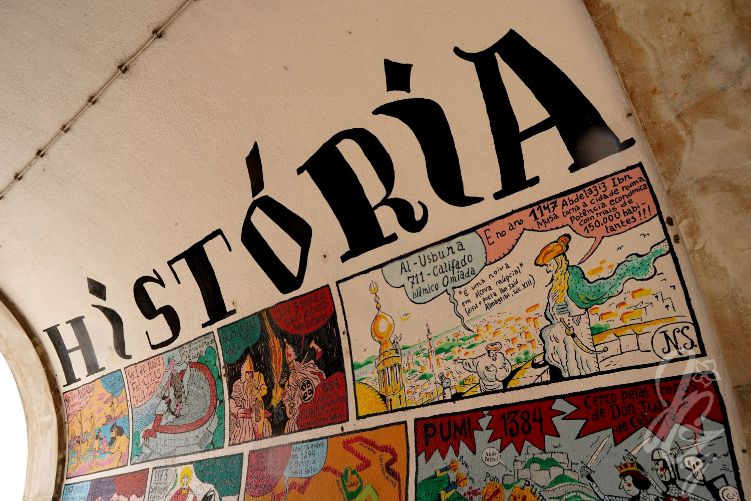
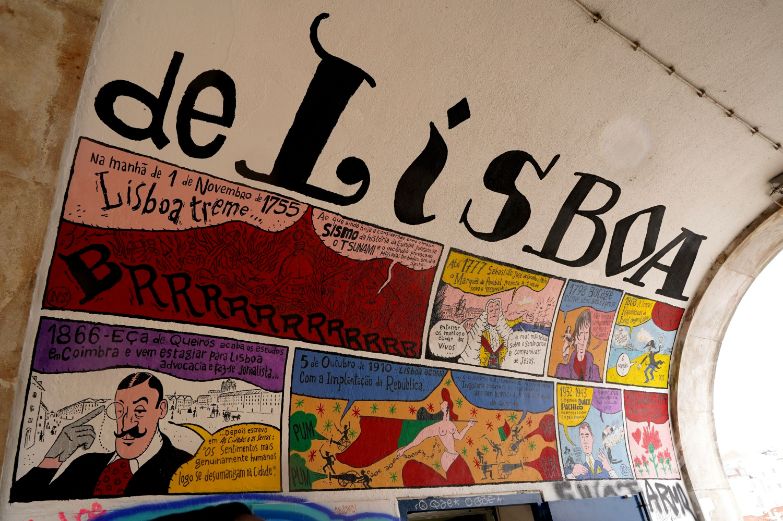
The entry point to the quarter of Alfama was also marked by graffiti under an arch along the historic city walls from the 7th century. The history of Lisbon had been painted on the inside of the arch. It looked a bit like a comic that pointed towards the most important events. The earthquake of 1755 was part of it too. It’s what makes Alfama nowadays so interesting as it was the only quarter in the city that was not completely destroyed and still has its original style and character. Whilst the rest of the city had been rebuilt with structure and planning, Alfama is a labyrinth of narrow cobble streets. It had been built in this way to prevent invasion from see. Only a few people could enter through the narrow streets and attacks were less likely.
A labyrinth of cobble streets
Alfama still has the shape it always had. It is like a labyrinth of narrow cobble streets, some of them are as narrow as the length of stretched out arms. As everything in Lisbon, it is built on a hill and there are steps in some of the streets. Not even a motorbike could get in. The people that live here depend on each other and you can feel that it is a close community. The population there is mostly elderly people that have lived in Alfama their whole lives. They know each other and are the soul of the place.
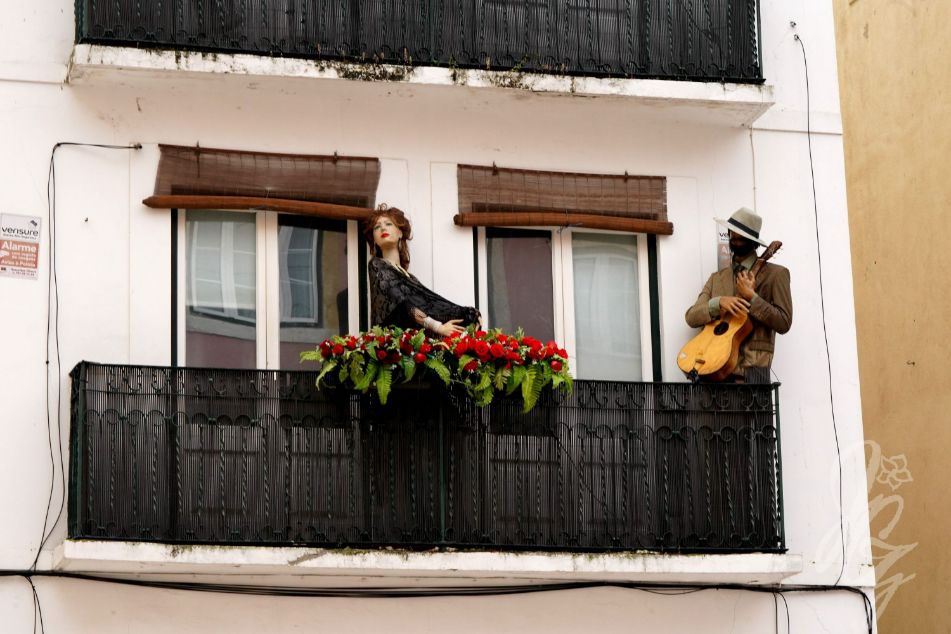
A few years ago, an English photographer wanted to capture the people that make Alfama what it is. You can still see the pictures that Camilla Watson took in the streets, even though some of the people have passed away in the meantime. Charlie stopped at the image of Natalia and Eduardo. Rita knew them and told Charlie that they had been married for more than 60 years. Natalia was still living there and had never been anywhere else in her life. Rita also shared stories about a woman called Angela who used to spot handsome men in Rita’s groups and invited them to join her for a ginjinha. Standing on balconies, chatting to the neighbours and watching people in the street is a popular pastime in Alfama. They could even see a balcony with a cushion on the railing. If you’re already standing there all day long, it should at least be comfy!
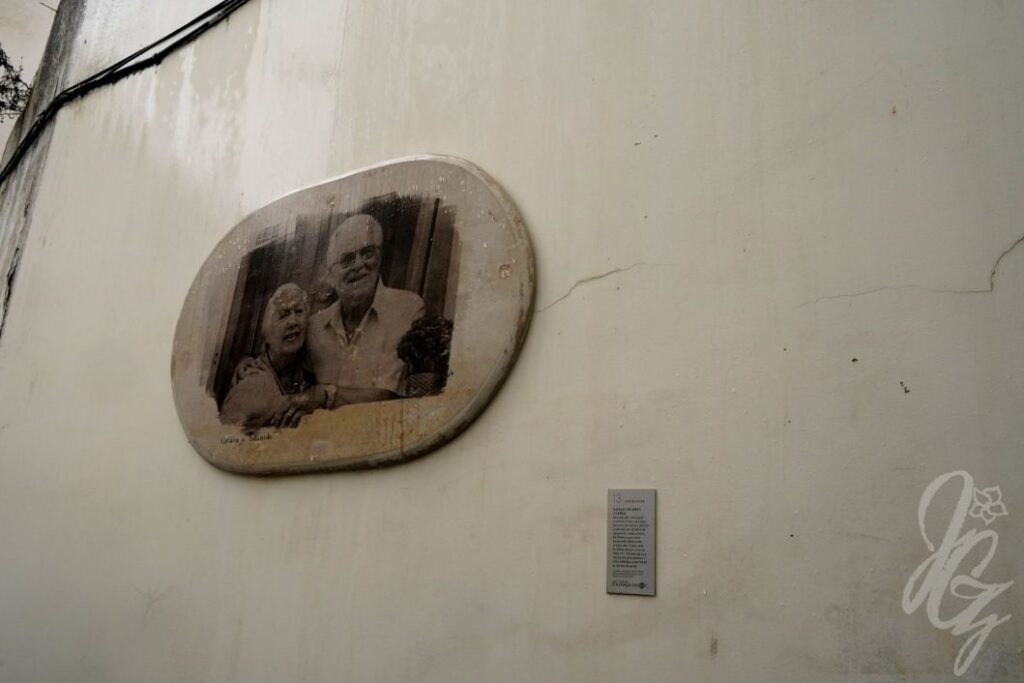
The day when Charlie visited, there were only a few people on their balconies because of the constant rain that day. The public bathrooms and laundry houses were empty too. They’re necessary in Alfama because the houses are too small to contain bathrooms or washing machines. Some of the houses are so narrow that you could barely imagine anybody living there. And yet, there are 5 different names on the doorbells of that same house.
They stopped in a little bakery to escape the rain for a while. Charlie tried a Pastel de Alfama – a little cake filled with an almond and coconut cream. The others tried a ginjinha.
Melancholy in the music
Alfama is known for something else and a popular place in the evenings. It is the birthplace of Fado and all restaurants in the quarter have live music every day. There is also the Fado Museum. It is a very melancholic type of music and sounds sad. The living conditions in Alfama were miserable in the early days and it was outside the city walls. The glamour of the court in the times when Portugal had the richest colonies in the world and a city covered in gold did not reach Alfama. It was a place where the poor lived. Fado summarizes all those feelings in a song.
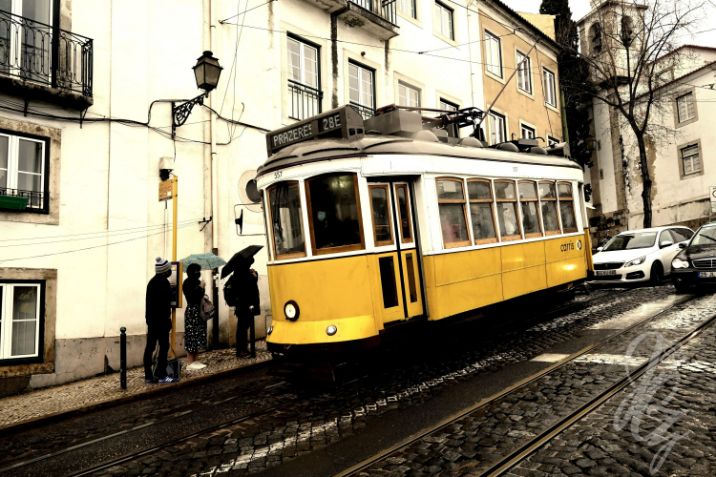
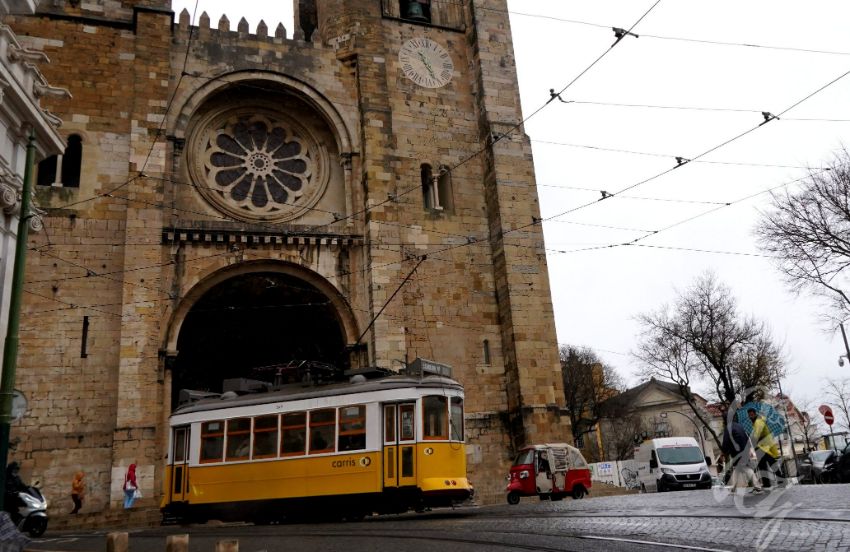
The Alfama walking tour finished in front of the cathedral where Charlie stayed for a while to capture the perfect Lisbon picture with a cable car in front of the historic building.