A weekend in Paraty
Colonial heritage meets nature
When Charlie was browsing the internet for day trips from Rio de Janeiro, a jeep tour to some waterfalls caught her attention. At first, it looked as if Paraty was close to the city. At the second view, Charlie realized that she would have to stay at least one night in Paraty. That worked out well for the weekend during the 2-week stay in Rio.
How to get to Paraty
The town of Paraty is around 150 miles south of Rio de Janeiro and a popular tourist destination. The drive down there takes around 4 to 5 hours, and you can find shuttle services with pick-up and drop-off at hotels. An official shuttle is also the safest way to travel.

Charlie still had her Portuguese classes in Rio and could only leave on the Friday afternoon. If you can, you should avoid that time as there was a lot of traffic and it took a long time to even get out of Rio. The return journey on Sunday was a little easier and faster.
There are shuttle services from and to São Paulo as well. If Charlie had heard of Paraty before she planned her trip, she probably would have travelled from Rio and then a few days later continued her journey to São Paulo. Paraty is about half-way between the two cities.
Charlie arrived late on Friday evening in Paraty and left Sunday at lunchtime. That was enough time to see the most important things around Paraty, however if you can, Charlie would recommend staying at least two full days, if not even three to enjoy the area in its entirety.
Cachaça tasting and swimming under waterfalls
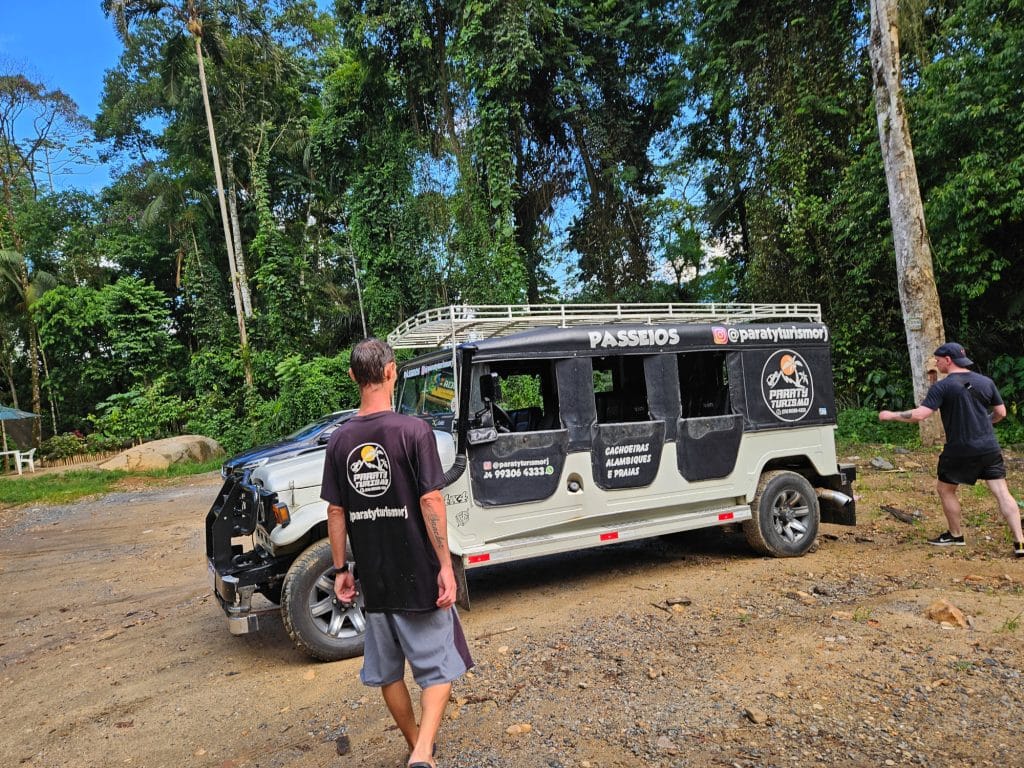
The Saturday was reserved for the tour that had made Charlie aware of Paraty: a jeep tour into the rain forest. They stopped at two different sets of waterfalls and two Cachaça distilleries during this 6-hour tour.
Waterfalls around Paraty
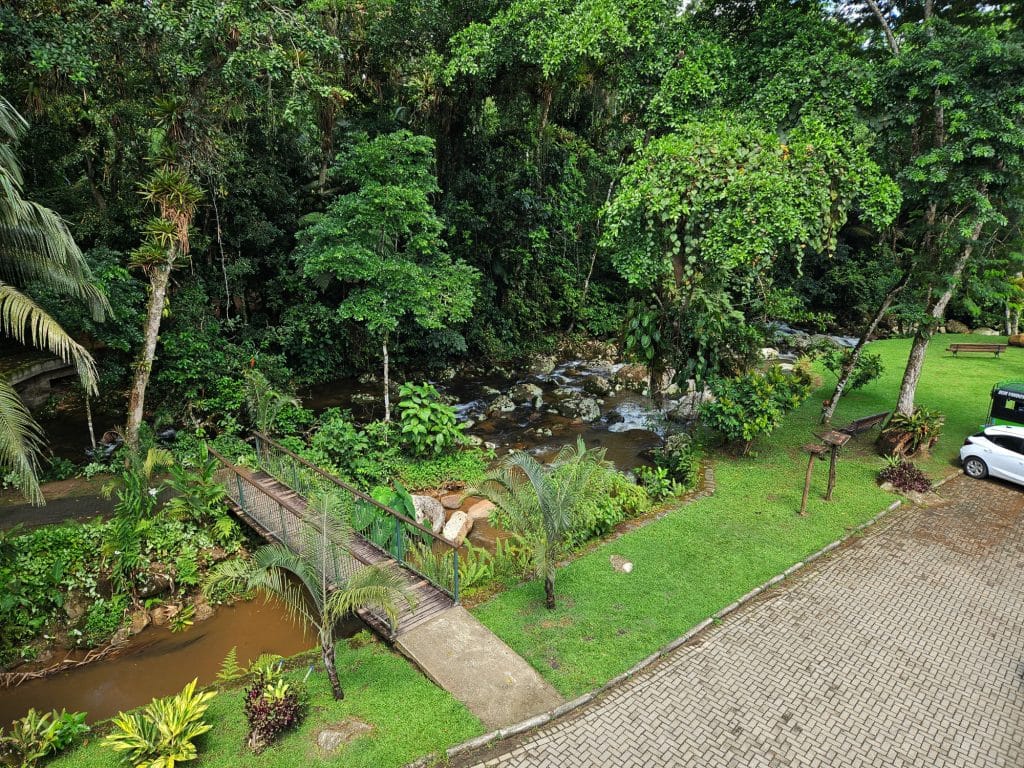
The first waterfall-stop was at the Cachoeira Pedra Branca where each person had to pay BRL 10 entrance fee. From the parking lot, it was a short stroll in between bamboo that reminded Charlie of the walks near Uvita in Costa Rica. There is an abandoned building from which you can enjoy a good view of the lower part of the Pedra Branca waterfall.
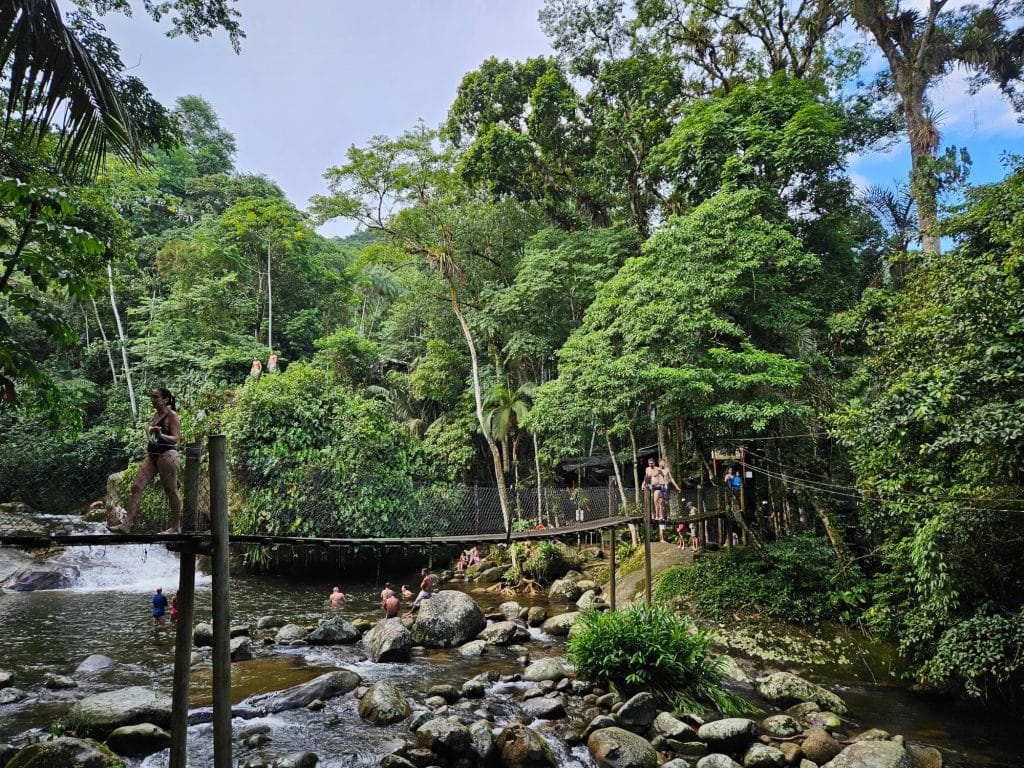
A bit higher up, you can enjoy a swim in the fresh water and take a picture standing in front of the waterfall. There were multiple jeep tours that morning and they all seemed to have this waterfall as their first destination. It was busy. Charlie enjoyed the swim in the cold water on this hot day.
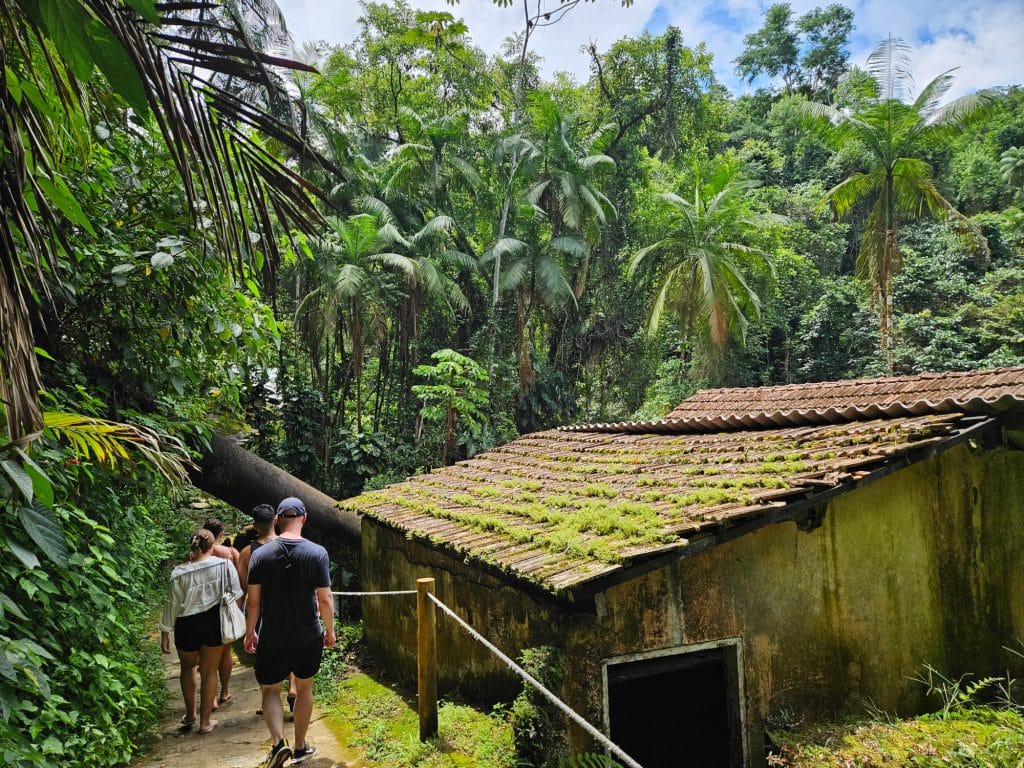
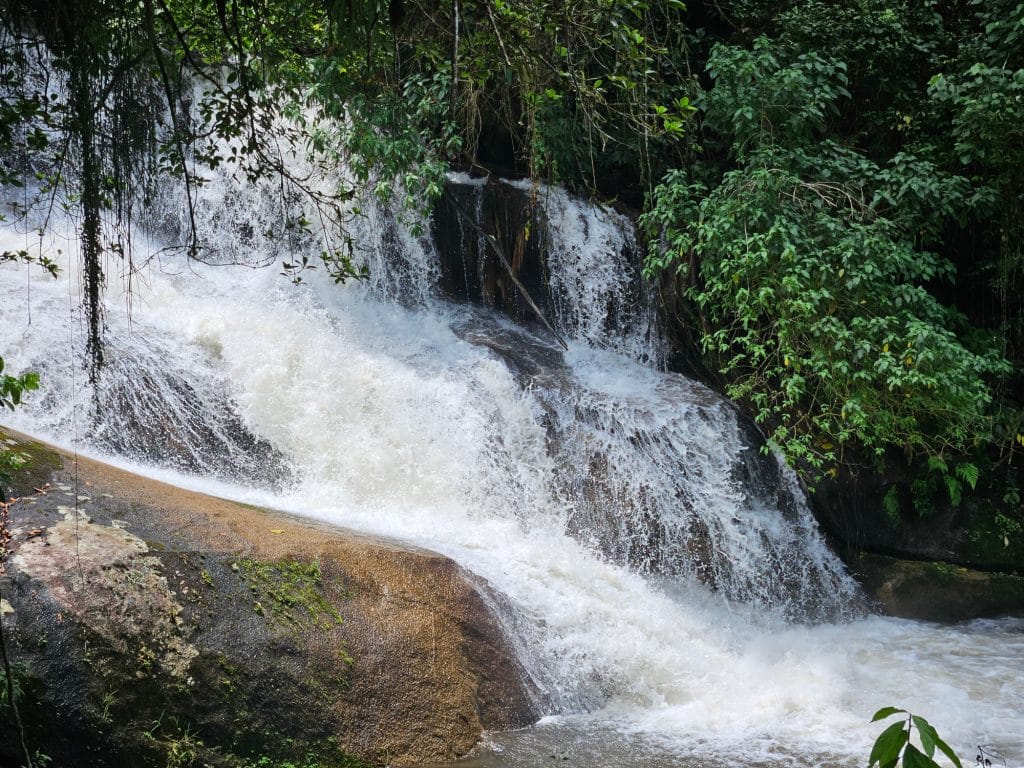
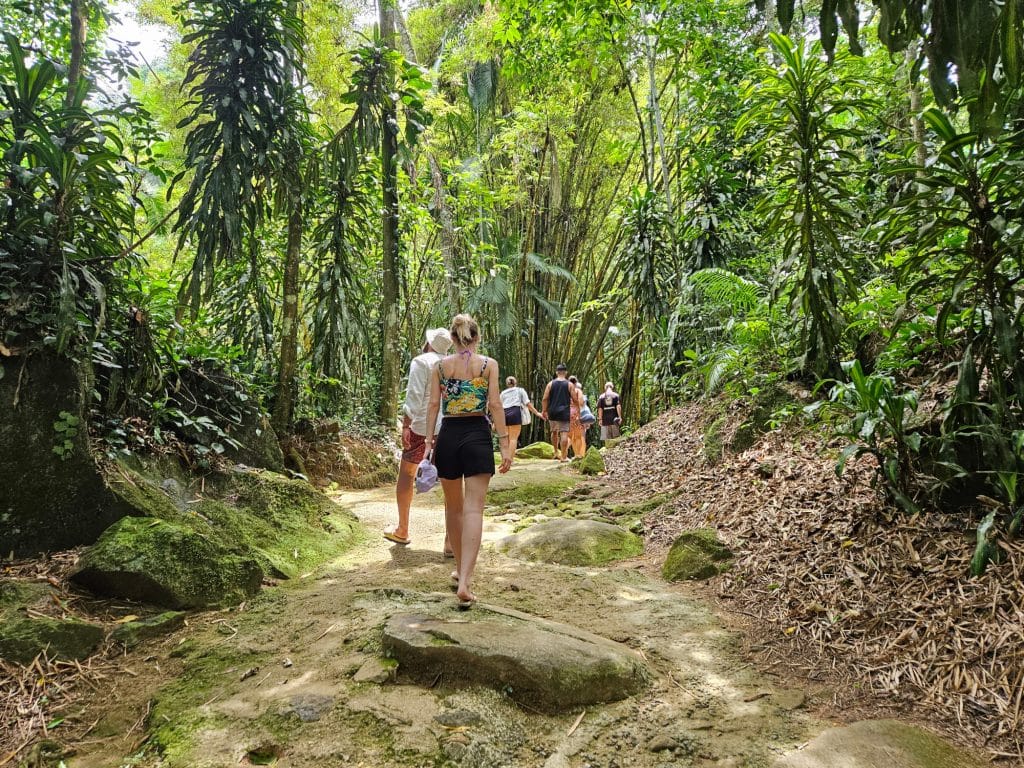
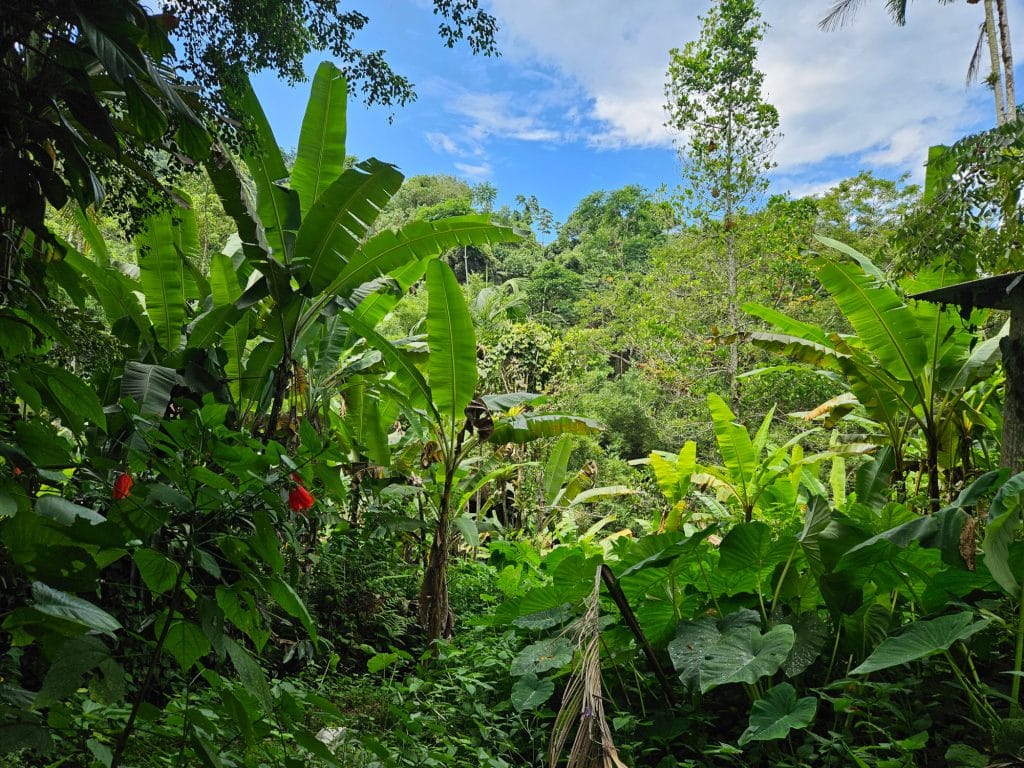
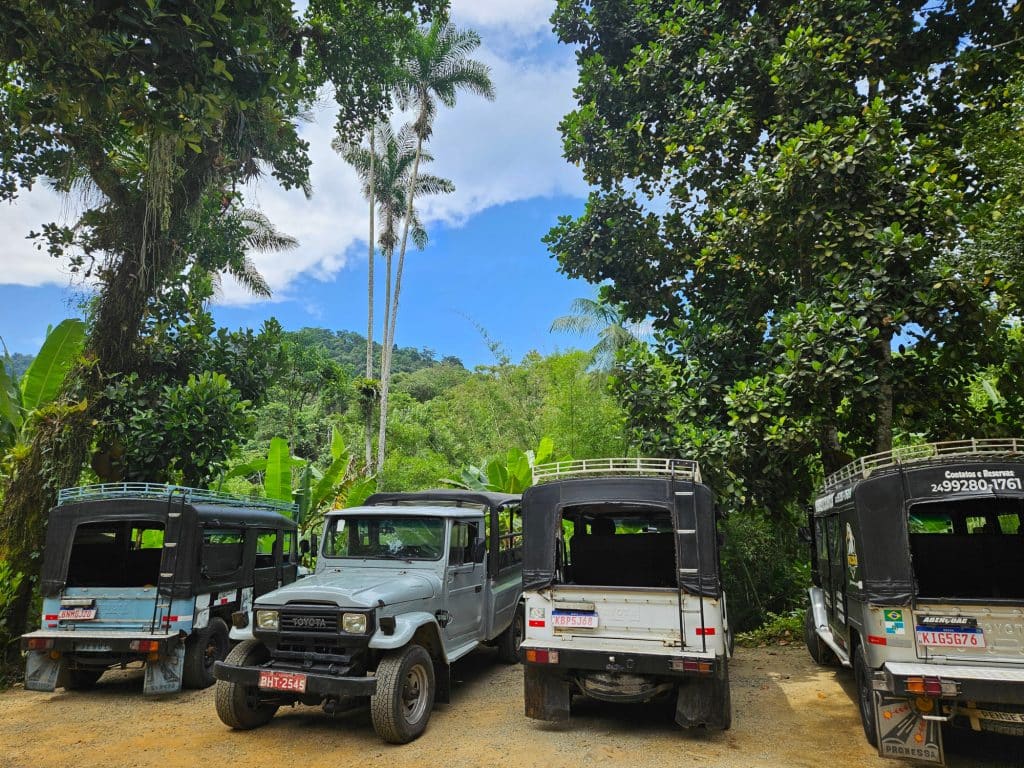
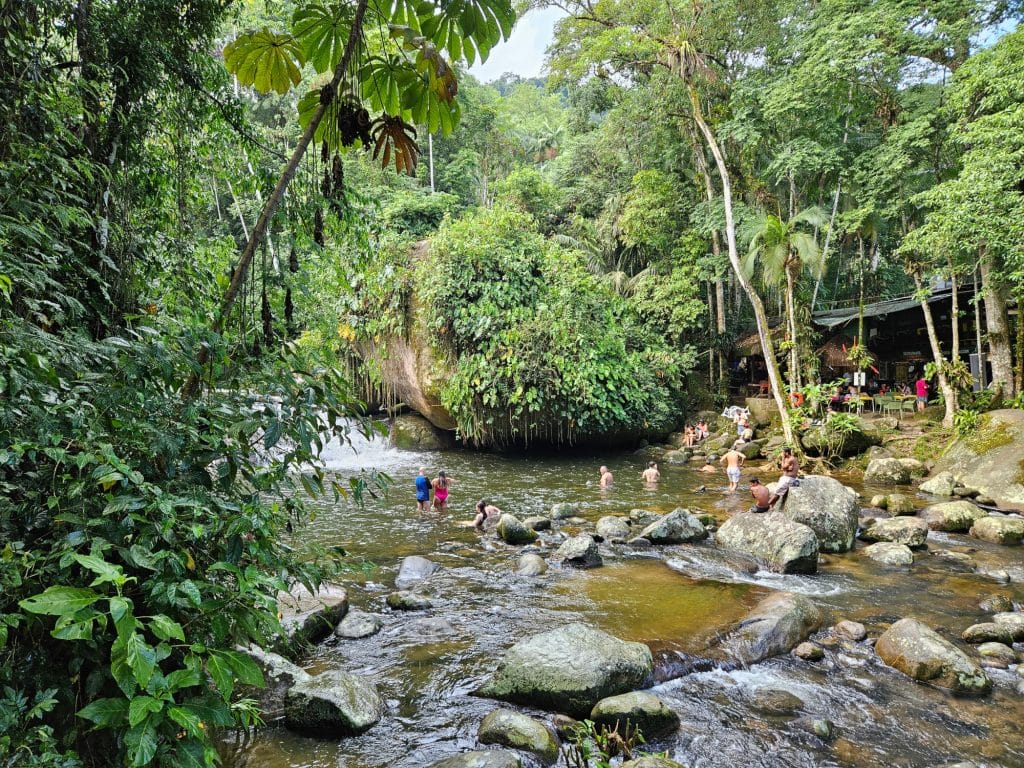
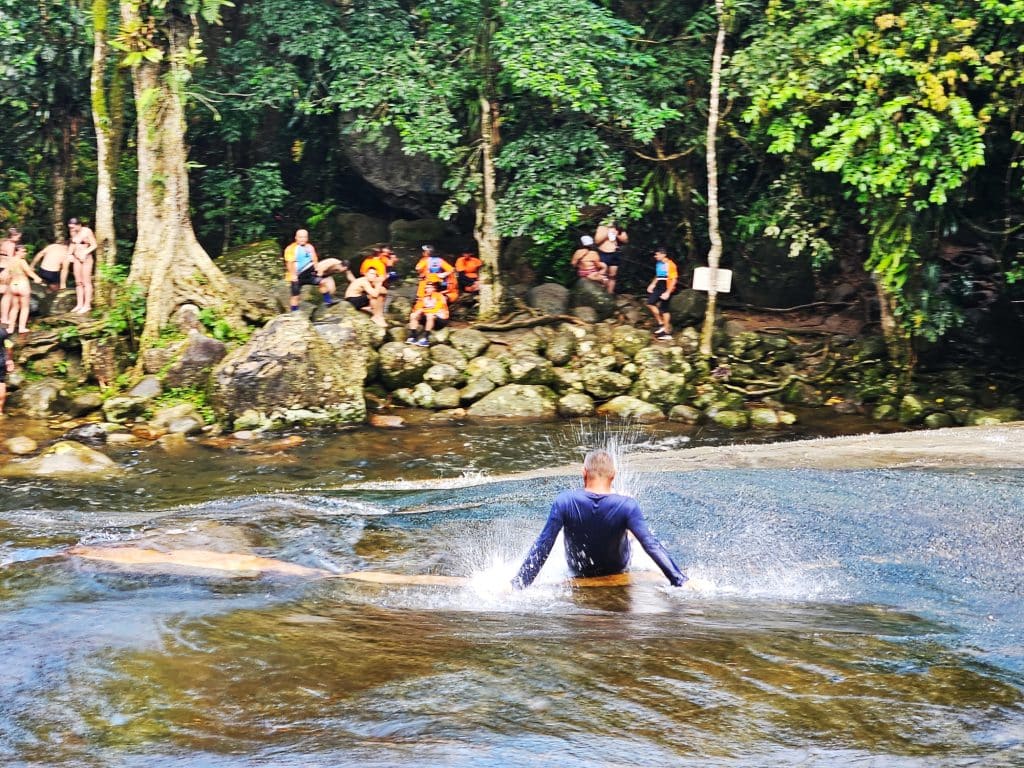
The second waterfall-stop was just after lunch at the Tarzan’s Well, Poço de Tarzan. The restaurant where they enjoyed lunch had the same name. This waterfall does not only invite for a swim but also has a natural slide. Sit down at the rocks, get into swing and slide down into another basin. Apart from the tour guides, there are helpers available too if you have any doubts or would like a push to get speed.
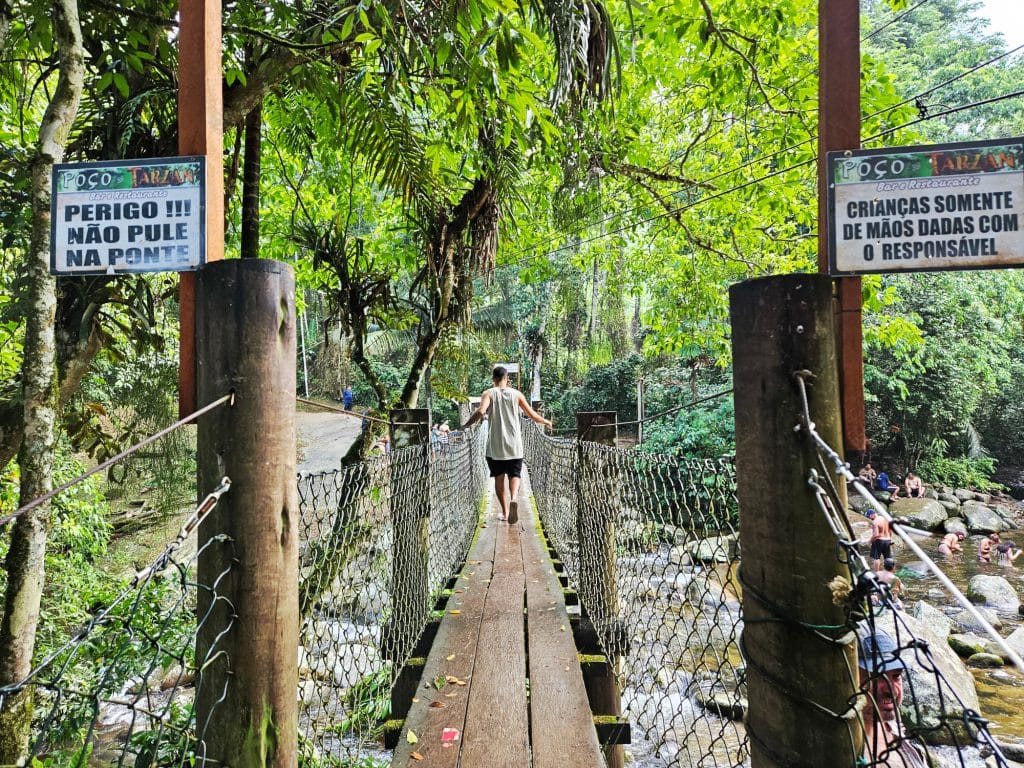
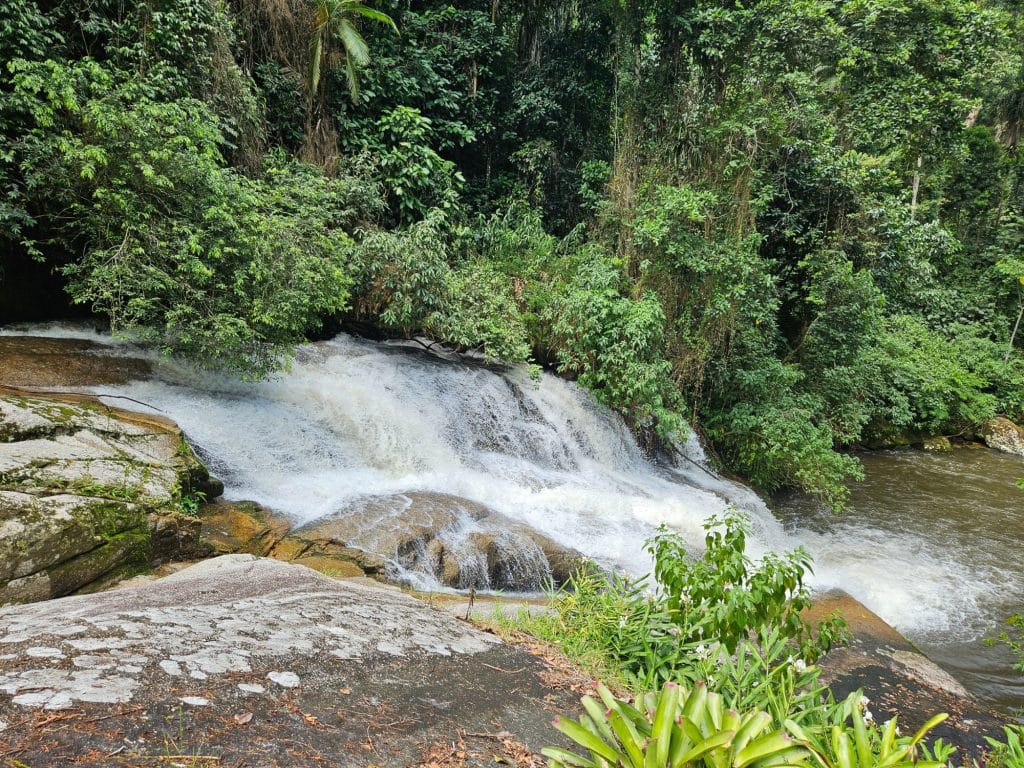
There is another, smaller waterfall a bit higher up and you can admire it from the hanging bridge that crosses the river. Charlie also spotted some adventurous visitors that jumped from an elevation into the water basin.
From sugar cane to Caipirinha
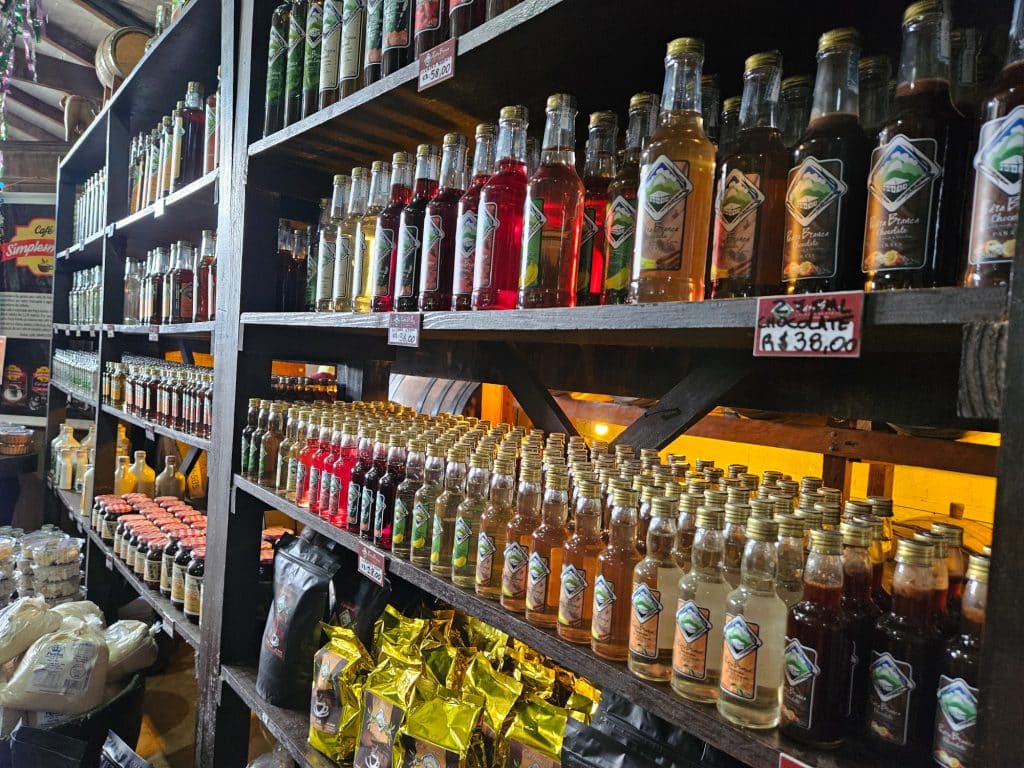
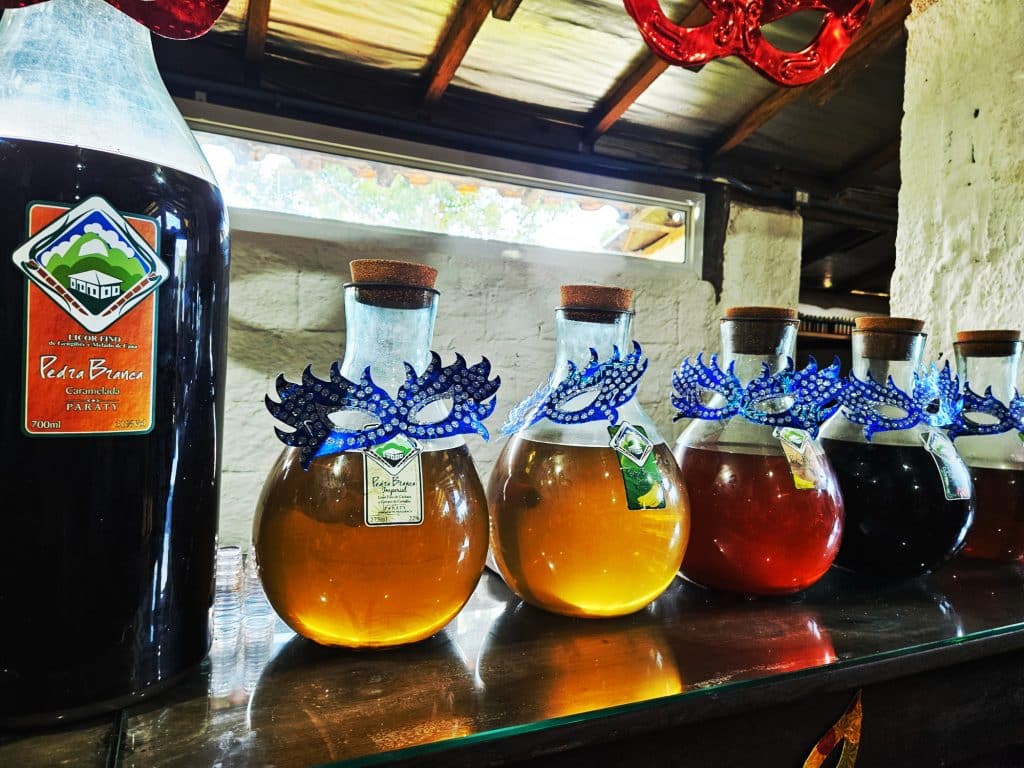
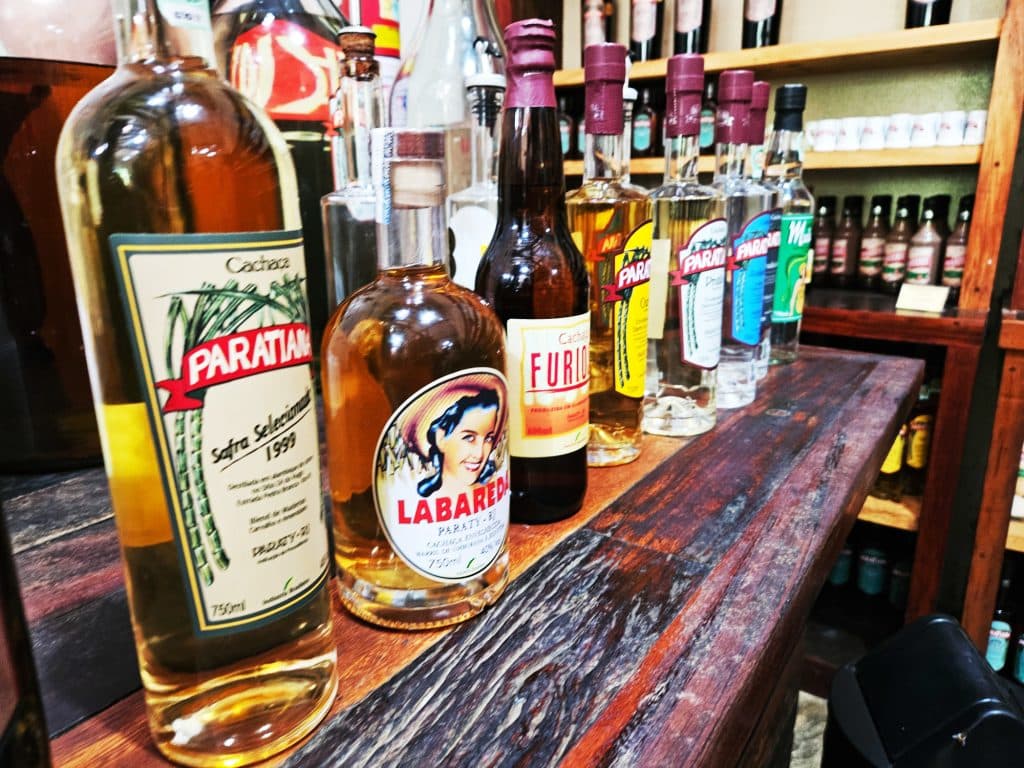
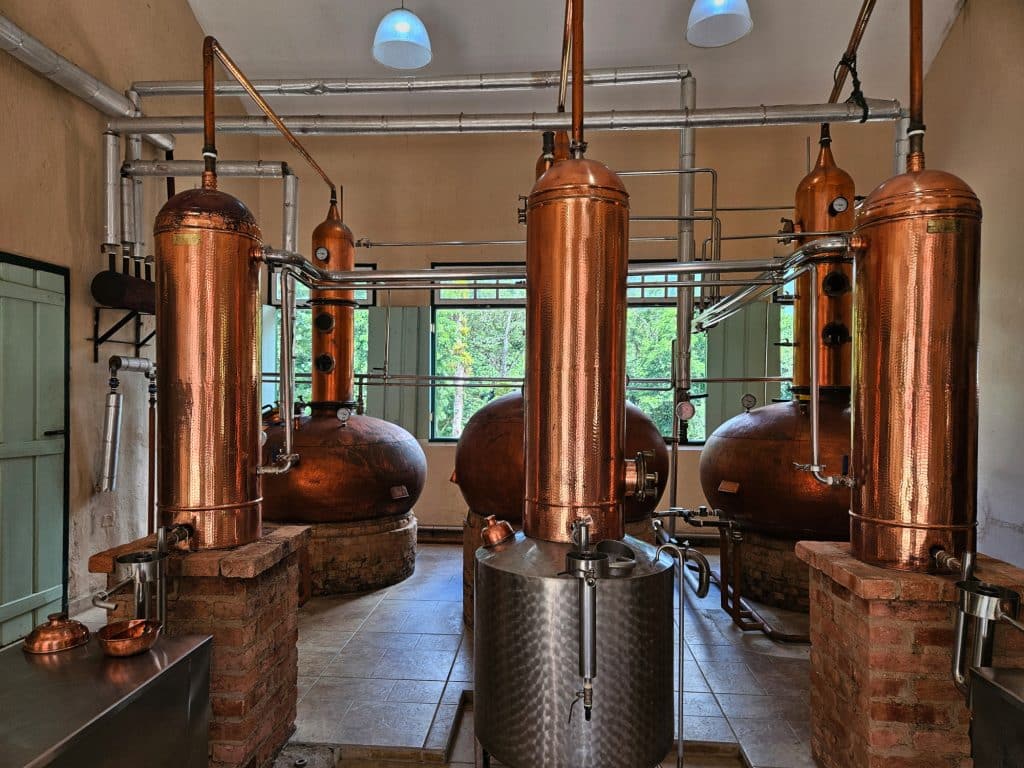
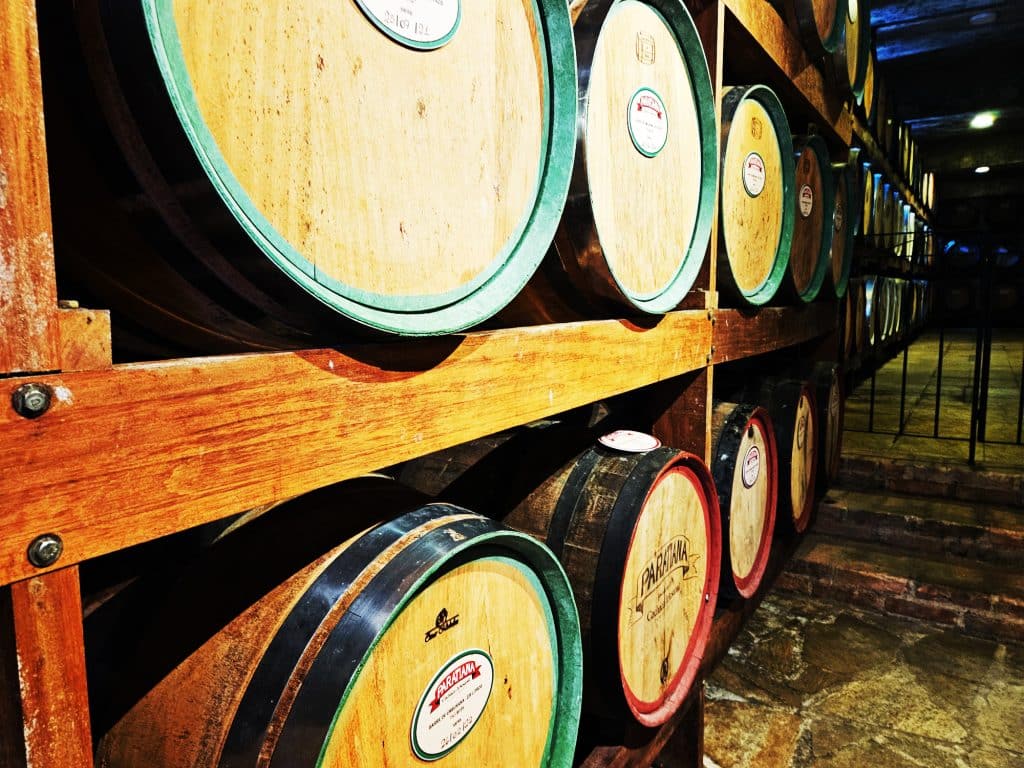
It is said that the traditional Brazilian drink, the Caipirinha was invented in Paraty in the middle of the 19th century as a remedy against Cholera. Until today, there is a strong Cachaça tradition in the area, and you should not miss a tasting. Part of the jeep tour was a visit to two distilleries, called Alambiques. They visited the Alambique Pedra Branca and the Alambique Paratiana. Charlie learnt there how Cachaça is made, and she got to taste different types of the drink. One of them reminded her of the honey rum from the Canary Islands.
The local Cachaça that they’re most proud of is the so-called Gabriela, that is made with clove and cinnamon. Charlie could taste both flavours immediately. The shot reminded her of the tastes of Christmas. It was like liquid gingerbread. The Gabriela Cachaça was inspired by the novel “Gabriela, Cloves and Cinnamon” by Jorge Amado. The film from 1983 was shot in Paraty and the house is still maintained until today. Apart from the Cachaça, you will find multiple references to Jorge Amado in Paraty. Charlie for example enjoyed a passion fruit tarte that was served with Gabriela Cachaça.
The town of Paraty
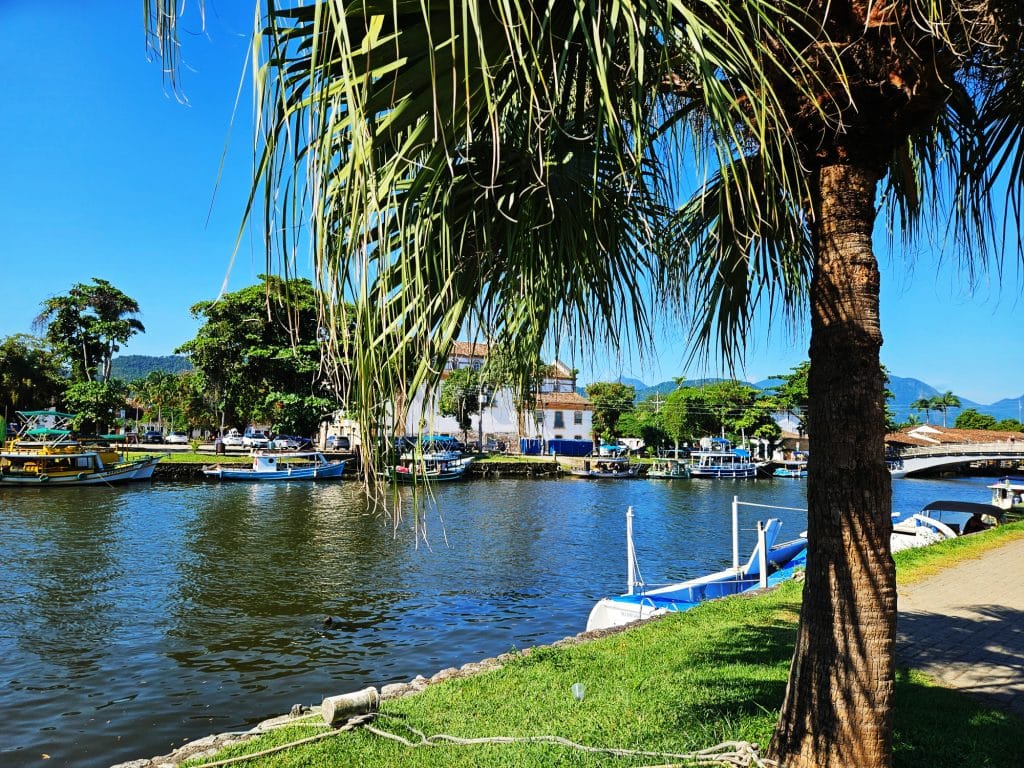
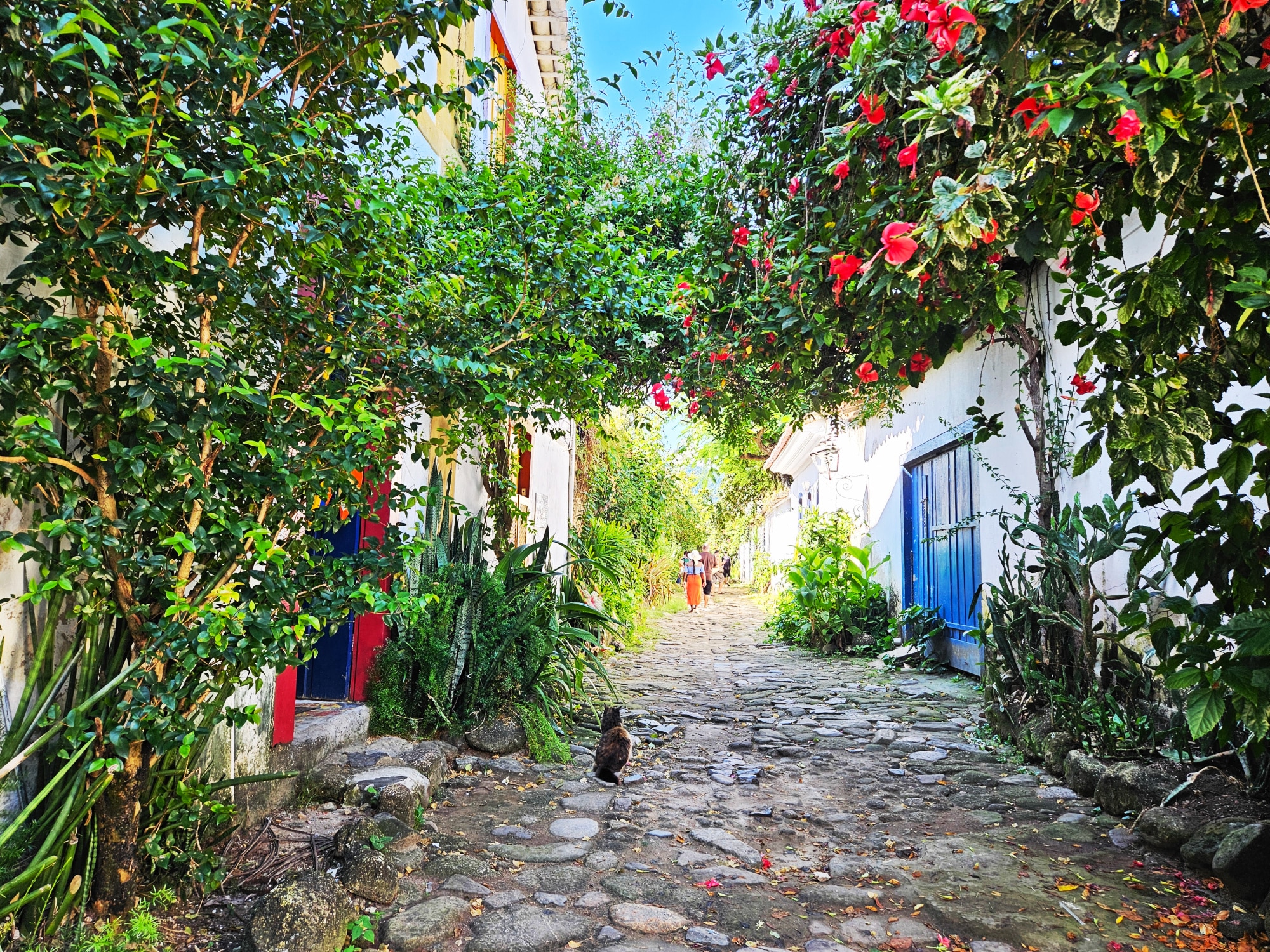
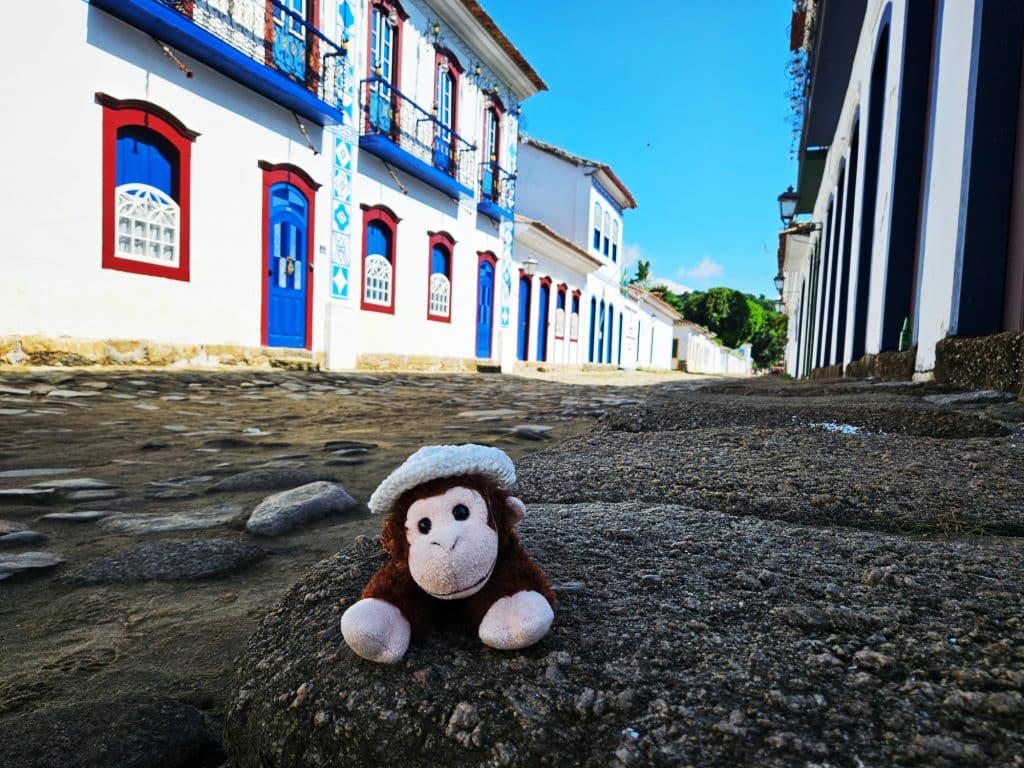
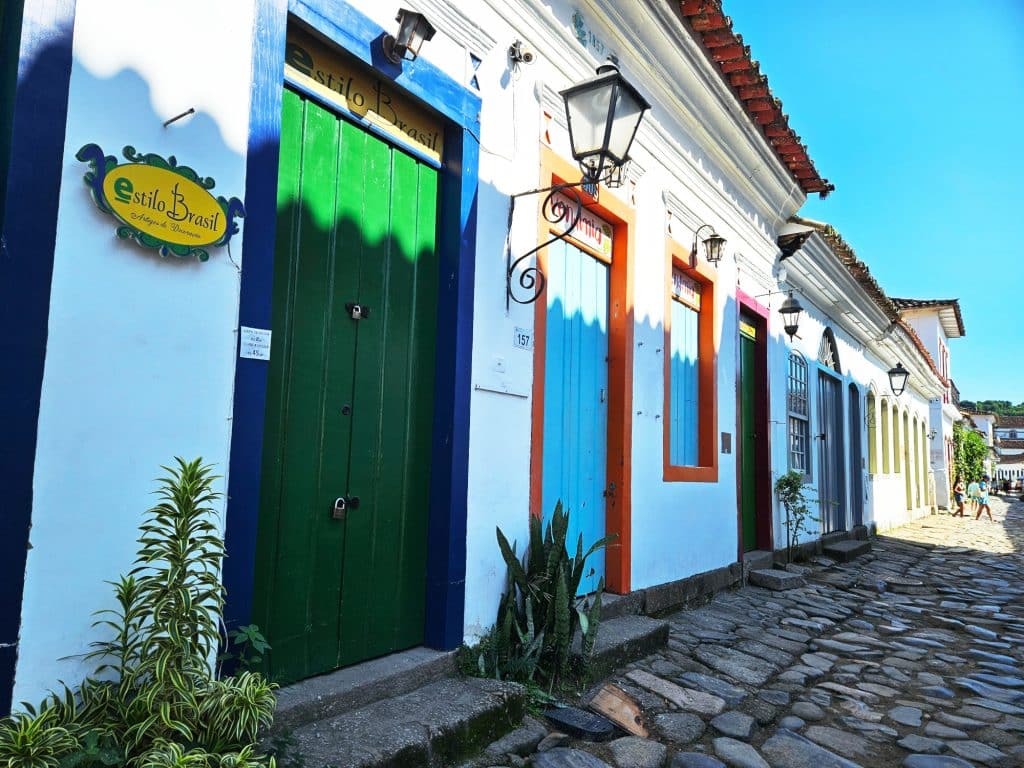
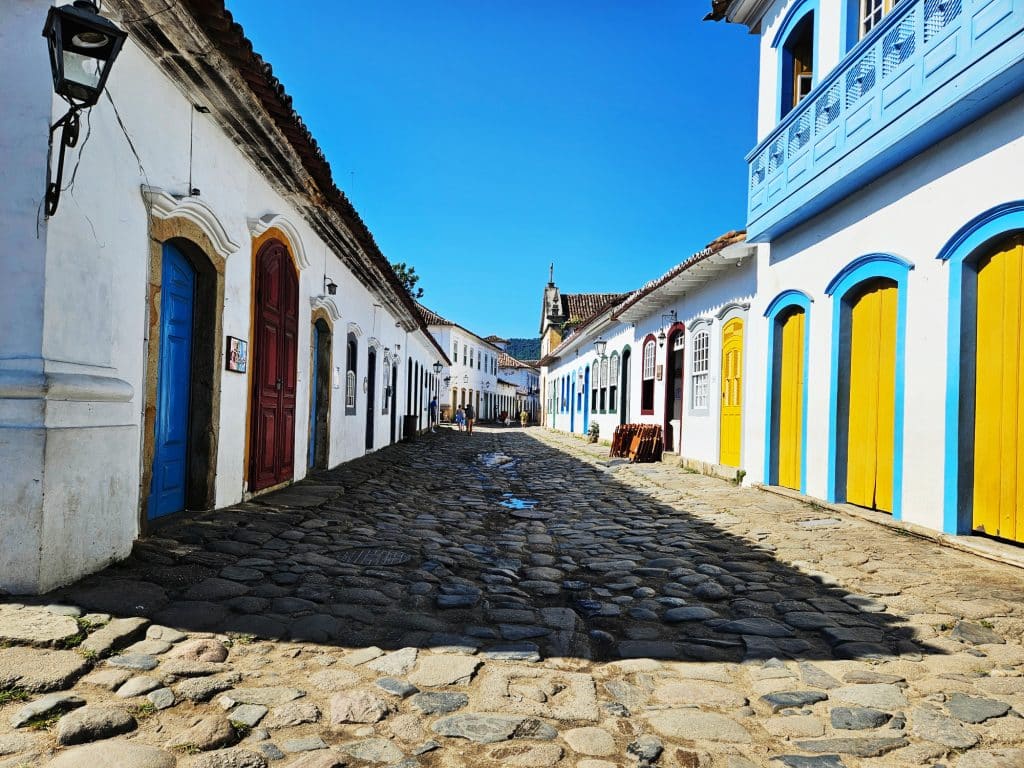
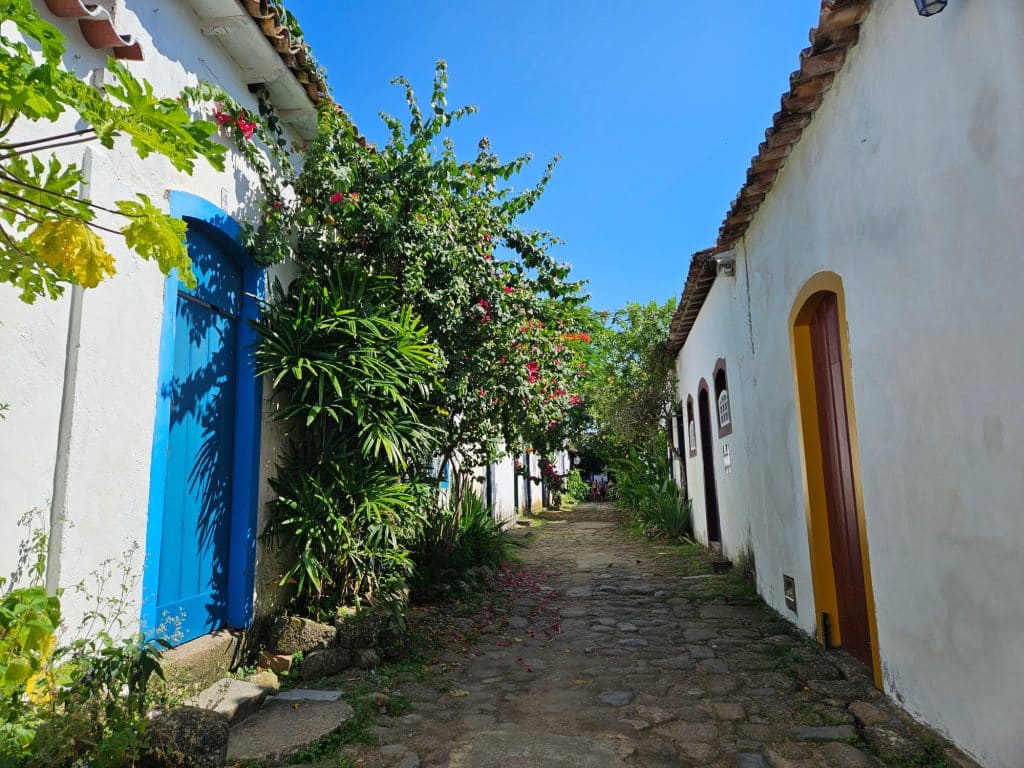
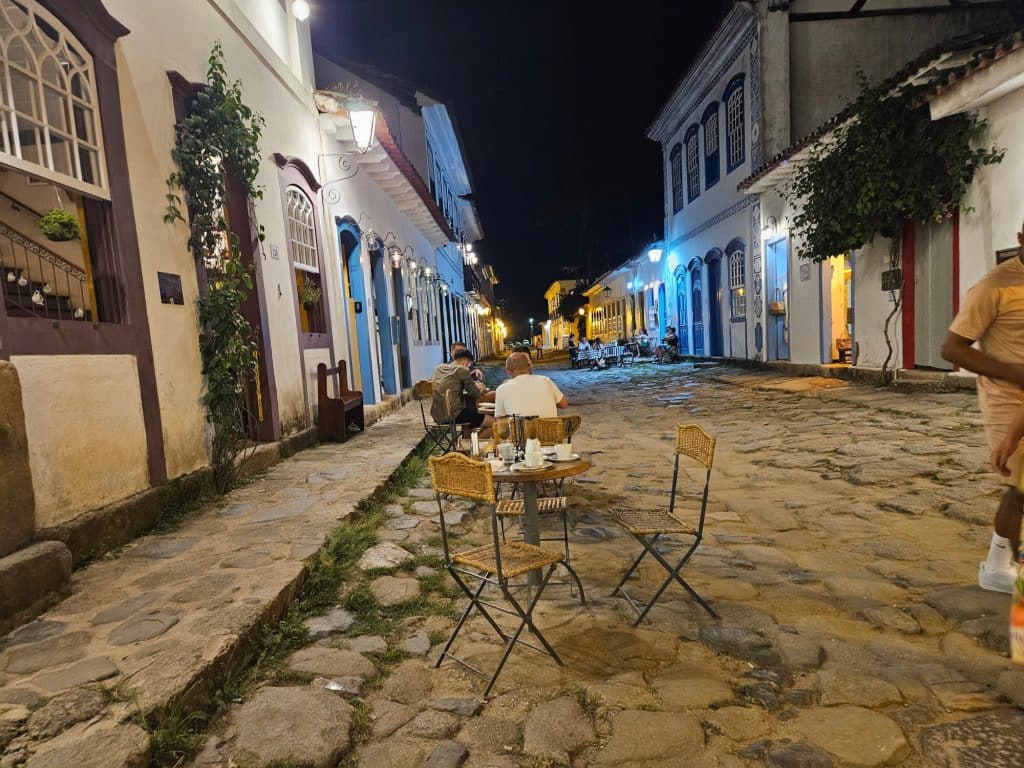
Charlie arrived in Paraty late at night and didn’t see much of it in the darkness. On her way to the meeting point for the jeep tour the next morning, she walked along the river, crossed the bridge and suddenly found herself in the middle of colonial-style houses and uneven, cobbled streets. It reminded her a bit of Antigua, and yet, this was different. The houses in Paraty are mostly white with some colourful highlights, the historic centre is pedestrianized, and streets are built with a different type of rock than in Antigua.
From fishing village to town
The name of the town goes back to the indigenous name for the fish that breed in the bay, paratii. The fishing village became the second most important port during colonial times, and the town was built with two things in mind: tidal flooding and the risk of pirate attacks. To prevent the latter, the town looks from sea as if it was a fort and invaders would not be able to see far. The roads too are built in such a way that you can’t see the end of the road and it all appears to be a labyrinth. At the same time, the tide was used to regularly flood and clean the roads. The houses lie a bit higher than the centre of the road to prevent water damage and allow it to flow back to the ocean.
Churches in Paraty
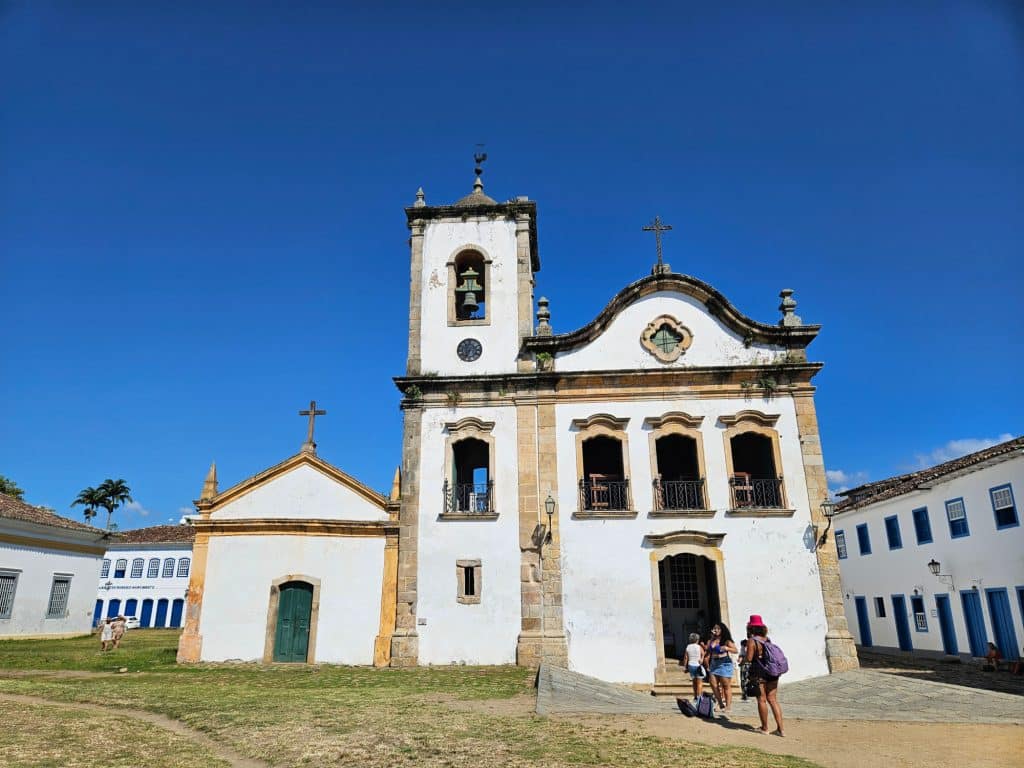
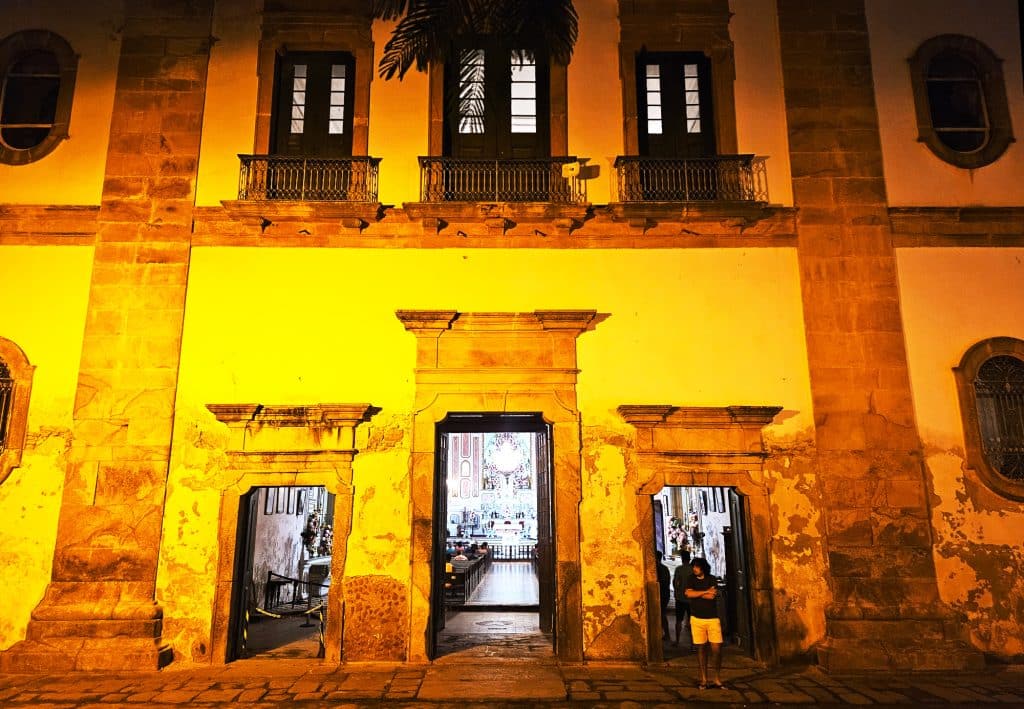
The historic centre is small, and yet, there are four churches, one for each ethnic group and social class during colonial times. The church Santa Rita de Cássia is the oldest in town and was built in 1722. It is no longer a church, but an art museum. Next to this building is the most scenic road in Paraty, Rua do Fogo. Be sure to make a stop there and take a picture. The church Igreja Nossa Senhora das Dores was built in 1800 and is today a National Heritage Site. The Parish Church at the main square and the first you see as you cross the bridge into the historic centre shows one particularity. It doesn’t have towers. That is a good thing because the ground it was built on would not be able to bear the weight and the church would have sunk if it had been given towers. Almost hidden in between the historic architecture is another church, the Igreja do Rosario, which was built in 1725 for slaves. If you stand in front of it, watch out for some historic lamp posts. In front and next to this church, you will also see indigenous inhabitants of the area selling their arts and crafts.
One town, multiple layers of history
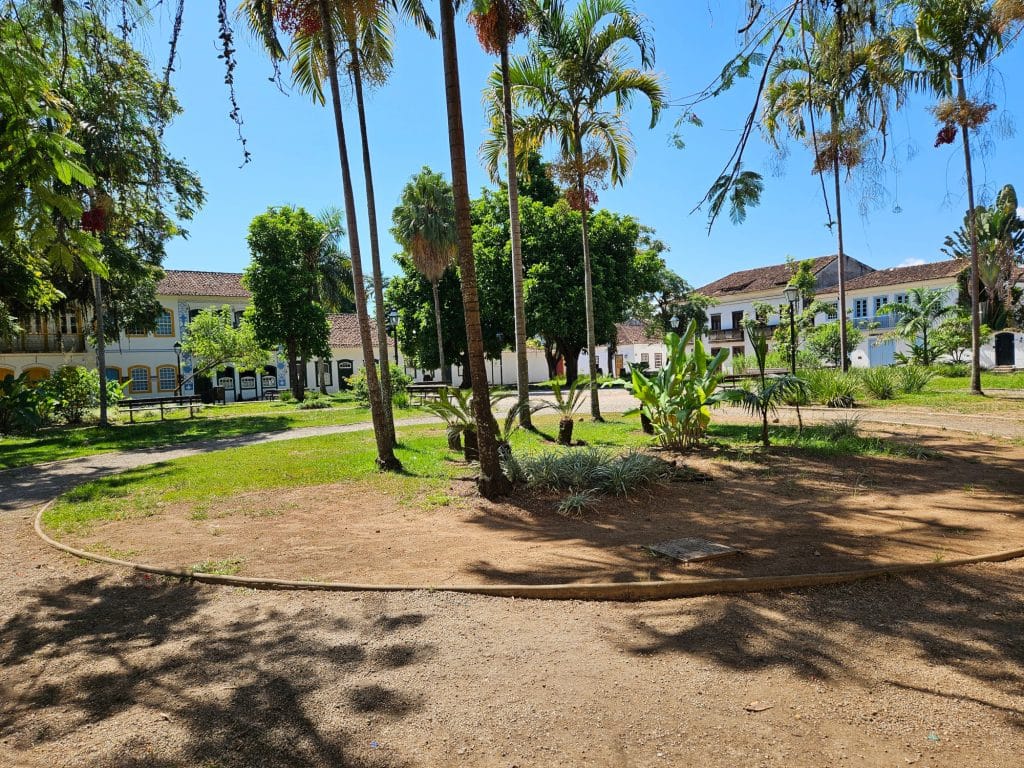
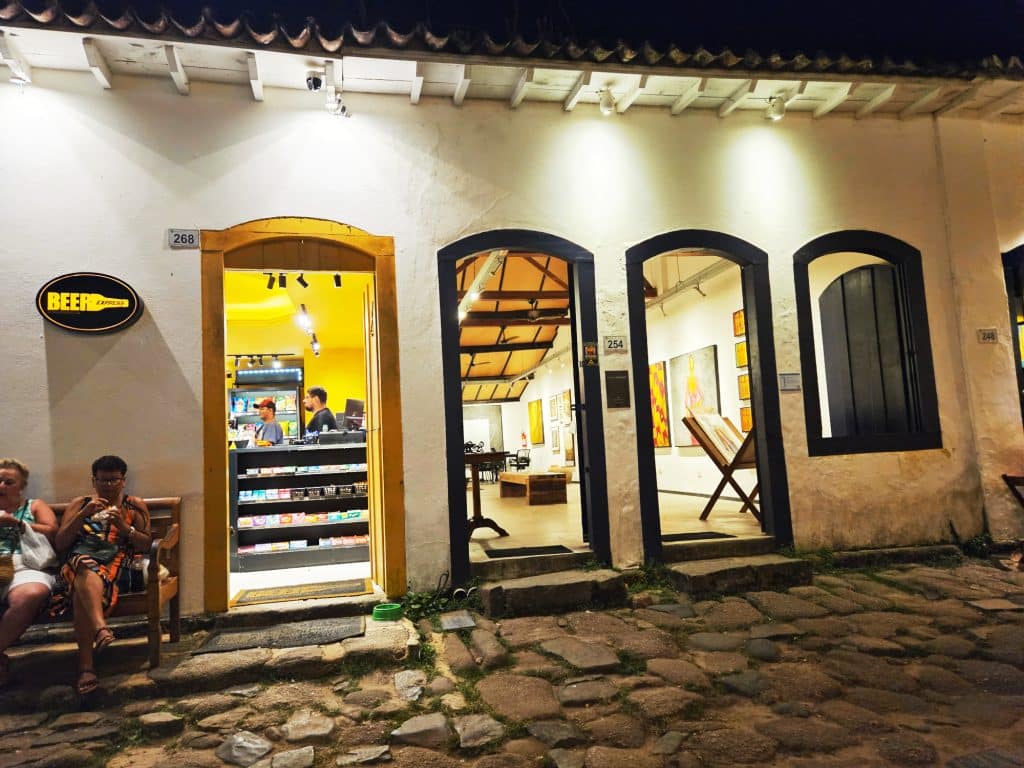
The roads of Paraty get busy in the evenings when all the restaurants fill the paths with tables and all the tourists seem to do their souvenir shopping. Most of the shops are open late and there are regularly concerts or other events at the open space next to the Parish Church.
Paraty is a UNESCO World Heritage Site as a mixed site where prehistorical archaeological sites meet historical constructions, and you still find local communities that live in traditional ways off the land.
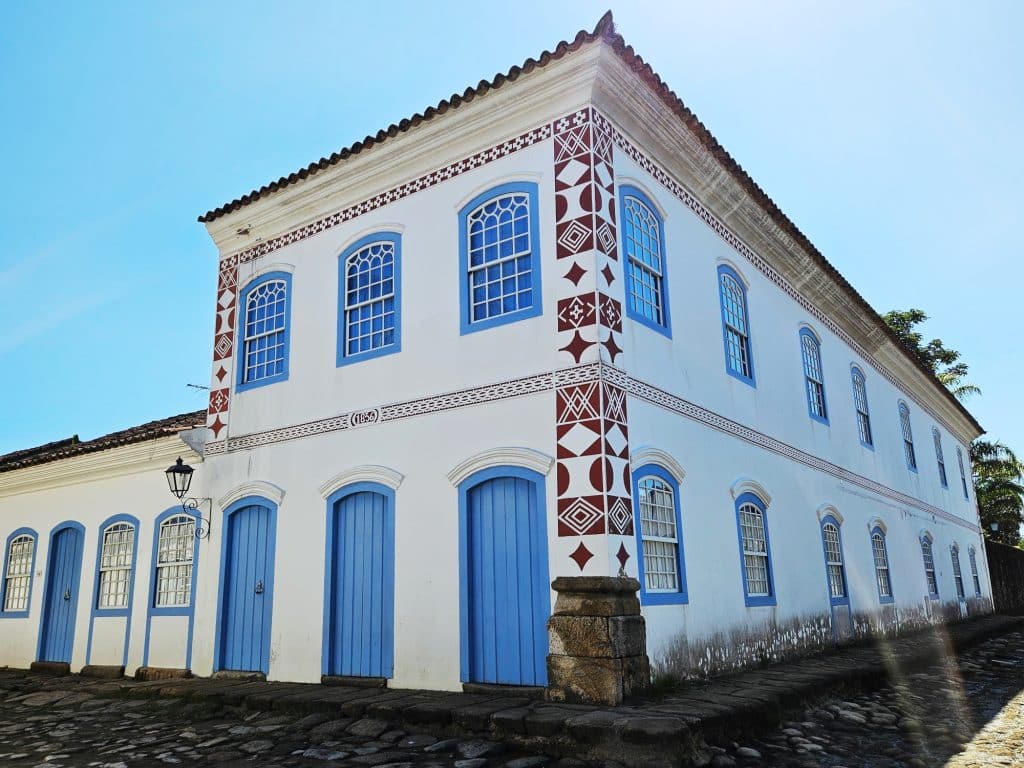
As you stroll through the cobbled streets, you will also find elements of the Freemasons. Their symbols are well visible at the corners of certain houses. They’re usually kept in the same style and colour as the rest of the architecture.
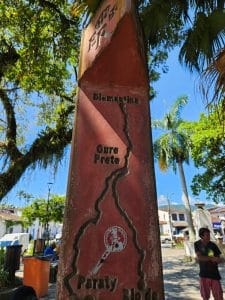
Paraty became important in colonial times as the end point of the so-called Royal Gold Trail where the gold from Minas Gerais would be loaded onto the ships to Portugal. The Gold Trail was built between the 17th and 19th century and is still available today as hiking route. A post with a map at the Fountain Square in Paraty marks the historic route.
Other things to do in Paraty
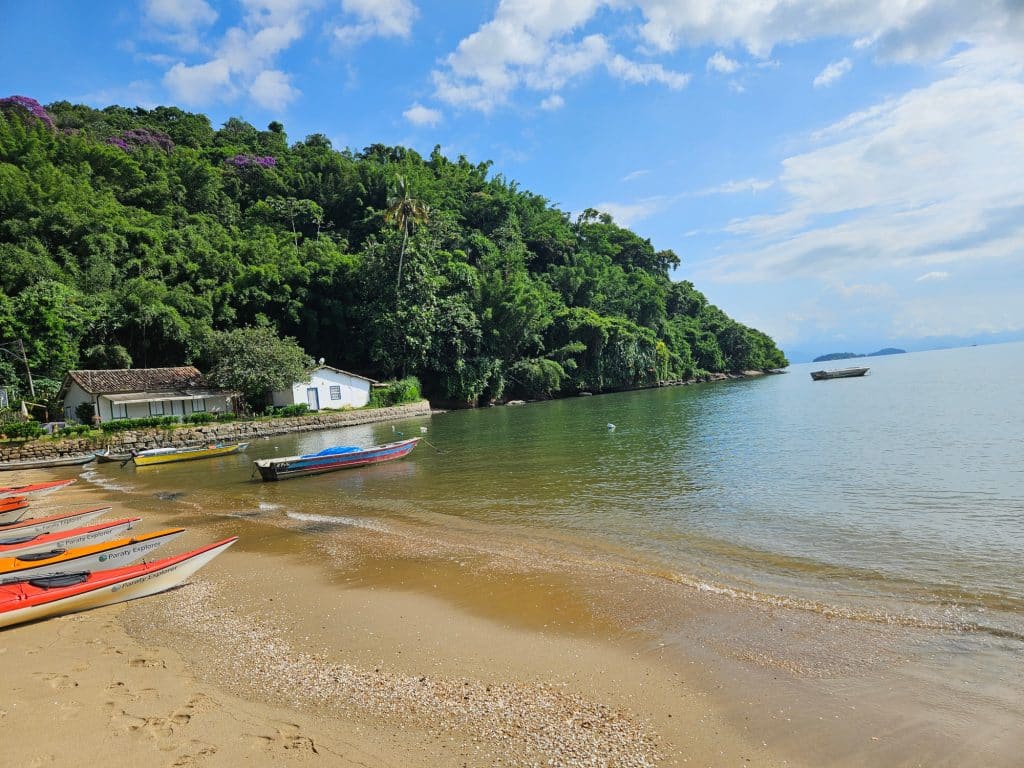
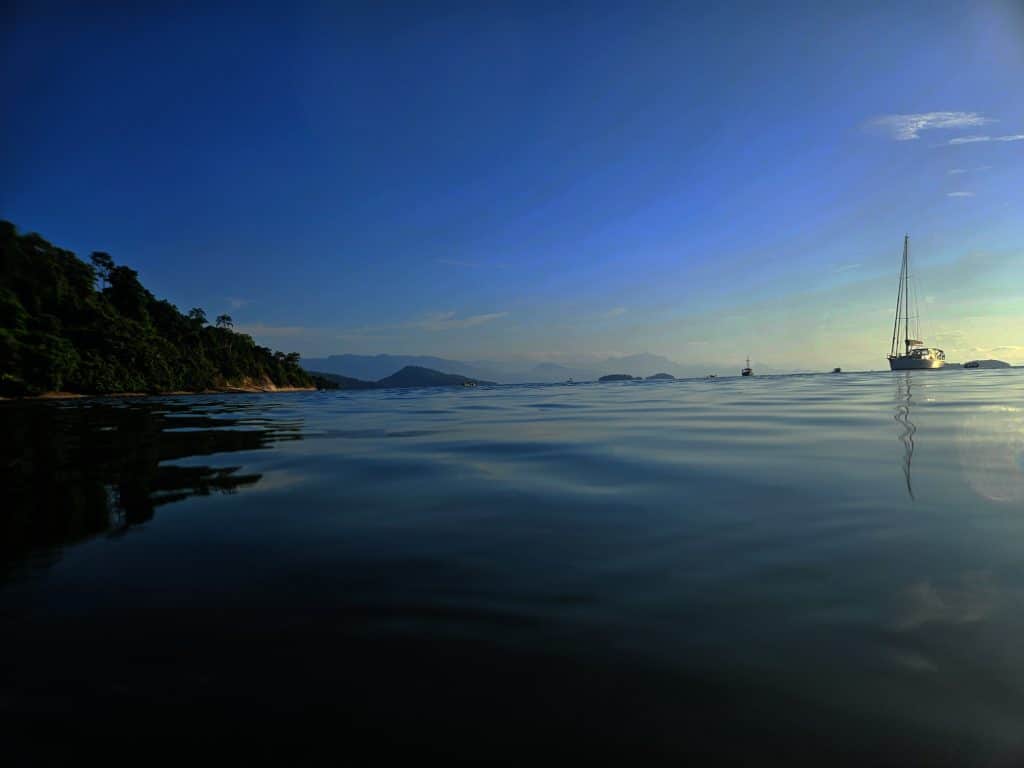
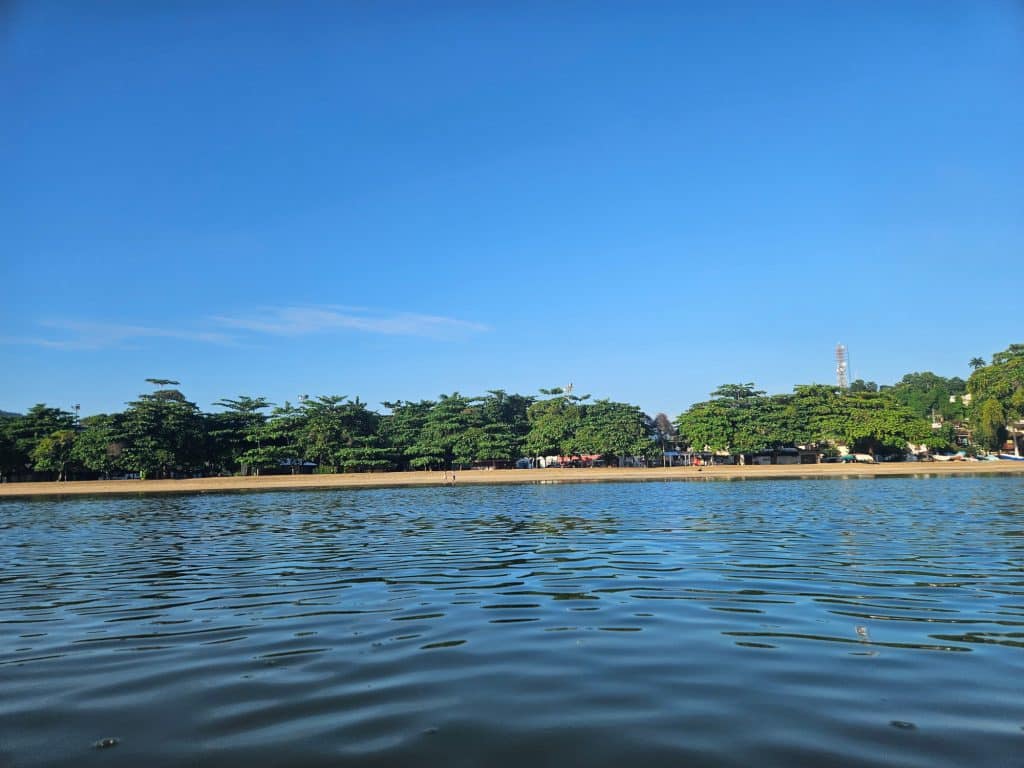
Charlie stayed outside of the historic centre at a guest house at Praia do Pontal. It was only a 10-minute walk to the town centre and had the advantage of being right on the beach. There are some bars and restaurants, and it is a relatively quiet beach. It is certainly a change to the busy gatherings at Rio’s beaches. Paraty is in a bay and the water is very calm. With several islands in front, it almost gives the impression of being a lake.
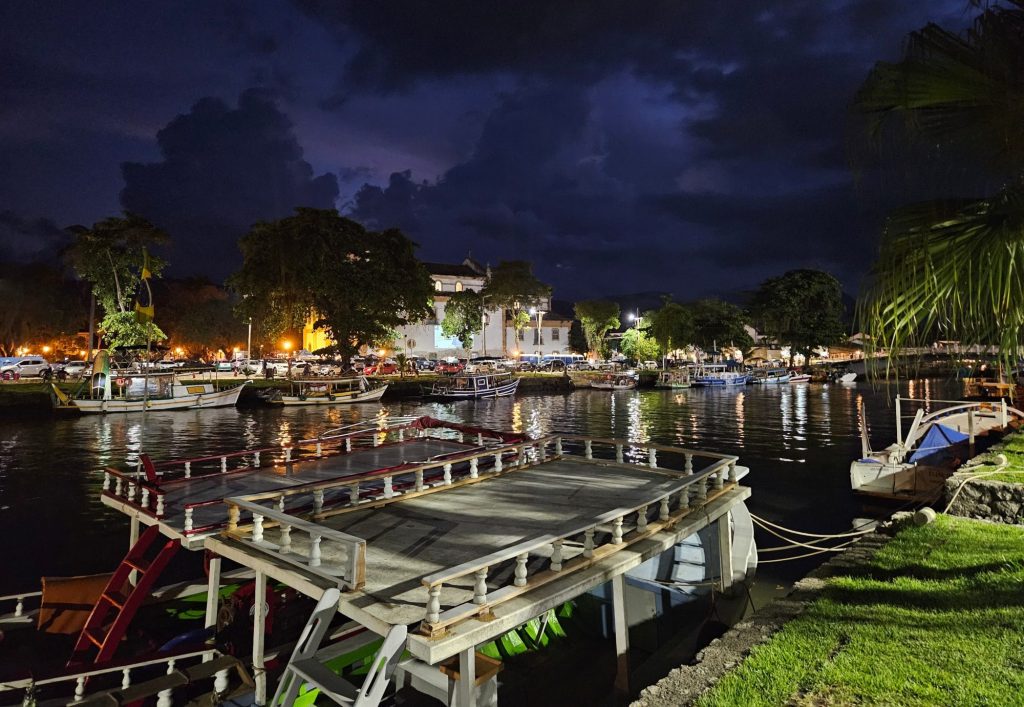
From there you can also see the river and the marina where you’ll find a large number of small boats that take tourists around the bay on day trips. There are more than 300 beaches and 65 islands in the area. You could certainly stay a lot longer than a weekend and still have plenty of nature to explore!