Different perspectives on Rio
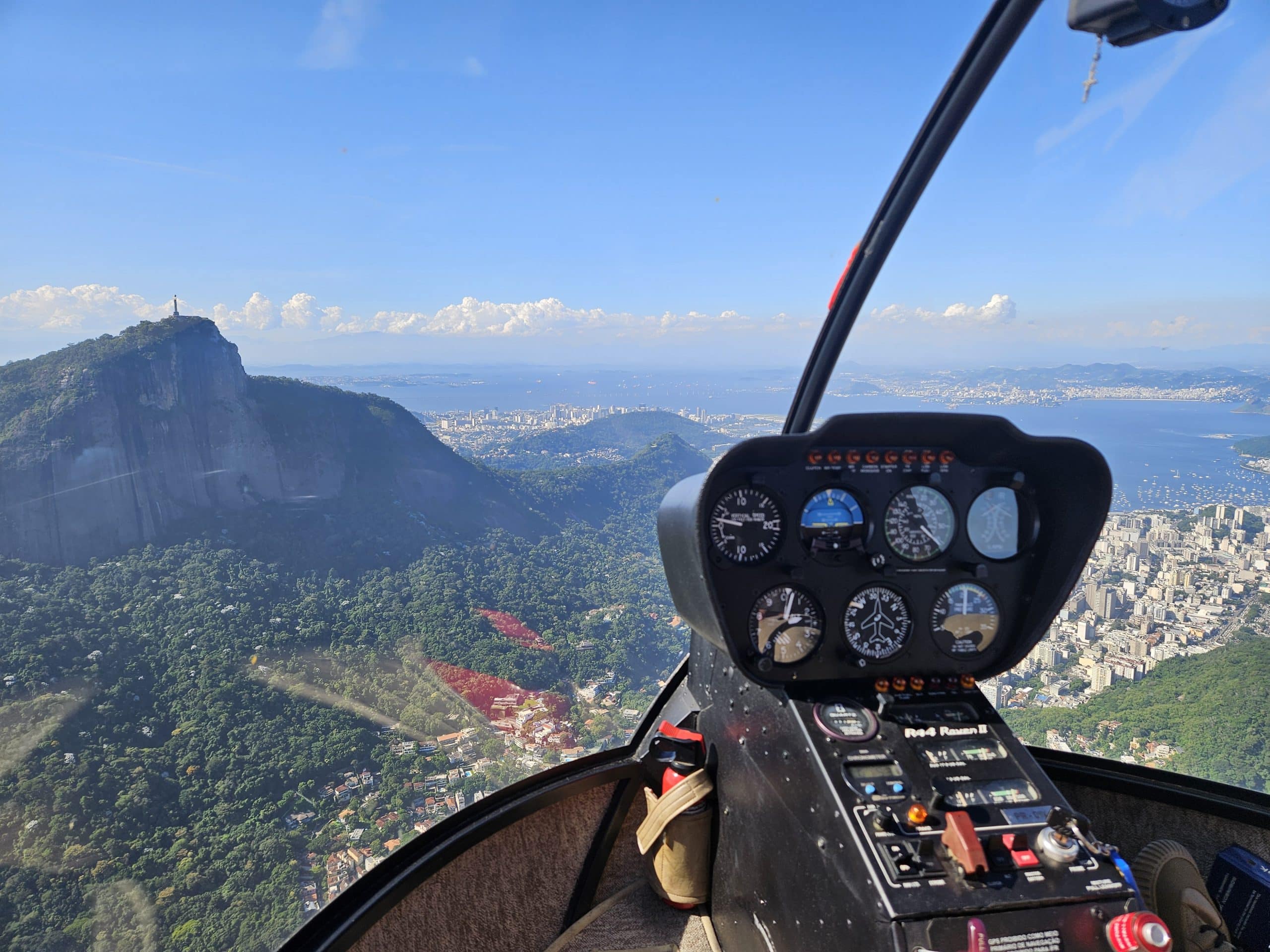
The typical image of Rio de Janeiro is an aerial view that includes the statue of Christ, the Sugar Loaf Mountain and majestic buildings along a seemingly endless beach. Words that come to mind are sunshine, beach life, paradise – or simply what dreams are made of.
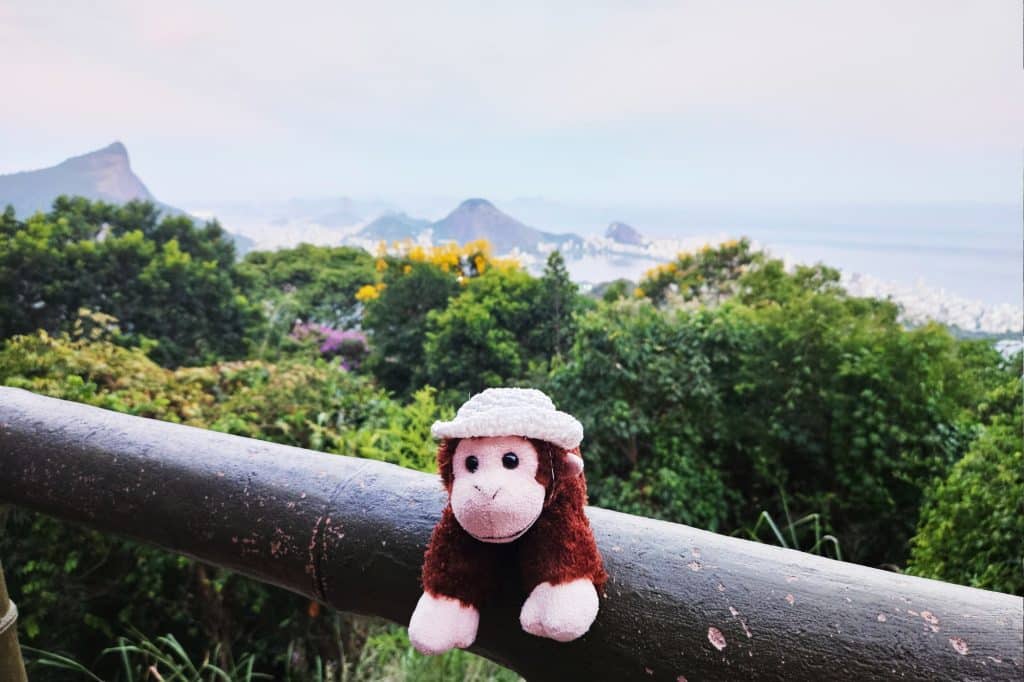
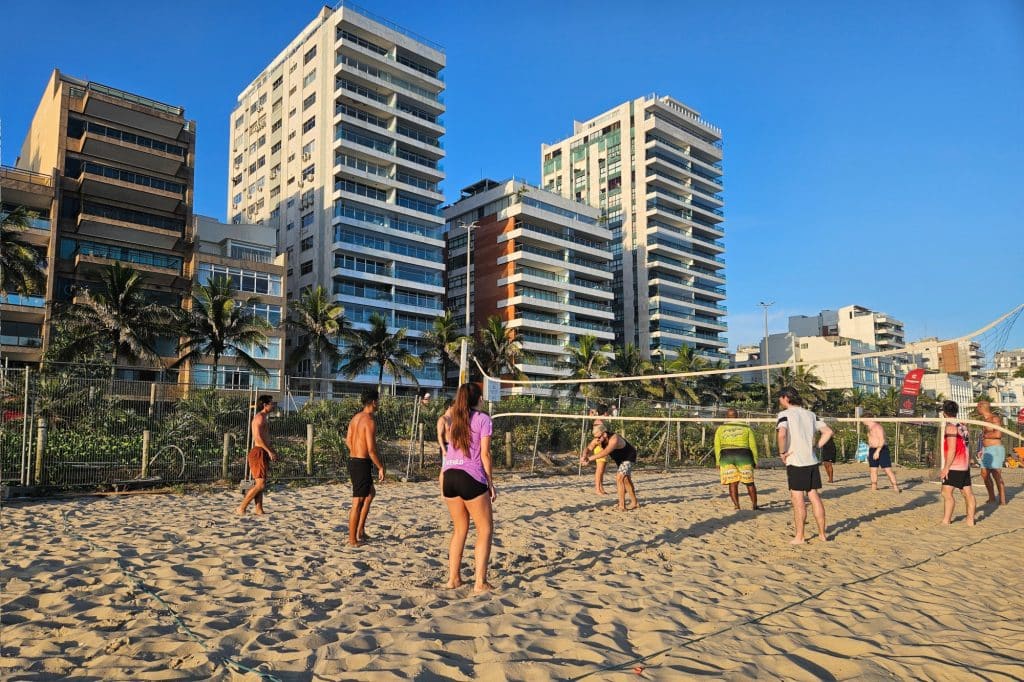
During Charlie’s visit she quickly realized that there was more to the city of Rio de Janeiro than what meets the eye at first sight. She took Portuguese lessons. She played Volleyball with the locals on the beach. She lived in a host family. She visited a favela. And she got a view over the city from different angles. It does make a difference if you see Rio from the statue of Christo Redentor, from the top of the Sugar Loaf, from the Chinese Viewpoint in Tijuca Forest or from the Parque das Ruínas in Santa Teresa.

Useful links:
- Language learning: Caminhos, Talkaway
- Digital Nomad Community: riodigitalnomads.org
- App for coworking spaces: Station App
- App for sports and meetups: Mude



How to move around Rio de Janeiro
How to get to all these places though? The best and safest way to move around in Rio is by Uber. Depending on the time of day, there can be a lot of traffic, so plan ahead and request the Uber early. The time estimations in the app were always incorrect for Charlie and you should add at least 10 minutes to the estimated time of arrival.
Phone robberies really are a concern in Rio and it is recommended to request the Uber from inside a building. As the car arrives, put your phone away and then walk outside. You shouldn’t be scared in Rio but always pay attention to your surroundings and think twice before getting your valuables out.
Public transportation in Rio de Janeiro
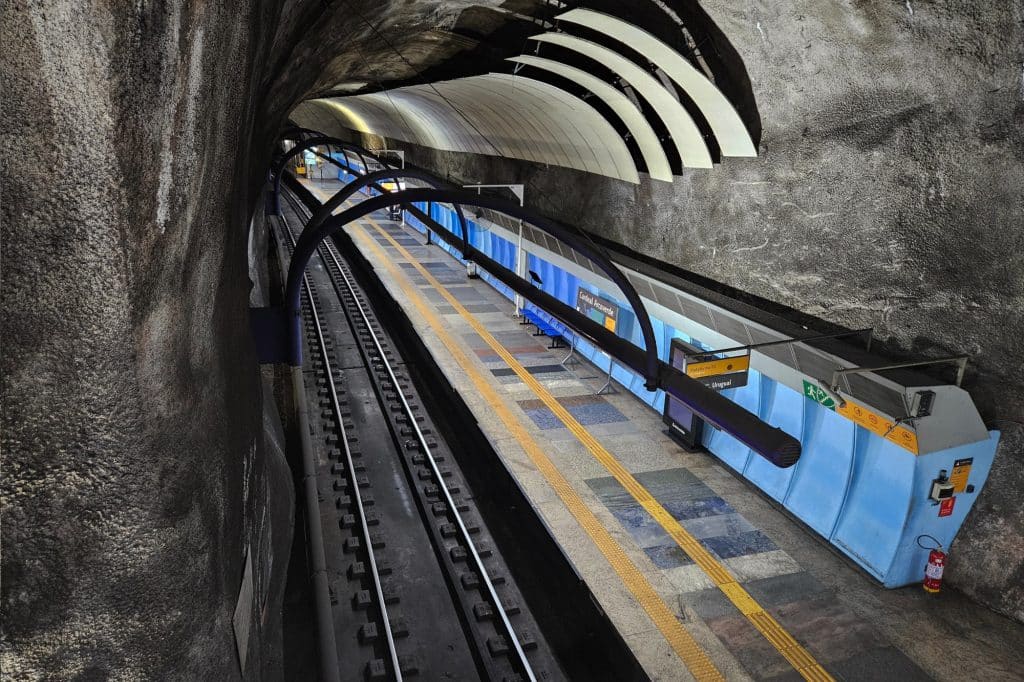
When it comes to public transport, the Metro is the safest way to get around and you can easily tap in and out with a contactless card. If you prefer, you can get metro tickets in every station. The ticket is a plastic card too. You simply tap this card and then insert it into the machine before passing through the gates. The card will be re-used.
The Metro in Rio also has separate carriages that are women-only during peak times. You will see signs on the floor at the platform to know where to enter to get to this particular carriage. Inside the Metro stations, there is WiFi and it is safe to get your phone out. When you exit the Metro station however, you should act with caution. This can be tricky because some Metro exits might be closed, and you might have to exit through the opposite side of the station. Once outside, you might need the help of Google Maps for orientation and directions.
If you want to visit Barra da Tijuca or Recreio, you can easily take a bus from Ipanema or Copacabana. This route is also considered safe. For the bus, you need a Jaé card (you can use it for the Metro too) or you need to pay in cash with the driver. Contactless card payments do not work for the bus. If you plan to take the bus to other locations in Rio, please get route information and speak to a trusted local whether the areas the bus is passing through are safe for tourists.

Getting to the city from the airport
If you are flying into RioGaleão (GIG), the best way to get into the city is by Uber. You can easily follow the signs in the airport to reach the Uber parking area. Charlie paid around USD 15 for this journey.
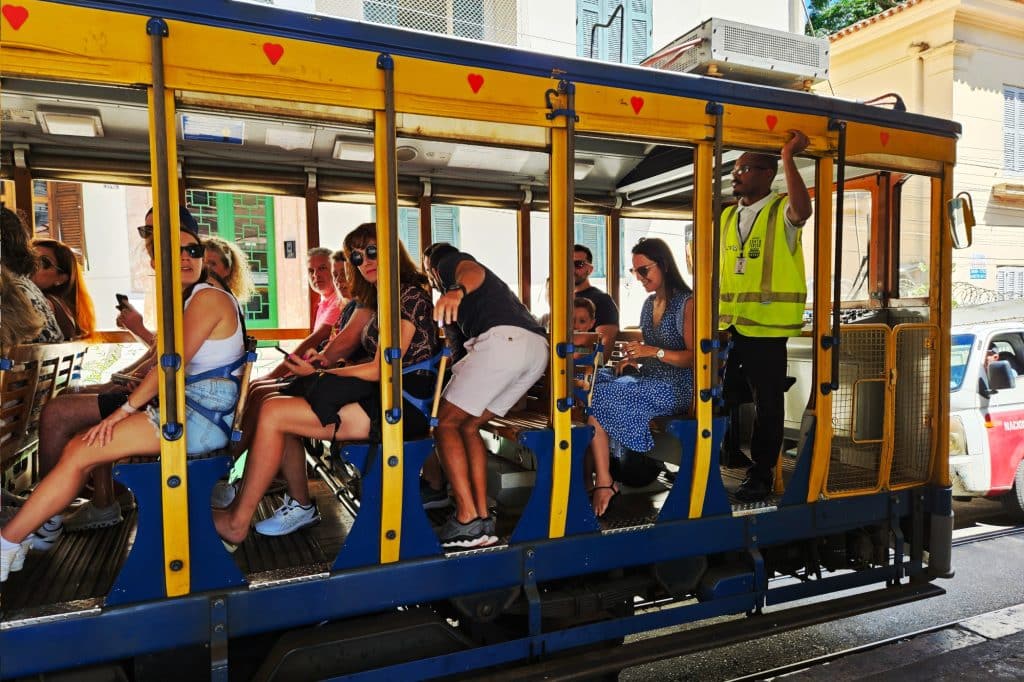
If you are flying into Santos Dumont Airport (SDU), there is a tram, the VLT, you can take. It is not signposted inside the airport and it is best to follow the signs towards the shopping mall. If you leave the airport on that side, you’ll see the tram station towards the left. There’s a ticket machine at the platform and one ride costs the equivalent of USD 1.You will need to buy the so-called Jaé card and top it up. This will be your ticket. You can use this card for the Metro too and if you plan to take the bus in Rio, it also is your bus ticket. You can change from the VLT to the Metro after only two stations at Cinelandia. It is very easy and also considered safe.
Getting to and from the central bus station
The VLT also takes you to the bus station (Rodoviario). The tram is considered safe, however, this route goes through some areas where you shouldn’t just walk around on your own. If you get on and off at Cinelandia or Carioca and the bus station, it is okay during the day. After dark, an Uber is the better option.
Walking around Rio de Janeiro
Between Copacabana and Ipanema where tourists mostly stay, everything is walkable. Be sure to get shoes with a good profile. Charlie doesn’t know how the locals can walk around all day in flip-flops. She would have had blisters and pain.
The tricky bit might be directions. You should not get your phone out on the side of the street because you won’t see a phone thief coming on a motorcycle. Try to memorise as much of your journey beforehand. It was a good memory exercise for Charlie to see up to which corner she could remember the way. She used street names and shops or restaurants as reference points. If you can’t remember any further, step inside a shop, then get your phone out to look at the map.
At night, please take an Uber!
Tijuca National Park
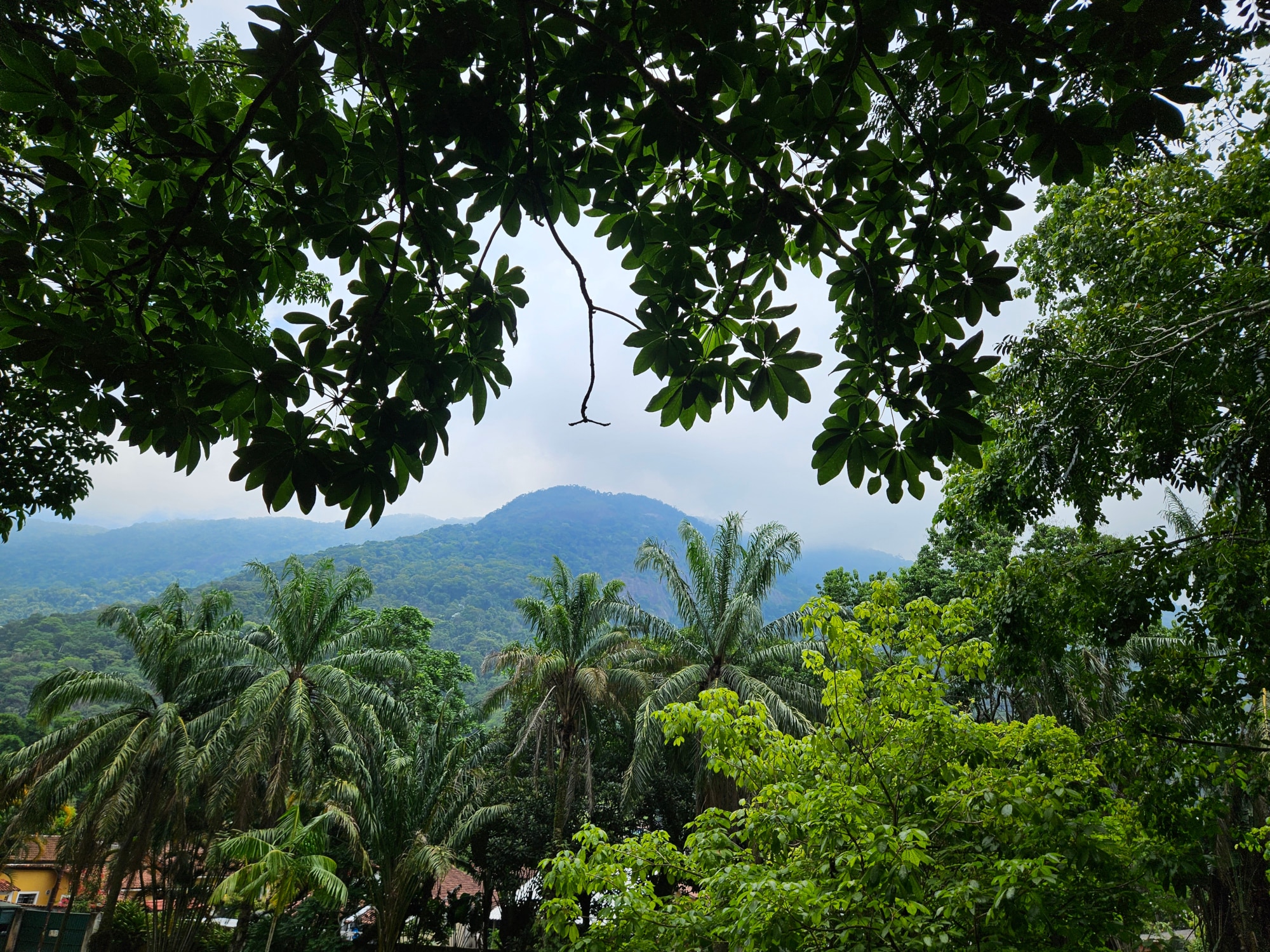
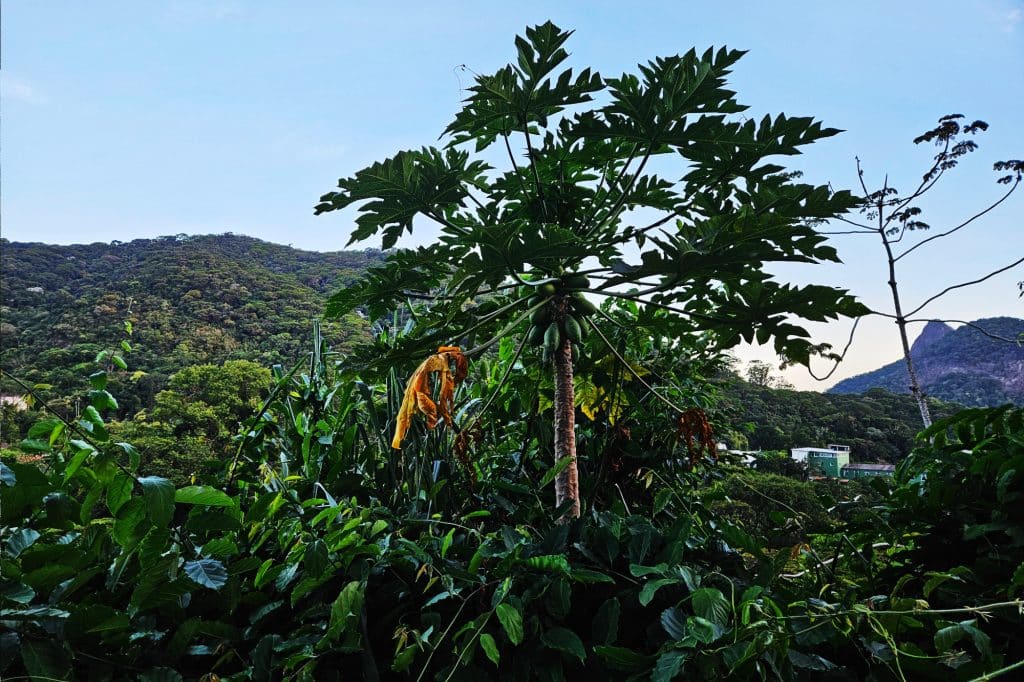
In many ways, Rio reminded Charlie of Las Palmas: a vibrant city, close to the sea and the surf and close to mountains and nature. In Rio, there is even more of the latter. The Tijuca forest is a national park and a rain forest within the limits of the city of Rio de Janeiro. As such, it is a popular destination for day trips and hikes. There’s lots to see and do.
Charlie didn’t stay long enough in Rio to explore the national park through multiple hikes. Instead, she booked a guided tour that mostly consisted of driving along the main road in the forest and a bit of hiking to see a cave from the inside. It was a small group of only 6 participants and the guide, Rodrigo, showed them all his favourite spots in the forest and pointed out all the different plants they could see. He was also looking for animals, for example monkeys and sloths, but they didn’t see any that day.
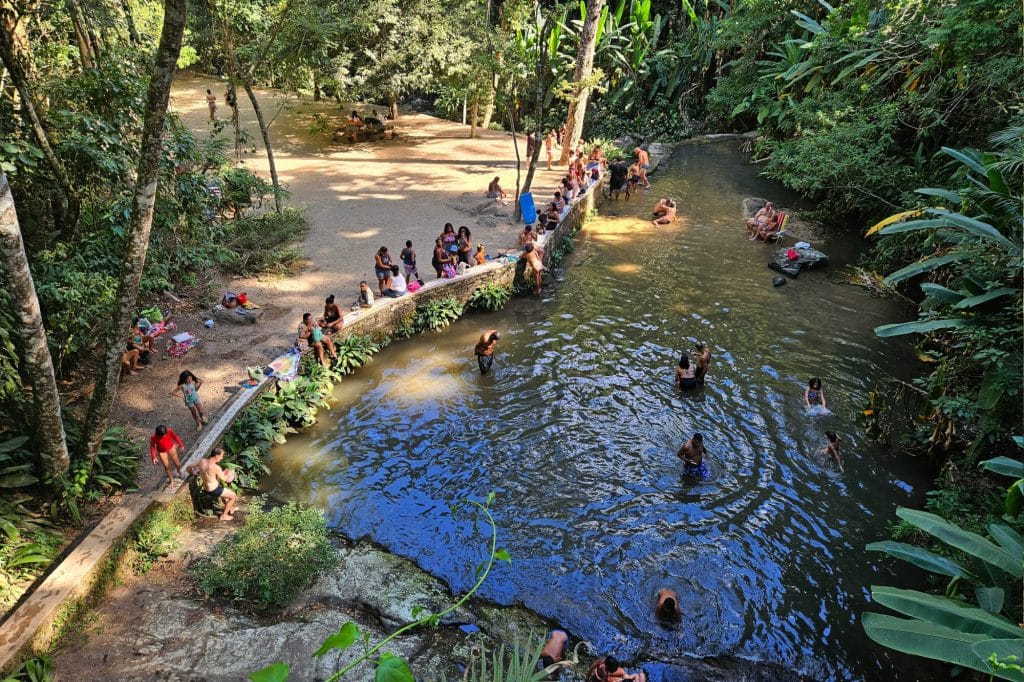
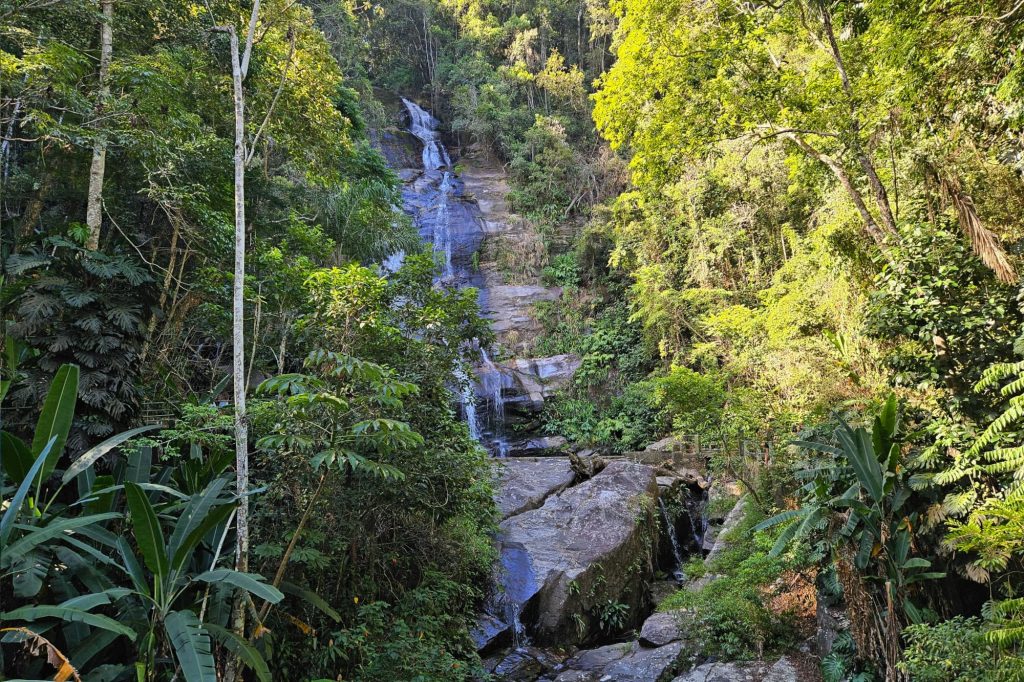
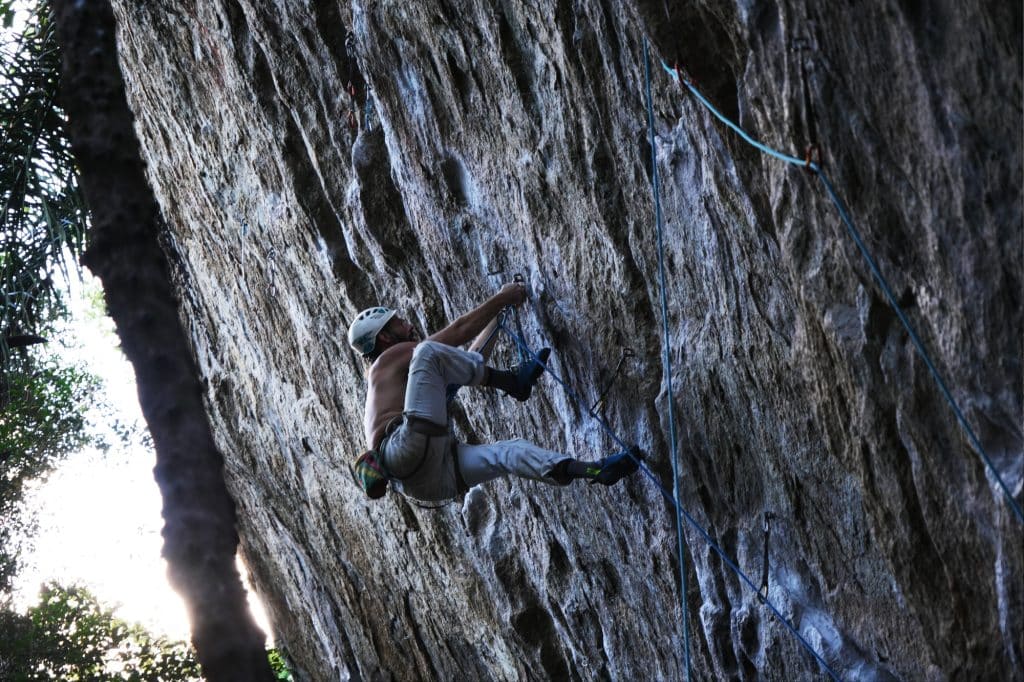
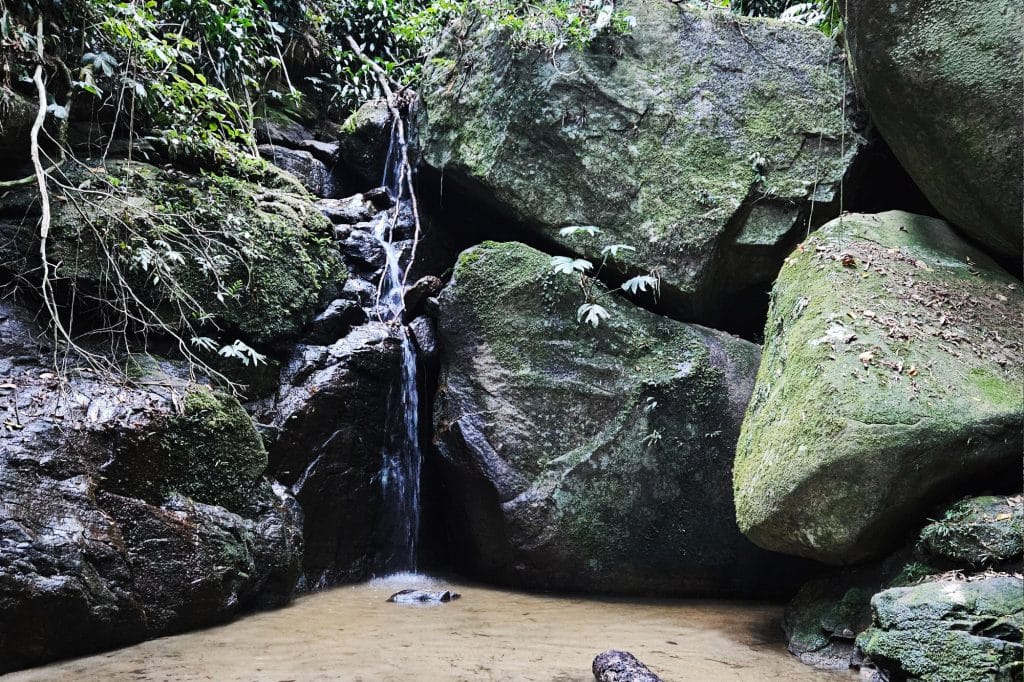
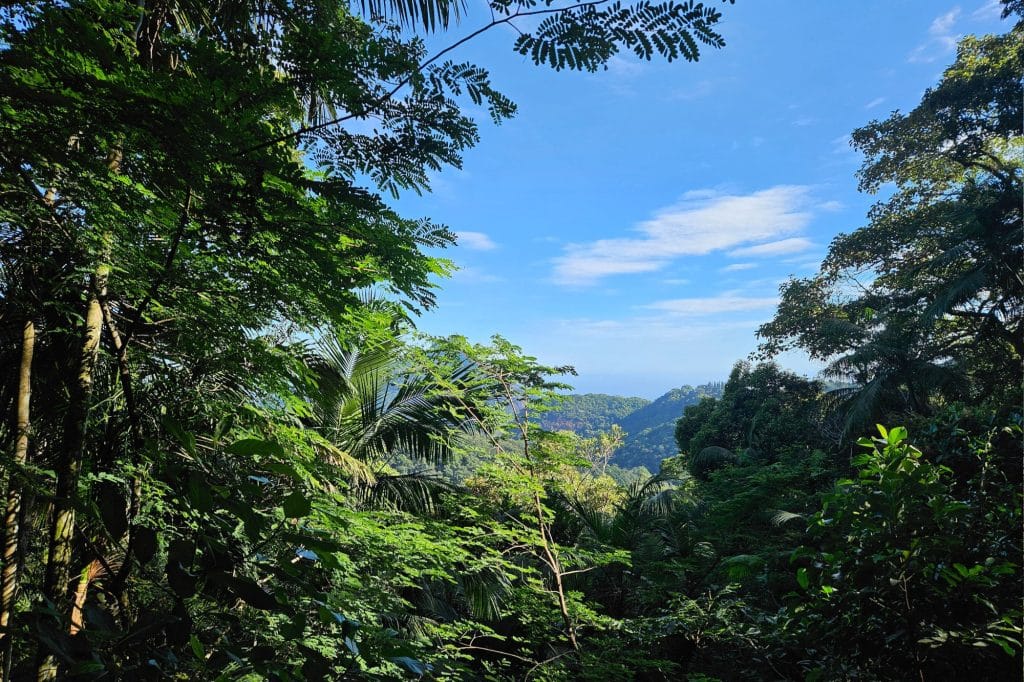
They stopped at several waterfalls and enjoyed a shower under one of them. That was a welcome activity after the hike along some steep steps to reach a cave. On the way, they also spotted some rock climbers. They also saw paragliders and hanggliders near the coast and enjoyed stunning views over the mountains and the city from several viewpoints. From the Chinese Viewpoint (vista chinesa) they could see the whole city, including the Christ statue and the sugar loaf which from up there seemed to be quite small.
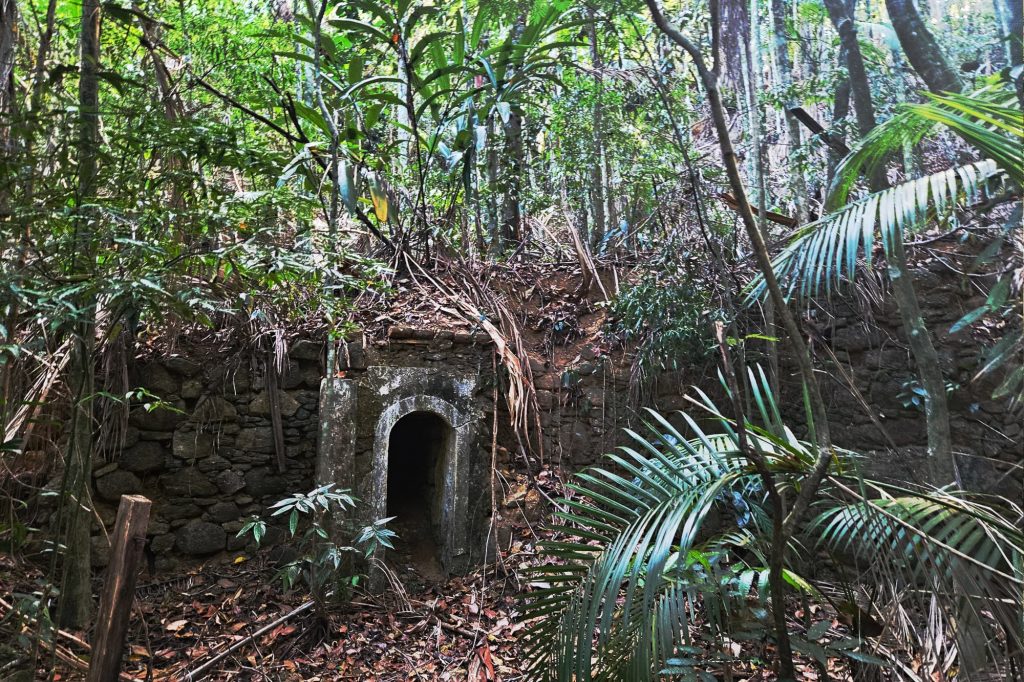
The Tijuca forest isn’t the original forest. After the colonization, the area was used for agriculture, mostly coffee and sugar cane plantations. Reforestation efforts started in the 19th century. Since the rainforest grows quickly, it is hard to imagine that the trees aren’t a thousand years old. If it wasn’t for ruins and parts of what used to be walls around the plantations, you would not notice that this is only a second forest.





The Statue of Christ and Sugar Loaf
They are probably the most visited places in Rio by tourists and yes, they have aspects of a tourist trap! Expect long queues and wait times at both, the Christ Statue and the Sugar Loaf. That being said, they’re still highly recommended to visit and you wouldn’t want to leave Rio without having enjoyed these views!



Visiting a favela in Rio de Janeiro
If you’re travelling to Brazil, you have probably heard or seen images of favelas. Contrary to common belief, they’re not a place of constant crime and violence. Some of them have been pacified and it is common for tourists to visit them. In Rio, the favelas of Rocinha, Santa Marta and Vidigal are the most obvious choices. When visiting a favela, it is important to do so with respect and to not take pictures in case of illegal activities. Charlie visited the favela Vidigal as a walking tour with the language school. The views from up there are spectacular too!

Surfing in Rio de Janeiro
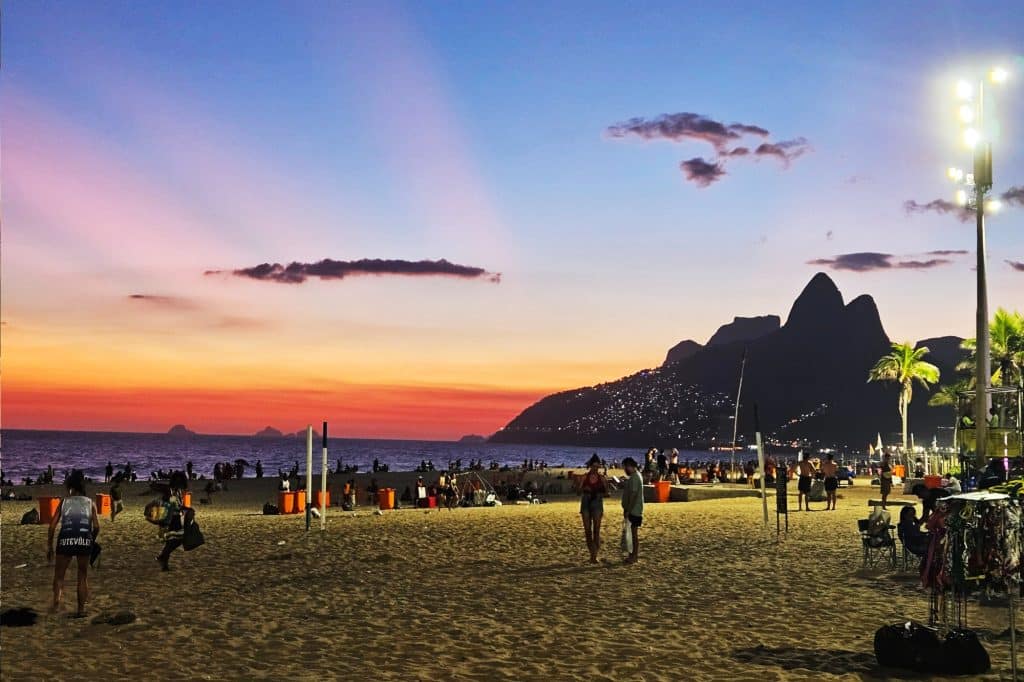
Rio de Janeiro is known for its beaches and the beach culture that comes with it. The best known beaches are Ipanema and Copacabana and they can get crowded. They are considered the most democratic place in Rio where everybody comes together, no matter their social status or whether they’re local or foreign.
Surfing is possible on either side of Arpoador on Ipanema Beach and at Leblon Beach. The wave is breaking very close to shore though and the rides are short. You find surf schools on the beach and it is best to just walk up to them to ask for lessons. You won’t find much information online and their shops are simply tents. Charlie spotted one surf club in a road behind Arpoador. Guarderia Surf Club is a shop and café and they offer lessons and rental as well as surfboard storage and lockers.
Apart from the waves breaking close to shore, there can also be a lot of rubbish floating near the coast. On one occasion, Charlie decided to not enter the water. It was just too much!
If you are looking for cleaner places, it is better to go bit further North or South of Rio for surfing.




Street Art in Rio de Janeiro
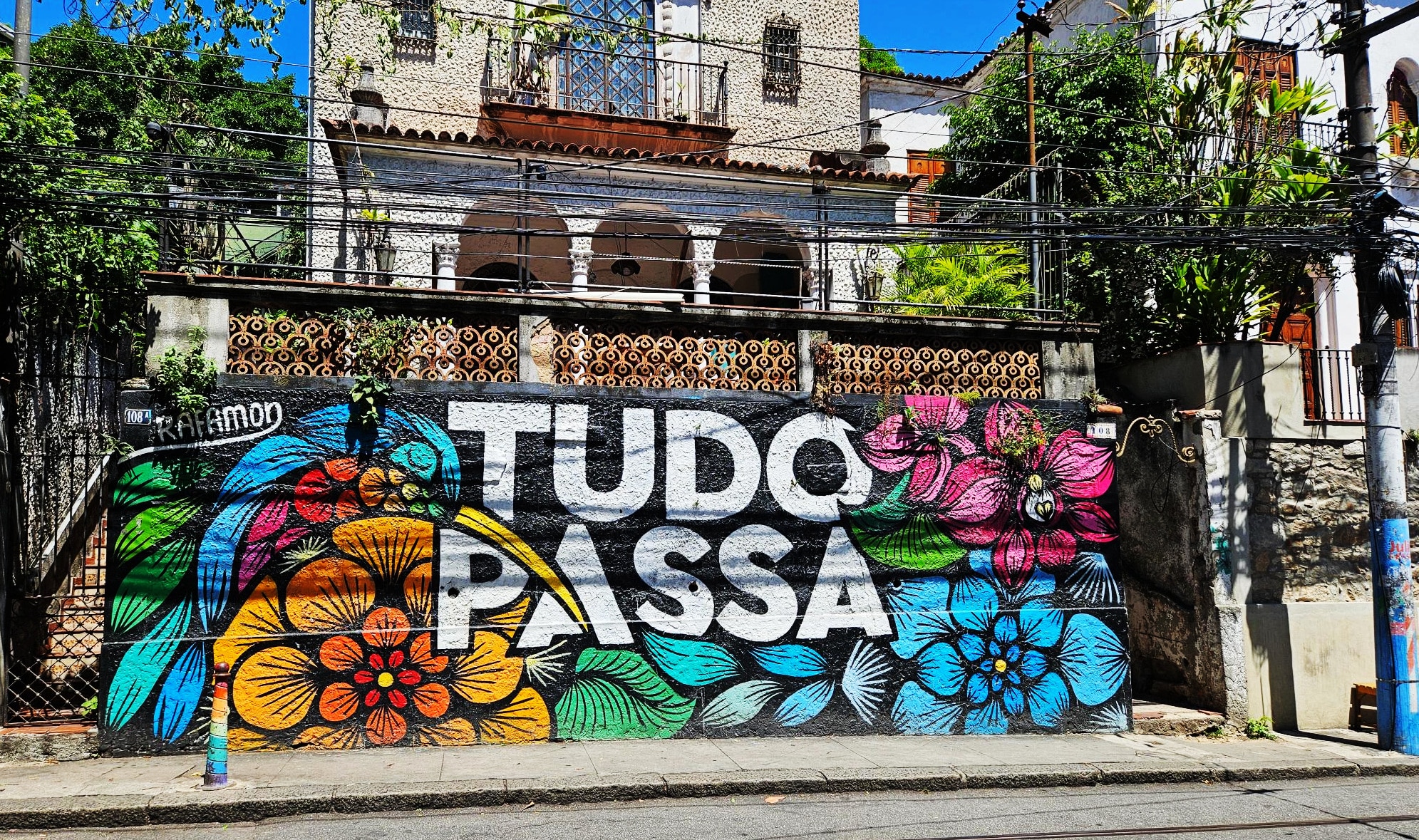
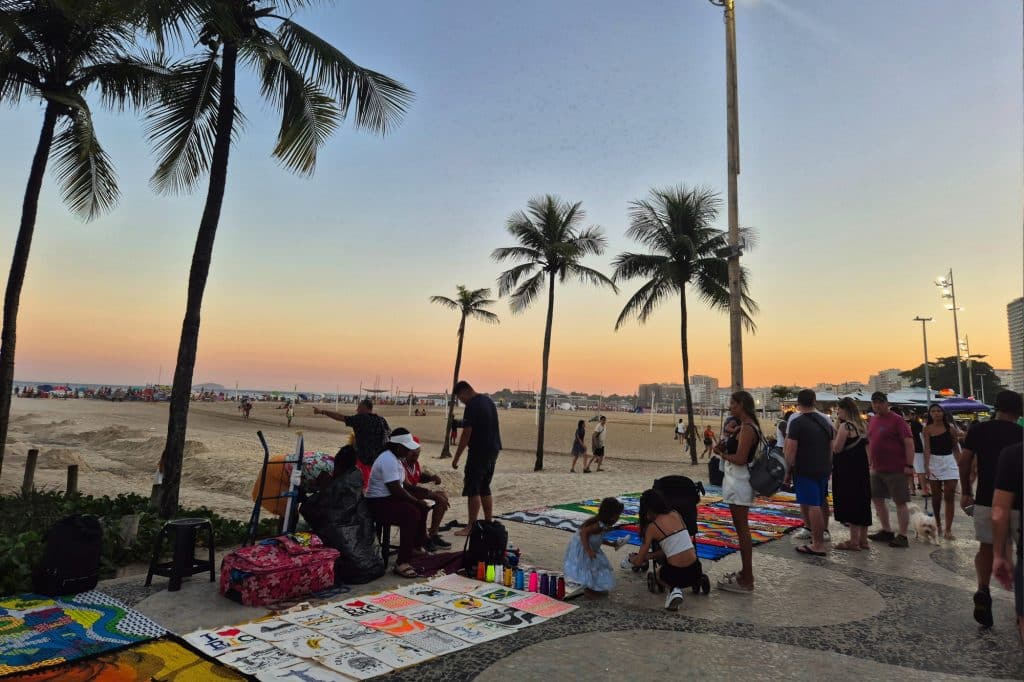
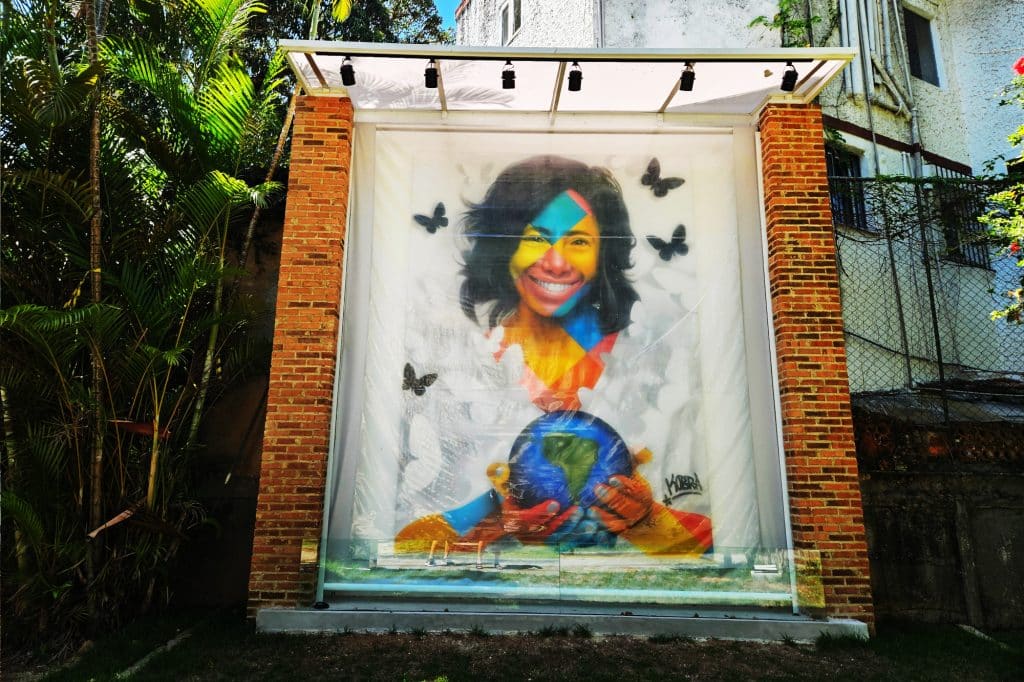
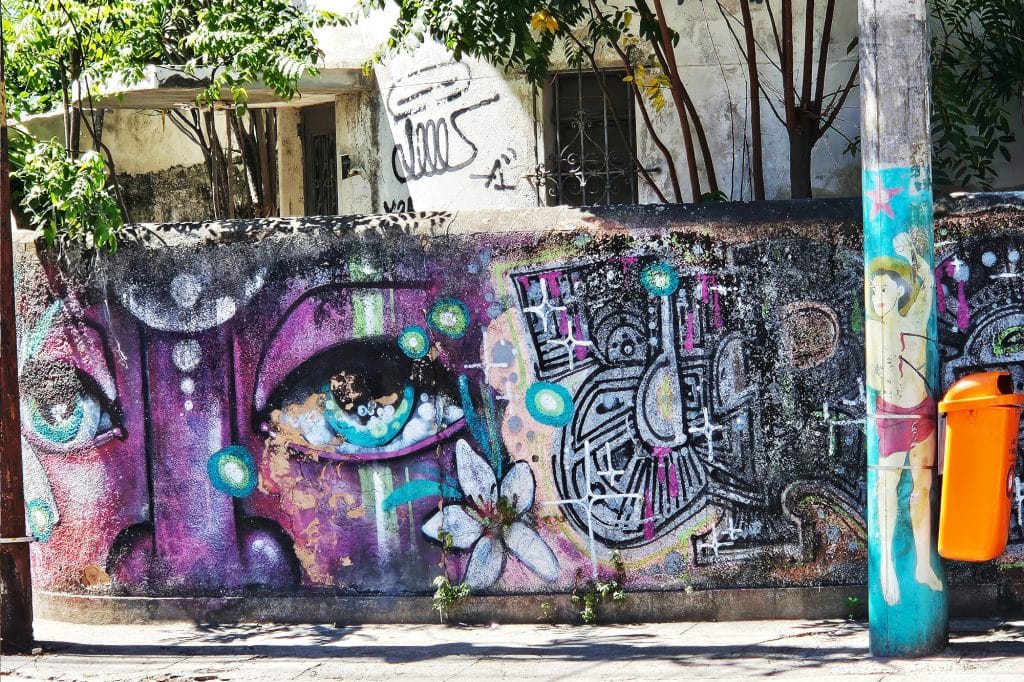
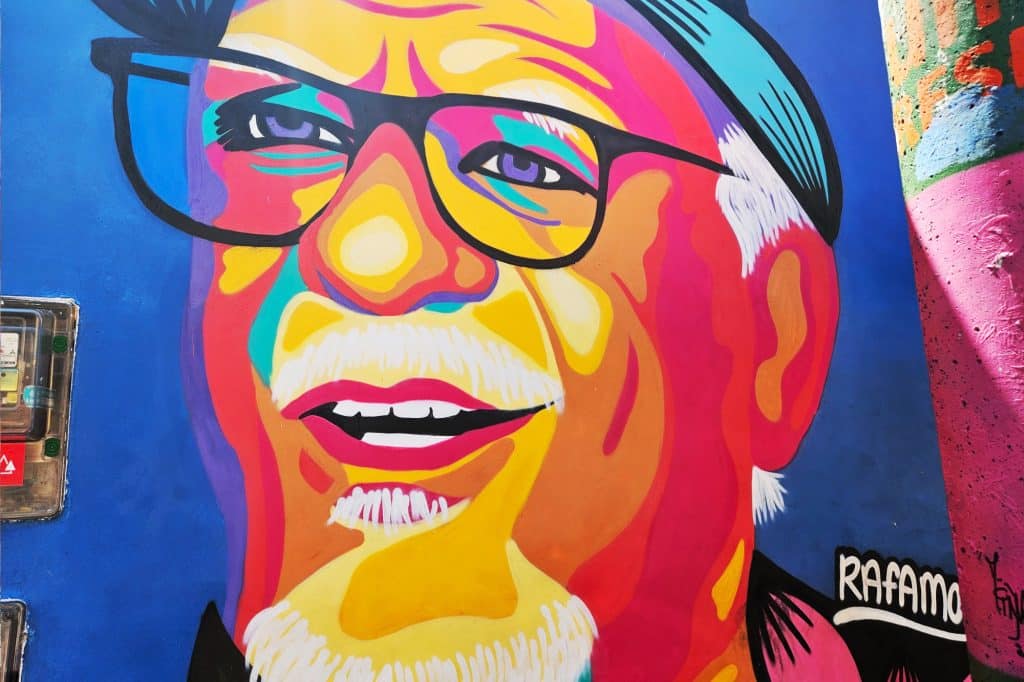
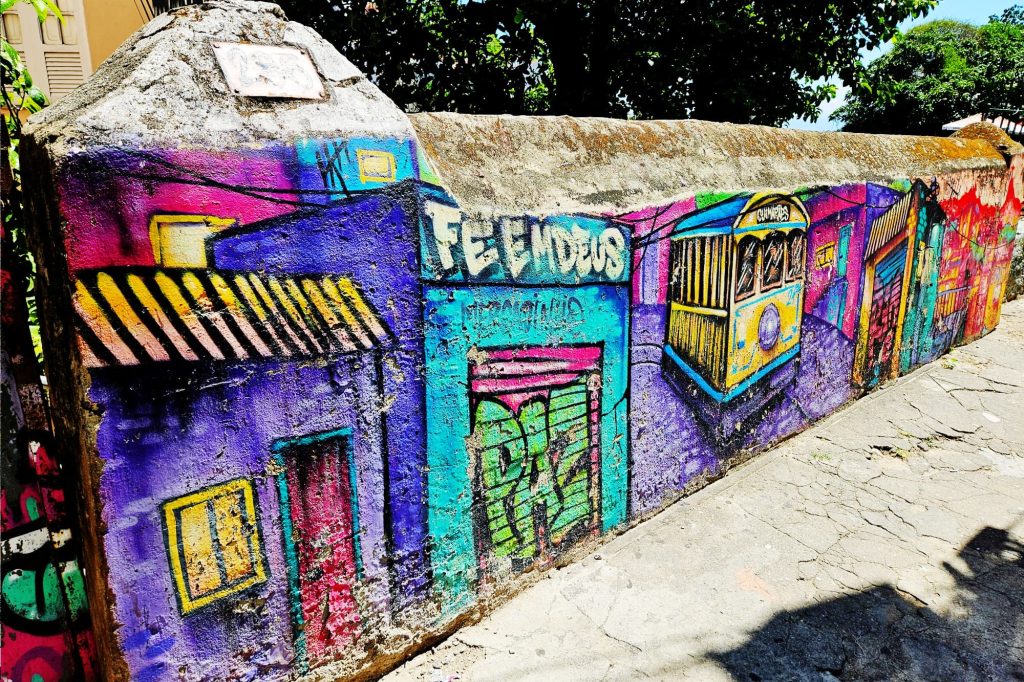
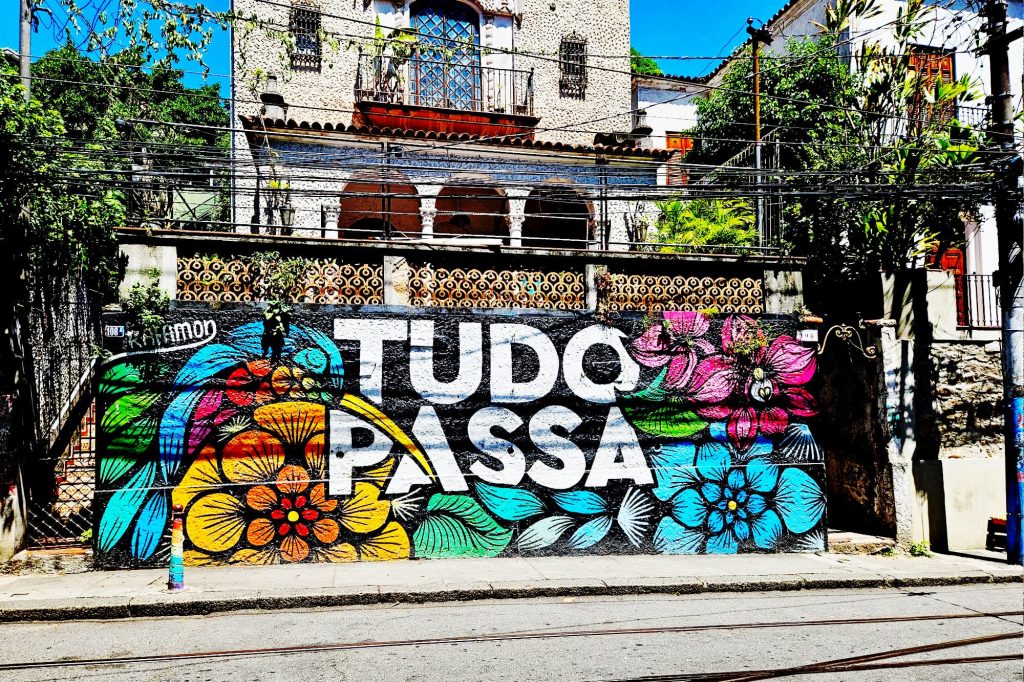
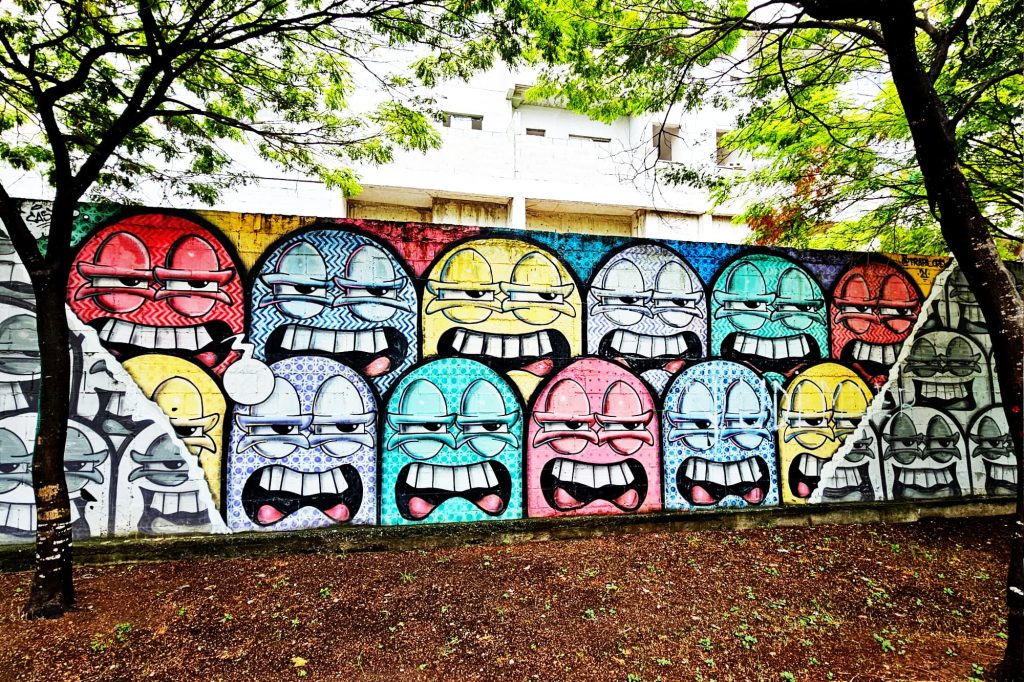
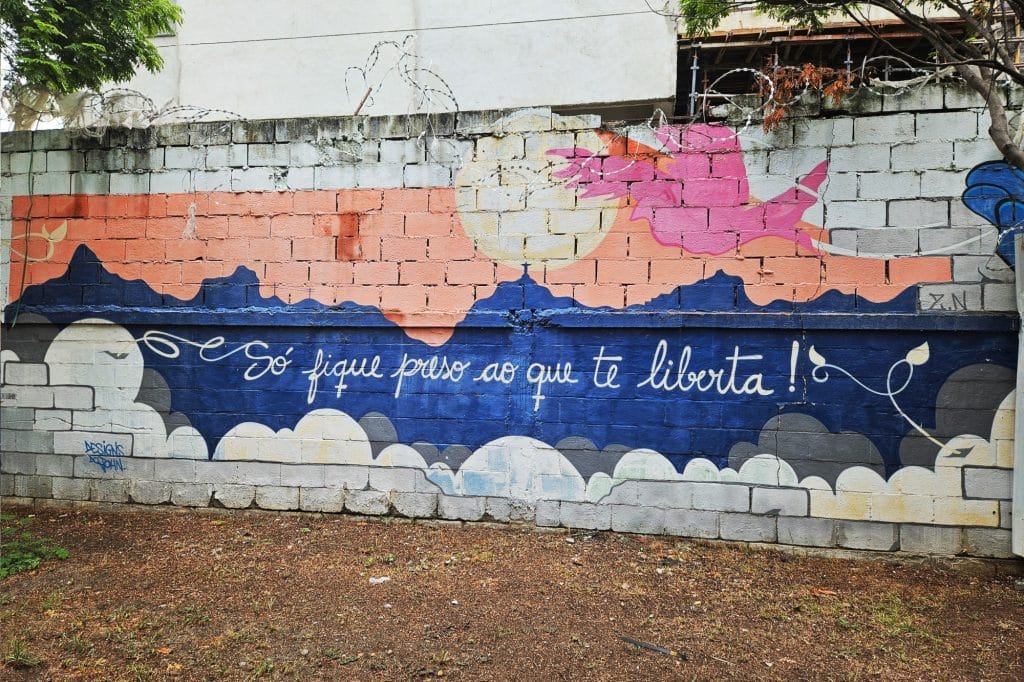
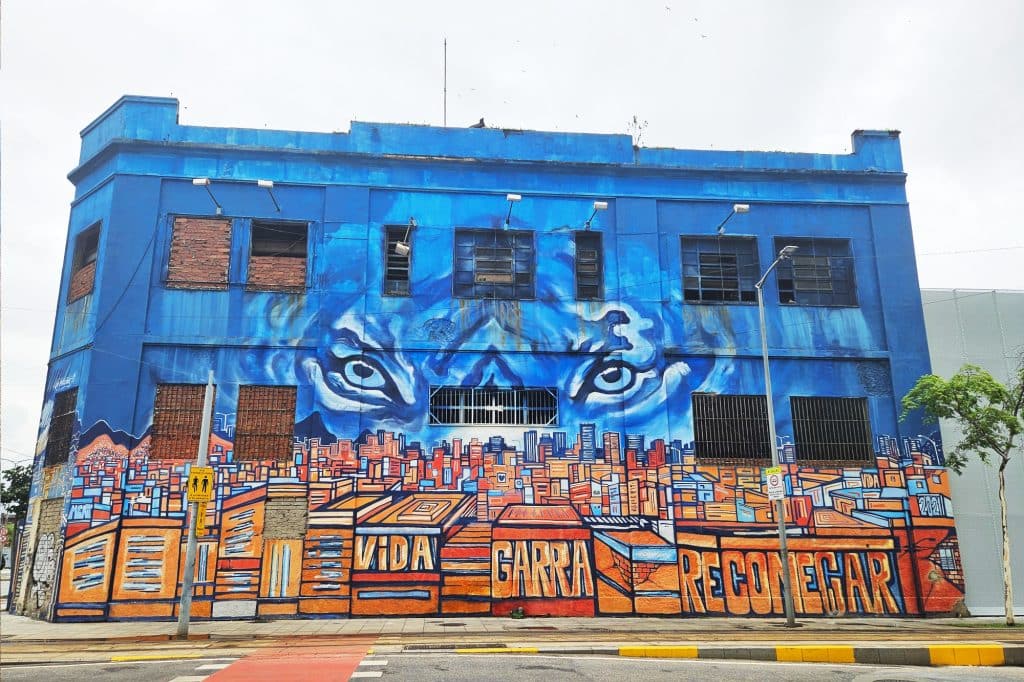
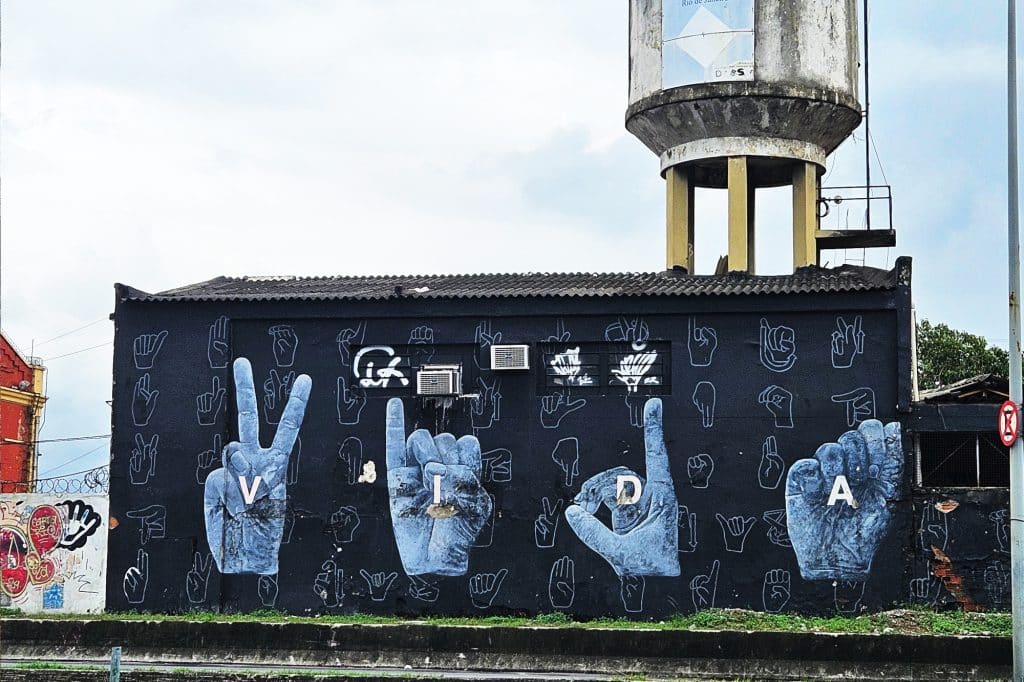
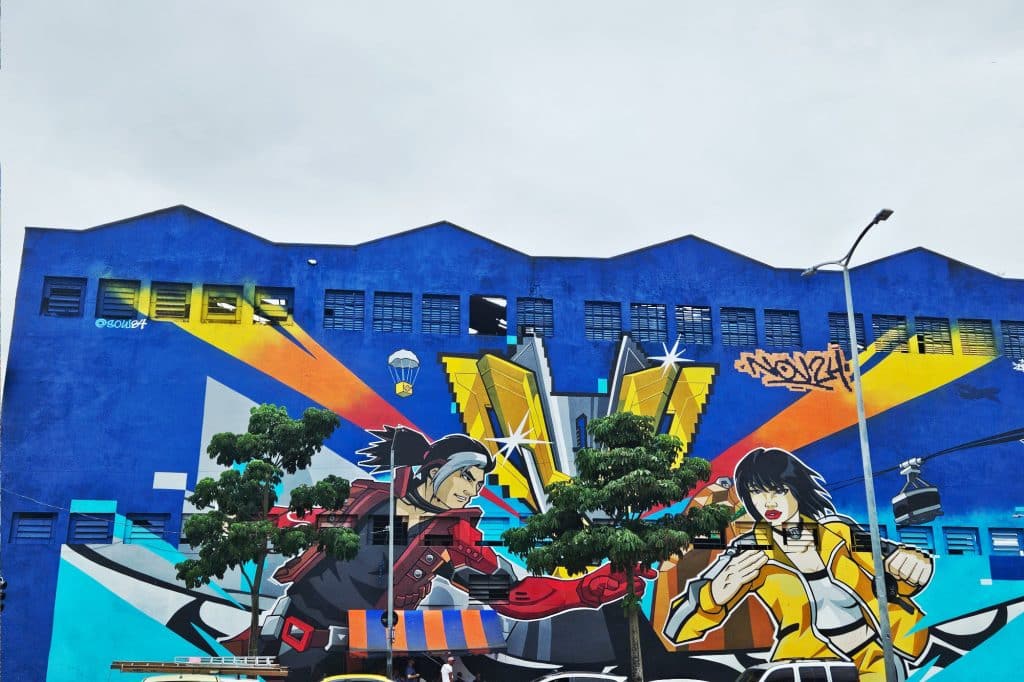
It doesn’t matter which part of Rio you go to, you will see graffiti and murals everywhere. The most popular part of town for arts of all kinds is Santa Teresa. It appears to be the biggest accumulation of street art and there are small art shops and artist studios as well. The architecture is mostly colonial since it was the first area where the Portuguese settled.
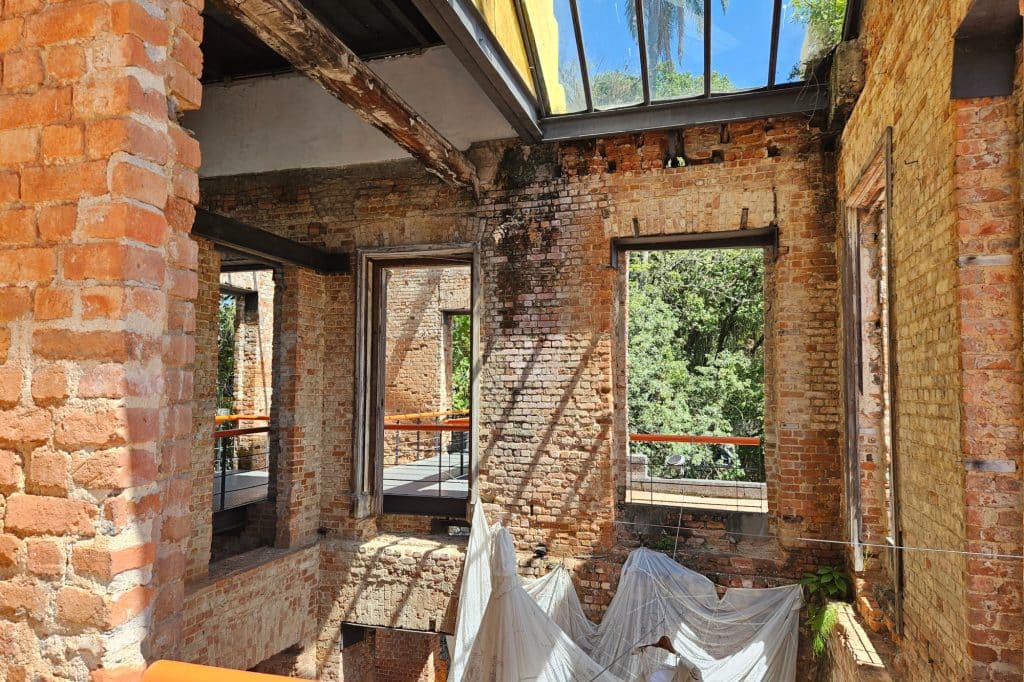
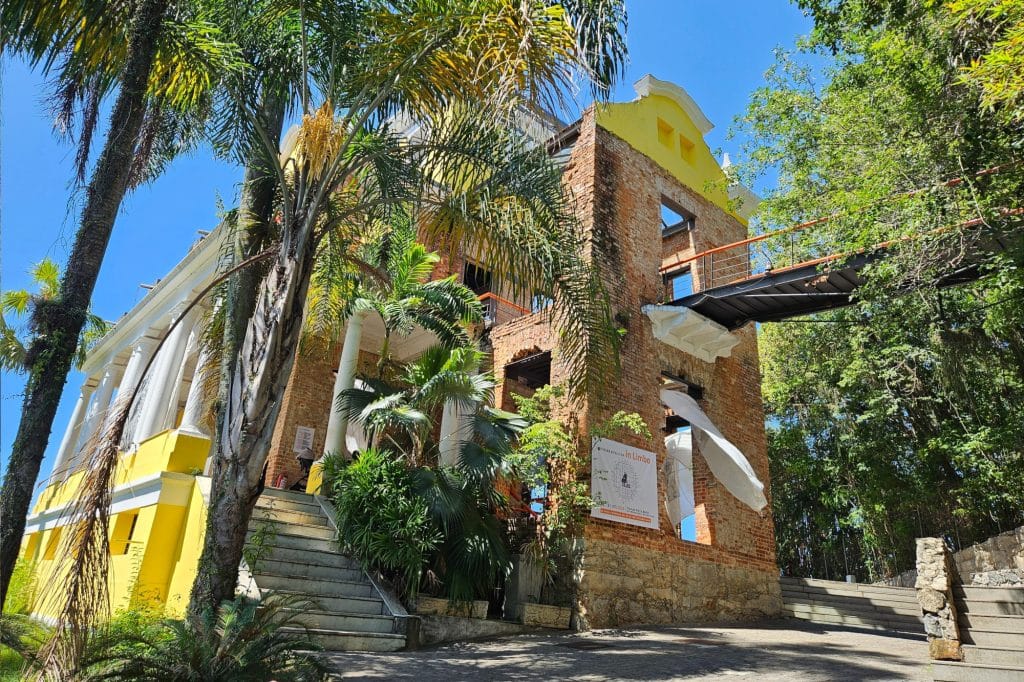
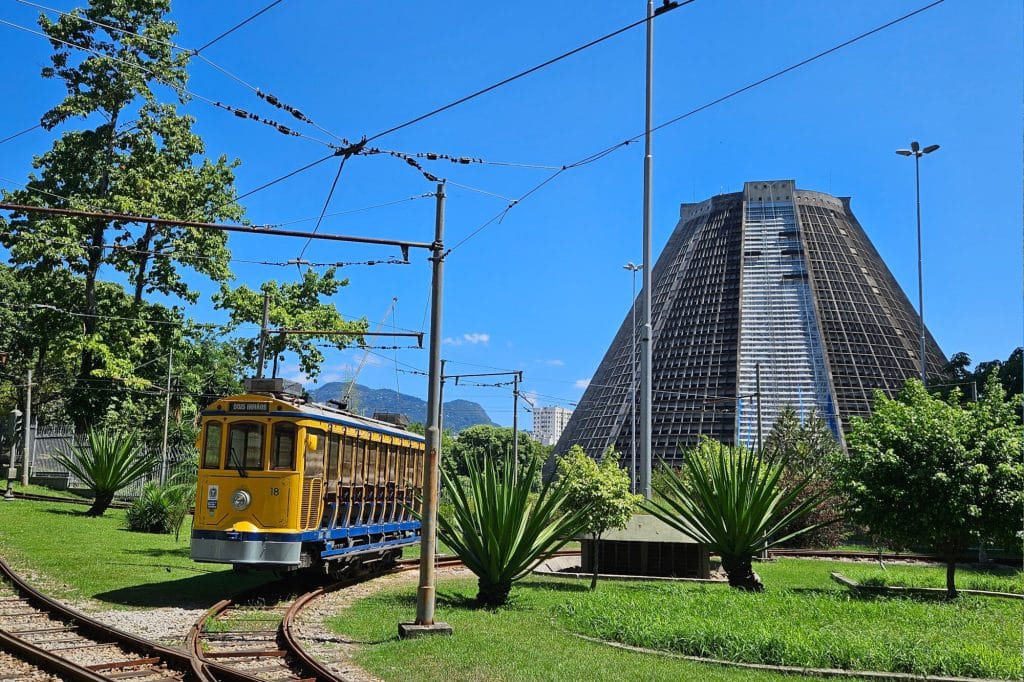
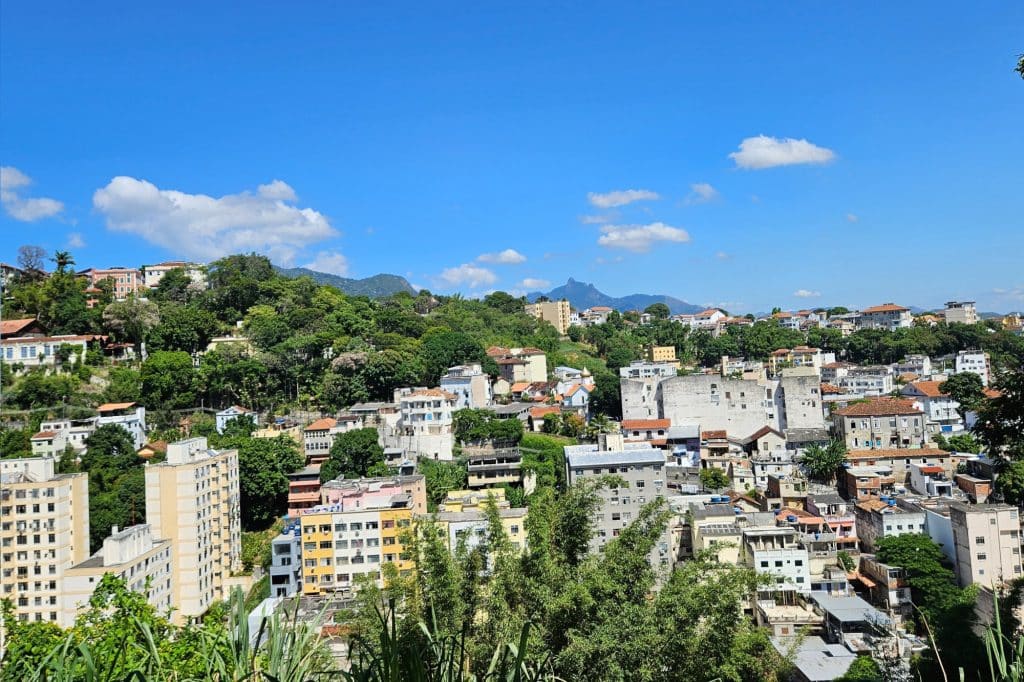
There is also the Parque das Ruínas (Maria Gloria Park) with an old building that has been converted into an art gallery with changing exhibitions. From up there, you also get a great view over Down Town Rio, an usual image of the city. To get there, you can take the historic tram from Carioca Station and then stroll around Santa Teresa. Already during the tram journey, you will see plenty of street art.
There are some giant murals around the Boulevard Olimpico and in some areas near the port. When Charlie was there, there were a lot of old factories and construction sites. The whole area might change in the near future and the street art might take a new shape.




Rio de Janeiro for digital nomads
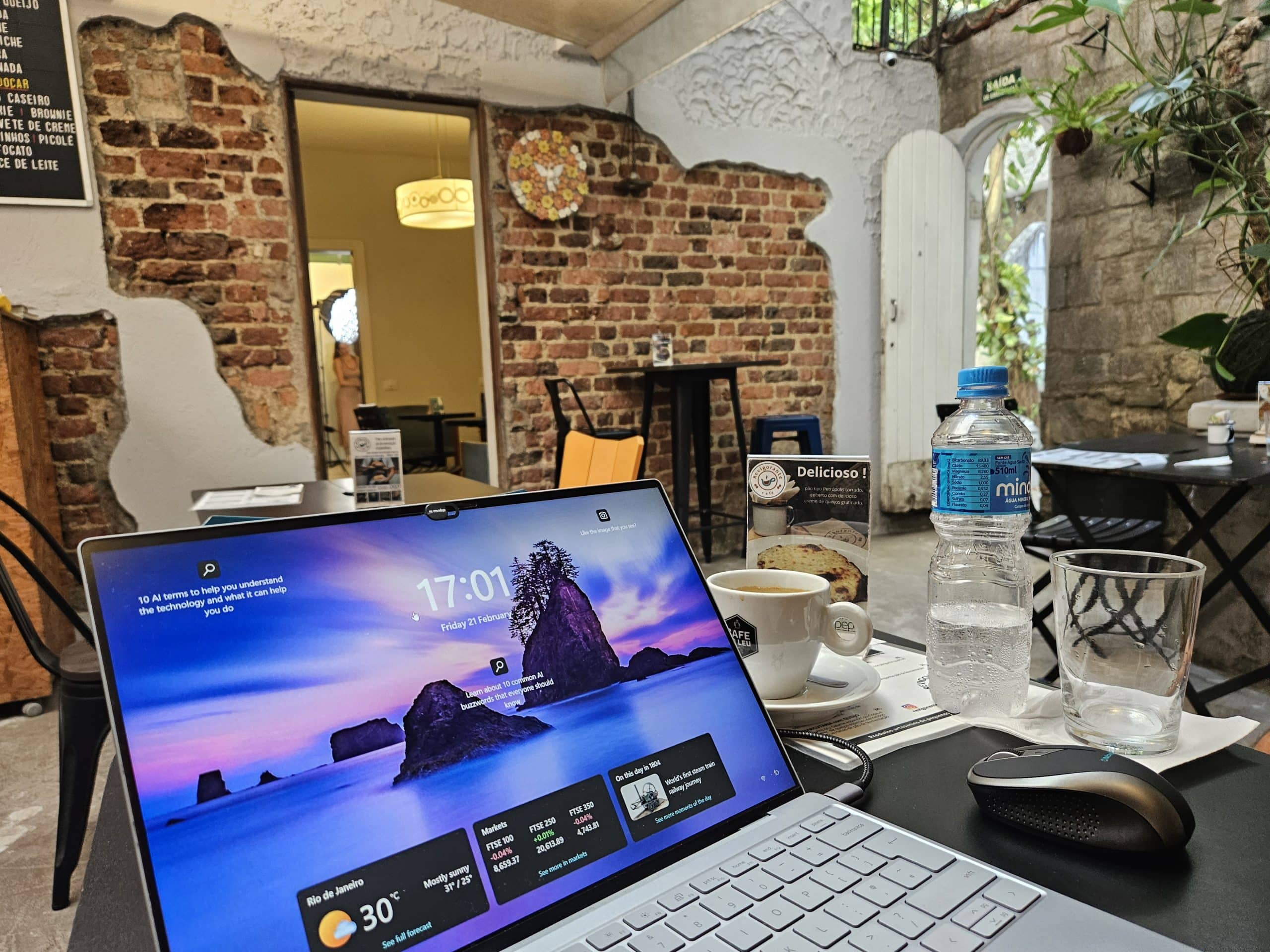
Rio isn’t known yet as a digital nomad community, however, you will find a good community of nomads and expats there to connect with. The best way to find them and get access to the several WhatsApp Groups is via riodigitalnomads.org.
There are coworking spaces in different areas of Rio. If you download and sign up for the app Station, you get access to multiple coworking spaces and can easily book desks and day passes.
There are no colivings in Rio de Janeiro and the best option for digital nomads is to book a flat on AirBnB. The safest areas (and also well-connected) are Leblon, Ipanema and Copacabana. You can also find AirBnBs for long-term stays in Flamengo and Botafogo.
If you’re interested in sports and meeting locals, you should check out Mude. It’s an app where all kinds of sporting meetups are listed, from Yoga to beach volleyball.