Carnival in Rio
Behind the scenes of the biggest carnival in the world
When Charlie booked her stay in Rio de Janeiro, she chose the dates wisely. She wanted to see the carnival in Rio and she wanted to experience it in a safe way. She booked a Portuguese course with a language school for foreigners because she knew that these schools always have an activities programme too. She was hoping that that programme would include the carnival. What Charlie wanted was to see the carnival and she ended up being in it.
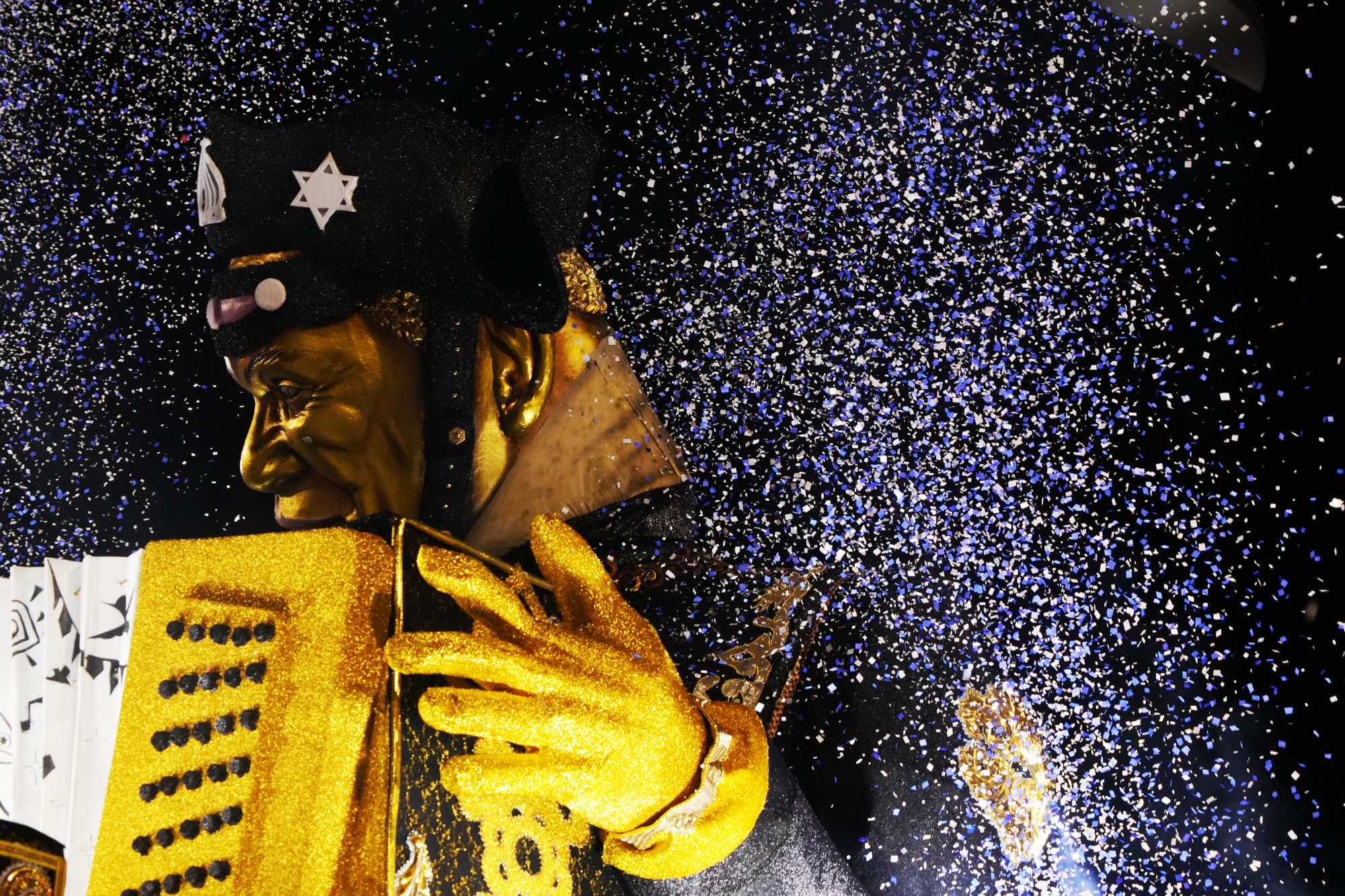
The carnival has many different aspects; there’s the public events in the streets and the ticketed shows at the Sambódromo Marquês de Sapucaí where the samba schools parade and compete.
Street parties: Blocos de rua
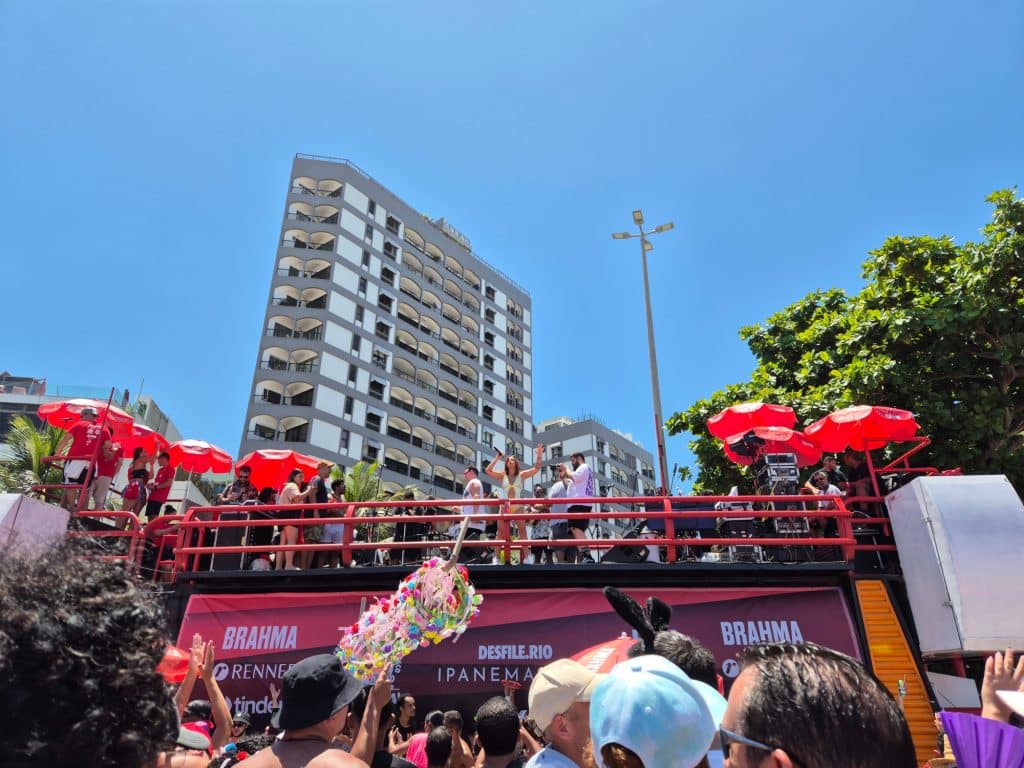
The street parties, the so-called blocos, start about two weeks before the official carnival weekend. Those are officially organized parties in different parts of the city. They usually come with a stage (often a truck) and a headline performer. Some of those are internationally known artists. The blocos happen at any time of day and have different sizes. The biggest ones are almost too big and too crowded, even the locals often recommend the smaller blocos because they’re more enjoyable. In the end, it comes down to personal preference. They start at 6 in the morning and happen throughout the day and until the next morning. The whole schedule is available at blocosderua.com and you don’t need a ticket. Those are free events. There are usually street vendors and restrooms available.
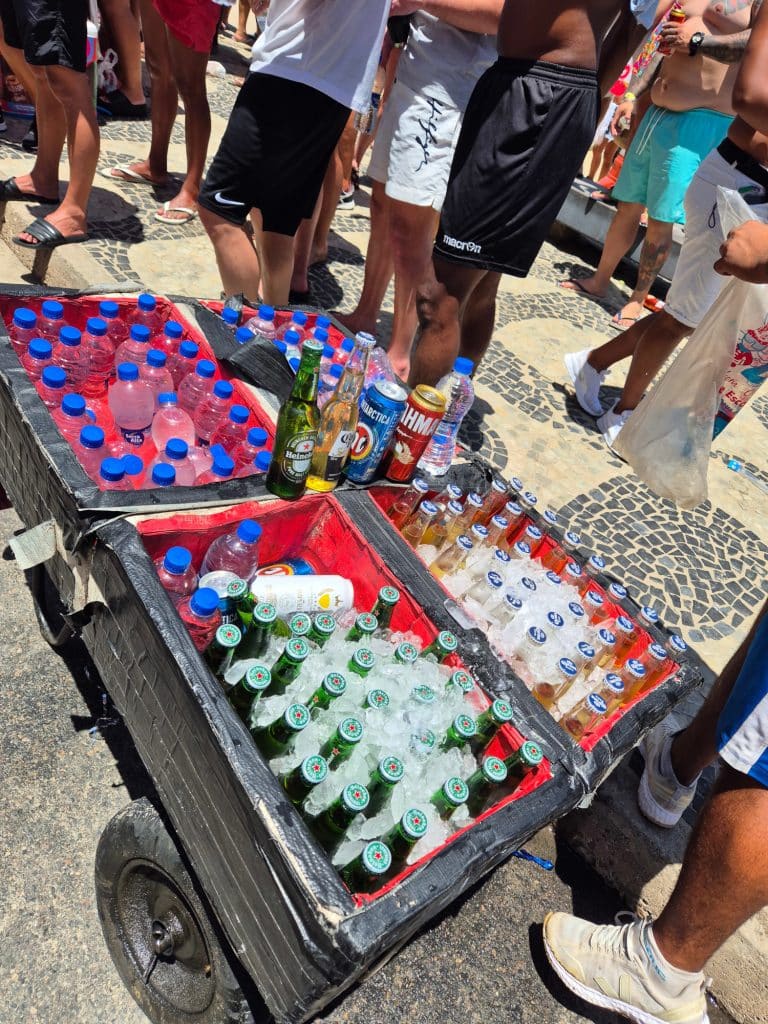
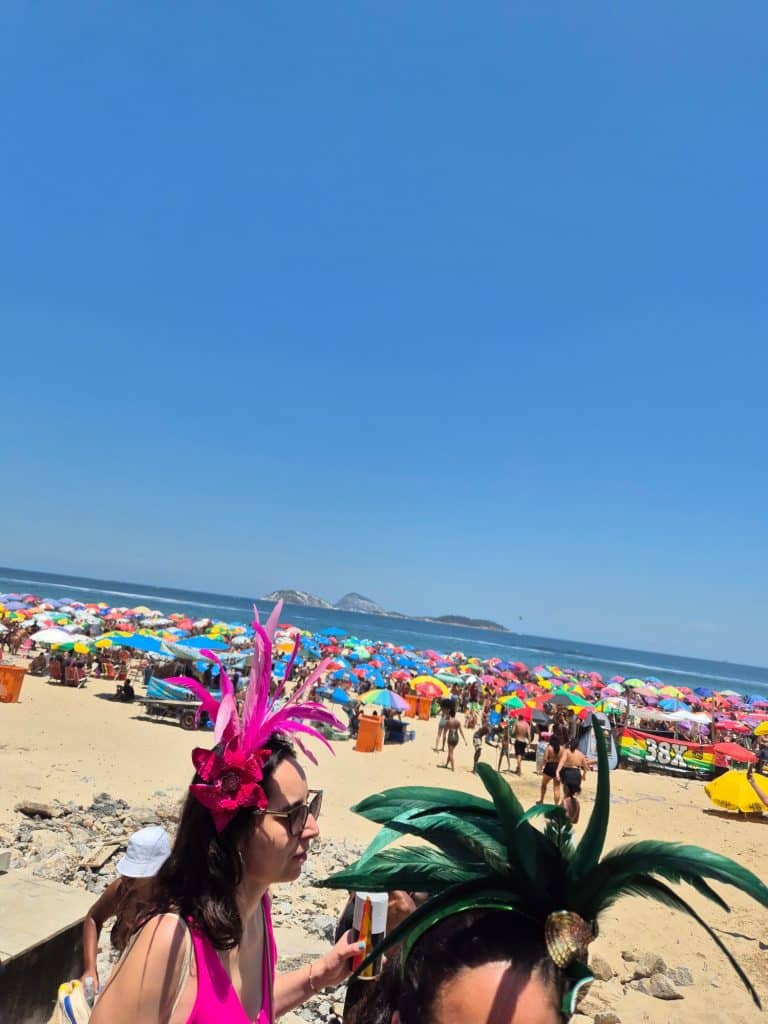
If you go to a bloco in the middle of the day, bring a hat and sunscreen. There is often no shade, and it gets very hot. You can get water from the street vendors for a fair price too. Don’t forget to hydrate in 35 degrees!

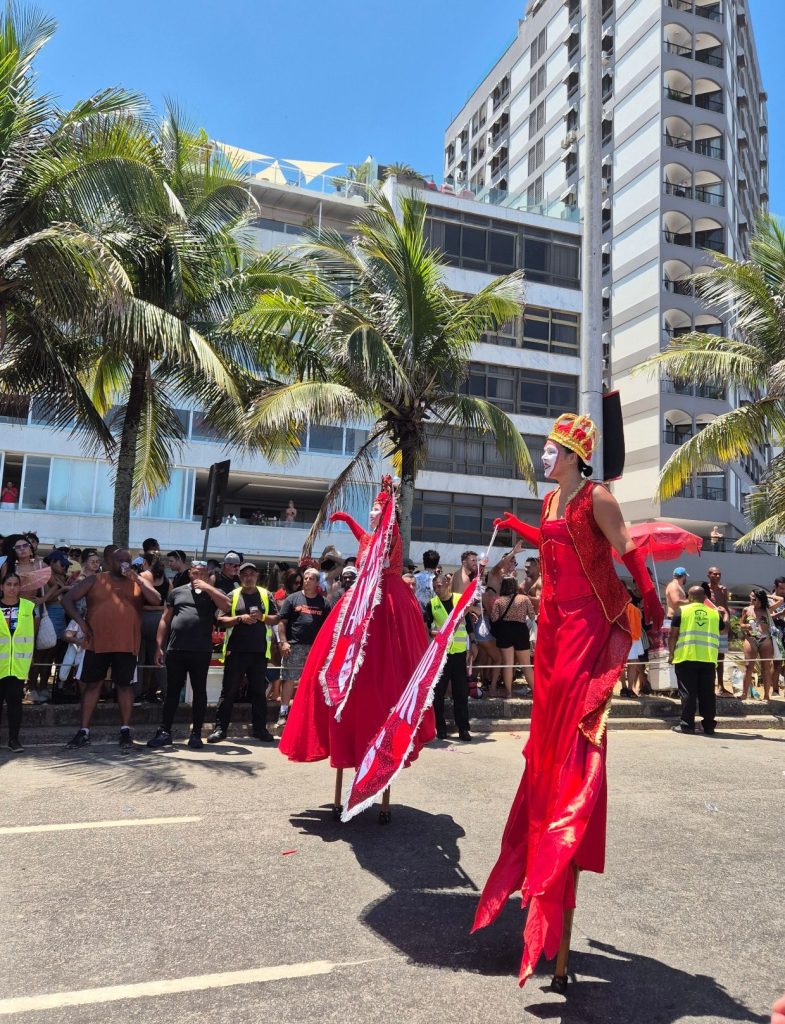
Be aware of pickpockets and make sure all your valuables are safely tied to your body. Charlie usually had her phone in a bum bag that she wore in front, when she had her phone out to take pictures it was on a lanyard around her neck. If your phone is visibly sticking out of the pockets of your shorts, it is very easy for pickpockets to grab it. They usually pass it on quickly to somebody else. That means that even if you notice it, it will be gone too quickly to get it back.
Unfortunately, it must be advised for women to avoid the larger blocos at night because the men can get touchy. The smaller blocos during the day are a better option. Charlie did see advertising boards all over the city informing about consent and it is sad to see this being necessary in 2025.
Watching the parade at the Sambodrome in Rio
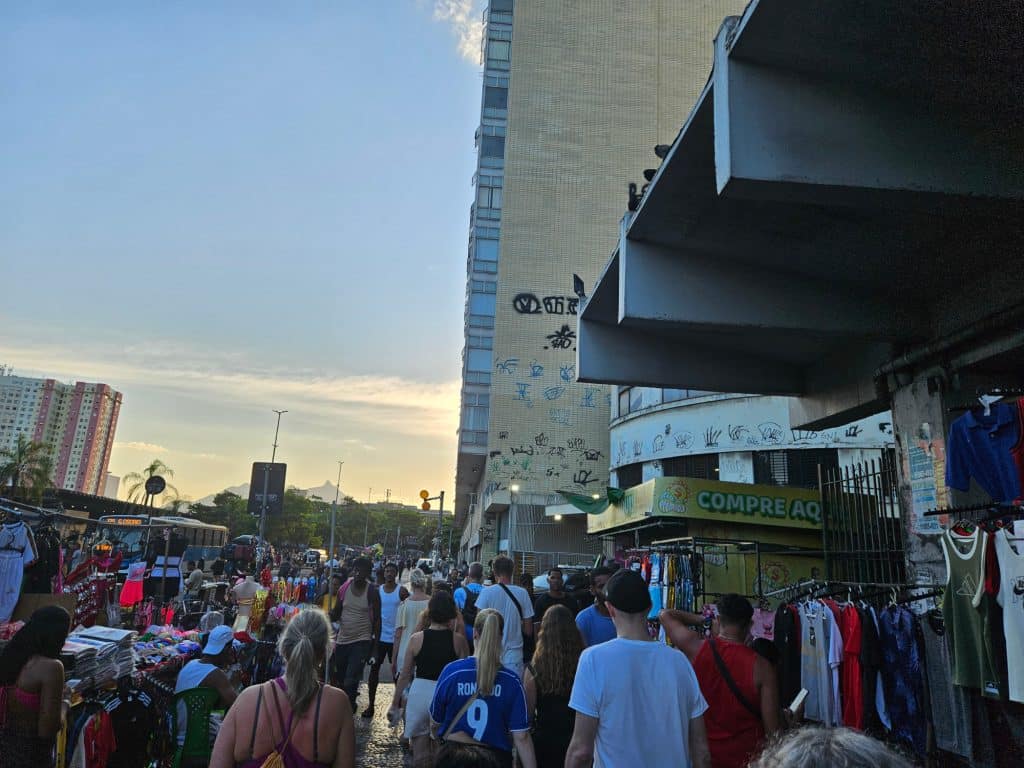
The carnival parade that you probably know from TV is happening at the Sambódromo Marquês de Sapucaí. If you want to see it, book your ticket early as they might sell out and prices rise closer to the dates. You can find tickets from various sellers online and they’re not expensive. (Offers from a few hundred pounds are usually organized tours with hotel pick-up which you might prefer for safety, the standard tickets are much cheaper.) The parade starts at around 9 pm in the evening and lasts until at least 4 am. If you have a ticket, you could arrive and leave at any time. For safety, you should go in a group. You can get to the Sambodrome by Metro. Get off the station Central from where it is a short walk. There are other Metro stations not too far away. Which one you choose might depend on the location of your seats in the Sambodrome.
How the parade at the Sambodrome works
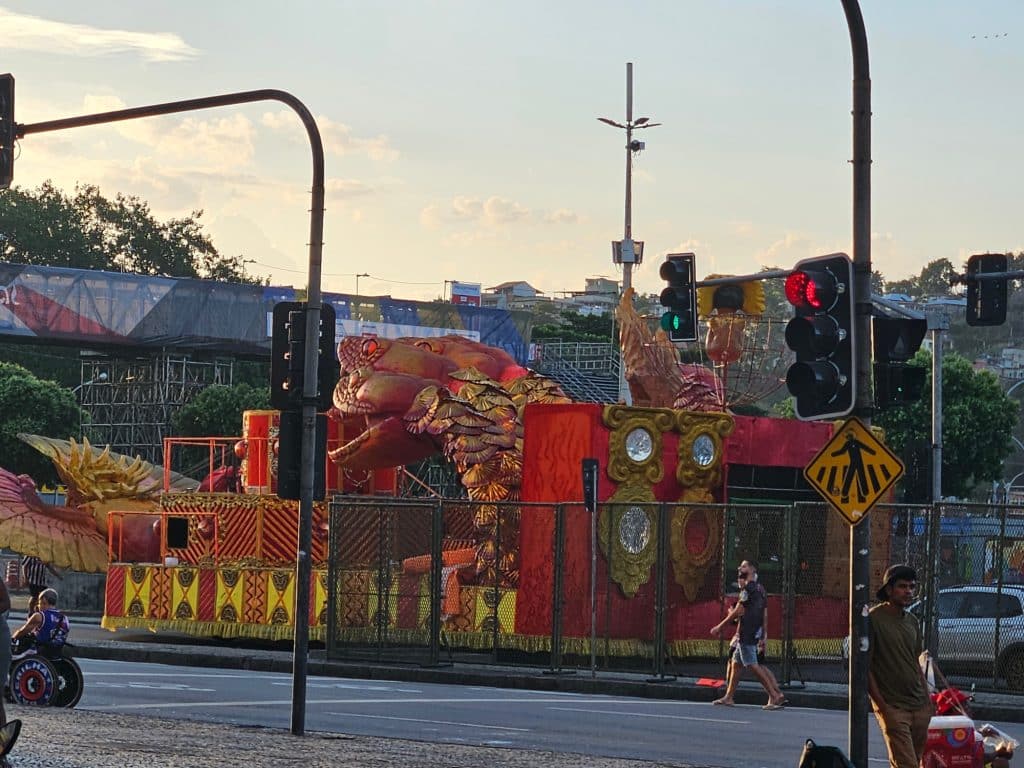
The participants in the parade are the samba schools in Rio. The parade is a competition – whoever comes first, gets to parade in pole position the following year. The last group of the night starts at 3am, so there is a good reason to want to be first.
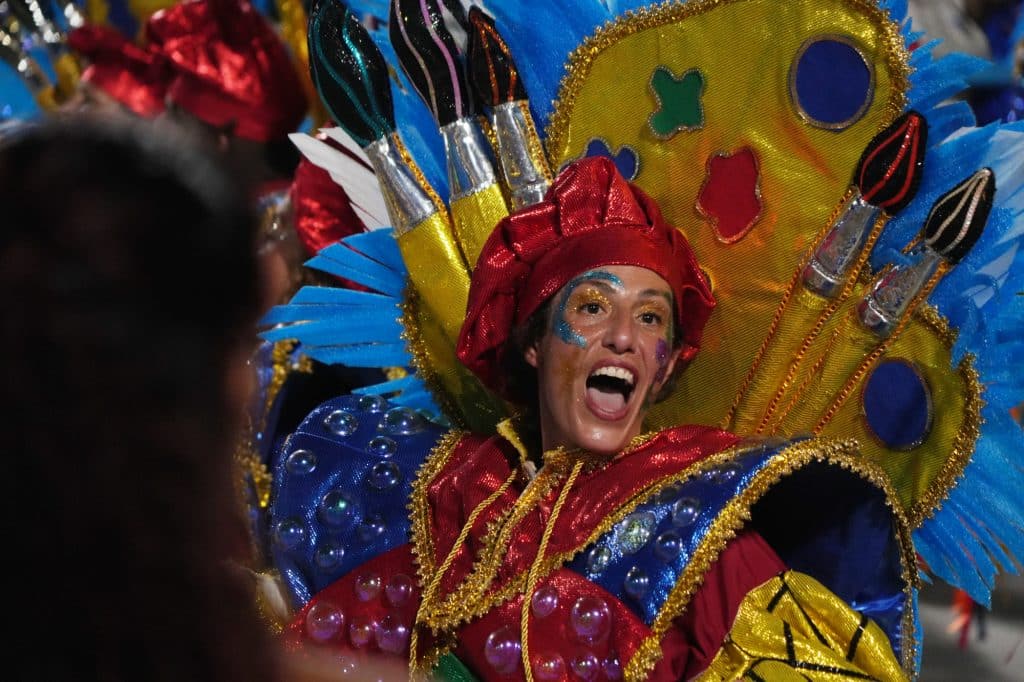
There are strict rules for the parade, for example every participant must be singing, dancing and smiling, and they must walk in formation. If they don’t, they will lose points from the jury. Each samba school chooses a topic and a song for their presentation and everybody in the parade must know the lyrics of the song and sing along.
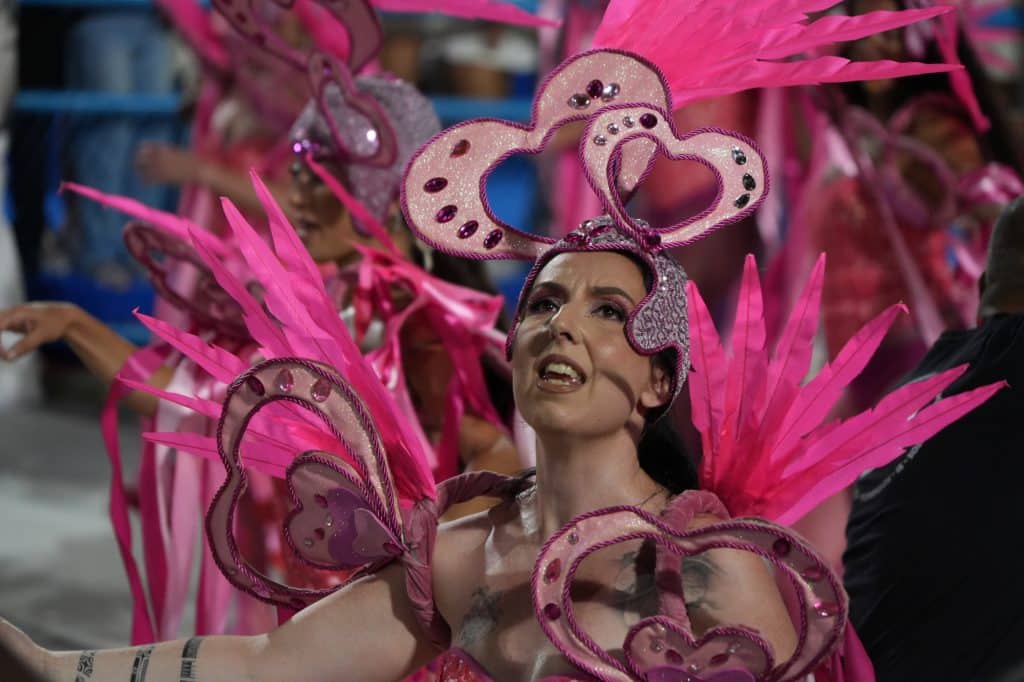
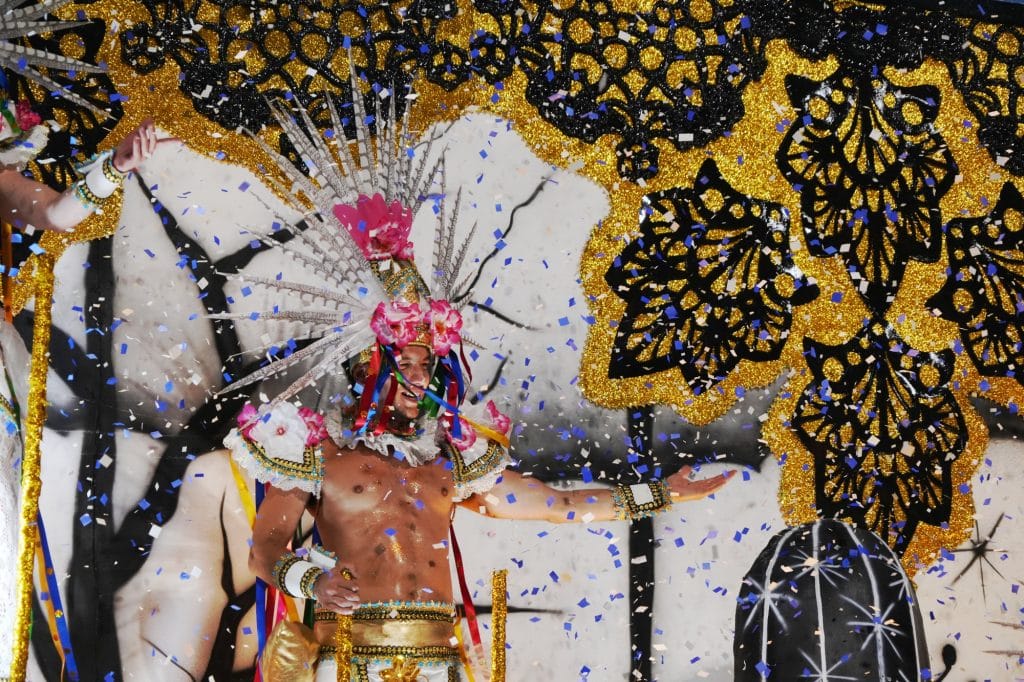
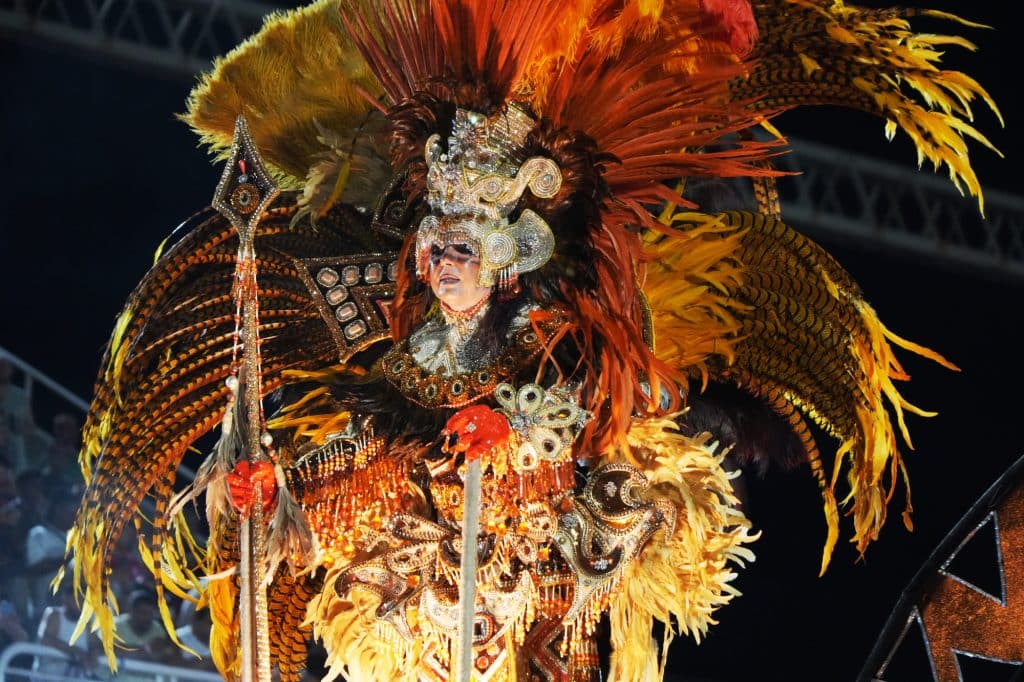
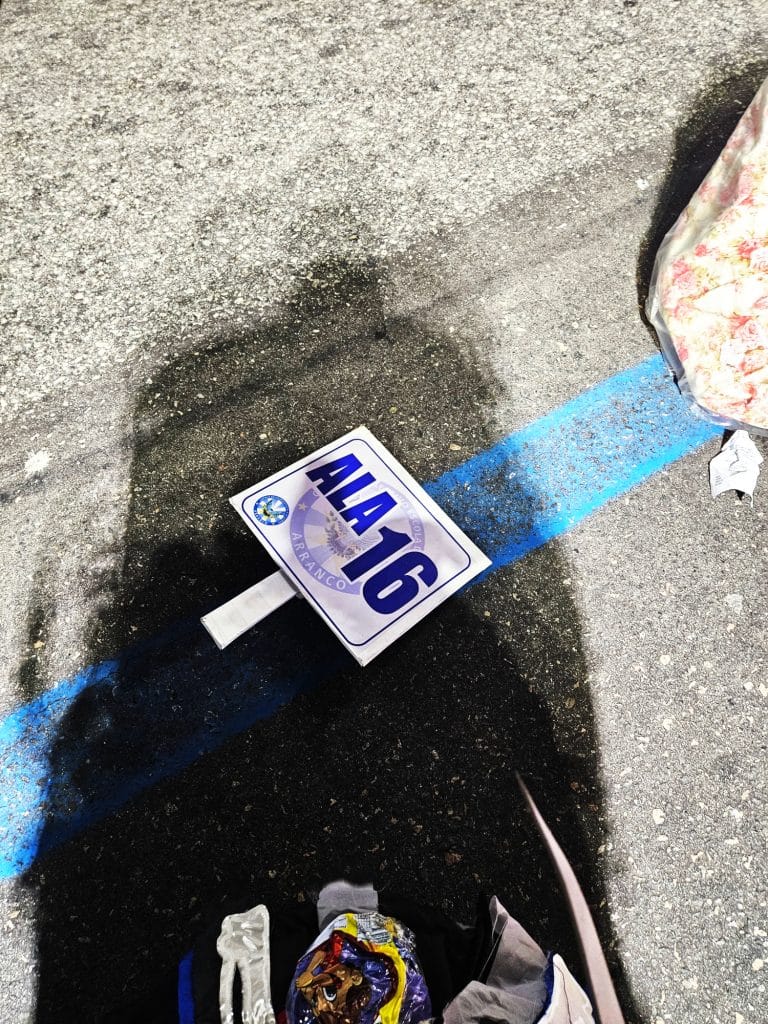
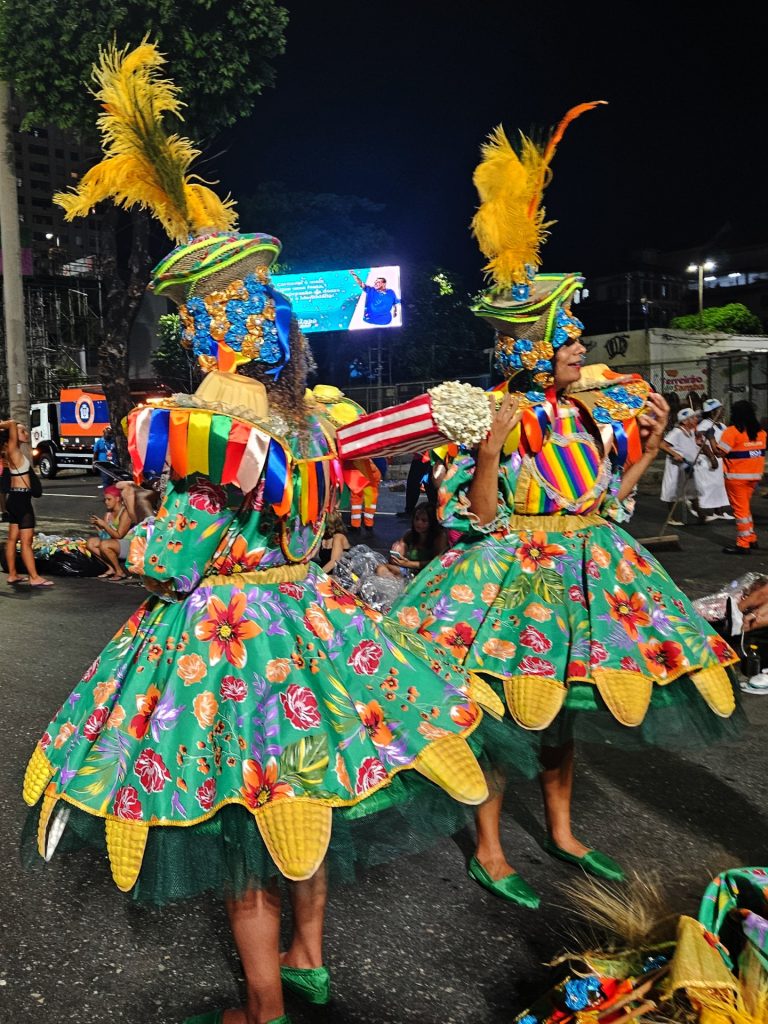
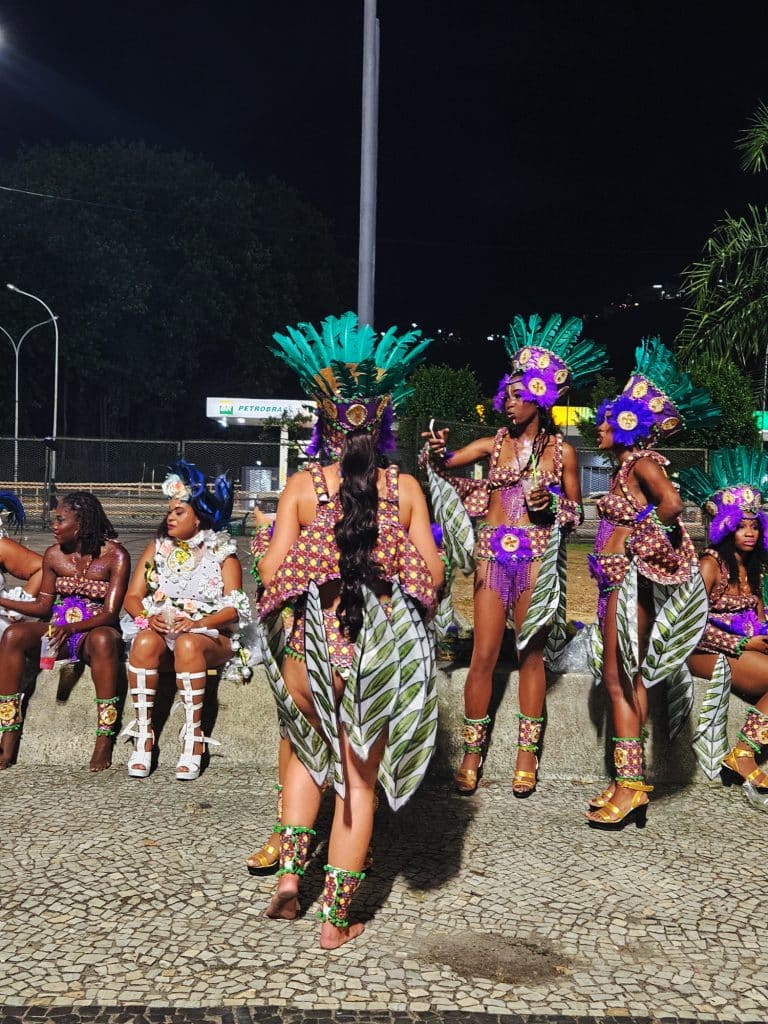
There are different groups, called alas (wings), and they walk in a specific order. Not all of them are samba dancers and most of the costumes are made of a lot more tissue than what you know from TV. In between the different groups dance the so-called passistas, professional Samba dancers. The couple that walked in front of Charlie’s group was wearing a lot of feathers and a huge skirt. Once again, it was a lot more tissue than what you expect from the carnival in Rio. Charlie would have loved to take a picture of them but that wasn’t allowed if you’re parading. At the end, they were gone too quickly to snap one.
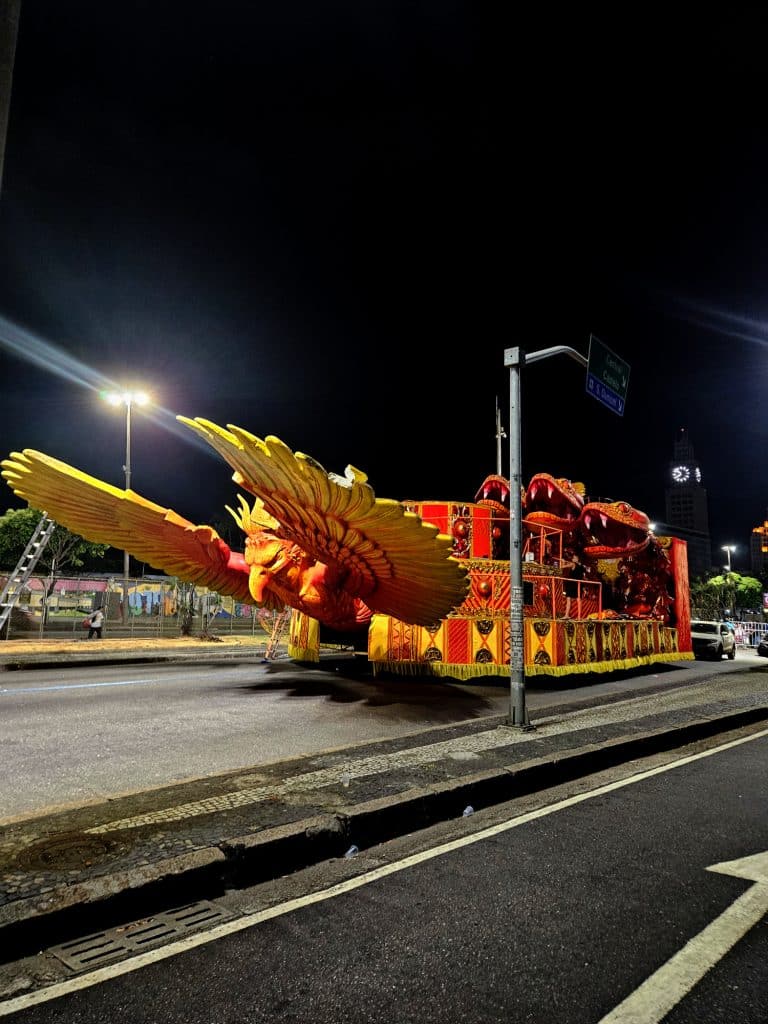


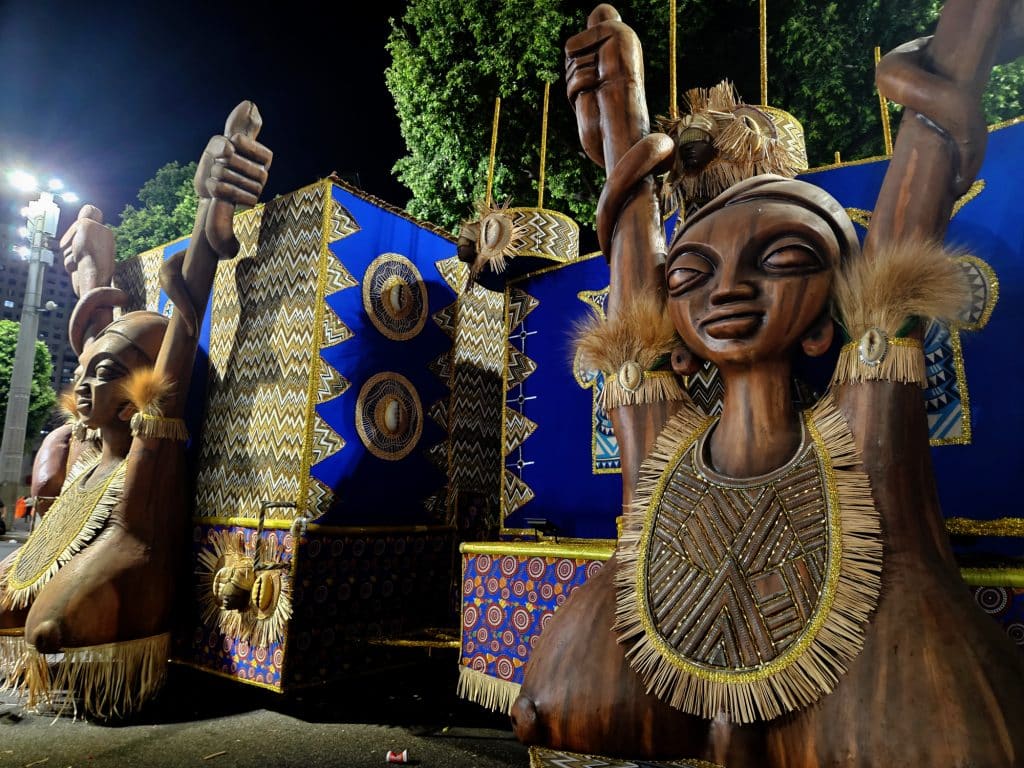
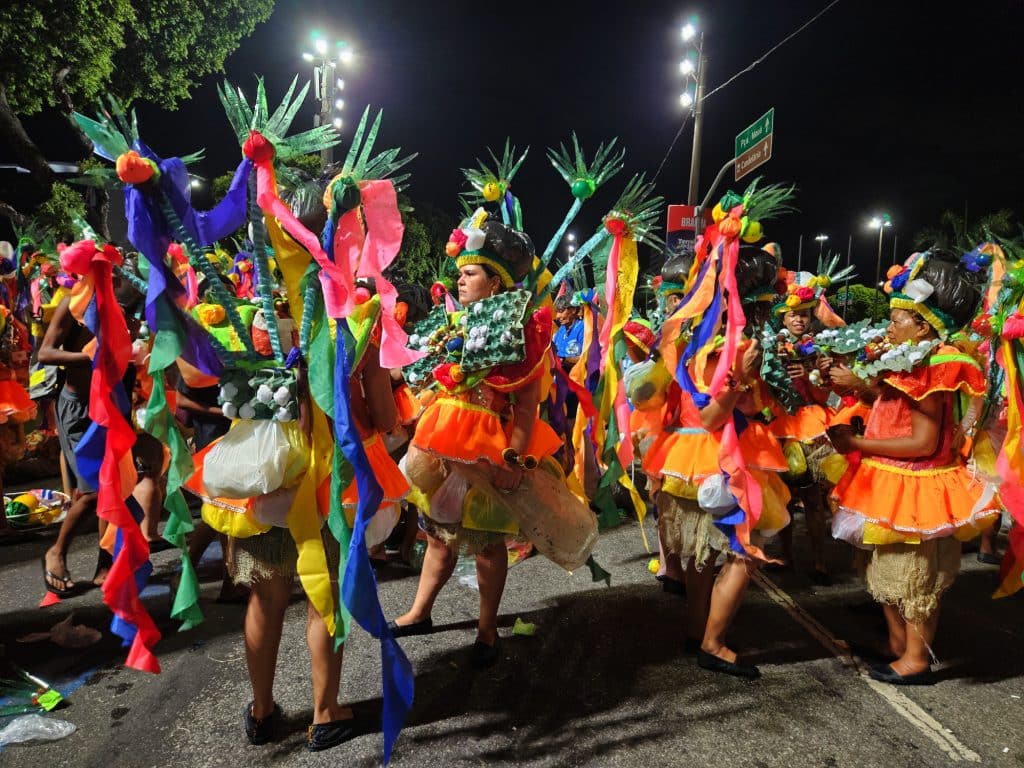
One of the judging criteria is the time it takes the whole samba school to parade through the Sambodrome. It must last at least 1 hour and 5 minutes and the maximum is 1 hour and 15 minutes. The time is shown on monitors in the Sambodrome. You can tell that there is a lot of organization going into this and the samba school starts preparing a year in advance for the big day.
Parading at the Sambodrome in Rio
What Charlie had in mind when she booked her language stay in Rio was to go to the Sambodrome with a group of fellow language students to watch the parade. What she ended up doing was parading with a group of fellow language students in a costume through the Sambodrome. They were associated to the samba school Arranco from the quarter in the North of Rio called Engenho de Dentro. It is a poor area of Rio, and they practice the African-Brazilian religion Candomblé.
The topic they had chosen for 2025 was “Maes que alimentam o sagrado” (The mothers that nourish the sacred). The song that they had chosen praises the role of the women in the Candomblé religion where ceremonies are led by priestesses.
Charlie only saw a few of the other groups. There was for example one that was holding signs stating women’s rights. The group in front of Charlie’s group was decorated in fruits and spices. The costume that Charlie and the others from the language school wore followed the topic that processed foods with high sugar are life-threatening. The costumes looked like a skeleton in a pile of empty soda cans.
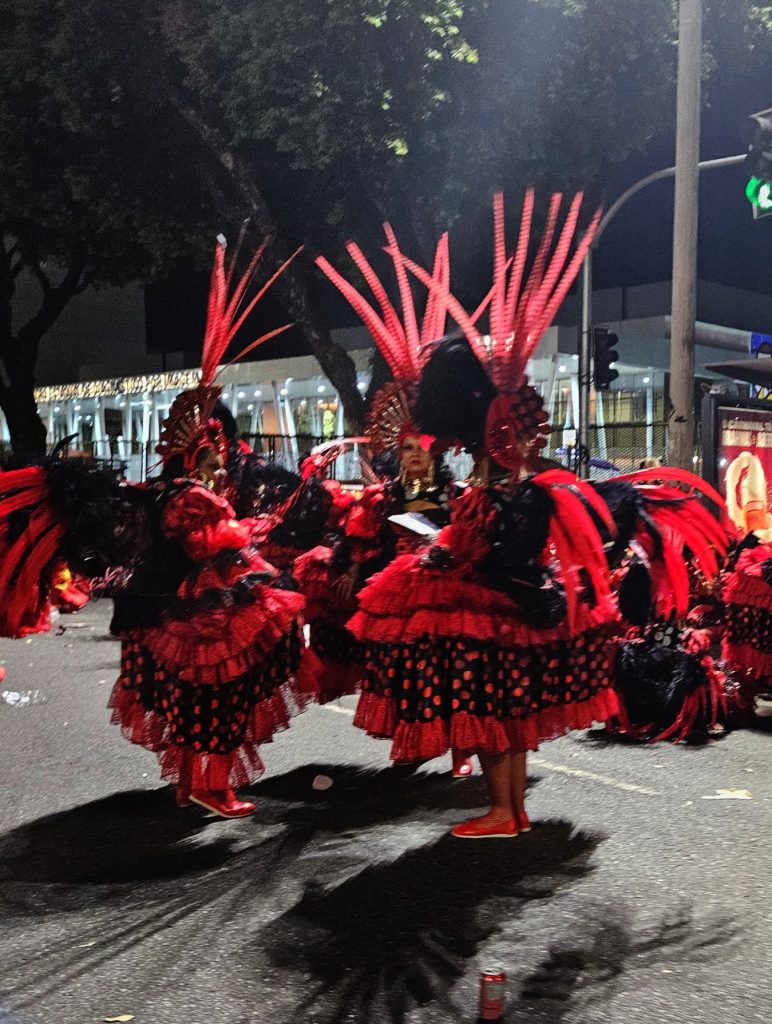
Preparation for the parade in Rio
They met in front of the language school at 4pm and took the Metro together to the Sambodrome. They gathered with other groups from the same samba school in a sideroad where the truck with the costumes was already waiting. Everybody was handed their costume in a big plastic bag. The original plan was to use the remaining time for make-up. However, it was very hot, and they decided against face paint. Those things were not a judging criterion for the parade. What mattered was that everybody looked the same.

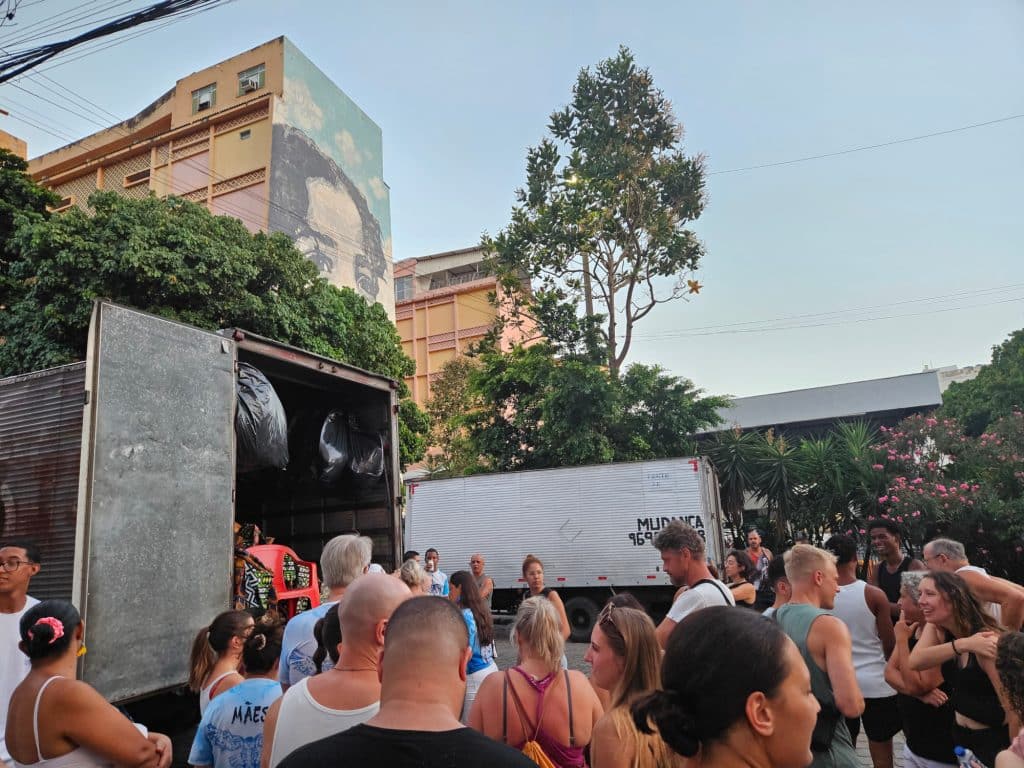
They were waiting in that spot for a while and saw some other groups passing by with their costumes. They later walked over to the start point for the parade where they put on their costumes. Charlie had brought 3 litres of water and a sandwich. That would not have been necessary as there were a lot of street vendors around and there were portable toilets too. The official start time for the group was 10pm, but the first group had a fire incident during their parade which caused delays. They eventually started entering the Sambodrome at 11 pm. Charlie’s feet were hurting from all the standing, even though she was sitting down on every opportunity throughout the evening.
It’s not a walk in the park
Just before it started, the chefe de ala put everybody in their spot and advised them to keep the formation. Charlie was in the front row of the group and had to pay attention to keep the line. The chefs and directors of the samba school were walking alongside them during the parade and advised when to stop and when to keep walking. They also reminded everybody to keep singing the song.
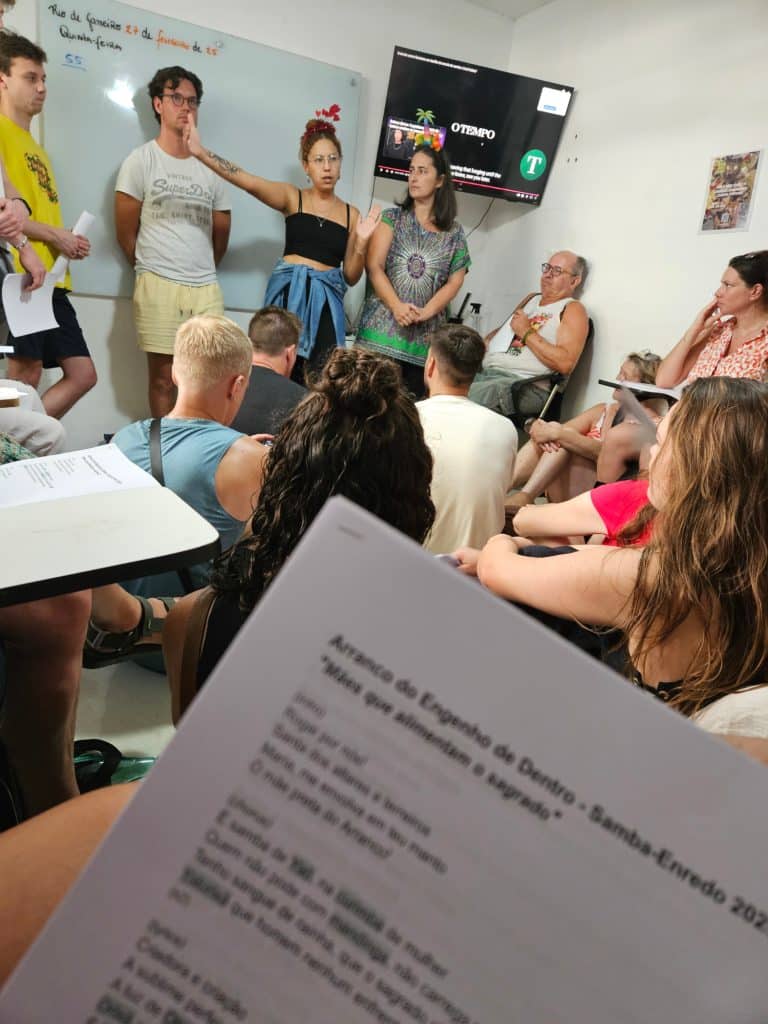
The song had been difficult to memorize as Charlie wasn’t familiar with the samba rhythms and there were a lot of words from the language of the Orixá, deities of religions of African origin that are widespread in Brazil. (It also influenced the Samba tradition.) In order to learn the song, the group had met at the language school the afternoon before to practice together. Charlie had been given a printout of the lyrics that also contained explanations for the Orixá words. There had been a technical rehearsal three weeks before the parade. That was before Charlie had arrived in Rio. It probably would have helped to attend that too.
Overall, it was an amazing experience, and Charlie was happy that she was given the opportunity to look behind the scenes of the carnival in Rio. It was tiring and her feet were still hurting the day after. For the next time, she’ll watch, from a seat!
Carnival in Rio from the other side
Charlie returned to Rio de Janeiro the following year. This time, she stayed a bit longer and she was a bit better prepared. She secured herself a ticket for the Sambadrome. This time, she would be watching the show from a comfortable seat in the second row.
The best platform to buy tickets is Ticketmaster, however, you need a CPF. Charlie bought her ticket second hand on Viagogo. It was a wrist band that almost did not reach her on time because the seller had to send it in the post. It was only the evening before that the doorman handed Charlie a small parcel. There was the wristband! For other sections in the Sambadrome tickets are delivered via an app to your phone. Charlie wanted the best view though to get all the photos.
She had booked the ticket for the same evening that the language school would be parading to see their costumes that year. She wasn’t sure how to time it. The ticket said 8 p.m. and the parade would start at 9 p.m. She didn’t know if there would be a queue at the entrance and to her surprise, there was none. She could walk straight in and find her seat. It was good that she had been there the year before as she remembered the way. She took the Metro to Central and walked from there for about 10 minutes in between the food stalls and street vendors.
Inside the Sambadrome, it was still empty. Most people only arrived around 10 and it was crowded by midnight. Charlie was happy to have arrived early because the view and the photo opportunities were a lot better with a smaller audience.
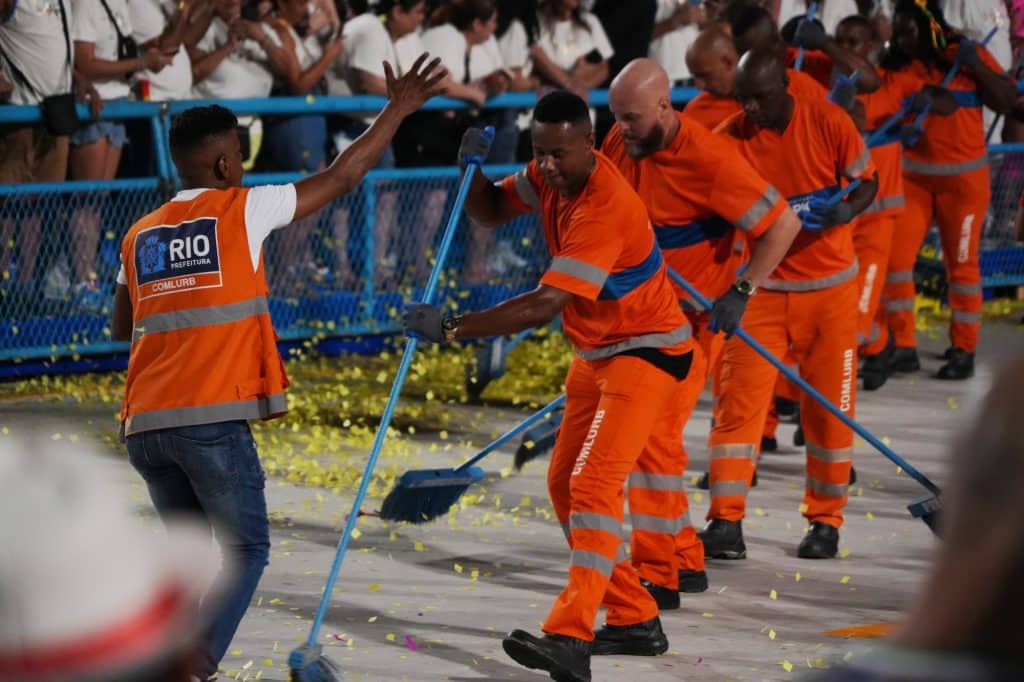
The whole experience felt like a massive party with millions of people, but, in a safe environment. And, believe it or not, even the cleaning crew paraded through the Sambadrome in formation and with a little choreography.