Sailing Day 5: Kythnos
Greek streets, ancient mines, and an herbal garden
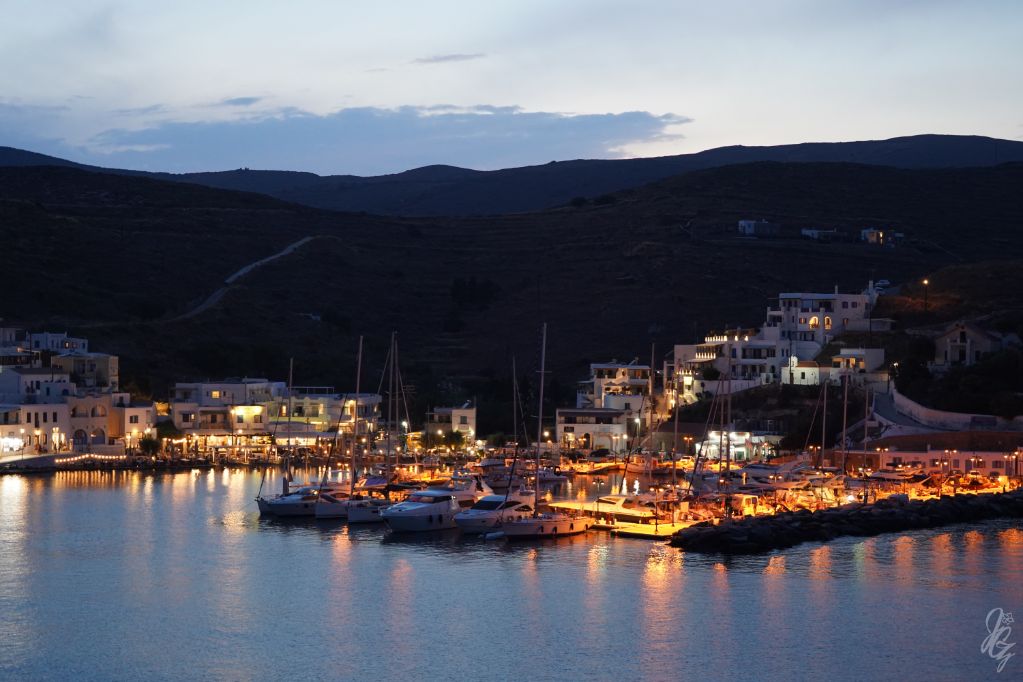
They woke up at 6 again that day because they were meant to leave Kythnos at 7 in the morning. Whilst they had a coffee on the boat, they were evaluating the situation though. The weather out on the sea wouldn’t be great that day with strong winds and rain and the harbour had gotten so busy the previous day that it would be difficult to get out. At least, they would have had to wait for the other boat to leave whose anchor was blocking their way. All those circumstances together made Vangelis decide to not leave Kythnos that day and the crew went for breakfast instead. Some were a bit grumpy about having gotten up early in vain, but that’s how it is when you work with nature and the ocean in particular.
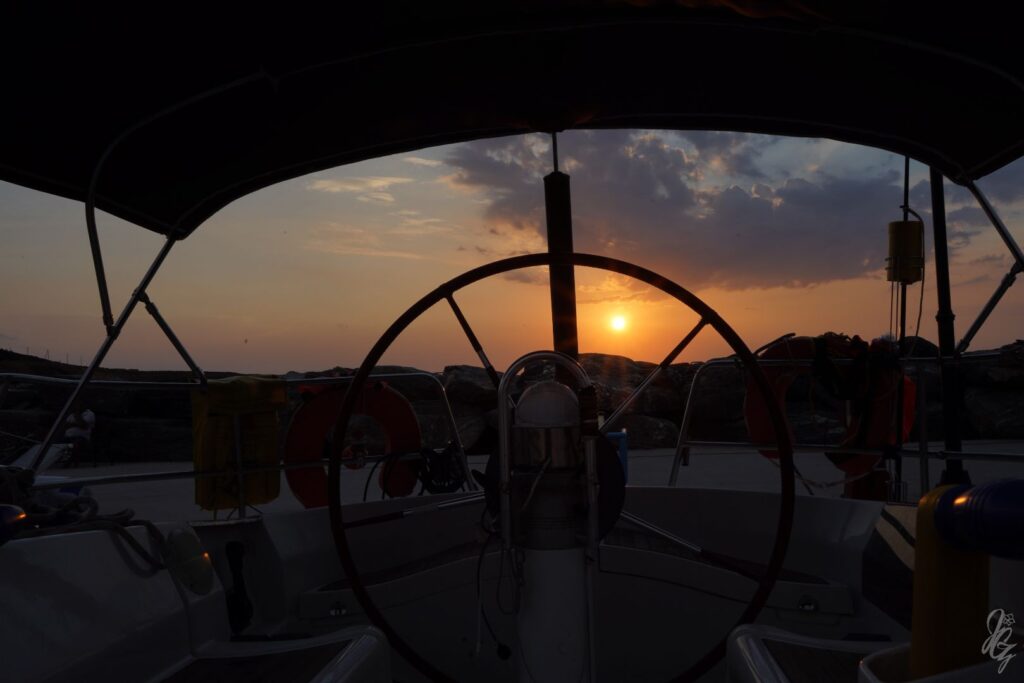
More sailing theory
Now that they had all day to spare, it was the perfect opportunity to continue the sailing theory they had started the day before in Kythnos. The first lesson was a refresher about the knots Charlie had learned a few days before and Julio was yet to learn. Charlie was surprised how well she remembered the stopper knot and the bowline. Now she also learned how to tie the fenders to the sides of the boat. Then they continued with some charts and navigation. Charlie had to use a compass and the chart to calculate the difference between true and magnetic north, to add annual variance and adjustments to ensure they would sail in the right direction no matter where they are in the world – all hypothetically of course, in reality the boat did not leave the harbour of Loutra that day.
Exploring the island of Kythnos
Vangelis was not just the sailing instructor, but also the perfect tourist guide and he had an idea how to spend the afternoon in Kythnos. He had previously recommended tours done by a local guide, Giorgios, but he had never participated himself. He rang him up to see if he had any availability that day and he did! Pablo and Julio weren’t interested, but Charlie and Daria shared a cab with Vangelis to get up the hills to the other side of the island of Kythnos. In a small town hidden in a valley called Dryopida, they would meet Giorgios to learn more about the island.
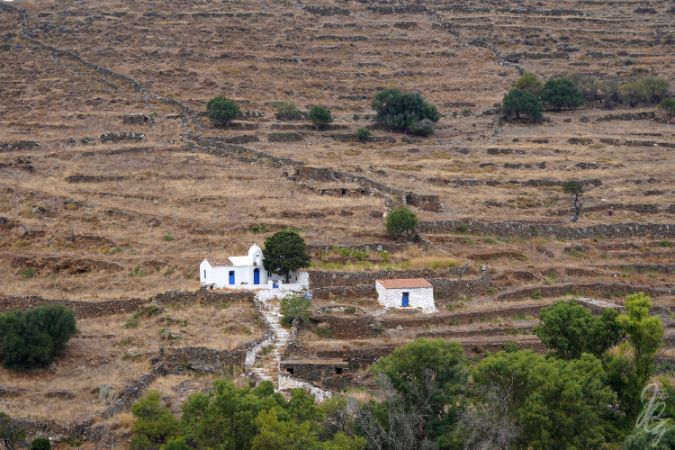
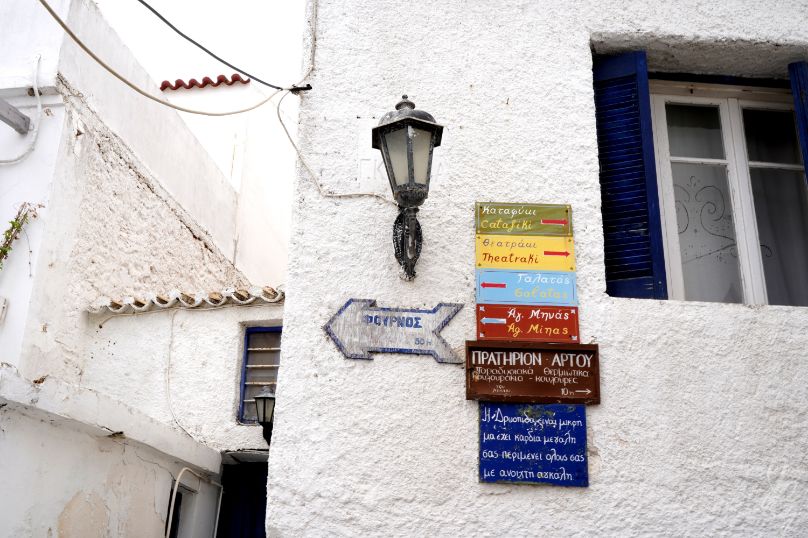
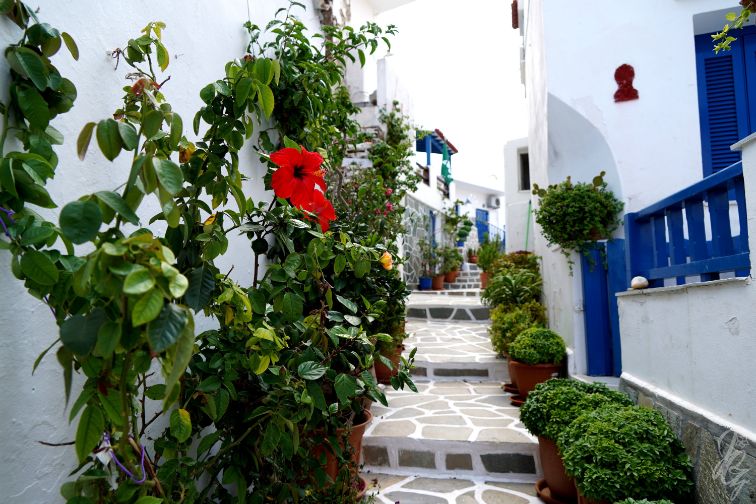
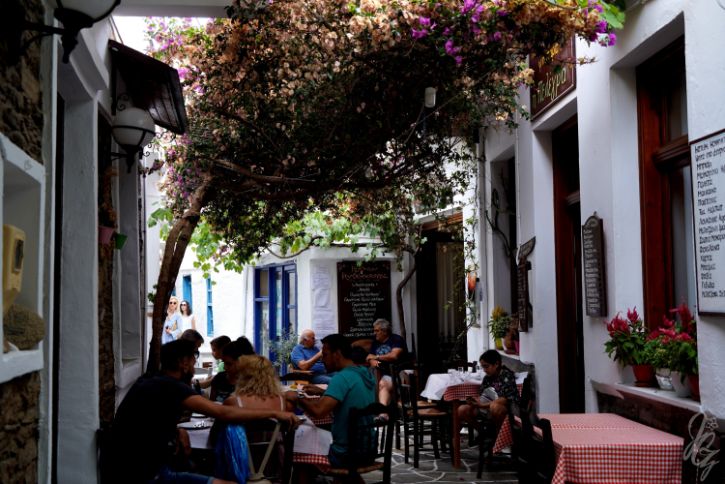
On the way there, they saw a bit more of the island and Charlie thought that it reminded her a lot of Malta: dry, rocky hills and never too far away from the coast. There are plenty of dry stack stone walls that mark property lines as the whole island is privately owned. If there is a double wall, it marks a public path where donkeys used to walk. Kythnos was once covered in abundant olive groves but had been almost completely deforested over time. Charlie doesn’t remember whether they were too early or Giorgios too late, but they had time for a coffee in Dryopida and got a first glimpse of that small town with its narrow, but beautifully decorated streets.
A place in history
The history of Kythnos goes as far back as 10000 BC and every period has left its traces. Of the 32 Cyclades islands, it is the closest to Athens. The best-known of this island complex are Mykonos and Santorini, but Kythnos is less touristy and has the largest fleet of fishing boats, honey and goats. Throughout history, it was a strategic point for sea trade. For that reason, the Venetians for example built a castle. Giorgios added an interesting story to that castle where an Ottoman emperor could easily walk in dressed as a pregnant woman.
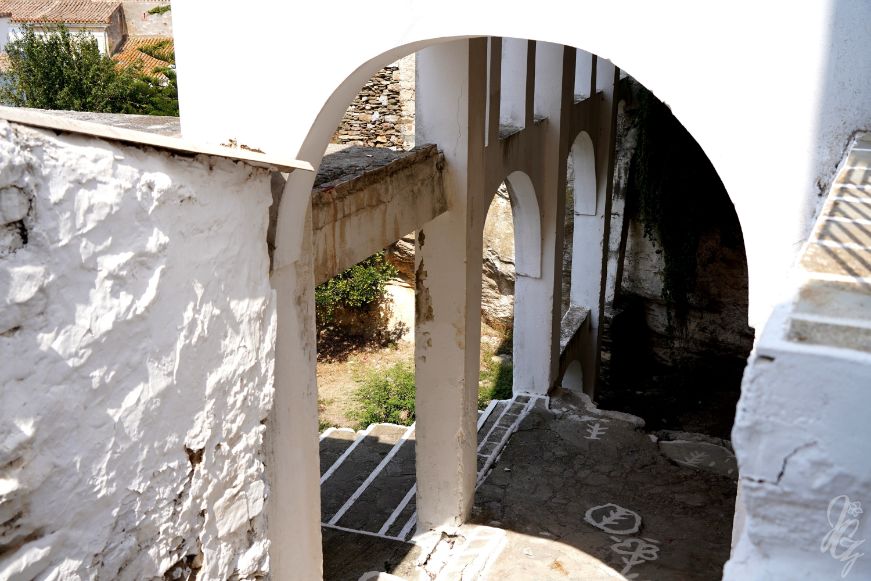
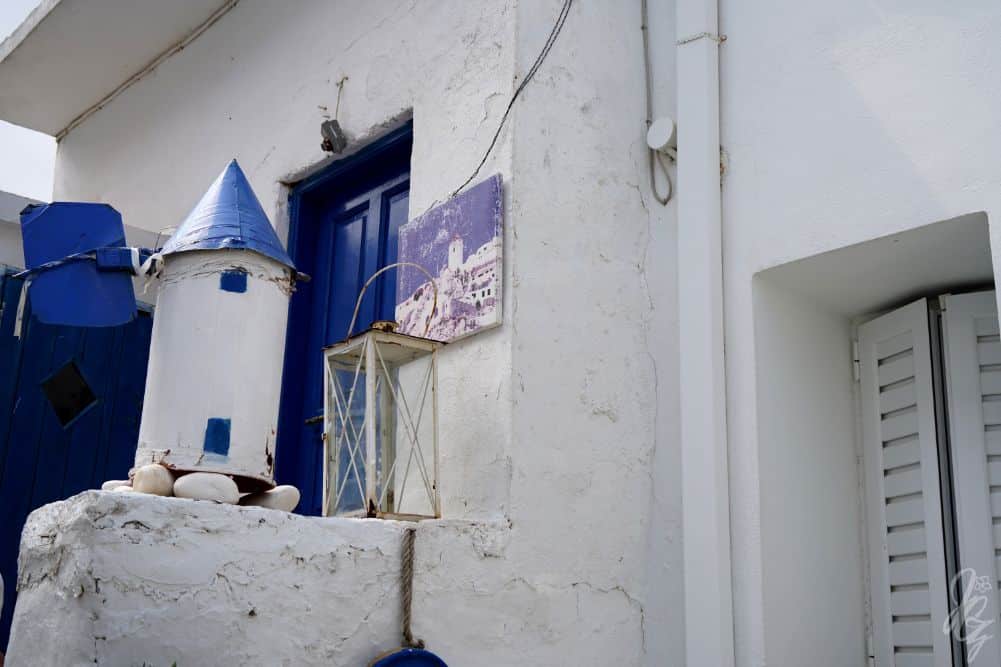
Dryopida as many other places on the island is hidden in a valley so that it could not be seen from the sea and to prevent pirate attacks in ancient centuries. For that same reason, hop was the main agricultural plant for a long time because if Pirates had burned it down, it would grow again within a year and not all harvest was lost.
Before they started their walk through town, they had a look at the surroundings and Giorgios pointed to a characteristic of the island: ceramic roof tiles. Those aren’t usual for the Greek islands, but very common in Kythnos. For those interested to hear more about the ceramic works there, Giorgios offers another tour where you could get your hands into some pottery yourself.
Churches everywhere
Another characteristic of Kythnos is the abundance of churches. There are approximately 400 churches for 1500 inhabitants. As such, their first stop that day was inside the cathedral of Dryopida that had been built in the 1870s. We are saying cathedral because it is the main church, its size is in no way comparable to the likes of Notre Dame in Paris or the Sagrada Familia in Barcelona. Charlie was impressed. She had never been inside a Greek-orthodox church before and was surprised how colourfully it was decorated. There wasn’t a single white space on the walls and the paintings created a friendly atmosphere. Charlie had a million questions and could have easily spent a few hours exploring every detail of this beautiful place. The altar is what an architect would call a room divider, but let’s be correct and call it Holy Wall. The entrance they stood in front of was for priests only. On that occasion, Vangelis mentioned that priests in the greek-orthodox religion were allowed to marry, have children and even work the lands before joining the other men at the taverna for an Ouzo.
Below the earth
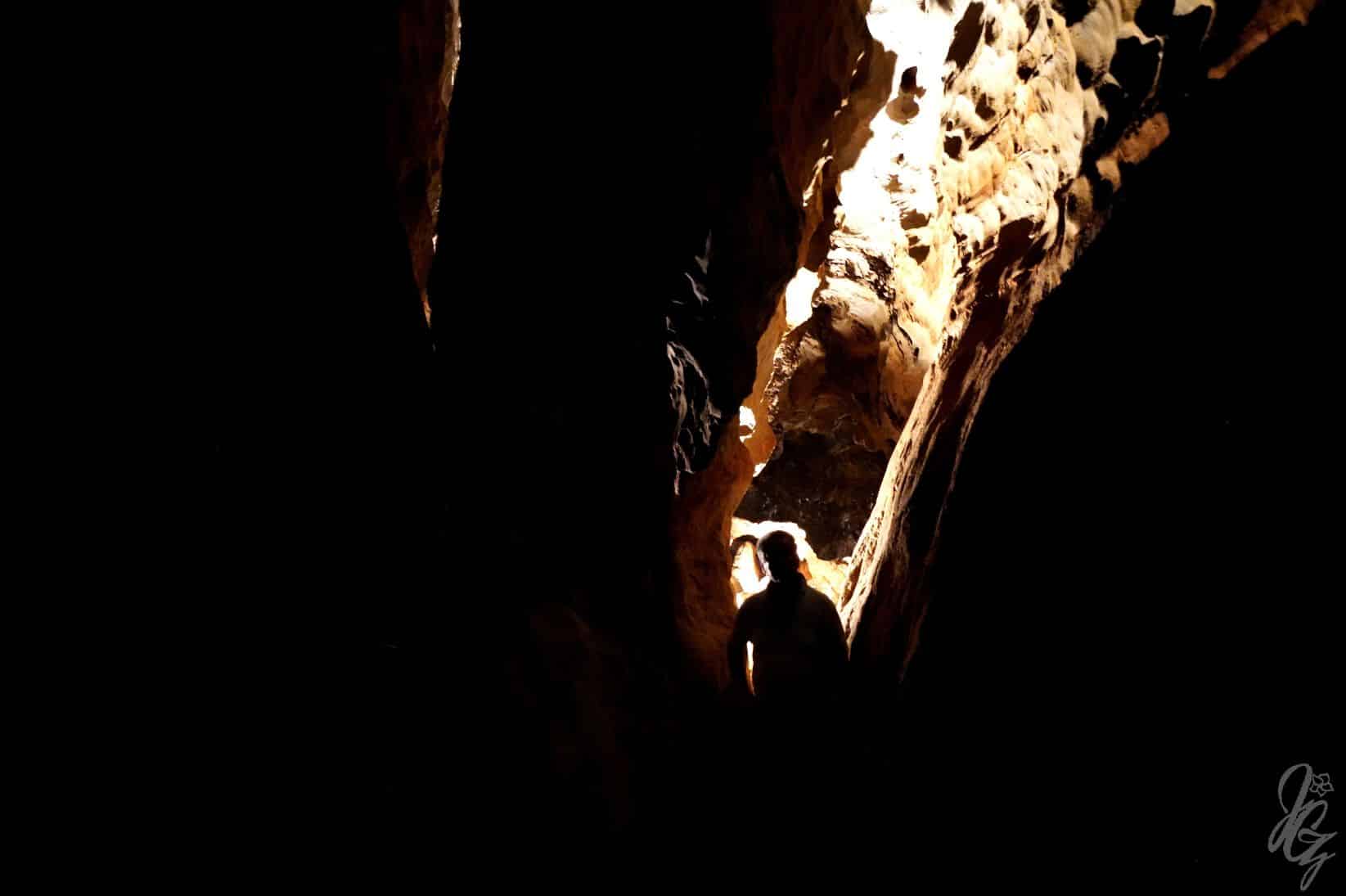
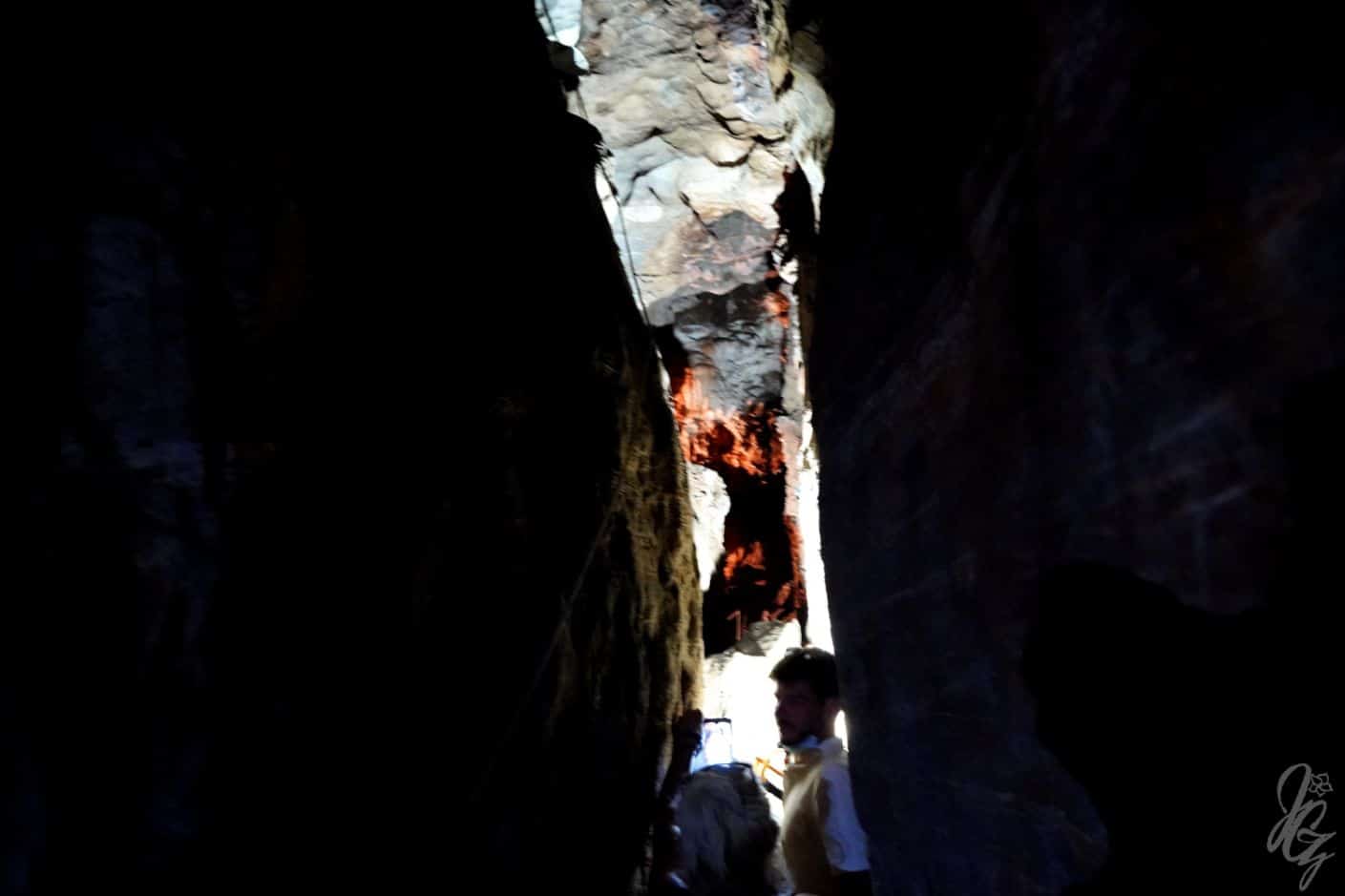
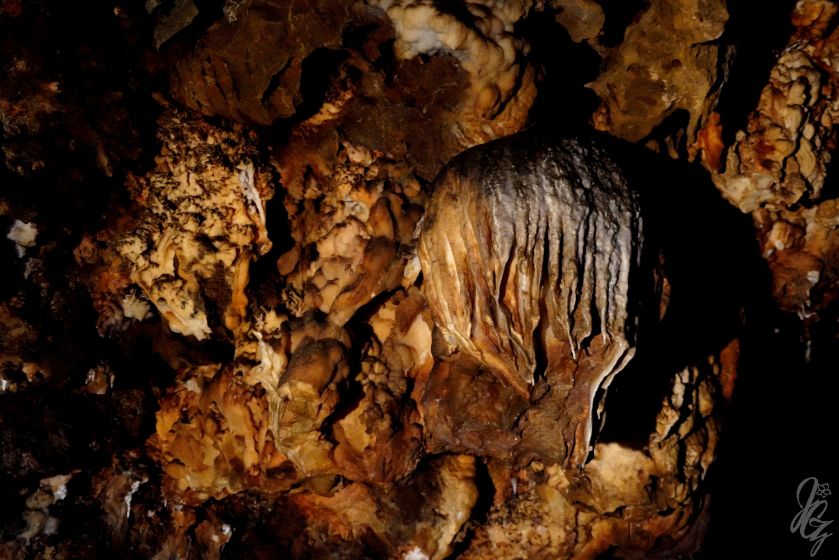
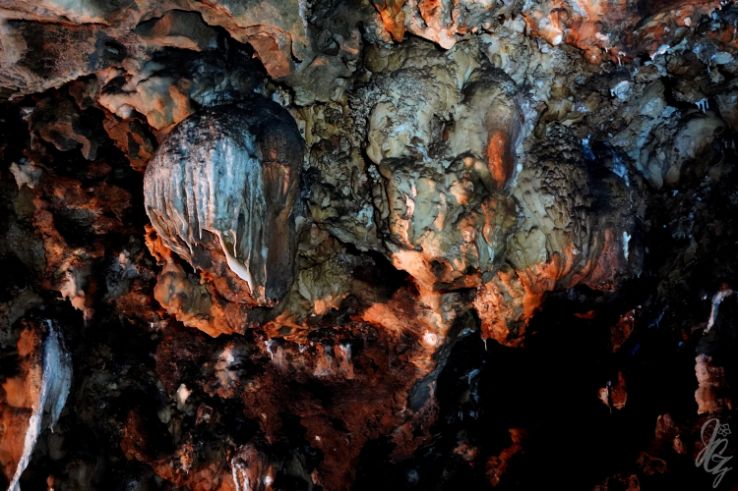
The next stop was the Katafyki Cave whose name comes from the Greek word for “shelter”. In ancient times, Dryopida did not need a castle because its inhabitants could hide inside the cave in case of a pirate attack. The first bit was visibly a natural cave that had been formed thousands of years ago by water. There are some impressive stalactites one can admire and with a little creativity you might discover the medusa, the embryo and the coral formations. Further down, the natural cave turns into a mine where they used to extract iron. These activities had stopped after 1935 as the manual labour wasn’t worth it anymore. Iron could be extracted much cheaper in other parts of the world. The tools and rail tracks that had been used continued to be used in agriculture. There is only little evidence left in those mines that indicate the previous activities.
The village of steps and an herbal garden
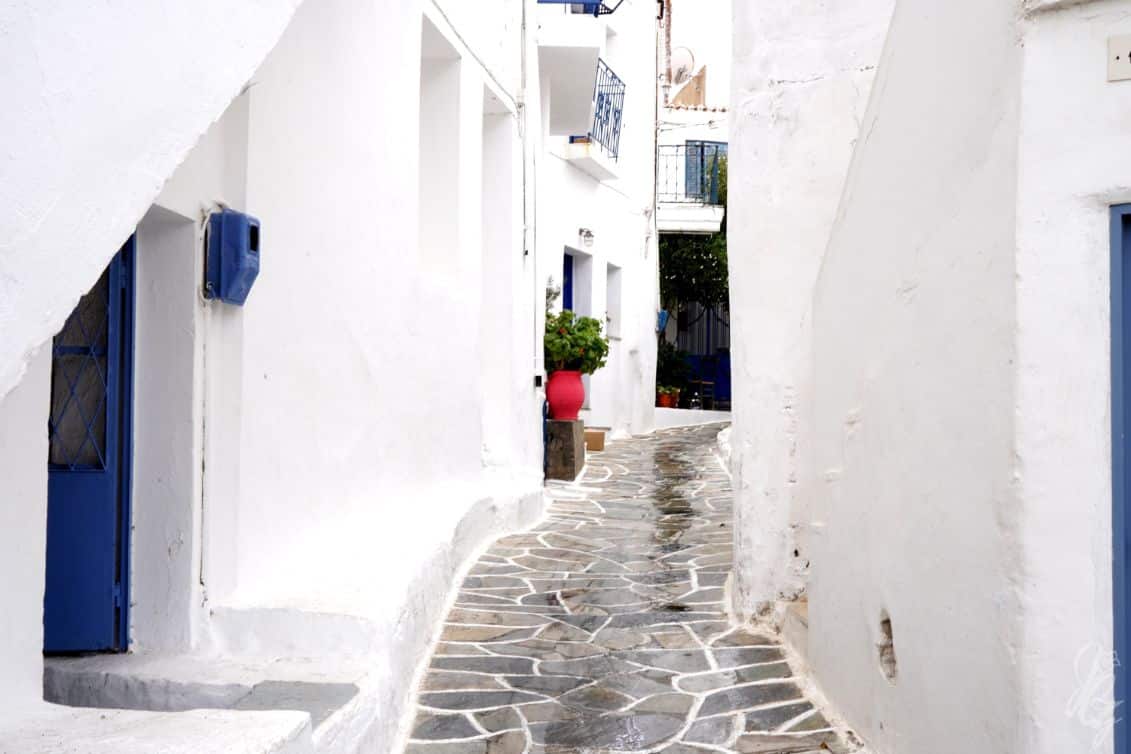
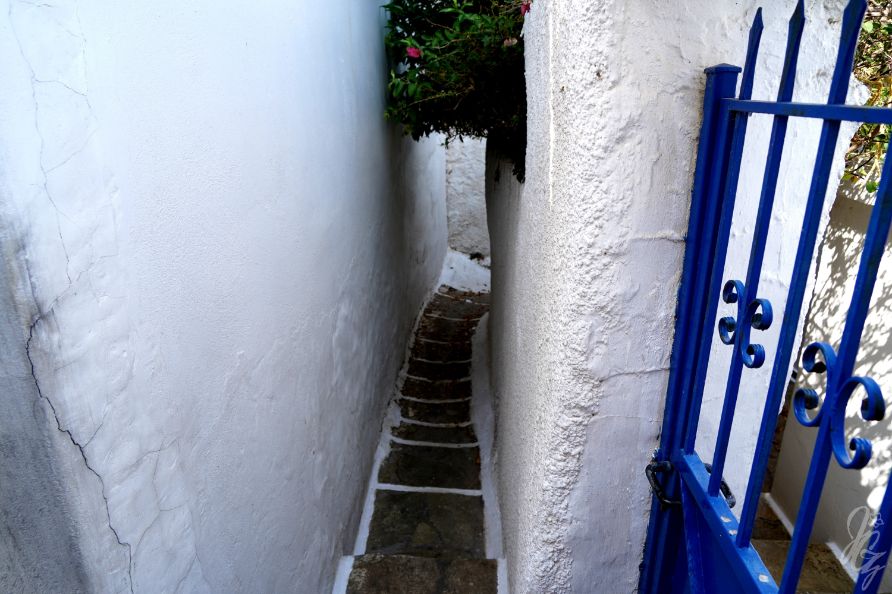
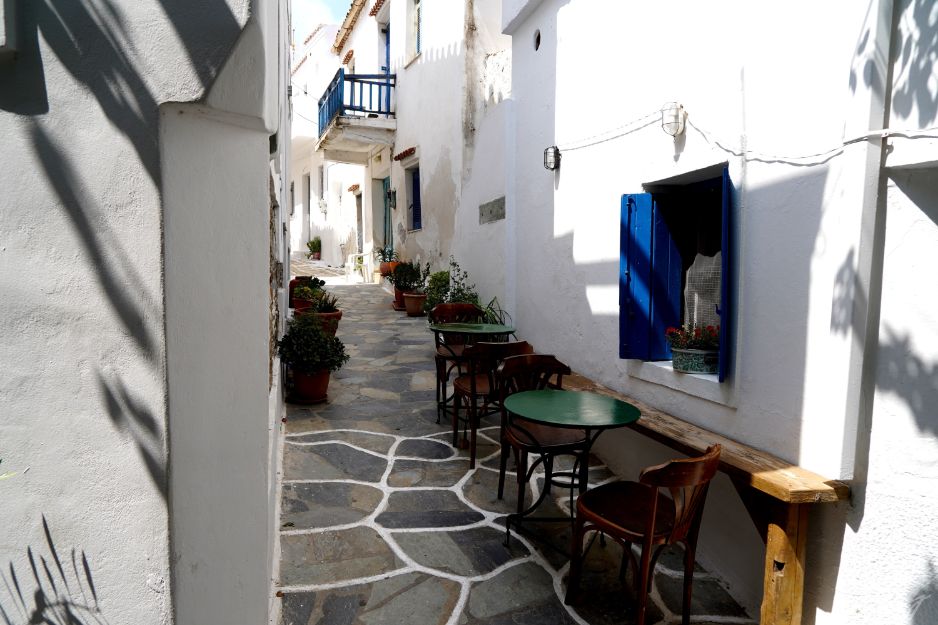
As they walked through the town, Giorgios pointed to some impressive architecture and the probably tiniest “streets” Charlie had ever seen. Elsewhere in Europe it would be labelled a narrow path, but Giorgios kept on talking about “streets”. No car – not even the Fiat 500 – could ever drive here. Apart from being narrow, there were also many steps. Charlie loved it as it had something very special and authentic. Everything there is also very well maintained with flowers and freshly looking paint. It is of course the traditional white facade with blue windows that we would all recognize as being typically Greek. Giorgios explained that this goes back to a nationalist movement where the colours of the Greek flag had to be visible to everyone. Originally, the colour of the Cyclades was a light olive green that is nowadays used more and more. You can spot it at several corners in Dryopida. That is if you manage to find a corner because those have been cut on most of the houses to facilitate the passage for donkeys.
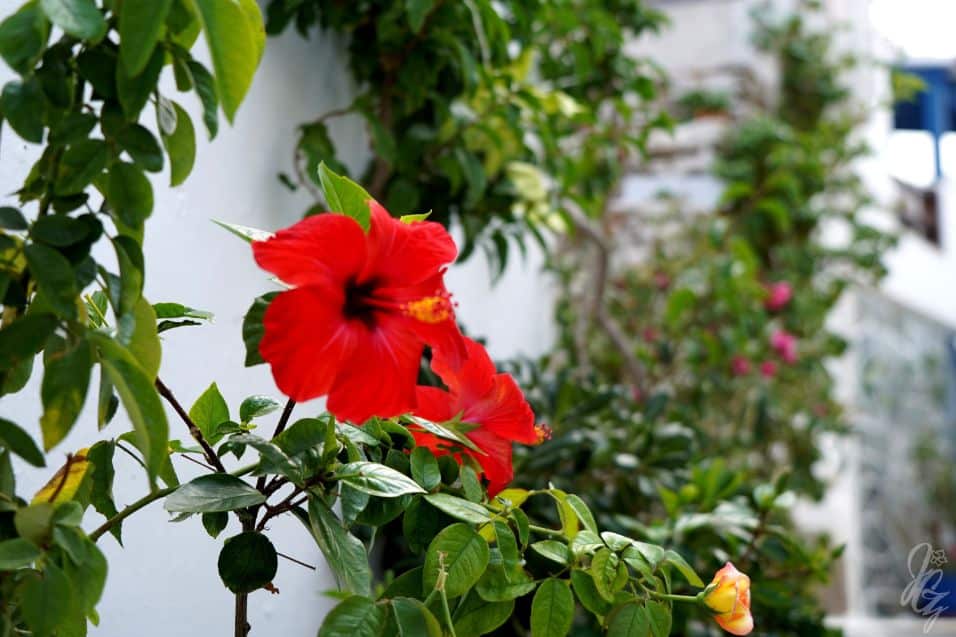
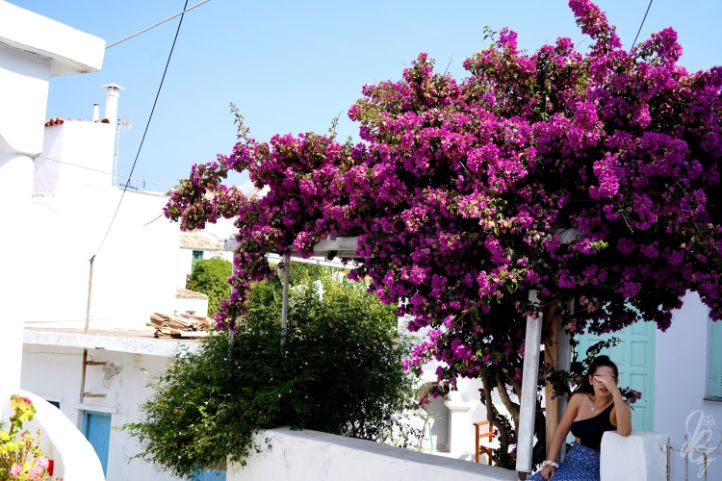
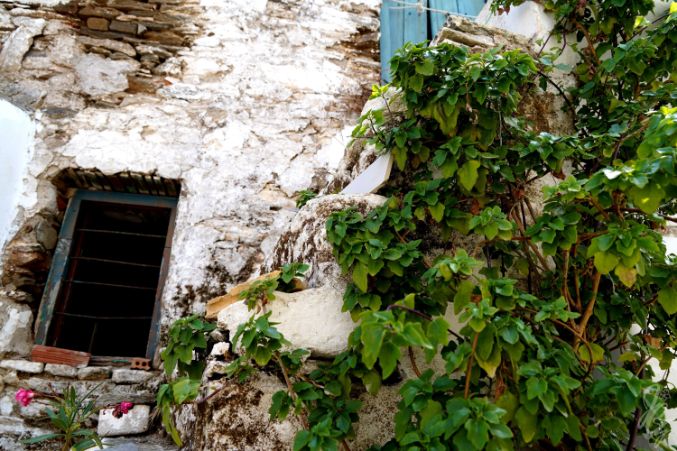
Almost every house in Dryopida comes with a beautiful garden and a stroll through town could be the perfect test for your senses and knowledge about kitchen herbs: basil, lemon verbena, bay leaf, rosemary can be found alongside olive, pomegranate, lemon and apricot trees, figs, almonds and capers. You have to see and smell it to believe it!
Giorgios also offers tours to the Chora, about the local honey production, cooking classes and ceramics from Kythnos. You can book your experience at experiencekythnos.gr or Vangelis can give him a ring during your sailing course with 7SeasSailing.