Daytrip to Brussels
Charlie in the European Capital
After spending a weekend with old friends in Ostend and Bruges, Charlie was dropped off by her friends in Brussels that Sunday evening. She would spend another day visiting the Belgian capital before taking the Eurostar back to London on Monday evening.
She had arrived late at night in Ostend on Friday and went out with her friends after the volleyball tournament in Ostend Saturday night – she definitely was up for a good night’s sleep, but as so often when you’re having a good time, that plan didn’t work out.
Another fun night at a hostel
Before going to bed, Charlie still had to eat and she got a beer and a pizza at the bar in the hostel. A comedy night was planned for that evening and why not get a bit entertained while eating? A few minutes before the show started, Charlie was joined by Sarah and Brian who were struggling to find a table. There was plenty of space next to Charlie and they introduced themselves to each other.
Sarah was from Belgium and just spending the day in Brussels. She would have to return to work the next morning. Brian was from New York and just had a layover in Brussels before his flight to Aruba the next morning. They both had met when Sarah was living in New York and took the opportunity to see each other again.
Charlie got on very well with both of them. They ended up in such a good conversation that the first comedian had to call them out to please be quiet.
Keep on drinking
During the break they continued chatting about travel and life in different countries, Brian got another round of beers and Tequila. That was the moment Charlie realized that her plan to get a lot of sleep that night would not be put into action.
At some point that night, Brian did not return from the bar. When Sarah went to check, she found him chatting with Fabiano. He was from Brazil and decided to join them at their table. That involved more beer and Tequila…Charlie fell into bed at 2 a.m. – tired and tipsy, but happy about the memories she had just made. It was another fun night at a hostel similar to her stay in Oxford a few months ago.
Brussels now and then
When Charlie visits other cities, she always participates in a free walking tour. They’re not really free; instead of buying a ticket for a fixed price upfront, you give the guide a tip at the end. The Brussels free walking tour started on Monday morning at 10a.m. at the Grand Place/Grote Markt. And there was already the first thing to learn about Belgium and Brussels in particular: all street names and locations have two names – one in French and one in Flemish as both languages are official languages in the country.
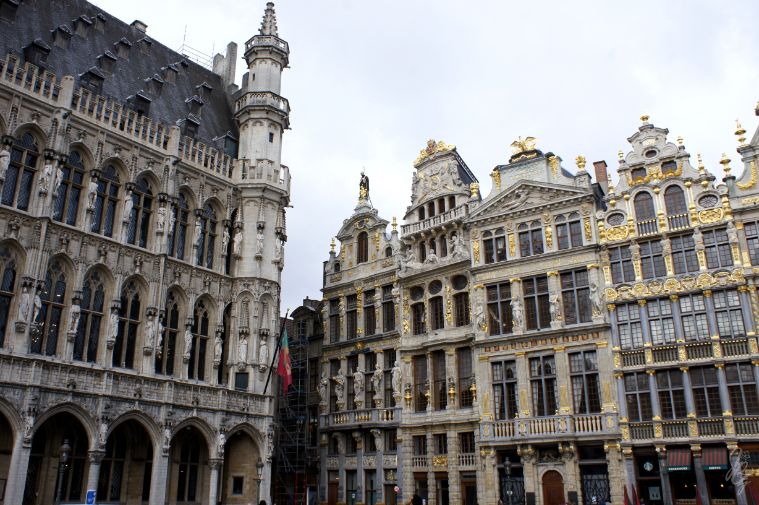
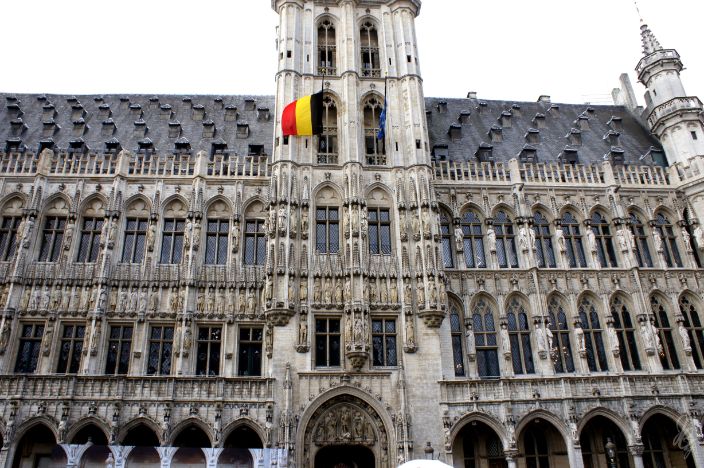
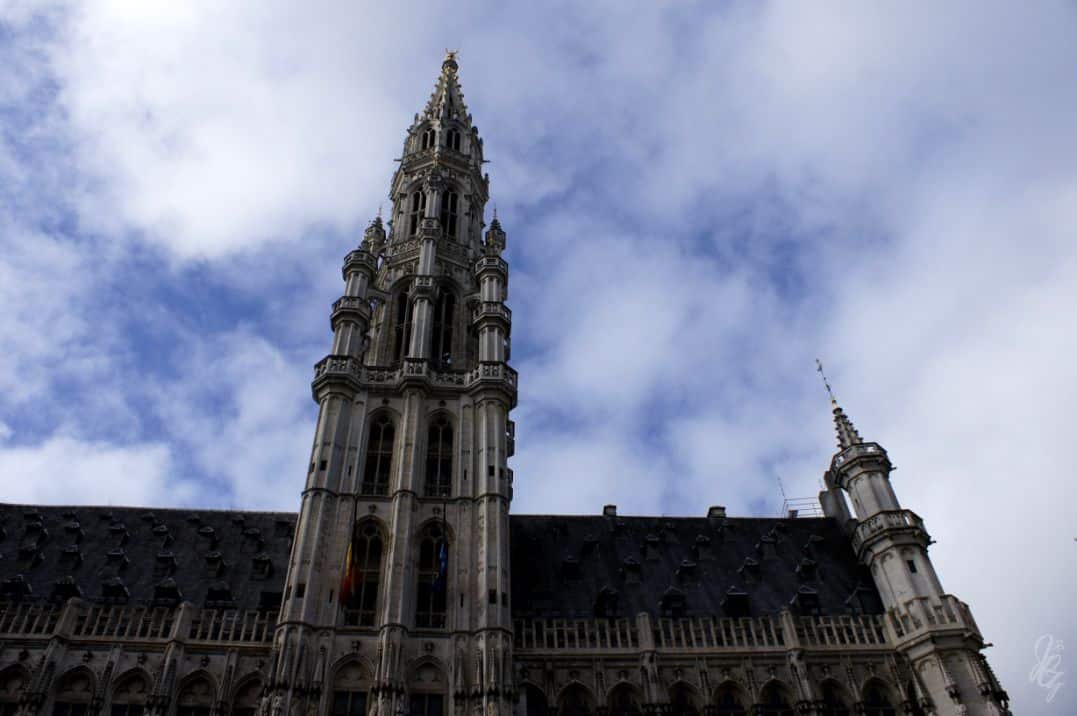
The guide that day was Anna and she started the tour with an overview of the history. What better place to do so than in front of the city hall that is surrounded by amazing architecture and houses that all have a story to tell. The group stood right in front of the city hall where you would notice that something in the architecture seems a bit off: The building is asymmetrical because it had been built by two different architects. High up in the sky, protecting the city hall, is a statue of St. Michael who is the patron saint of Brussels and will be met several times during the tour.
Building everything from scratch
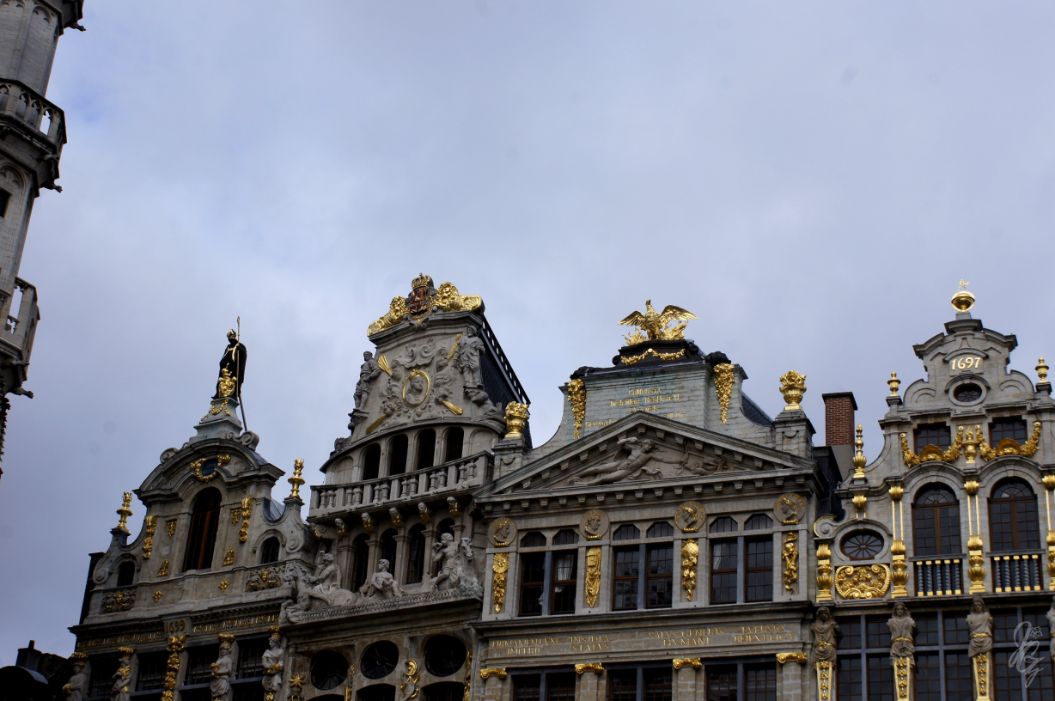
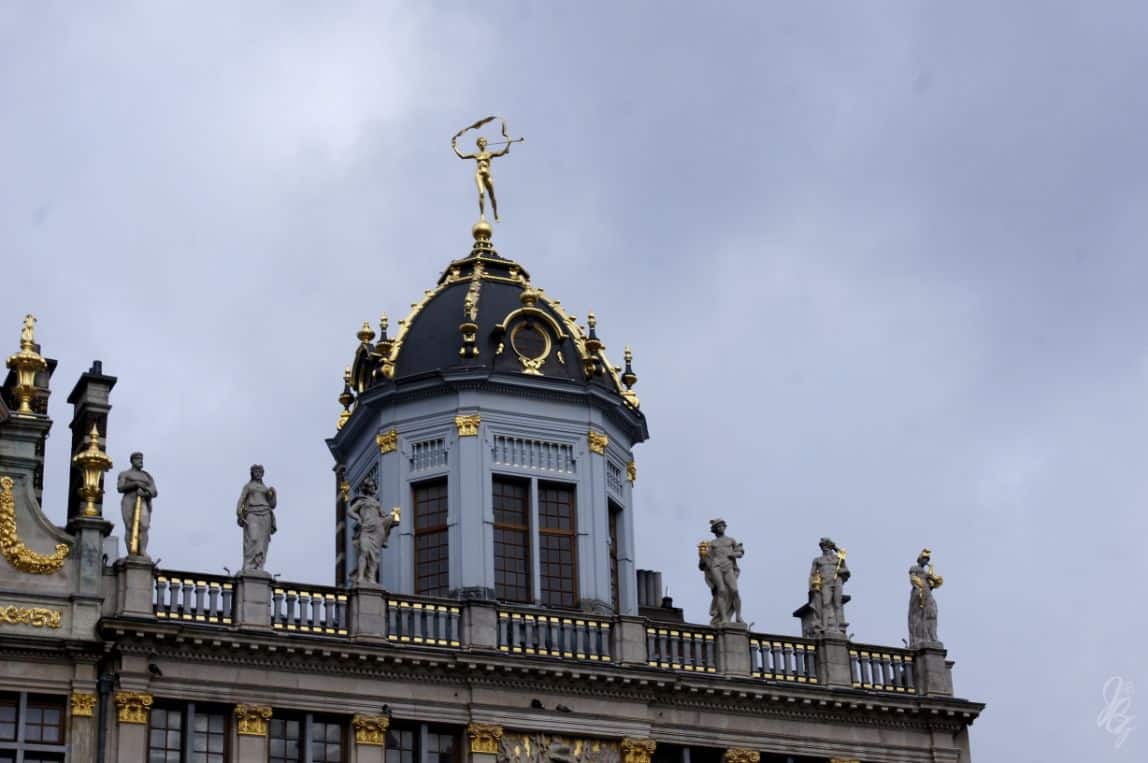
Throughout history, Belgium was always a strategic place in Europe and changed hands many times. The French weren’t always friendly neighbours and bombarded Brussels in 1695 which destroyed all the original houses around the Grand Place. Since they were owned by the guild, they had to be rebuilt with grandeur and until today show these baroque style buildings with rich decorations the elements of the guild. That’s not all, if you look closely you can also discover many elements that guide you through Belgian history. There is for example a lion holding the Spanish coat of arms to remember the times when Belgium was under Spanish rule and a phoenix to remember how Brussels was reborn out of the ashes after the French bombardment in 1695.
Comics and Figurines
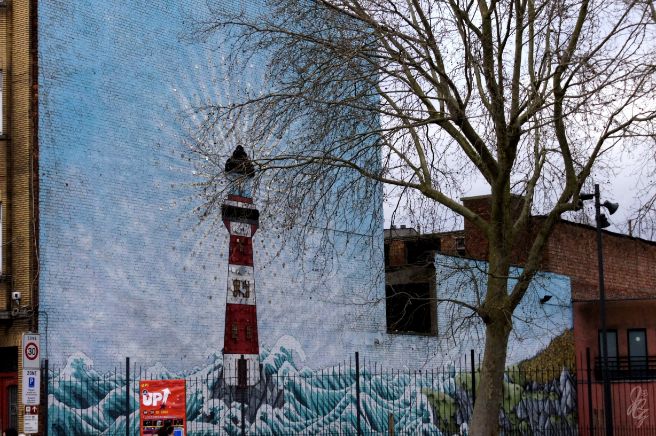
When we are asked what Belgium is well-known for, the first things that usually come to mind are chocolate and waffles, maybe we even think of fries, but there is one thing that often is overlooked: some of our favourite comic figures were invented in Belgium. The Smurfs as well as Tintin and Snowy are Belgian. The graffiti in Brussels show how proud the people are of these childhood heroes.
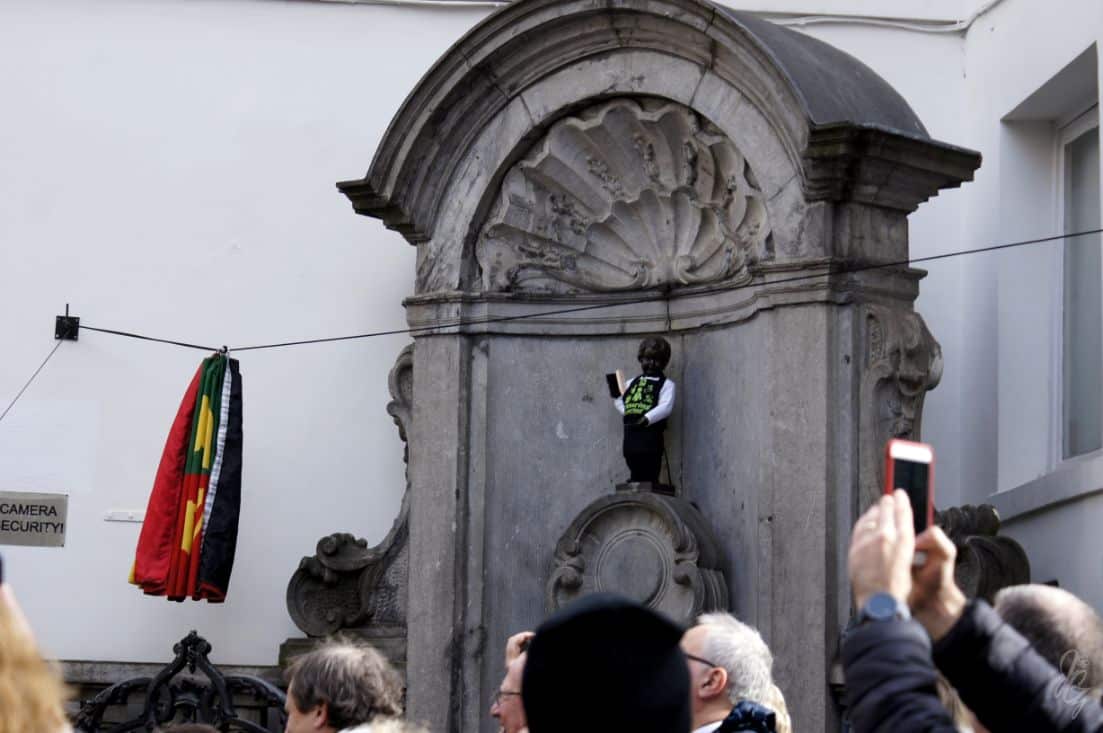
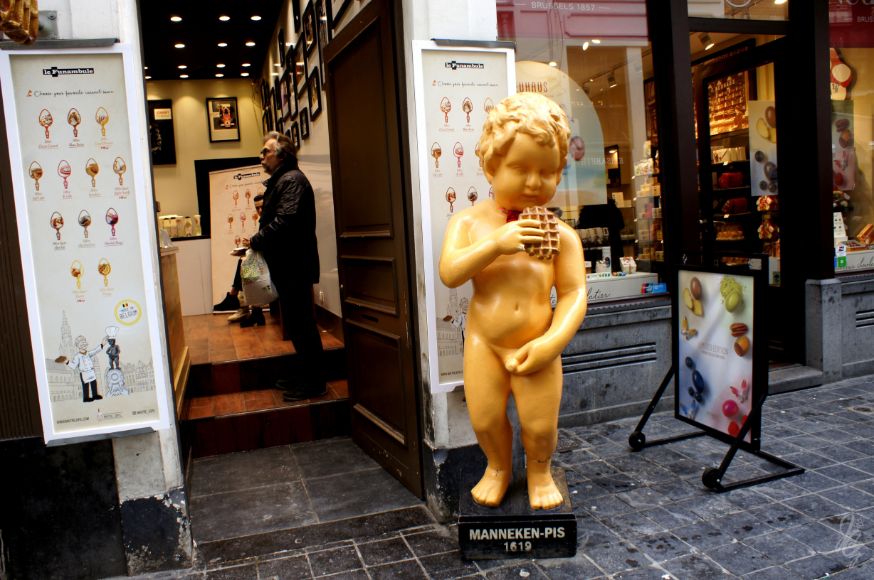
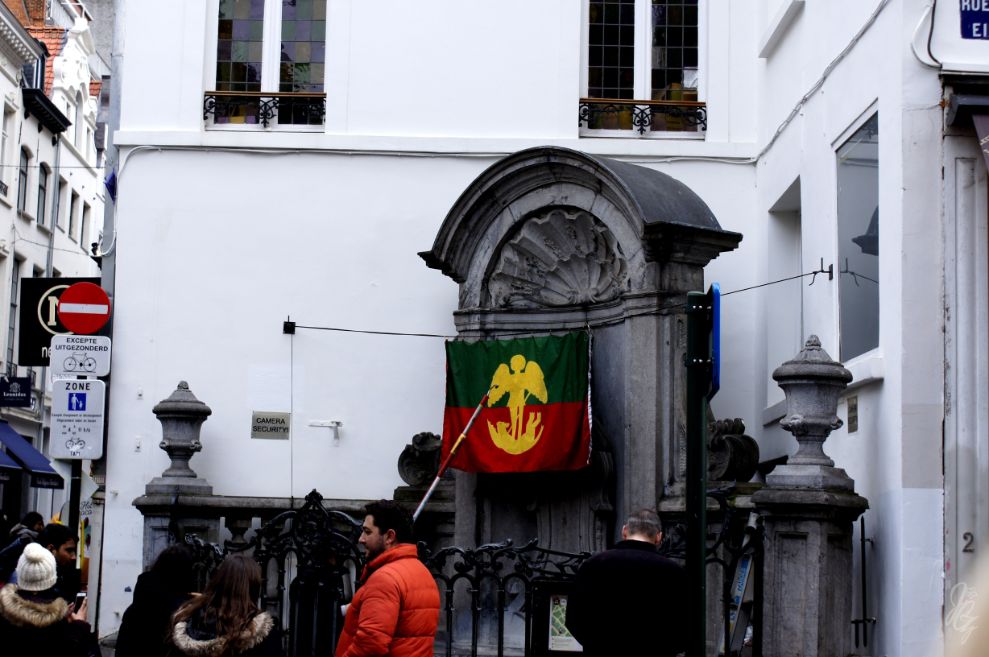
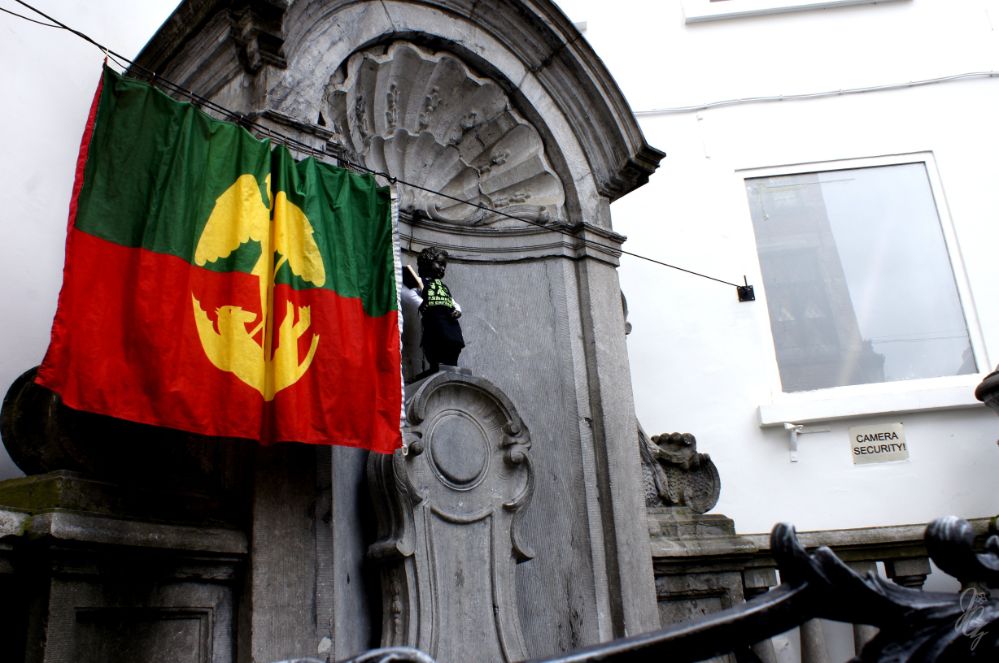
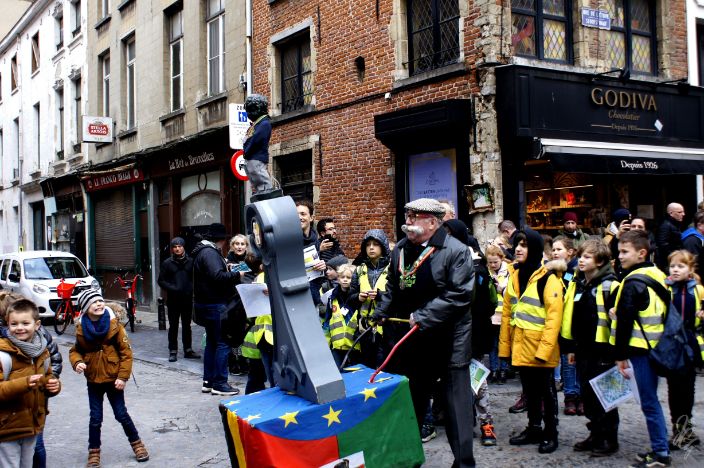
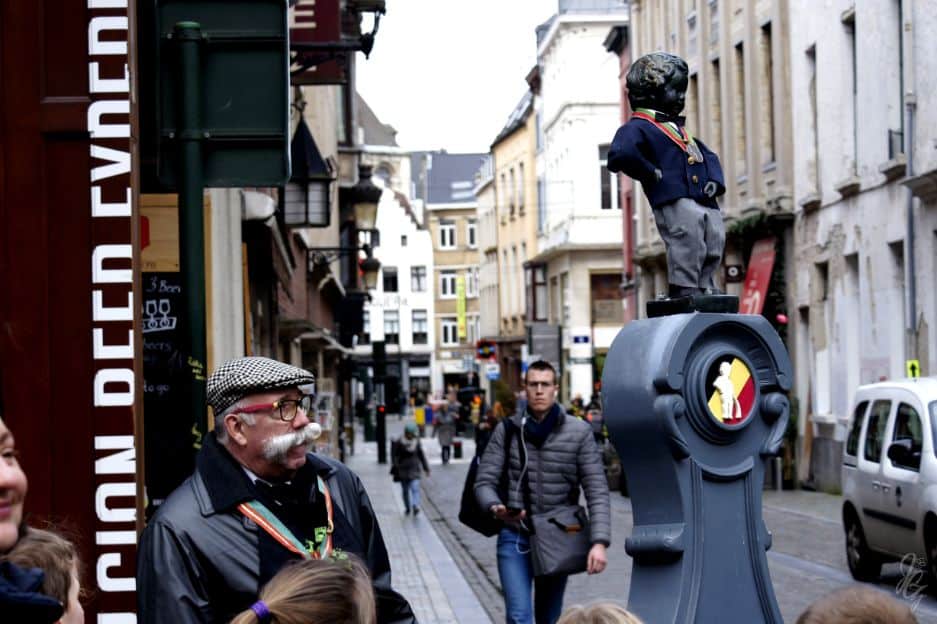
There’s not only The Smurfs, but another little boy without whom the city wouldn’t be what it is: the Manneken Pis. During the free walking tour, they arrived just in time to attend the dressing ceremony. Yes, you heard that right, there is an official dressing ceremony for the little statue for which a group of volunteers holds a formal speech and sings, groups of children arrive with their teachers to attend whilst trying to get wet as the statue actually starts to pee in the crowd. Anna the guide mentioned that sometimes, the Manneken Pis pees beer or wine during the ceremony. There also is an official dresser putting the statue into one of the more than 1000 outfits that are displayed in the museum “GardeRobe Manneken Pis” in Brussels.
Keep on Walking
After the little show they continued the walking tour through the streets of Brussels. The next stop was at the old stock exchange which was at that time closed for refurbishment to turn it into a leisure centre. Directly opposite you can find Fritland. According to Anna, they serve the best fries in town. She gave a few rules on how to eat Belgian fries on that occasion:
- Never, ever order French fries, they’re Belgian!
- Don’t eat them if you’re vegetarian because the original ones are fried twice in animal fat.
- If they ask you which sauce you want, you choose a sauce!
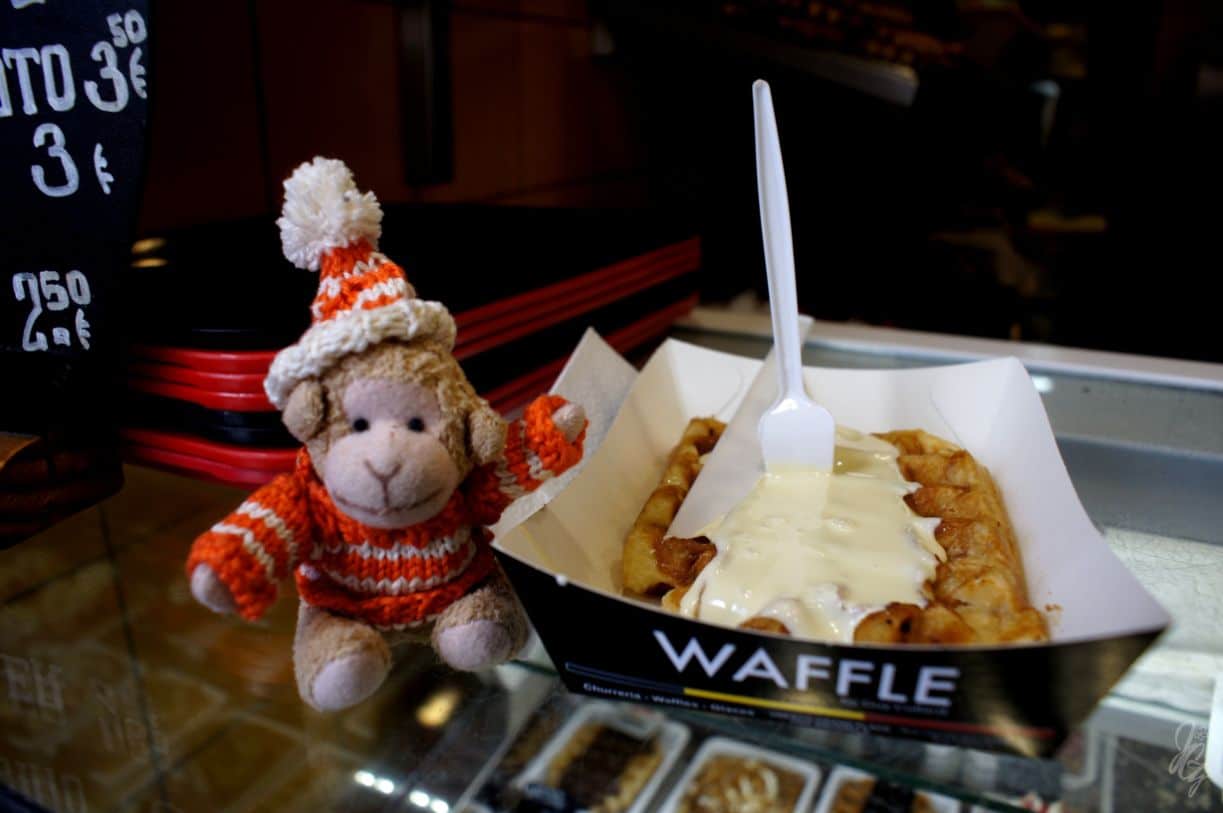
But no matter how many fries you eat in Brussels, there is another smell that you can’t escape: Waffles. You might be disappointed to read that most of them are a tourist trap: they look nice with a lot of cream, chocolate and fruits, but the original ones are eaten plain. There are two types in Belgium: Liege Waffles and Brussels Waffles. The first is round, the latter is usually rectangular and fluffier.
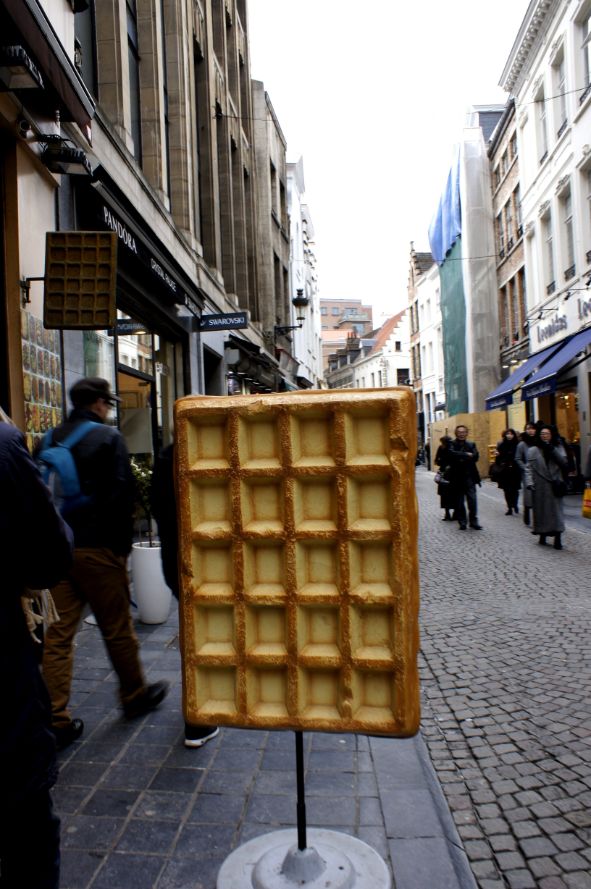
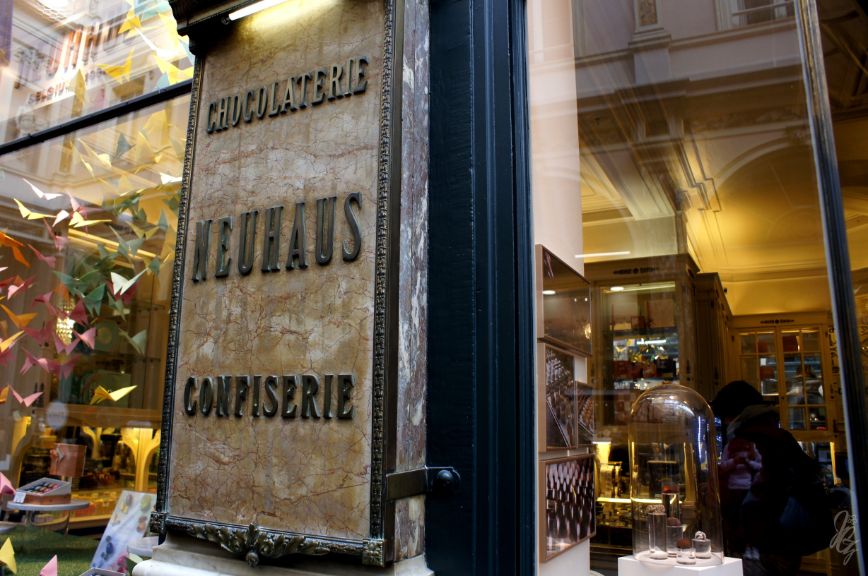
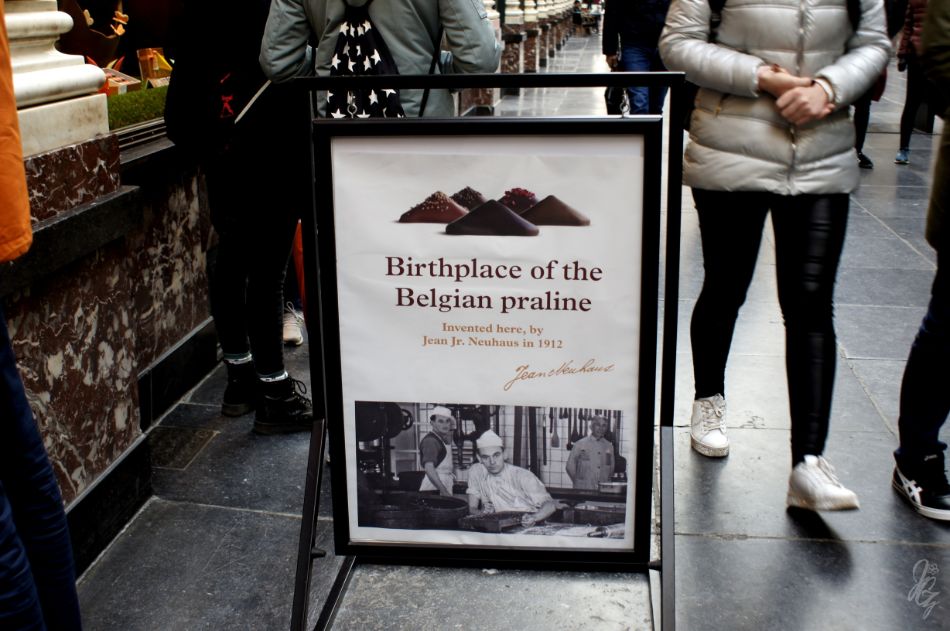
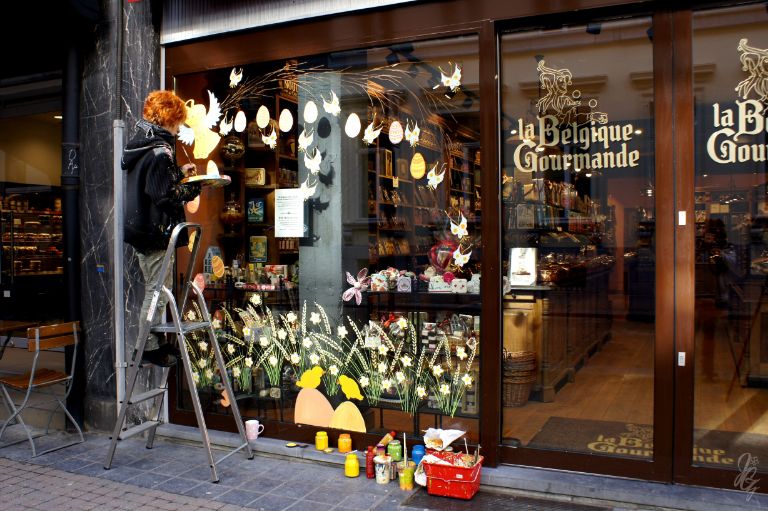
They’re passing through the Galeries Royales Saint-Hubert where you can find the famous Neuhaus confiserie – the place where the Belgian praline was invented. It originally was a pharmacy until that day when they decided to coat the bitter tasting medicine with chocolate. The praline was born. Luckily, it is nowadays rather filled with milk and hazelnuts.
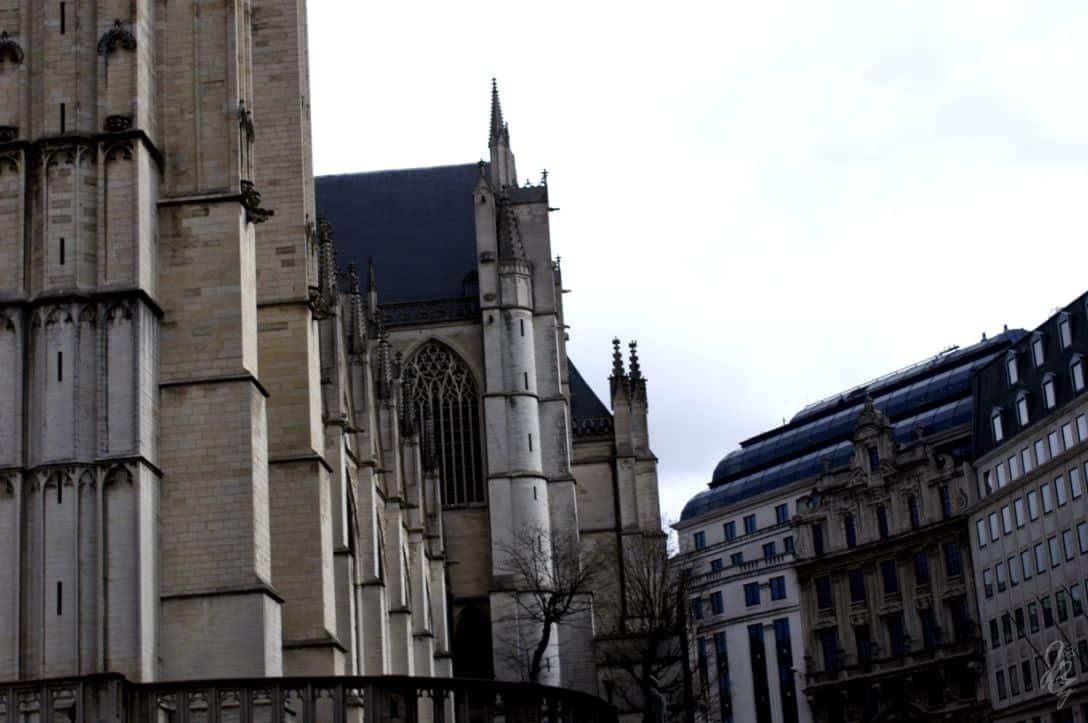
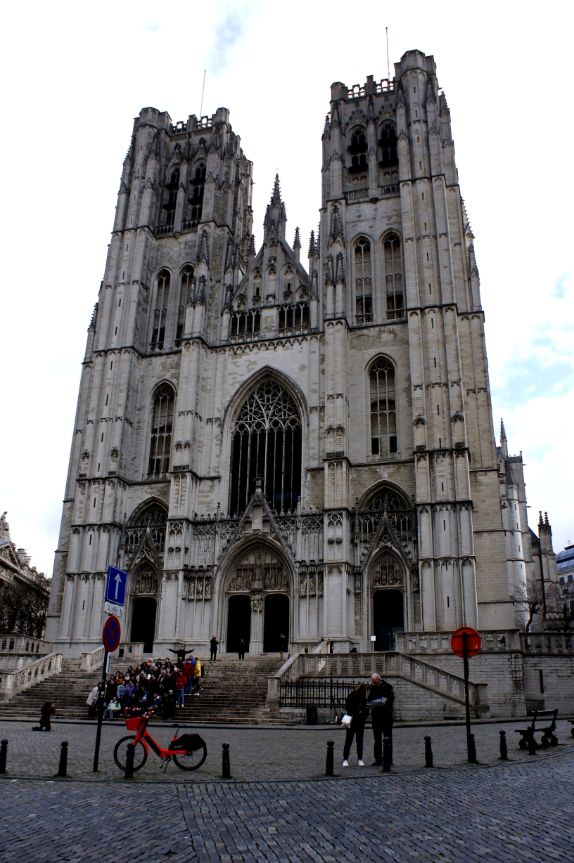
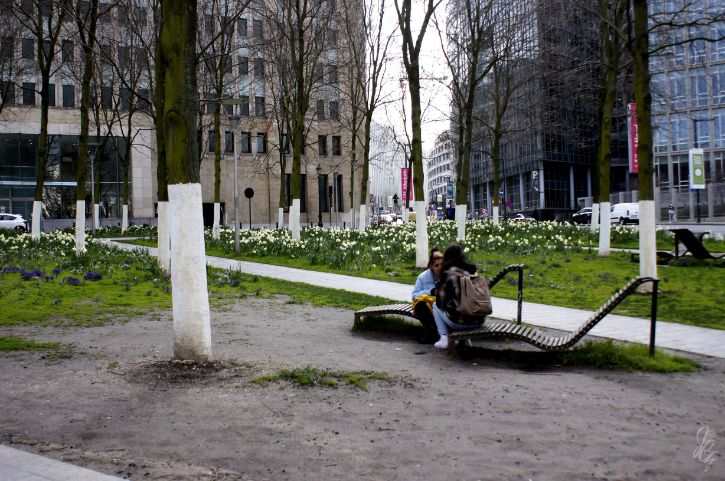
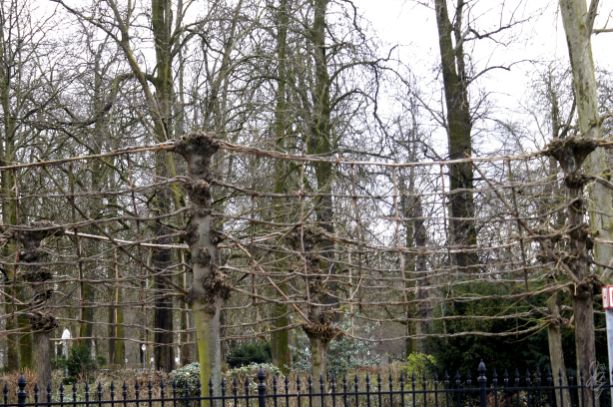
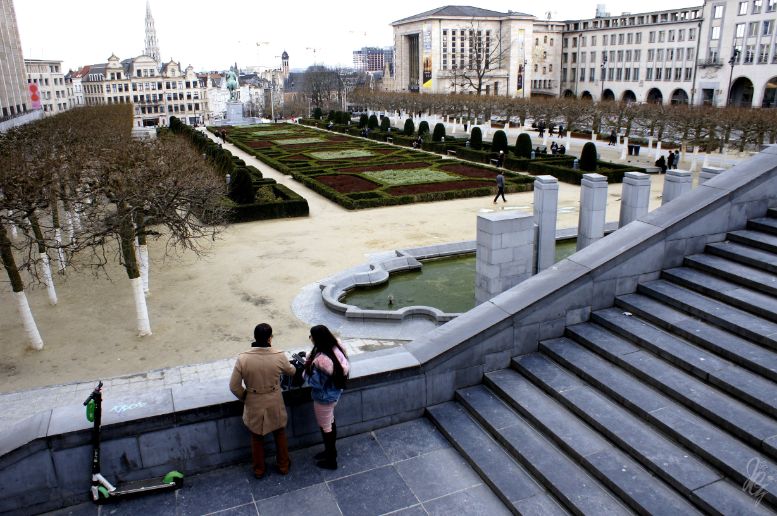
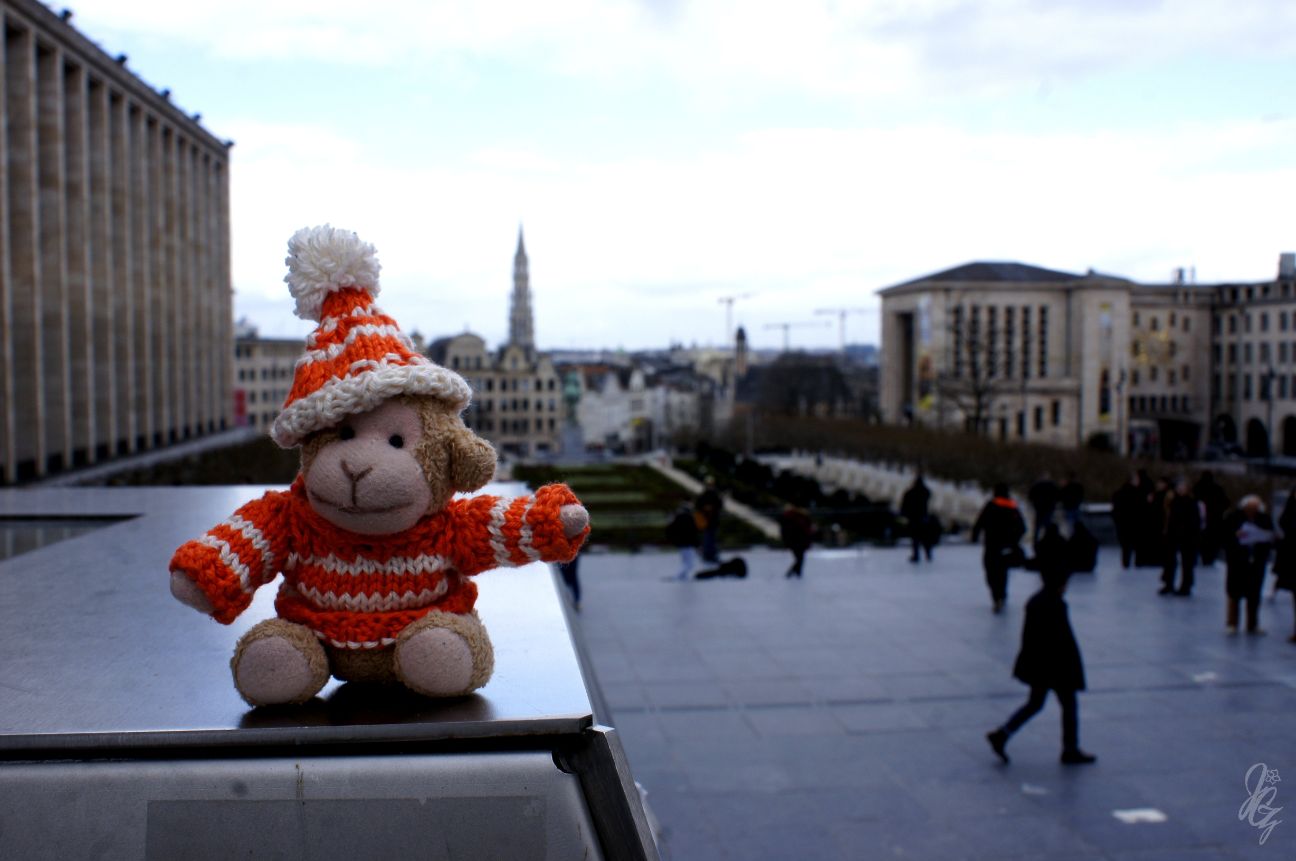
The Brussels walking tour continues along the Cathedral of St. Michael which looks a lot like Notre Dame in Paris, pass by the Warandepark and the Royal Palace. They hear about the different museums in Brussels and finish the tour at the Mont des Arts.
The Heart of Europe
At this final stop Anna talks about the youngest bit of Belgian history and explains why Brussels was chosen to be the European Capital: the country was always neutral and never had started a war, it was too small anyways to become a threat and it was geographically in the middle.
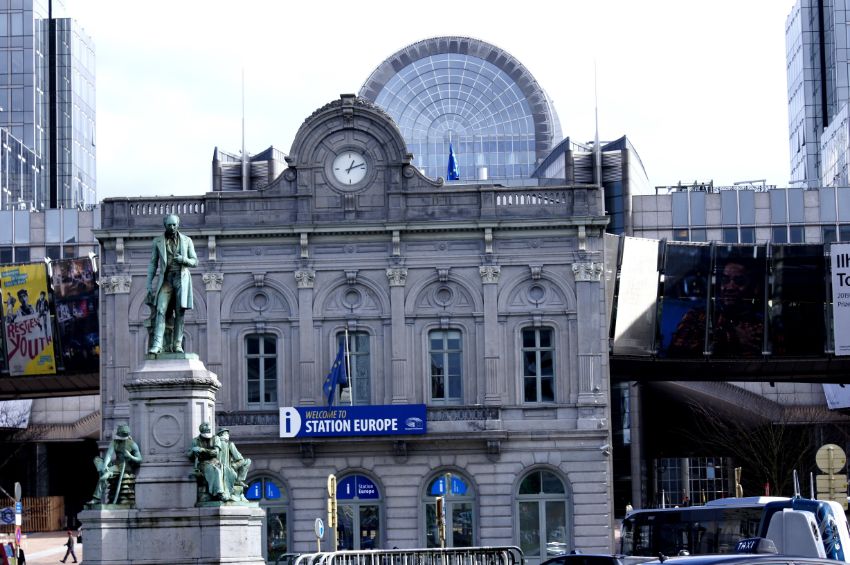
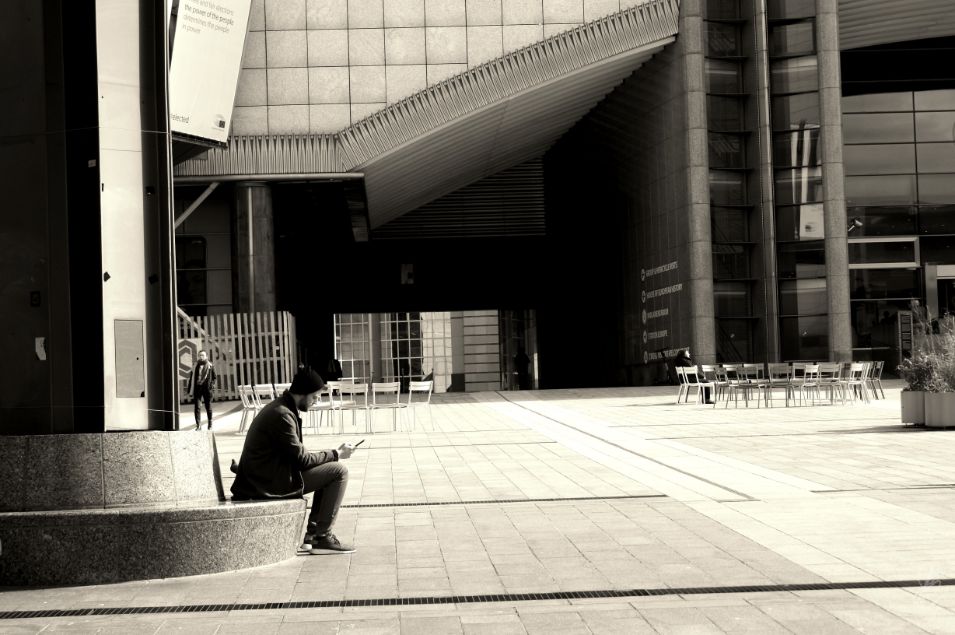
That being said, there was one place for Charlie to go to in the afternoon: the European Parliament. To learn more about European history – Charlie was always interested in history – the Parlamentarium was the best place. The entry is free, but there are security checks similar to those at an airport. It is open Mondays from 1 to 6 p.m., Tuesdays to Fridays from 9 a.m. to 6 p.m. and on weekends from 10 a.m. to 6 p.m.
History lesson: European Union
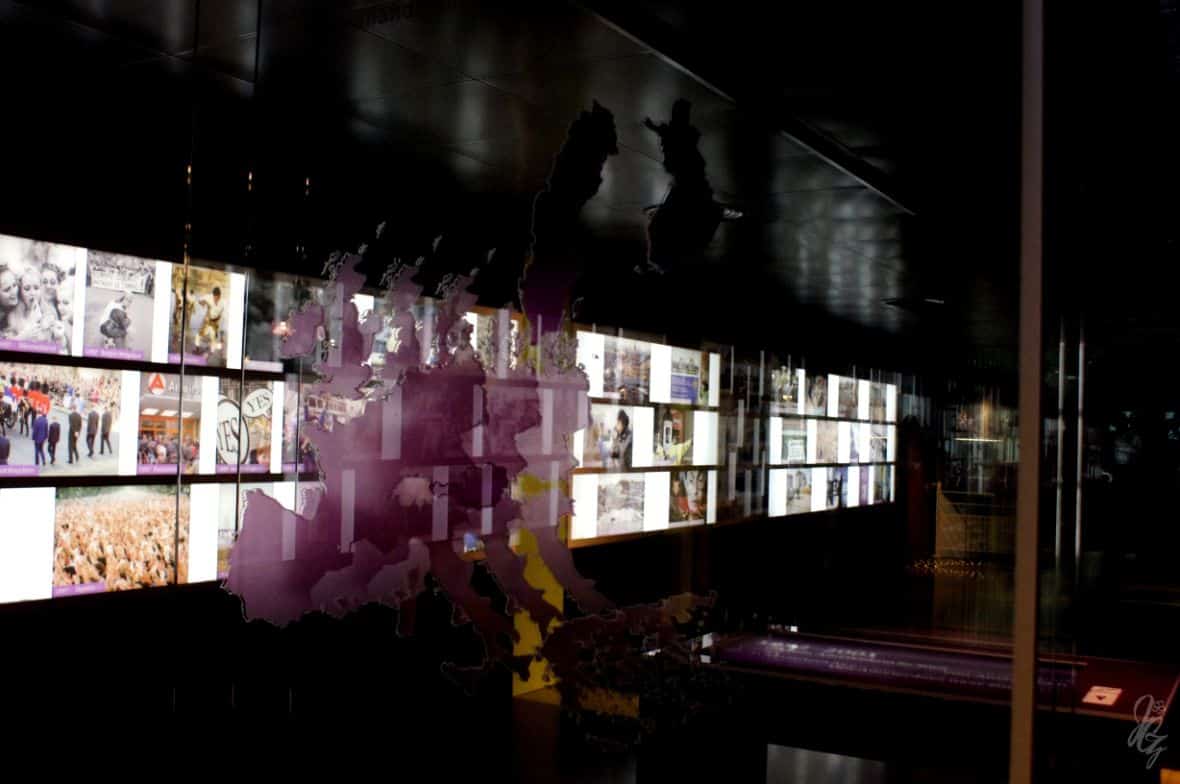
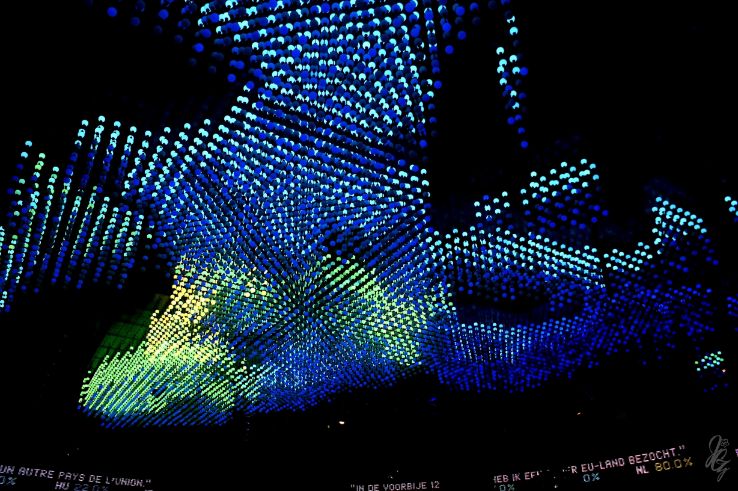
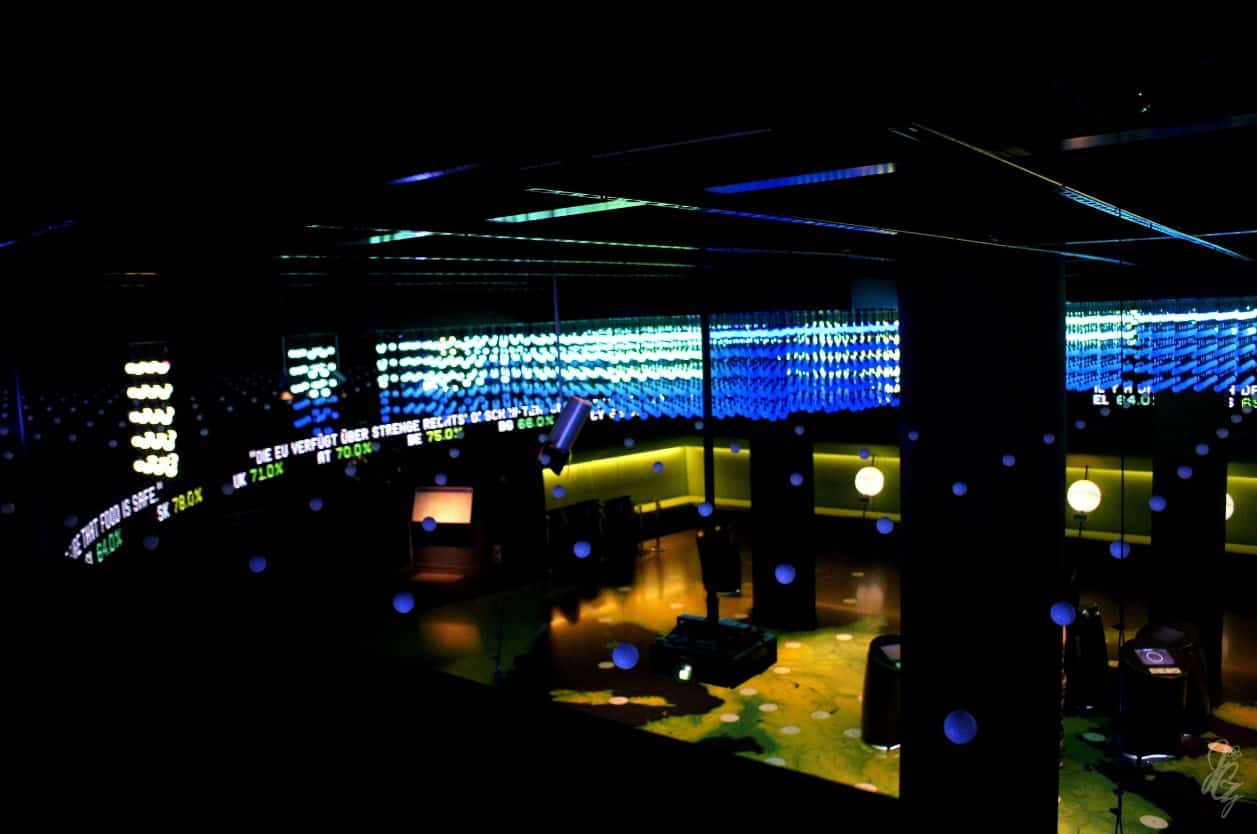
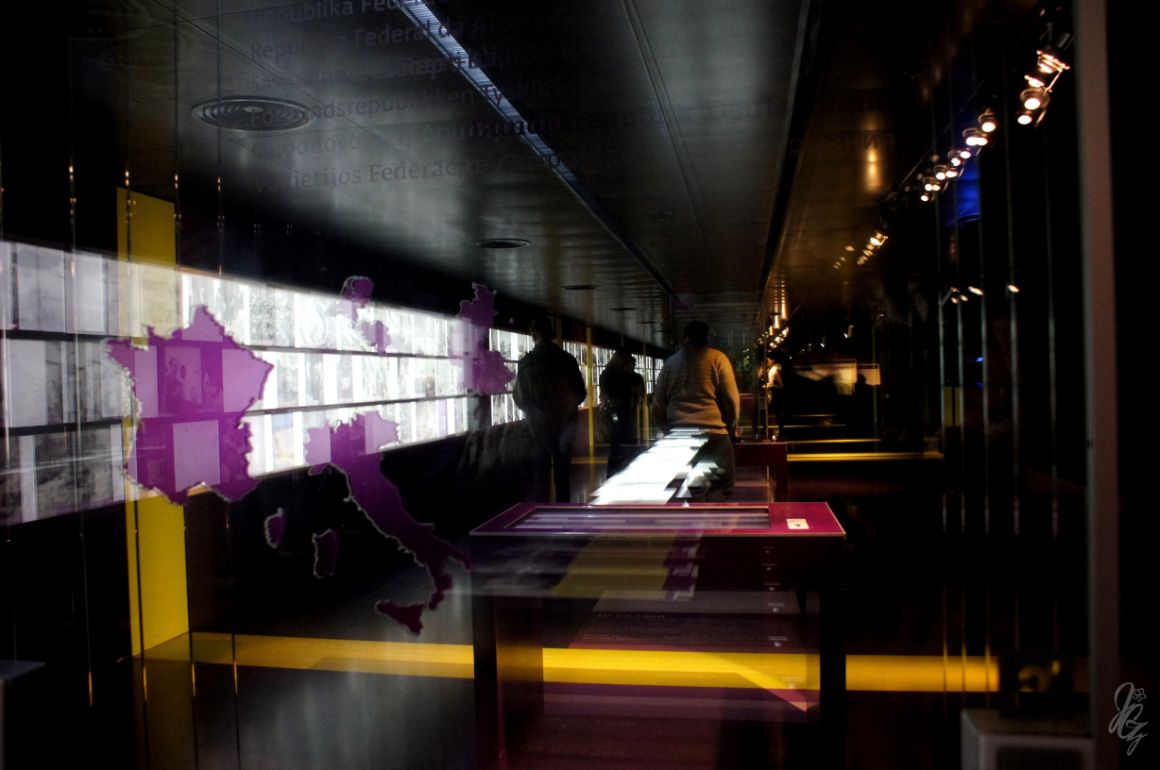
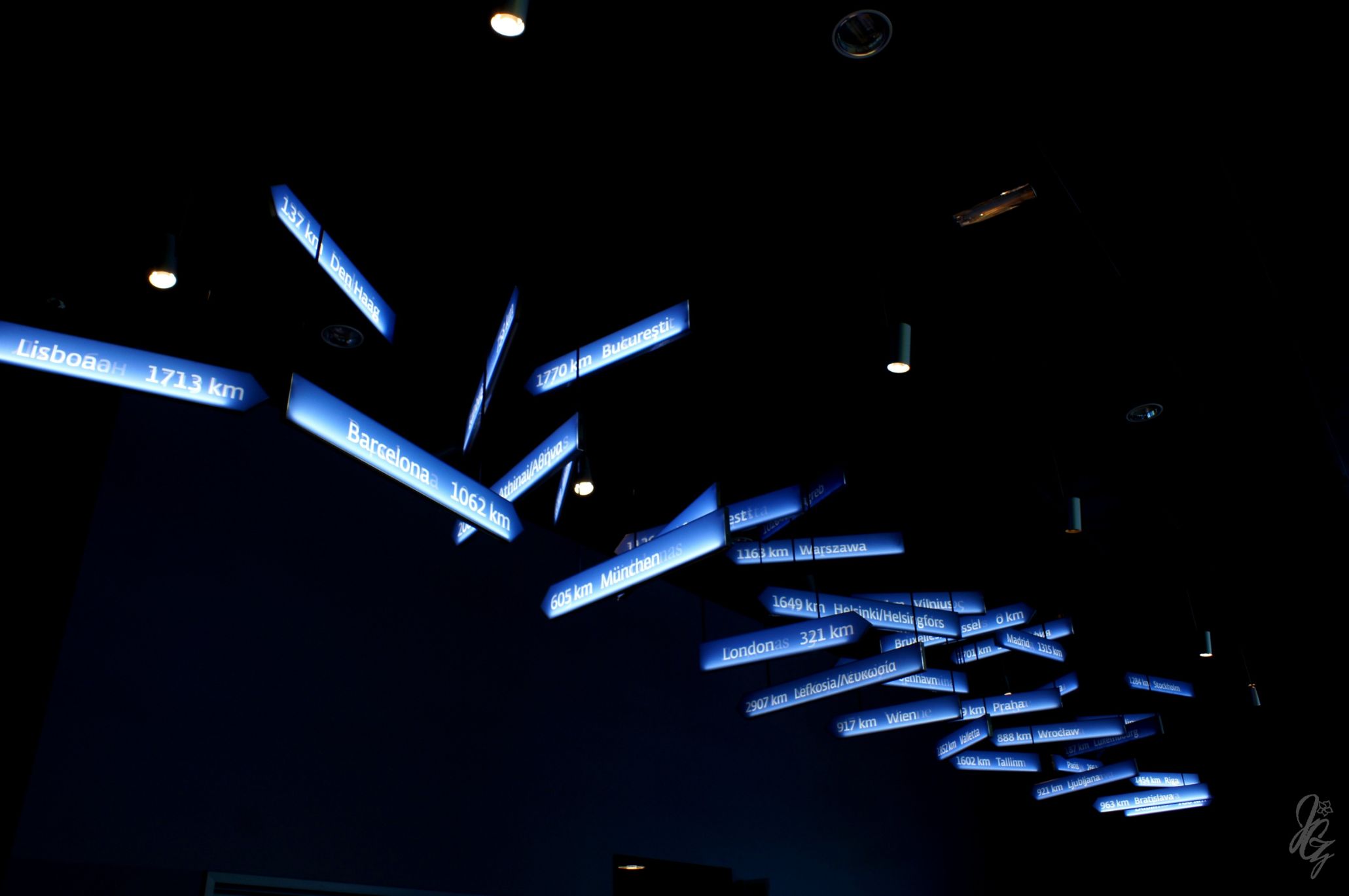
Inside, you can learn about the three different locations of the Parliament: Strasbourg, Luxemburg and Brussels. The history of the European Union is laid out nicely with imagery and milestones throughout the 20th century. It starts with soup kitchens after World War I, talks about the rise of fascism, the great depression, Nazi-Germany and the Spanish civil war. The history continues after World War II with The European Coal and Steel Community and the USSR. You can learn when each member state joined, you’ll see smiling faces on pictures of the fall of the Berlin wall and the opening of the Eurotunnel in 1994 which made it possible for Charlie that day to get from London to Brussels by train.
One Europe
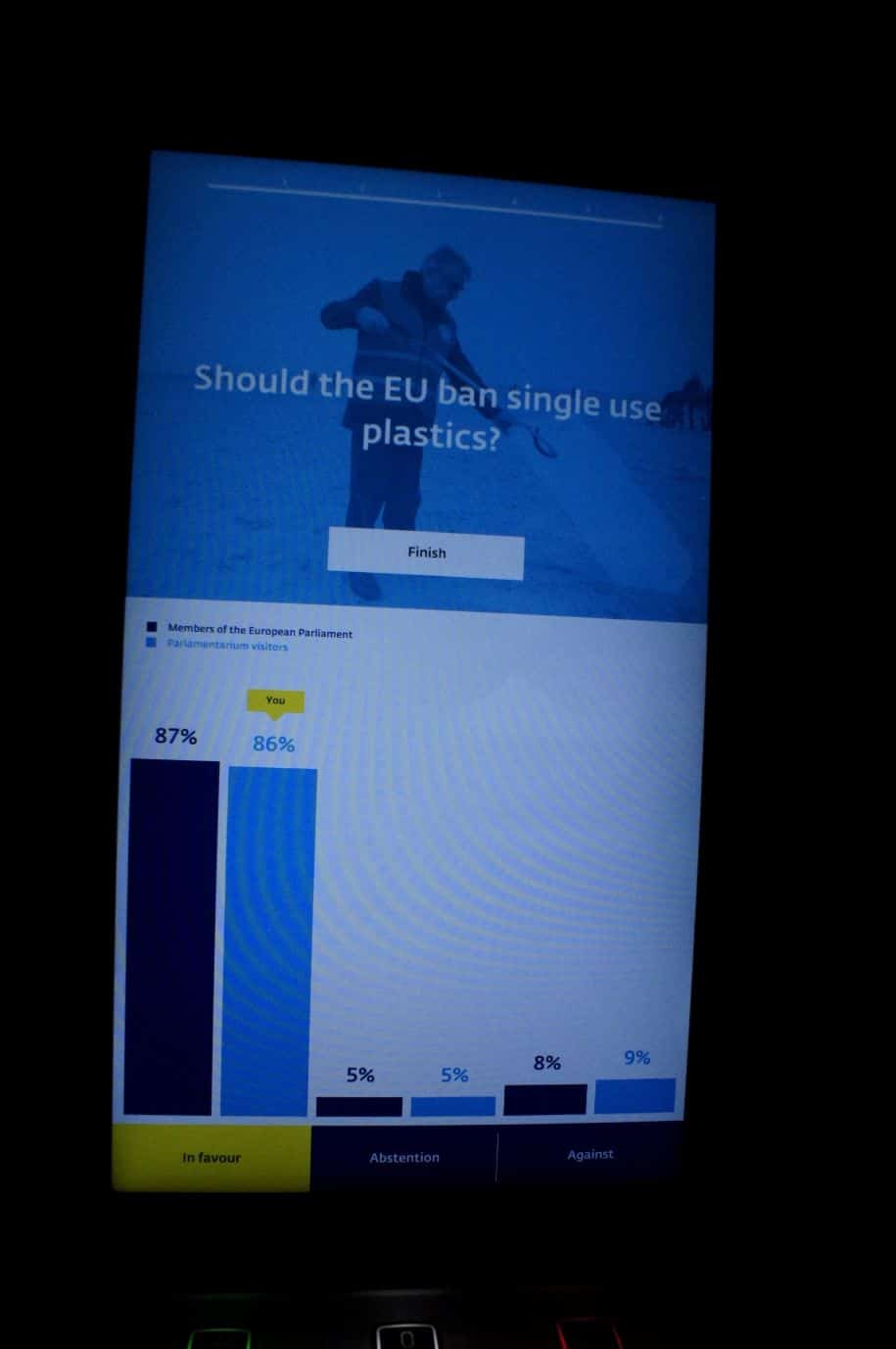
The last part of the exhibition talks about today’s parliament and the visitor can take a seat and become a part of important decisions. There is a little game you can play where you vote about some hot topics that are being discussed in Parliament. It reveals in the end what the majority of visitors has decided and what the actual parliamentary decision was. Charlie was surprised to see how much these results differed across all topics but one: The visitors of the Parlamentarium and the members of the parliament seemed to agree in one point which is the a on single-use plastic. Charlie likes this decision – everything to protect the oceans. There are better alternatives, filter water bottles for example, anyways!
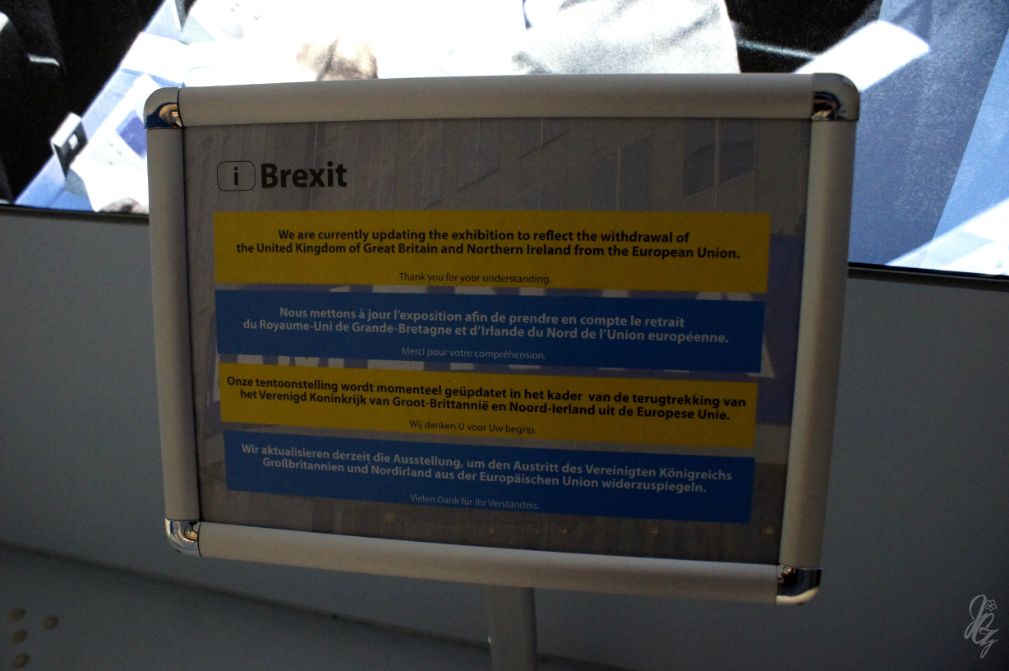
The very last room invited the visitor to take a seat on a comfortable sofa or armchair and listen to stories people all over Europe have to tell. The room is surrounded by images of stunning landscapes. Within a few minutes you could travel from the most northern parts in deep snow to sunny beaches in the south. It demonstrates how much beauty this continent has to offer.
Charlie took the Eurostar back to London in the evening.
Frequently Asked Questions
How to get to Brussels?
Brussels is very well connected in Europe: You can easily reach the city by train (station Brussels-Midi for international trains), car, coach or fly into Brussels airport.
Where to stay in Brussels?
As any major city, there are plenty of hotels, hostels and AirBnBs available. There is something for every budget and preference. Even with a lower budget you easily find accommodation close to the city centre.
How to get around in Brussels?
If you are staying close to the city centre, almost all sights can be reached on foot. Brussels also has a good public transport network. You can use the underground, tram or bus for € 2.10 for a single ride or €7.50 for a day ticket.
What to do in Brussels?
It is recommended to start with a free walking tour to get an overview. Afterwards, you can do special tours to taste beer or chocolate, visit the numerous museums or the European Parliament which are all within walking distance from the Grand Place or the Mont des Arts. The Atomium is a bit outside the city and best reached by car or public transport.