Initiative to reduce plastic waste on Cornwall’s Beaches
The Headland Hotel in Newquay partners with Dick Pearce Bellyboards for an eco-friendly surf experience
Plastic waste on beaches is an ever-growing problem despite all efforts of beach clean-ups. It is one of these cases where every little counts and Charlie was pleased to hear that the famous Headland Hotel in Newquay has come up with an idea.
The plastic they’re fighting against is not the waste you would imagine that comes in the shape of bottles and bags, it is cheap body boards made of polystyrene. These boards are very accessible for tourists and cheap to buy so that even non-surfers are tempted to try taking on waves. Upon their return home, the cheap boards are often discarded and end up as plastic waste on the beaches. Many of them have dings and scratches and even those that are still in shape won’t be used any longer. Charity shops don’t take them because it’s just too many.
The Headland Hotel and the Newquay beaches
The Headland Hotel in Newquay, famous not only for its location, is overlooking one of the main surf beaches, Fistral. Beaches like Towan, Crantock and Holywell Bay are only a stone’s throw away and there’s practically always good surf to find. If you read Charlie’s other stories about surfing, you might have noticed that they mostly involve sleeping in tents or bunkbeds far away from a 5-star-experience. How does this initiative by a luxury hotel fit in the picture?
Veryan Palmer, Managing Director of The Headland Hotel explained, that many of their guests are regulars in their 40s and 50s. They used to travel in a van when they were younger. Surfing is still on their agenda, but they replaced the van with a really comfy bed.
Wooden belly boards to fight against plastic
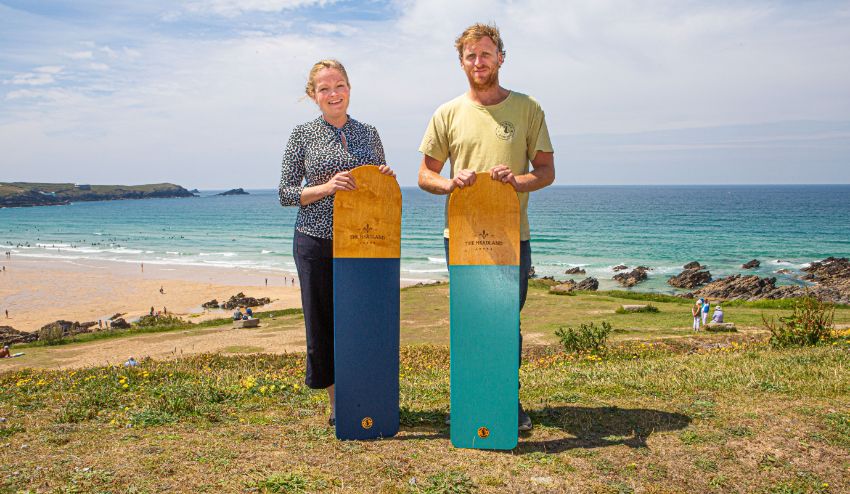
The Headland Hotel has now joined forces with Dick Pearce Bellyboards and commissioned its own environmental-friendly boards. Guests can pick the boards up, free of charge, from Surf Sanctuary surf school. Jamie Johnstone, joint owner of Dick Pearce Bellyboards, added:
“It is great to have the iconic Headland Hotel supporting local businesses, particularly those that are focussing on environmental sustainability and the continuation of Newquay belly board construction.””
If you have ever been to Newquay, you might have noticed that the majority of water sports are surfing and paddleboarding – where does bellyboarding fit in?
Why bellyboards?
Wooden belly boards originated in Hawaii before becoming popular in the UK in the early 20th century. Veryan Palmer explained that every hotel used to have bellyboards for their guests in the 70s and 80s, but other boardsports have taken over. The newly commissioned bellyboards by The Headland have a vintage design that reminds of the origins of the sport and the story of the local business that produces them. Dick Pearce took over the business from his father Charles, who had begun to make belly boards in his family’s tannery workshop when the popularity of surfing took off in the 1960s.
Veryan Palmer also adds the important aspect of accessibility:
“Everybody can bellyboard, it’s much more accessible than surfing and a non-scary way to catch a wave. We often see families doing it. Children and teenagers that come for surf lessons need to be accompanied by an adult. The parents can take a bellyboard and be with the kids in the water. They also come back to take a real surf lesson later.”
Those “real” surf lessons as well as paddleboarding can be taken at the resident surf school Surf Sanctuary.
Image: Courtesy of The Headland Hotel & TravMediaUK