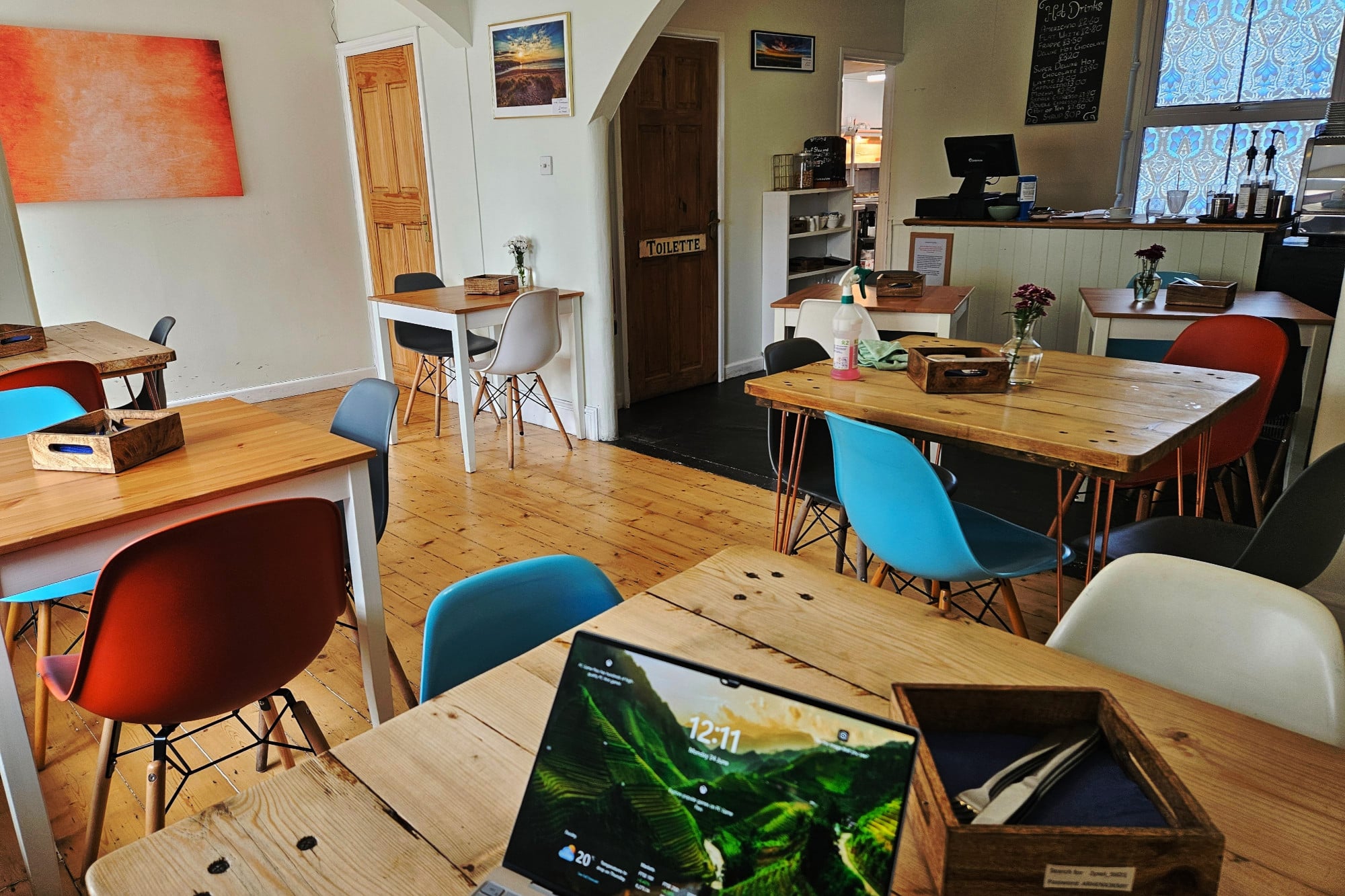
Madeira – Things to do, places to see
From the highest peaks to the coast
Madeira is a volcanic island in the Atlantic Ocean that was inhabited until the Portuguese arrived in the 15th century. There is scientific proof that the Vikings have been there, and the Greeks and Romans marked the island on their maps. The Portuguese were the first to settle as the location was perfect for trade with Africa, even though it was difficult to build in this mountainous landscape.
Hiking routes in Madeira
The mountains make Madeira the perfect destination for those who like hiking and you find all levels of incline. The hiking routes are clearly marked, and paths have been built. It might be tempting to get off-track, but it is not recommended to leave the paths for safety reasons.
Pico do Arieiro and Pico Ruivo: Where the Sun Rises
The most popular route that any hiker coming to the island wants to do is the peak-to-peak-tour from Pico do Arieiro in 5965ft (1818 m) to Pico Ruivo in 6106ft (1861 m). The route is challenging though and should not be underestimated. You can book a guided tour where you will be picked up at the end of the route and don’t have to walk back.
The Pico do Arieiro is the best place to watch the sunrise and the sunset from above the clouds. It’s magical! Charlie did both trips when she was staying at Homeoffice Madeira. It was only a 20-minute drive from there. There is a parking lot, and you don’t have to walk far to get the view. It was a little crowded, but there was enough space for everybody. Charlie and her housemates had tea and coffee with them and watched the sunrise on a chilly November morning at 7.15 a.m.


Sunrise at Pico do Arieiro in Madeira
From the same spot, you can also see the sunset in the evening. They had prepared snacks for a picnic at the coliving and drove up there at 4 p.m. one Tuesday evening. They did a short walk along the hiking route and back and sat down in a green spot near the parking lot. They enjoyed pasta salad, salty muffins, melon, ham, cheese, grapes, and wine whilst the sun was setting over the clouds.


Sunset at Pico do Arieiro in Madeira
Ponta de São Lourenço
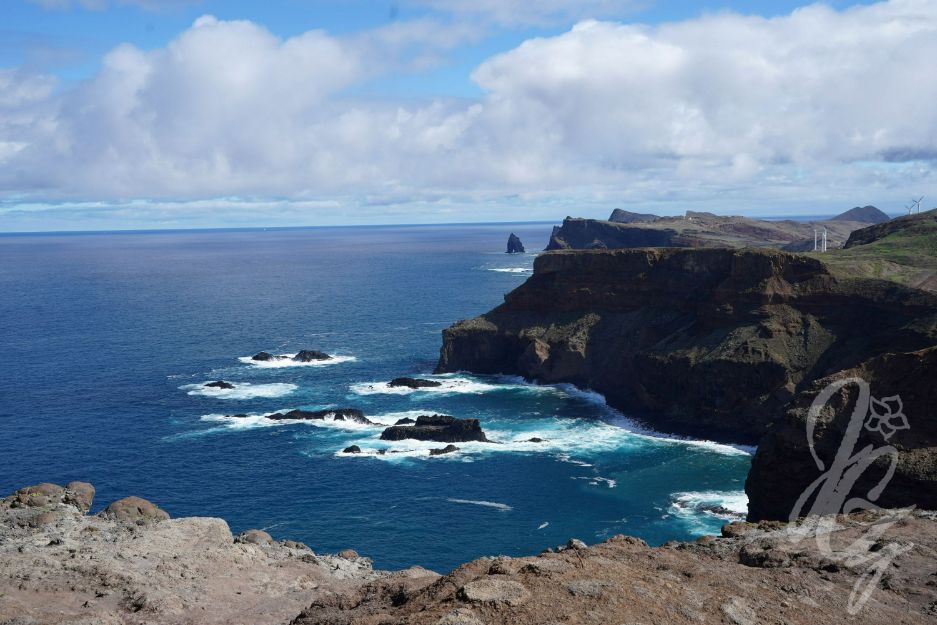
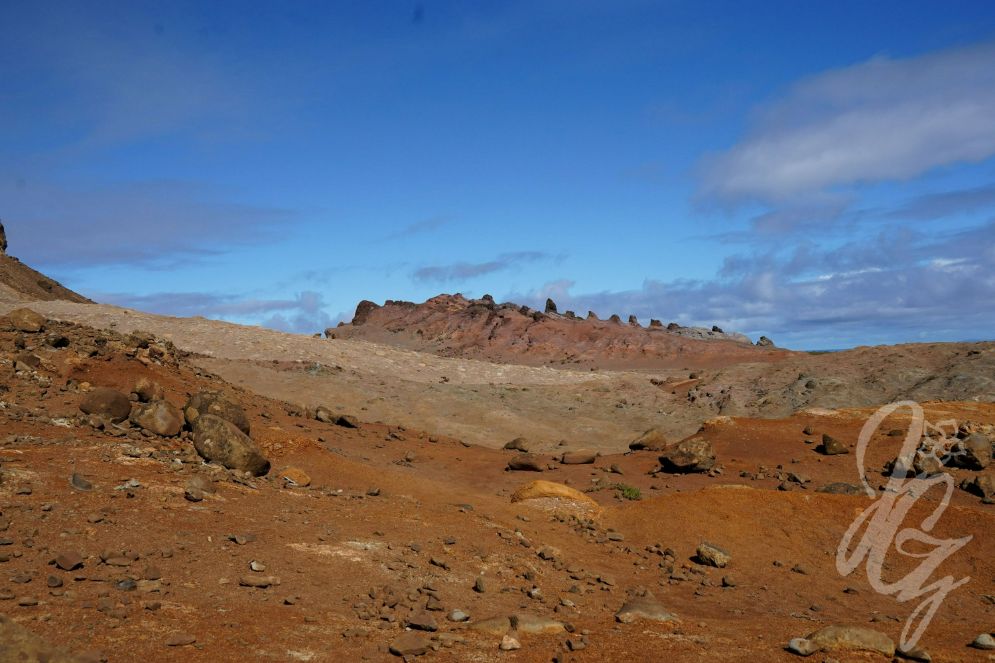
There is a hiking route at the north-eastern tip of Madeira: Ponta de São Lourenço. The landscape looks completely different than the rest of the island. It is mostly red rocks and hardly any vegetation. You can see and hear the waves crashing into the coast from both sides as you walk along the path. From the parking lot, it is about 1 hour until you reach a bar that looks like a little oasis in the desert as it is surrounded by palm trees. In the summer, you can return to the parking by water taxi.


Ponta de São Lourenço at the eastern tip of Madeira
Not far from there are Machico, the first settlement in Madeira, and the town of Caniçal where you find multiple viewpoints over the East coast. The beach Prainha isn’t far from there either. Charlie and her housemates drove there on her first weekend when the weather was still a bit more like summer. The black sand is really soft, and the waves were gentle. The beach is tiny but didn’t feel crowded. There is also a restaurant and bar where you can get fresh fish. It was yummy!
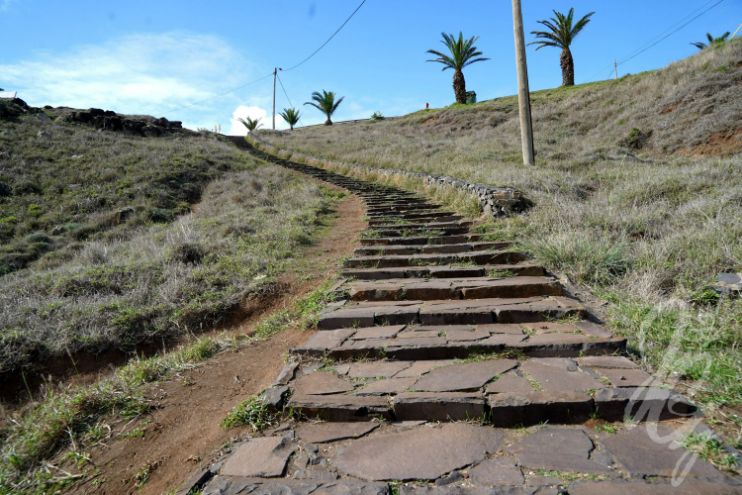
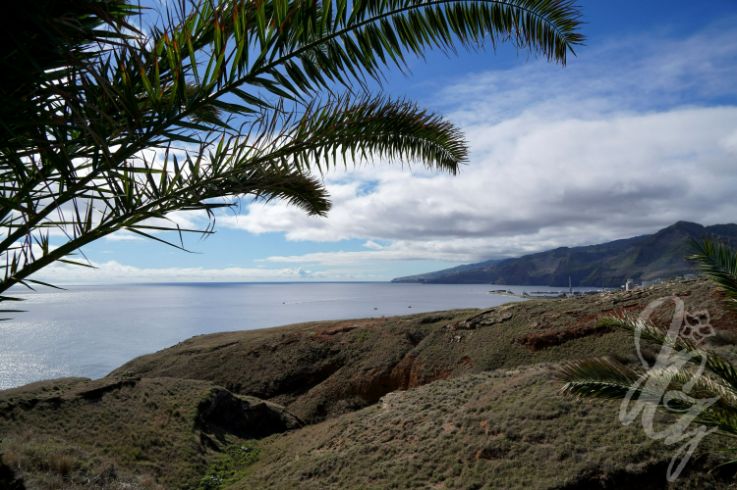
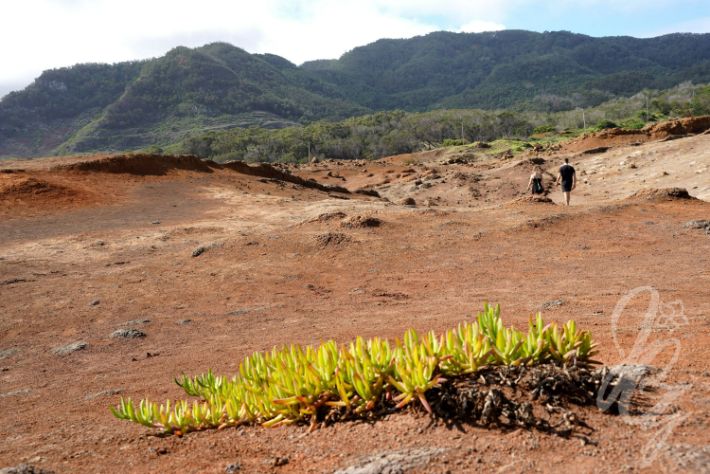
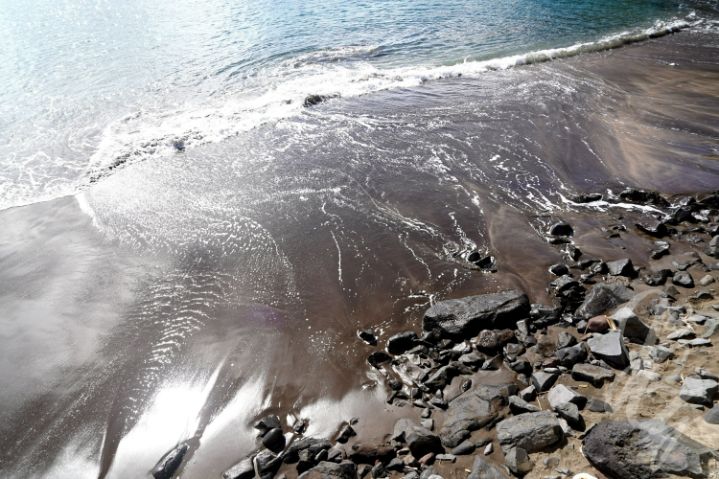


The Eastern part of Madeira: Caniçal and Machico
Caldeirão Verde
A bit further along the North coast is the town of Santana from where you can access the parking lot for the walk at Caldeirão Verde. The name translates to ‘green cauldron’ and that is no exaggeration. The walk guides along a green valley that could be confused with the rainforest.
When Charlie did the walk, she was lucky to have beautiful weather with a clear blue sky. The walk was muddy, but the sun was shining through the trees. As you walk further into the forest, the path gets narrower, and you end up walking on the little wall of the levadas.
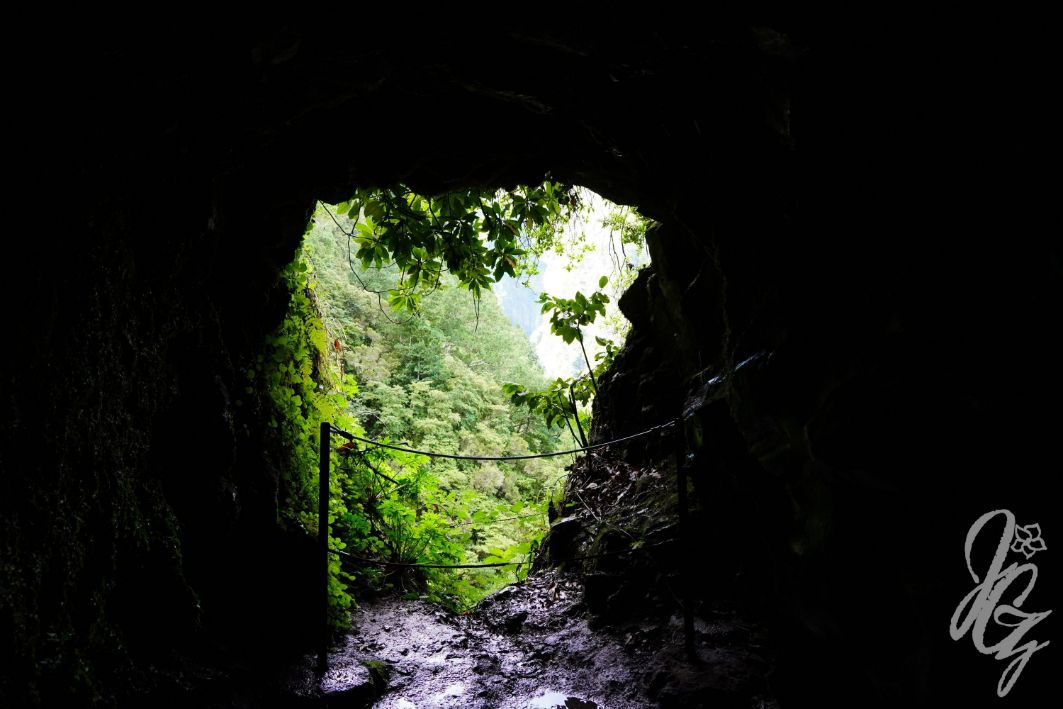
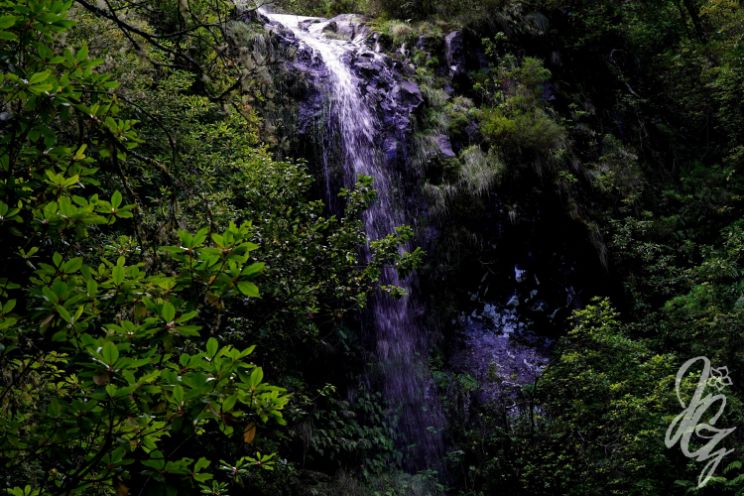
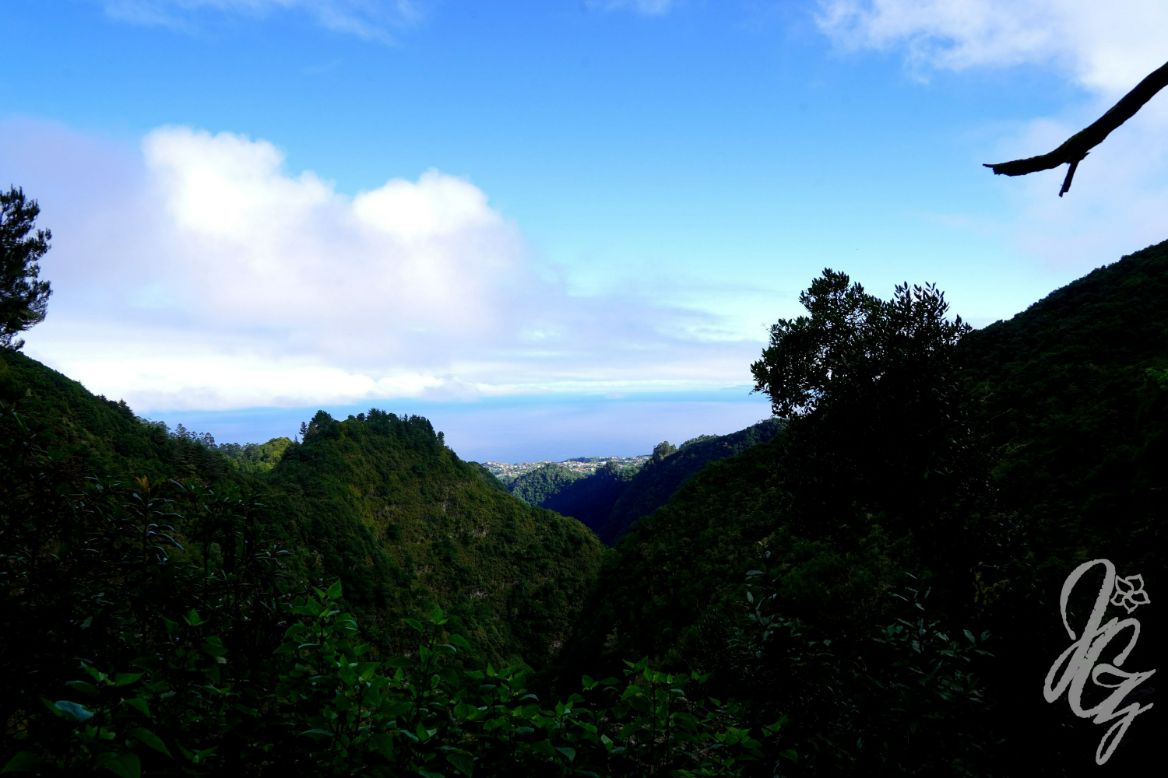
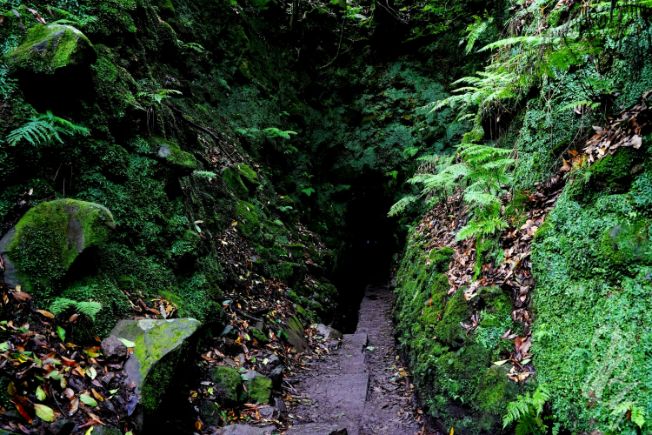
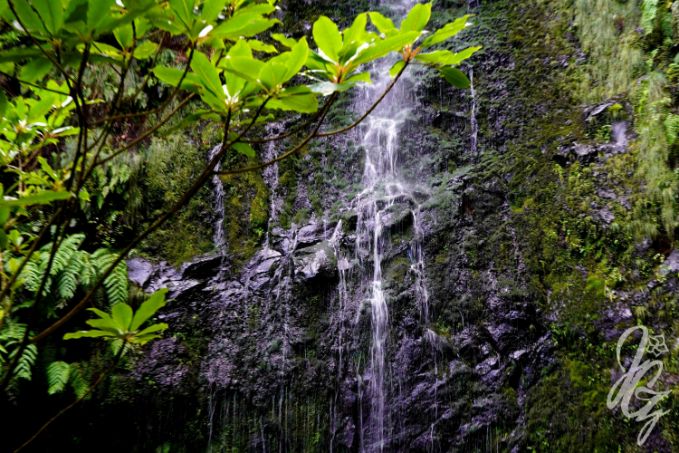
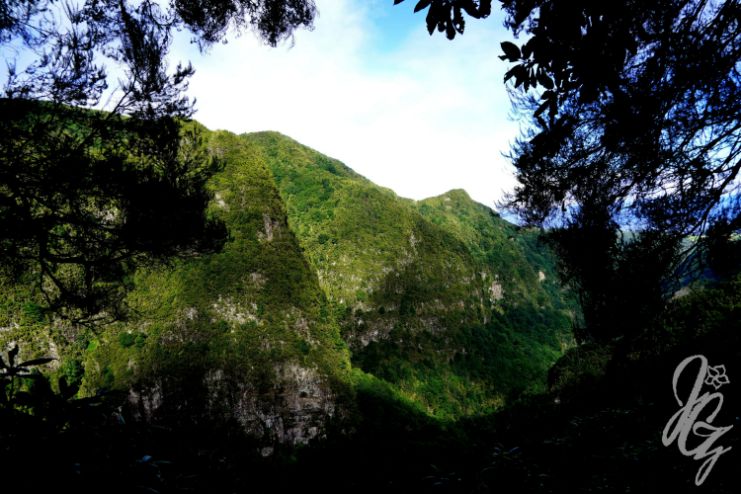
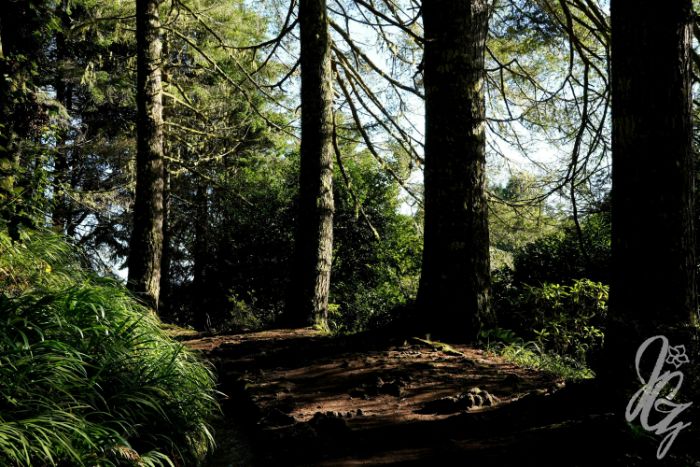

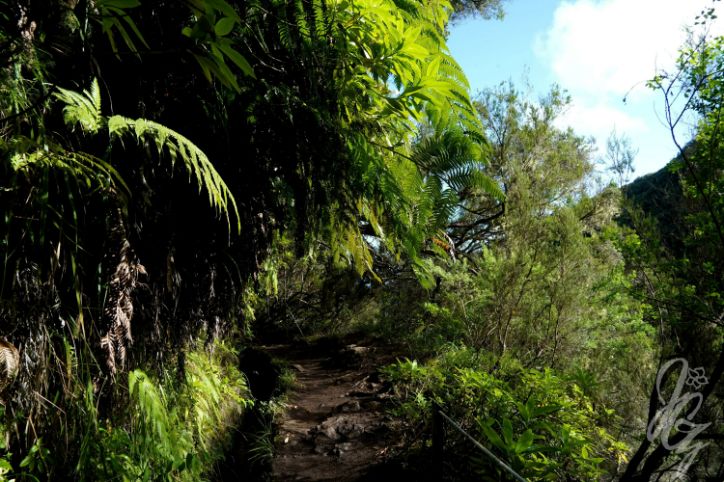
Caldeirão Verde in Madeira
The levadas were built as canals to bring water from the mountains to the drier south of Madeira. There are around 1500 km of levadas in Madeira and they are used to generate power through hydroelectric plants too. There is a lot of water coming from the mountains and you can see people collecting the water along the road. Any water that is coming directly out of the rock is drinkable, however, you should not drink the water once it is in the levada.
The hiking route PR9 brings you through a few tunnels (bring a torch!) and along the levada to a 150m high waterfall where you can sit down and enjoy the sound and views of the water. It was 6.5 km (around 4 miles) from the parking lot and took Charlie about 2 hours with frequent photo stops. Most people return once they’ve seen the Waterfall, but you can also walk another 2.8 km (about 2 miles) to Caldeirão do Inferno. The route remains mostly flat, only the last 900m is a step staircase. You can see more waterfalls there and even walk through one if you like.

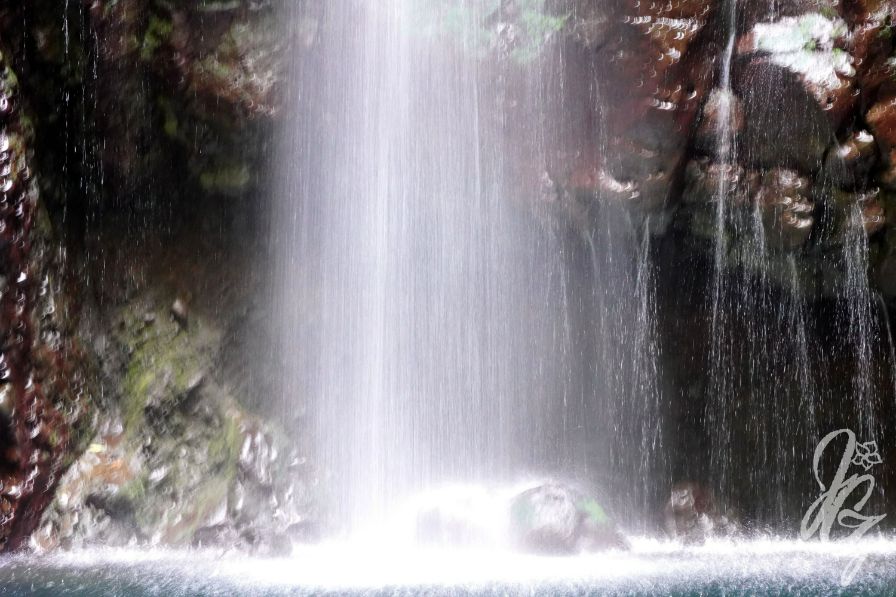
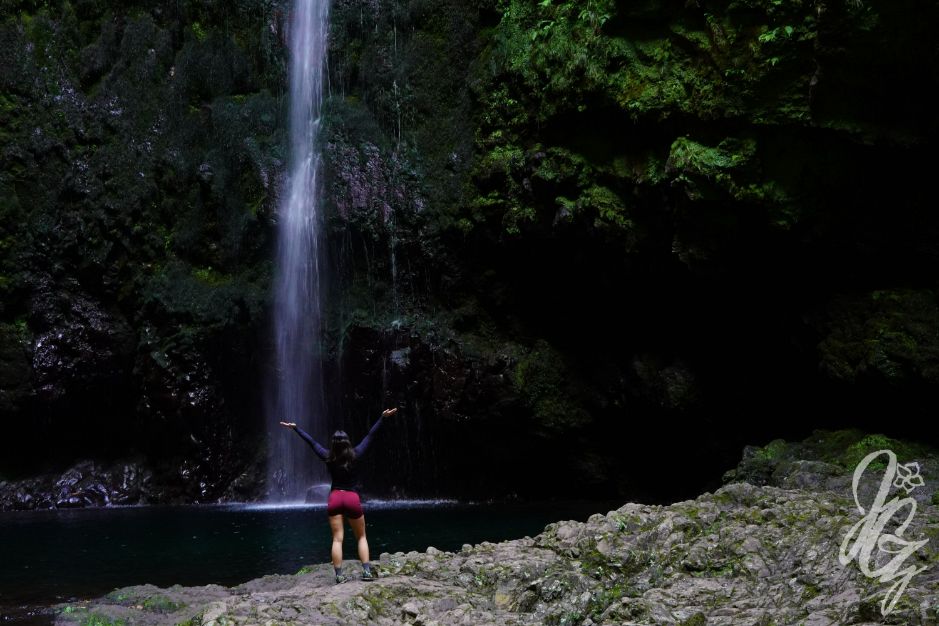

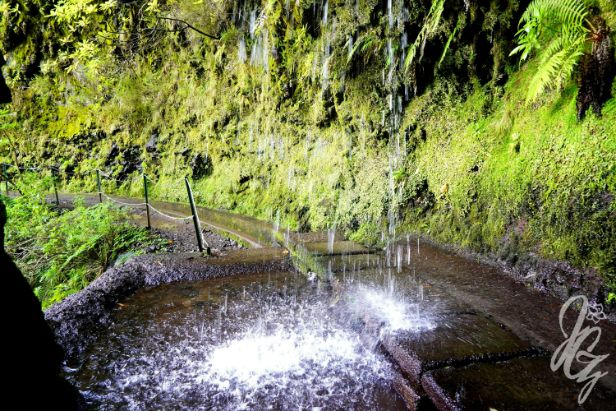
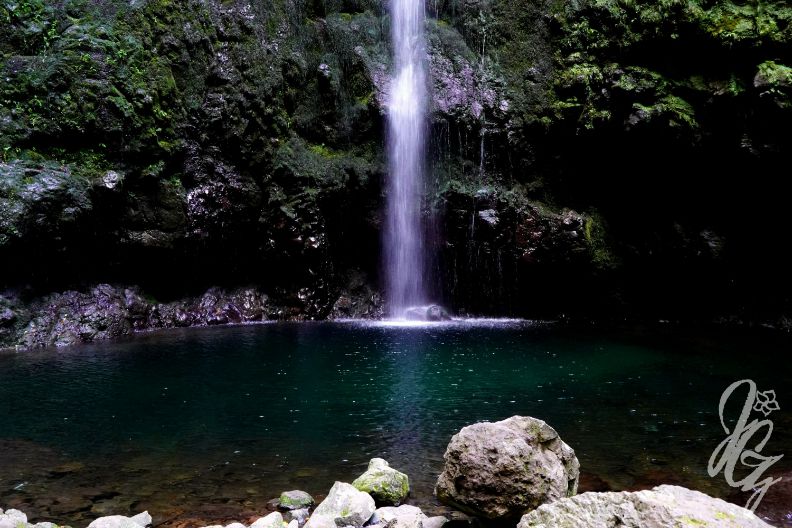
Caldeirão Verde and Caldeirão do Inferno in Madeira
Once you’re back at the parking lot, you could visit the museum or sit down in the coffee shop before returning home.
Encumeada
Another popular spot for hikers and also accessible by car is Encumeada. There is a hotel from where you could start your hikes. On the way there by car, you are also passing by a well-known Poncha bar. If you want an authentic experience of the local drink, this is one of the best places. The Nuns Valley isn’t far from there either and another popular hiking route.


Encumeada in Madeira
If you keep on driving past the Hotel Encumeada and the numerous viewpoints, you will pass a few tunnels that were carved by hand and one of them even has a little waterfall inside. You can get a natural carwash.
Once you reach Paul da Serra, you might have a view of all the high peaks of the island if the sky is clear. Charlie was lucky when she was there, it is more likely that the peaks are surrounded by clouds, and you can’t see anything. The parking lot for the Rabaçal walk, the 25 fountains walk, isn’t far from there. Charlie didn’t do this walk and apparently, it gets very busy.


Viewpoint in the mountains in Madeira
If you continue driving towards the north of the island, you are passing along the straightest road in Madeira in the mountains. It is the place where the crater of the volcano used to be a long time ago.
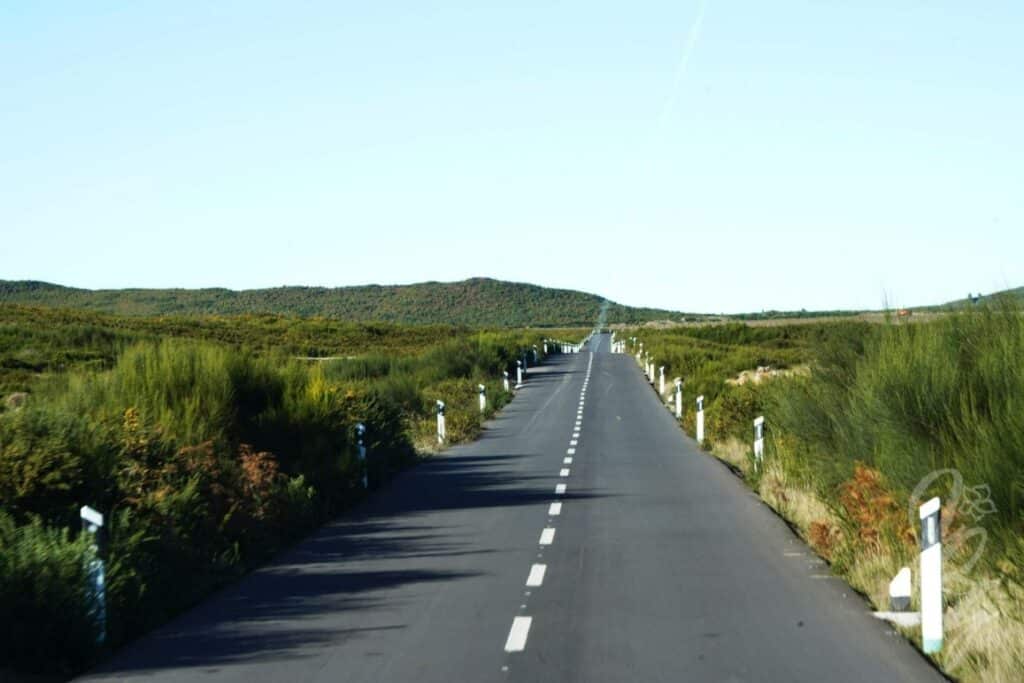
Straight road in the mountains of Madeira
You will also pass by Fanal, the ancient forest that appears to be a mystical place due to the fog that often surrounds the trees. Charlie went there three times and it wasn’t foggy at all.


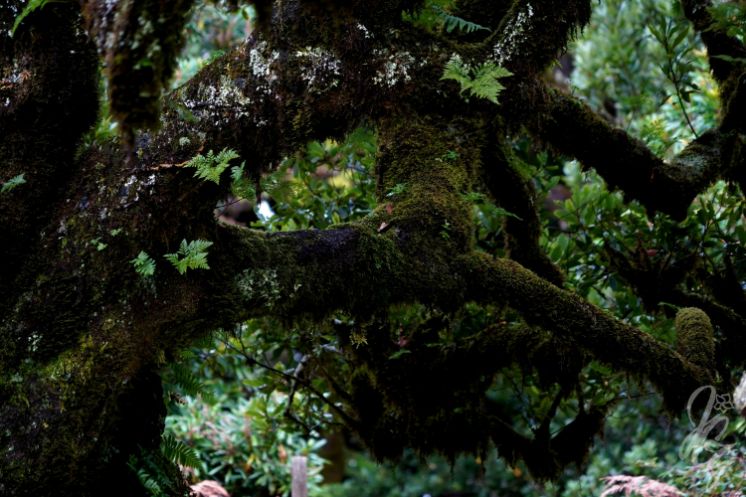


Fanal Forest in Madeira
North coast of Madeira
If you made it through Encumeada and Fanal, you are already close to São Vicente, Seixal, and Ribeira da Janela along the North coast of Madeira.
Seixal is known for its black sandy beach and a waterfall where you can take a shower on the beach. Be careful though, the water is colder than the water in the sea. You might be surprised. Behind the beach is a bar and some natural swimming pools formed by volcanic rocks in the water.


Seixal Beach in Madeira
Ribeira da Janela is a piece of coastline with interesting rock formations, and you find a viewpoint with a swing suitable for adults. You can rediscover your inner child whilst enjoying stunning views over the north coast of Madeira.
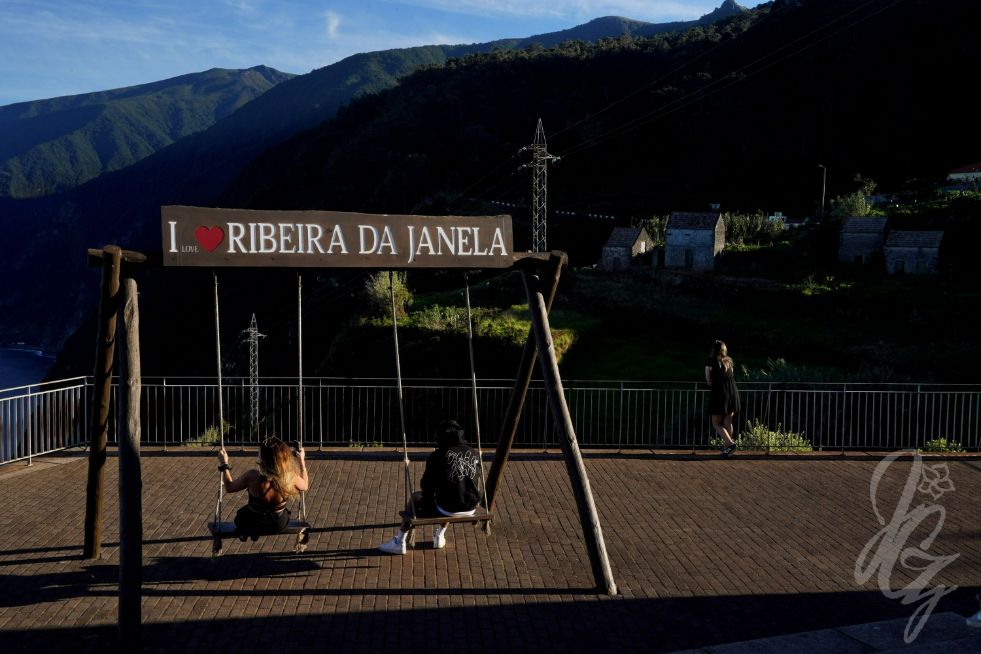
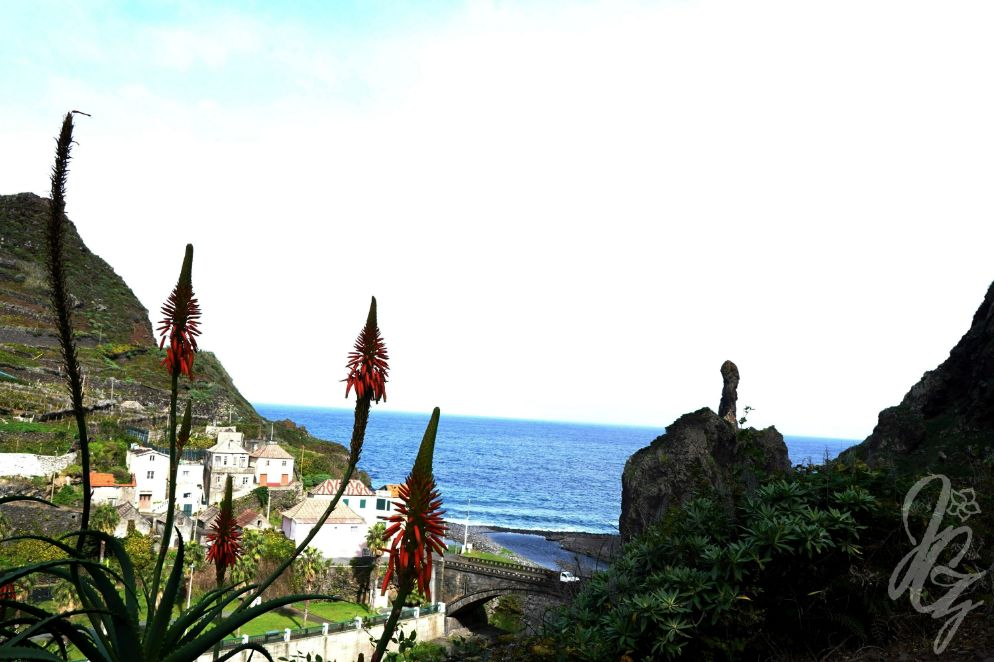
Ribeira da Janela in Madeira
If you drive from there further west, you reach Porto Moniz which is famous for its volcanic swimming pools. It is a popular tourist destination and has a few souvenir shops and restaurants. You can enjoy the view of the waves crashing into the volcanic rocks whilst you have lunch at an outdoor terrace.
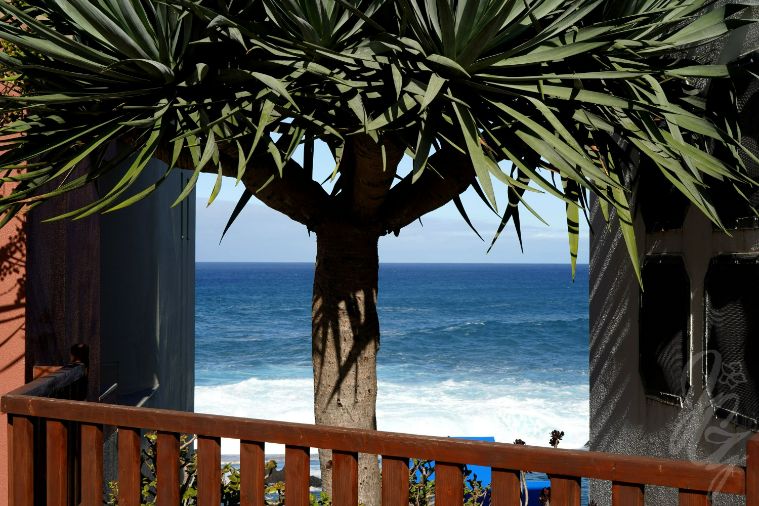
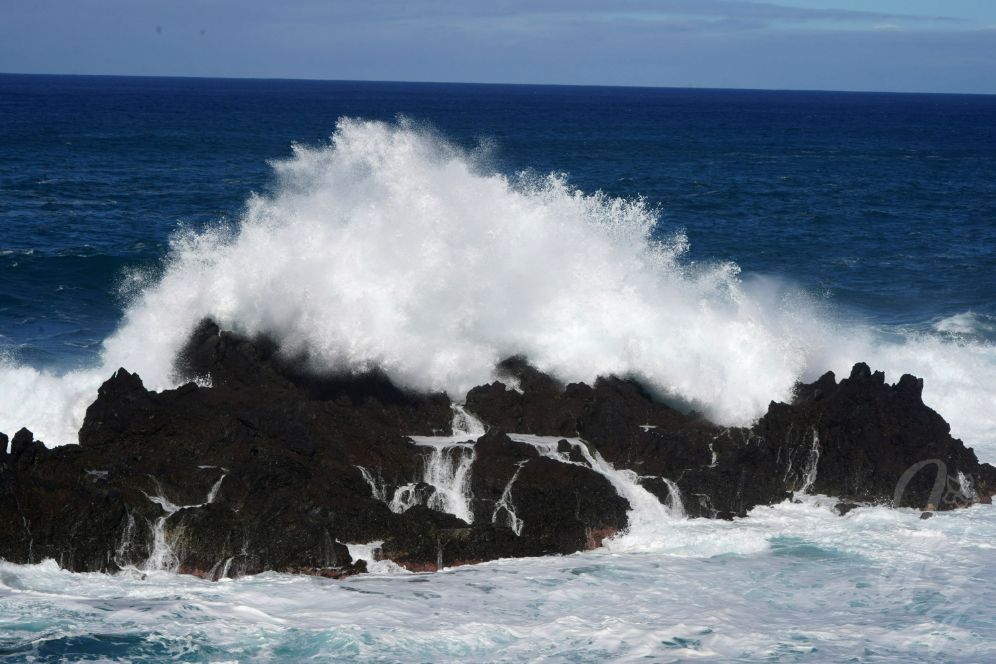
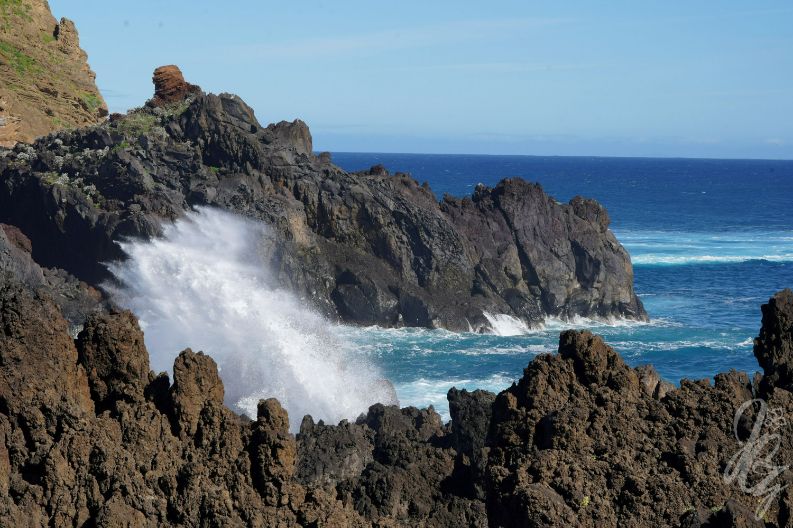
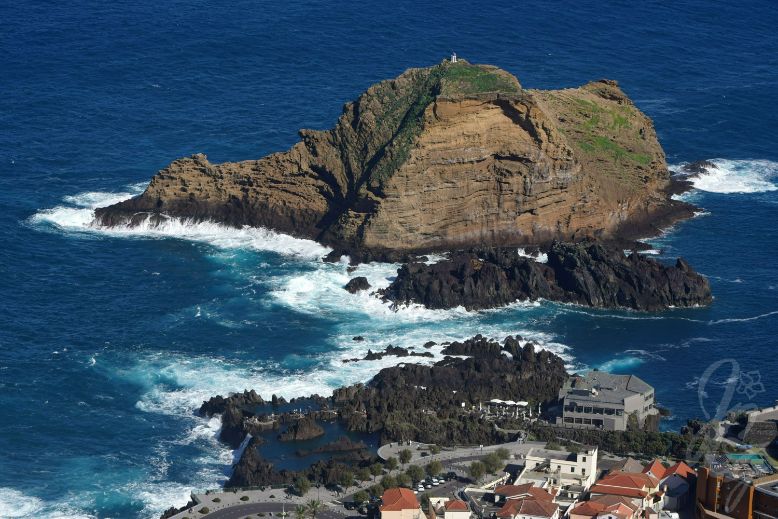
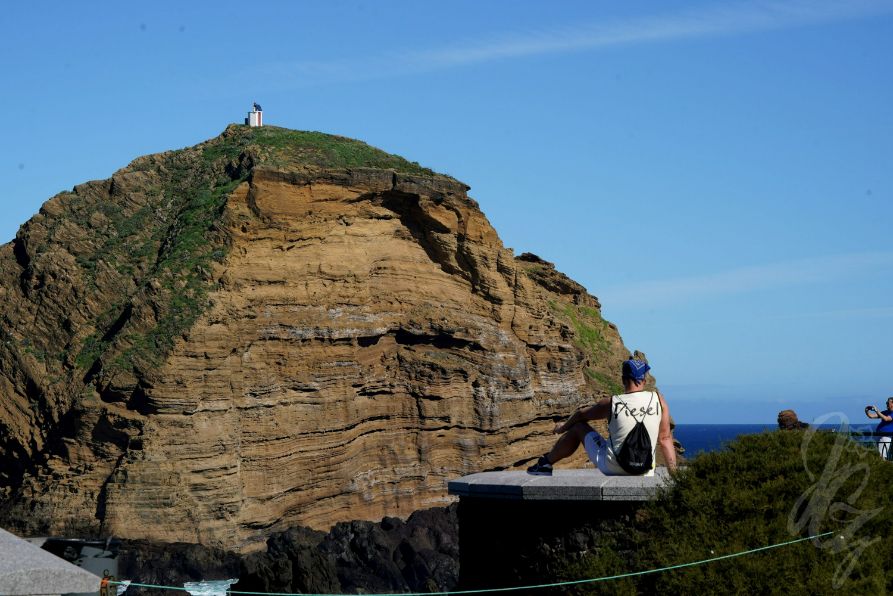
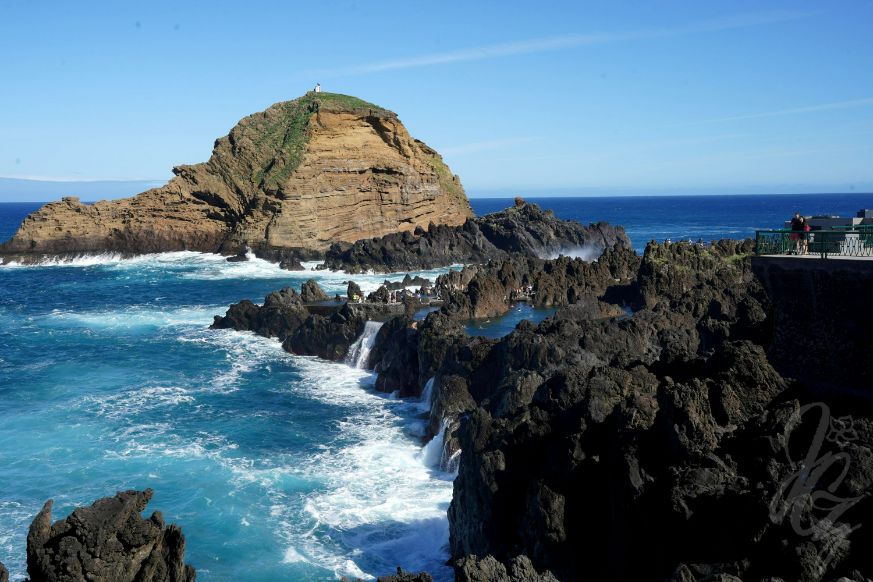
Porto Moniz in Madeira
If you drive from Seixal further east, you come through São Vicente, Sao Jorge, and Santana. This is where you can still see some of the original, traditional Madeiran houses along the road and there is another cable car that brings you closer to a waterfall. On the way to Santana, you are passing by the Quinta do Furão hotel where you have the best view over the north coast in between a vineyard.

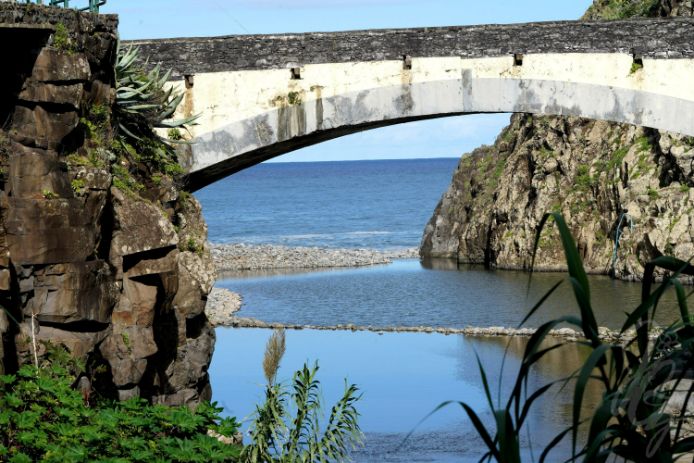
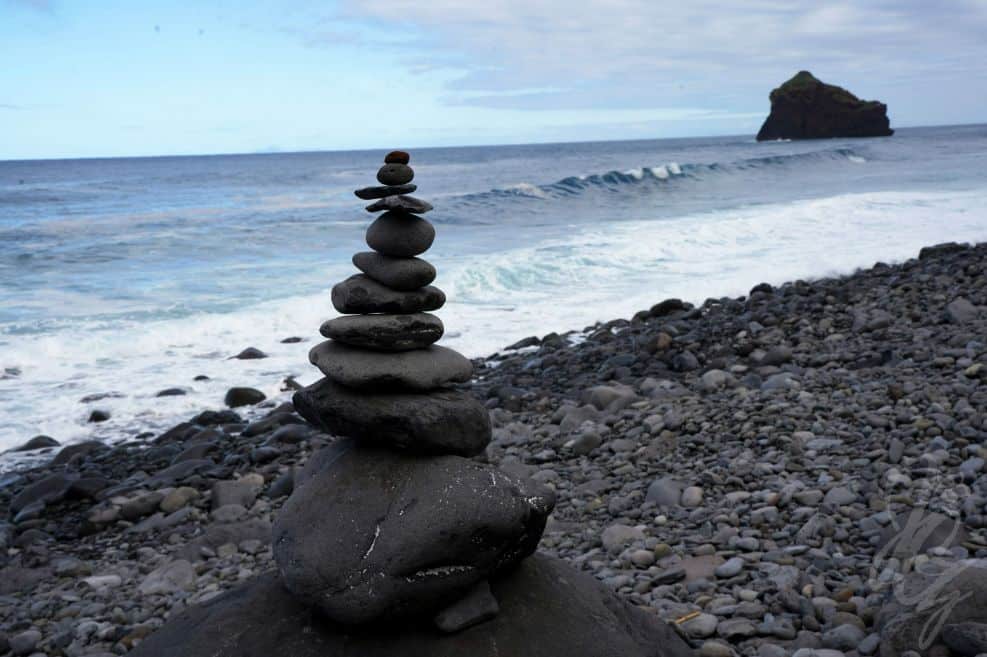


Sao Jorge and Santana in the north of Madeira
South coast of Madeira
On the opposite side of Madeira, in the south, is the capital Funchal where you can explore the old town, take a ferry to Porto Santo, or the cable car up to Monte to explore botanical gardens or ride a Toboggan.
Not far from Funchal towards the west is Camara de Lobos which is a small harbour with a tropical feel. The name of the place means “chamber of the seals”. There used to be many seals in this place historically, but most of them were killed by fishermen as they were seen as a threat to fishing. Once they realized their mistake, the remaining seals were brought to the Deserted Islands in the south of Madeira where they are protected until today. Those islands can only be visited in the summer months with a guided tour.
Camara de Lobos is also the place where Winston Churchill liked to paint. A picture on the road and the restaurant “Churchill’s Place” remind of him.


Camara de Lobos in Madeira
Further towards the west is Cabo Girão, a skywalk with a glass floor and Ponta do Sol, the town where the first digital nomad village is and where Charlie stayed for the business retreat in Madeira. You also find plenty of hotels in this area as it is the sunniest place on the island and has a beach.
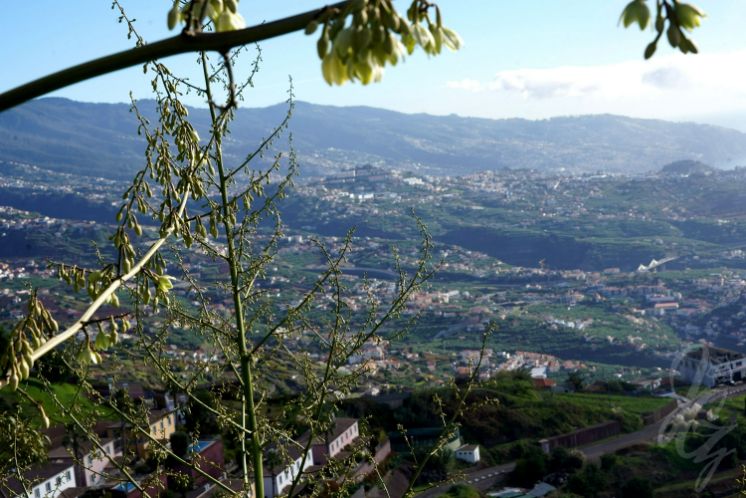
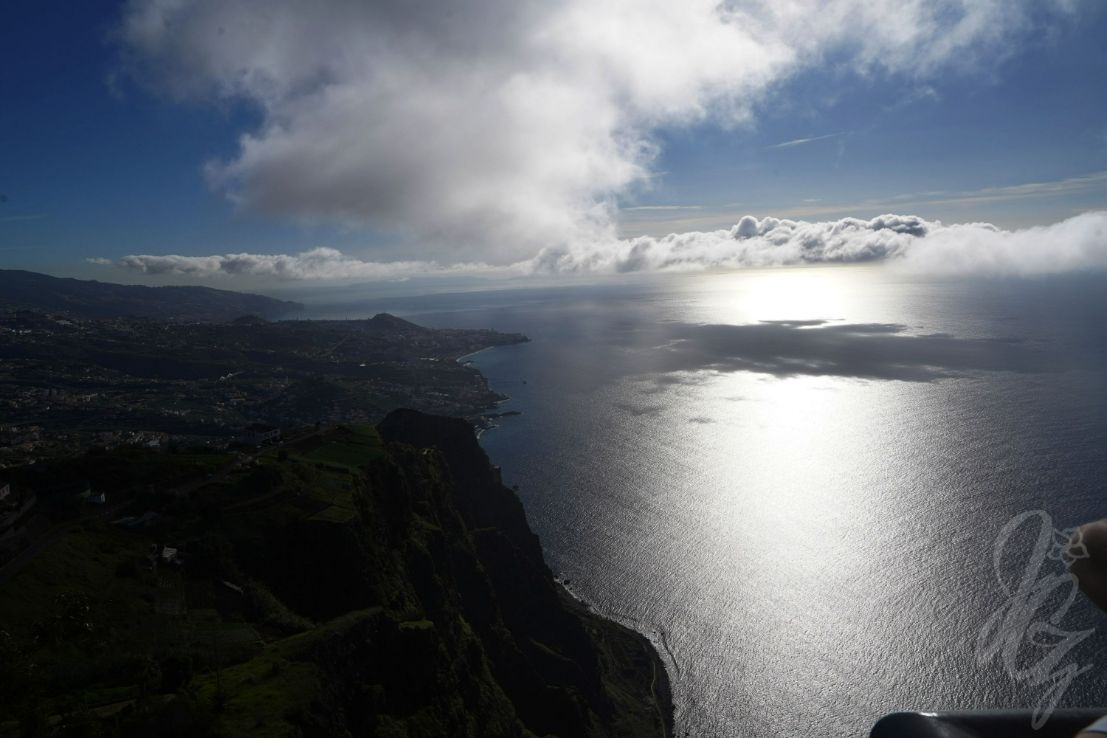
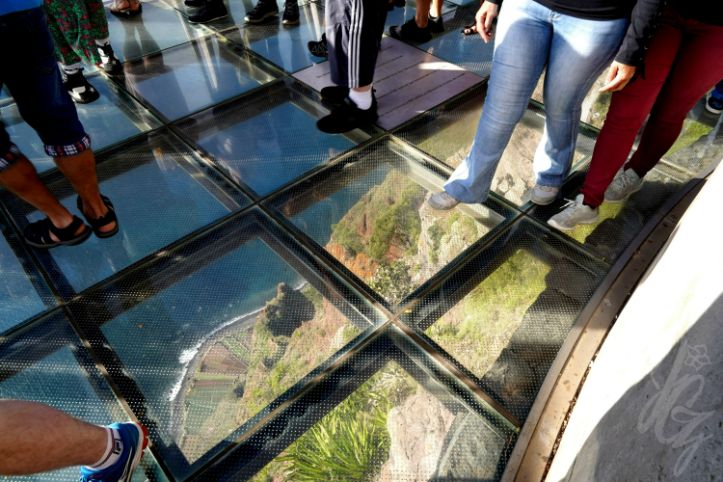


Cabo Girao and Ponta do Sol in Madeira
There are also the towns of Ribeira Brava and Calheta. The latter has a sandy beach (not a pebble beach like the other places), but it is unnatural. All white sandy beaches in Madeira have been created artificially with sand from Morocco. Only the black or pebble beaches are natural. Calheta has some lovely restaurants by the marina, and you can see a stunning sunset.


Sunset at Calheta Beach in Madeira
Surfing in Madeira
If you continue further west from Calheta, you reach the towns of Jardim do Mar and Paul do Mar which are some of the best surf spots on the island. However, they still appear to be authentic and are not touristic at all. The waves can get quite big on this side of the island. They are usually a bit smaller in Lugar de Baixo near Ponta do Sol.


Surfing in Paul do Mar in Madeira
In the north, you find a popular surf spot in São Vicente and several spots in between along the west and north of Madeira. Charlie couldn’t go surfing whilst she was there because there was, unfortunately, no connection between her accommodation and the surf spots by public transport. The other people that she shared a car with were more into hiking than surfing. She’ll have to come back to Madeira!