Seattle
Where skyscrapers meet nature and history
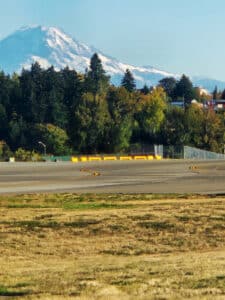
Flying into Seattle was like magic. As the airplane approached the city, Charlie could see the vast wooded areas and the several bays and islands that the Pacific Ocean provides. In the middle of it all, a city where skyscrapers form the centre whilst the other districts show wooden houses of all sizes in between trees and lakes. And then, there’s Mount Rainier. The volcano is easy to spot as you exit the airplane, unless it’s cloudy. Charlie was lucky and she was greeted with blue skies.
Pioneer Square: Architecture shaped by history
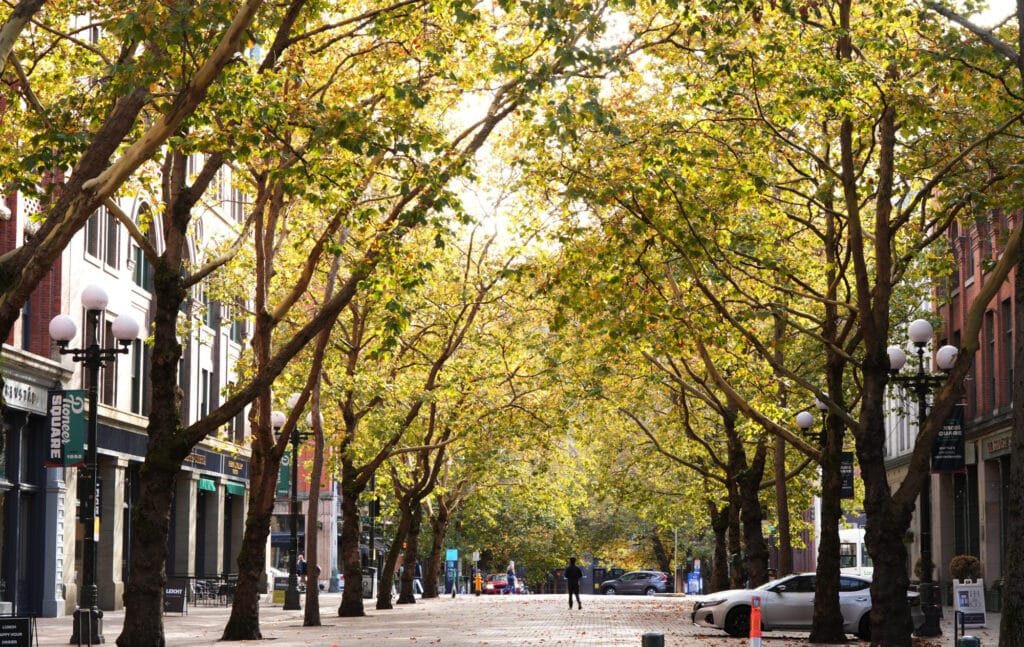
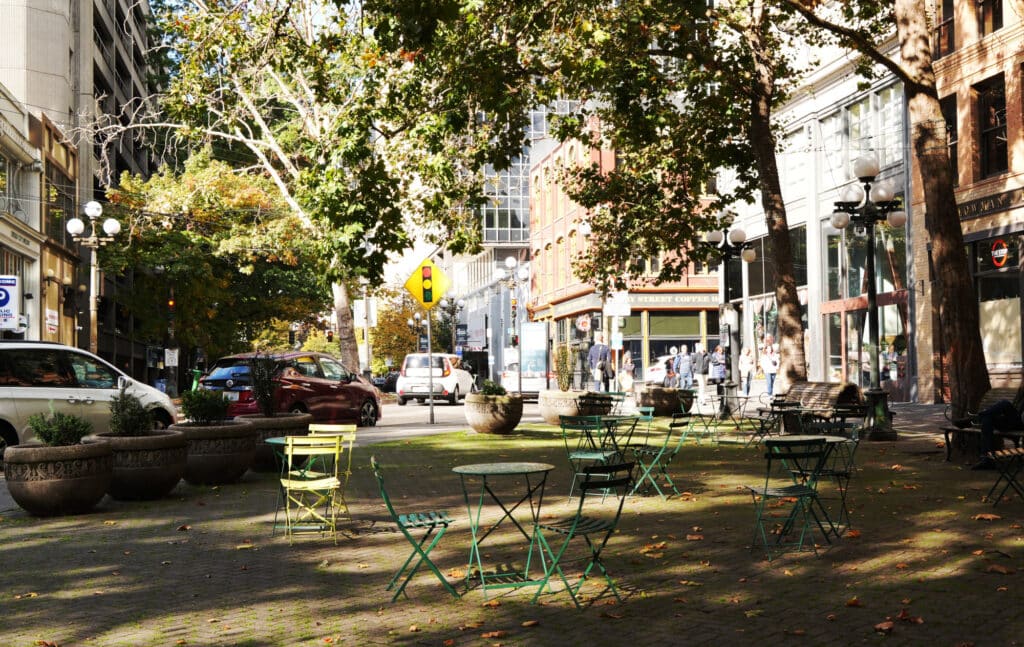
Let’s start at the city centre, the place where it all started: Pioneer Square. The so-called Pioneers and the Denny Party reached the place the we now call Seattle in the mid-19th century. The original settlement, todays Pioneer Square, was built on tidal flatlands. They probably didn’t know better back in the day! The first settlement was regularly flooded.
A tragedy in 1889 turned into a second chance to do it better. The Seattle Great Fire burnt the wooden settlement to the ground. Luckily, there were no casualties. The inhabitants by then had realized that they needed to move away from the water. Instead of moving further inland, they decided to build seawalls and raise the city. Instead of wood, the materials they used for the new buildings were brick and stone which you can still see today. In order to raise the levels, they moved land from the nearby mountains towards Down Town. In the end, the city was raised and the surrounding mountains became hills. (They’re still steep! Walking from the waterfront into the city still feels like a climb.)
The merchants however didn’t want to pause their economic activities until the project was finished. Instead, the houses were built first with shops on the first floor. Access to the shops, once the ground level was risen, was via ladders. The second floor of the houses became the new first floor, the previous first floor became the basement. This basement was accessed from the street down via ladders. Instead of pavements, there were tunnels next to the road.
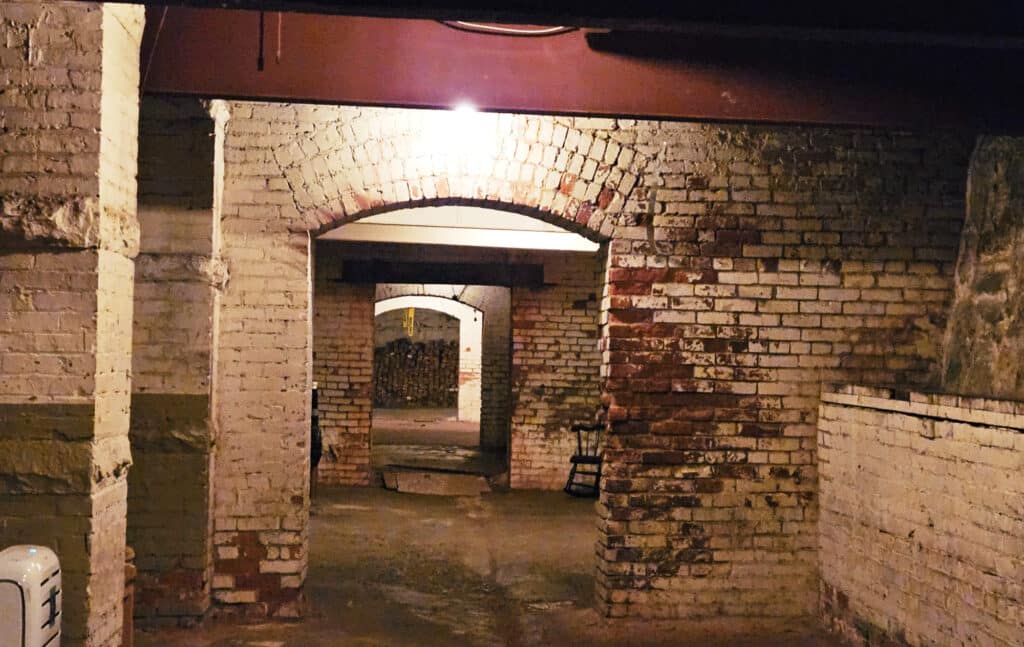
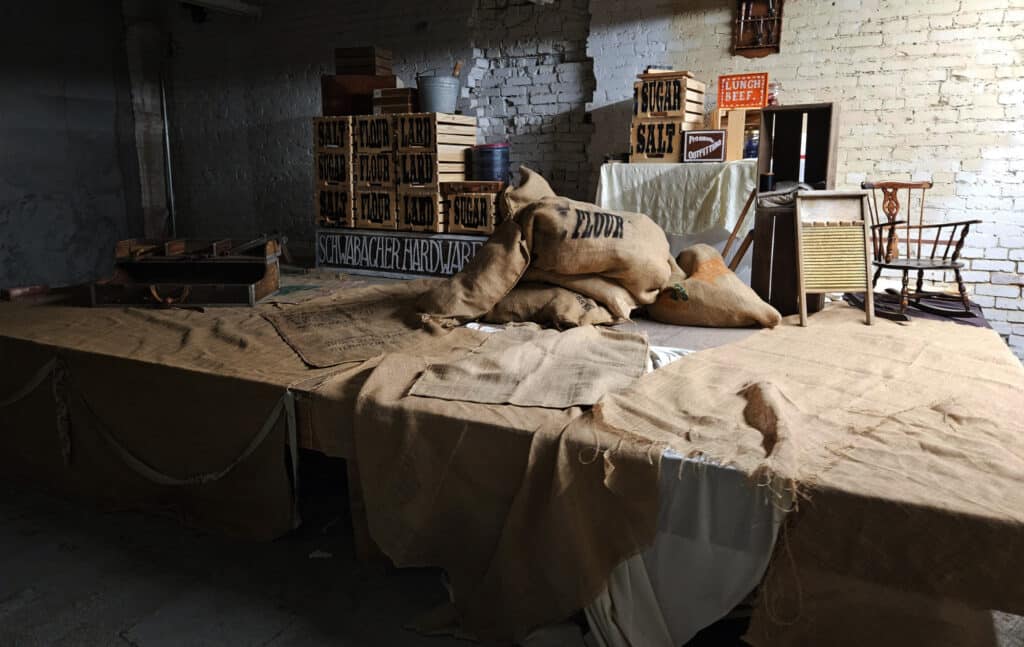
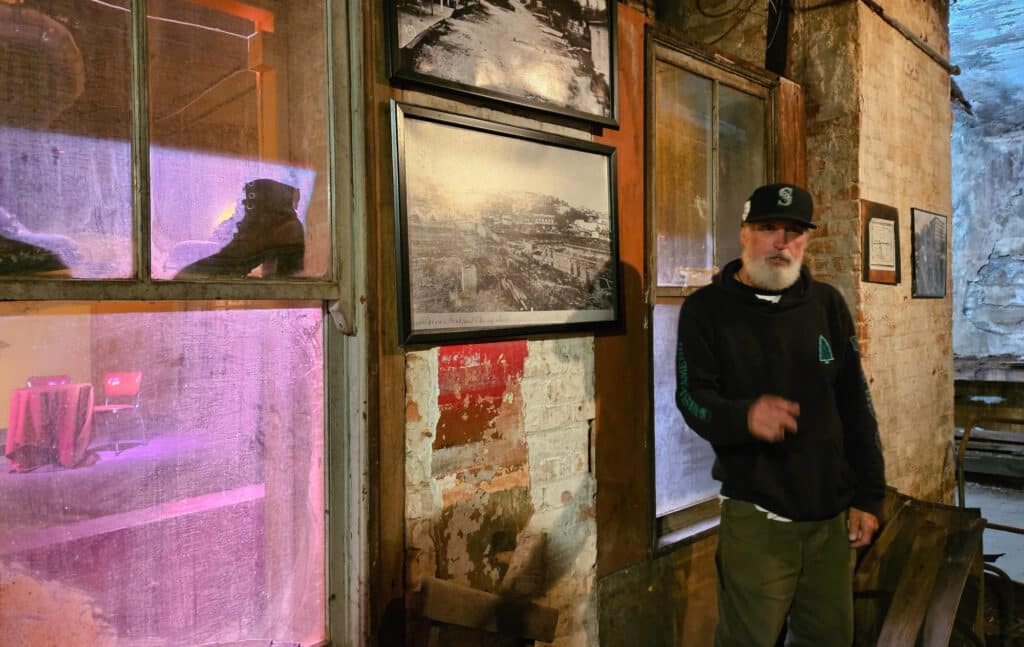
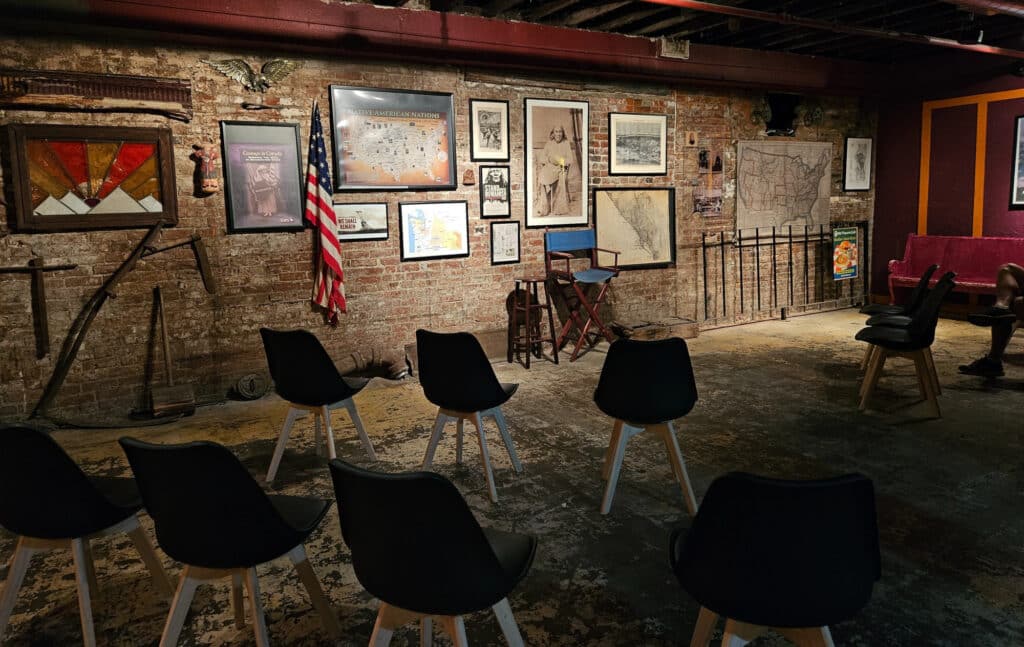
This means that Pioneer Square is the place of a system of tunnels that were not dug into the ground, but the ground was built around them. The tunnels are still there until this day and some of them are in use. However, they are not connected. You take the steps down into one of the tunnels and explore them on that side of the street. To see the tunnels on the other side, you climb back up, cross the street and then climb down into the other tunnel.
Charlie did the walking tour “Beneath the Streets” which is the best way to see those tunnels as they are closed off for the public.
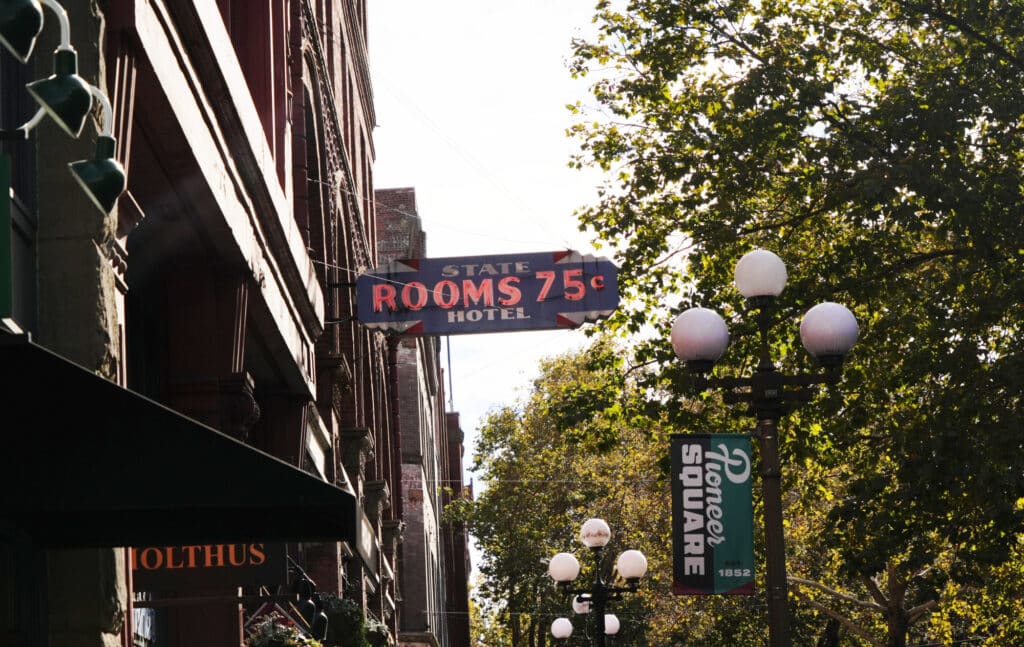
The buildings around Pioneer Square are protected under the National Historic Preservation Act and can’t be modified. If you see a hotel room advertised for 75 cents a night – sorry to disappoint – it is an old sign that they are not allowed to remove or update with current prices.
The tunnels are owned by the city and buildings owners have the right to use them. In the 1920s they were mostly used to store Whiskey and to open speakeasys.
Seattle and the indigenous population
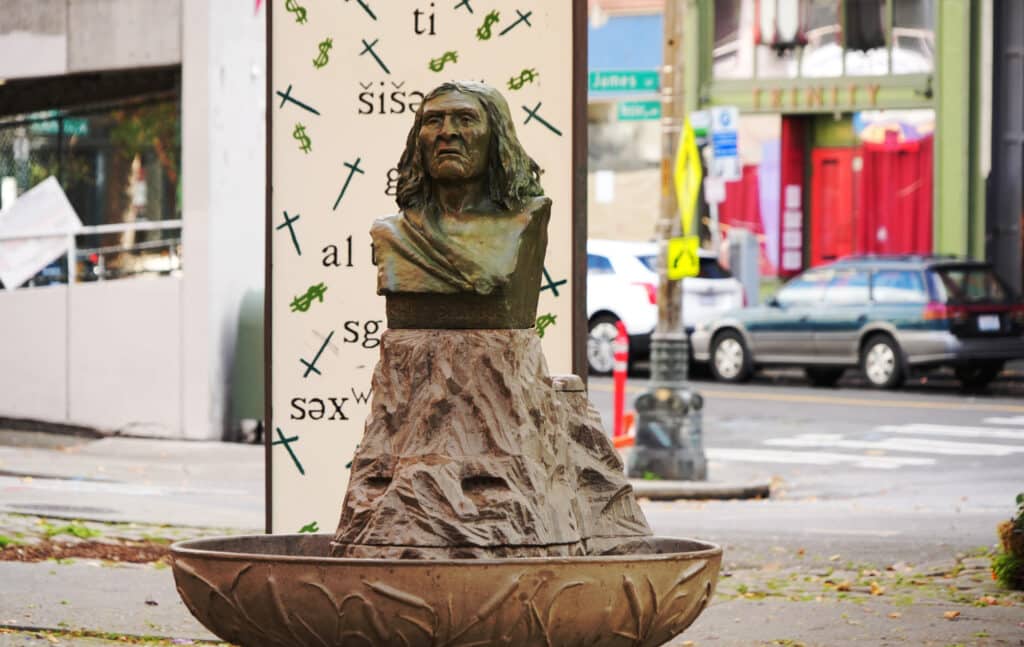
When the Denny Party arrived in 1851, the land was inhabited by natives, namely the Suquamish and the Duwamish. Seattle is exceptional in US-history as it got its name from an indigenous chief, Chief Seattle. They originally had a good relationship until they were pushed out in the 1860s. The city is an exception in that sense as well because it acknowledges this dark part of history. There is a statue of Chief Seattle in front of the Pioneer Building.
Next to it is a totem which could be misleading. The local tribes did not use totems. The original one was stolen from a tribe in Alaska. The city keeps it as a representation of the complicated history and the difficult relationships with the natives.
Seattle during the Gold Rush
Another historic event shaped Seattle and it happened only a few years after the Great Fire: The Klondike Gold Rush led to the migration of thousands of people to the Klondike region of the Yukon River in Canada at the end of the 19th century. Seattle played an important role at the beginning and at the end of this journey. At the start, the gold miners loaded their ships in Seattle before making their way towards the Yukon. (A ton of supplies is still visible in one of the tunnels and reminds of this time.) At the end of their journey, the gold miners landed in Seattle and provided labour as they needed help unloading their ships. This not only brought work to the town, but also money and led to a prosperous entertainment district, or shall we say red light district? That was no other than Pioneer Square. If you want to learn more about this time, you can do a guided walk in the evenings.
Two other places in Seattle are dedicated to this period: The Klondike Gold Rush Museum in Pioneer Square and the Miners Landing by the waterfront. The first is educational, the second is more like an adult playground.
Other places to explore in Down Town Seattle
Pioneer Square today is full of art galleries, coffee shops and wine tastings and a popular place for tourists and locals alike. Not far from there is Jackson Street known for its role in music history. Blues and Jazz flourished in this area, Hendrix played there and it was no other than the band Nirvana that made Seattle the birthplace of grunge music.
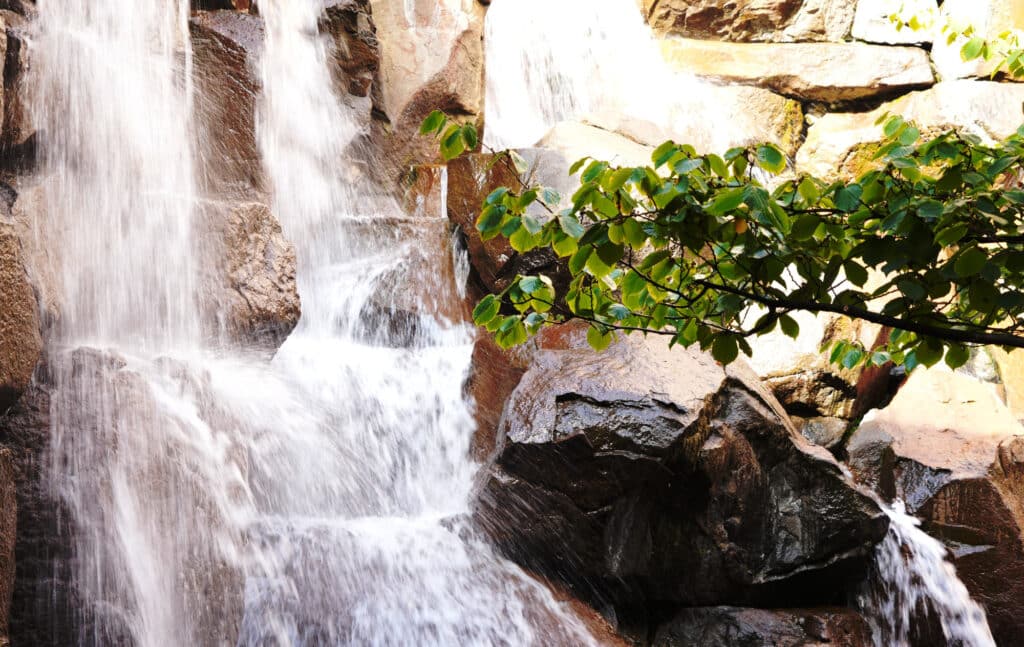
Another good stop near Pioneer Square is the waterfall park, an urban waterfall. The place commemorates the birthplace of UPS.
Also not far from there is the business district of Seattle, or what the locals like to call it, the Amazon Campus: South Lake Union. This is where all the skyscrapers are and you will certainly make your way into this area if you are in Seattle for business.
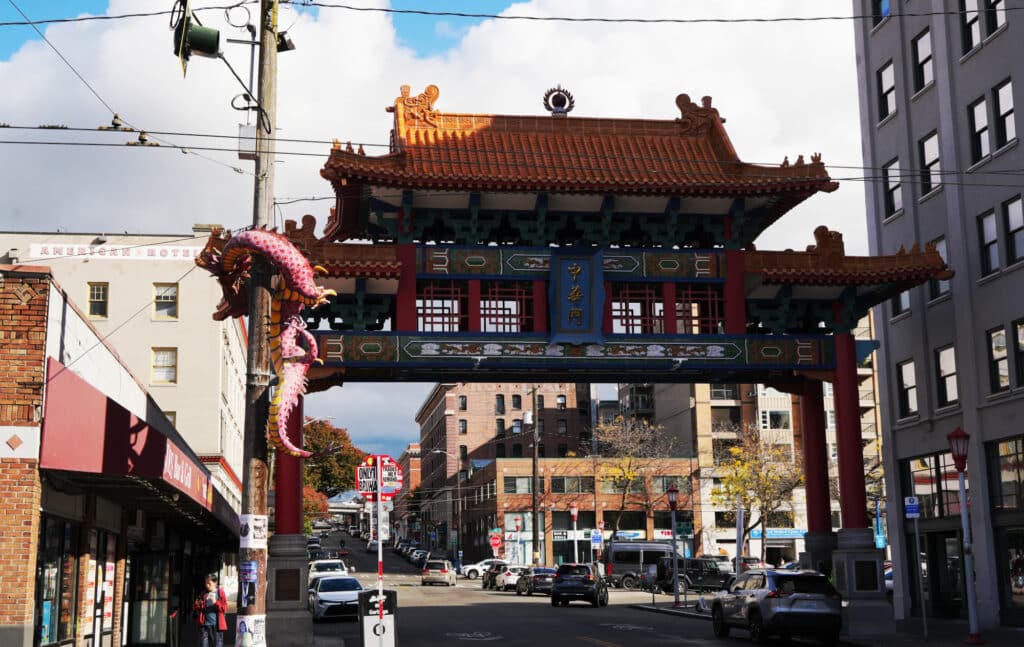
The international district with China Town, Japan Town and Little Saigon are close too and you can see the two sports stadiums, T-Mobile Park and Lumen Field, from afar.
Public transportation in Seattle
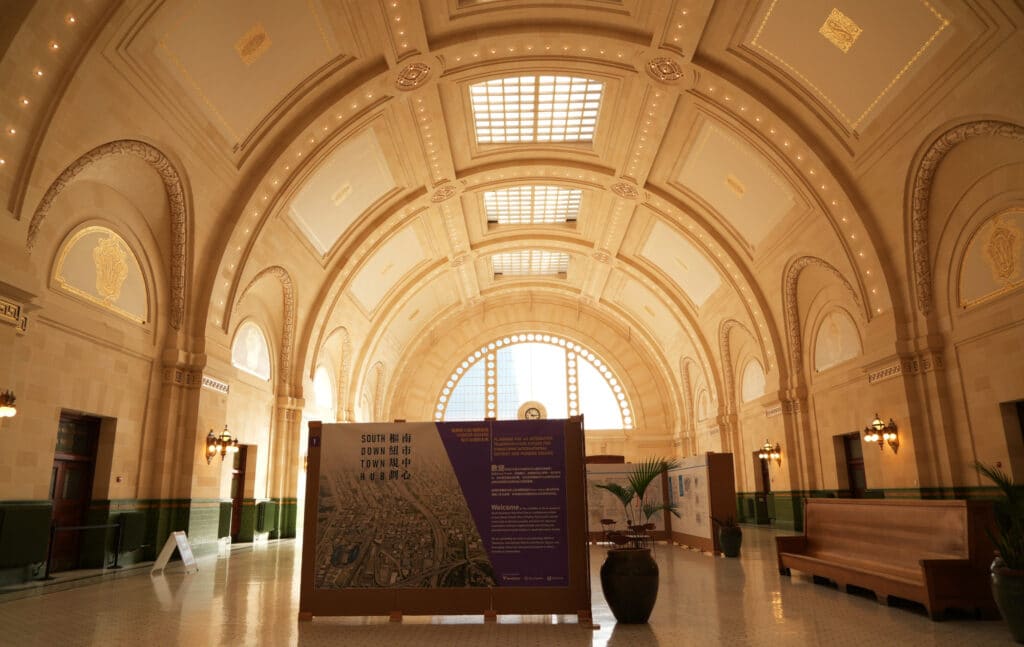
On your way towards the stadiums and the international district you will pass by two train stations that are next to each other: King Street Station, today’s Amtrak train station, and Union Station. The latter is no longer a train station, but the magnificent architecture and signage remained when it was turned into an office building. You can still visit the main hall and enjoy the splendour. (Also, there are public toilets which are probably the nicest you can find in any city.)
Two train stations right next to each other is a strange thing that Charlie has not seen in any other city before. Both were built at around the same time (1906 and 1910), but each served a different railway line. When Charlie heard this she realized that this must have always been a thing in Seattle – and still is today.
The public transport network in Seattle is good in the sense that is it functional and it gets you efficiently wherever you need to go. However, every part of it is owned and managed by a different entity and you need a separate ticket for each of them. You have busses, the Link Light Railway, street cars, the South Lake Union Train, and the Monorail, to only name a few. Each of them requires a separate ticket.
If you get an Orca card, it is accepted everywhere, but the charges are different. There is no such thing like a day pass that is valid on all of them. Instead of an Orca card, you can also use the Transit Go App. You must select your mode of travel and the specific provider when purchasing the ticket through the app. Once you have your ticket, you simply show it to the driver when you board a bus for example. On busses you can also pay by cash, be aware though that you don’t get change and it is easy to overpay if you don’t have the $2,75 in exact change. Card payment is not possible on busses. Other than that, you can get around easily on public transport in Seattle.
Pike Place Market
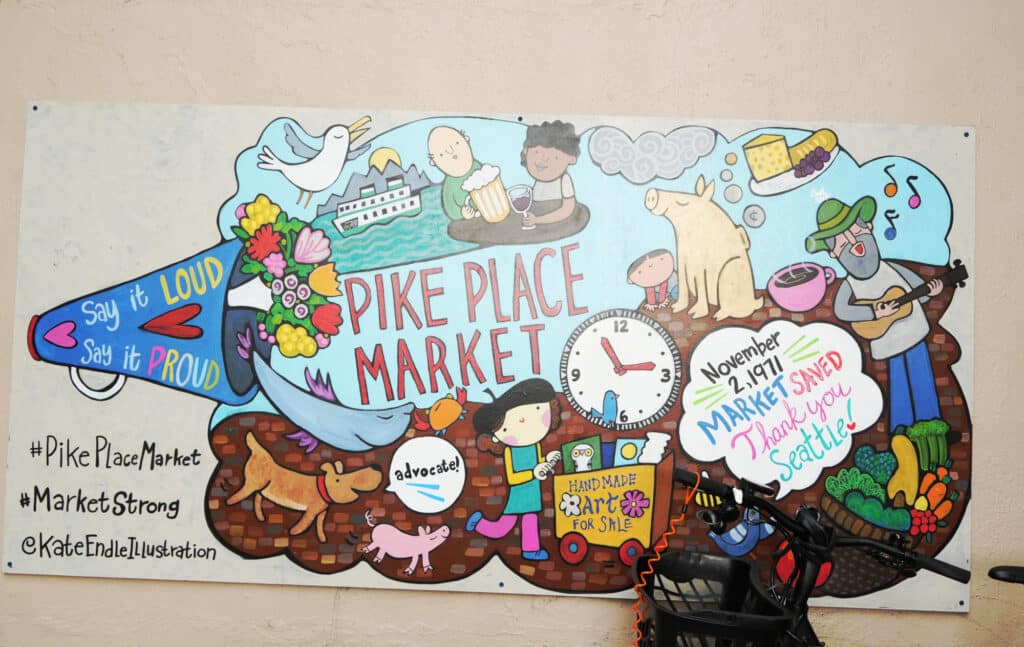
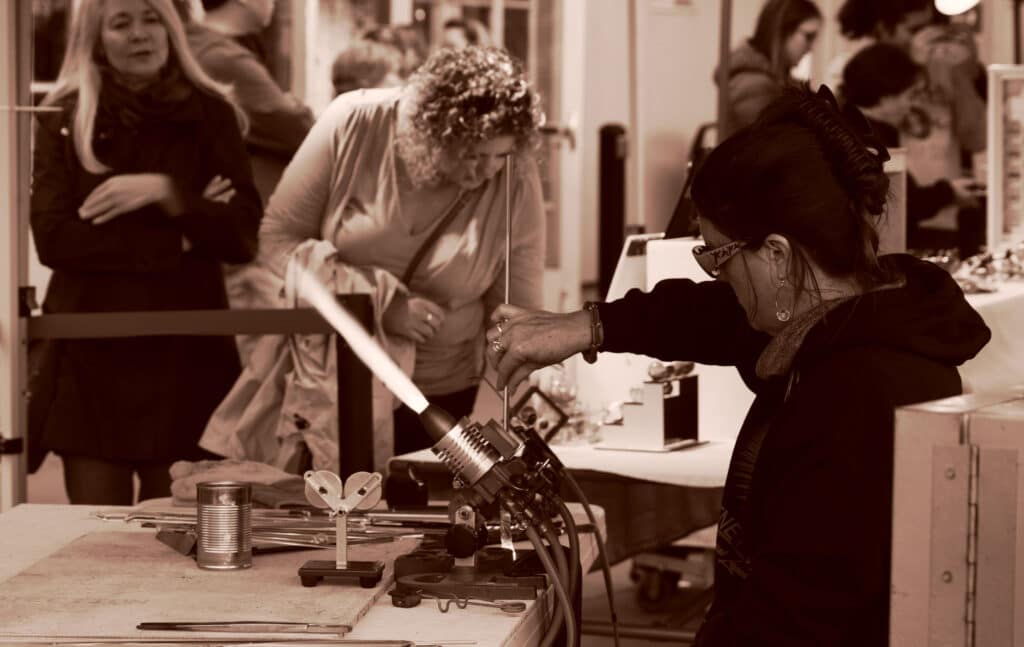
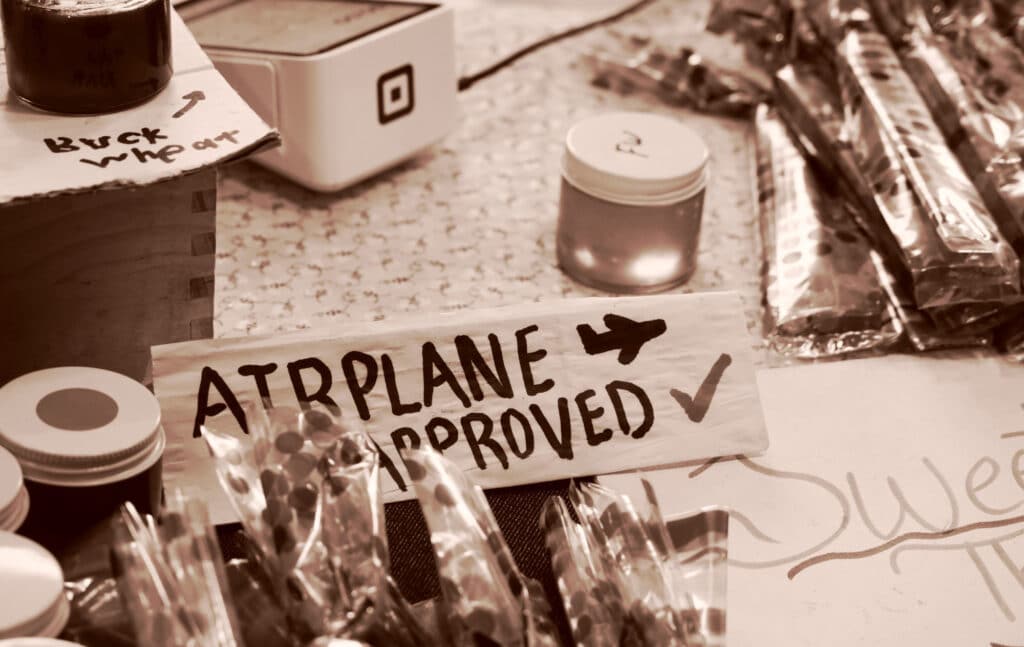
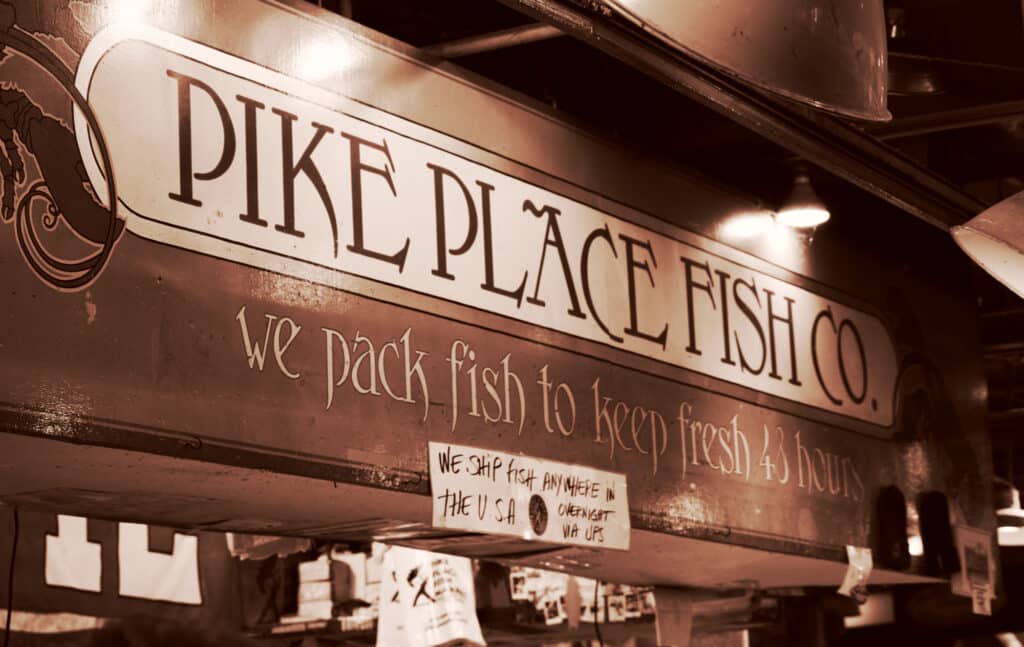
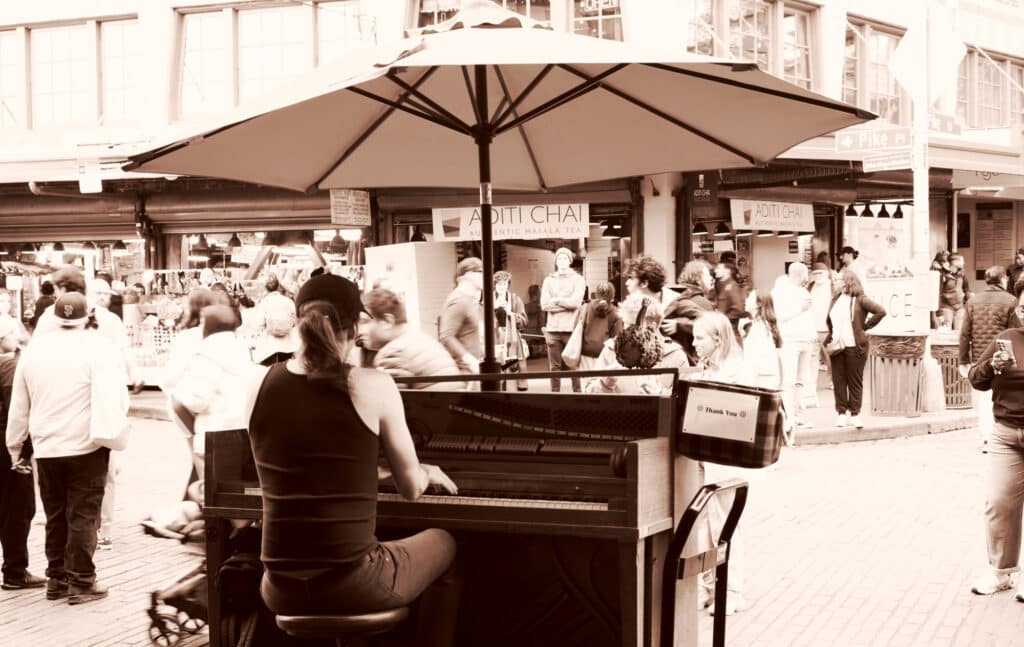
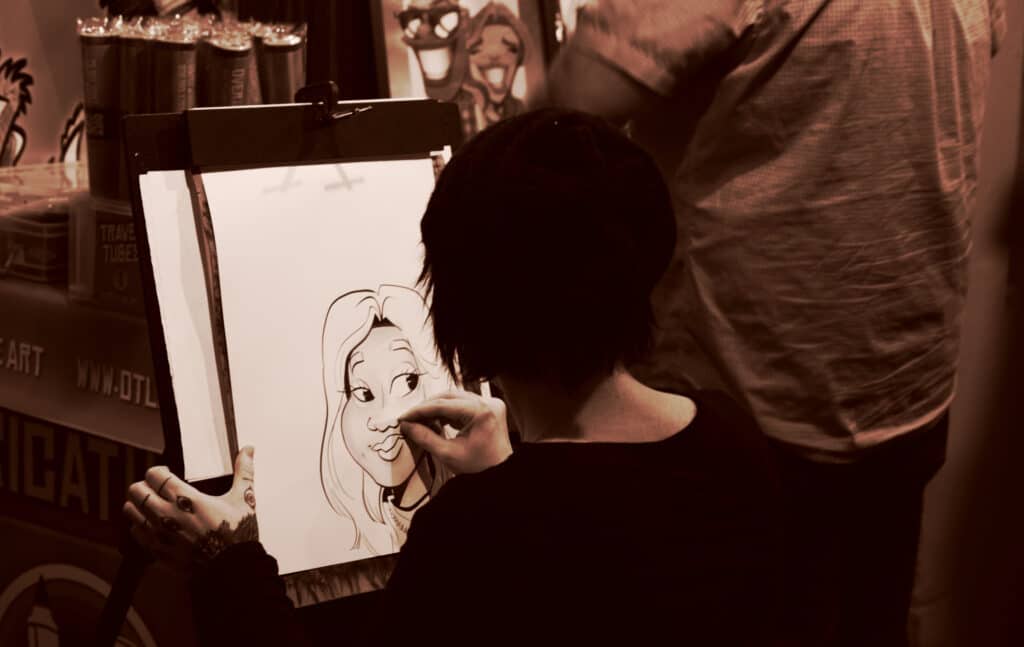
There is one iconic place in Seattle that should not be missed on a trip to the city. Pike Place Market opened its doors in 1907 as a farmers market. Today, it is more than a farmers market. You find local businesses and artisan products of all kinds. At the lower level, there are permanent stores and art shops as well as restaurants. There are guided tours that provide more information and will help you see everything without getting lost.
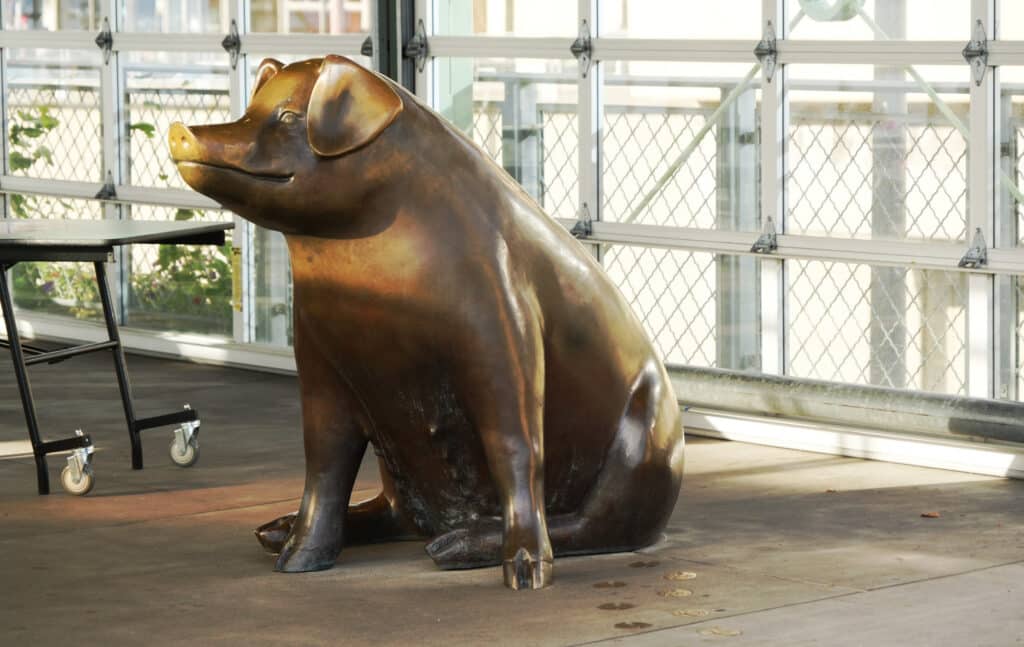
At the entrance to Pike Place Market, next to the famous fish market, is a life-size piggy bank. It is said to bring good luck if you make a donation and stroke the pig’s back. The tradition goes back to a time where the market was about to be closed and was saved by generous donations.
On the outside of the market, on the other side of the road Pike Place, are two gastronomical institutions that you should visit: Beechers is known for its Mac’n’Cheese, the French bakery Le Panier for its croissants. Expect a long queue! The croissant Charlie tried was worth the 15-minute wait!
The Seattle Centre
It was yet another historic event that shaped this part of the city: The Seattle Centre was built as the fairground of the World Fair in 1962. The most famous relict of that is the Space Needle. It is to Seattle what the Eiffel Tower is to Paris Things to do in Paris and provides a good view over the city and its surroundings. You get up via an elevator and have access to two different floors. The highest floor has an outside area where you can take a selfie that looks as if your floating over Seattle. There also is a café and some seats to properly enjoy the views. The floor beneath has a revolving glass floor and you can stay in one spot to see everything that is on the ground below the Space Needle.
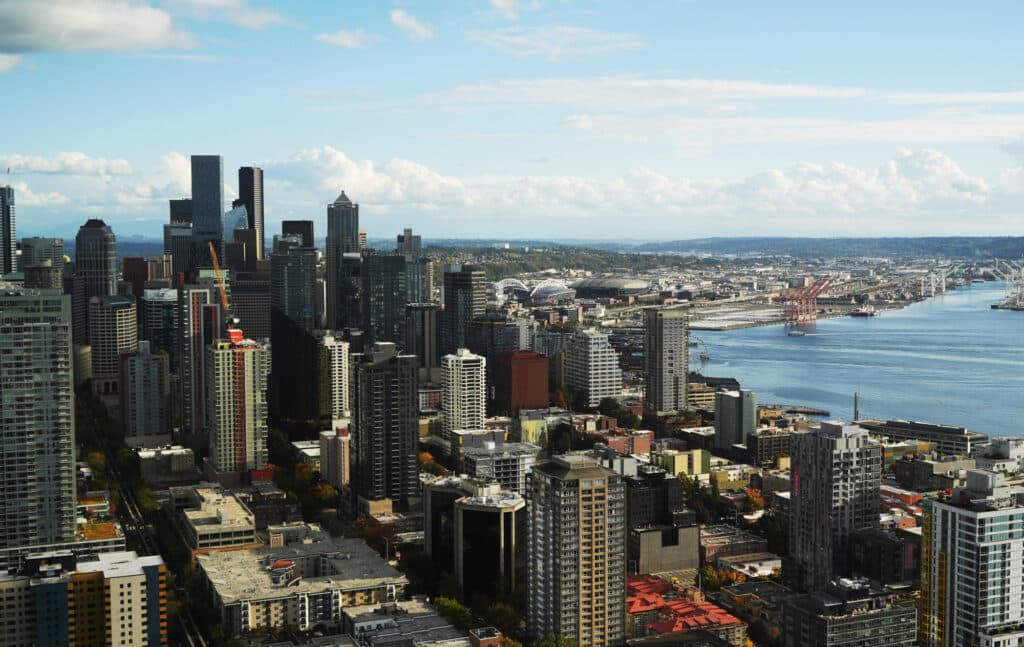
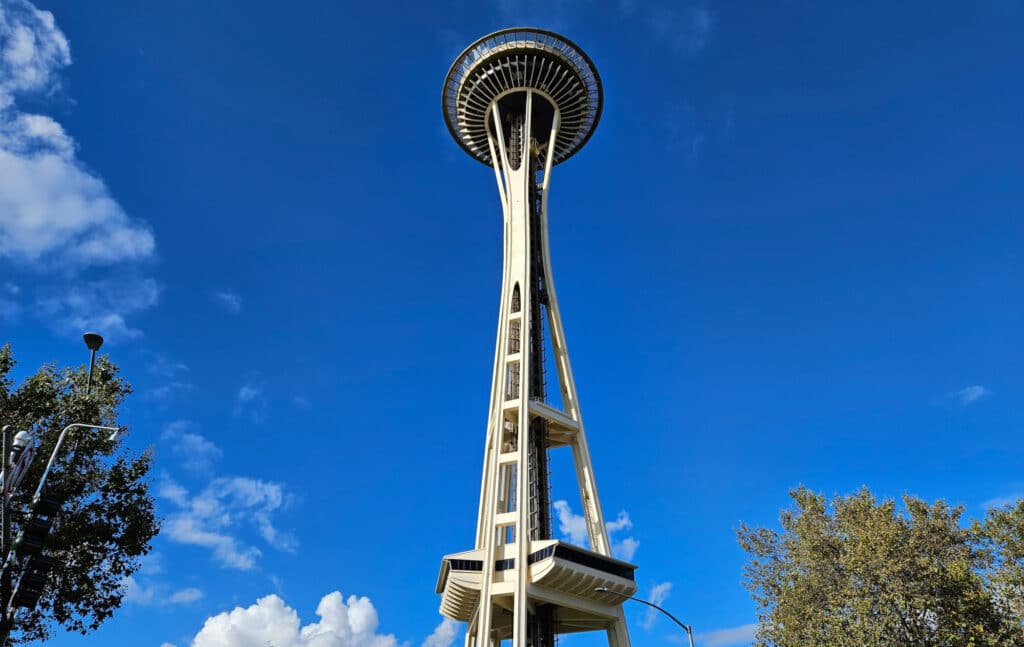

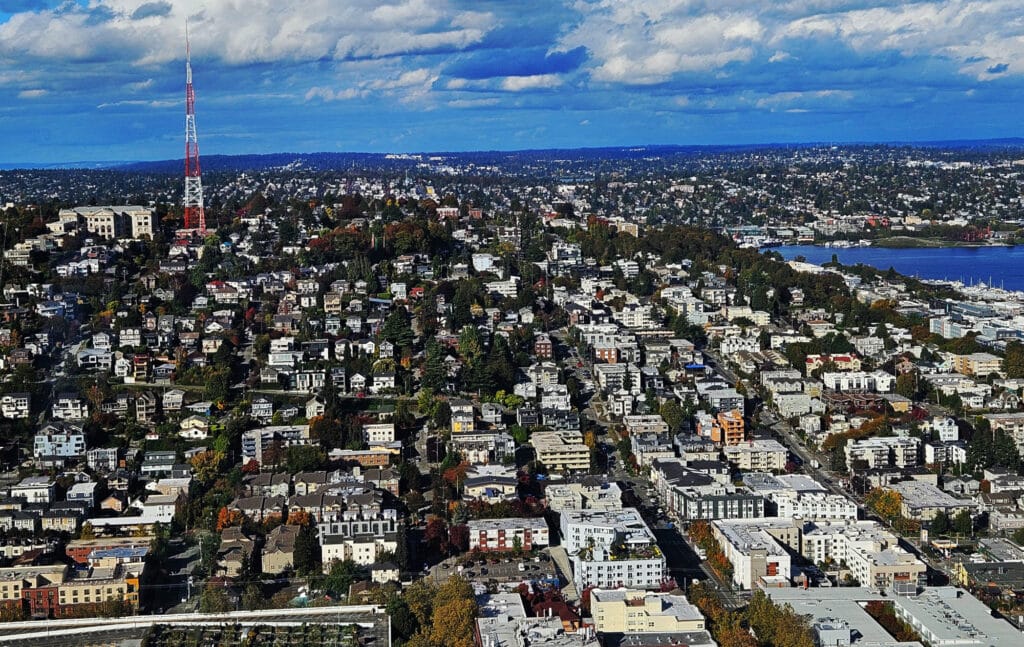
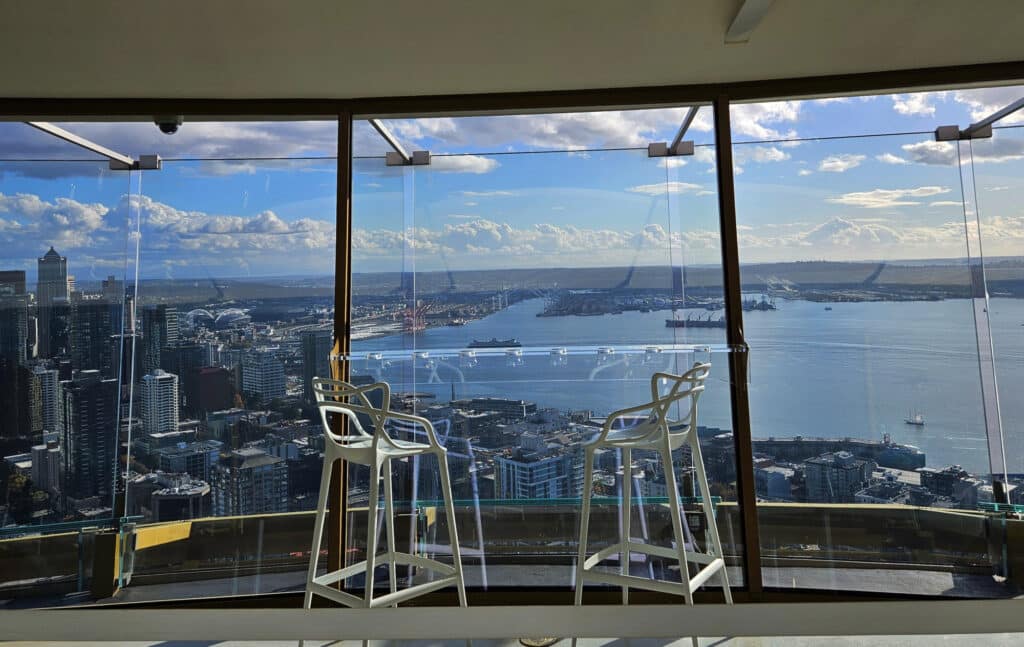
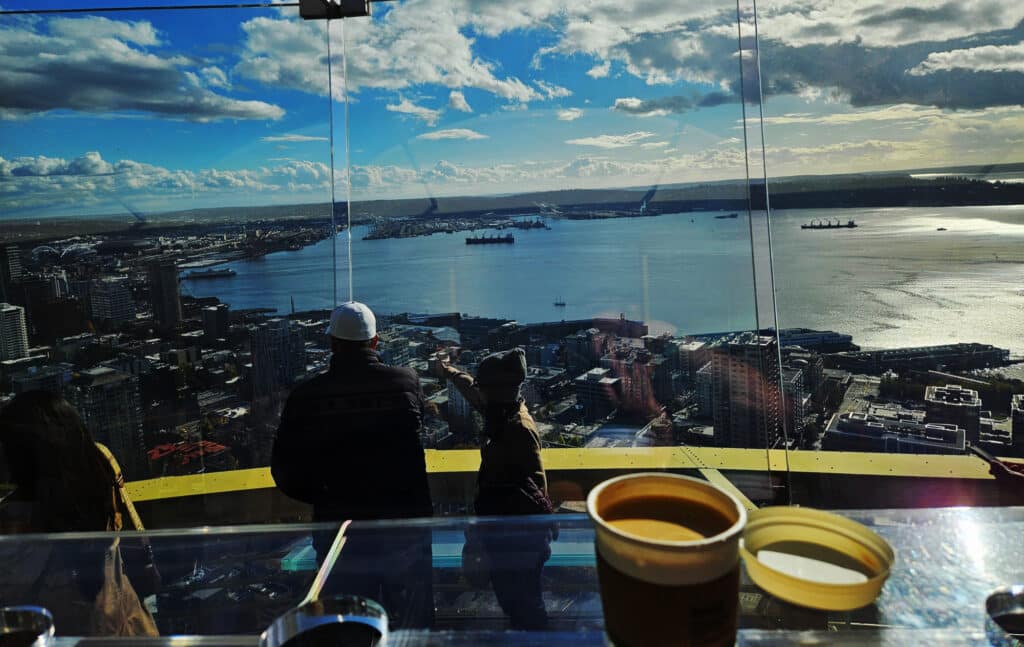
The area is not far from Down Town Seattle and you could walk and there are bus connections too. However, to go all in as a tourist, you should get on the Monorail. It was built for the World Fair in 1962 and follows the futuristic theme. It connects Westlake to Seattle Centre and a ride costs USD 3.50. It leans into the curves just before it drives right through another futuristic looking building, the Museum of Pop Culture. This so-called MoPop contains several exhibitions about music and science fiction. The music section is strongly related to the musicians that put Seattle on the musical map: Jimi Hendrix and Nirvana. When Charlie visited, there was also a temporary exhibition about Keith Haring. As a street art lover, that was right up her alley!
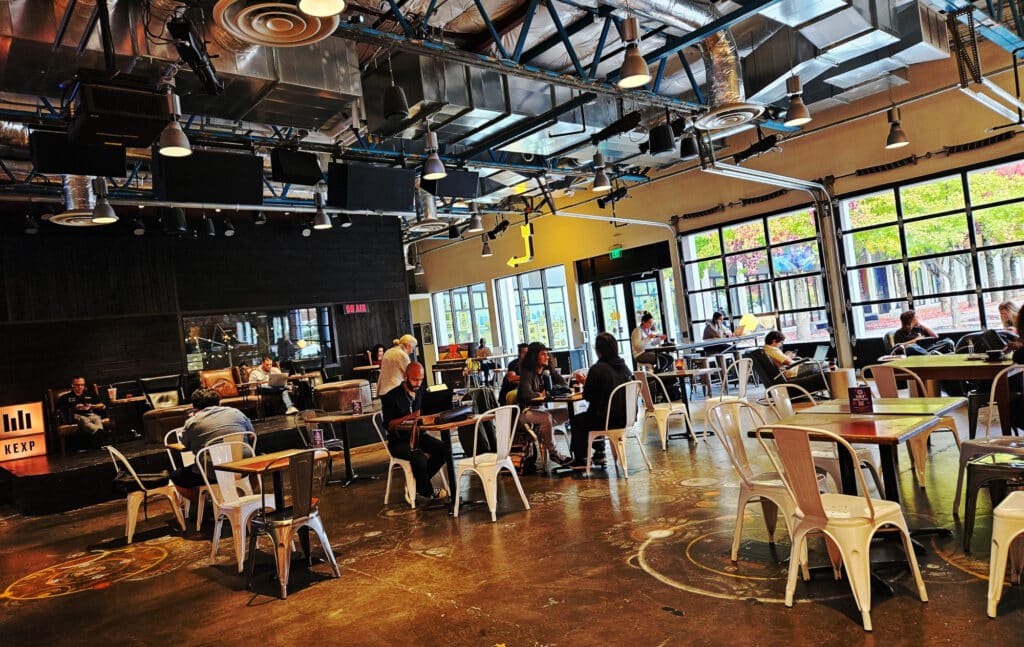
There is a lot more to see and explore in the Seattle Centre and Charlie highly recommends a visit of the Chihuli Gardens, a garden and museum that presents glass art, and a coffee stop at KEXP radio. You can easily get a combined ticket for the Space Needle and Chihuli Gardens.
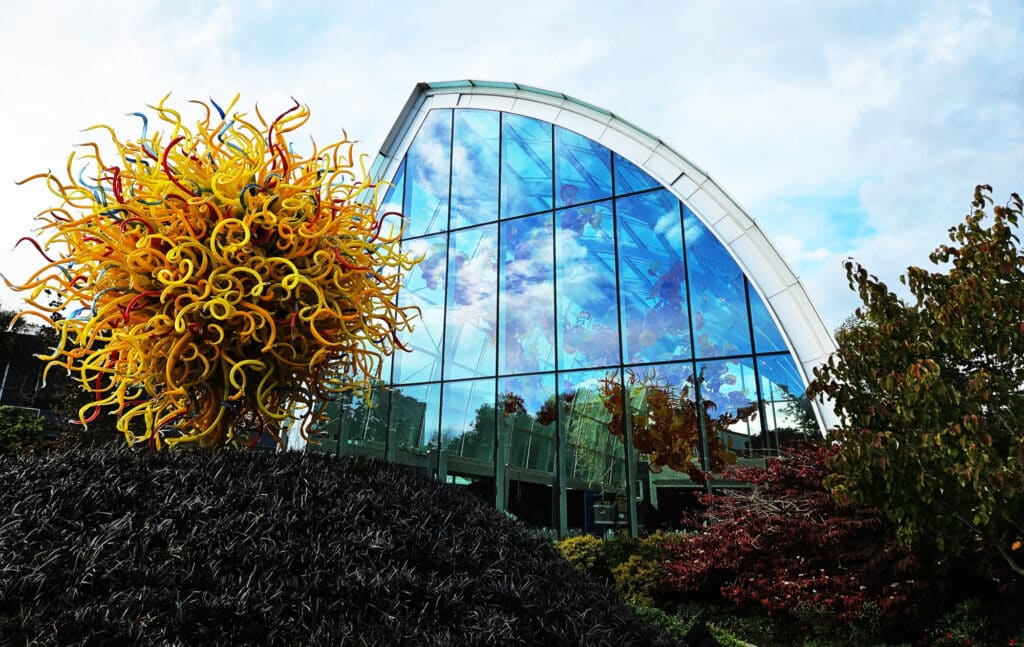
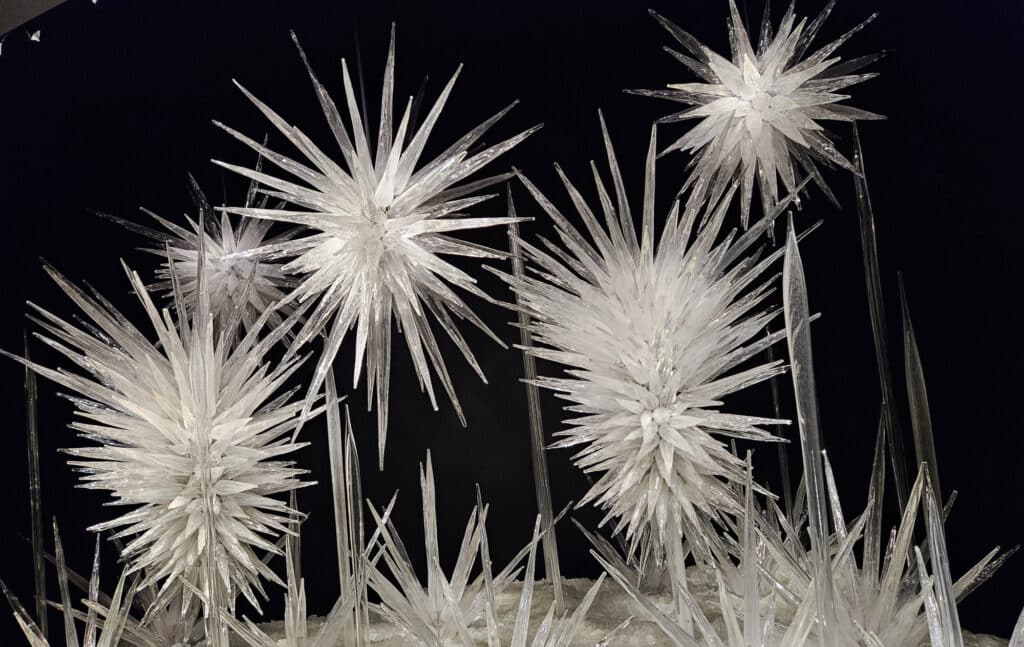
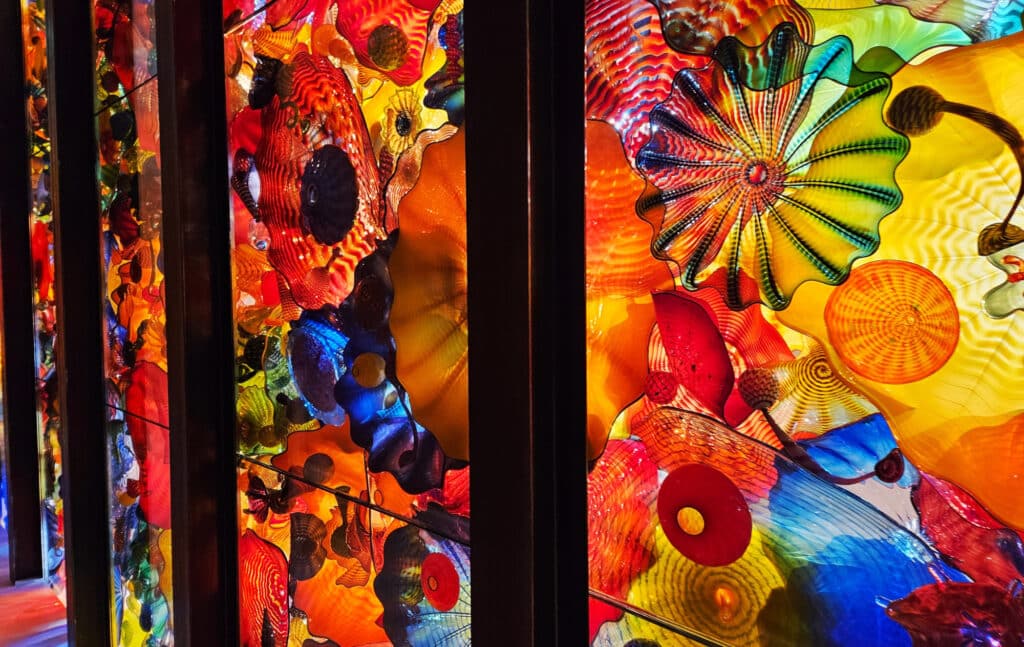
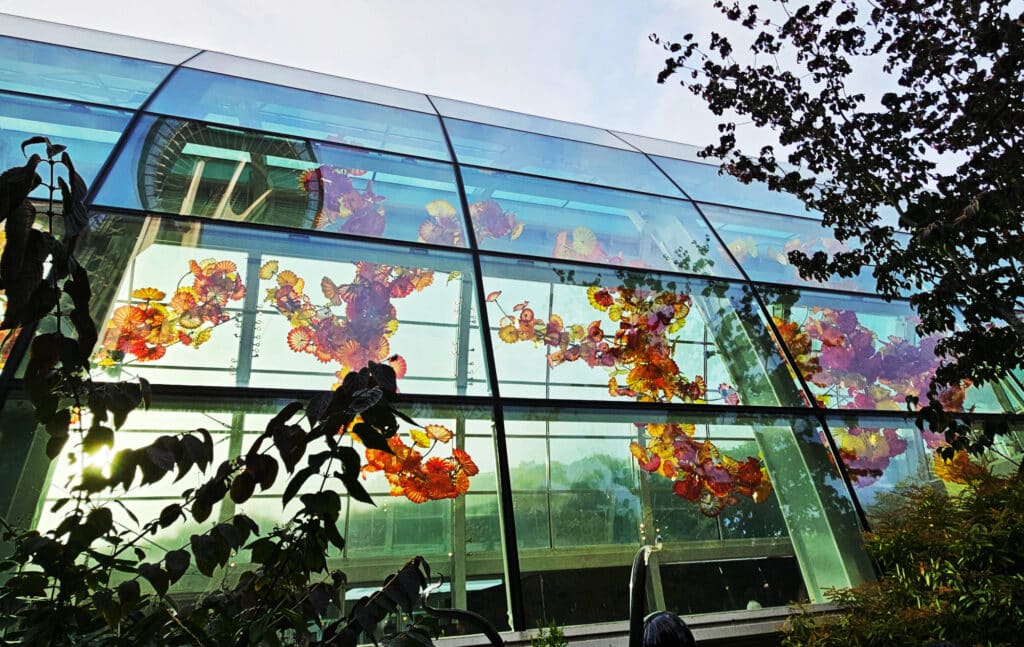
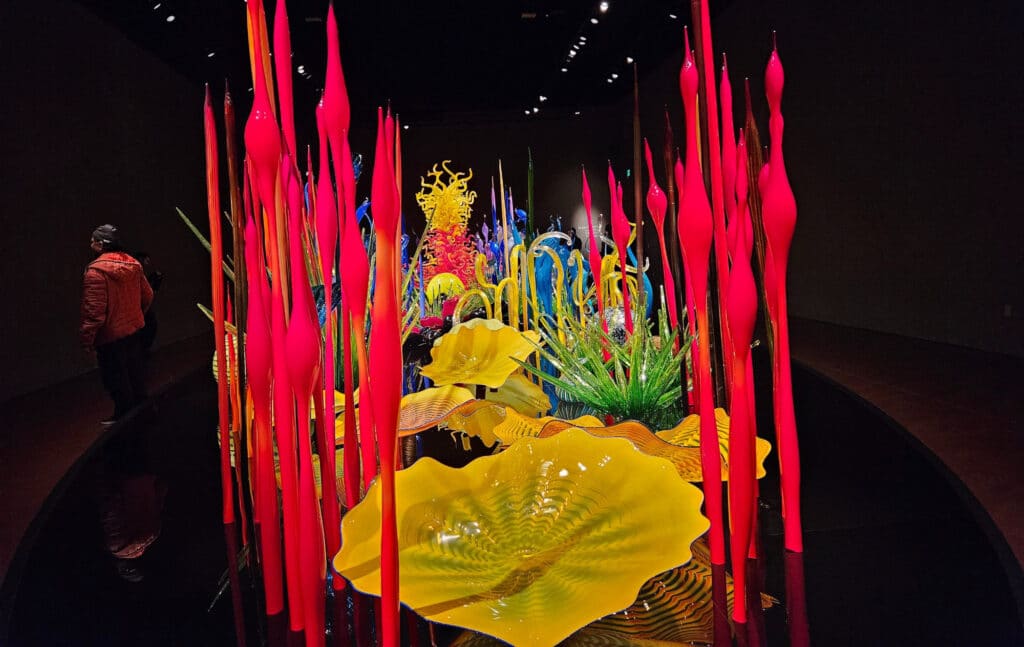
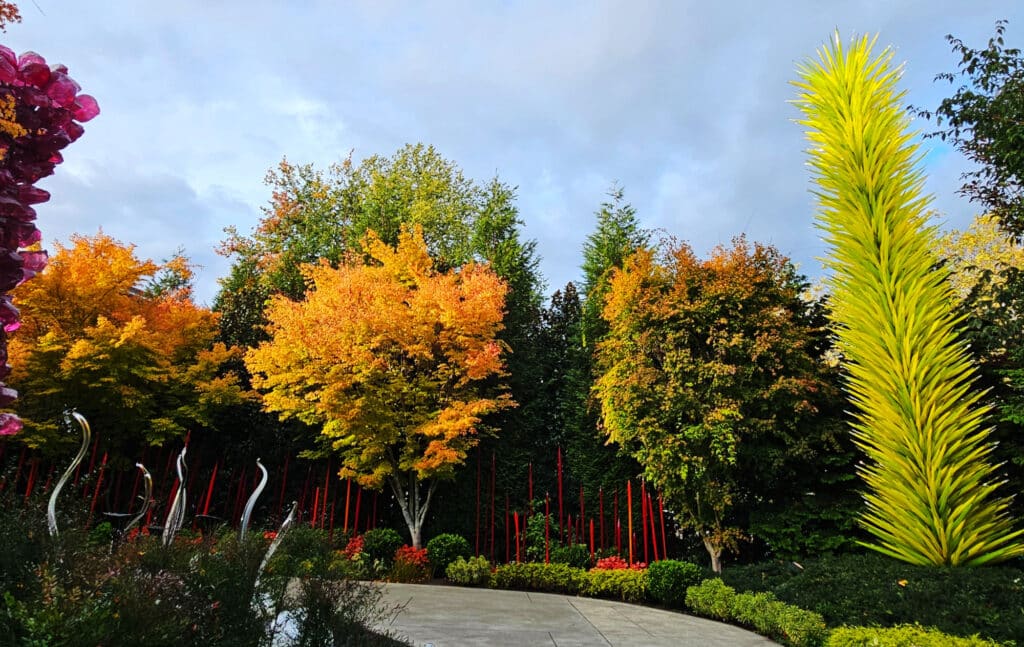
If the view from the Space Needle wasn’t enough yet, there are two other options to see Seattle from above: the Columbia Tower and the Smith Tower, both in Down Town Seattle.
Places to work from in Seattle
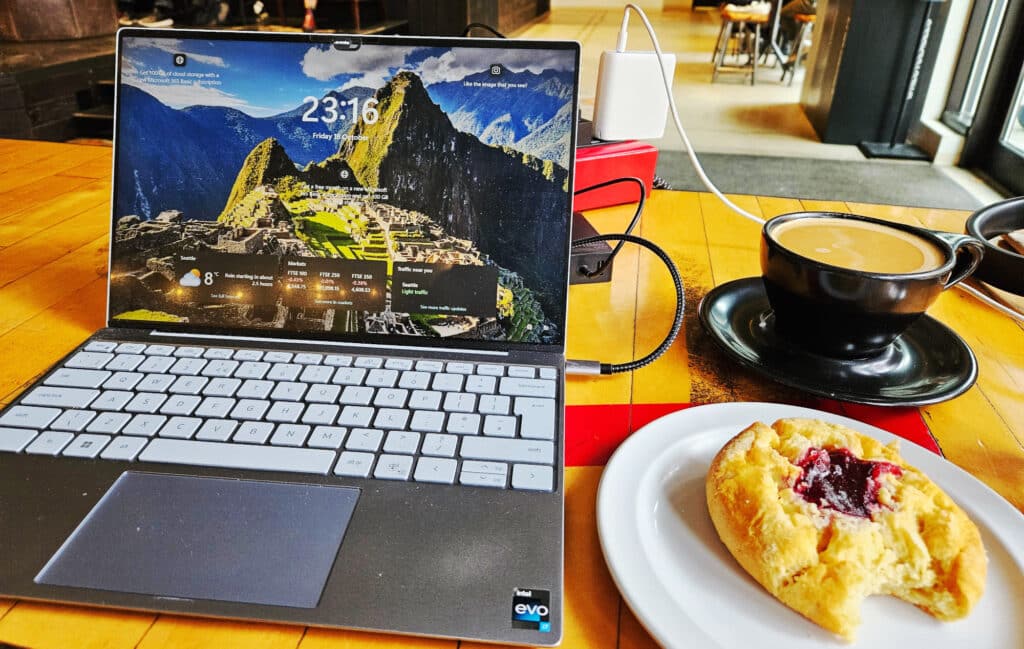
If you visit Seattle like Charlie as a digital nomad and need to get some work done whilst citytripping, you will find a laptop-friendly coffee shop easily. Here are a few that Charlie has worked from during her short stay:
- Zeitgeist: near Pioneer Square, opposite of the Klondike Gold Rush Museum
- Caffe D’Arte: at Pioneer Square
- Argento: in Capitol Hill (where Charlie’s accommodation was)
- Caffe Ladro: in Capitol Hill along 15th Avenue – definitely a favourite!
- Ada’s Technical Books: in Capitol Hill along 15th Avenue, coffee shop and bookstore – great vibes!
- KEXP radio station: at Seattle Centre
- Chocolati: near Green Lake Park
- Pike Street Coffee: Below Pike Place Market on your way to the waterfront
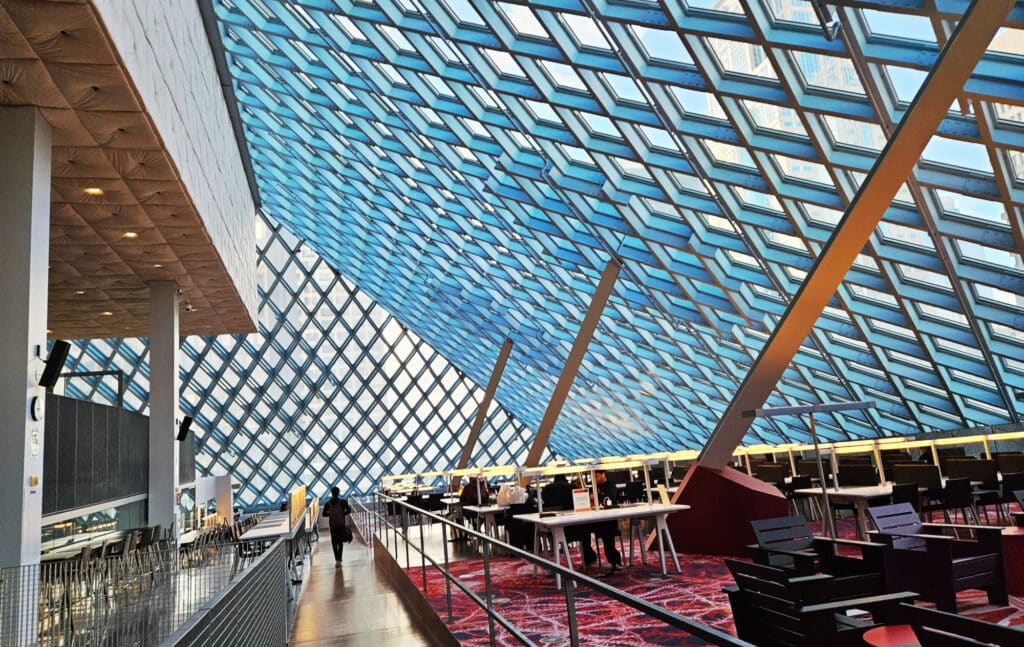
If you need a full day of work and want to avoid coffee shop distraction, check out the Seattle Public Library. Take the elevator to the 10th floor and then walk towards the north side of the building. There is a spacious area with desks and other more comfortable chairs to get productive. You don’t need to be a member of the library to work from there.