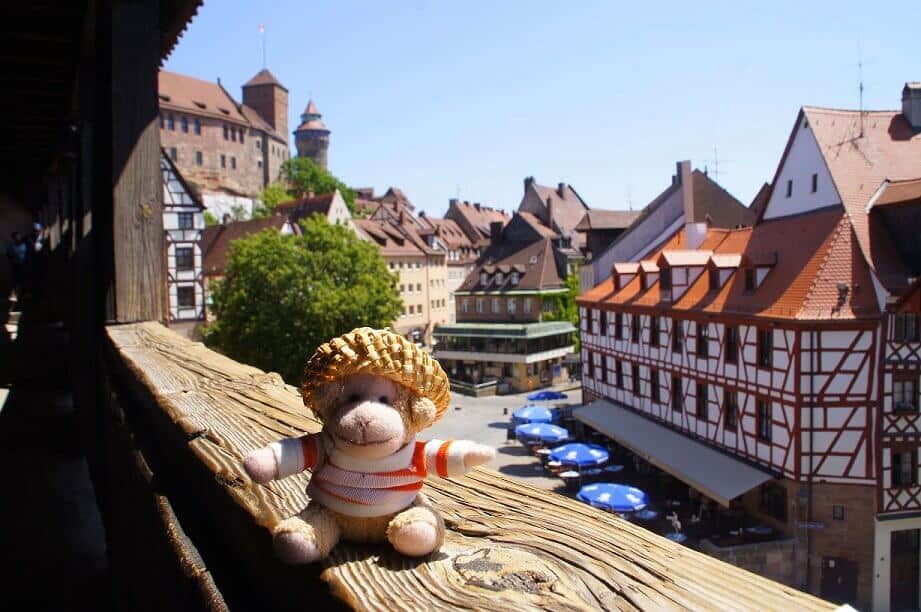
Charlie in Nuremberg
Tales of Emperors and Gingerbread
Charlie had been thinking about a day trip to Nuremberg for quite some time. She was there frequently but all she’s seen of the city was the airport and the train station. She never actually stayed in the city.
She arrived at 10 in the morning at the airport in Nuremberg that day and went straight into the city. She only had hand luggage, but it was still too much to carry around when you’re exploring the city. She wanted to leave that at the hostel. Charlie usually stayed at the A&O Hostel at the train station if she arrived late at night in Nuremberg and had to catch a train early in the morning, but there had been no room available this time. Therefore, Charlie booked a bed at the Five reasons hostel which was also very central and overall provided a positive experience with very friendly staff.
When she arrived, she realized how lucky she had been to get an affordable bed at a hostel: Rock am Ring, one of the biggest festivals in Germany that takes place at the Nürburgring every year, was on that weekend.
Exploring the city (not) on your own
Charlie took the underground to the station next to the opera which was opposite the hostel. When she arrived, the receptionist was explaining another guest how to get to the festival grounds. While Charlie was waiting, her eyes wandered through the room and stopped at a map. That’s what she needed. Next to it was an information about a free walking tour through the city that she had been trying to find online a few days before without much success. Meeting time was 11 a.m. at the reception. Charlie checked her watch: It was 11.05!
The tour should start officially at 11.30 at the fountain at the market place. The map told Charlie that she could still make it. She left her suitcase in the luggage storage and started walking towards the meeting point. Sometimes you don’t need to have a plan to make it go according to plan.
Charlie had done similar free walking tours in other cities in the past. Instead of buying a ticket for a fixed price, you tip the guide at the end of the tour.
Charlie preferred that over exploring the city on her own because the guide usually had a few secrets to share along the way. Charlie was not disappointed in this regard.
Travel through time back to the early days of the city of Nuremberg
Fabian, the guide opened the tour with a trip in time back to the 9th century when the castle above Nuremberg had been built. It was supposed to be a military base at a strategically located point in the middle of Europe. Nobody thought about building a city there. Nevertheless, settlers came and started building on sandstone and marshland to make use of the protective function of the castle.
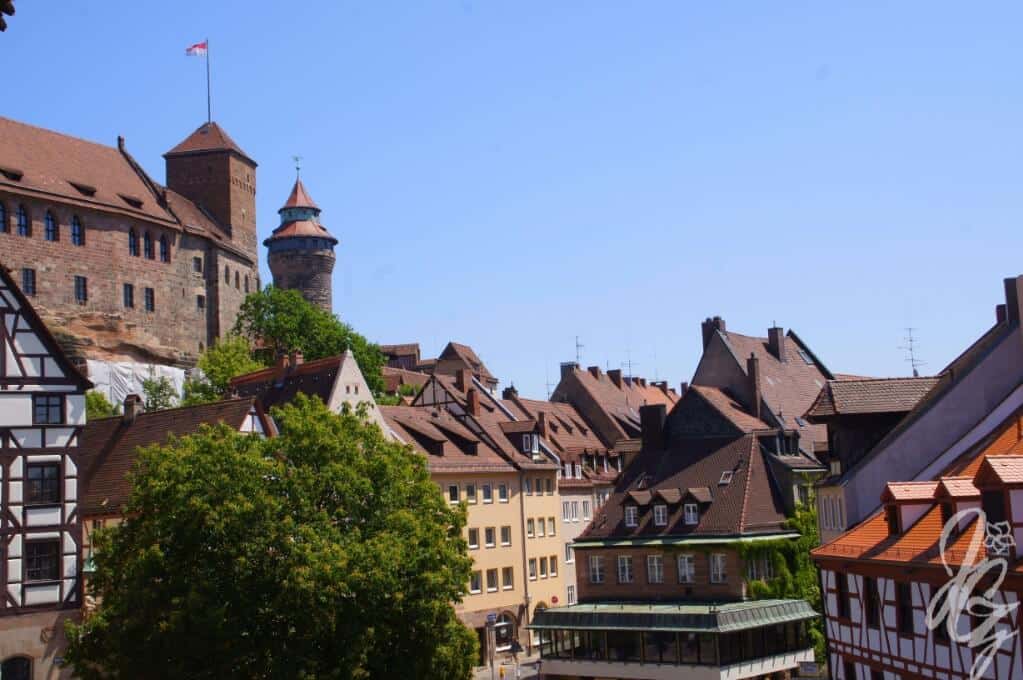
They continued their travel through time to the point when the city was mentioned in a written document for the first time, to a rich city of manufacturers in the middle ages and to the end of its independence when Napoleon handed it to king Maximilian, a Bavarian monarch. This was the beginning of the conflict between Bavaria and Franconia that marks until today an identity conflict for Nurembergs’ citizens. Fabian told the group that the best compliment for somebody from Nuremberg was to call him “the best Franconian you’ve ever met” even though he is politically a Bavarian resident.
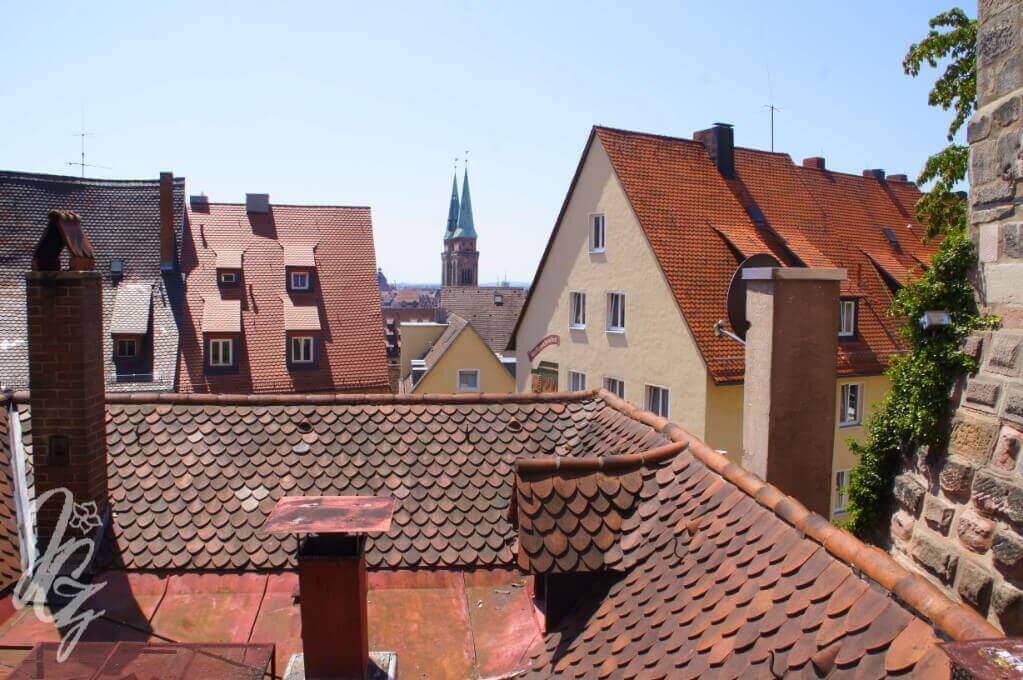
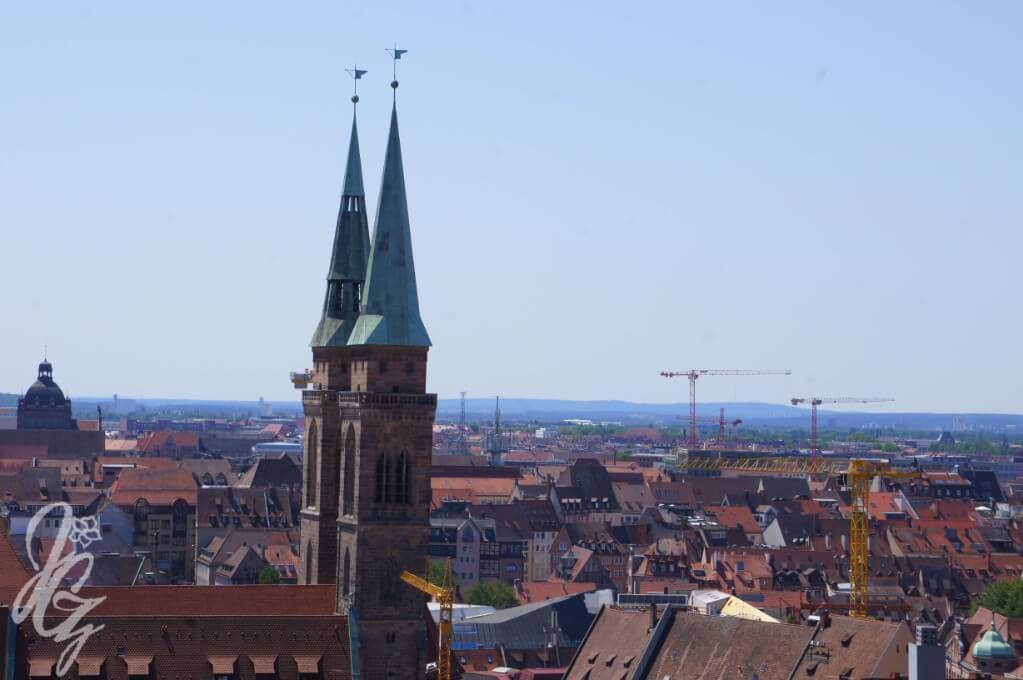
Once they had reached the castle at the top, they learned a lot about Nuremberg as the capital of the Holy Roman Empire, travelled to the 20th century and heard about the city’s importance in Nazi Germany and bomb attacks during the 2nd world War.
Nuremberg in the Middle Ages
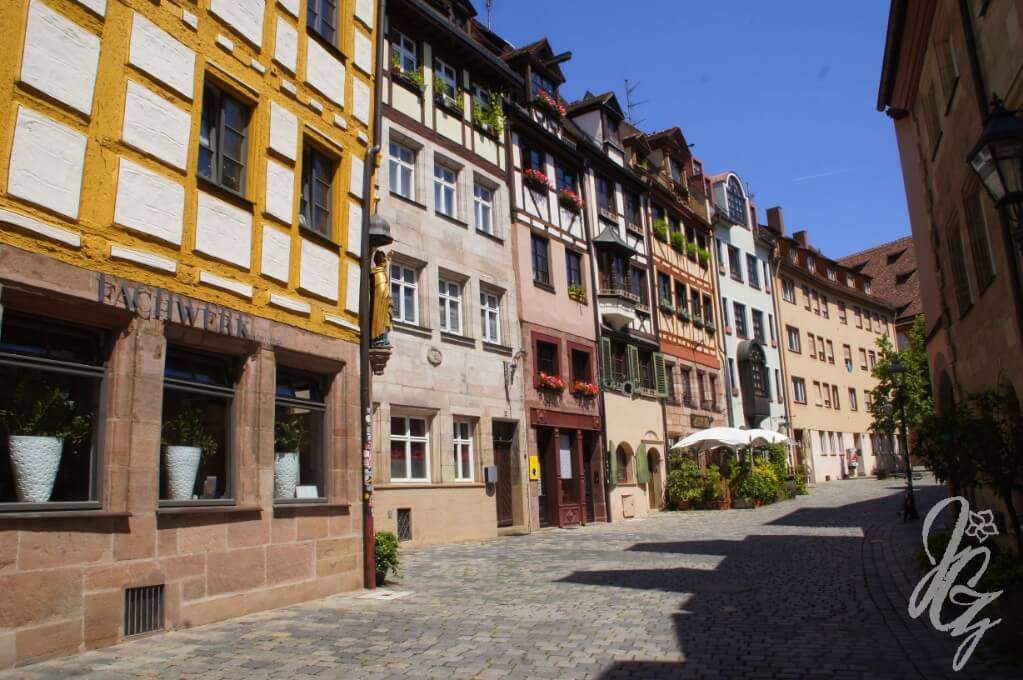
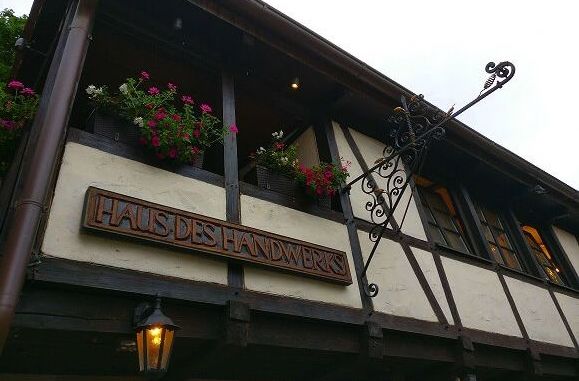
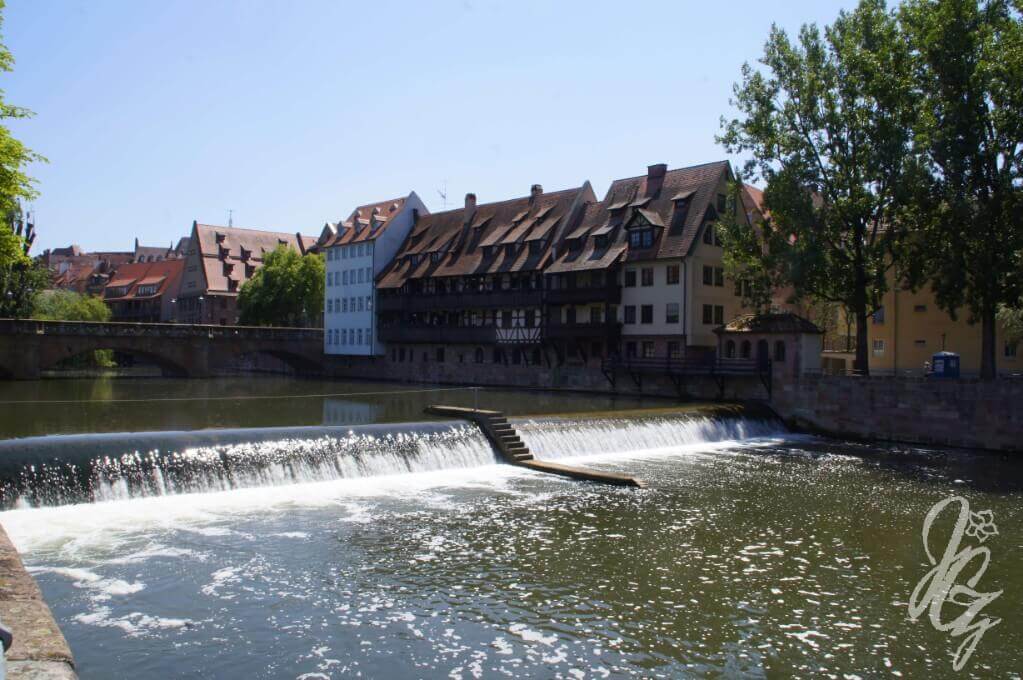
As they reached Duerer’s House and passed by the monument, talked about historic tunnels to finally stop in front of beautiful half-timbered houses in the craftman’s village to enjoy an ice cream in the sun, they travelled back to the Middle Ages. They did not need to worry about the executioner anymore these days and stopped willingly in front of his house to enjoy the picturesque architecture to both sides of the river. Nuremberg was an important partner of Venice in the Middle Ages – something you can still see in the architecture and the bridges all over the city.

20th century Nuremberg
When they were at the castle, Fabian mentioned Nazi Germany. The construction of the famous race course dates to those days. But that weekend, it was difficult to visit the Documentation Center Nazi Party Rally Grounds due to the music festival Rock am Ring.
Instead, Charlie decided to visit the Nuremberg Trials Memorial that afternoon. It is located at the palace of justice right above the courtroom no 600. It is still in use nowadays and was the place where in 1946 members of the Nazi party had to face justice for their actions. An audio guide describes how the room looked back in those days and who was sitting in which chair.
The exhibition “Nuremberg Trials Memorial”
The exhibition shows big boards with quite a bit of text that can be read out by the audio guide, as well as images, sound and video recordings of the Nuremberg Trials. The exhibition shows the different aspects of the trials: which law had been applied, which obstacles had been taken (e.g. accommodation for witnesses and defendants, transportation, conversion of the courtroom, press etc), which defendant faced which charges and sentences and the important role of the trials as the precursor of the International Court of Justice in Den Haag today. As a linguist, the most interesting fact Charlie learned that day was the fact that the trials were the beginning of simultaneous interpreting.
Overall, it was a nice refresher of the things she had once learned at school but if she’s entirely honest, she would say that she has visited more impressive exhibitions in the past.
Witty and Charming
Every city has their own stories and facts to tell and the good thing about a free walking tour is that the guide usually tells them in a witty and charming way. Entertainment is what he gets his tips for. Fabian did a good job that day.
How they name things in Nuremberg
He was making fun of his ancestor’s creativity regarding how they named places in the city:
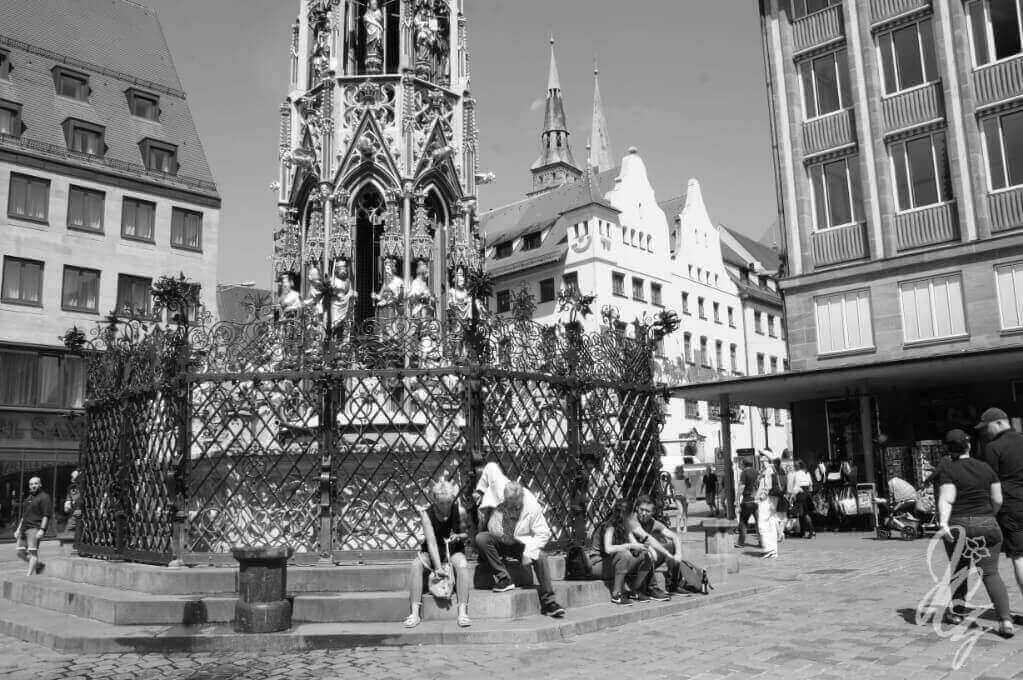
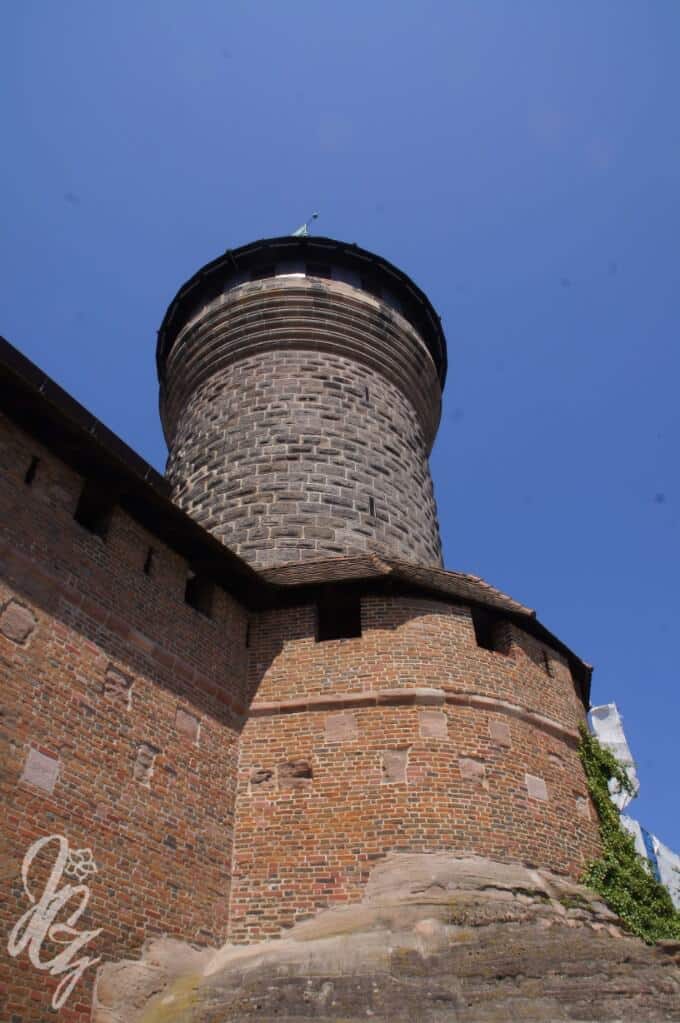
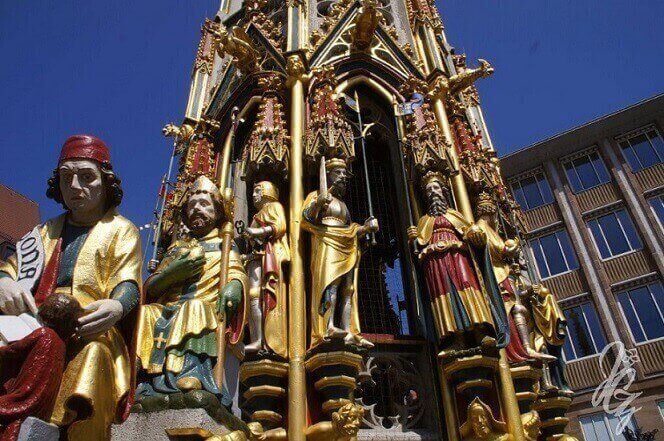
Henry III called the city Norberg, derived from the word “nor” which means “rock” and “berg” as in “mountain”. The fountain at the market is particularly beautiful and is called “beautiful fountain” (german: Schöner Brunnen) and the lookout tower next to the castle is called “Luginsland” which means “look in the land”. At least, you always know what you get in Nuremberg.
In reality though, this tower wasn’t used to look out in the land, but the citizens used it to look inside the castle. They didn’t trust the duke and hoped to catch him doing something illegal. Once he had fled the city, he went to Berlin and turned it into the capital. Nuremberg had missed its chance, but Fabian didn’t seem to be too upset about it.
The fountain at the market is indeed beautifully decorated with colourful figurines that were supposed to explain political concepts in the middle ages. If you ever go to Nuremberg and can only visit one thing, it should be the beautiful fountain. On the way there, you will see a lot of the city anyways.
Bavaria vs Franconia, Nuremberg vs Fürth
On several occasions during the tour, Fabian mentioned an identity conflict that the people in Nuremberg are constantly facing. Since Napoleon handed the city over to King Maximilian, it is politically a part of Bavaria but in their hearts, the people feel more Franconian. One of the reasons why the people in Nuremberg dislike the Bavarian government since they took control over the city was the prohibition of beer gardens in the gardens around the castle that exists till today. In different places in the city, you can either see the blue and white Bavarian flag or the red and white Franconian one. That way you’ll know immediately what kind of place you’re getting into. When it comes to food, Fabian does not recommend going into any of those restaurants that are decorated in blue and white. You’ll probably know why. Charlie will tell you more about Nuremberg’s culinary offer a bit later.
There was one point of the tour where Fabian (and with him everybody else in Nuremberg) was suddenly very happy about the fact that the city belongs to Bavaria because the television tower is 5 meters taller than the one in Munich and therefore the highest building in Bavaria.
Another conflict became obvious during the tour: Nuremberg vs Fürth. It goes as far as the river that flows through both cities gets a different name depending on where you are. In Nuremberg, they call it Pegnitz whereas in Fürth they speak of the river Regnitz. One and the same river, two names. Charlie had never heard anything like that before.
City of Love
If Charlie mentions the “city of love”, the first that comes to your mind is probably Paris, but we are still in Nuremberg and Charlie thinks that this city deserves the name as much as the French capital.
She had that thought already at the beginning of the tour when they were at the beautiful fountain. There are two rings hiding in the fence that surrounds the fountain: One is the original golden ring that has turned black over the years, the second ring is a copy of the original and the locals call it the “tourist ring”. The story behind the ring – you got that right – is a love story, of course. It is said that if one turns the ring three times, he/she will find the love of his/her life. As the group walked around the fountain, they could observe a man turning the ring and heard him saying: “Well, now it will happen.” He turned around to notice: “And my wife is gone.” Charlie leaves it to your imagination what this might mean. He was anyways turning the copy of the ring which might not work at all.
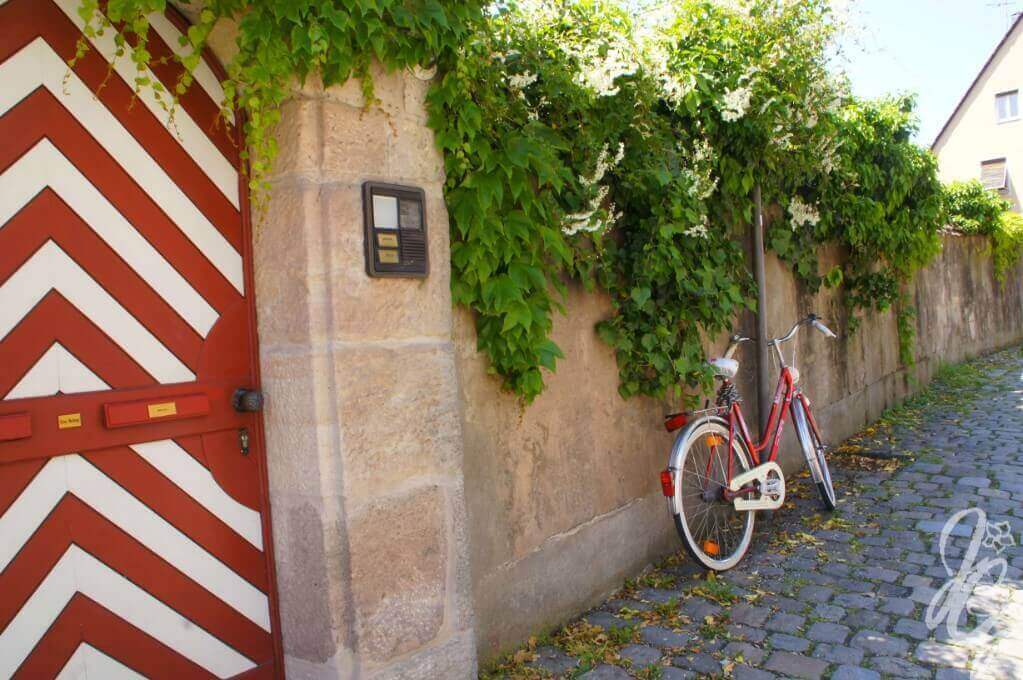
As they stopped in front of the Duerer house, not only did they learn about his art work, but also about the story behind his famous self-portrait. You probably know in which direction that goes: it’s another love story. The women he was supposed to marry did not want to marry anybody she hadn’t seen before. What a lucky coincidence that he was a painter and could draw an image of himself. It was the beginning of a great love story and an early version of the modern selfie.
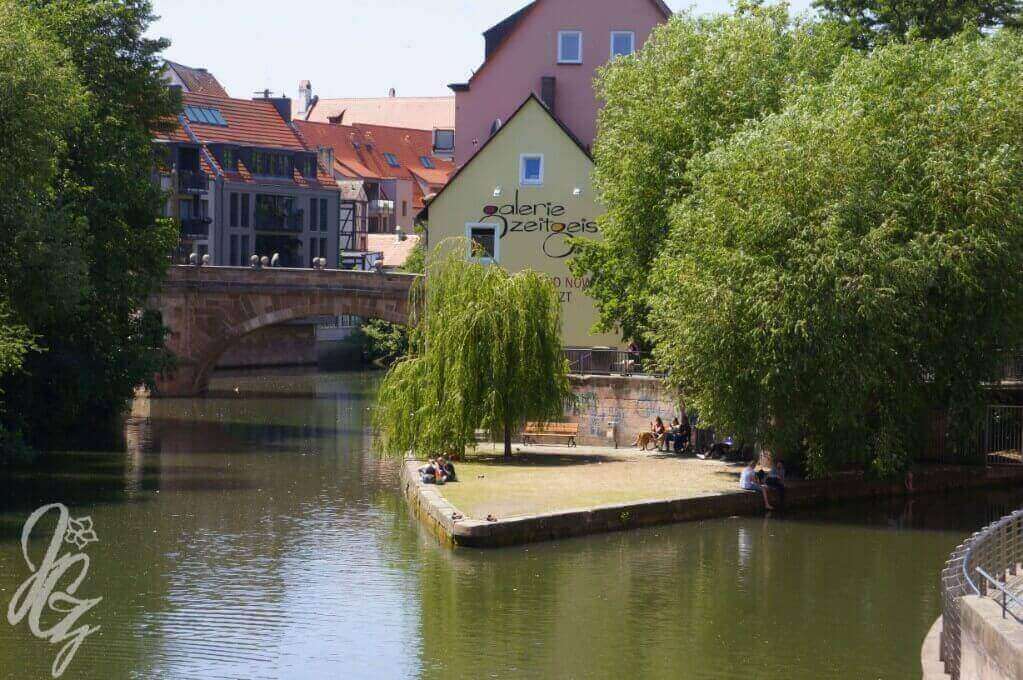
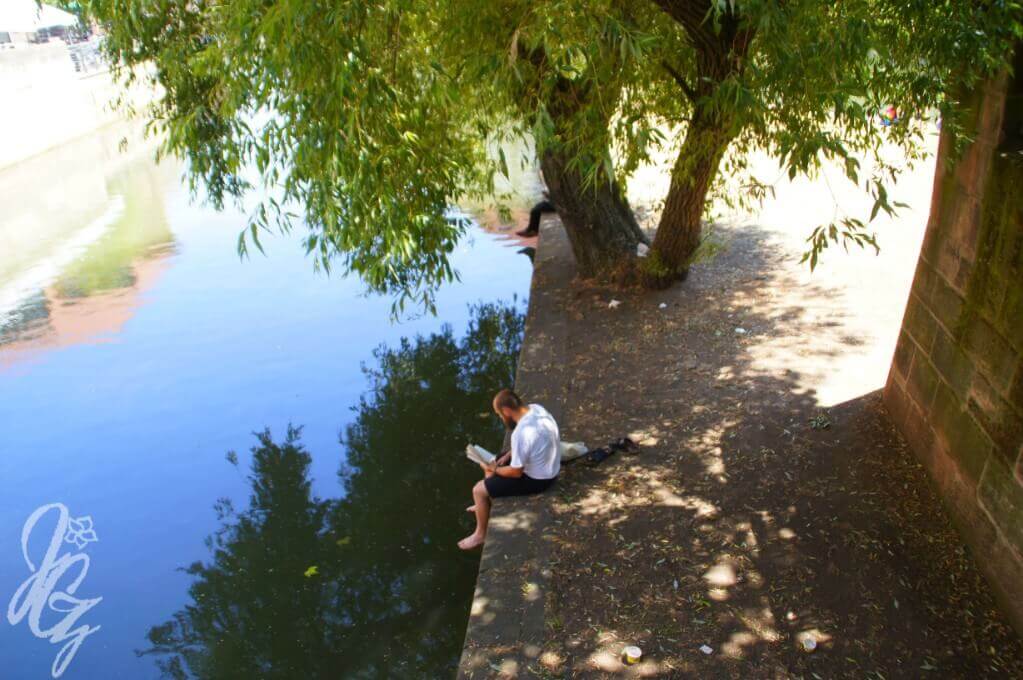
On their way back from the castle into the city center, they passed by an island that had officially been named “island of love” a few years before. It’s a romantic place, especially when the lights switch on in the evening, and is frequented by many couples.
The tour came to an end at the Lawrence church that looks almost identical to the Sebald church they had seen in the beginning. How could it be that two churches in close proximity to each other looked exactly the same? The answer is again a love story. The architects of both churches were in love with the same women and each of them dedicated a church to her. It is unknown how this story ended.
Culinary Nuremberg
Apart from history and monuments, there’s one thing that’s not to be missed when on a city tour: the local food. And there’s plenty of that in Nuremberg.
Not suitable for vegetarians
The first specialty to mention is the Nürnberger Rostbratwurst. To try this one, Fabian recommends a stall at the market place, the so called „Bratwursthäusle“. He calls it the oldest take away stop in the world. The Franconian cuisine contains a lot of meat which was no surprise for Charlie who grew up in Thuringia where they love meat as well. As they were at the Trödelmarkt, Fabian recommended the restaurant „Trödelstube“ where they serve the best Schäufele (specialty made of the pig’s shoulder meat).
What to drink in Nuremberg
What’s the number one drink in Germany? You got that right: beer. It is part of the culture and can be very varied. Fabian mentions a restaurant called “Landbierparadies” where they present another local beer every week. It takes 5 years for a full turnaround of all local beers. That gives an idea of the number of beers brewed in this region.
Fabian recommended another place opposite the Duerer house that is famous for its beer offer called “Der Wanderer”. The red beer seems to be his favourite. Charlie was thinking to go there at the end of the day to give it a try, but she was too exhausted for another walk in the evening. A bit of rest should be accepted when you got up at 3 a.m. to fly from London to Nuremberg, participate in a 2.5-hour long walking tour and walk for another 30 minutes to the Nuremberg Trials Memorial and back. And they served beer in the hostel too.
It also was the local beer culture that was an advantage to Nuremberg during the second world war. The “Felsengaenge”, subterranean tunnels, were used in the Middle Ages to store and transport beer barrels. During a bomb attack in the second world war they saved many lives, lots of Duerer’s paintings and the beautiful fountain. The people in Nuremberg had been warned of the bomb attack 1.5 hours before which was enough time to save those treasures.
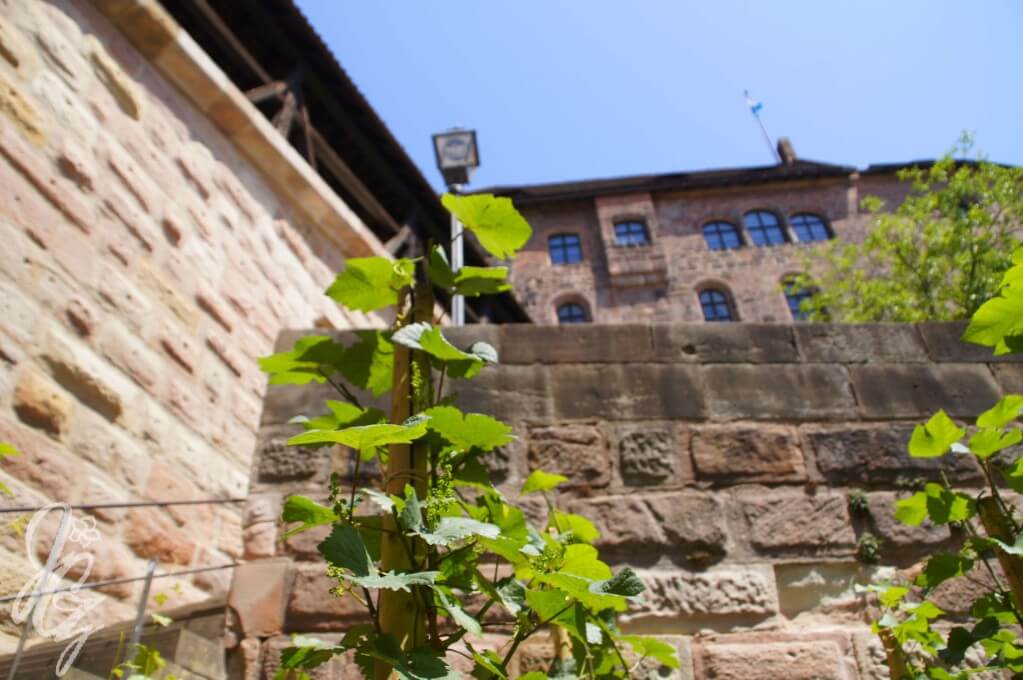
Another drink should not be forgotten on this occasion: mulled wine. The “Nürnberger Christkindl Glühwein“ is probably one of the best known and even gets exported to other countries. Even when Charlie was living in Malta, she could enjoy this drink at Christmas time.
Now that we mentioned Christmas, we can also speak about the ginger bread that is originally from Nuremberg: the Elisen Lebkuchen. Even in the summer, the city cannot forget about them as every bakery advertises them, nowadays even with flour and gluten free ginger bread. Even the oldest tradition has to adjust to modern dietary requirements.
On that occasion, Fabian shared the story behind the gingerbread tradition. He refers to the story that later inspired the Brothers Grimm to the fairy-tale of Hansel and Gretel. A baker from Aschaffenburg and his wife with the names Hans and Grete had murdered a competing baker to steal her popular gingerbread recipe. But she had sent the recipe to a friend in Nuremberg who continued baking the gingerbread after her passing away and created a brand that exists to this day: „Lebkuchen Schmitt“.
Charlie is determined to spend another day in Nuremberg at Christmas time to visit the famous Christkindl Market. You’ll probably read more here about mulled wine and gingerbread then.