Urban Art in Cologne
Discovering street art, murals and craftwork
The city of Cologne is known for its historic architecture and a rich history dating back to the 12th century. The city isn’t usually mentioned in the context of destinations known for their street art scene. That’s a shame as there is a lot of urban art on display and it takes different shapes from the more traditional mural painting to 3D-craftwork. Who would have thought to read the word “traditional” in a post about street art? Is it becoming a more integral part of urban landscapes?
Street art tour on a bike
Charlie usually does walking tours to find street art because that is the best way to take photos. However, there was no street art walking tour in Cologne for the days she spent in the city. As an alternative, she found a cycling tour. That was a new experience and she would still get insights into the local street art scene. The tour was organized by Colonia Aktiv and the guide for that day was Sarah who had been doing these tours for 7 years. Yet, as it is characteristic for street art, she has never done the same tour twice.

Street art route through Cologne
The tour started at the Eigelstein Gate, one of the gates to the city in medieval times. At first, they cycled towards the old town before taking a turn towards the parts of the city that developed in the industrial age. The tour lead to the Gerling Quarter and from there to the Belgian Quarter and Ehrenfeld. It was a route of about 13 kilometres in total and took a little over 3 hours. The length of the tour changes with the interest of the participants. It was a small group and they stopped regularly to admire the art and even did some stops upon request.
Banana art in Cologne
The first stop was in front of a large mural where you could see the spires of the Cathedral in the background. It is at the entrance to the old town and pictures the state of the art scene in Cologne that is trying to gain access again after having been pushed out by financial enterprises and media companies. The main contributors to this piece are the members of the art collective Captain Borderline. The central element of the mural is a banana, heavily inspired by the Banana Sprayer.
The banana is known in Cologne as a quality seal and unofficial logo of the arts scene. Thomas Baumgärtel, the person behind the pseudonym of the Banana Sprayer, places a banana by the door of art galleries that he deems to be of good quality. If you ever look for an art experience in Cologne, let the banana guide you to the right places.
The mural has plenty of other elements that refer to societal issues and contain political statements.

Room for interpretation
At the heart of the Belgian Quarter, opposite the majestic church of Saint Michael at Brussels Square is a sculpture by Mark Jenkins. At first, it appears as if a real person was sitting on a balcony at the first floor. The fact that the face is completely covered gives it away. The statue draws from the question who the city belongs to. It could represent the people living around the square that sceptically watch the parties happening at night. It could equally represent the party-goers that remain seated in the square despite being asked multiple times to leave.

Colourful Belgian Quarter
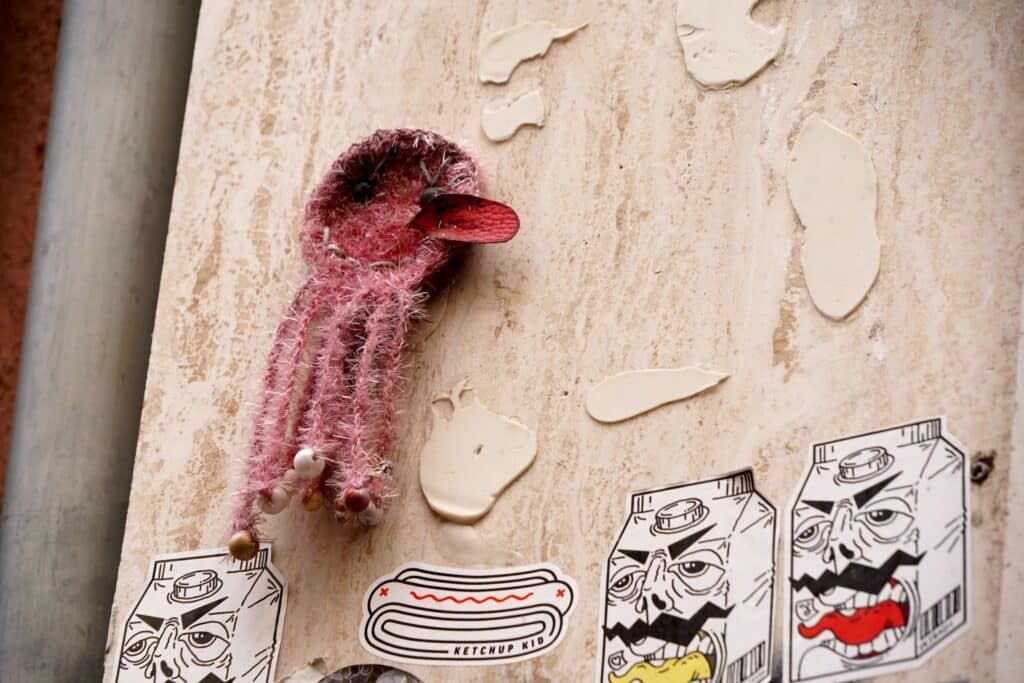
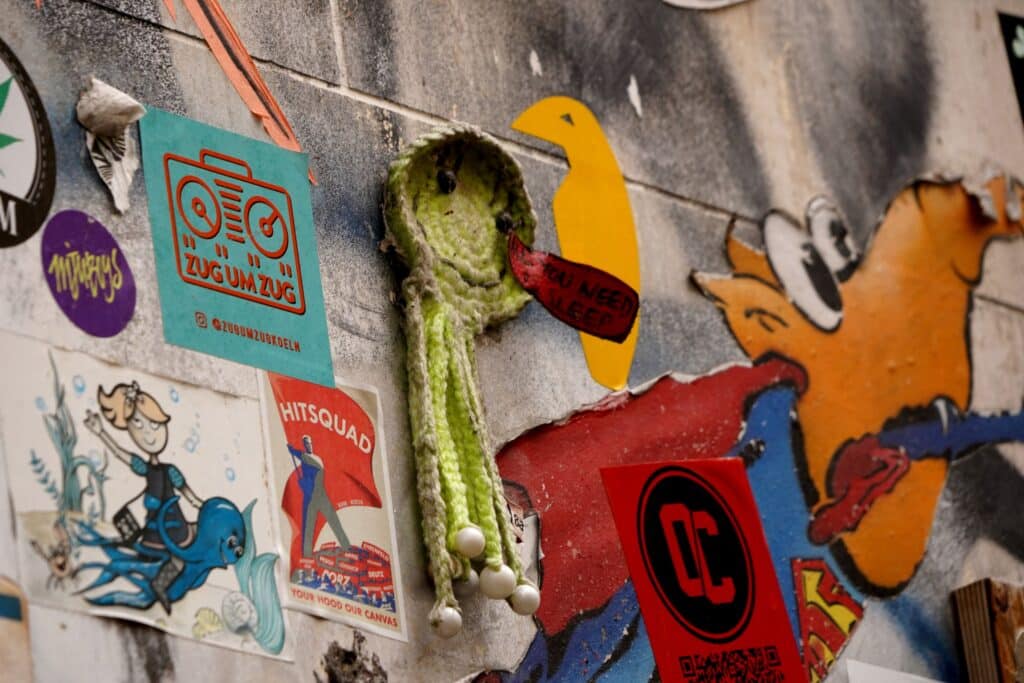
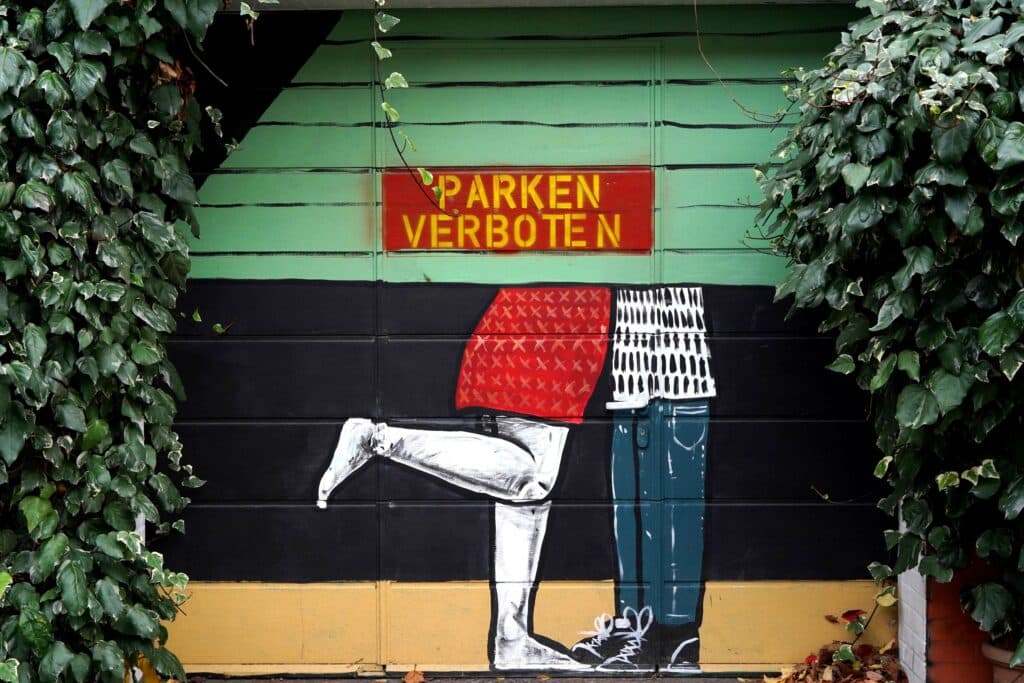
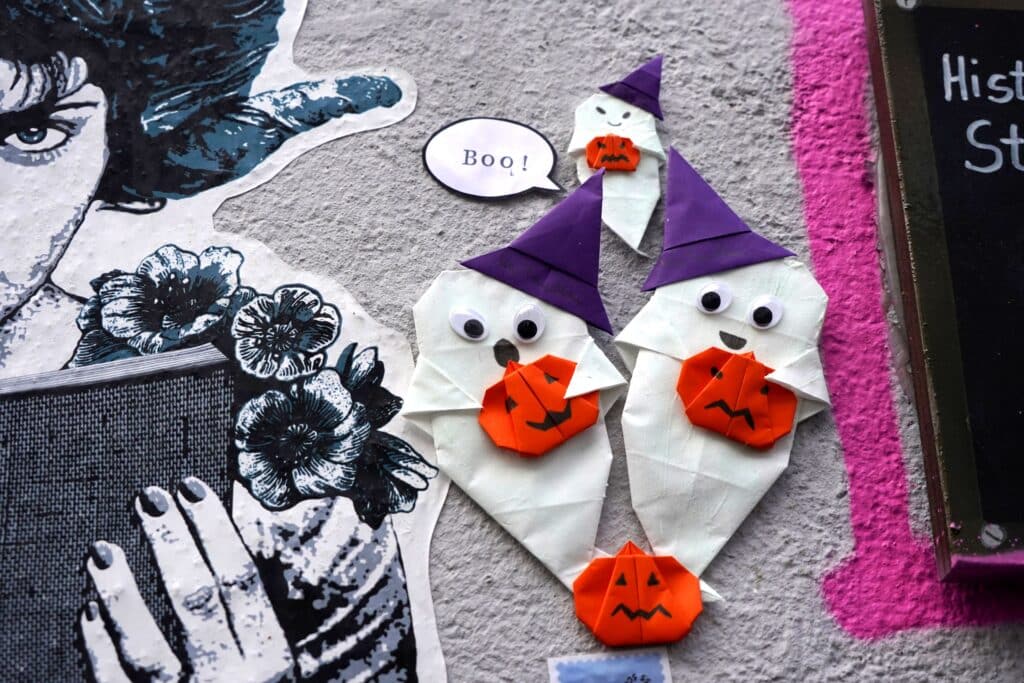
Looking around the area, there is more and more urban art to see by the minute. The most obvious are the jungle walls that are painted upon request of the building owners. Another remarkably artistic place is a hairdresser who allows artist to decorate the façade. It is a mix of small paste ups, paintings and craft works from little manga figures smoking illegal substances to knitted octopuses and pictures. On the way there, you also notice plenty of painted gates and shutters that turn the quarter into a colourful place.



Street art in Ehrenfeld
If there is one quarter in Cologne to visit for street art, it is Ehrenfeld. There are three hotspots, two of them being train stations. The station Cologne West is covered in a giant mural that stretches all the way from the entrance to the platforms and shows multiple animals that you usually find in the woods.
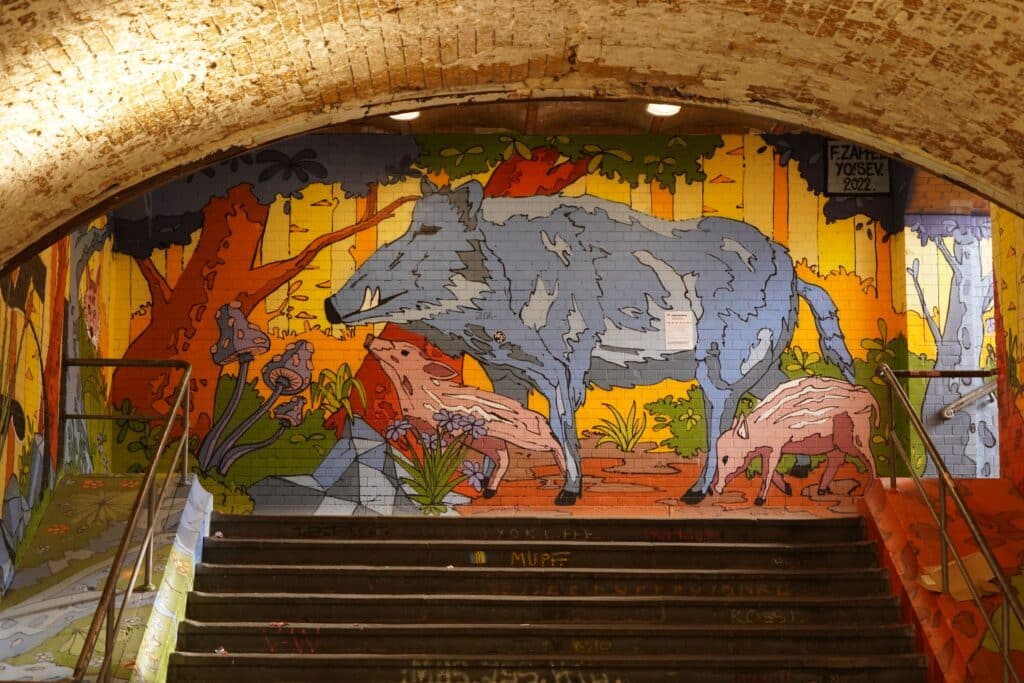


The train station Ehrenfeld is an even larger display of murals and mosaic work. The one that inspired Charlie the most was the giant mural in the tunnel that displays a surrealist style of painting.
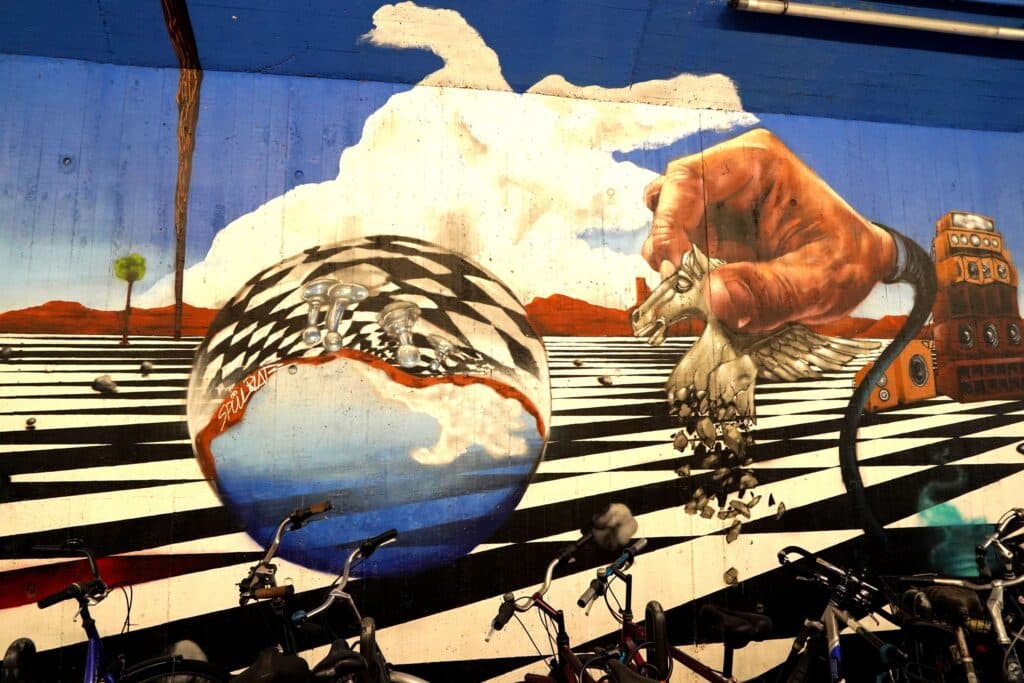

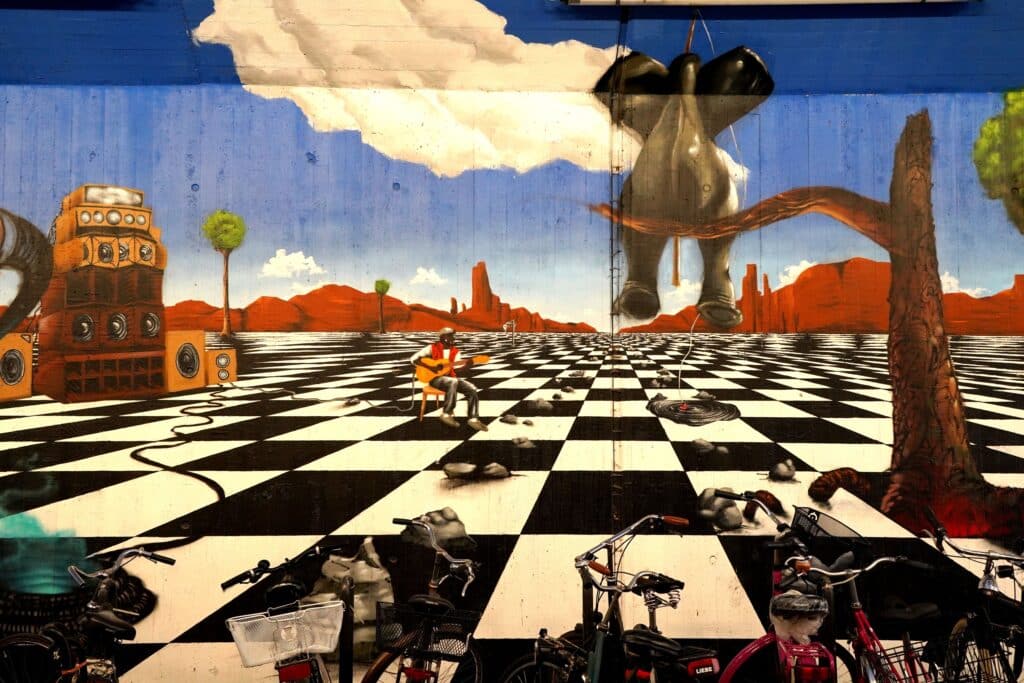
The third place to visit in Ehrenfeld is the street Körnerstraße that shows characteristics of a street art gallery with artworks of different sizes and techniques. The quarter and this street in particular have been gentrified in recent years and yet leave enough room for artistic expression.



Industrial street art: The painted warehouse
This is the place in Cologne that is most likely to change completely in the coming years, the Helios territory. As you approach the building, you either see the Helios tower, or a modern gym or a construction site. In between remain the walls of an old warehouse that provides the canvas for murals.
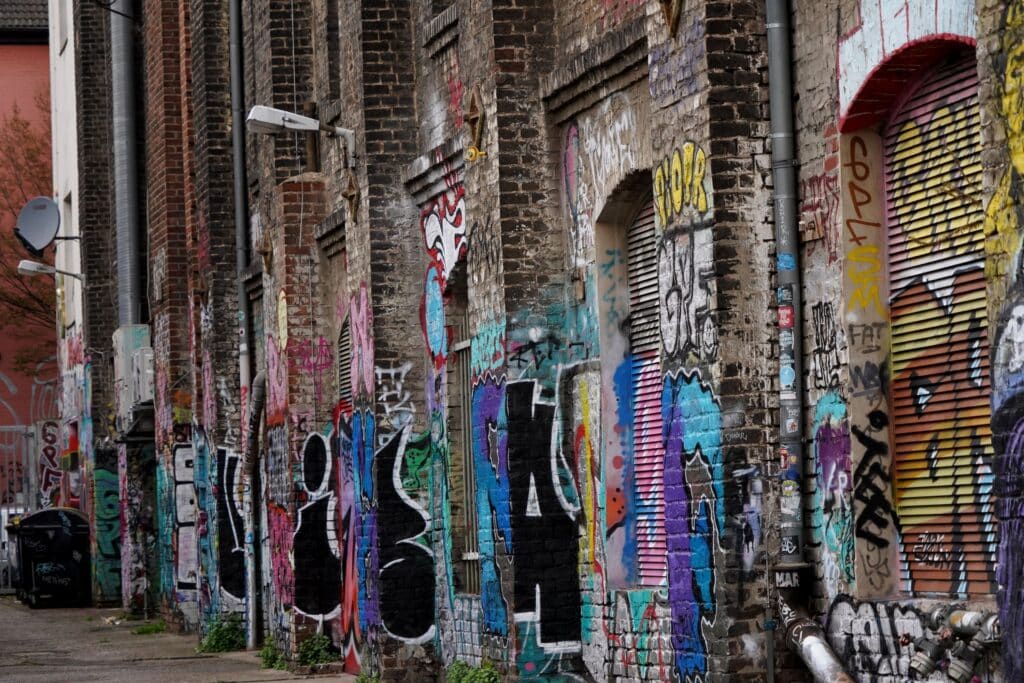

Street art in Cologne
It came as a surprise to Charlie that the city of Cologne has such a vibrant street art scene. The giant murals are often a cultural display, the smaller pieces can be described as “cute art” or political statements that often play with words. You also notice murals that show buildings Cologne is known for or the silhouette of the city. If you get a chance, go and see it!