Nomads Surfing: Eco-friendly Surf Products
Introducing a surf brand that works towards sustainability
It started in 2017 when three friends whose playground is the ocean decided that something had to change: Thomas, Nicolas and Basile were on a surf journey in South East Asia. Perfect waves. Beautiful beaches. A dream for every surfer. And then, there’s the negative side to paradise: plastic trash. Wherever they went, even in the most remote islands, no matter if they were habited or not, plastic bottles, toothbrushes, flip flops – you name it – covered the most beautiful beaches.
The three friends realized what impact plastic had on the environment that they so much enjoy on their surf boards. They felt that it would be a shame to not preserve the paradisical surf spots in this world for future generations. That’s how Nomads Surfing was born.
The company is based in France and was officially launched in 2018. It started with 3 surf boards.

Eco-friendly Surfboards – How?
Despite a background in engineering, neither Thomas, nor Nicolas, nor Basile are surfboard shapers. In order to put their ideas into practice, they had to team up with a shaper. They found Vitor in Porto. They analysed the traditional way of shaping and the challenge was to do it differently.


It took about 6 months of research, development, trial, and error until they had found their eco-friendly formula. Vitor is the signature shaper of Nomads Surfing and all boards are produced in Portugal. The names are inspired by the co-founders’ favourite surf spots in South East Asia and they’re about to launch the 8th and 9th boards in their collection. Two classic short boards, two fish, a mini malibu and a long board form already part of the family. What are they made of that makes them eco-friendly?
Putting Sustainability in Surfboards
Traditional surfboards are made of polyurethane or polystyrene foam, strengthened with fiberglass and covered with polyester or epoxy resin. The production of these raw materials from oil leaves a massive carbon-footprint. If the end product, in this case the surfboard, goes to waste, it simply goes to waste. These materials are hardly recycled.
The boards by Nomads Surfing are made of EPS (expanded polystyrene) foam which is recyclable. Even a broken surfboard can get a second (or third) life. This is entirely in line with the circular economy that Nomads Surfing stands for: Nothing gets to waste; everything gets a new life. The resin used for the boards is 40% made from organic resources (biomass, linen and basalt fibre), the highest percentage possible on the market.
But what about the other components of a surfboard and other surf related products? Eco-friendly does not end with the foam inside a surfboard. The traction pads by Nomads Surfing are made of natural cork, the fins are made of recycled fishing nets (that are also a threat to marine life), and their clothes collection is made of organic cotton and recycled polyester.
One aspect that often gets forgotten and it has also been raised in our interview with Rory the producer of eco-friendly surf wax in the UK, is the carbon-footprint we create by shipping products around the world. Nomads Surfing are reducing this footprint by producing mostly in France or Portugal, partnering with local shops and by using RePack for reusable packaging.
For their eco-friendly ways, Nomads Surfing has received the gold label by the Ecoboard project.


Sourcing sustainable materials
The footprint left in shipping does not only refer to the final product. Often, the raw materials have to be carried from afar. Nomads Surfing also have a solution for this: Local upcycling. Nomads Surfing is repurposing billboards used for festivals. Those are made of vinyl and produced to be durable under sun and rain but get usually thrown away when their time is up.
The billboards are given to an association in Bordeaux, called Récup’R which has a social impact creating collaborative workshops for refugees or isolated individuals. They work on these billboards to create pouches, backpacks or board bags.
The fins by Nomads Surfing used to be made of plastic from the scrap pile of car manufacturing and are now made of old fishing nets.
Going the extra mile
The co-founders of Nomads Surfing want more than the mere production of eco-friendly surf products: The main goal is a clean ocean and marine protection. Changing the approach to surfboard shaping can reduce further pollution. The way they source their materials can also reduce already existing pollution. However, it remains a David-against-Goliath-like challenge. Therefore, Nomads Surfing are also supporting other initiatives that focus on marine protection: 5% of their revenue goes to NGOs such as The Rescue Ocean Project in France, Ecoknights in Malaysia and The Lifeboat Project in the Philippines.


Putting eco-friendly surf boards to test
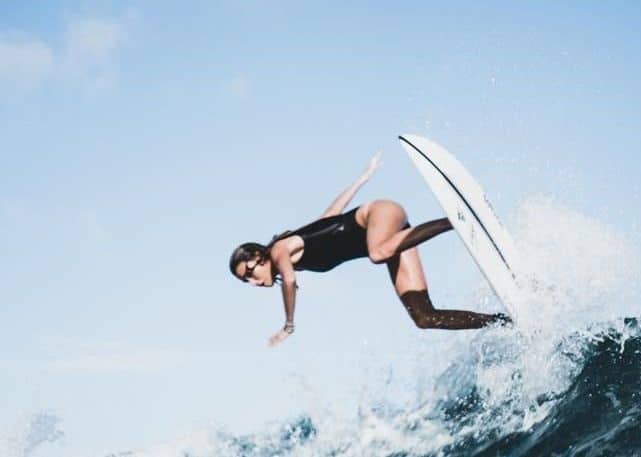
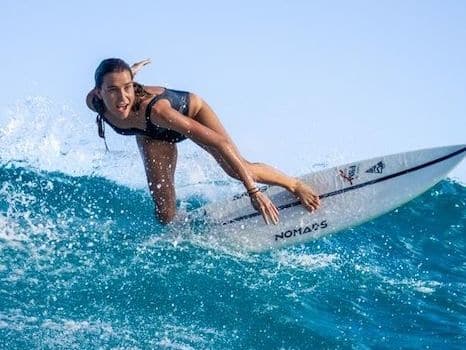
As much as we surfers care about the environment, we also want our surfboards to be high performers. To ensure that their surfboards are fit for purpose, Nomads Surfing have ambassadors in France that test the boards in the French paradise of surfing between Bordeaux and Biarritz. Some of their ambassadors compete in the WSL QS, some others are free surfers. They’re young, passionate and talented. They provide feedback and make suggestions to improve the performance of the eco-friendly surfboards and surf gears by Nomads Surfing.
Eco-friendly Surfboards – A real challenge?
What Nomads Surfing is doing seems all very reasonable and logical. Charlie was wondering why this isn’t already an industry standard in surfing.
“For fins and surf boards, the sad part is, that it is relatively accessible. What we have done was challenging, we demonstrated it was possible, but it is not a revolution in the surf industry. We had lots of articles saying: ‘organic surf boards’ or ‘fully made of recycled plastic’. That is not true, we are not a revolution. The technology is available, and everyone should do it. What we genuinely want is less waste in the ocean. The hard part is to find a product where you respect the environment, keep performance and are competitive with prices.” (Thomas Cervetti in an interview on 12/01/2021)
For that reason, Nomads Surfing are producing in Portugal and not in France. It seems to be a good middle ground to save costs and still remain somewhat local in Europe. At least, it is not the by now threaded “made in China”. Fact is that eco-friendly production, even with recycled materials, is more expensive than petroleum-based materials. Additionally, there are some established brands in surf that gradually revert to eco-friendly production and that makes the space even more competitive. With Nomads Surfing, all boards are handmade. There is no mass production. That adds value, but also cost. Still, their boards are reasonably priced.
By now, there are 7 different boards offered by Nomads Surfing: Two classic short boards, two fish, a mini malibu and a long board. The 8th and 9th shapes are currently in production. Keep an eye out on the Nomads Surfing shop to see their designs. If you have a special request for a board, get in touch with them! They make it happen!
How to get surf equipment made by Nomads Surfing
Yes, you can order everything from their online shop, and they ship to all of Europe. Shipping costs vary from one country to the next, so wherever you are, it is best to check with them directly. They do not deliver worldwide as this would go against their values of reducing the carbon-footprint. For that reason, it is preferred that you get your board from a local shop. They currently are in shops along the French Atlantic coast and are currently trying to get into UK shops as well. If you would like to see their boards in your local shop, the co-founders of Nomads Surfing are always open to an introduction.
We know that one thing we can’t get out of surfing – no matter how much we try to reduce our impact on the environment – is the travel aspect. Maybe next time you’ll head out to a French surf spot, pop into one of the partner shops of Nomads Surfing and get your board whilst you’re already on the road. They have a shop in Hossegor, where Charlie went for the Quiksilver Pro in 2019. As soon as the travel restrictions are lifted (we are in a global pandemic at the time of writing) Charlie will be in Hossegor again and you usually find her at Carwyn’s Surfhouse. Maybe see you in the waves soon on a surfboard by Nomads Surfing?
Interviewee: Thomas Cervetti (Co-founder of Nomads Surfing), Images: Nomads Surfing