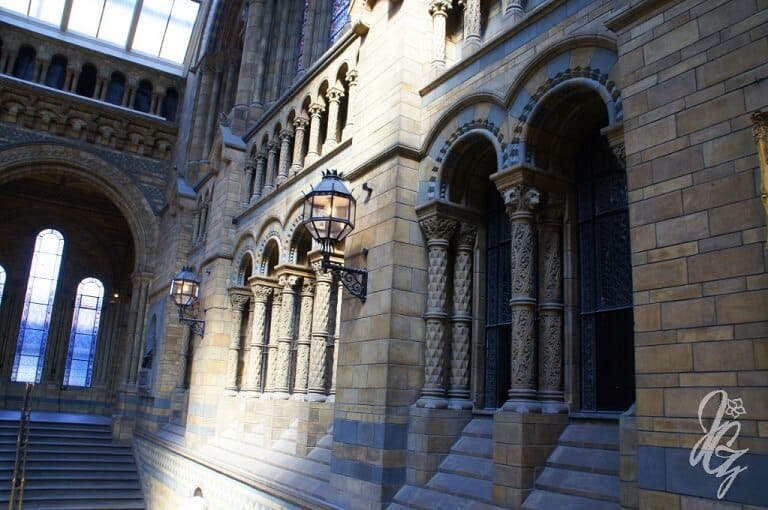
Wildlife Photography
54th Wildlife Photographer of the Year at the Natural History Museum
UPDATE added October 2019: The 55th Wildlife Photographer of the Year has been awarded. The new exhibition is on between 18th October 2019 and 31st May 2020. Adult tickets are available for £13.95 and can be bought directly at the Natural History Museum’s website.
Charlie had been planning this for quite some time. Fortunately, this photo exhibition was on for a bit longer and she had plenty of time to go and see it.
Find the museum
The whole experience though started with some complications. The app Citymapper guided Charlie safely to the museum but pointed to a place in the middle of that massive building – not to the entrance. She followed the outlined path on the map, walking along side the building and the fences. The only place she arrived to though was a security entrance that was not meant for the public. At least there was somebody she could ask for the official entrance. As if she hadn’t seen that coming, she had to walk all the way back along the fence and stumbling upon more groups of tourists that were getting out of coaches.
All of this wouldn’t have been an issue if her ticket to the exhibition hadn’t been for a specific time. That time was about 10 minutes ago at that point.
While she was walking fast – almost running – along the fence, she still couldn’t see an entrance that would bring her to the other side of the fence and asked a couple on the pathway. They couldn’t help as they were looking for the entrance too. It might be a good idea to add some indicators pointing towards the entrance to the banners and flags for current exhibitions that are shown all around the museum to make it a bit easier for confused tourists.
Find the exhibition within the museum
Finally, with the help of another security guard, Charlie finally found the entrance. Now, she only had to find the exhibition. That would have been a lot easier if it hadn’t been a Saturday and lots of people had had the idea of visiting the Natural History Museum that day. Charlie followed the instructions by another security guard, went to the left and up the escalator but all she could find were exploding volcanoes and screaming and running kids testing all the interactive features of that exhibition. That certainly wasn’t the place Charlie had been looking for.
She took the stairs down where she found a map and directions on the wall. That was progress, now she could follow the arrows to the space where the exhibition was on. Long journey, but worth the while.

Wildlife Photographer of the Year
The purpose of this yearly competition and resulting exhibition is to increase awareness about nature and its beauty. It is done on purpose that the photographs don’t only show the beauty of nature but also the threats to it. As this, it is completely in line with the overall mission of the Natural History Museum to challenge the way people think about nature.
Apart from amazing pictures of different parts of the world, what Charlie liked most about this exhibition is the fact, that there is detailed information about each image. This includes the situation in which the picture was taken and technical details about the camera, the lens and the set up. This also includes information about the time a photographer spent until he got the exhibited shot. This is something you can easily underestimate when you start with photography. And it is the same for street photography as it is for nature: as soon as you depend on a specific event to happen, a person or an animal to show up, you have got to wait. If you’re lucky, it is just 5 minutes, if not, you might have to return to the same spot repeatedly for years until you get the perfect shot. And if it happens, you better have the camera – including all settings – ready as the moment might pass quickly.
Diversity of the environment
The exhibition starts with photographs in the category: diversity. In this part you can admire pictures of different landscapes from glaciers to deserts (with their inhabitants) and how they changed over time, by natural causes or human interference.
Midnight Passage
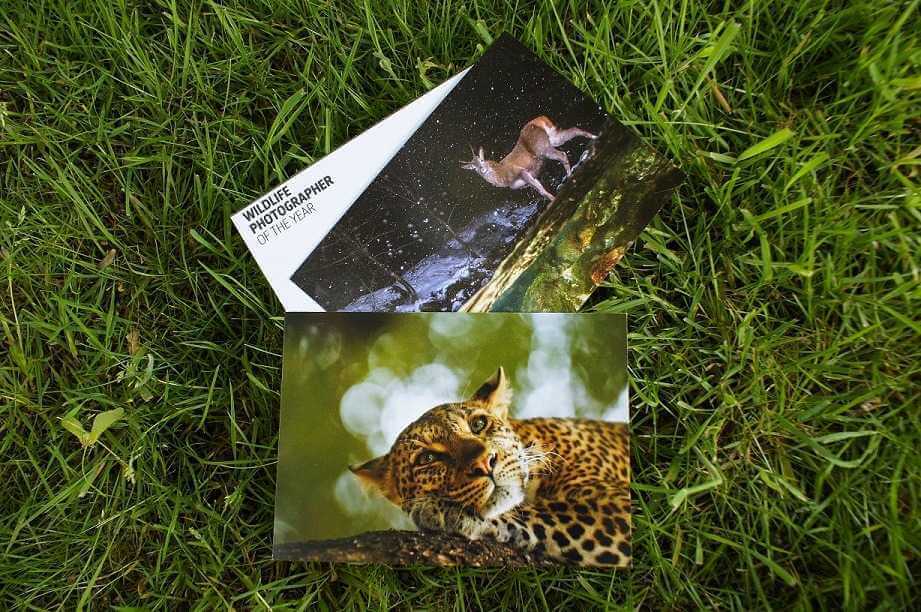
One image in this part of the exhibition was particularly interesting for Charlie called “The Midnight Passage”. It shows the deer of Valldal on a riverside in front of a mountain. The photographer Vegard Lødøen in the description how proud he is of this picture as it has taken him years to get the deer in a good pose and in the right composition in front of the lens. Apart from the picture itself, Charlie likes the idea of placing a camera half-way under and half-way above the surface of a river. It is an excellent idea to create an exciting composition that Charlie had never seen before.
Animals in the wild
Two other pictures that stuck to Charlie’s mind are that of a Tiger climbing up a tree whilst staring directly into the camera and that of a bear in the mountains. The photographers installed cameras that were controlled by motion sensors. Those cameras had to be there for more than a year until the animals set themselves in the right pose. Charlie would like to show these pictures here, but that would restrict your imagination and infringe the rights of the photographer. The exhibition is still on until 30th June 2019 at the Natural History Museum, in case you want to see it.
Animal behaviour
This part of the exhibition is followed by the category: behaviours. It shows photographs of mammals, invertebrates, birds and reptiles in movement, eating, during play or fight.
Flying hunt
Two pictures stuck out. One shows a flying fish who just came up to the water surface that is getting hunted by a boobie – that’s a bird. Charlie liked this picture taken by Sue Forbes as she remembered herself how difficult it is to catch the picture of a flying bird that shows the animal in focus and correct exposure combined with the right motion blur of the background. In this picture, you can see the bird in all its beauty as well as the flying fish that leaves a trace of movement on the water surface. Both animals also show a reflection in the water.
Don’t disturb
The other impressive image is that of a courting couple of snakes. At first, you wouldn’t be able to tell whether it is indeed two snakes or just one with the photographer (Lorenzo Shoubridge) making creative use of motion blur. He points out in the description how important it was to not distract the snakes while taking the picture as it would have changed their pose. Again, another great example of a photographer who had the settings right when the moment occurred.
Compositions
There was one picture in the category “Compositions” that Charlie remembers well called “The Upside-Down Flamingos” by Paul Mckenzie. He took a picture of the reflection of the flamingos’ legs in the mud in which he had to lay down for some time to take the picture. He then turned the picture in post-production which creates an impressive effect of flamingo legs. Charlie likes this picture as it shows the artistic aspect of photography and imagination used in post-production modifications.
Charlie’s Favourite Part: Documentary
The category of the exhibition Charlie liked the most was the documentary photography showing the human impact on animal life. Charlie is fascinated by this kind of photography as there is a story to each image that is better expressed visually than with words.
It is quite touching, and also slightly disturbing, to see a dead Tiger on an autopsy table that has bitten his own paw off after getting trapped by a hunter’s trap or a bear dressed up performing tricks in a circus arena.
The sad clown
One picture there was particularly heart-touching which did not only Charlie feel. Also surrounding guests expressed this feeling. The picture was taken in Indonesia by Joan de la Malla. It shows a Macaque – a little monkey – with the name Timbul wearing a giant clowns head and mask that sits heavily on his head. You can see a chain held by the monkey’s owner who stands in the background. Timbul has lifted his left hand towards the mask, his head is slightly bend forwards, giving away under the weight of the mask. He is trying to relieve the discomfort. While looking at the picture, the gesture of the monkey makes the viewer feel his pain.
Apart from animal cruelty, this category of the exhibition also shows how humans can help animals by showcasing the story of a flamingo who was badly hurt after an accident. One of these pictures was shown in the Sony World Photography Awards Exhibition at Somerset house Charlie had visited a few days before too.
Animals in their (un-)natural habitat
That flamingo lives now in a household with humans as he couldn’t live in his natural habitat anymore after the accident and medical care. Two other images made an impression in the next category which is called “habitats”. One of them shows a bear in the city by Marco Colombo with the title “Crossing Paths”. Charlie was fascinated by the composition and light of this image and the fact that it is another case of picture that could only be taken with a photographer taking acting immediately and having the settings of the camera right.
The other image that made Charlie rest in front for a while is that of a fox standing in an old classroom covered in gas masks in a vacated building close to Chernobyl. A nuclear disaster had occurred there in 1986. Even after more than 30 years, radiation levels are still high an no humans enter this area. But it seems that nature has found its way back which might be a sign of hope as the photographer Adrian Bliss points out in the image description.
Finding your vocation
In a separate part of the exhibition and not filed under any specific category within the nature topic, you find the work of young photographers. Some of them as young as 8 years old what the quality of the images doesn’t give away. They simply are professional and inspiring. While admiring one of these pictures, a couple was standing behind Charlie, the girl asking her boyfriend “What did you do when you were 8 years old?”. “Not taking photographs”, was his answer.
Charlie remembered a motivational quote she once read somewhere that goes something like this: What would your 8-year-old self say if he/she saw what you’re doing on a daily basis? Charlie sincerely hopes that these 8-year-old photographers will not give up their vocation once they get drawn into societal pressures trying to tell them to get a university degree and a so-called “real job”.
Charlie was taking pictures when she was a child, always taking the camera with her on school trips to capture these moments. She didn’t start doing photography seriously though until recently and she wishes now, she had known more about the technicalities and composition earlier. But it’s never to late to follow your passion and this is what Charlie is doing. While she’s practicing and trying to become a better photographer, she keeps on getting inspiration from such stunning photography exhibitions as the Wildlife Photographer of the Year at the Natural History Museum in London.