Street Art in Medellin
Murals and graffiti the Colombian way
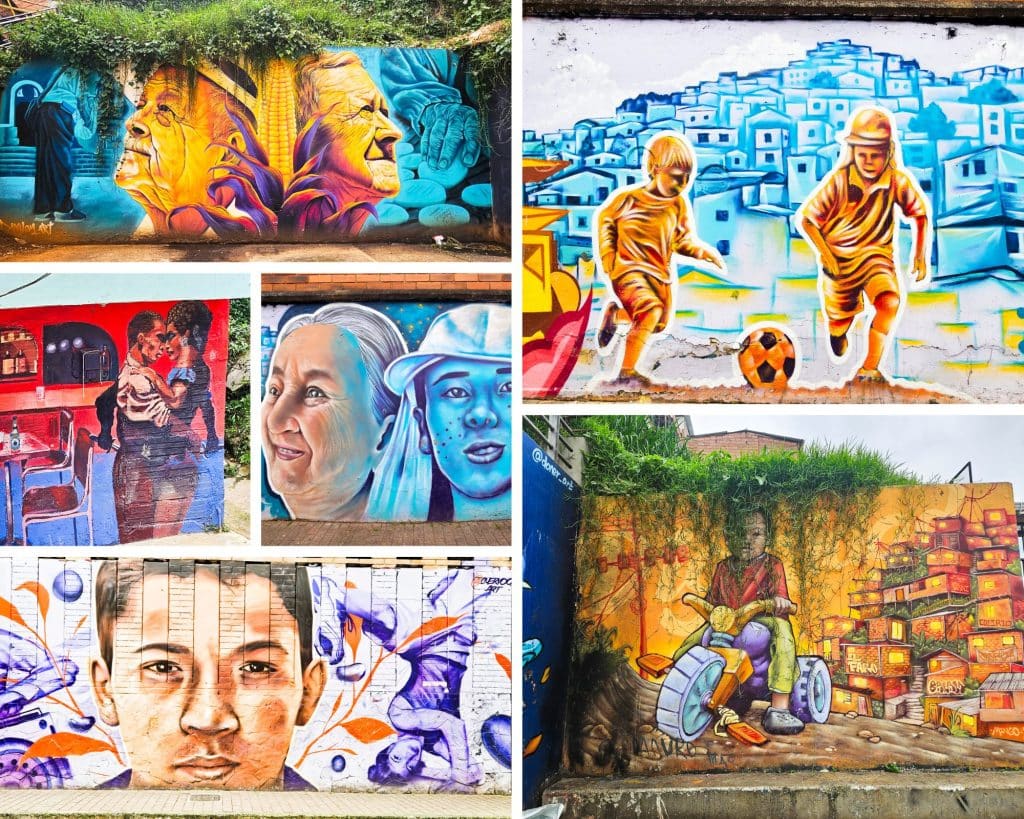
Street art was the main reason for Charlie to decide on Medellin as a destination. Of course, she had also heard good things about the digital nomad community there and the salsa scene, still the murals were the most convincing.
If you pay attention, you can see street art everywhere in the city. There are a few hot spots though and Charlie found it surprisingly difficult to find dedicated street art tours.
Comuna13
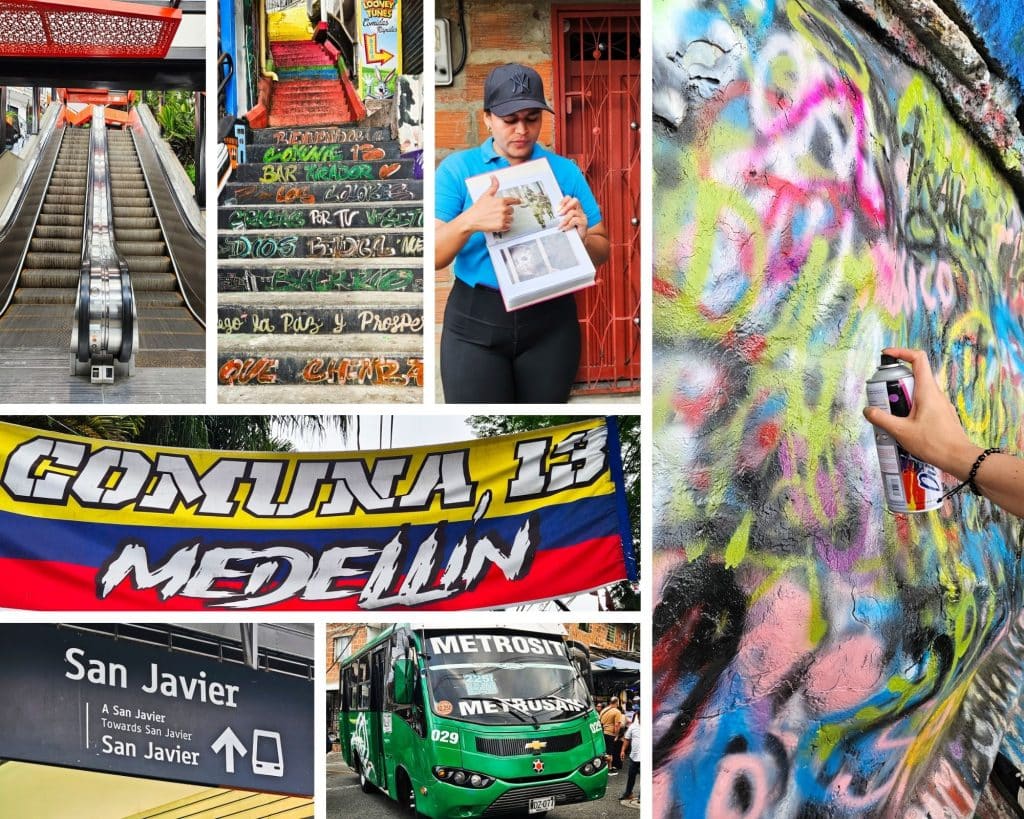
This part of Medellin is an integral part of the history of the city and a place that shows how art brings transformation. Charlie has previously seen attempts in cities like Lisbon to use street art to make an area attractive. Comuna13 is the best example of what could be possible.
The historic background of Comuna13
During the times of the violent conflict in Colombia, Comuna13 was one of the places that was best to be avoided. The situation was similar to what Charlie had already heard about the quarter La Sierra during the coffee tour. Several armed groups (guerillas and paramilitary and later narcos) controlled the area. Leaving the house was a dangerous undertaking. With no less than 21 military operations, the government removed the guerrilla from Comuna13 in 2002 which also caused a large number of innocent people to lose their lives. The bloodiest, and also the final one, was operation Orion in October 2002. The paramilitary signed a peace contract in November 2003, however, some of them kept on operating in gangs underground. It was the emerging hiphop scene and the beginning of the cultural transformation of Comuna13 that finally pushed them out.
The artists of Comuna13
There are a few murals in Comuna13 today that ensure that the history is not forgotten. One of those covers a wall that you can easily see if you’re coming up the escalators. It is by YesGraff and Chota13 – the two artists that started it all – and marks the date of operation Orion. It shows the cruelty of the military operation and the fear of the local population, the wounds and the healing.
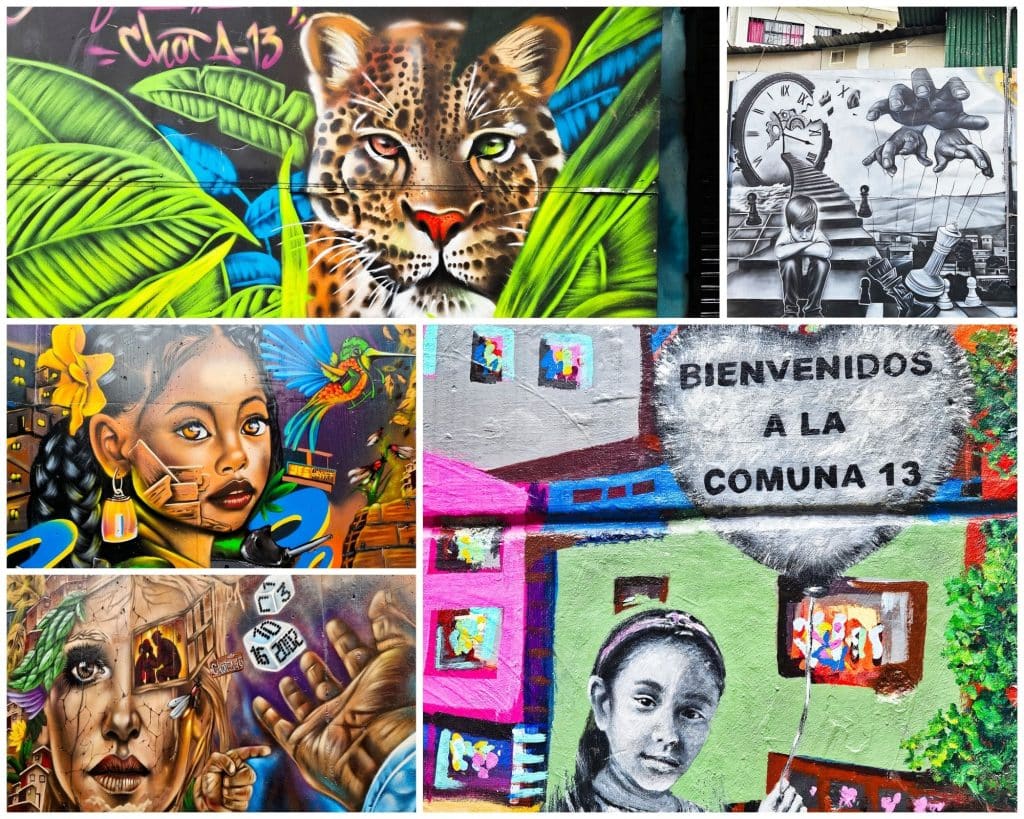
A bit further up – you have to take a staircase to the side of the main path – is another mural that Charlie was intrigued by. It shows to one side the violent history and makes reference to an impressive photo taken during operation Orion, mostly in black and white. To the other side, colourful culture emerges from the hand of a little girl.
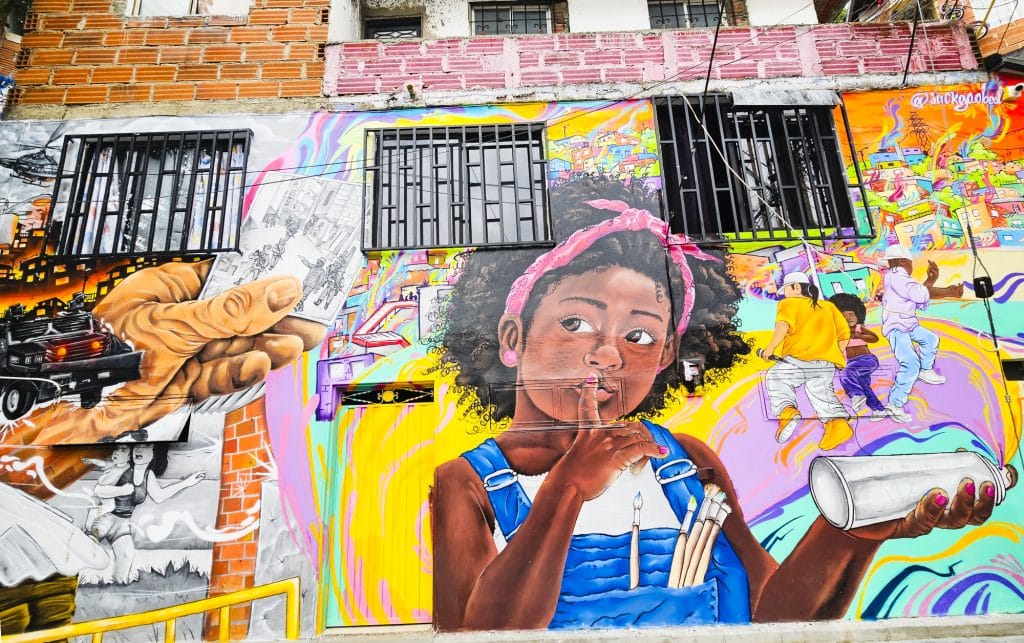
There are a lot more murals in Comuna13 and Charlie even bought a book that analyses the majority of them in detail. If you want to explore the art of Comuna13, you should go there in the morning between 8 and 10 before all the shops open. Later in the day, it gets to busy to fully enjoy the murals. The area has turned into a tourist attraction that has more of a theme park these days. It might not be what you expect. If you do a guided tour – preferably with a local guide that you meet at the bus stop – they will take you through some of the quieter paths to avoid the crowds. It might seem like a tourist trap at first, but on second thought (and the tour guide confirmed this), it contributes to a good economy in Comuna13 and creates employment.
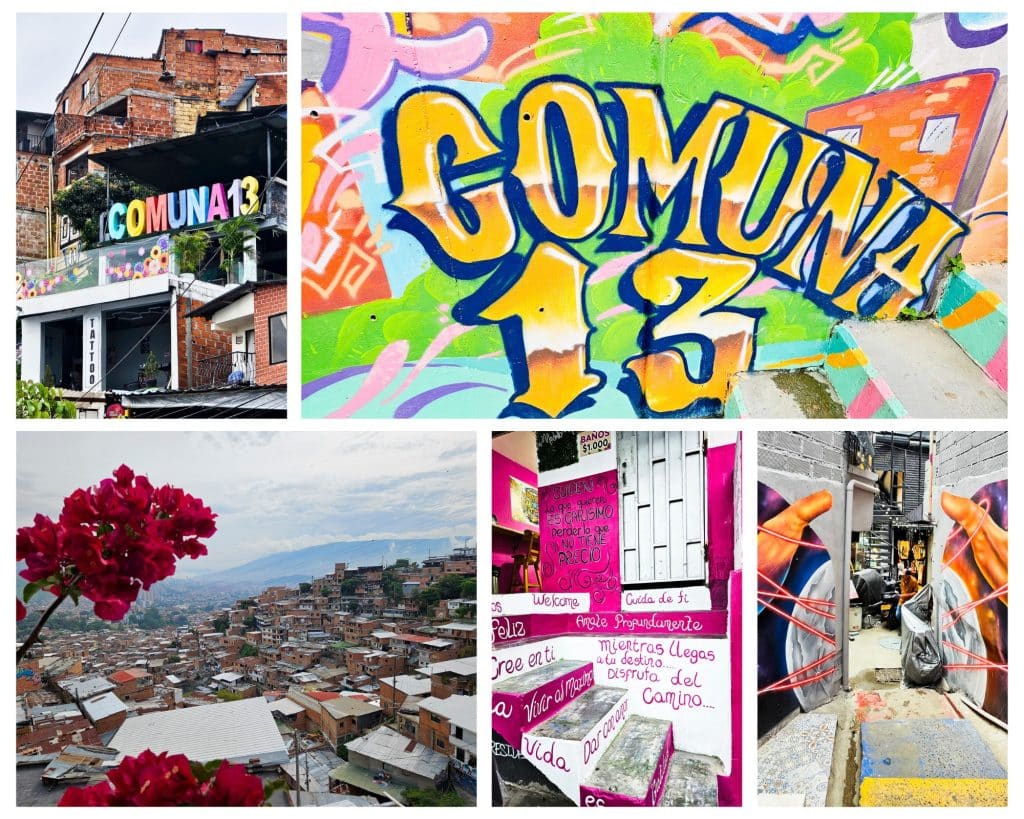
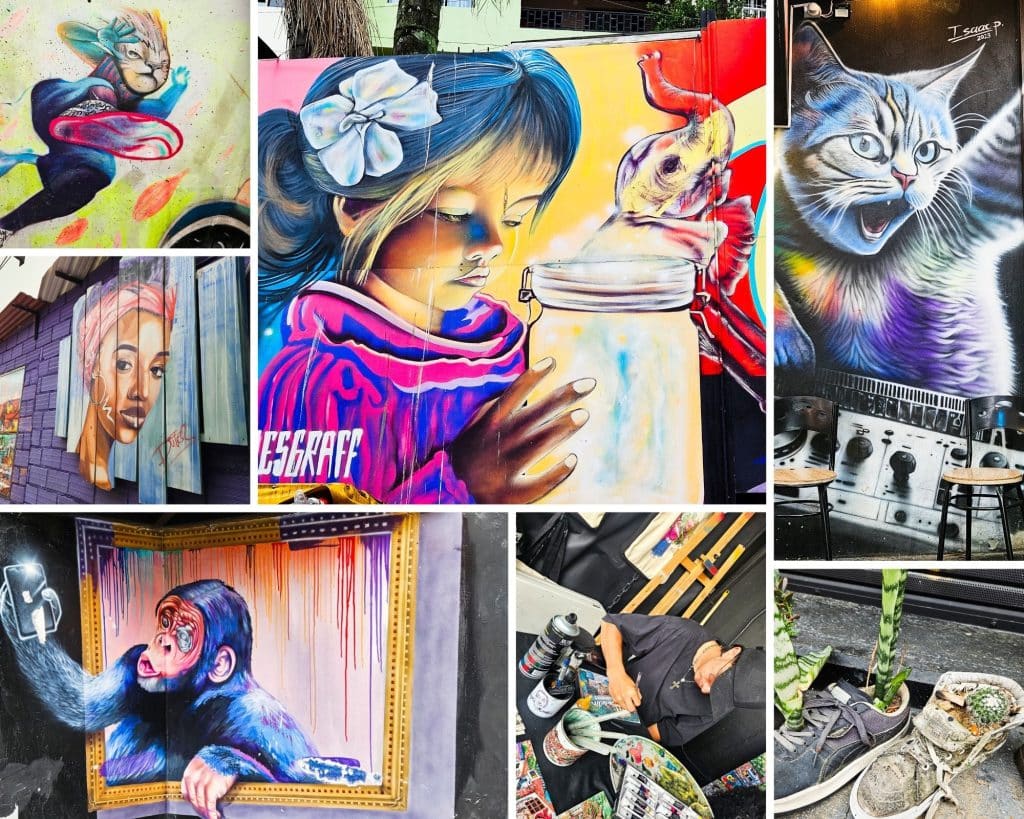
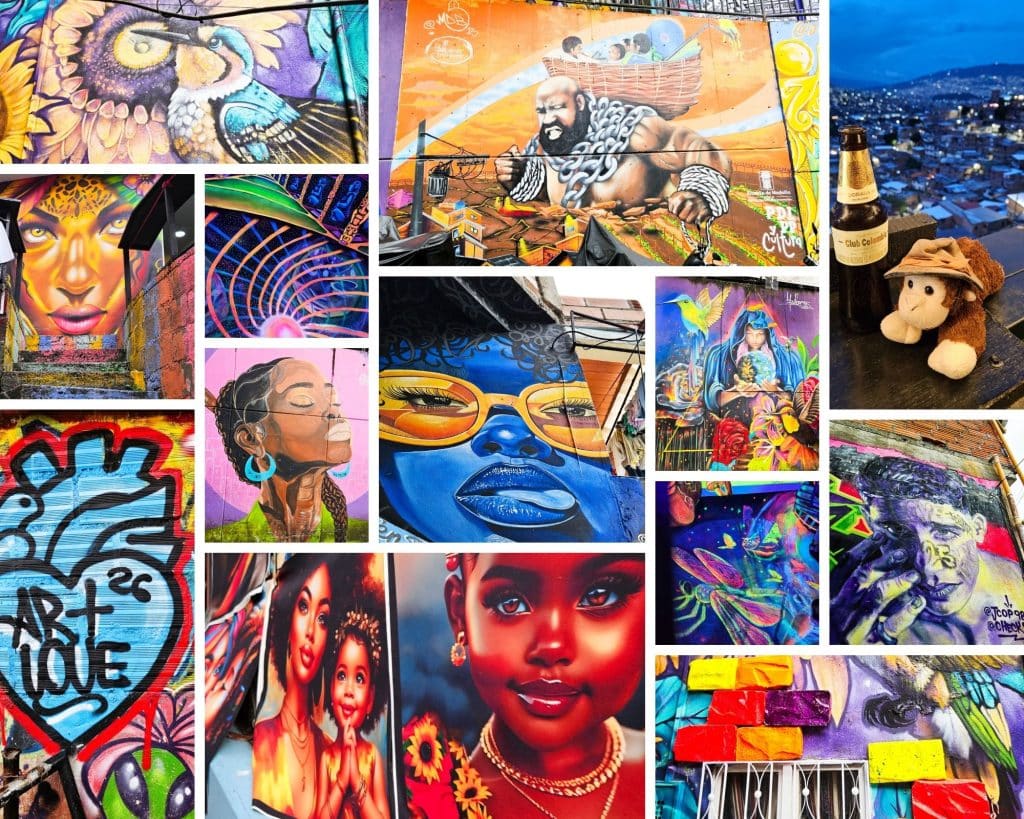
How to get to Comuna13
The easiest way to Comuna13 is by taking the metro to the station San Javier and from there bus 225i. As you leave the station, simply turn to the right and into the next road and you will see the sign for the bus. For the metro, you need a Civica card which you can buy at any of the ticket machines, the bus can be paid in cash to the driver. You get off at the final stop (where everybody gets off).
Street art in the centre of Medellin
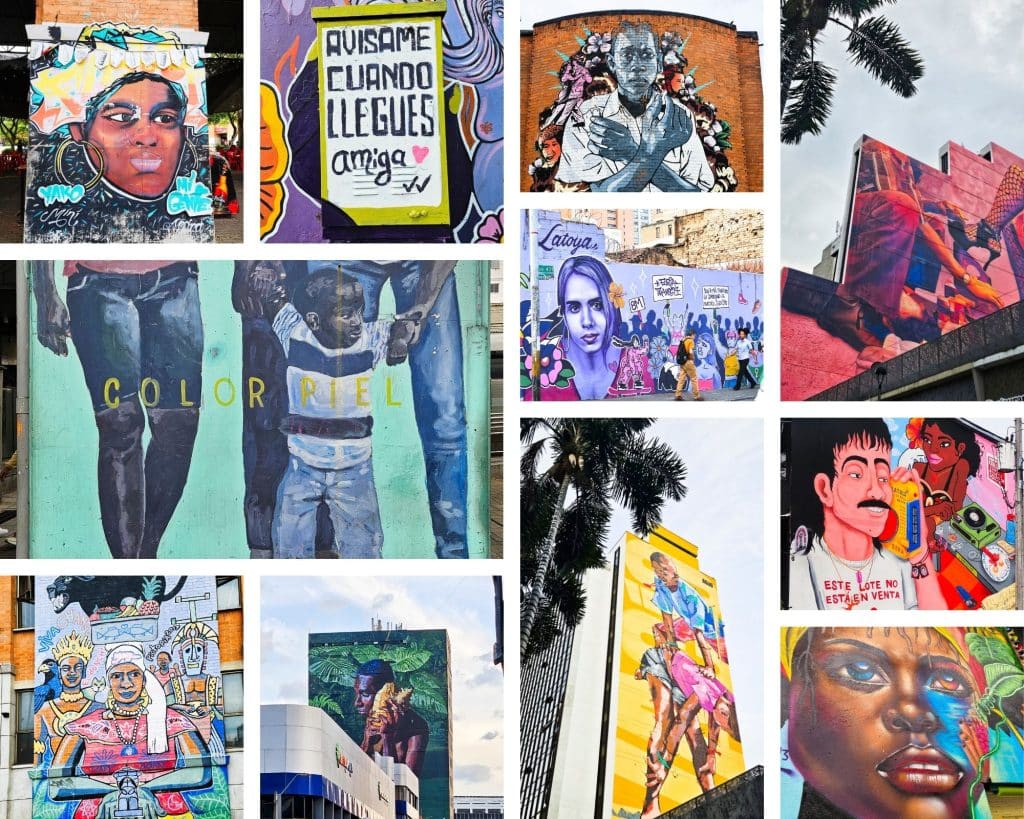
By pure coincidence, Charlie discovered one tour in the centre of Medellin that was about street art, alongside Afro-Colombian culture and food. The Negro Food Tour started at the station San Antonio and the first destination was the Parque San Antonio. Already on this short walk, they saw a few murals by Afro-Colombian artists. The most impressive for Charlie was a mural that was created during the street art festival Pictopia by the artist El Donchi. Charlie liked this one in particular because it makes a strong statement about the feeling of identity in Colombia that in the mural is based on a mix of indigenous and African origins. It ignores the history of the Spanish colonization and that in itself is a statement.
They passed along the Parque San Antonio and briefly discussed the history of the violence in Colombia as they stood in front of two statues by Botero. One of them is a rebuilt of the original that had been destroyed during an attack in 1995. The artist that led the tour, Zatélithe, remembers those days of his childhood. Instead of becoming sentimental in this moment, he opened his bag and revealed a green glass bottle that appeared to be filled with herbs. A moment later, Charlie was tasting a traditional Afro-Colombian drink, Biche. It is an herbal liquor.
The next stops were food focused. They tried Peach Palm in honey from a street vendor and sat down as a restaurant to try an Afro-Colombian dish.
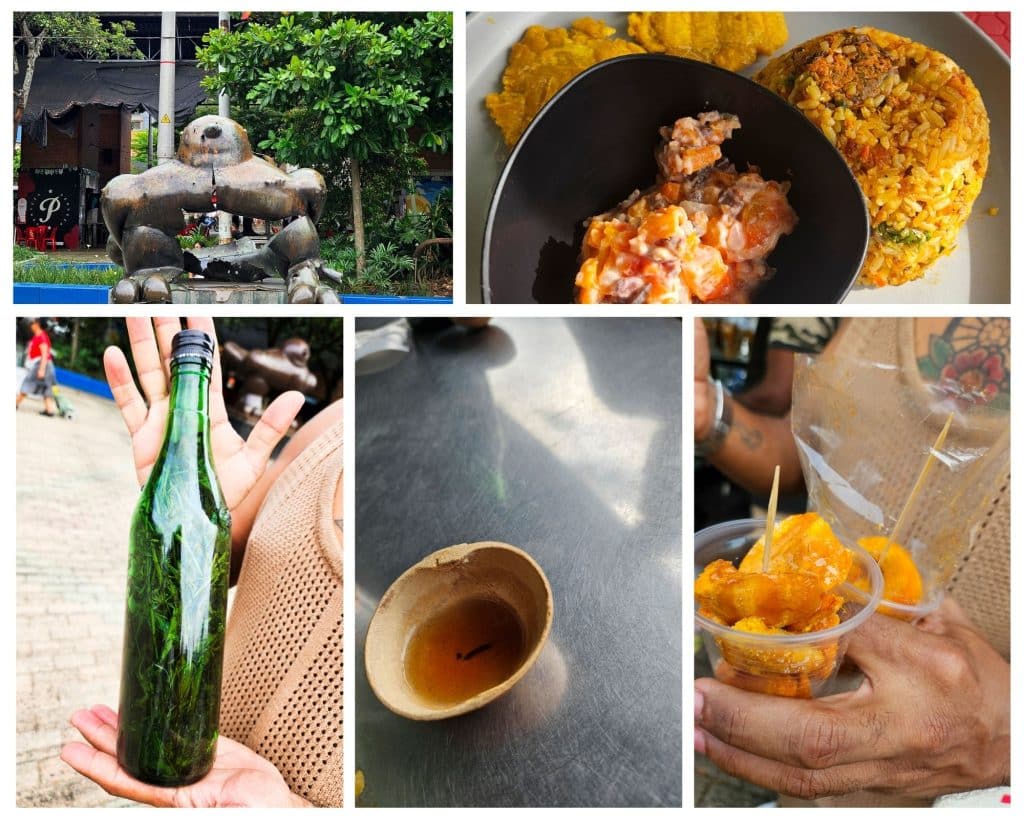
They continued strolling through the centre of Medellin and talked about street art and music. They stopped briefly at the Claustro Comfama, a former monastery that has been turned into a cultural centre and at Ubuntu Bar to try another type of Biche. Since Charlie is more interested in street art than food culture, they changed the route for the rest of the tour.
They passed by a commercial mural and also saw a few that change regularly. Painting new murals over older ones is common practice in other cities, but not so much in Medellin. There it is something unique and only occurs on certain walls. (Murals are also widely respected and rarely get tagged.) Charlie thinks that it is a shame that the mural that had been created by four female artists for International Women’s Day will soon be gone.
Book the food and street art tour
They passed along Parque Periodista to see a piece of art that mixes many different elements from several parts of the world (e.g. ancient Rome, Hindu culture and Egyptian symbols). Unfortunately, it is not recommended to go to this park on your own as it can be unsafe, even during the day.
From there, they saw a piece that had been created by Zatélithe himself. It tells the story of Afro-music in the United States.
They passed through Calle Junin and Bastille to admire some giant murals and ended the tour near San Antonio in front of another tall mural. Most of those have been created as part of an annual street art festival, La Bienal de Grafiti y Arte Urbano Latidos.
Constelaciones
Walking and driving around Medellin, Charlie asked herself one question: Why don’t they decorate those houses that almost look naked with murals? Then, somebody mentioned Comuna 3 and the project Constelaciones. The macromural at the water reservoir Uva de la Armonia in comuna 3 (Manrique) is a symbol of resilience and transformation and has been declared as a tourist attraction one year after it had been created, in 2023. Multiple houses have been decorated in beautiful colours and form together a giant mural.
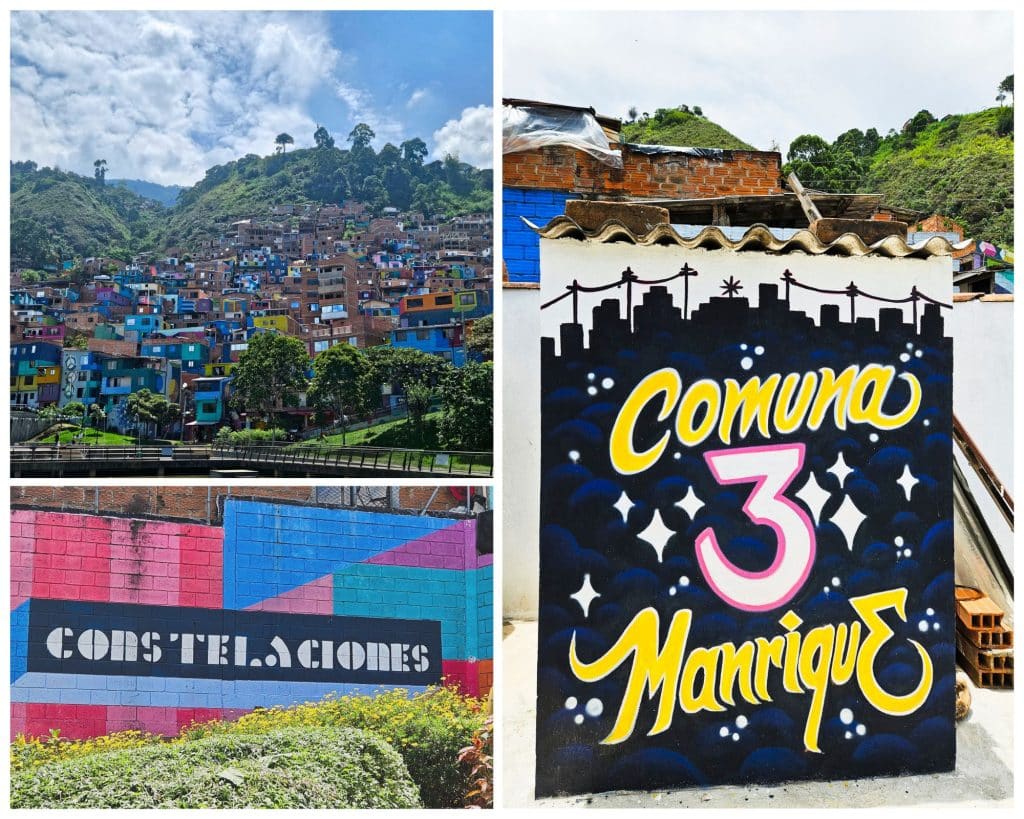
Constelaciones is the Spanish word for ‘constellation’ and in this particular one, the stars are the local people that live in comuna 3. As such, many of the murals show faces of locals – from the youngest to the oldest members of the community. You can see a mural of kids playing with marbles in the street, an Afro-Colombian woman and references to the live she lived near the coast before she came to Medellin and a mural that describes the hardship of the people that made the long journey to the city, carrying all their belongings and memories, to find a better life.
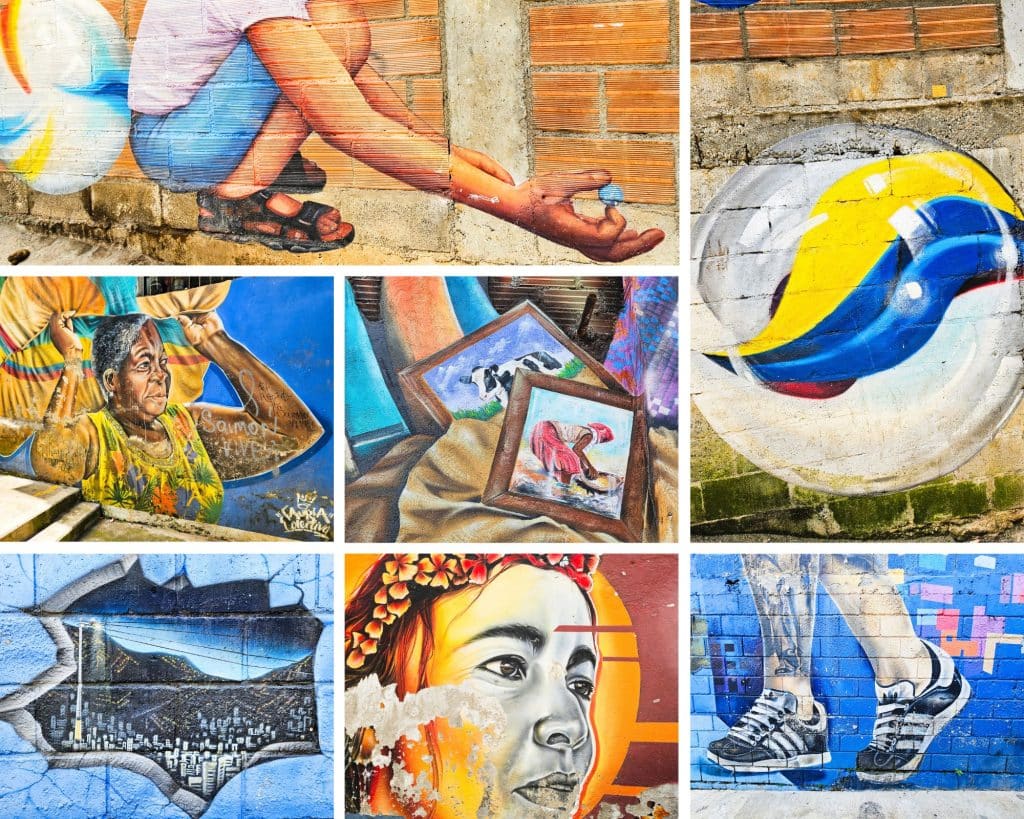
Meeting the local stars
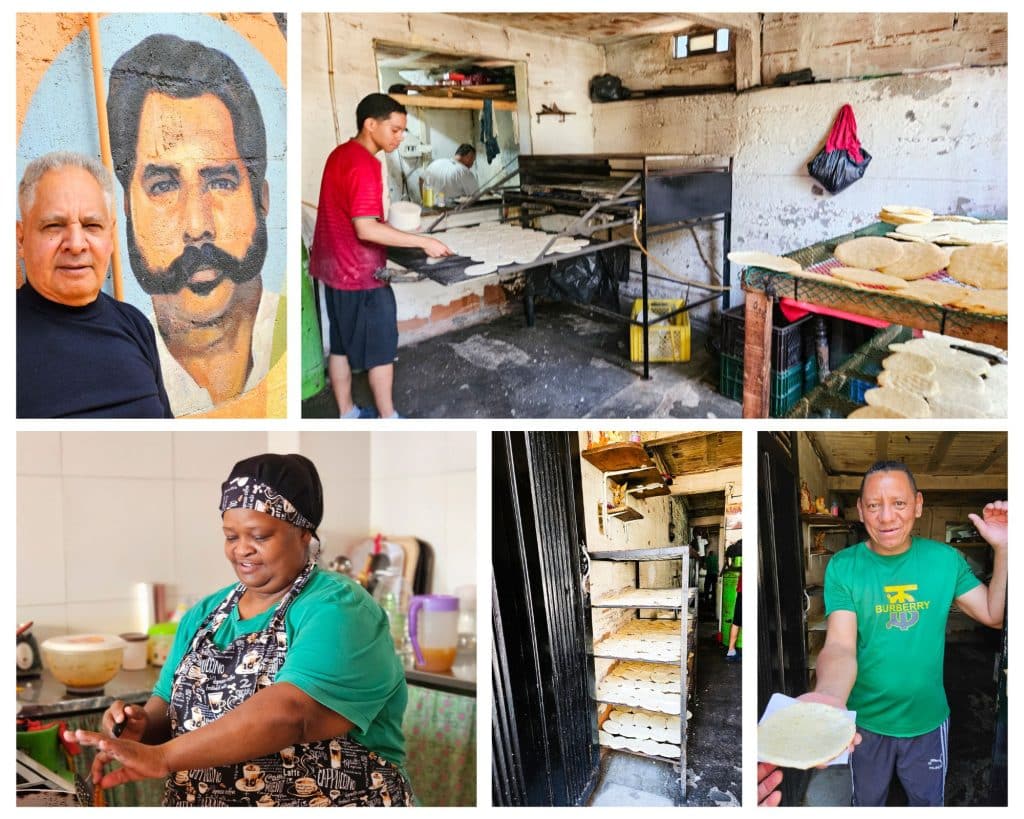
It is not only the murals that show the people that live in those houses, but Charlie also got to meet some of them as part of the tour. The first she met was Don Enrique who stepped out of his traditional Arepa kitchen to serve a snack and chat about his life. Charlie also tried Carimañola and Patacones at the small restaurant by Dona Telma. And she met the man that everybody calls “El Vaquero” (the cowboy) because he arrived in Medellin with his entire herd of cows back in the day. Charlie got to take his picture next to the mural of his younger self and the cows.
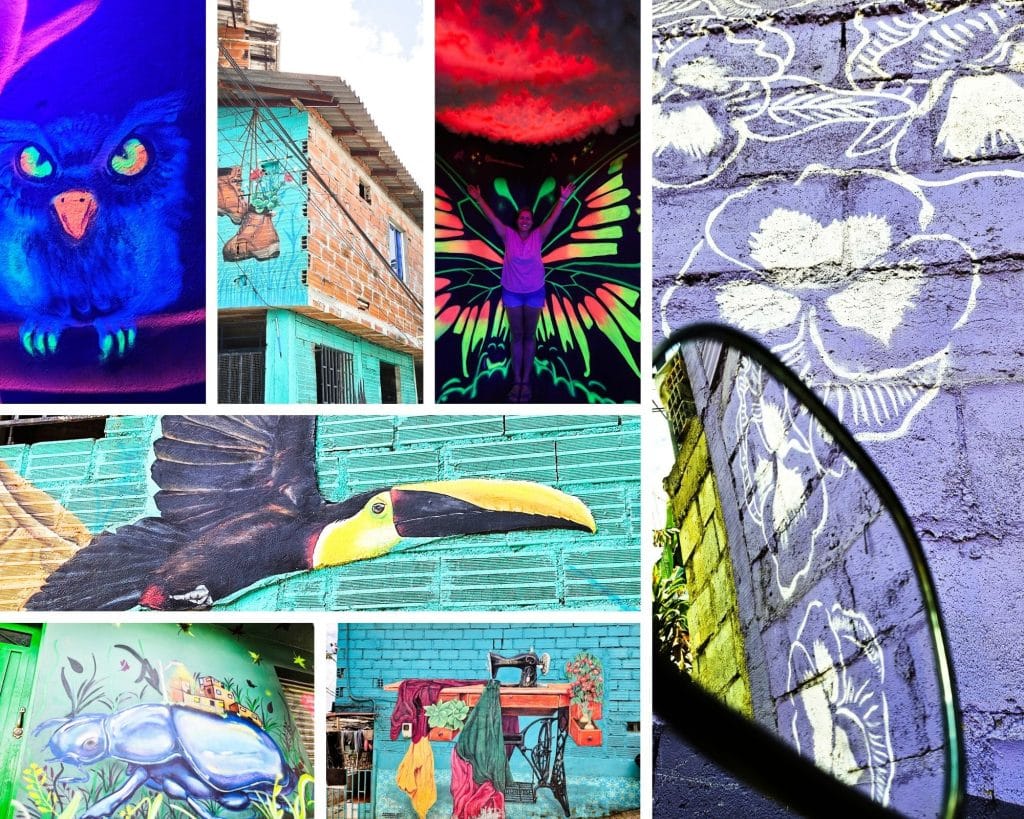
Recurring images in comuna 3 are the blue bug that represents the area and its rebirth, as well as scenes and objects of daily life or memories of the life that the locals left behind when they came from the countryside to Medellin.
The first house that had been decorated with a mural is today an attraction, a viewpoint and a community hub. The so-called Mirador de la Esquina Verde (viewpoint at the green corner) got its name from the pre-dominant colour of the mural, green. From the terrace, Charlie enjoyed a great view of Medellin and inside the building, there was a surprise waiting. You step into a mural that reconstructs a forest, and it shines in neon colours. This building though is not always open. The tour guide had a key to let Charlie in.
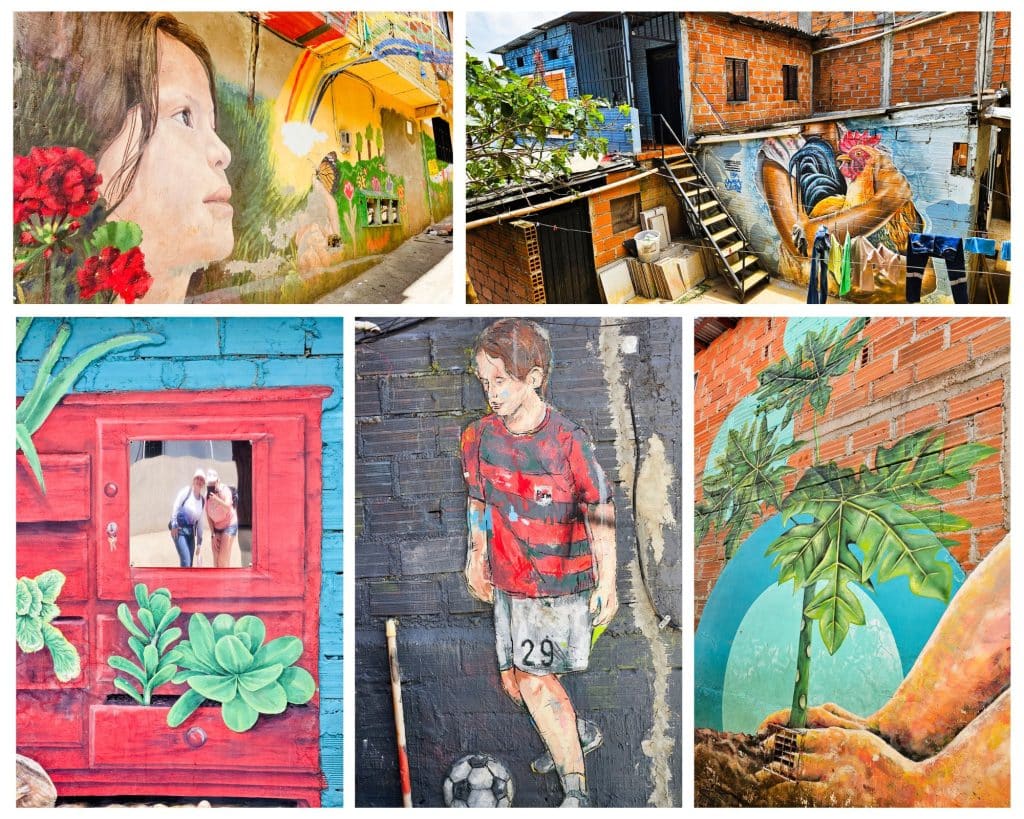
Charlie loved this tour because she got to chat to the locals and get insights into their daily life that you can’t easily get otherwise. Her main motivation was the street art, but it was the people who opened their doors and hearts that made it so special.
The guided tour is offered in Spanish, English and German and there is a short and a longer version. You book directly with the guide who is a local of comuna 3.
Book the tour of Constelaciones
Street Art in Santo Domingo
On the way up to the Parque Arvi, Charlie spotted quite a few murals through the windows of the cable car. A lot of them are very close to the station Santo Domingo and she had it confirmed that it is a safe area to walk around as a tourist. It still felt a bit strange because the area is not touristy and Charlie certainly stood out from the local crowd. There are some beautiful murals though that form what they call “museo urbano de memoria” (“urban museum of remembrance”).