Portland
A visit in the rose city
There are roses everywhere, no kidding. Roses are apparently the biggest economic factor in Portland – so much that the rose has become the symbol of Portland, short PDX. And you will see the symbol of the rose everywhere in the city.
A lot of history in a short span of time
The first tour that Charlie did in Portland on the evening of her arrival was a Ghost Tour. These are usually an entertaining way to learn a bit about the history of the place. In this case, in a city that isn’t even 200 years old yet, the focus of almost all the ghosts was the dark history of human trade beneath the surface, in the so-called Shanghai Tunnels. Why Shanghai? Because it was the destination of a lot of the ships that the shanghaied people (kidnapped in modern terms) were brought to in order to find cheap labour.
Another aspect of the tour were the many haunted parking lots in Portland that show supernatural activity because they used to be indigenous burial grounds – another dark aspect of the history.
The Lewis and Clark mural
Charlie did another walking tour to learn a bit more about the city the next day and the moment that stuck with her the most was a mural next to the building of the Historic Society of Portland. There are ways in which Portland is quite similar to Seattle and that mural made her realize that. For example, the city has an art fund and the budget for construction projects includes a percentage that goes into that fund. The mural in question though was less about art and more about the message it conveys about the connection of the city to its own history. Charlie had noticed that the year before in Seattle where there seems to be growing knowledge about the dark aspects on how the Northwest was “discovered” by the pioneers and how the indigenous population was treated.
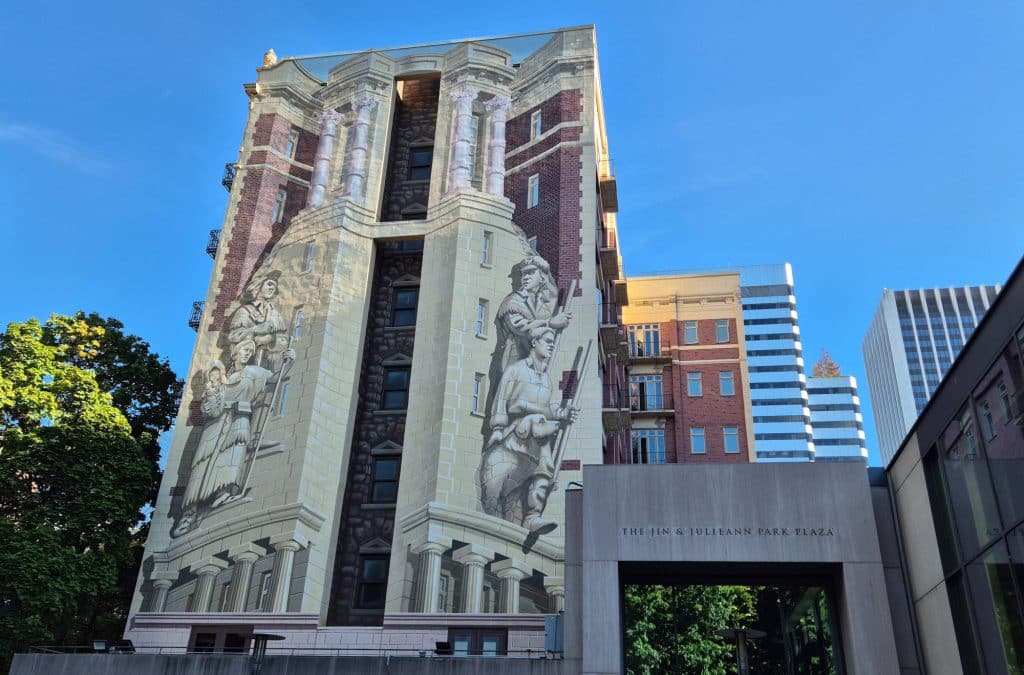
That mural was picking up on this in an interesting way. At first, it is merely a mural that shows the great explorers Lewis and Clark. At the second glance, one might wonder who the other two people in the mural are. Surprising for Charlie was the fact that the other attendee on the tour, a US-American who had been taught US history in school, did not know about the indigenous woman Sacagawea and the African slave York. For Charlie, this was only a confirmation that the Westcoast has already gone a step further in reconciling with their own history than other parts of the States.
By the way, there is a hiking trail called the Lewis-and-Clark-trail which finishes in the ocean town of Seaside that Charlie visited next on her trip. Whether the name of the trail will get revised at some point or not, the landscapes around there are well-worth the journey.
Other interesting bits about downtown Portland
From said mural, it is only a stone’s throw to the theatre district of Portland. It seems like a mini version of Broadway with flashing lights and big signs. If you’re in Portland for a little longer, maybe check out a show.
It also isn’t far from the heart of the city, Pioneer Square or what the locals call it “Portland’s living room”. The bricks that the square is made of contain names of people that have donated to the construction cost. In the summer, you will find some chairs on the square that invite to take a seat in the sun. There are also regular events happening at the square.
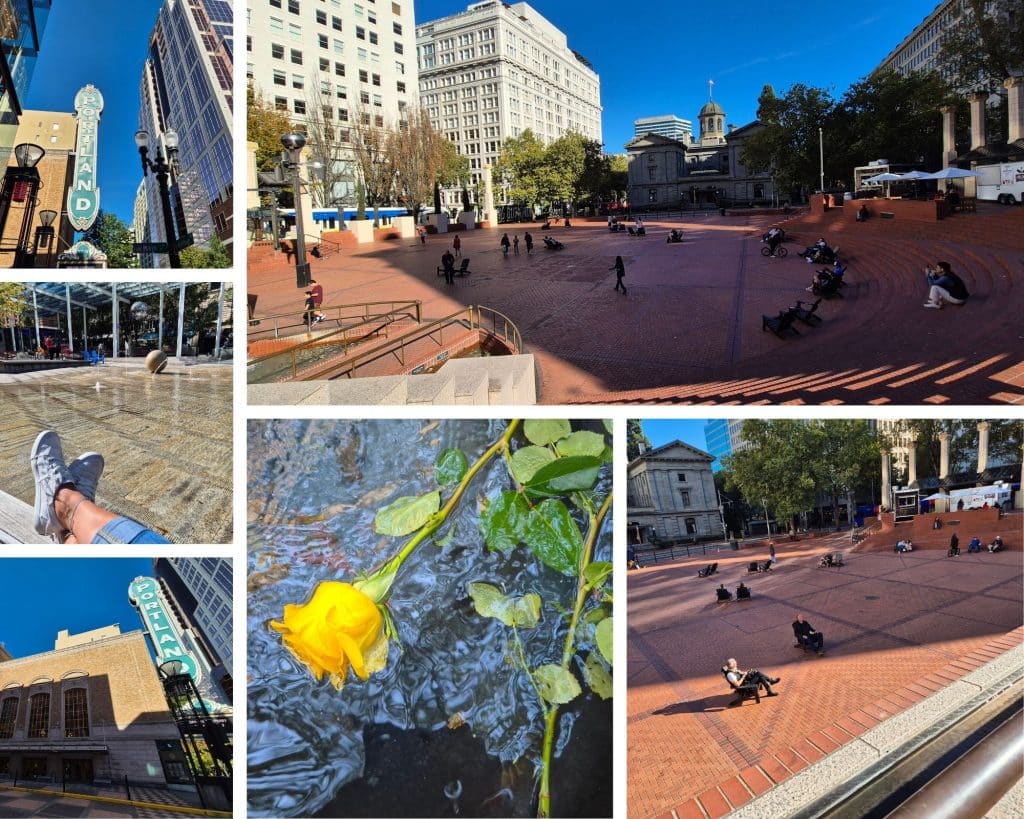
One more thing is obvious in Portland: The number of food carts. It was never easier for Charlie to get street food. The food carts are an integral part of Portland’s culture and often come in a group that forms an entire food market. The most popular one is the Midtown Beer Garden which is also not far from Pioneer Square. When it comes to street food, Charlie usually avoids that because of the risk of food poisoning. The tour guide however convinced her that it is not an issue in Portland. Charlie enjoyed the Hawaiian food she got at the market.
Portland is unique in the US in another way too: You pay the price that you see on the price tag. There is no sales tax! You better get your shopping done there!
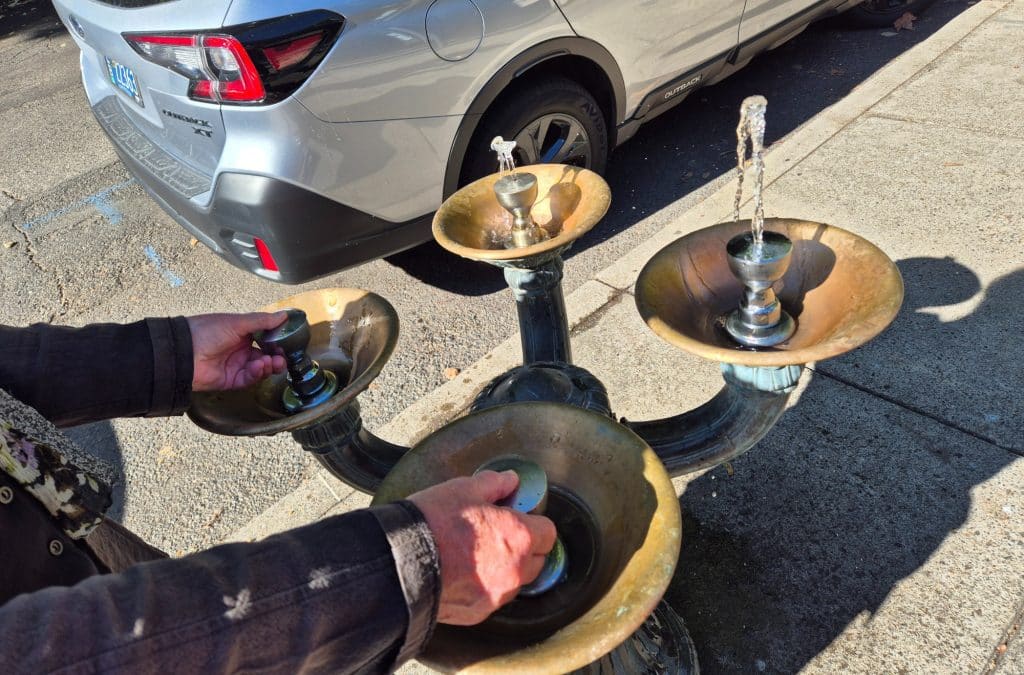
The last thing Charlie wants to mention as a curiosity about Portland are the Benson bubblers – freshwater fountains that you can see all over the city. They have four taps that are continuously running. To facilitate drinking from them, just hold your finger over one of the four to increase the pressure on the other three taps. That is also a good way to tease your siblings on a hot summer day.
The fountains are made of copper which is antibacterial by nature and the water is safe to drink. It comes from a water reservoir at Mount Hood – the pride of Portland.
Views towards Mount Hood
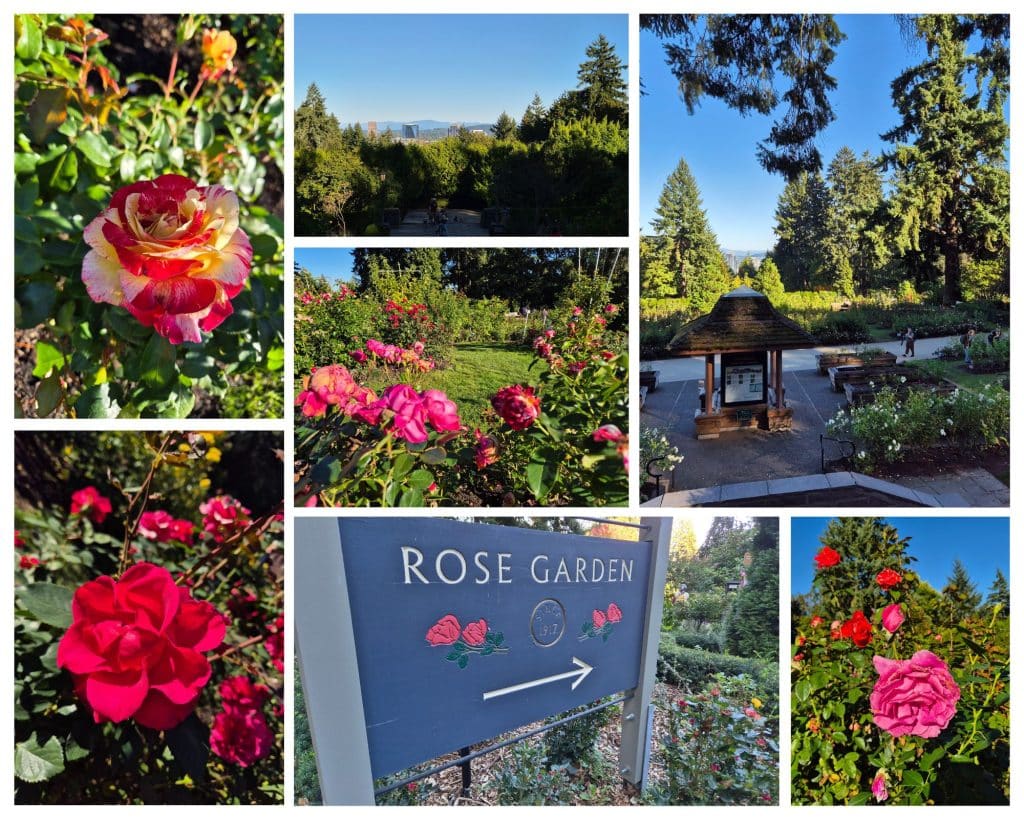
On a clear day, this mountain is visible from Portland and the surroundings. On the first day in Portland, Charlie was unlucky as there was a lot of overcast. The second day was different. Charlie had asked the tour guide where the best spot was to see Mount Hood and that’s how she learned about Washington Park and the rose garden. From Pioneer Square, it was a 30-minute walk to get up there. Charlie took the bus and walked back later – that was a little faster. She had a stroll through the beautiful rose garden which was still in full bloom at the beginning of October, and she found the spot that provided a great view over the city and Mount Hood in the background.
Riding the waterfall shuttle
In the research stage of her trip, Charlie also spotted a street art tour for Portland, however there was one other tour which seemed to be a lot more popular: a trip to the waterfalls around the Columbia River Gorge. The street art would have to wait for another visit to Portland.
The tour on the so-called Waterfall Shuttle started in Portland with a pick-up at the hotel. From there, it was a 45-minute-drive to the first waterfall, the so-called Horsetail Fall. It gets its name from its shape, a horse tail.
Just a short drive further down the historic route 30 was the second and the biggest waterfall for that day: Multnomah Falls. That is a tiered waterfall where the water flows into a basin before it proceeds into another fall. The entire waterfall is visible from the bottom and from a bridge at about the middle of its height. At Multnomah, there are a coffee shop, a souvenir shop and restrooms.
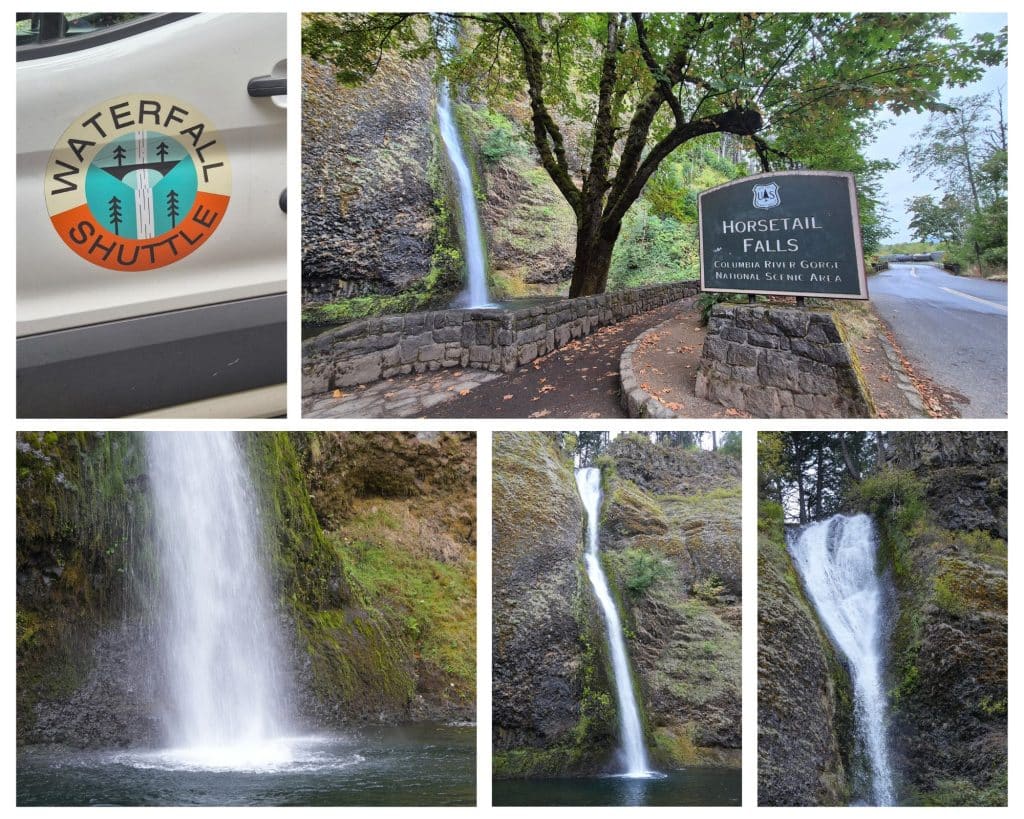
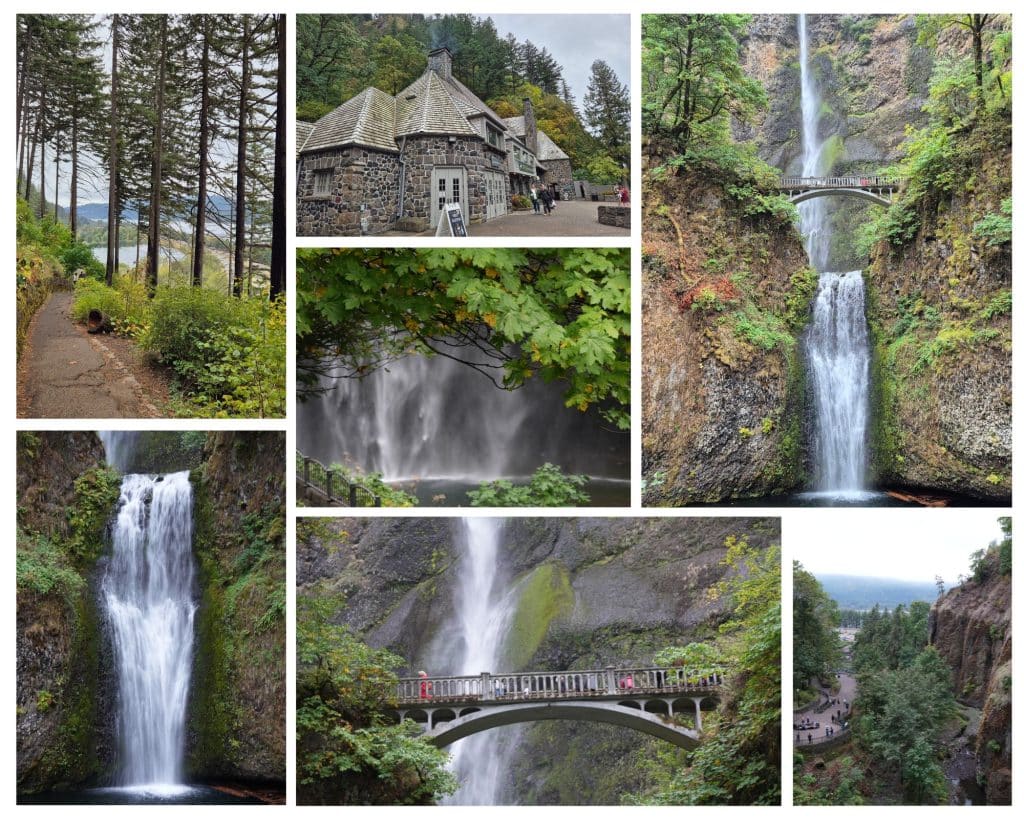
The third stop on the waterfall shuttle was at Wahkeena Falls which in the language of the natives means “most beautiful”. It was a short walk to the waterfall from the parking lot and Charlie could stand right in front of it. This is another type of waterfall, a plunge waterfall, where the water plunges over a cliff. At the bottom, the Wahkeena Falls were more like segmented waterfalls as they split into multiple streams.
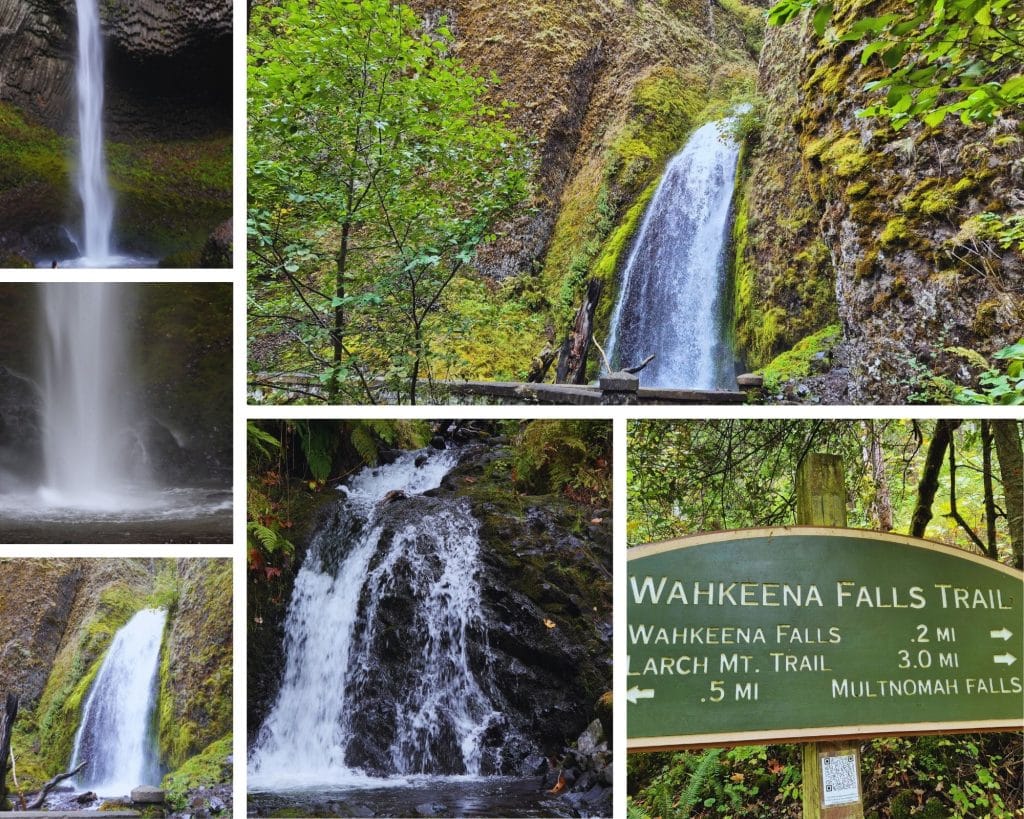
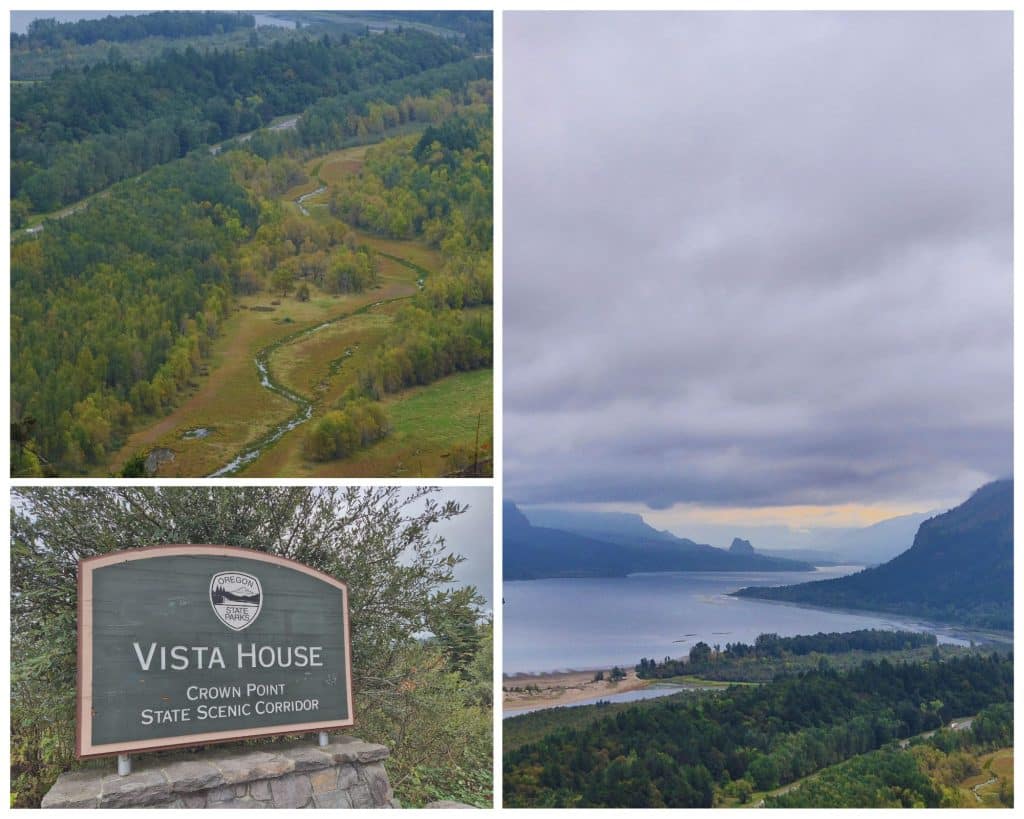
There were two more waterfalls the shuttle took the group to: Shepperd’s Dell and Latourelle. The final stop was at a place called Vista House from where Charlie captured a view over the landscape around the Columbia River Gorge.