Street Art in Philadelphia
Art and history in South Philly
Charlie had wanted to visit Philadelphia for a while because this city on the East Coast of the USA is said to be the birth place of street art. To make this short: She was not disappointed!
South Philly
One thing seems to be recurring in almost any city Charlie has visited for street art. It often is one particular part of the city where this type of artistic expression flourishes, be it Shoreditch in London, Bushwick in New York or the RAW-area in Berlin. That is no different in Philadelphia as most of the street art is found in the southern part of the city, an area that used to be outside of the limits of the original settlement.
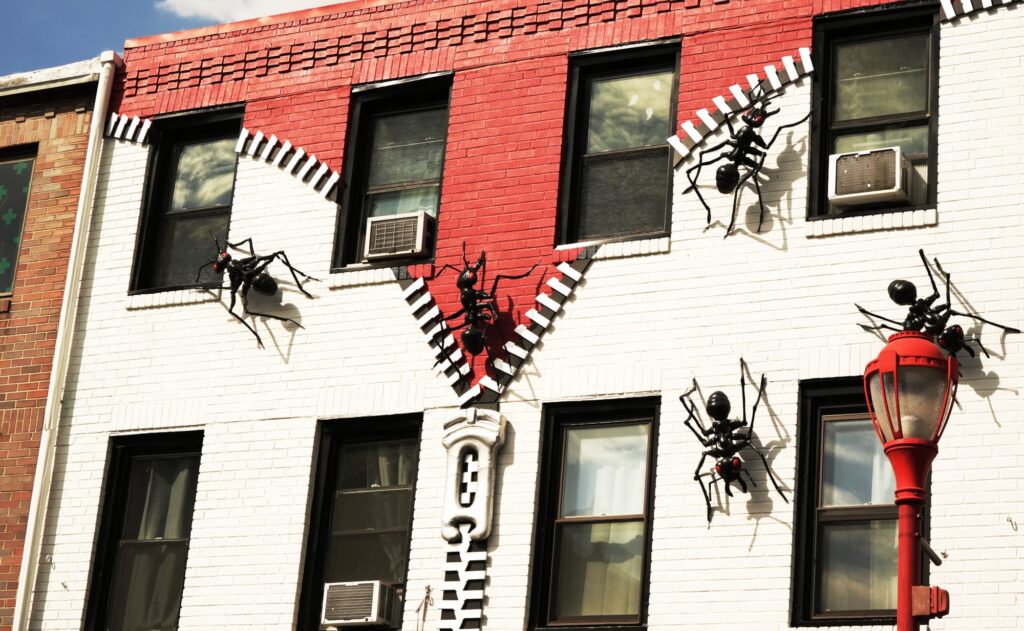
In the early days, Philadelphia was mostly inhabited by Quakers who did not believe in art and any form of it was banned from the city. If you walk into South Philly today you can see immediately where all the artists and those interested in night life went to. The architecture is different, there are plenty of small bars and cafes, art shops, theatres and of course all kinds of street art from graffiti to murals, paste ups and mostly mosaics. Art is no longer prohibited in the Old City of Philadelphia, but the most vibrant art scene and community is still found until today in South Philly.
The artists that made a difference
Isaiah Zagar
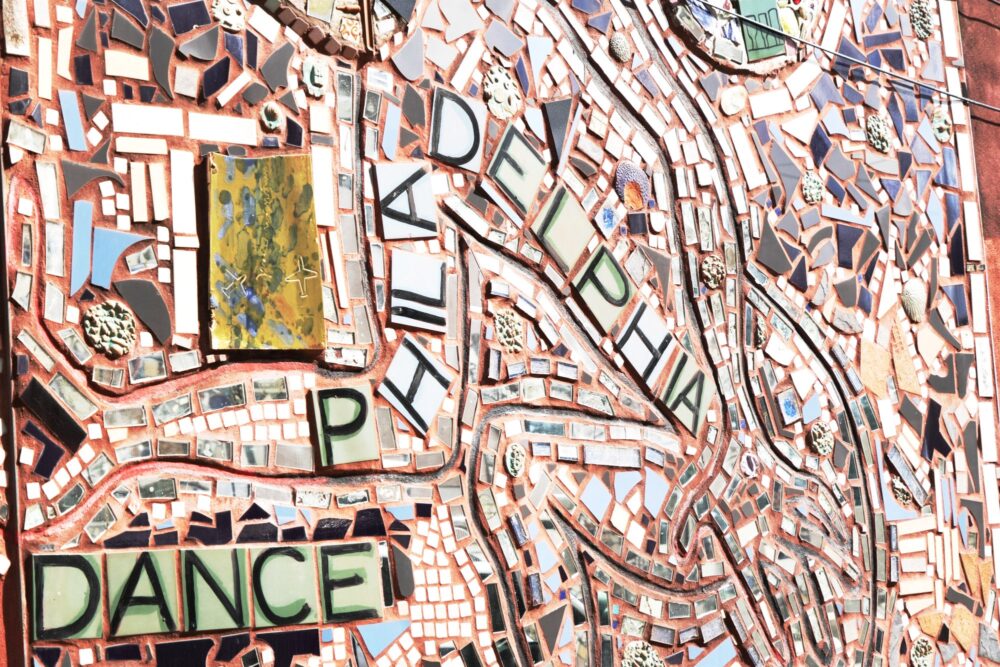
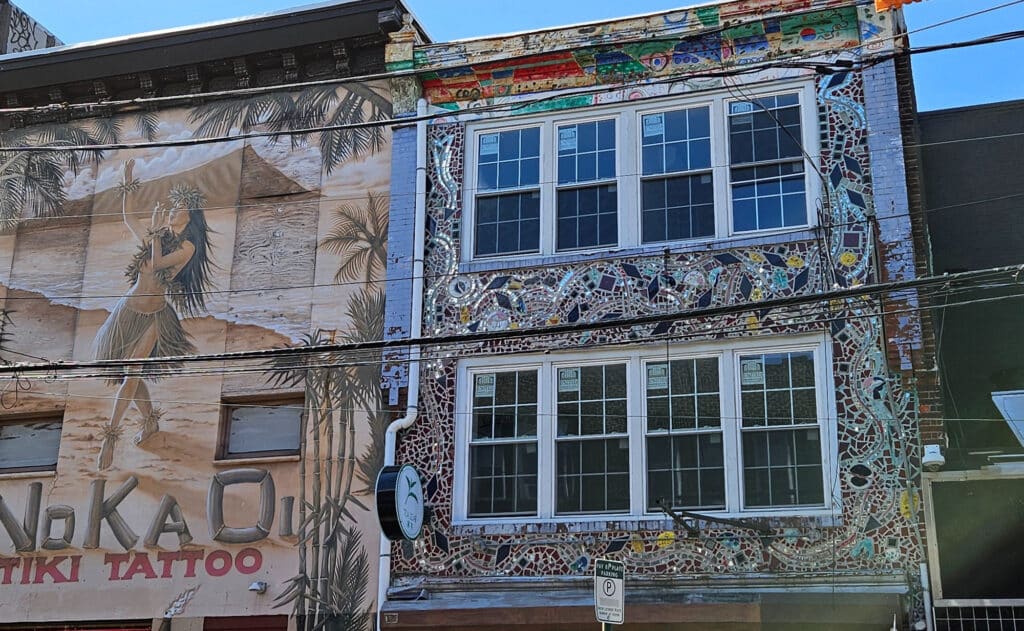
One type of art is immediately visible if you walk into the district of South Philly: mosaic made of shards of mirrors, ceramic and glass bottles. All those works are by one artist whose family is until today at the forefront of the arts scene: Isaiah Zagar. He uses discarded materials and rearranges them in new ways to tell a story. He usually adds words to his pieces to emphasize the story or to provide information about the person whose story he’s telling.
The original idea of his art came to be when he and his wife Julia noticed decay and abandonment in the area. Due to a planned highway construction project, more and more people had left this part of Philadelphia in the late 70s. The art Isaiah created and the gallery that Julia opened were meant to turn an almost abandoned place into something nice and beautiful and worth to visit and live in.
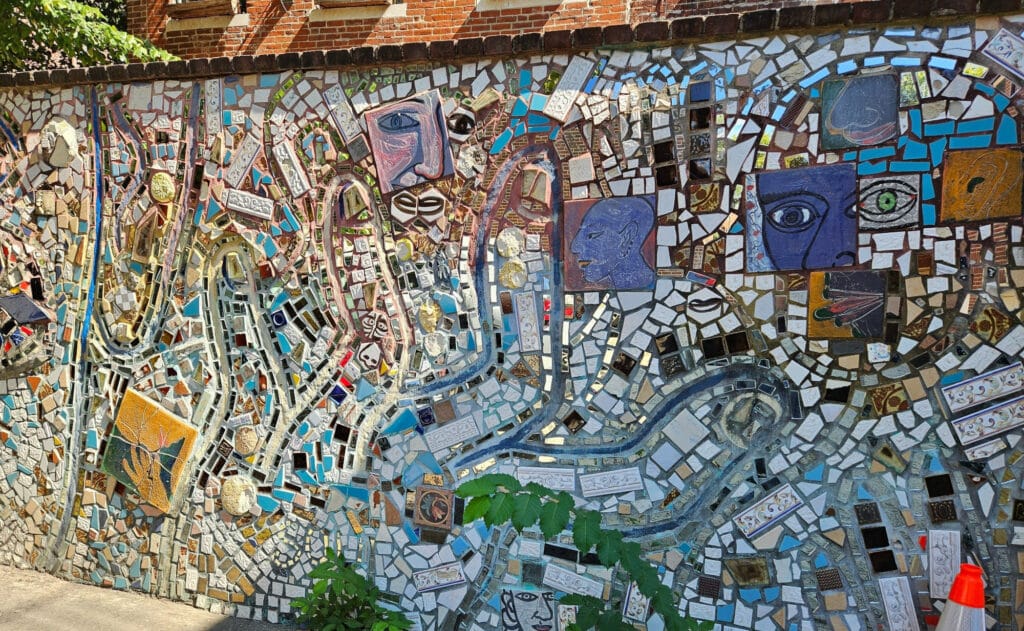
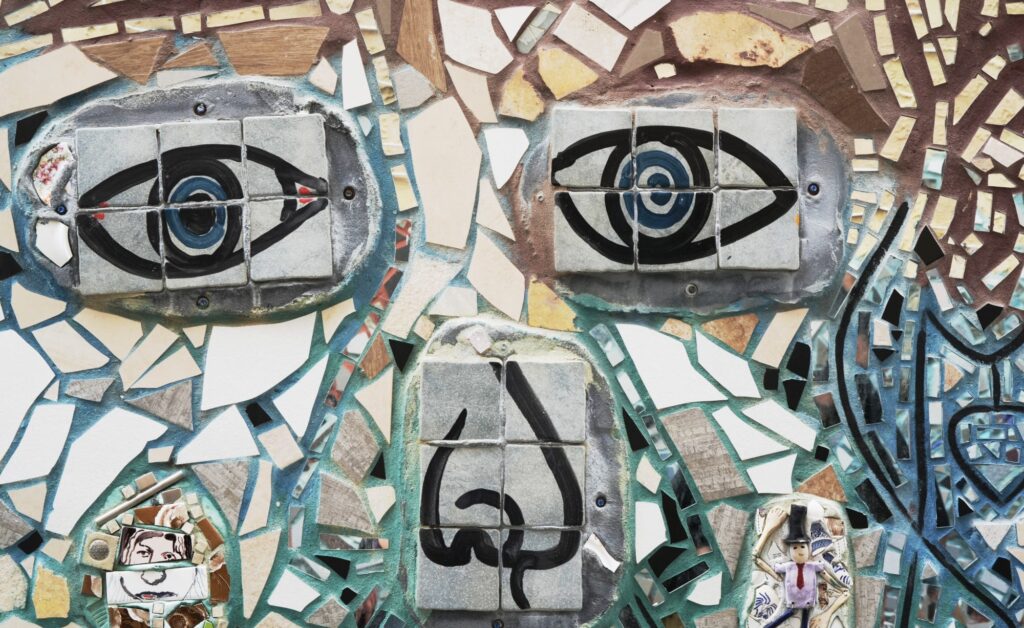
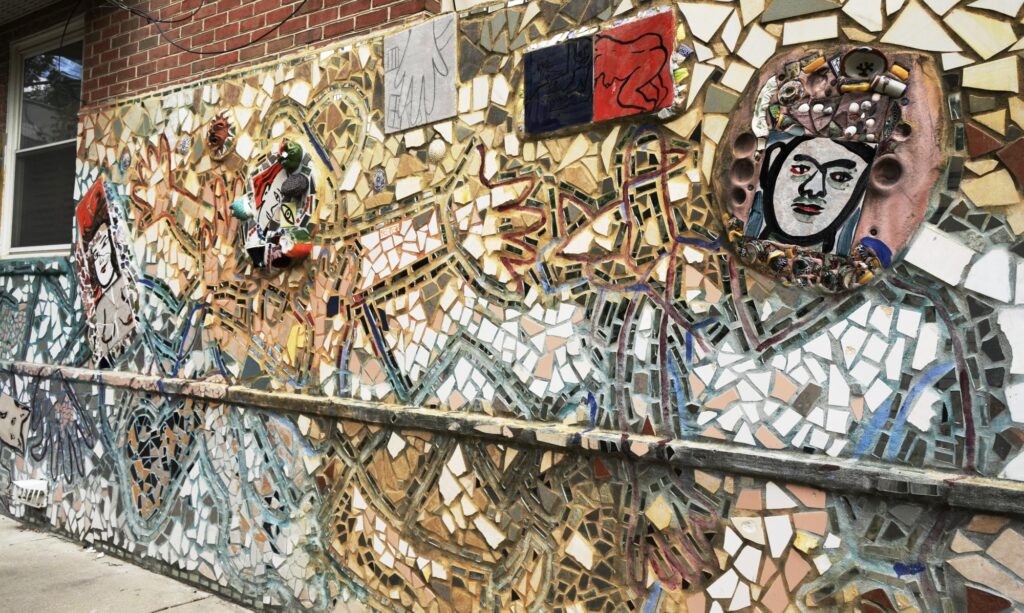
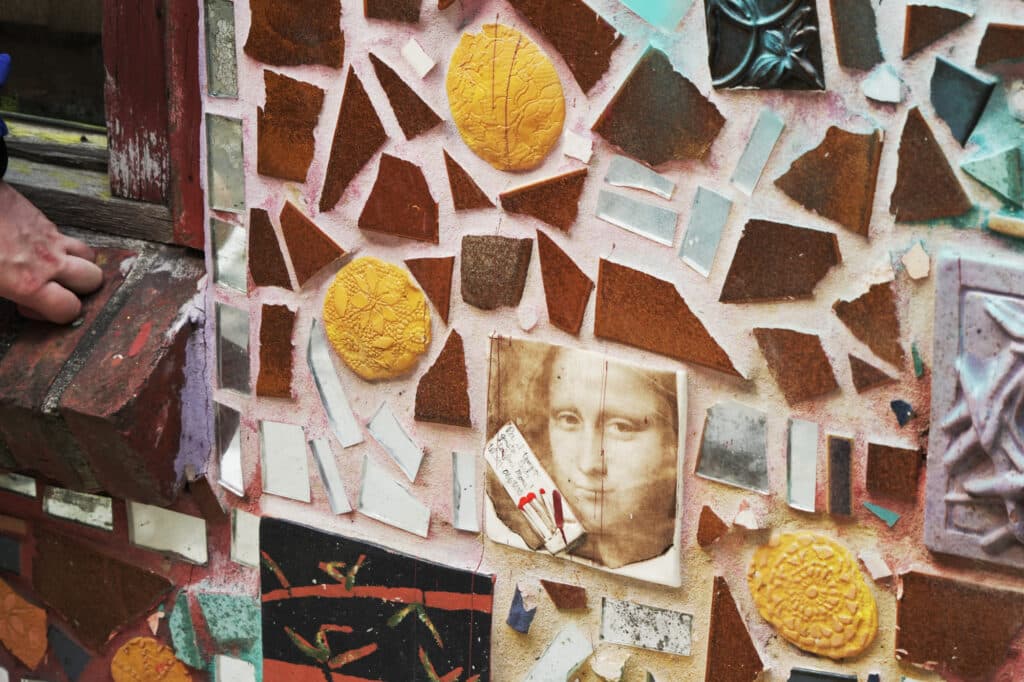
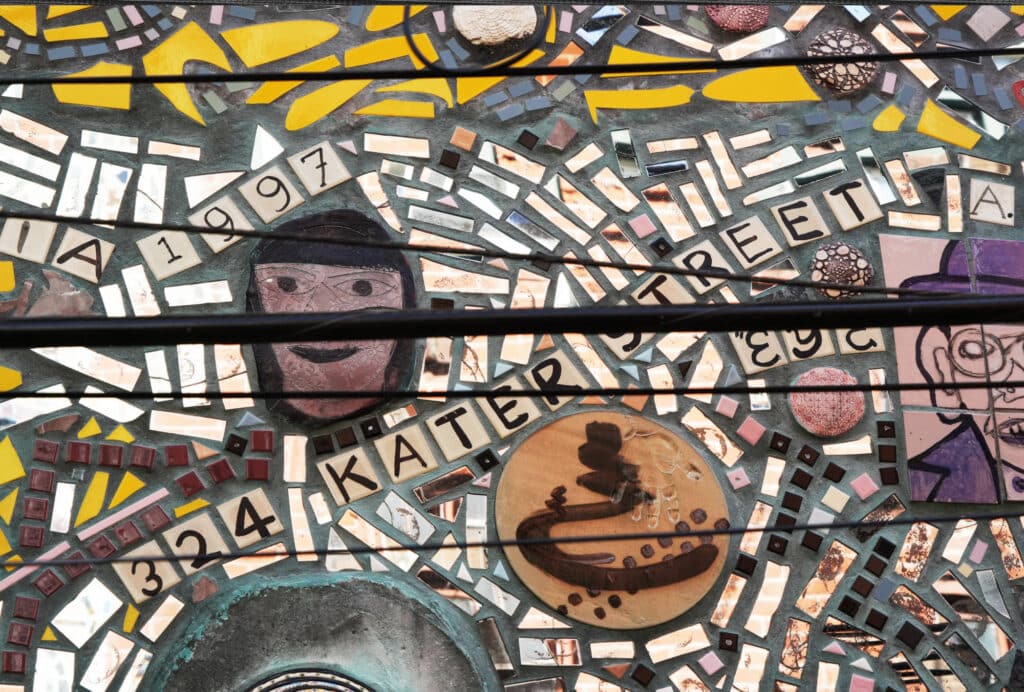
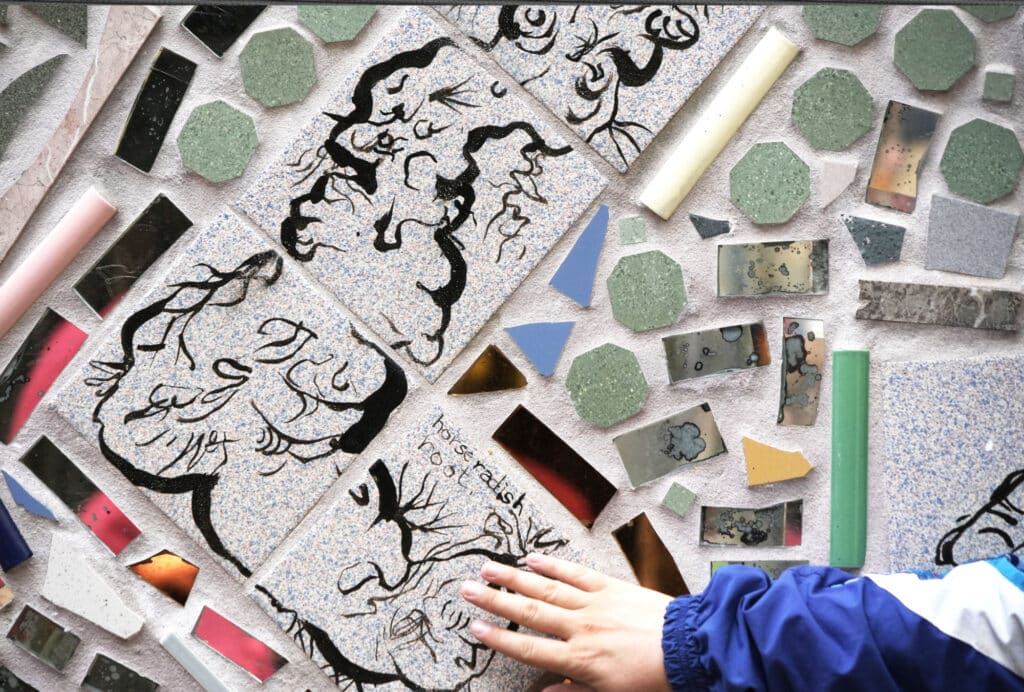
A few things are recurring in his art:
- Every piece starts with a circular blob that he creates in his studio before attaching it to the wall
- Shards of mirrors turn the viewer into a part of the art and make it dynamic as the light changes throughout the day
- Glass bottles are a reminder of the times when it was necessary to place shards of glass on windowsills for safety
If a stroll trough the streets of South Philly hasn’t given you enough of his art yet, you can visit his masterpiece: Philadelphia’s Magic Gardens. Over multiple floors and labyrinth-like structures indoors and outdoors, Isaiah has created an art gallery to get lost in. You can take a scavenger hunt by picking up a sheet that asks you to find certain pieces. It is not easy to find them all!
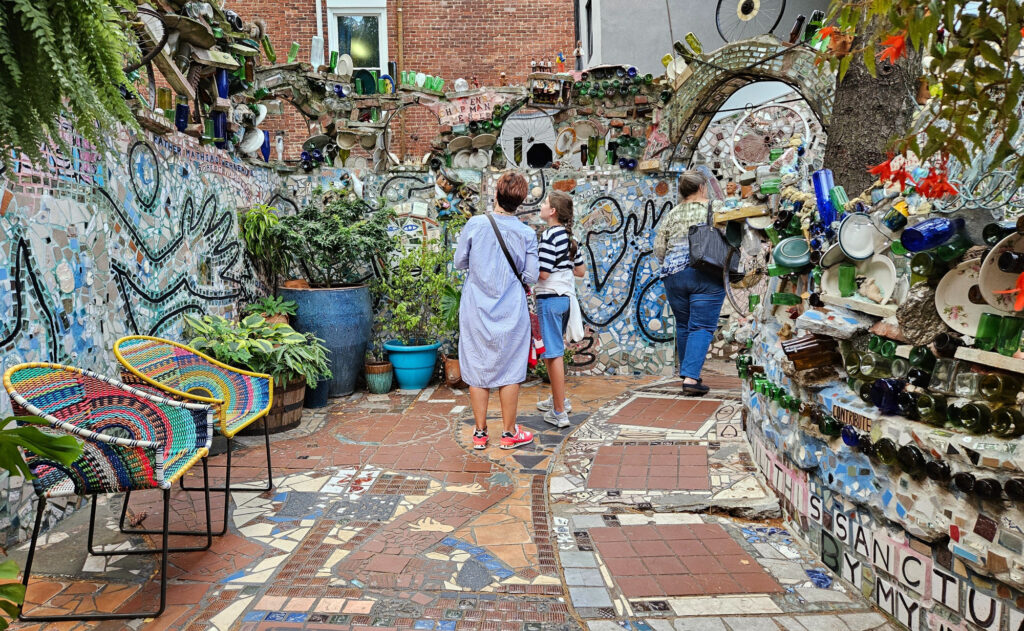
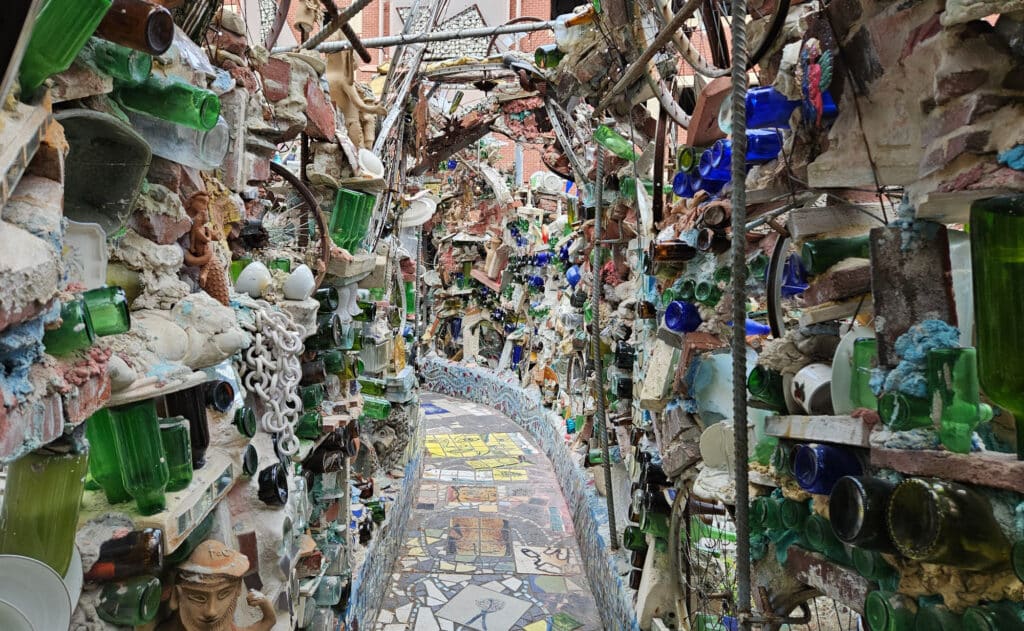
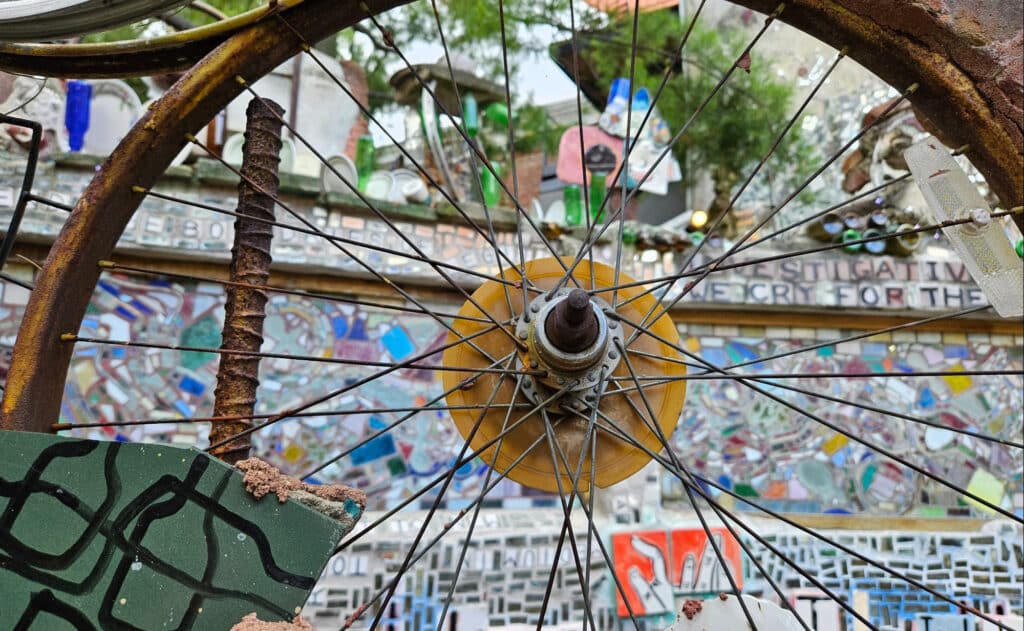
Charlie visited the Magic Gardens as part of a street art tour and the entrance fee was included. If you go by yourself, an adult ticket costs USD 15.
Julia Zagar’s gallery, the Eyes Gallery can be visited for free, and you can purchase art from different parts of the world, not only Isaiah’s works.
Eddie Lang
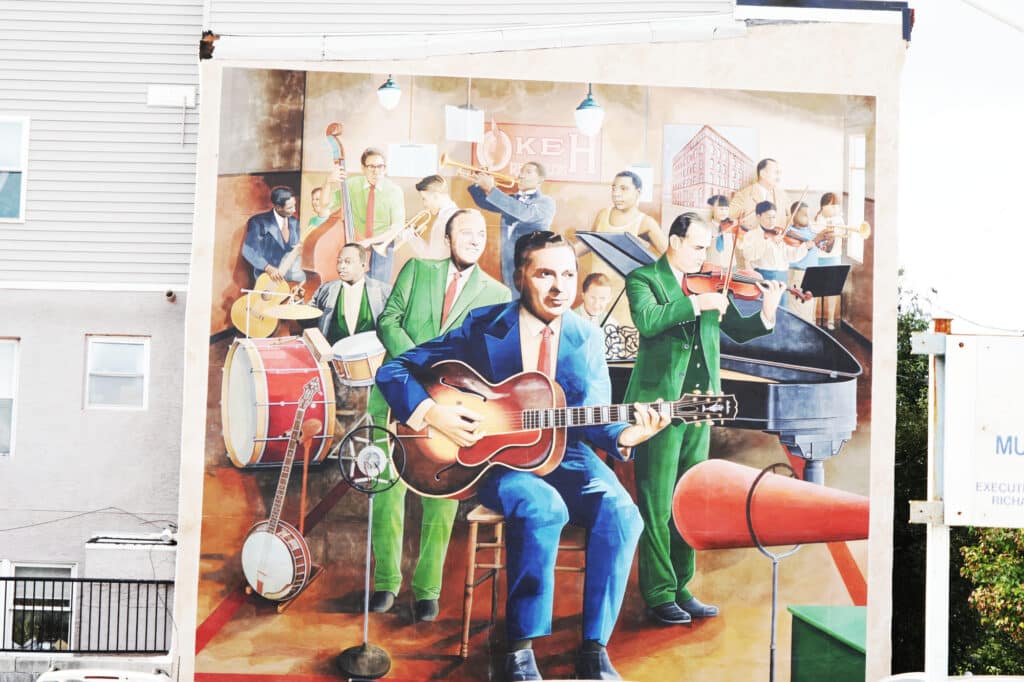
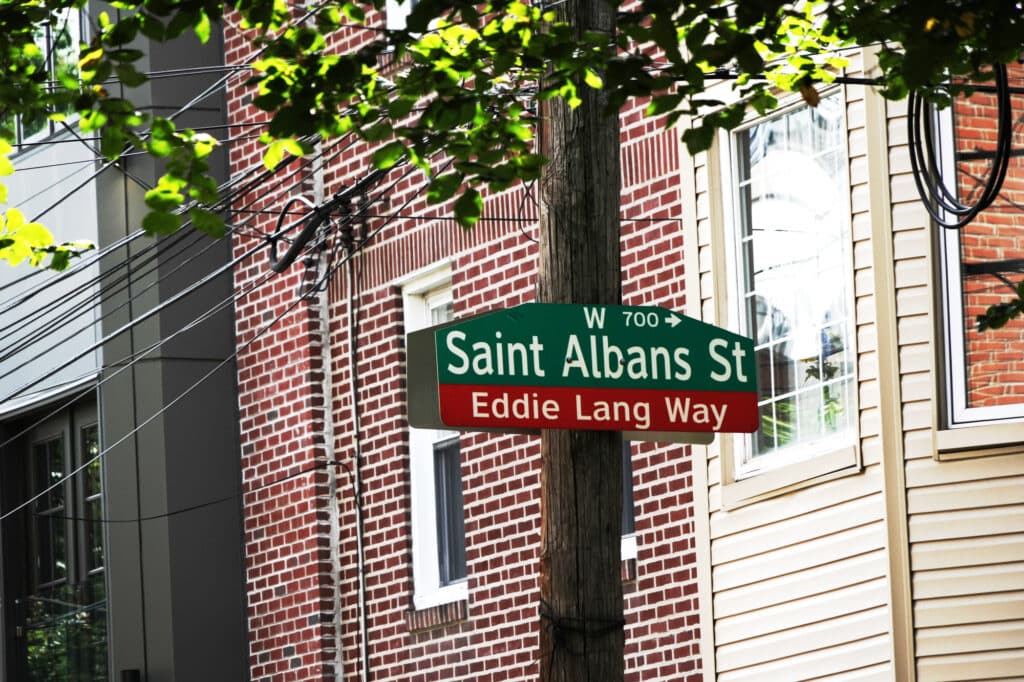
The impact the Zagar’s had on Philadelphia’s art scene is hard to match. Yet, there is one other name that should be mentioned, Eddie Lang. He was born as Salvatore Massaro and was part of the Italian community in Philadelphia. Being Italian wasn’t a good thing in the city in the past. These immigrants were excluded from public life and had to find their own ways to make a living within their community. Opposite the Bank of Italy in Philadelphia commemorates a giant mural the jazz guitarist Eddie Lang and its legacy. He paved the way for many other musicians of Italian descendance.
Next to the mural is the Da Vinci Art Alliance, born out of the Italian community and nowadays an art gallery for all.
Murals and graffiti as guerrilla art
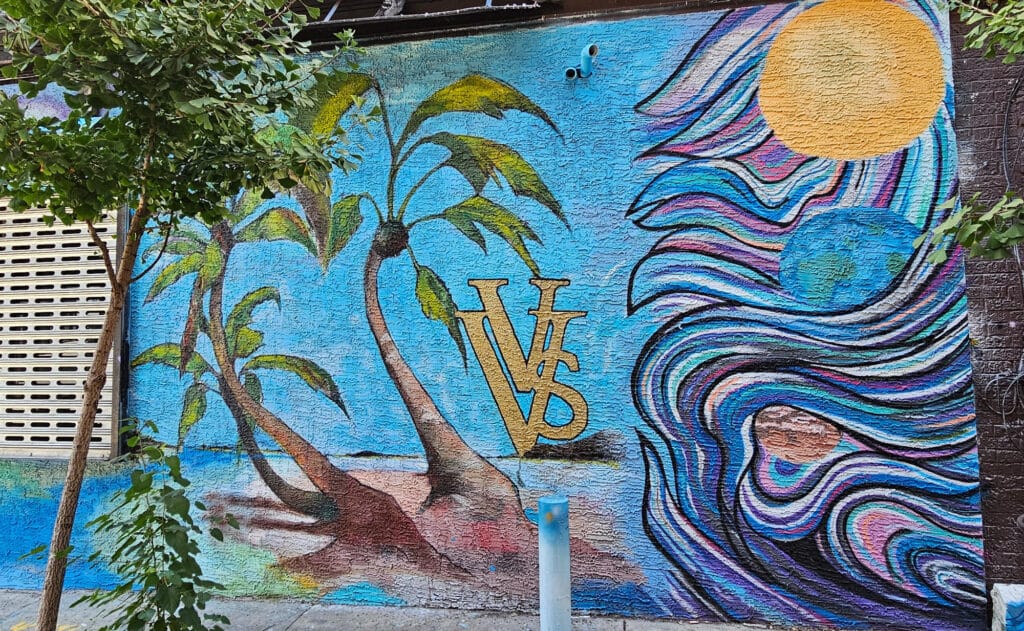
The street art in South Philadelphia shows examples of what one usually expects when thinking of street art: murals that contain a message. One example is next to the Zagar house at the back side of the Theatre of the Living Arts in Kater Street. It shows three indigenous leaders and a text about the Battle of Wabash (also know as St. Clair’s Defeat). It marks an important part of American history and honours the indigenous heritage. By choosing this battle as the motive of the mural, the artist puts history in question. The Native Americans won that battle over the United States in 1791.
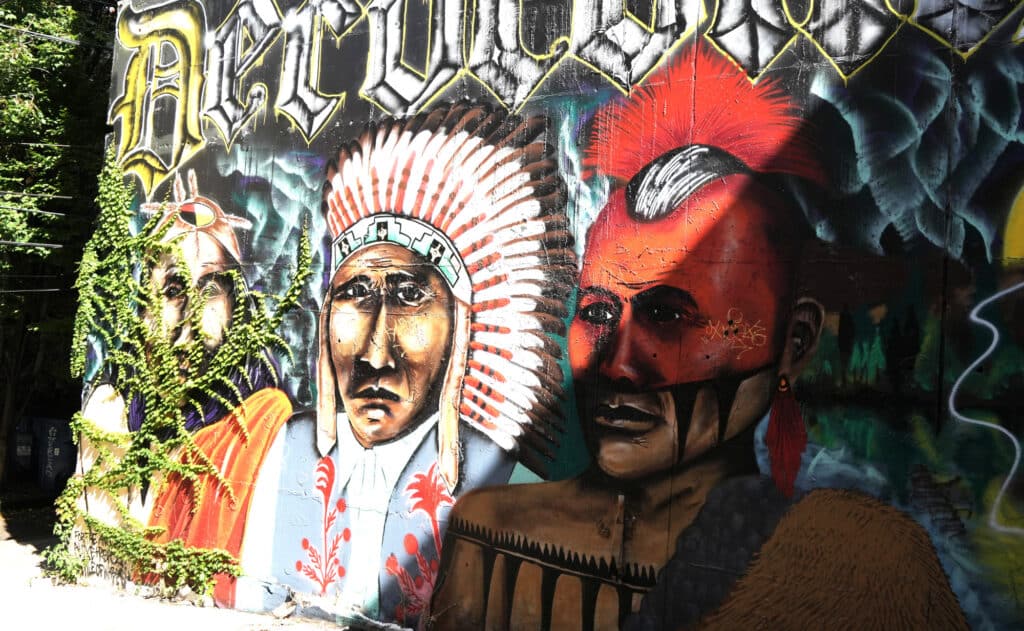
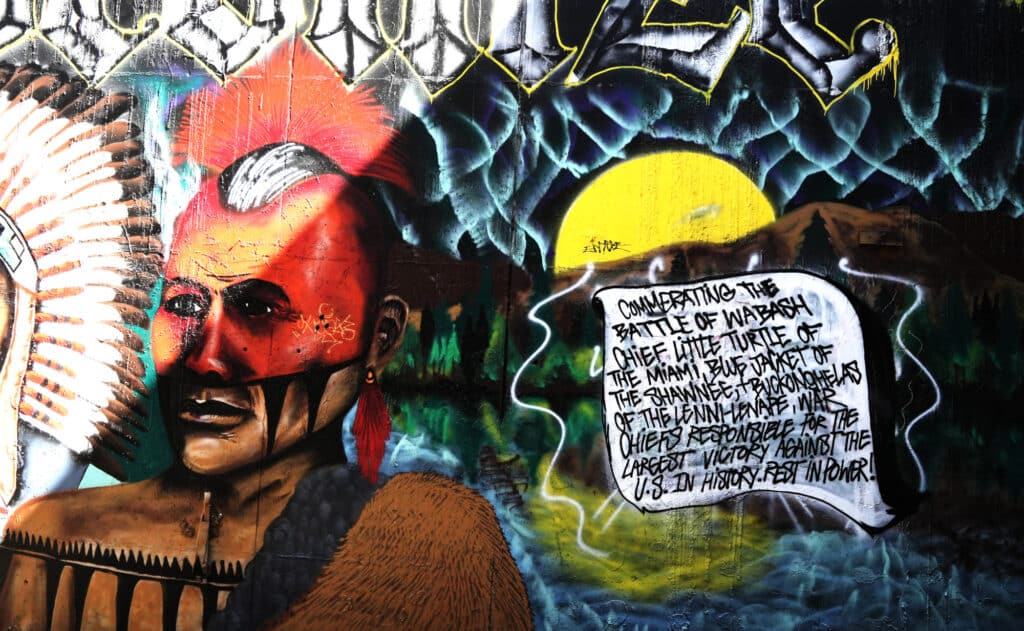
Street art becomes guerrilla art by breaking traditional connotations of what and where art should be, a representation of the world that must be in a gallery to ensure preservation. Street art is the exact opposite; it questions how we see the world and isn’t meant to last.
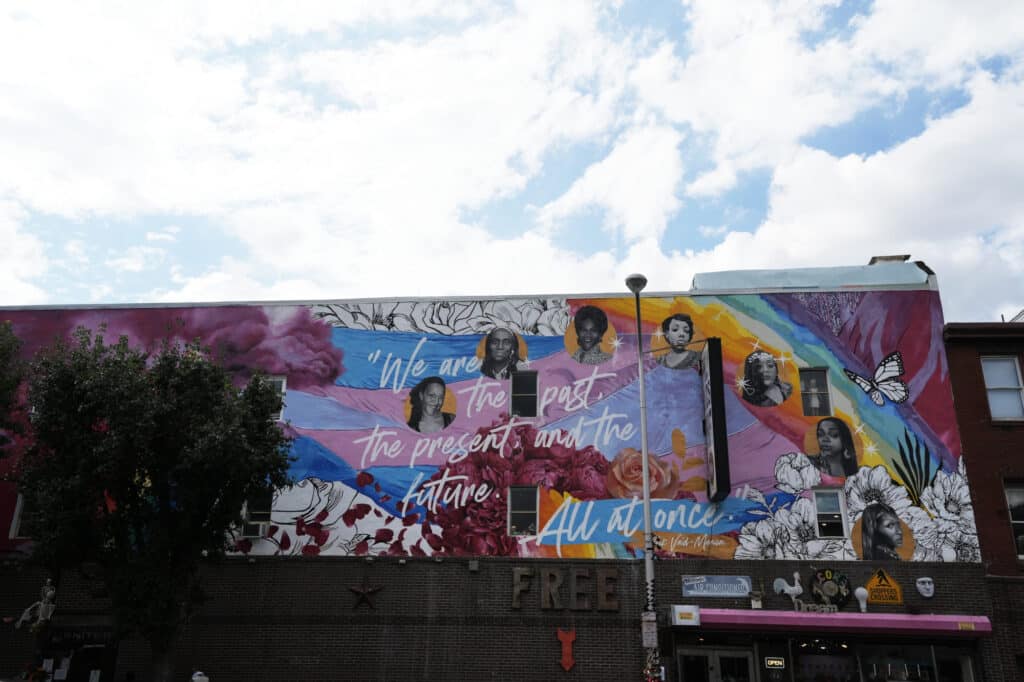
Another example in Philadelphia is the mural at the AIDS Thrift Store. It shows the faces of black transsexual women that have been murdered in Philadelphia and is meant to signify that the store is an inclusive space where everybody is welcome.
The image of a city
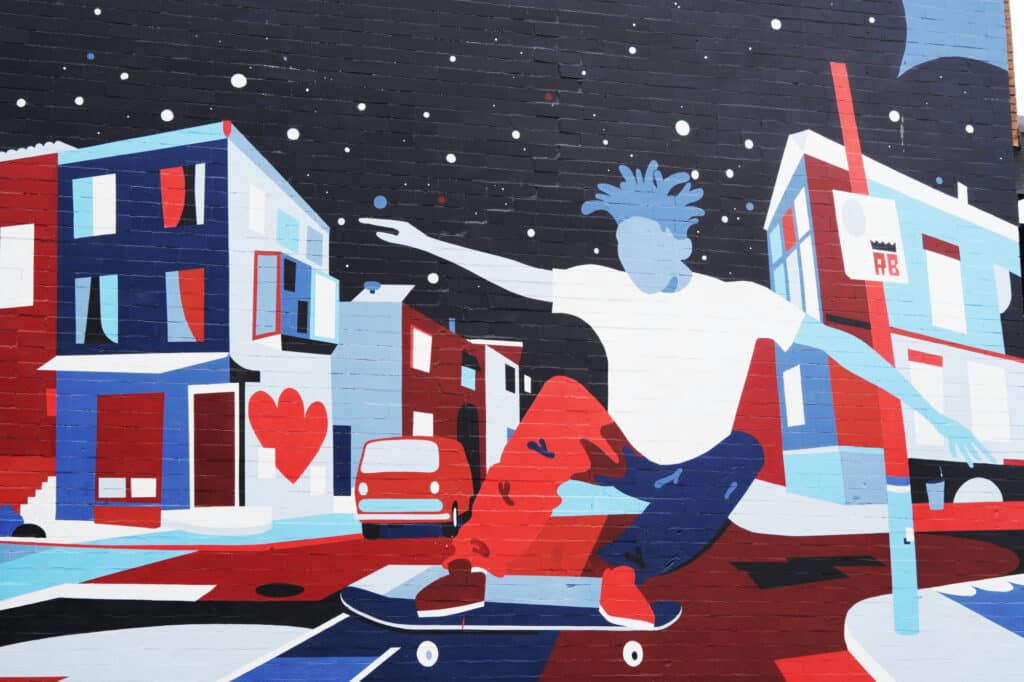
Not far from the Thrift Store is a mural that shows a skateboarder in the urban landscape. The brutalist architecture in Philadelphia was recognized by skateboarders in the 90s. The videos of them practicing their sport in Philly spread into the wider community and put Philadelphia on the map.
Other representations of the city are mostly found in stickers, for example the Gritty, the mascot of the Philadelphia Flyers or the eagle of the Philadelphia Eagles. Go Birds!
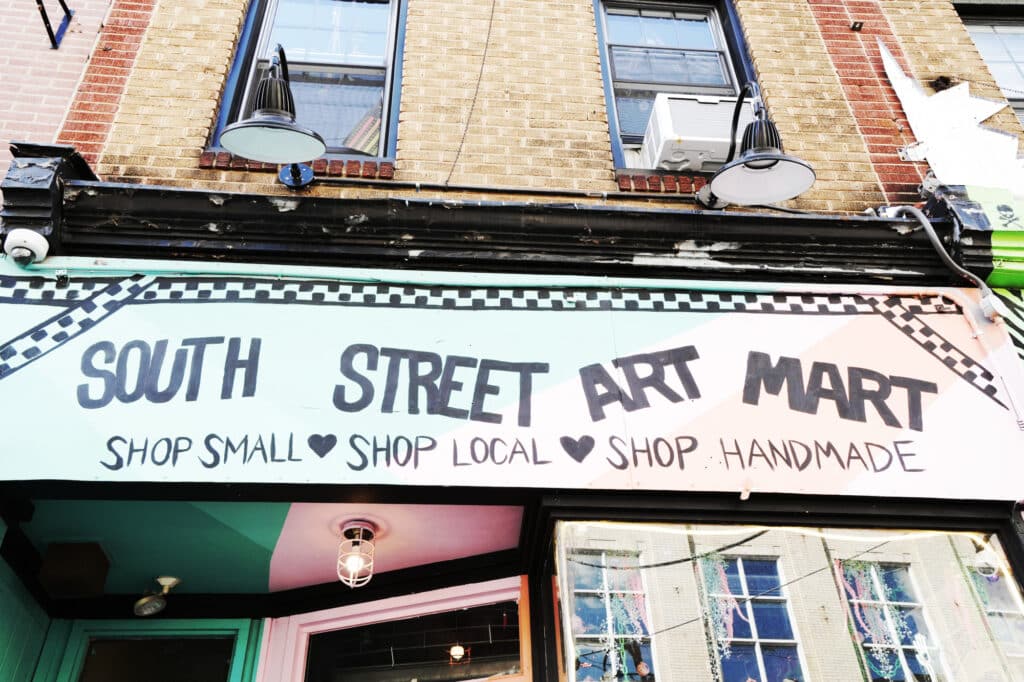
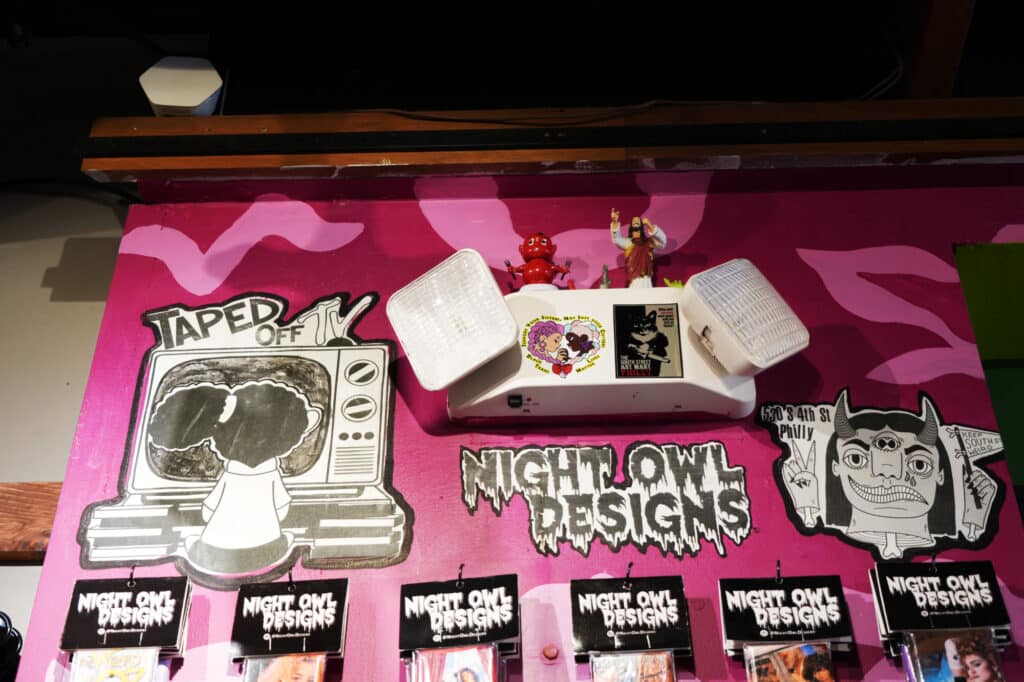
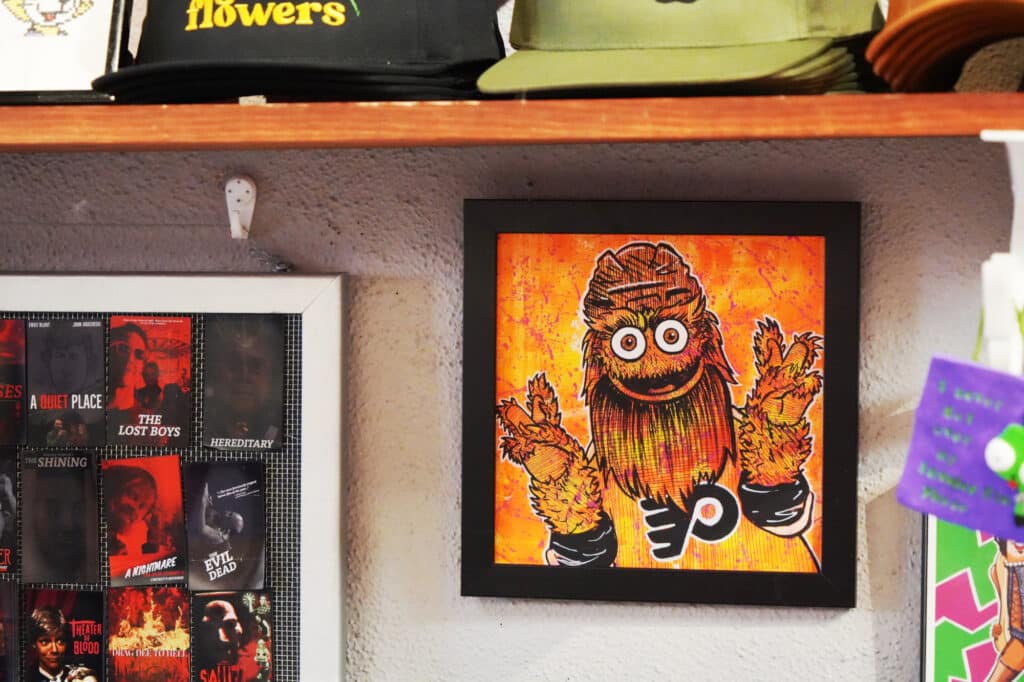
Those stickers can be purchased in a small shop not far from the Eyes Gallery, the South Street Art Mart. Other works of local artists are available too and a purchase is the easiest way to support them. Another possibility for support is a donation to or a tour with the non-profit organization Mural Arts Philadelphia (former Mural Arts Program) that connects artists with spaces, similar to the Urban Art Gallery in Lisbon.