


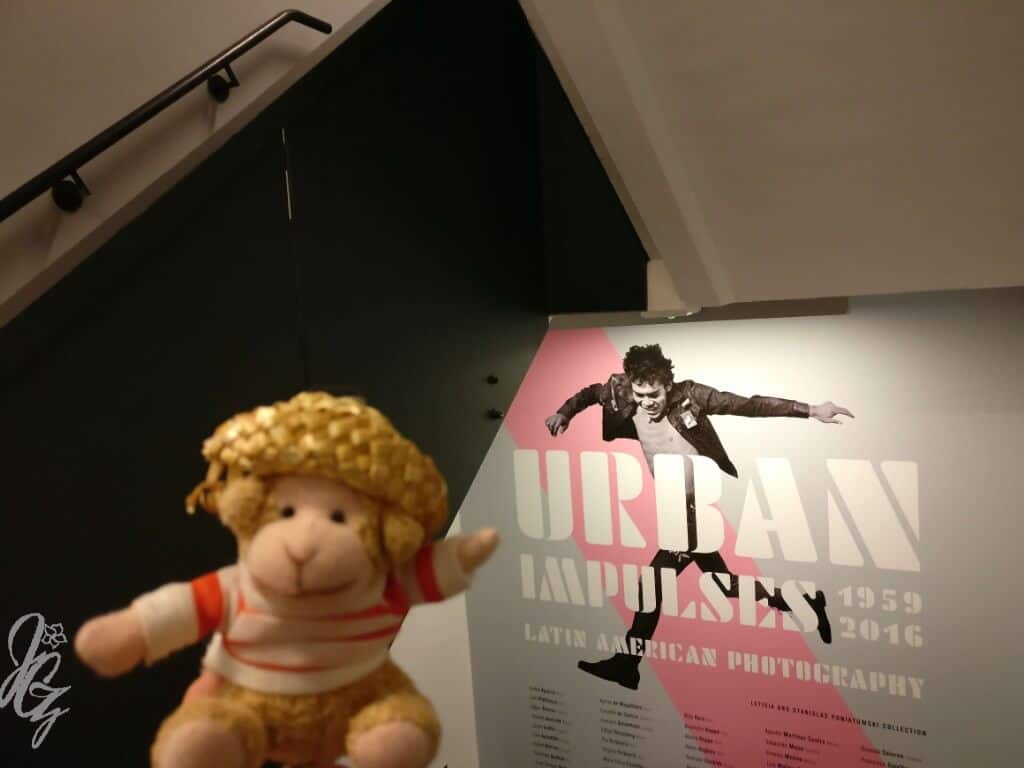
Charlie at the Photographer’s Gallery
Exhibition: Urban Impulses: Latin American Photography from 1959 to 2016
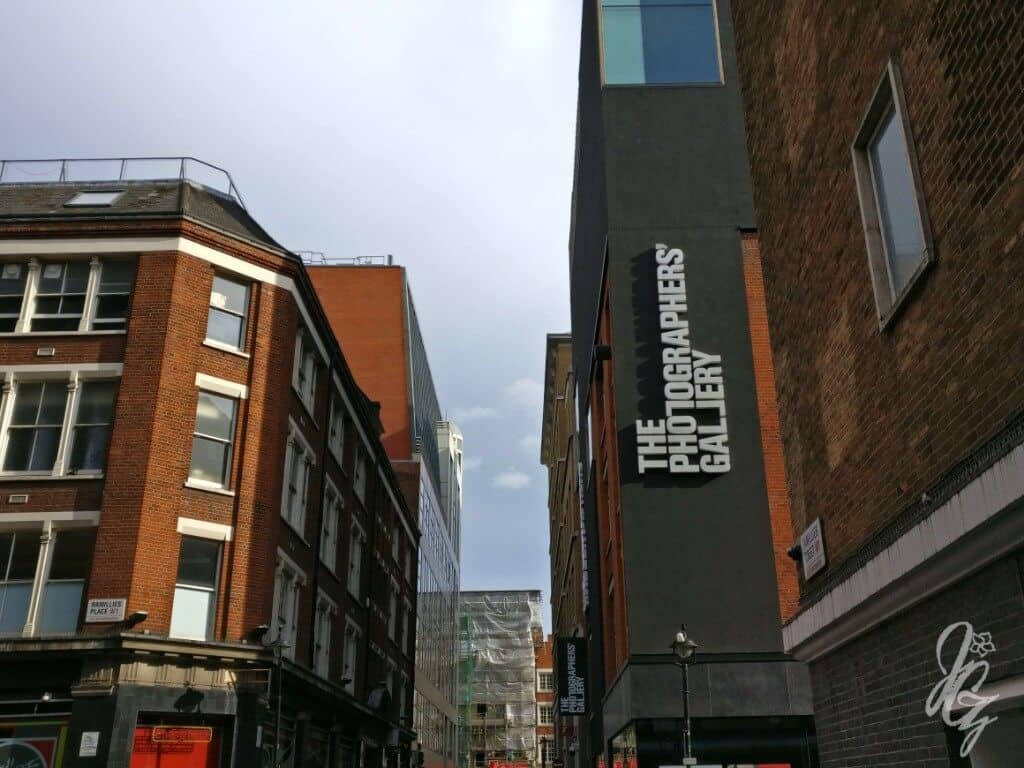
The Photographer’s Gallery in the heart of Soho is one of those destinations where you find yourself regularly if you’re into photography. The exhibitions change frequently and there’s always something going on in the workshop rooms or the café.
At the time of writing, the main exhibition at the Gallery is focused on documentary photography of urban scenes in Latin America between 1959 and 2016. Through a variety of styles – from documentary photography to collage – are significant political episodes shown that have shaped the continent during the 2nd half of the 20th century and into the 21st. The starting point in 1959 is no coincidence – the year of the Cuban Revolution that marked the beginning of a new era for the whole continent. What followed were military dictatorships in several countries, social movements, left-wing governments and cultural diversity.
The exhibition was curated by Alexis Fabry and María Wills and is very political in character. There was no intention to display stereotypes, poverty or misery, although cultural expression and gender roles play a part in the exhibition. It is split in two parts over two floors: “POP-ULAR” is dedicated to pop culture, “SHOUTS” to political events.
POP-ULAR culture
The section with the title Pop-ular is in general a mix of fashion and pop culture and contains a good number of advertisements. Those show the likes of Marlboro, Superman and Coca Cola marking the US-American influence in Latin American markets. Other prominent topics in this exhibition are the Argentinian Tango, nightlife and pre-columbian culture.
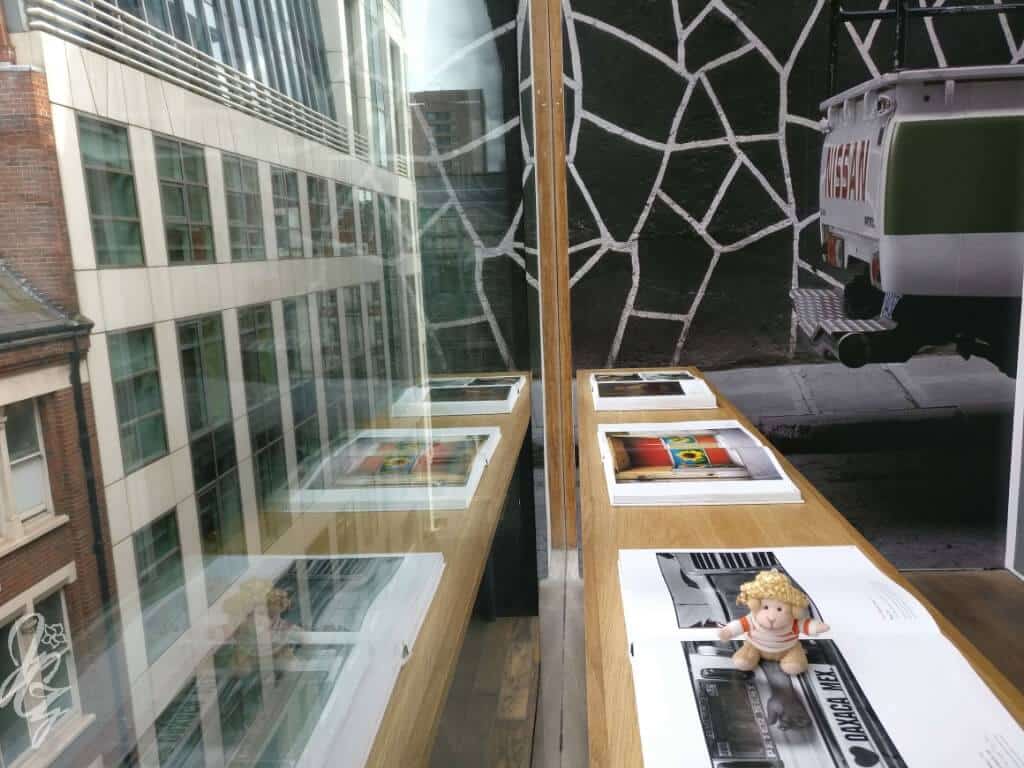
Pre-columbian elements in modern culture
Photographer Beatriz Jaramillo displays in her work architectural elements that are inspired by pre-columbian symbolism. Similar for the works by Pablo López Luz that are shown in the exhibition and are part of a series called “Neo Inca series”. They contain photographs of architectural elements in Bolivia and Peru that reflect how elements of Inca culture are grafted into an urban context. In the same context appears a photograph by Billy Hare that was taken in Lima in 1981. It shows a wall with a door that seems to have the same architectural elements as the previous ones, but in this case, it has been created by shadows instead of being architecture.
Nightlife and gender stereotypes
An integral part of urban culture is the nightlife and as such, it shouldn’t be missed in an exhibition that bears the title “Urban impulses”. Images in that category show entrances to night clubs with neon signs. There aren’t just the usual nightclubs; strip clubs and nudity don’t fall short in this exhibition. Shown are amongst others the works of Ayrton de Magalhães and Miguel Rio Branco who made prostitutes and strippers their main motive.
Urban Scenes and creativity in photography
There are some other images in that part of the exhibition that made quite an impression. One of them is shown prominently at the entrance and shows a palm tree growing through a gas stop in Colombia. It was taken by Sebastián Mejía in 2012 and is called “Quasi oasis 17”. It is indeed almost an oasis in which the palm tree stands strong in the middle of something that has been built around it by humans. Charlie liked this picture for several reasons: On one hand, it shows humans valuing nature instead of tearing it down to build a gas stop, on the other hand is the image of a gas stop in itself a political message as the question of ownership over resources such as water, mineral resources and oil has caused many disruptions in Latin American politics and society.
Another image that Charlie was fascinated by also has a relation to trees and was taken by Lourdes Grobet in 1978. The image was shown twice in the exhibition and at first, Charlie couldn’t tell where the difference between both was, but it was immediately clear that there was a difference. By analysing every single element in the picture, Charlie noticed that some of the trees along the main road had been removed leaving some blank space behind. It had been hard to discover as the image was in black and white only. The technique reminded Charlie of some other pictures she had seen at the exhibition for the Sony Photography Awards at Somerset House a few weeks earlier. The photographer of those pictures had removed buildings from landscapes in Hawaii to reveal the impact of humans on nature.
The third image that really stood out had been taken on a square in Quito in 1983 by Graciela Iturbide and was also in black and white. An elderly man stands in front of a group of people in the middle of a square. He carries two mirrors under his right arm which causes an interesting effect in the image as the mirror reflects the opposite side and buildings of the square. Similar to the previously described image, Charlie had to stand in front of it for a while to discover how the image was created and what it was showing. Sometimes the answer is as simple as the main subject of the photo carrying mirrors.
SHOUTS and political events
The second part of the exhibition, on a different floor of the Photographer’s Gallery, is called “Shouts” and centred around political events. According to an interview with the curators that was shown on screen at the exhibition, the images should create a notion of movement and Charlie thinks that they have achieved this goal, may it be real physical movement or political movements. As such, it contains many images of people in motion and also political statements sprayed onto walls. Those Latin American murals though differ in topic, context and (artistic) creation widely from those you would usually see amongst the graffiti in London.
In an exhibition about Latin America that sets the year 1959 as the starting point, there are two names that should not be missed: Che Guevara and Fidel Castro. Both are shown in the exhibition, alongside other political leaders such as Pinochet. This marks up important events on the continent in the second half of the 20th century: The Cuban Revolution, left and communist movements and military dictatorships.
Disappeared
In the context of those military dictatorships, some images show military presence, e.g. the image titled “18.000 Soldiers Patrol the Streets of Santiago” by Helen Hughes taken in 1983 – half-way through Augusto Pinochet’s term.
What is even more present in this exhibition are the long-term effects of those dictatorships on society. As such, the topic of the Desaparecidos (engl. the disappeared) plays a role. The image by Ataúlfo Pérez Aznar for example shows posters that artists and human rights activists had put up around the Plaza de Mayo in Buenos Aires in 1983. These posters showed the silhouettes of people – each of the blanks had a name of somebody who had been murdered or disappeared next to it, with some information about profession and age. The topic of the Desaparecidos is relevant until today as many people are still looking for answers as to what happened to their relatives or friends. Human Rights Organisations like the Mothers of the Plaza de Mayo are still active and demand answers. This side is also shown in the exhibition, e.g. in the image by Eduardo Longoni. It had been taken in 1981 and shows a member of the Mothers of the Plaza de Mayo at a demonstration with soldiers and active weapons in the background. Both elements of that picture make it an outstanding piece of documentary photography.
Until today, many people are still missing and there might never be an answer and even if there is, it usually isn’t a positive one. It is a regular news topic that mentions corpses being washed up along the Latin American coasts. The artist Anselmo Carrera made this the main topic of his work which is shown at the exhibition too. Over the years, he had collected newspaper clippings in Peru showing violence. Those clippings have been put together in collages. It’s not photography, but it is a legitimate part of the exhibition at the Photographer’s Gallery and completely in line with the overall topic.
Conflicts in Society
Apart from military presence and violence, the exhibition also shows the impact on society that these political contexts carry. The image “If you shoot, I shoot” by Pablo Ortiz Monasterio shows a teenager pointing a gun towards the photographer/viewer that raises awareness of how violence affects every member of society, no matter their age.
The collection of darkroom materials in the collage “Catharsis” by Enrique Bostelmann shows faces of different parts of society that had been affected by conflicts: peasants, children, penitents and revolutionary heroes whereas the image by Héctor García displays a student movement in Mexico City in 1968.
Two other pictures are displayed next to each other in which two sides of conflict come to light: The image by Pedro Valtierra shows how an indigenous teacher is beaten by soldiers in the streets whereas the image by Diego Levy shows violence against state representatives. A policeman is assaulted by demonstrators in this image. It does not matter where these pictures have been taken, as they reveal underlying problems in all Latin American societies. Even though the violence has been reduced after the end of military dictatorships, the causes of the conflicts are still present and remain unsolved until today.


