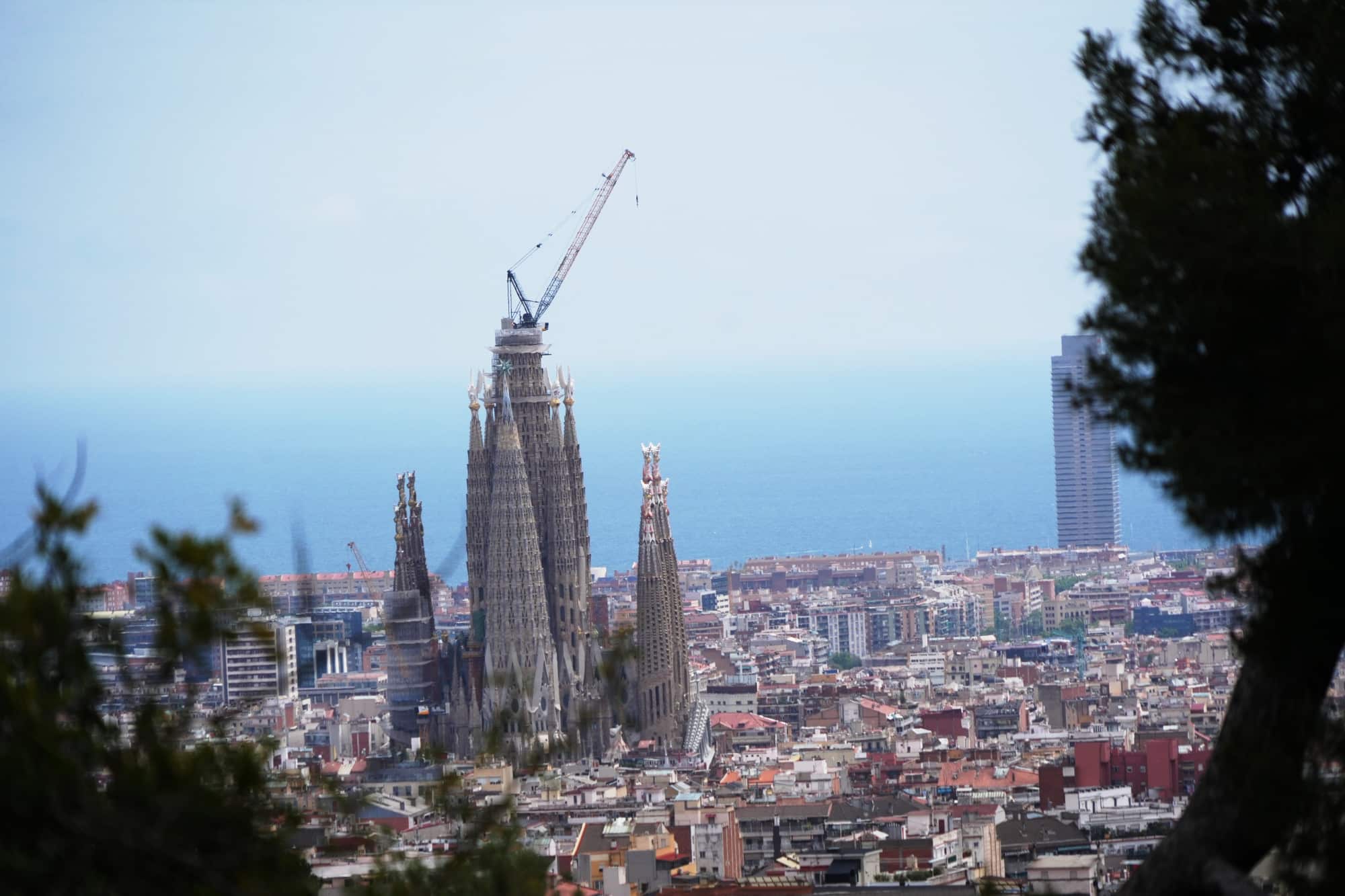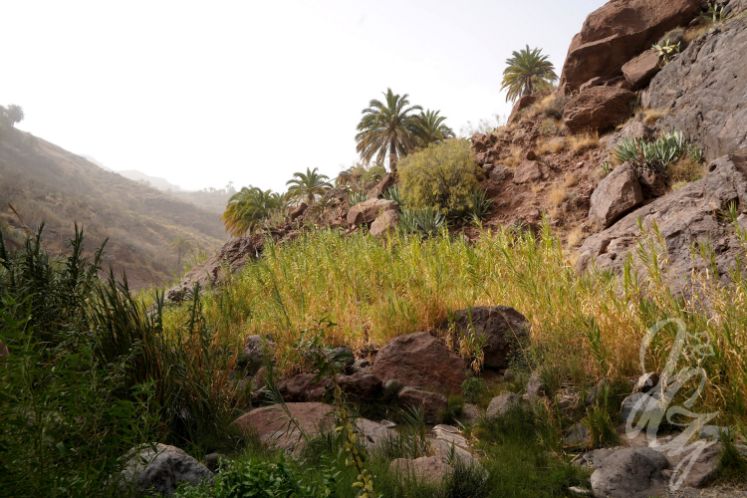
Discovering the real treasures of Gran Canaria
Off the beaten track around the mini continent
There are different ways to see an island like Gran Canaria. Charlie usually joins a tourist tour in the beginning to get a good overview and once she has an understanding of what the island has to offer, she explores on her own, digs a bit deeper, and wants to see what it really is about.
When Charlie booked her tours on Viator at the beginning of her stay, that’s what she had in mind: Have them show you around and then decide where you wanted to go again to see a bit more. She had already done two different tours, one to the mountains and one called treasures of Gran Canaria. She had no idea that she would only discover the real treasures much later. Those two tours should have covered the most obvious places to see. They were good, but not outstanding. It felt like the typical tourist thing: get on a bus, get all the information, get off and on every once in a while, and tick some boxes.
The third tour that Charlie did however was nothing like that. There was still a minibus involved with hotel pick-up, places to see and plenty of information, but it was in a small group of adventurers and led Charlie to places she otherwise wouldn’t have seen. The best about this tour though was the feeling of being amongst friends. Imagine when you visit friends in a foreign country, and they take you to their favourite places. That’s what trips with Climbo feel like!
The Rainforest Tour
Instead of a standard tour of the north of Gran Canaria, Charlie had booked a trip called Rainforest Tour. Good you ask: No, there is no tropical rainforest in Gran Canaria, but there are places that are very similar, in particular the Barranco Azuaje and a coffee plantation near Agaete.
Charlie was picked up right in front of The Roof, the coliving she shared with other digital nomads in Las Palmas, and they drove in a small van out of town along the north coast of Gran Canaria. There were three other guests with Charlie on the trip, plus two guides Marine and Lucas. Marine had only recently started working with Climbo and was still learning. Lucas would be there in case she needed help.
Firgas
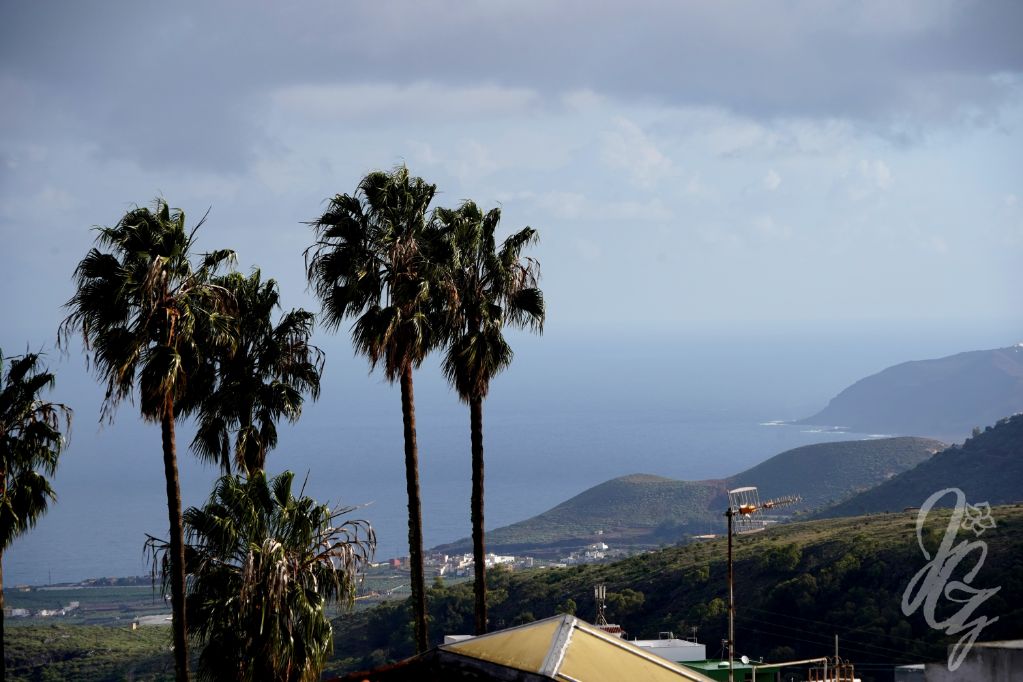
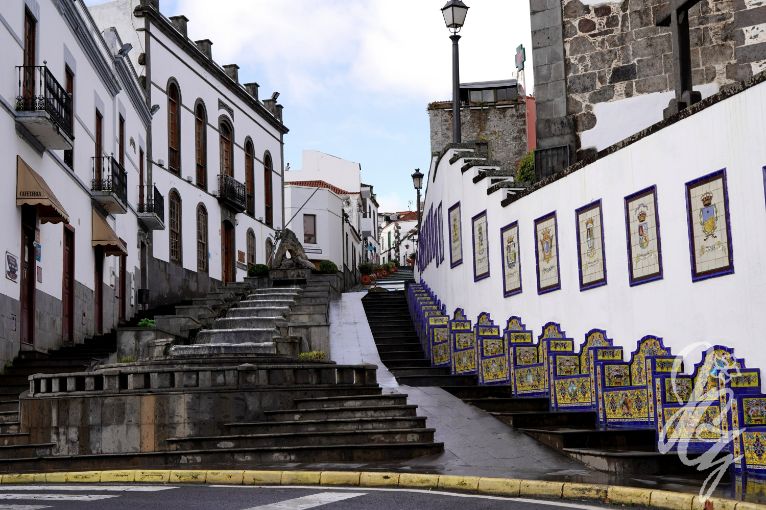
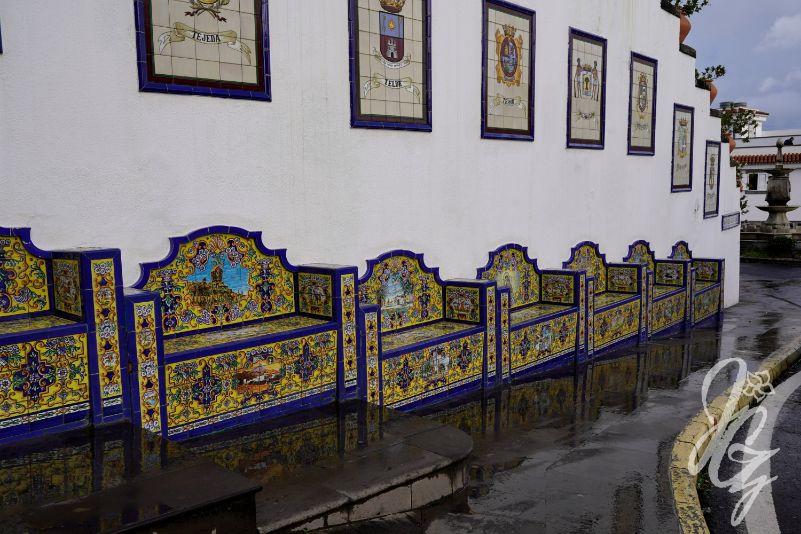
The first stop was in a small town called Firgas. (When you’re in the Canary Islands, you might occasionally encounter that name on water bottles.) From Firgas, you have a beautiful view over the landscape, the sea, and Las Palmas. There you’ll also find the Paseo de Gran Canaria and the Paseo de Canarias. It is a street where some beautiful artwork shows the 21 municipalities of Gran Canaria and each of the Canary Islands. The group spent a long time there and Marine provided information about each municipality and island. They learned about the strawberries of Valsequillo, the beach Guigui near Aldea, the ancient capital Galdar, the sucar cane of Arucas and much more. It was the perfect introduction to the island(s).
Barranco Azuaje
Once they left Firgas, they made their way towards the Barranco Azuaje, the valley where they would explore the Canarian Rainforest. Already the drive towards it was spectacular. Unfortunately, Charlie sat at the wrong side of the van and didn’t get any pictures. You just have to believe it on this occasion!
The weather was a bit moody that day and it looked like it was going to rain. Lucas explained that they would not be allowed to drive towards the valley when it rained. The rainfall would cause erosion along the cliffs and big rocks could fall onto the street. It simply wouldn’t be safe to drive along there.
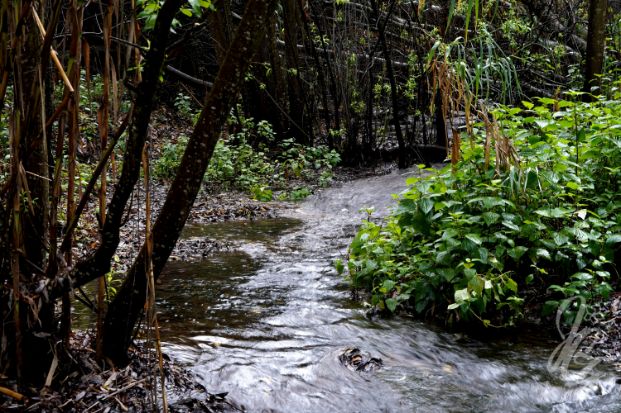
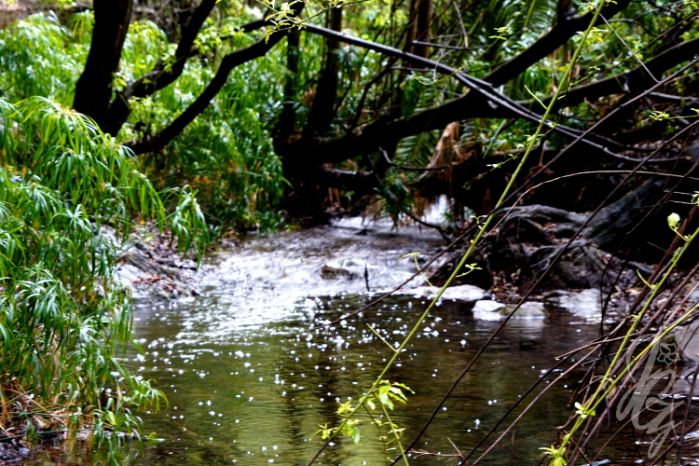
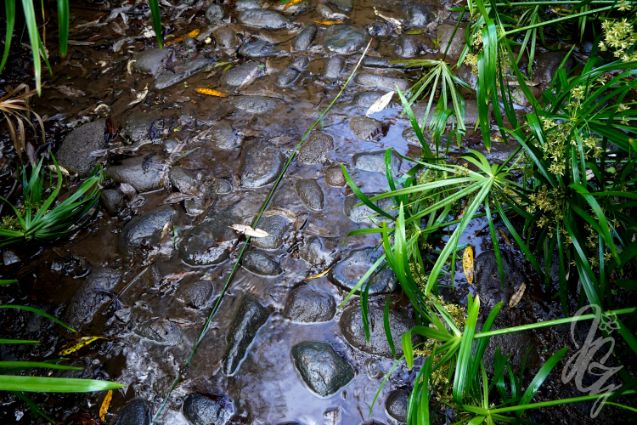
The first thing they saw when they arrived at the valley were the ruins of an old spa hotel. In front of the building was a path that was a bit difficult to see at first. It would lead them right into the valley. A few drops were falling from the sky, nothing that you would call rain. They continued further into the valley and passed by some eucalyptus trees.
After a few minutes, it was properly raining. Charlie had taken the rain sleeve for the camera and her big rain poncho. As they walked further, the rainfall got stronger, and they saw the water levels rising. Lucas explained that it wouldn’t be safe to continue any further. Already by then, the path was covered in water. It was best to return to the van and get on an alternative adventure.
This was also good practice for Marine, the trainee tour guide, as she had not been to the alternative place yet.
Tilos de Moya
They drove to Tilos de Moya where they learned a lot about the flora and fauna of the ancient laurisilva forest that was once present in all of Macaronesia. They were at an information point that displayed all the information in three languages. Lucas guided them through this exhibition and explained things in detail. Charlie was impressed by his wealth of knowledge. There was no question he didn’t know the answer too.
Outside the little information houses was a path that led into the forest onto a circular walk. It was important to not leave the path as the whole area is protected and part of a massive reforestation programme on the island. It was a good 20-minute walk through the forest and Lucas and Marine were waiting with the van at the other end. It wasn’t a rainforest, but still a lovely part of the nature of the Canary Islands.
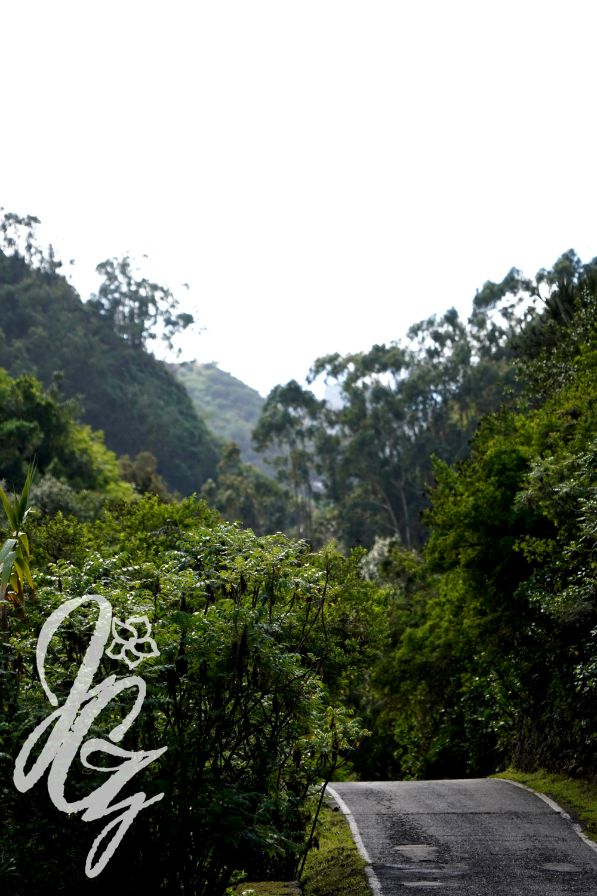
Finca La Laja
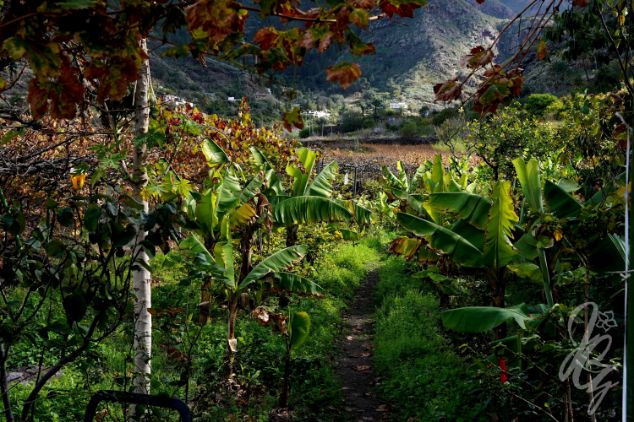
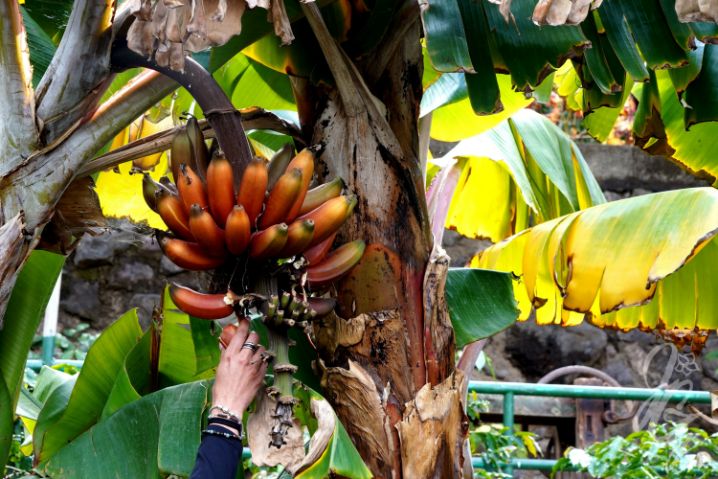
Charlie was really looking forward to the next stop where they would visit the only coffee plantation in Europe. At the entrance to the finca La Laja was a sign that read “Welcome to Paradise” and that was no exaggeration. This place was magical. Lucas guided them around the finca, the wine bodega, and the plantation. There was a lot more than coffee and vineyards. They saw avocado, mango, and papaya growing on trees, and tasted pink banana and juicy oranges fresh from the tree.
As they stood at the roof terrace, Lucas explained that he was very proud of the sign that showed that the finca had been featured in an episode of Masterchef once. That was an important step in showing that Gran Canaria was more than an all-inclusive holiday destination to sip on cocktails at sandy beaches. There is a lot of nature to explore and Climbo has made it part of their mission to raise awareness and attract a different type of tourism to this mini continent.
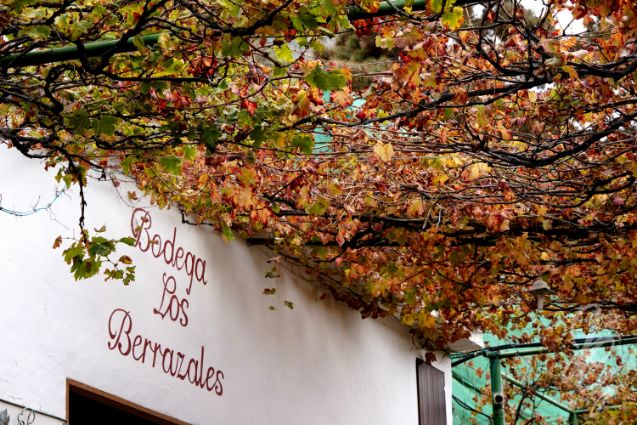
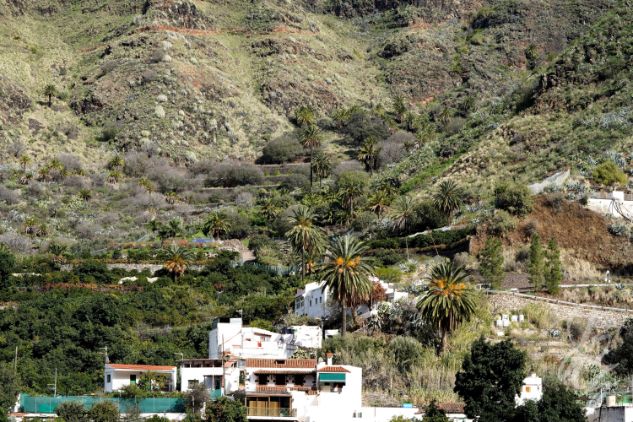
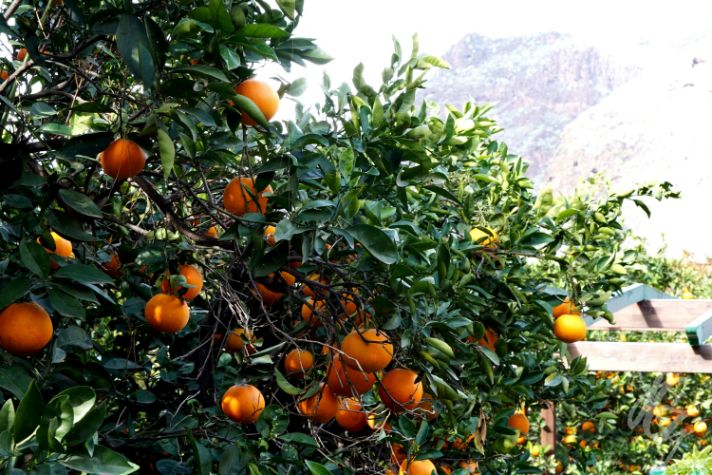
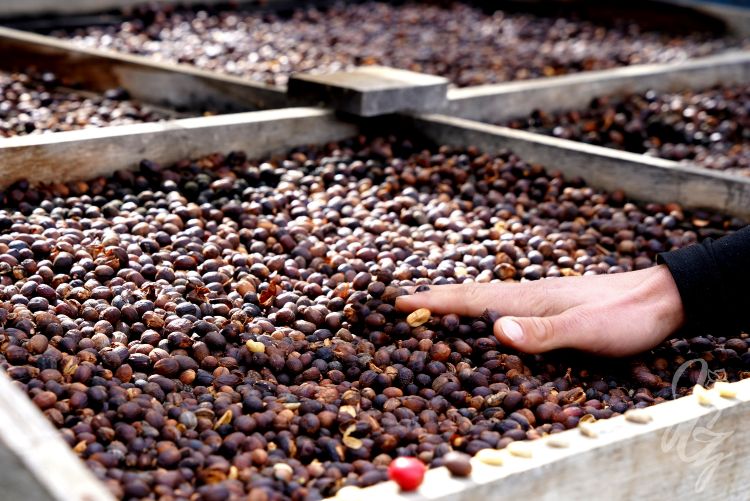
After the tour, they sat down at the restaurant for a tasting. There was cheese and Chorizo Terorero, different types of wine and jam. It was all local produce. The orange jam was a lot sweeter and had a different colour to what you would usually find in an English supermarket. It was very tasty! There was also a coffee jam which Charlie had never seen before. It was good too, but Charlie never liked things that taste like coffee, unless it’s coffee. She had high expectations in the latter. After all, they had just seen where the coffee grows, how it is collected, dried and roasted. However, the coffee they had at the end of the tasting was a little disappointing as it seemed really weak.
Just as they had finished the tasting, Lucas brought a little Papaya that had grown on a tree right next to them. The pulp was dark orange and super yummy. It had a lot more taste than any fruit you can buy in the north of Europe.
Agaete
On their way to the finca, they had driven through the town of Agaete. Now, they were on their way to the last stop: The natural pools of Agaete. Charlie had heard about this place before and really wanted to go. It was quite busy with people, but it didn’t feel crowded. Charlie changed into her swimming costume and went for a dip. The water was lovely. There were holes in the walls that separated the pools, and you could dive through them to reach the other side. From the pool closest to the sea, you could watch the waves crash into the rocks.
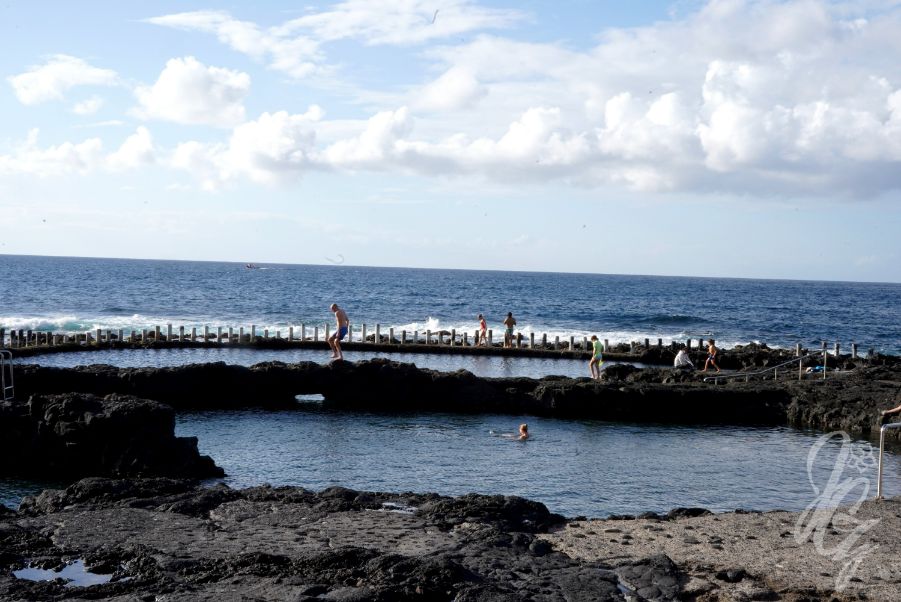
With this stop in Agaete, the day had come to an end. Lucas and Marine dropped Charlie off near the house and she was excited to sort photos and tell her housemates about the amazing day she had had.
Charlie loved it so much that she went on Climbo’s website to find out which other tours they offered. There was a Red Canyon Tour scheduled for Sunday. It was perfect! This time also Tom and Álvaro whom she shared a flat with joined Charlie on the trip.
The Red Canyon Tour
The first stop of the day was in a small fishing village on the East Coast of Gran Canaria: Tufia. The surroundings remind of the landscape in Fuerteventura and the road that leads to Tufia does not seem to be trustworthy. If she hadn’t known the guides already, Charlie would have become very suspicious about where they were taking her.
Tufia
The village of Tufia is probably one of the smallest on the islands and until May 1997 it was not even connected to the power network. A memorial commemorates the day they got electric lights.
There is a parking lot just outside the village with a viewpoint to oversee the bay. From there you can walk through the village down to a small beach with the typical black sand that you find often in the Canary Islands. The white houses in Tufia with their blue windowsills might make you think of Greece, but Lucas explained that this architecture is typical for the islands and mostly found in Lanzarote.
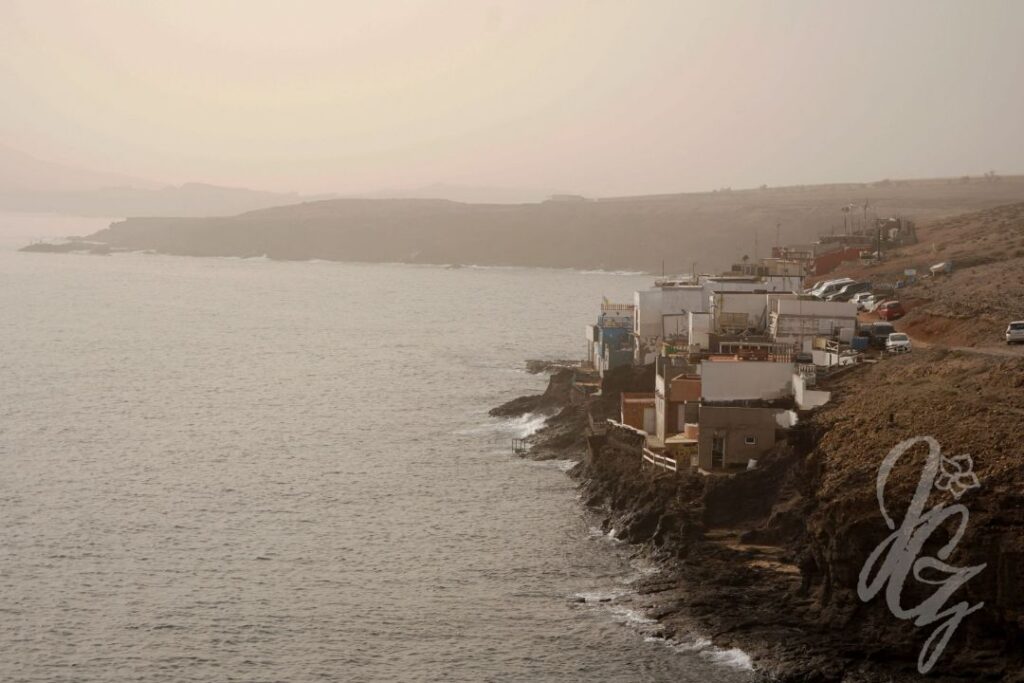
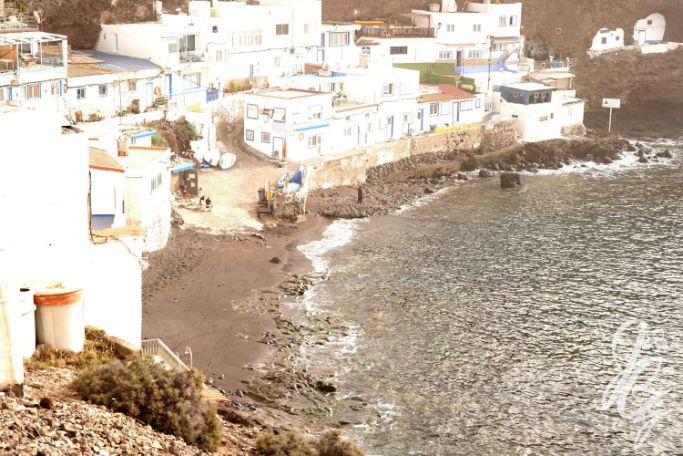
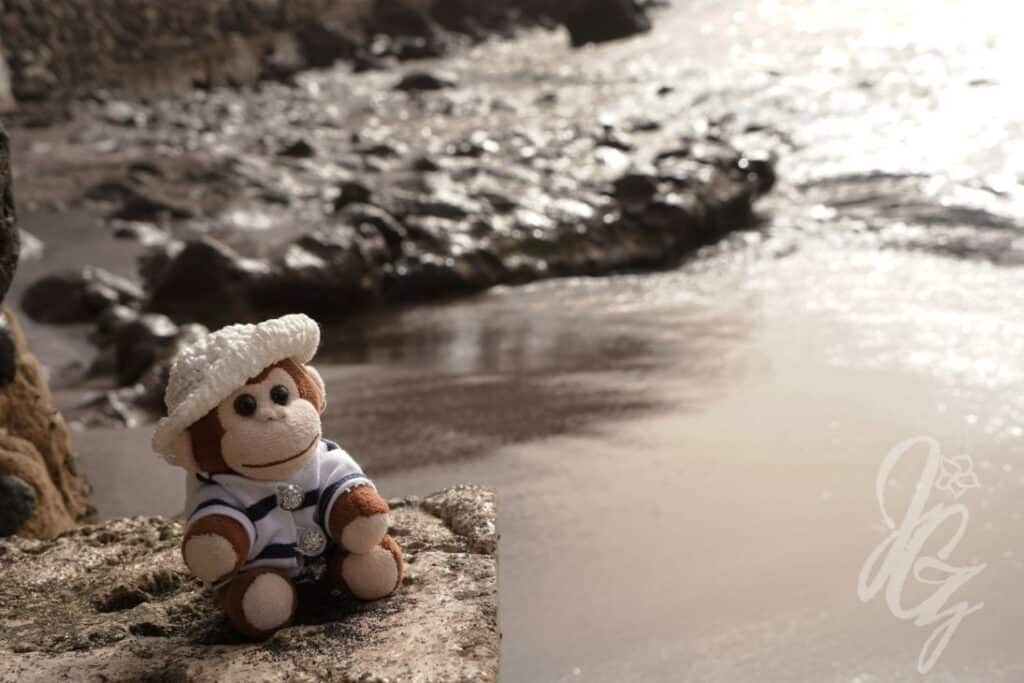
It was around 10 in the morning; the sun was up in the sky making it nice and warm and causing beautiful light reflections on the crystal-clear water. They went for a swim. Álvaro had brought his snorkeling gear and was off to explore the marine fauna. He seemed very happy when he came out of the water later. There was a lot to see beneath the water surface and Tufia is also a popular spot for scuba diving. There were only a few other people on that little beach, and they all seemed to be locals.
Once they had had their swim and dried a bit, they made their way back up to the car park. Before getting in the van, they had a quick peek to the other side where they saw another bay with a beach: Agua Dulce. A few people were sunbathing there that Sunday morning.
The last kingdom of Gran Canaria: Fortaleza Ansite
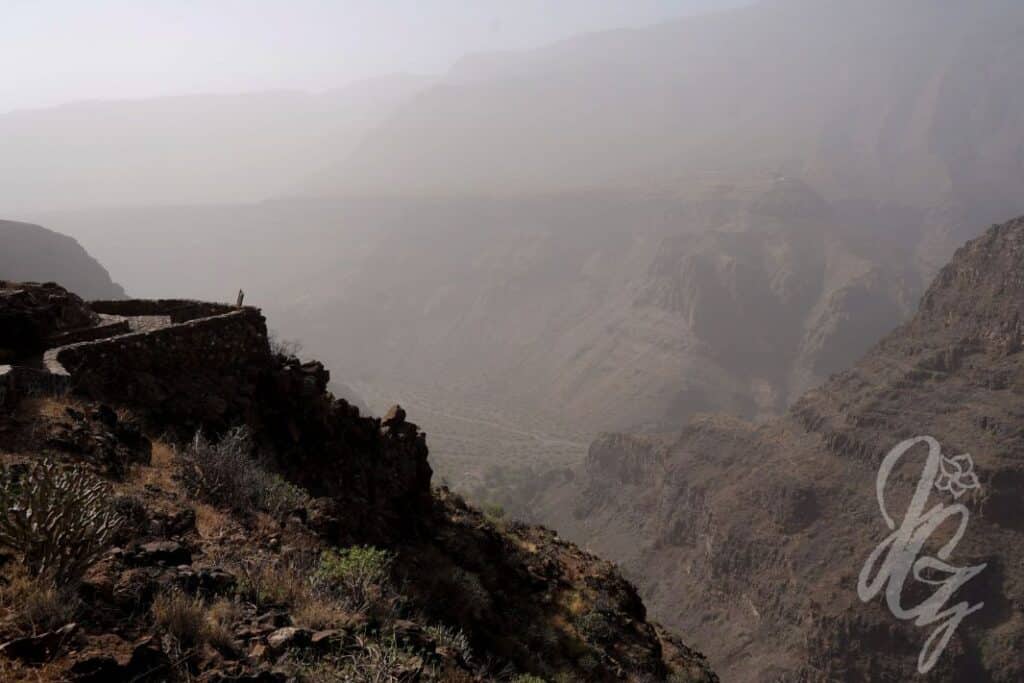
After their visit to Tufia, they left the coast and drove further inland into the mountains. Next up on the schedule was the Fortaleza Ansite. On the way up there, they made a stop at another viewpoint, Mirador el Guriete. The Calima that day clouded the view a bit, but they still were perfectly placed to see the Fortaleza Ansite and the surroundings high up on a towery rock formation.
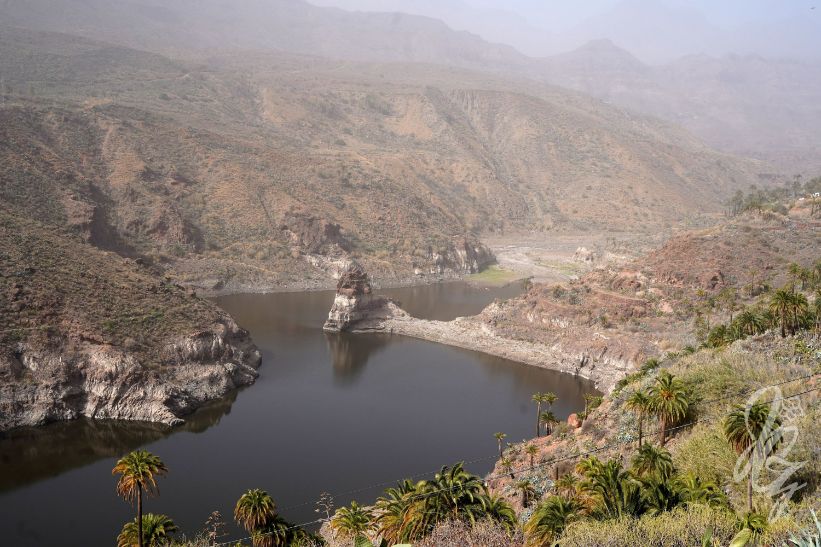
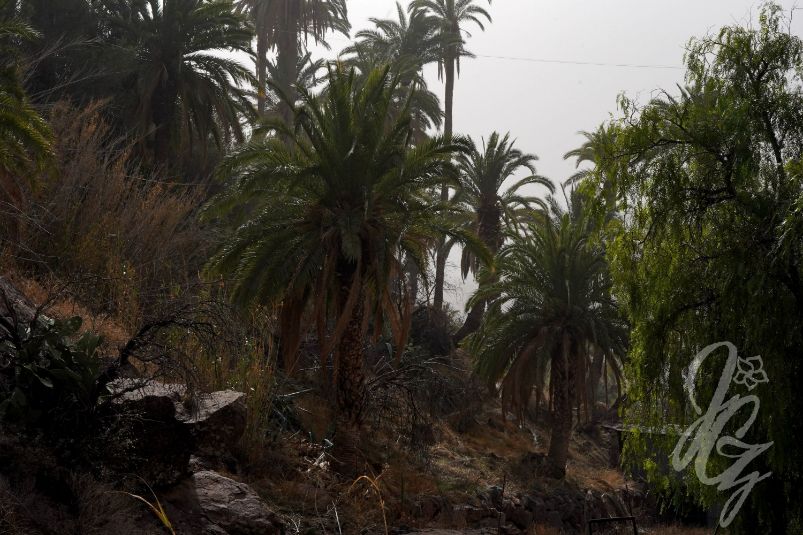
They also saw a palm tree oasis in the valley beneath them and Lucas explained that this used to be a river and spoke of the times when big parts of the islands were covered in palm trees. This really seemed to be a place where you could see the impact of climate change. Apart from the palm tree oasis, there was nothing that would indicate the presence of water.
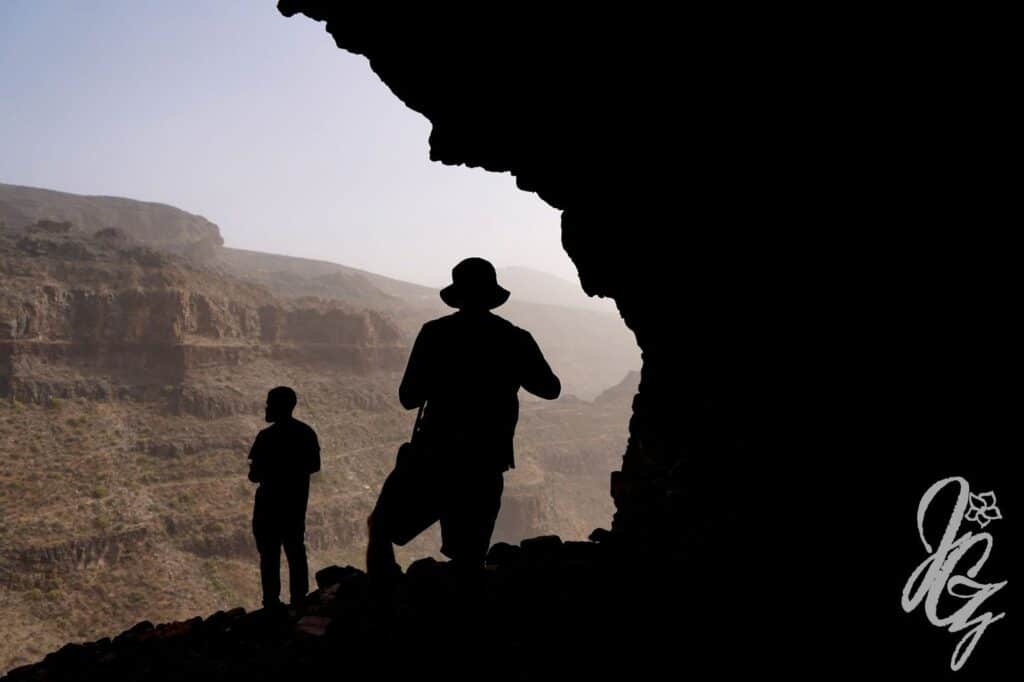
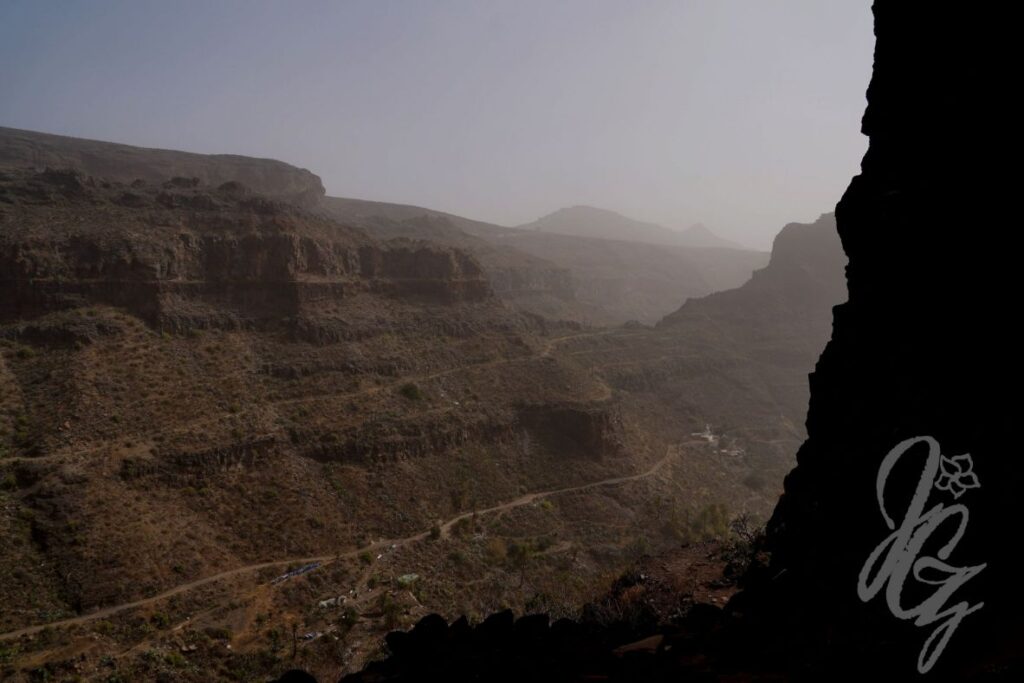
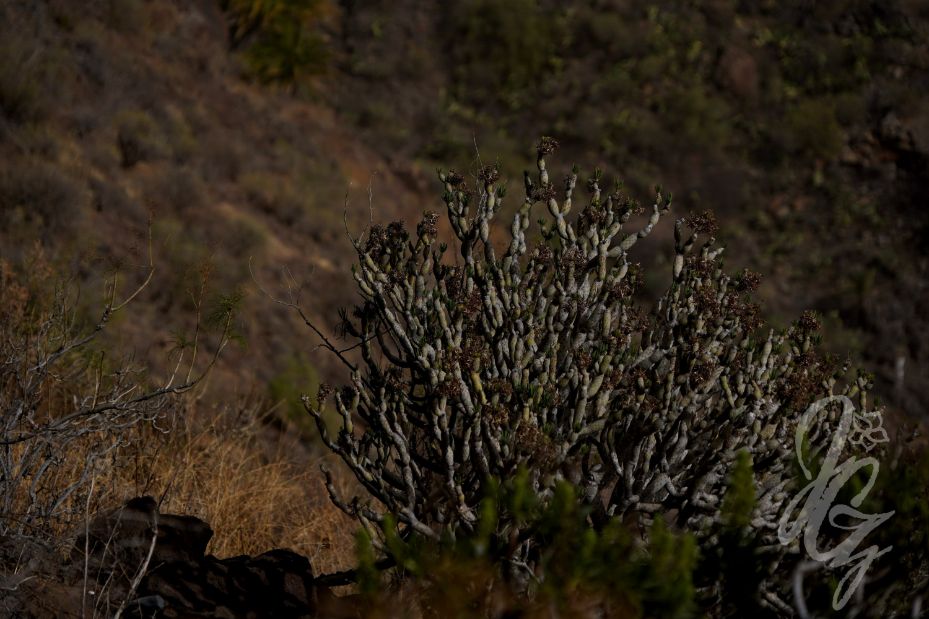
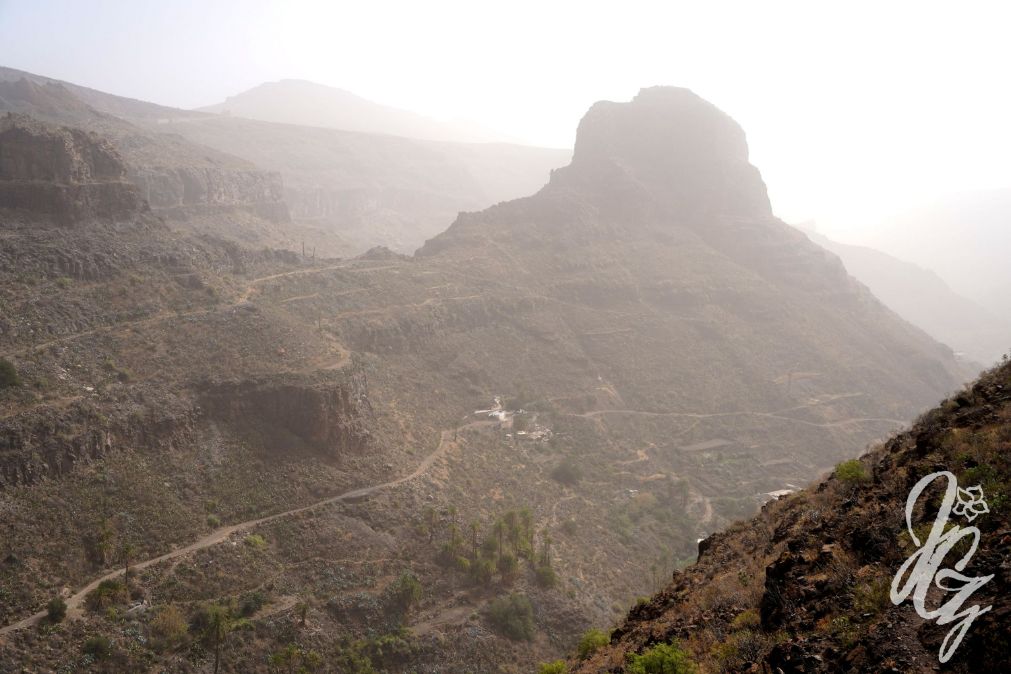
Back in the van, they drove to the fort they had just been admiring from afar. The name “last Canarian kingdom” was a good opportunity for Lucas to speak about the history of the islands and the indigenous population that used to live there before the Spanish arrived.
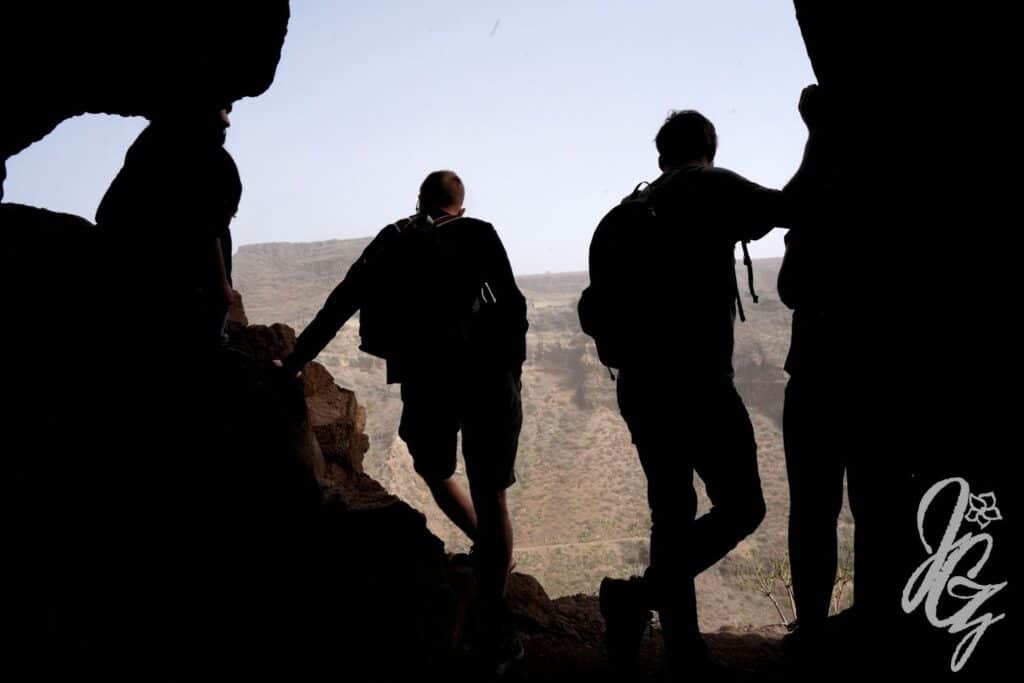
There are also some archaeological excavations that show the traces of stone houses, but the fort is mostly a dramatic rock formation with plenty of caves. There is a path leading up to the main cave. It is open from both sides offering stunning views to both sides of the valley. If Charlie had done this trip on her own, she would have stopped here and returned. Lucas however took them a bit further on the outside of the cave and into another. It involved a bit of climbing and is not suitable if you’re scared of heights in which case they would not go there. Everybody on the tour that day was quite adventurous and wanted to explore more. It involved some climbing in and out of caves which made it a truly special experience.
Barranco de Tirajana & La Sorrueda’s Palm Valley
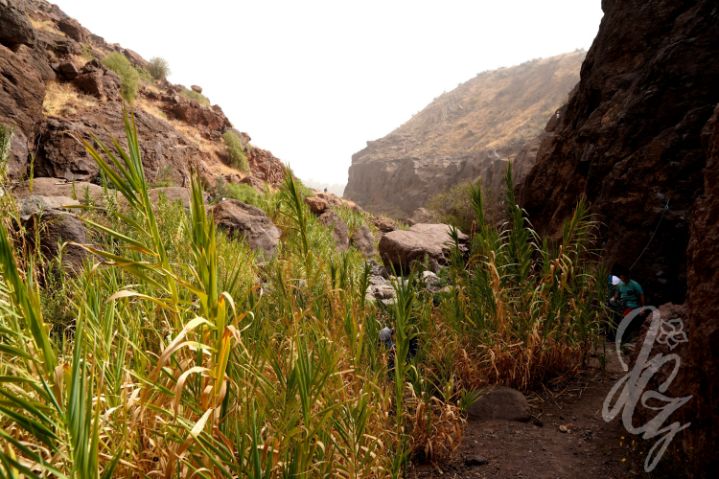
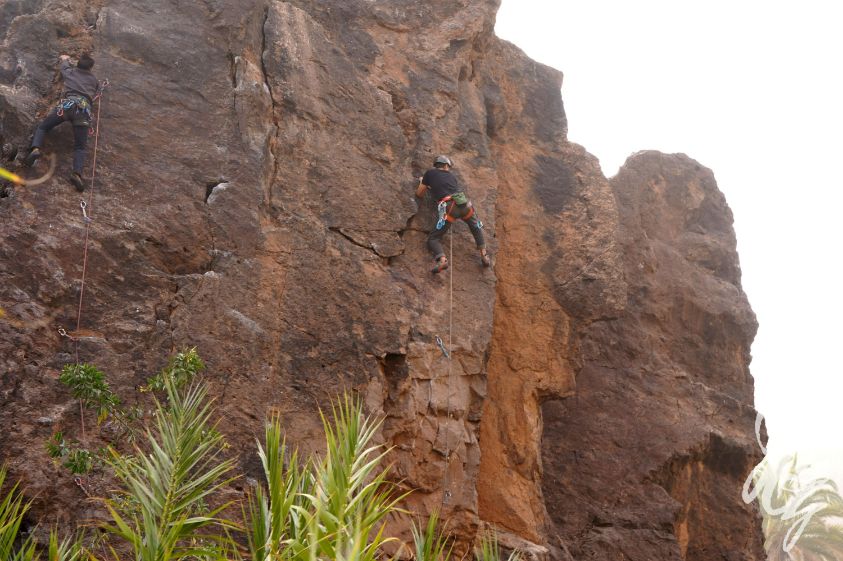
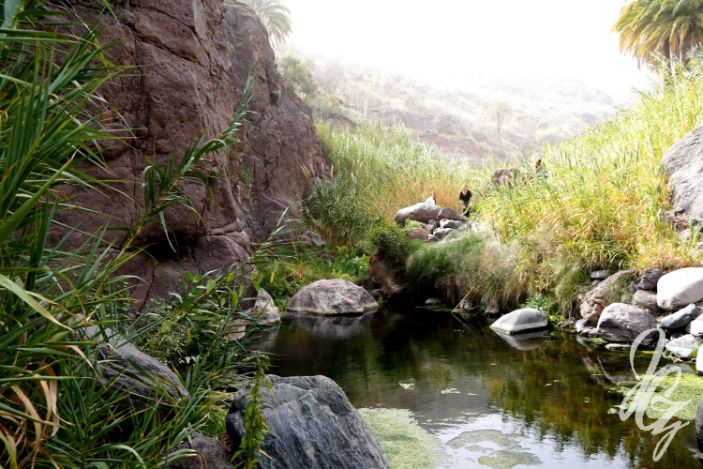
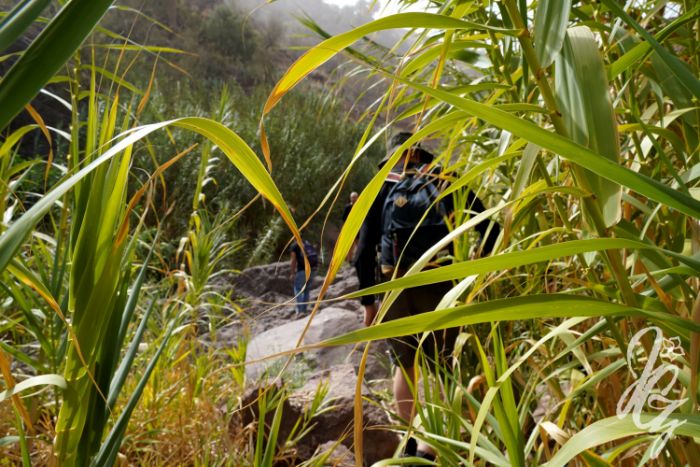
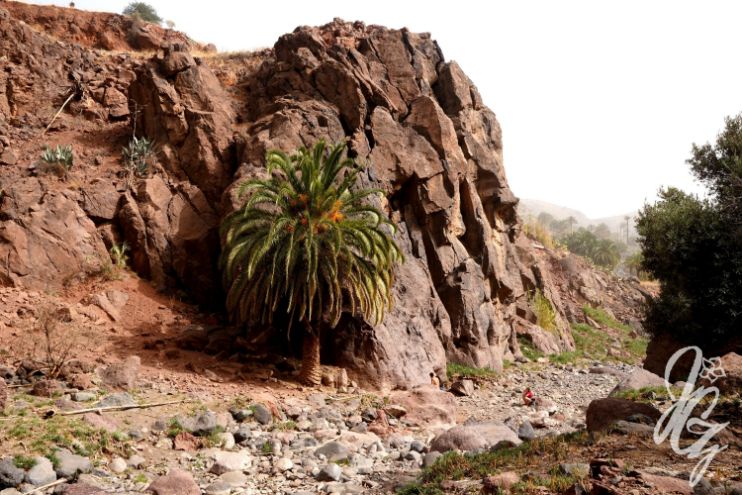
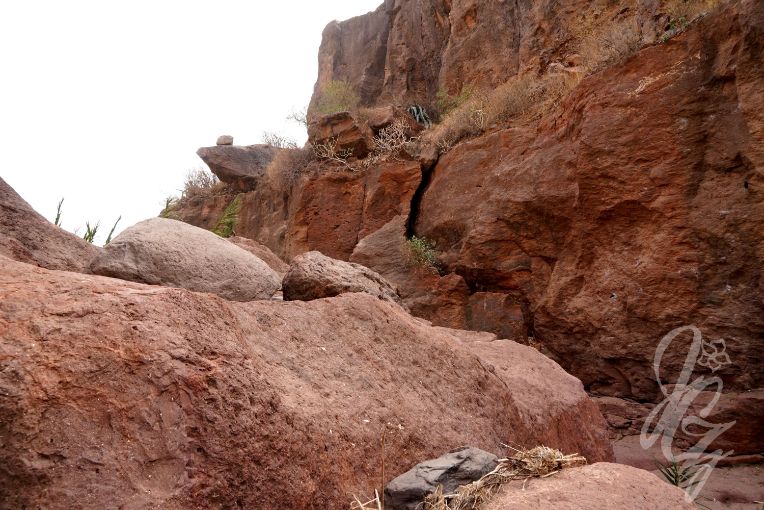
Still in the region around Santa Lucía, the next stop was at the Barranco de Tirajana. It was a mini hike into a canyon that is popular amongst climbers. That was obvious that day, not even at the climbing wall in London had Charlie ever seen so many climbers at the same time. The rain in the winter months usually brings a lot of water in the valley, but this year had been quite dry and there was only a small stream left and some tiny puddles.
As they walked into the valley and climbed over some rocks, Charlie felt that her photography skills could not do that landscape justice. See for yourself:
Barranco de las Vacas
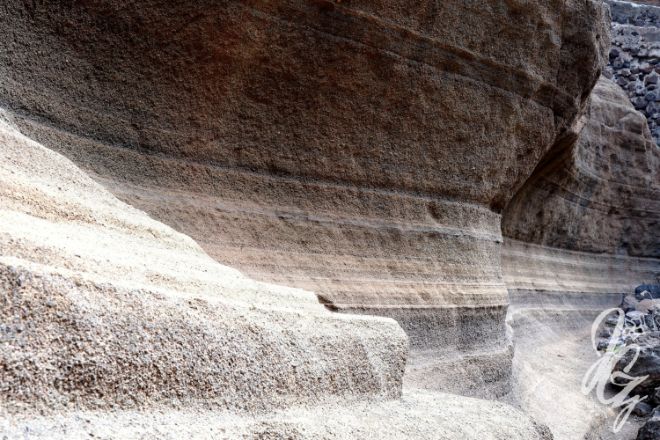
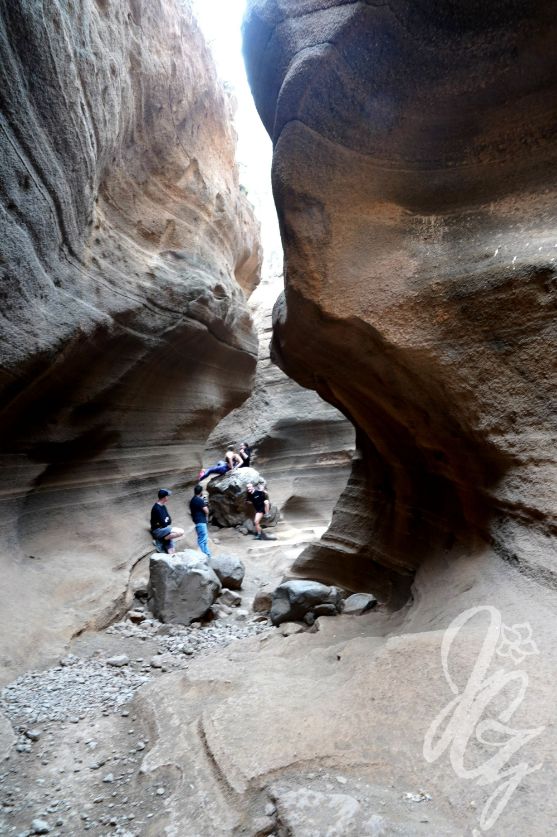
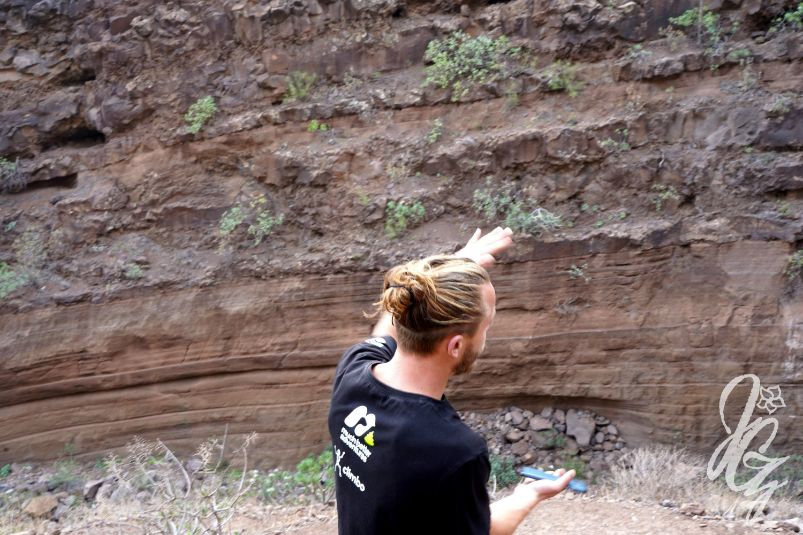
The next stop of the tour brought them into a much narrower valley. Instead of greenery, they saw impressive layers of stone formed by volcanic activity and flowing water. During strong rains, the Barranco de las Vacas is not accessible as the water is flowing fast through the valley. It wasn’t raining that day and they could walk all the way to the end where they found a very instagrammable spot. They also had to wait a bit for other visitors taking their pictures before they positioned themselves on a rock in the centre and Lucas would take a picture.
Valle Guayadeque
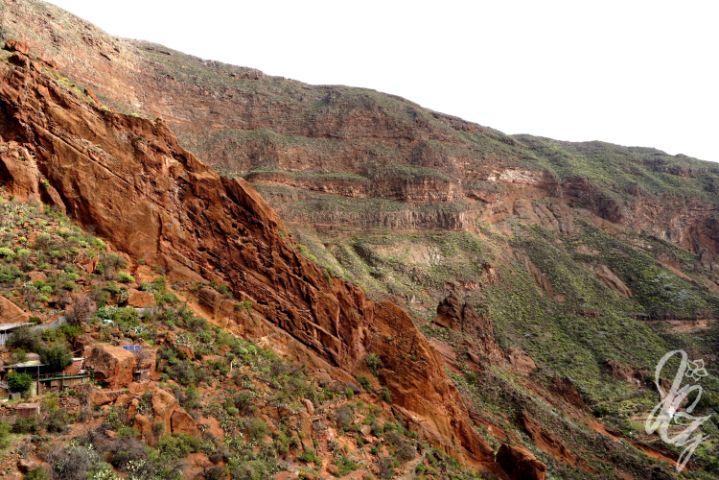
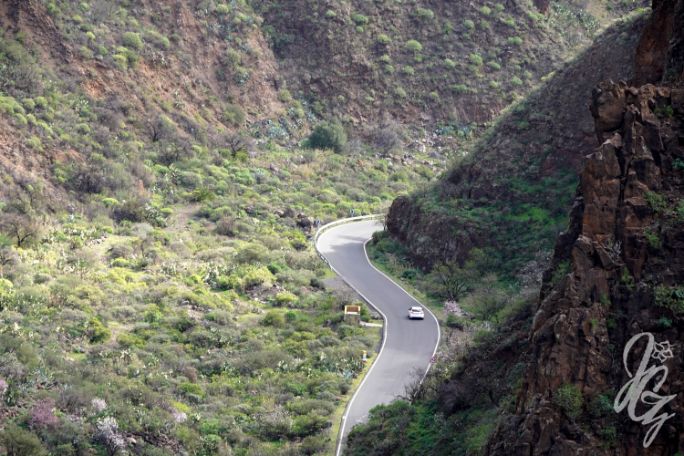
The final stop was another valley which was much greener and also colder that day. Charlie had to get her jacket out as they arrived in front of the restaurant in Guayadeque. They walked all around the rock into which the restaurant was built to enjoy the best views of the valley. They passed by some houses built inside the ancient caves that had been converted into tourist accommodation. Lucas called it humorously “Cave AirBnB”. Charlie had checked these out before and it seemed to be a nice type of accommodation, but not suitable for single travellers. Climbo are also offering a multi-day hike in cooperation with Much Better Adventures that starts in Guayadeque. The cave houses are the accommodation for the first night.
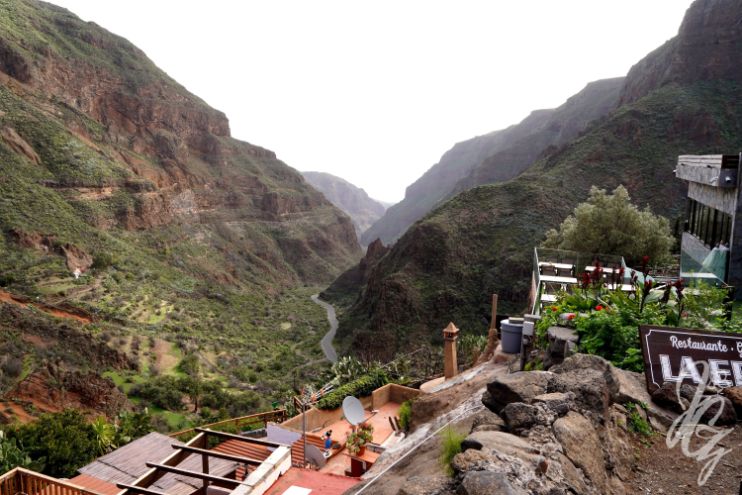
After their stroll around, they had a late lunch (was it rather an early dinner?) at the restaurant Tagoror. In typical Canarian style, they shared some papas arrugadas and a meat platter. They also took this opportunity to try gofio, a Canarian specialty dish that dates back to the indigenous population. It is a thick fish stew with corn flour. It might sound strange, but it is very tasty!
Another great trip in Gran Canaria came to an end and Charlie was happy to have discovered Climbo as a tour operator. She had spent two days full of adventure, experienced the multiple micro-climates and she felt that she had gotten to know the island of Gran Canaria.