


Interview with surf instructor Kim “Kiwi” Wieland
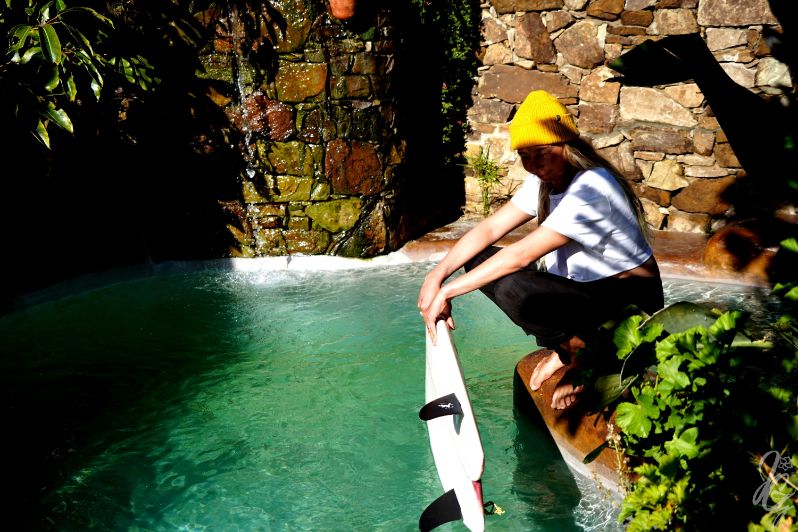
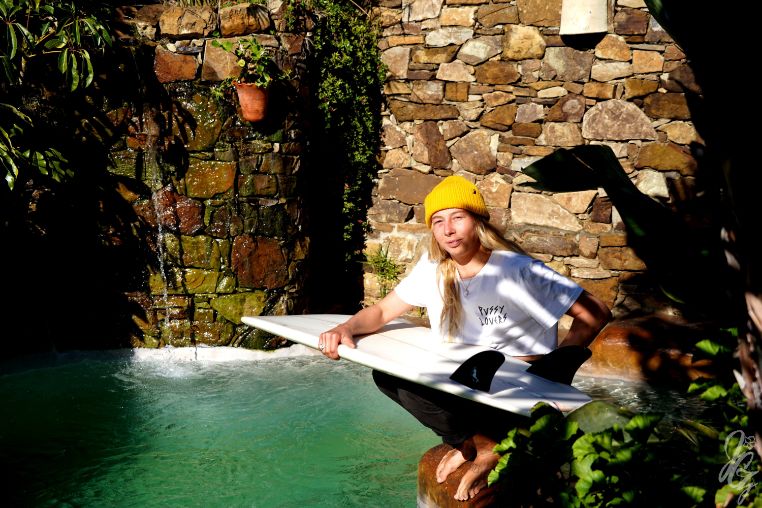
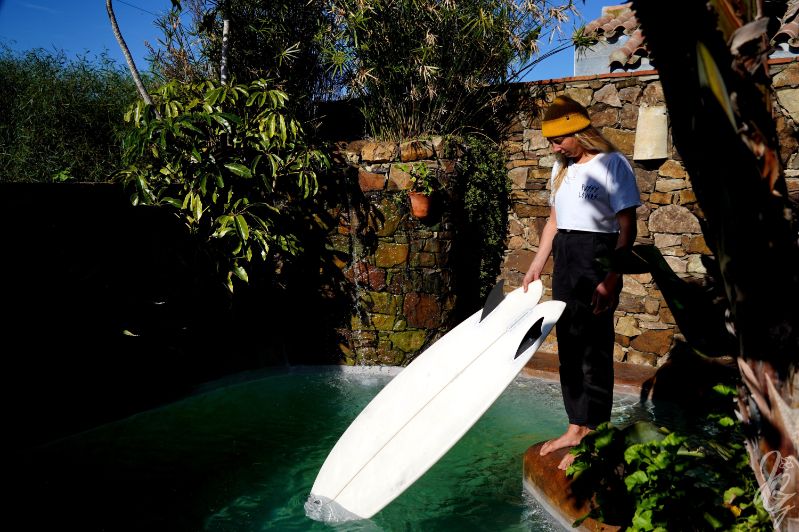
Kim “Kiwi” Wieland started surfing when she was at uni and has turned this passion into a profession. Under the wing of Milo Castelo, she became a surf instructor and has since taught the next generation of surfers (of all ages) in places like the Canary Islands and Portugal. Kiwi is currently living in Conil de la Frontera where Charlie met her during her surf trip to Andalucía.
When did you start surfing and how did you learn it?
I never thought something like that existed. I was born in Alicante. There are no waves in Alicante. I first tried it with friends when I was 14. We asked some of the cool guys how to do it and were told “when you’re longboarding, just paddle, get the wave and standup.” I swallowed a lot of water that day…
My curiosity was sparked when I was 18 and studying in Valencia. I got a cheap 8’ board and I was either sneaking out of my lectures to go surfing or arrived late. The others knew I had been surfing because my face was still blue from the sunscreen. I surfed my ass off. Within three weeks I bought myself a short board and sold the other one.
Did you finish uni?
Yes. I finished my studies [laughs]. I started with mechanical engineering, then product design, but I didn’t like it. I finished my studies as interior designer and carpenter. That can be useful for surfcamps.
Did you ever take a surf lesson?
No, I never had surf lessons. Milo Castelo was training with me, but it wasn’t surf lessons. I was more pushed by the people around me. I was in the water everyday with pro-riders and saw them airdropping. That made me practice more. In three months I learned what others learn in two years, because I was in the water every day. I was super stoked. There was nothing else for me.
What made you fall in love with surfing?
Surfing is the hardest sport you can ever try because it’s not depending only on you. I was a professional horse rider and took part in some smaller competitions in Spain when I was younger. Competition was normal for me. But with surfing, you’re outside, looking for waves, you try to analyse it and you’re playing with a dangerous thing. There can be zero waves or there can be a Tsunami. You have to pay attention every second or you’re in danger and you put all of us in danger. You need to learn how to dance with energies and it’s pretty hard sometimes. And still, sometimes, it’s like this.
When did you decide to turn it into a career?
I was training with Milo Castelo in Galicia and was in the water all day from 8 in the morning until it went dark at 11 pm. I also trained his little girl who was 4 years old. Milo was then pushing me to become an instructor. I love to teach because it’s coming from the heart.
Was it difficult to make it a career as a female surf instructor?
Being a surf instructor is totally different for girls. Men drop in and go in the water more proudly. You have to gain their respect. They need to see you catching more waves than them, but it was very easy to get a job. After my time in Galicia, I spent three years in Tenerife where I was teaching the kids club. I would get up at 6 a.m. and drive around in a van full of kids.
After that, I became the head coach of Pure Surf in Peniche and I had the best summer of my life. That position also looks good on the CV. For me, it was never about money.
Do you enjoy teaching kids more than adults?
Teaching kids is more playful. There is more energy, more giving and receiving. With adults, you have some that want to be pushed and others where you need to explain more. There is also psychology involved. Surfing is not only standing up, but you also need to learn about the ocean, how to read waves…
Which was the funniest moment during a surf lesson?
It was in Tenerife with the kids. We had 3 people on the board and did something like Acro Yoga or we did a competition where we all tried to look the same on the board. [Kiwi jumps into a surf posture.]
What is the hardest part of teaching to surf?
When you have a student who is scared and can’t overcome it. It’s about having fun.
Unbalanced groups are also a challenge. So many people come to surf schools and then you have beginners and others that had already been there for 2 weeks or if there is somebody who needs more attention than the others. That is not easy to balance.
Of course, rescues are hard too. One time, I had to rescue some kids who were too close to the cliffs with the body boards. It all went well but I was out of energy. Luckily, I never had to resuscitate anybody.
What is your number 1 tip for anybody learning to surf?
- Enjoy! Have fun! That’s the most important. If you don’t enjoy it, don’t do it!
- And don’t surf to relax, relax for surfing!
- Always surf with people who know more and don’t go in if you don’t feel it.
Who has inspired you the most for your own surfing?
Bryce Young and Torren Martyn. The free surf, retro style, twin fin, one fin – that inspires me. They make the ocean their playground and they’re enjoying it. On a longboard it is more like dancing and it gives back the fun. Surfing is not about being super good, but about having fun. That’s why I don’t like the competition anymore. And waves are always a big lecture. One wave, you’re feeling great, the next one, you’re nothing. It’s water language.
Which wave in the world do you have the best memories of?
It’s not about the wave, it’s the feeling. I loved surfing in Tenerife, Peniche; but my favourite break is Playa San Martín in Asturias. You have perfect left handers and the snowy mountains in the background.
Where did you travel to for surfing?
I only travelled in Europe. I would like to surf in Indonesia next. It’s important to take time to discover new places and to get to know the place. I was three years in Tenerife, and I learned that you need to stay longer to get to know all surf spots. There are 25 different peaks to discover.
Which surf break were you disappointed of?
I’m always disappointed when it’s windy. And when there are too many locals that give you a hard time. I noticed I had more trouble with this in river mouths. It is fine when you respect them, but it’s always different for girls.
The 2021 WSL season is starting soon. Who is your favourite? Carissa or Caroline?
Stephanie Gilmore. She remained humble, isn’t taking it too seriously and is enjoying it the most. Others sometimes try it too aggressively. They try to get into the boy-style and the boys are surfing more aggressively. Girls have more feeling and we need to use that to our advantage.
There are some famous examples of professional surfers with mental health problems, e.g. Andy Irons, Sunny García, Keala Kennelly. Could surfing be their way of self-medication? Do you see a connection between surfing and mental health?
Andy Irons was tragic and once there is pressure from the outside, you’re not doing it for fun anymore. For a lot of people it’s an escape or the waves are the only place where you feel safe. Rob Machado too left at some point. Everyone has a different balance.
The ocean is a place where I can be myself. You don’t need to explain anything in the water and it’s a good place to meditate that gives a lot of energy.
Thank you Kiwi for the lovely chat, the coffee and for opening the doors to your home in Conil de la Frontera!