Weather in Gran Canaria
Sun and wind from the Sahara
When we think of the Canary Islands, we think of sunny days, blue skies and beaches. That is true for most days of the year. The sunniest places in the Canary Islands are the south of Tenerife and the south of Gran Canaria. If we ignore the microclimates that cause the weather to change, Gran Canaria gets on average 320 sunny days every year. In the month of July, Las Palmas de Gran Canaria gets 308 hours of sunshine, the lowest amount of sunshine is in December with 181 hours.
| Month | Min °C | Max °C | Rainy days | Hours of Sunshine |
|---|---|---|---|---|
| January | 15 | 21 | 3 | 190 |
| February | 15 | 21 | 3 | 195 |
| March | 16 | 22 | 2 | 230 |
| April | 17 | 23 | 1 | 235 |
| May | 18 | 24 | 0 | 265 |
| June | 19 | 26 | 0 | 270 |
| July | 21 | 27 | 0 | 300 |
| August | 22 | 28 | 0 | 300 |
| September | 22 | 27 | 1 | 250 |
| October | 20 | 26 | 3 | 215 |
| November | 18 | 24 | 3 | 180 |
| December | 17 | 22 | 4 | 185 |
Data Source: https://www.climatestotravel.com/climate/canary-islands/gran-canaria

Charlie was in Gran Canaria in January when the average temperature is around 18°C and she felt that she got plenty of sunshine. It was usually a bit fresh and humid in the mornings, but as soon as the soon had risen, it was nice and warm with an occasional light wind. However, on her second weekend she found out what a Calima was!


What is a Calima?
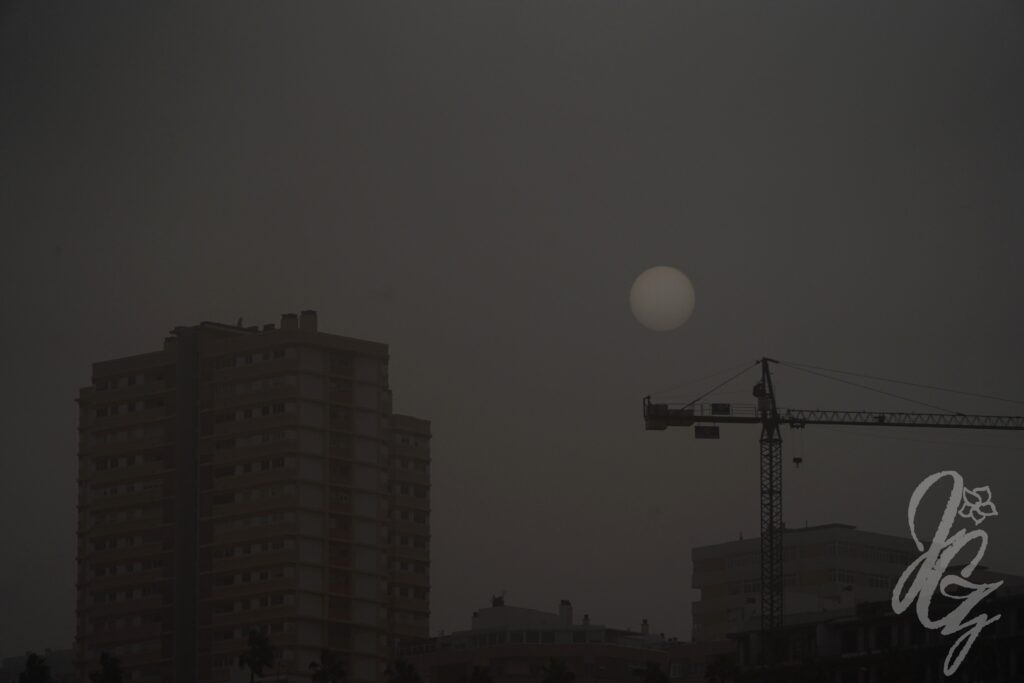
The Calima is a wind phenomenon in the Canary Islands. This southerly or south easterly wind brings dust and sand from the Sahara Desert over to the islands and increases the temperature. These sand particles make the air look thick and fog-like. It can become very severe causing flights to be cancelled due to low visibility. It can also affect the respiratory system. Hence, outdoor sports should be avoided during the Calima.
Animación del canal RGB de Meteosat en el día de hoy. Visibilidades mínimas en los aeropuertos: 1600 m. en Gran Canaria, 1800 m. en Fuerteventura y Tenerife Sur y 2800 m. en Lanzarote. pic.twitter.com/DwzgNwR1jg
— AEMET_Canarias (@AEMET_Canarias) January 14, 2022

The Calima happens mostly in winter when the wind travels at lower altitudes than in the summer. It also travels much further to Cape Verde and the Caribbean, but the Canary Islands experience it first due to their proximity to the Sahara.
Apart from dust, the Calima also contains toxins from power and mining plants and petrochemicals in countries in northern Africa. The population is usually advised to stay inside during the Calima. Charlie felt why that is recommended. It can get really hard to breath. It feels a bit like a hay fever. Charlie also had constantly itchy eyes during the Calima in Gran Canaria.

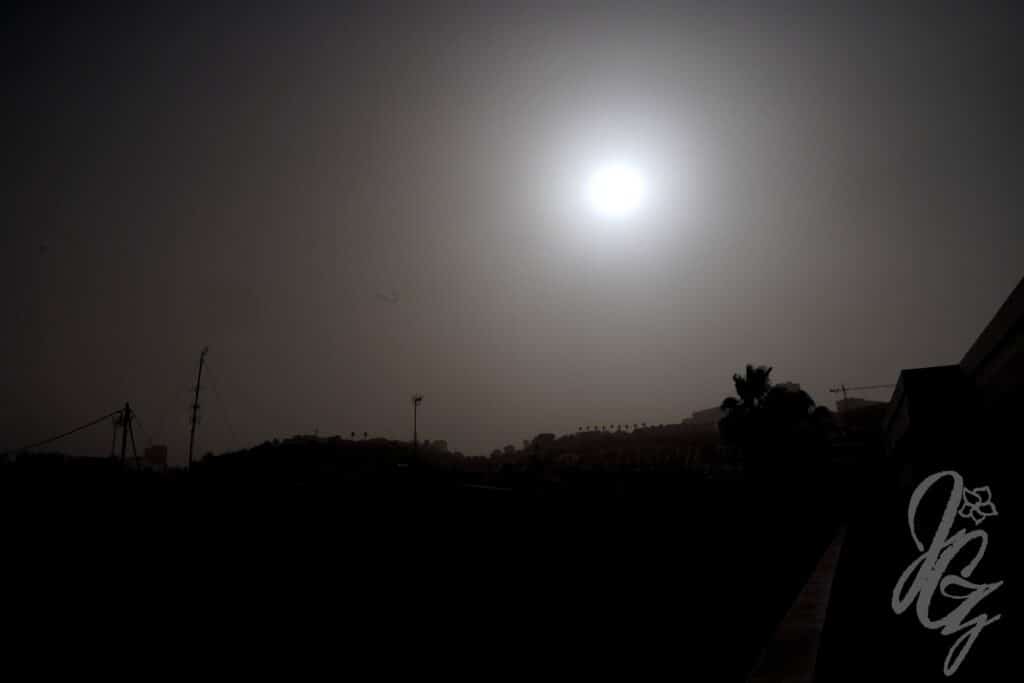


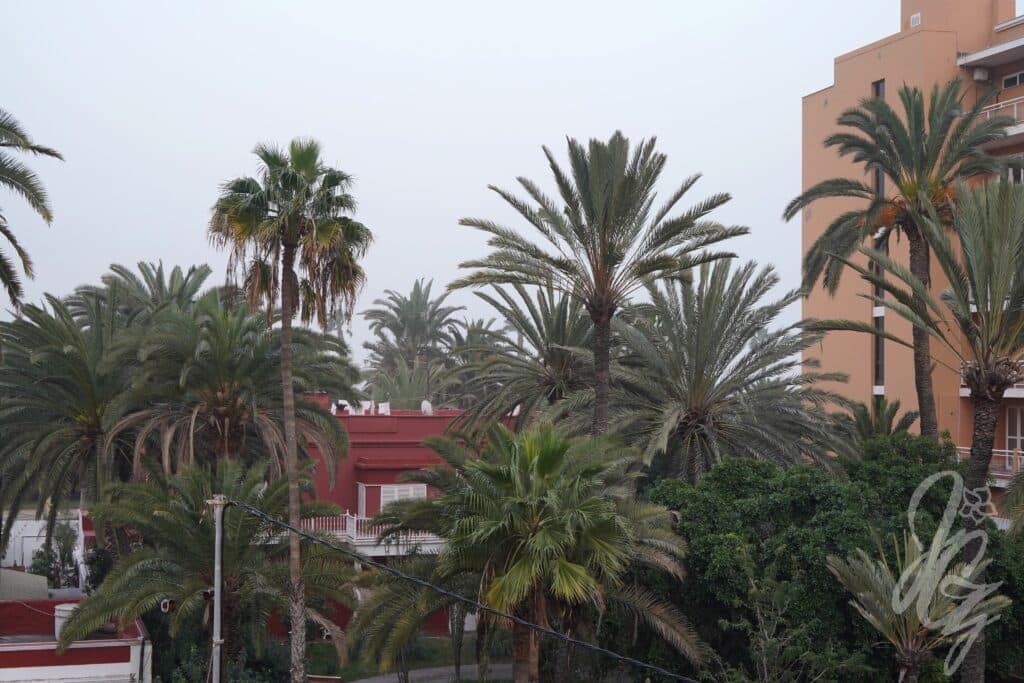
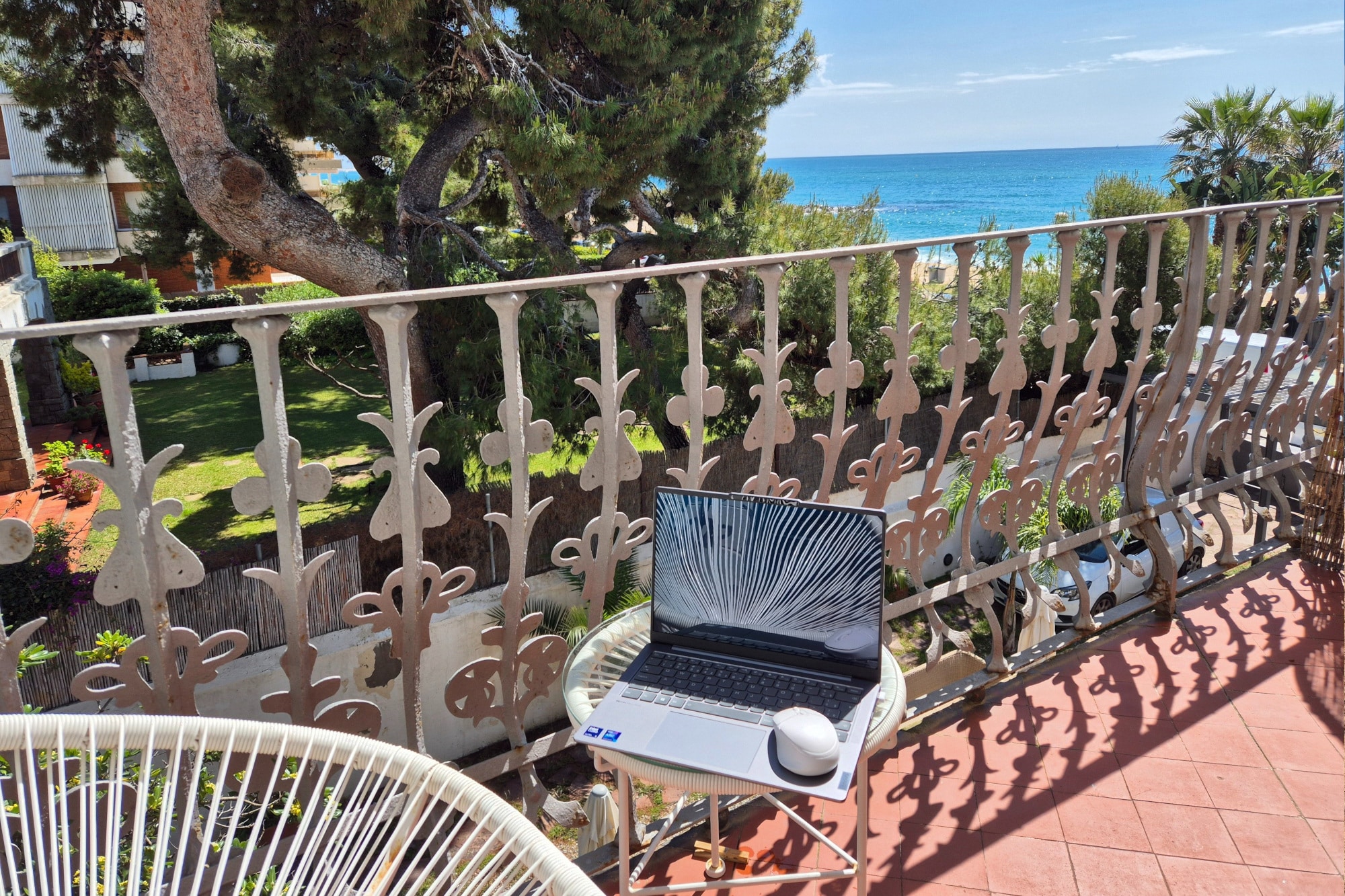
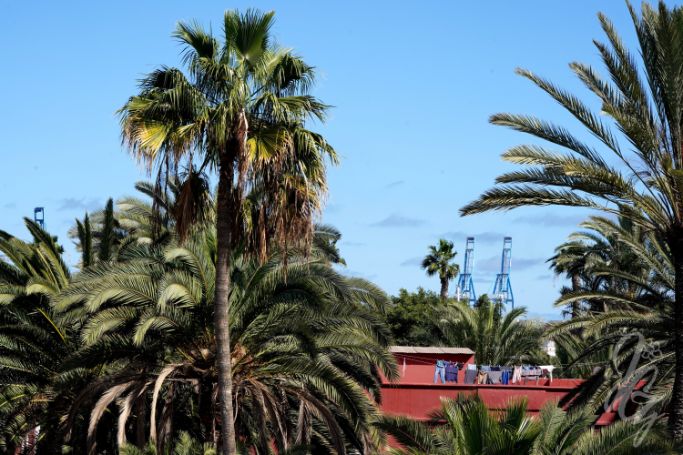
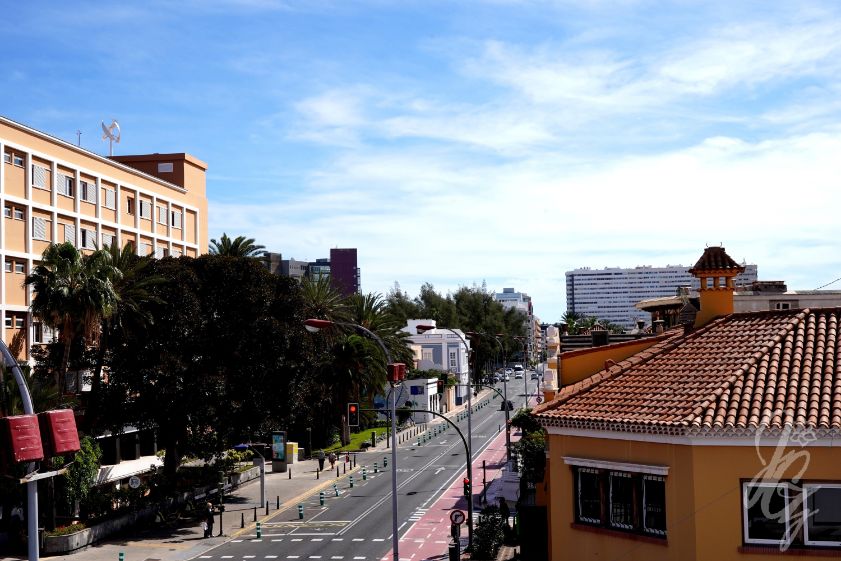
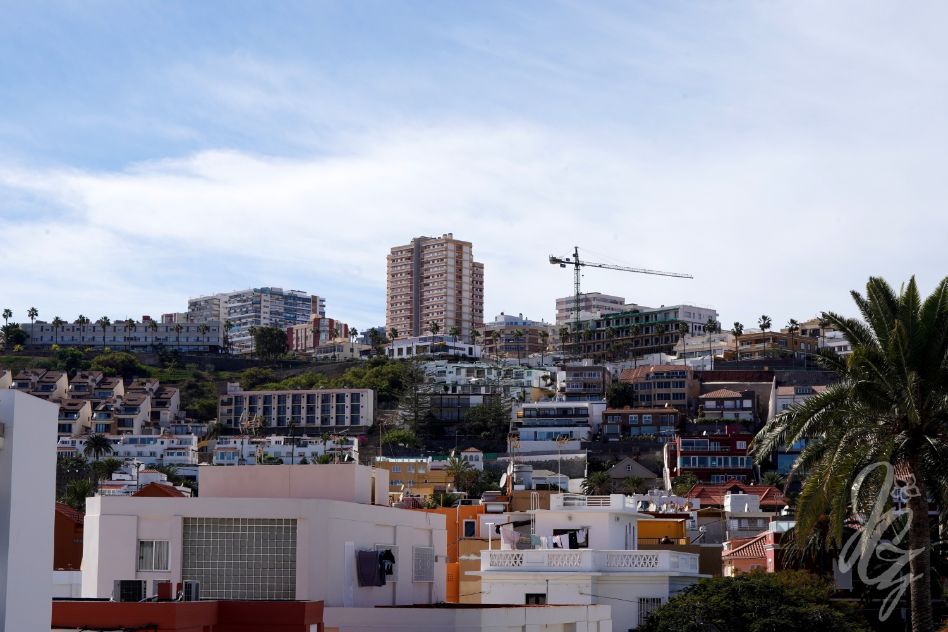
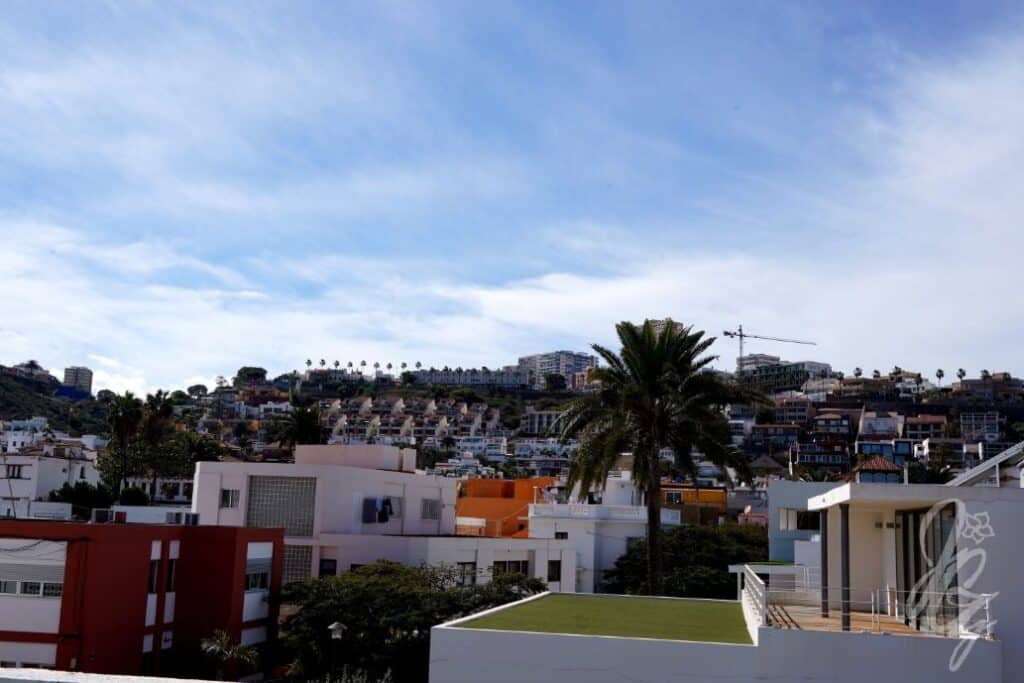
For comparison, this is how it looked from The Roof when there was no calima:


Does the Calima affect all the Canary Islands?
In most cases, all of the islands are affected by the Calima. However, depending on the exact location of the wind you might find places that are a bit more sheltered. It usually lasts 2-3 days. The authorities will issue warnings according to the pollution levels.