Philadelphia
Visiting the birthplace of the US
There was one reason why Charlie had wanted to visit Philadelphia for a while: Street art. She was not disappointed and whilst she was already there, why not dive a little deeper into US history too?
Philadelphia’s role in US history
Not only was Philadelphia the first capital between 1790 and 1800, it also is seen as the birthplace of the US because it was home to the first Continental Congress, the Constitutional Convention, the place where the declaration of independence was written and signed and where the constitution was drafted. As such, there are a few buildings worth visiting in “Philly”.
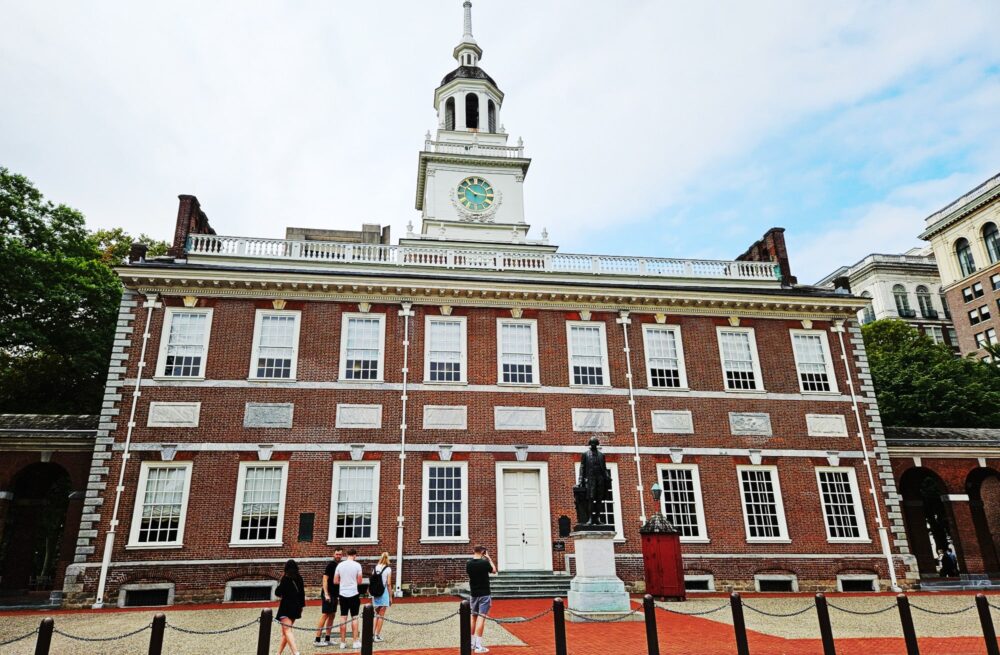
Carpenter’s Hall
It was built as the home of the carpenter’s guild between 1770 and 1773 and was used for a meeting of representatives of all 13 colonies, the first Continental Congress in 1774. The delegates, who still saw themselves as British subjects, came together to draft a letter to the king to address the growing frustration in the colonies. Little did they know that they would grow together as a nation in the process. A famous quote by Patrick Henry summarizes it:
“The distinctions between Virginians, Pennsylvanians, New Yorkers, New Englanders are no more. I am not a Virginian but an American.”
Carpenter’s Hall can be visited for free and if you’re lucky, you might even see a little re-enactment of the founding fathers.
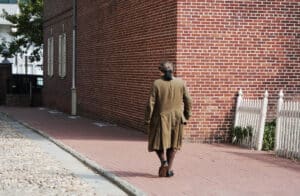
Independence Hall
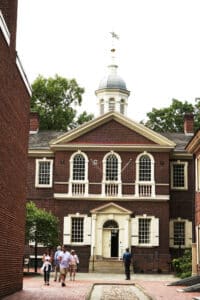
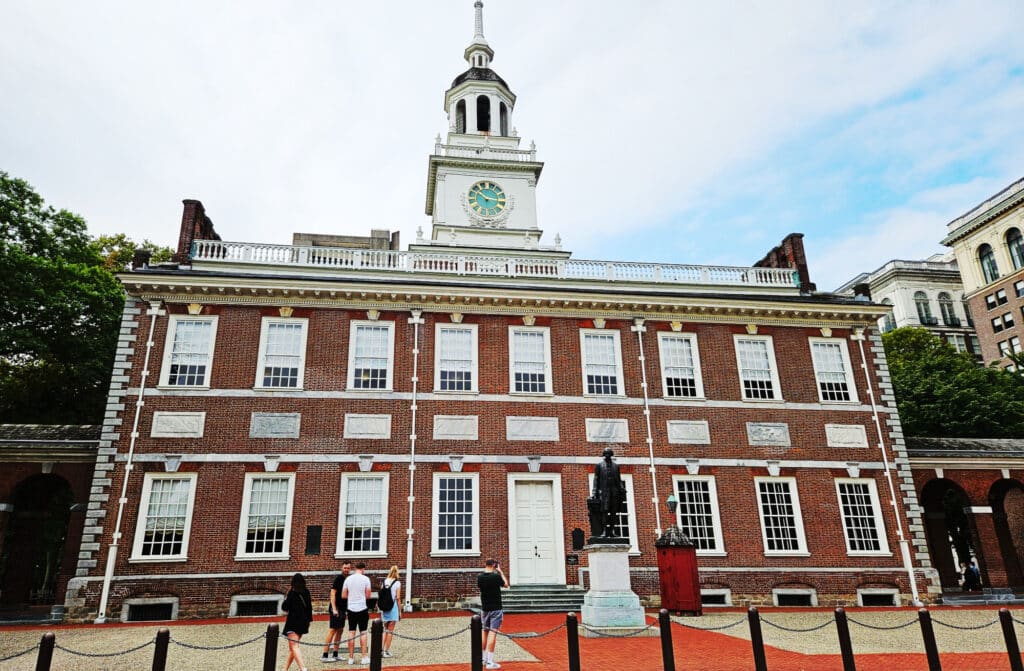
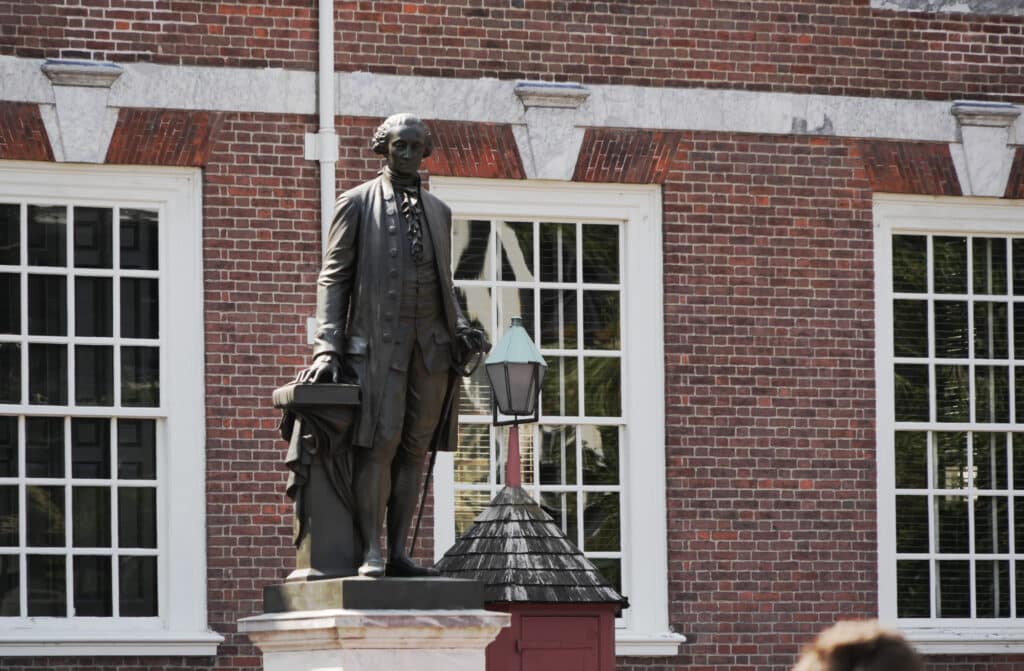
Originally built as the Pennsylvania State House, it was the place where the Declaration of Independence and the Constitution were debated and signed. You can’t miss this building as almost everybody is stopping in front of it to take photos. If you’d like to see it from the inside, you should book a tour online.
Liberty Bell
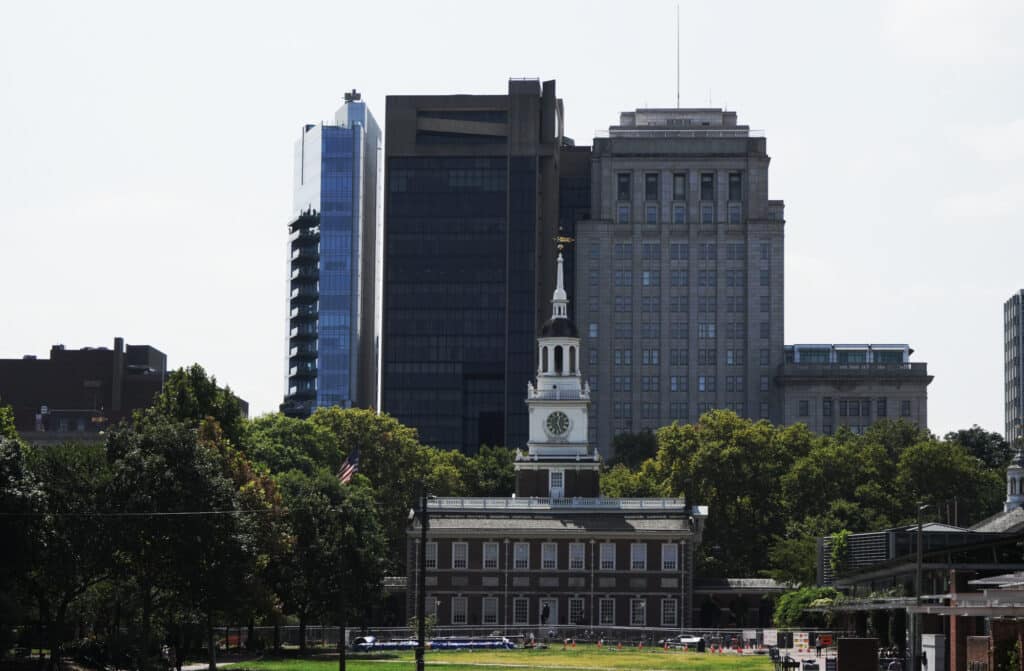
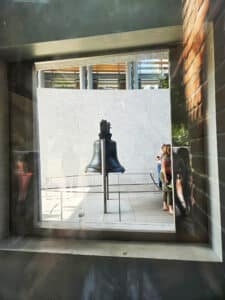
Opposite of Independence Hall is the so-called Liberty Bell, an emblem and symbol of liberty. You can see it through a glass window from the outside. If you’d like to see it close up, you’d have to get in line. It usually is a long line and the entrance is free. You only pay in wait time.
President’s House
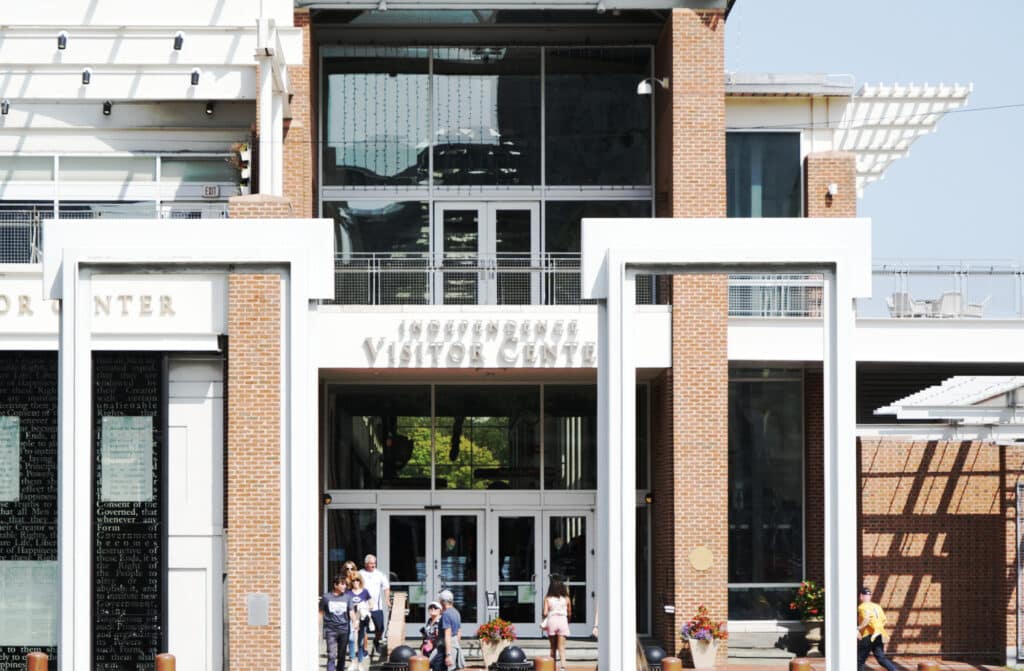
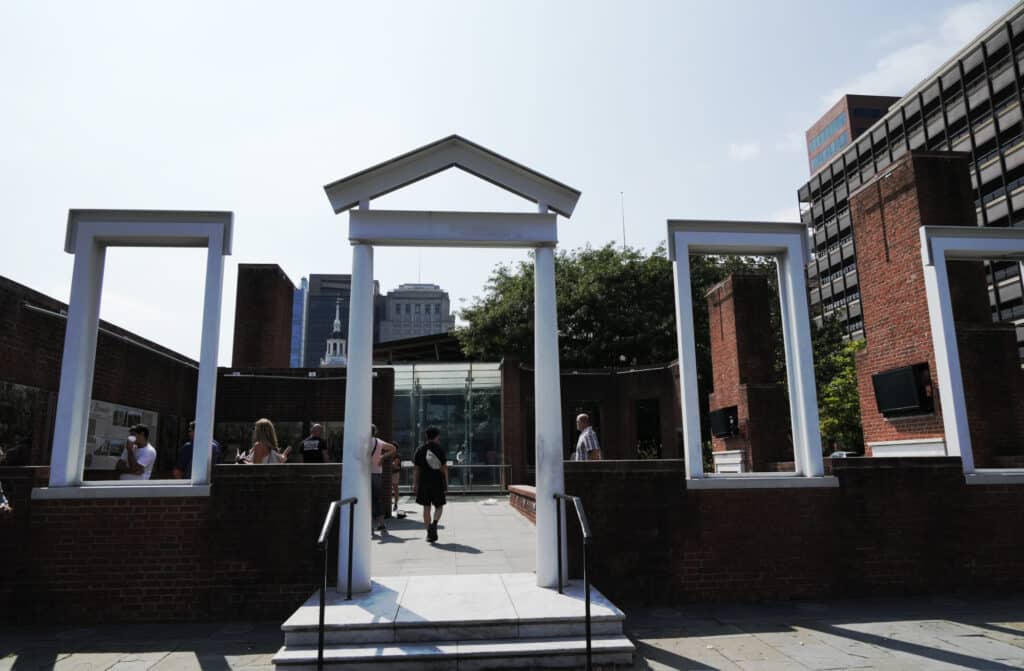
On the other side of the building where the Liberty Bell is, you can see the President’s House. Some walls and information tables mark the place where the first White House stood when Philadelphia was the capital of the United States between 1790 and 1800. The information on the building mostly refers to slavery in the history of the US.
Arch Street Meeting House
The first settlers and founders of the city of Philadelphia were Quakers who fled Europe due to religious prosecution and mostly wanted tolerance and equality. The Arch Street Meeting House was built in 1804 as the place for their monthly meeting. The interior is kept in its original state and the building can be visited for a small entrance fee. You can find information about the history as well as modern Quakerism.
Museum of the American Revolution
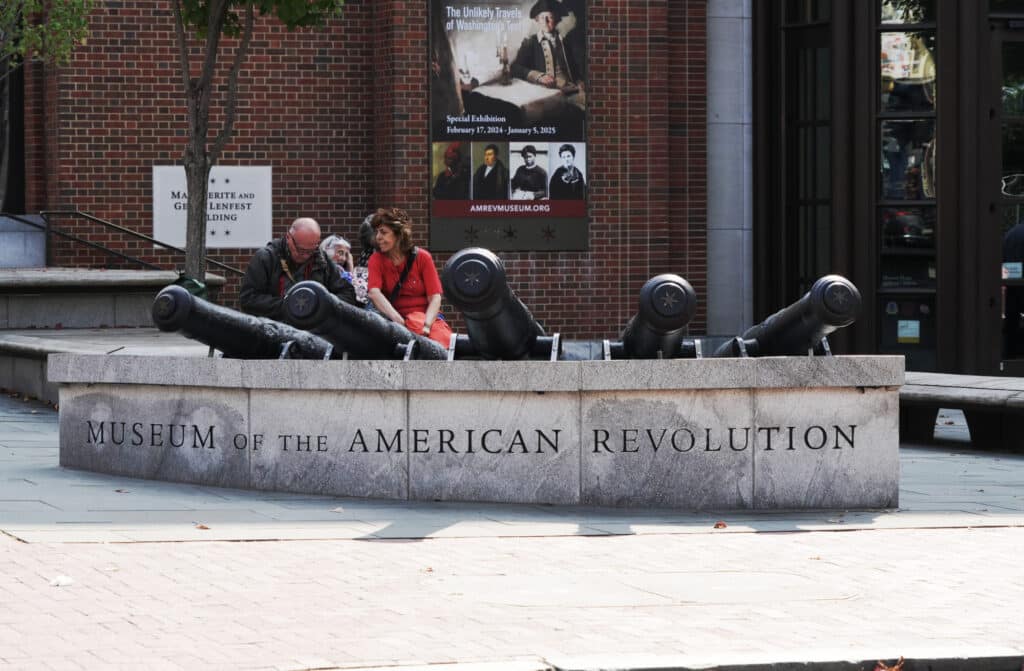
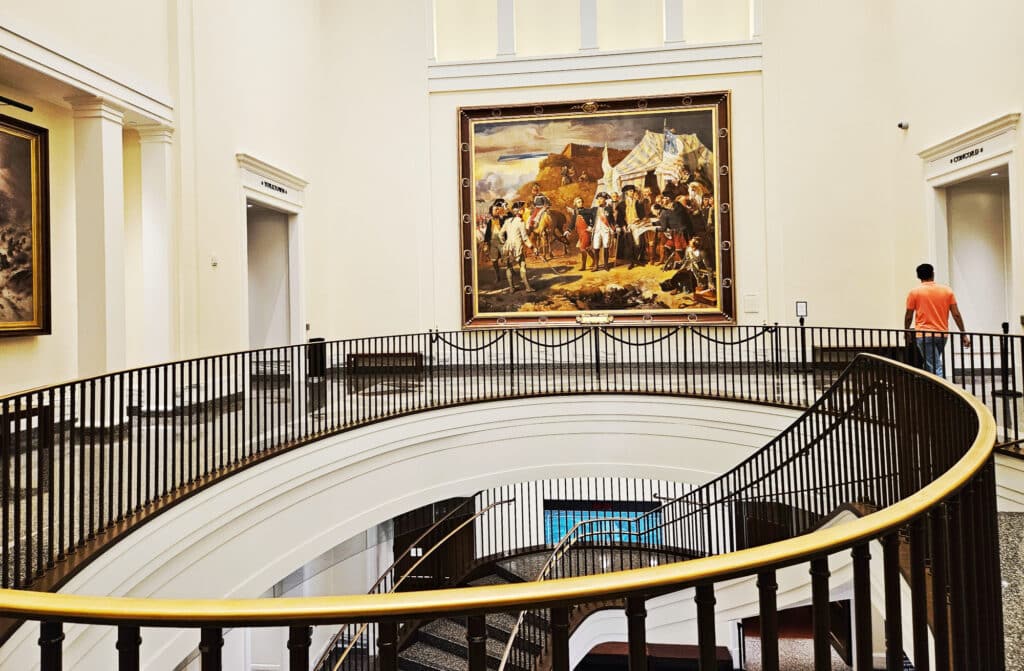
Not far from the already mentioned places is the Museum of the American Revolution where you can dig even deeper into US history. Charlie did a guided walking tour in Philadelphia, and it involved a short stop at the museum and a short video about Washington’s War Tent.
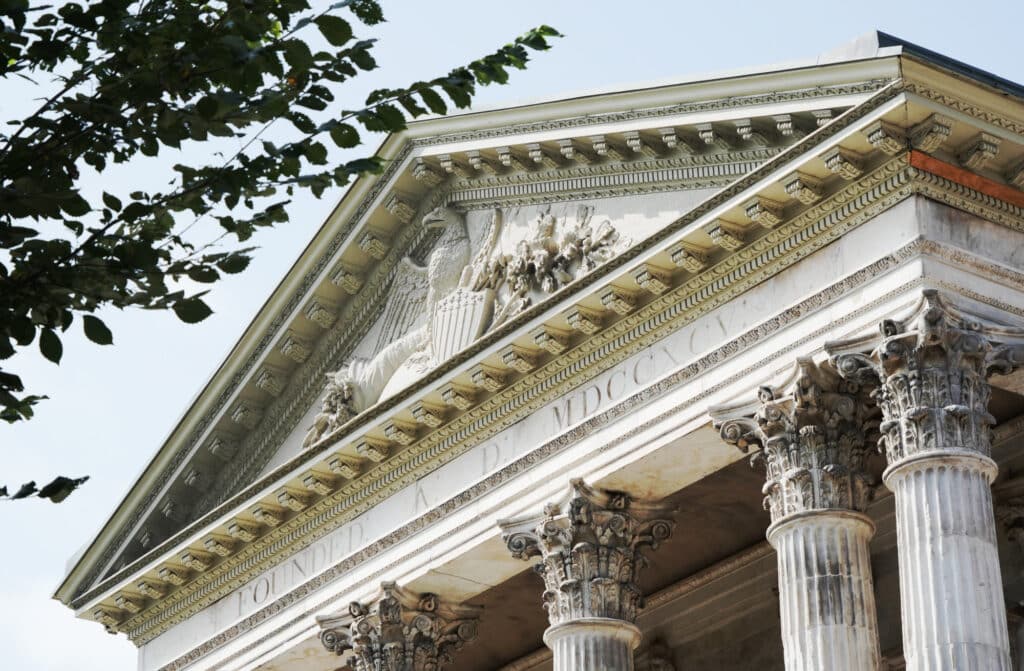
On the way from Independence Hall to the Museum of the American Revolution, you also pass by the buildings of the first and second national bank. It was the first Federal Reserve before there was an official one.
Christ Church Burial Ground
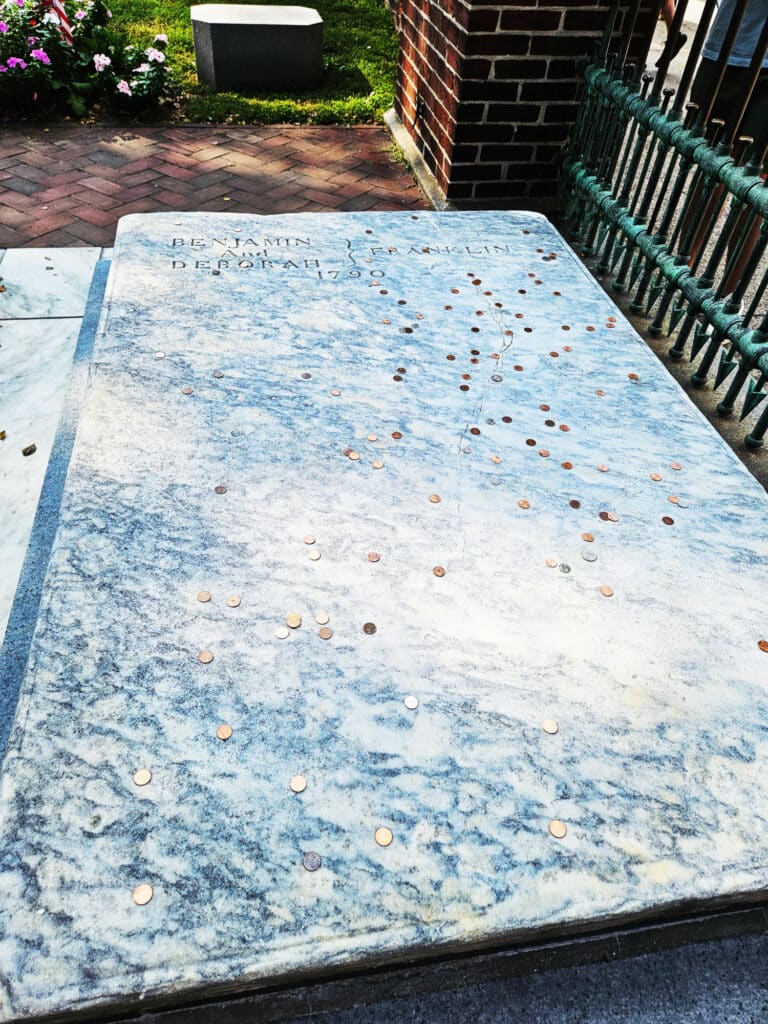
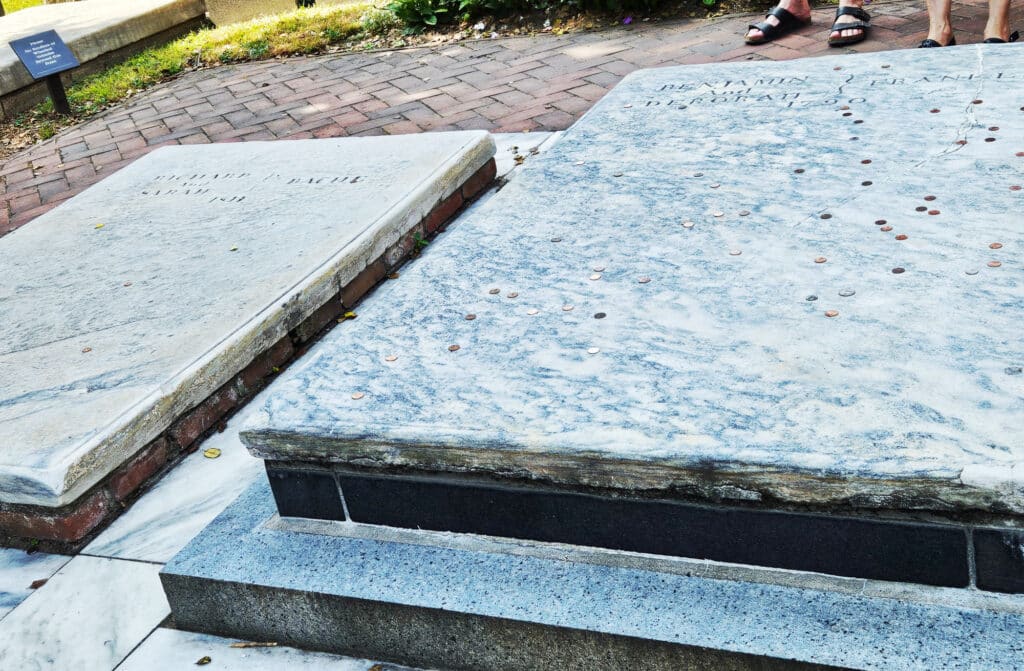
In that same area of Philadelphia is the Christ Church Burial Ground which is mostly visited because of the grave of Benjamin Franklin. Visitors leave pennies on the grave as a tribute to his quote: “A penny saved is a penny earned.” However, the guides at this burial ground like to joke: “A penny tossed is a penny lost.” They collect every year at least 1000 dollars from the grave. One year, it was as much as 4000 dollars.
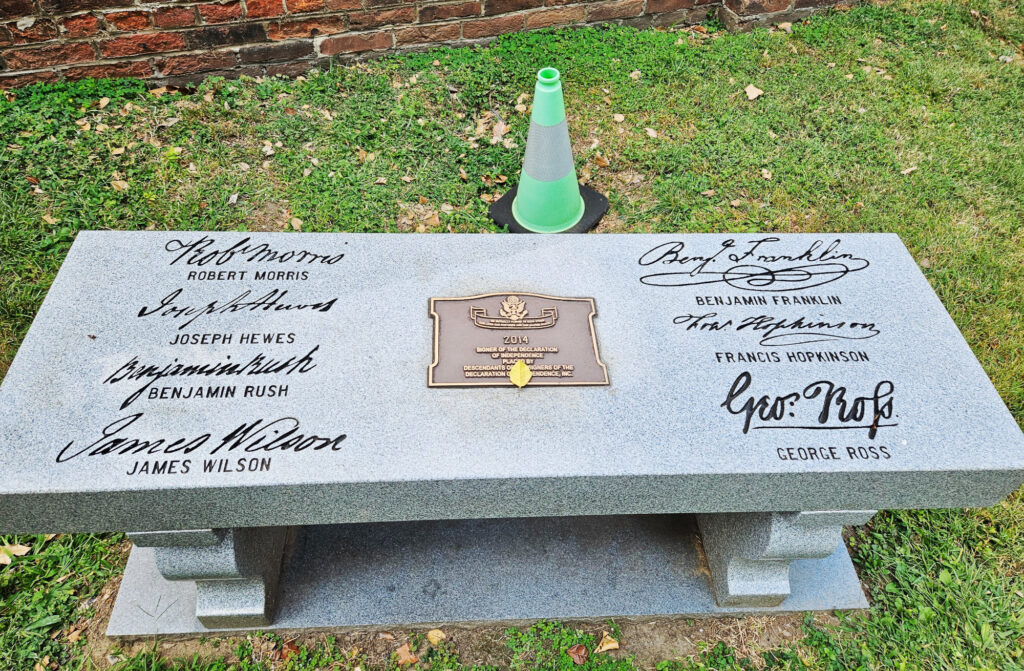
Apart from Benjamin Franklin, 4 other signers of the Declaration of Independence found their last rest at Christ Church Burial Ground: Benjamin Rush, Francis Hopkinson, Joseph Hewes and George Ross.
They also offer special tours around the Yellow Fever which hit Philadelphia in 1793 and led to large numbers of fatalities.
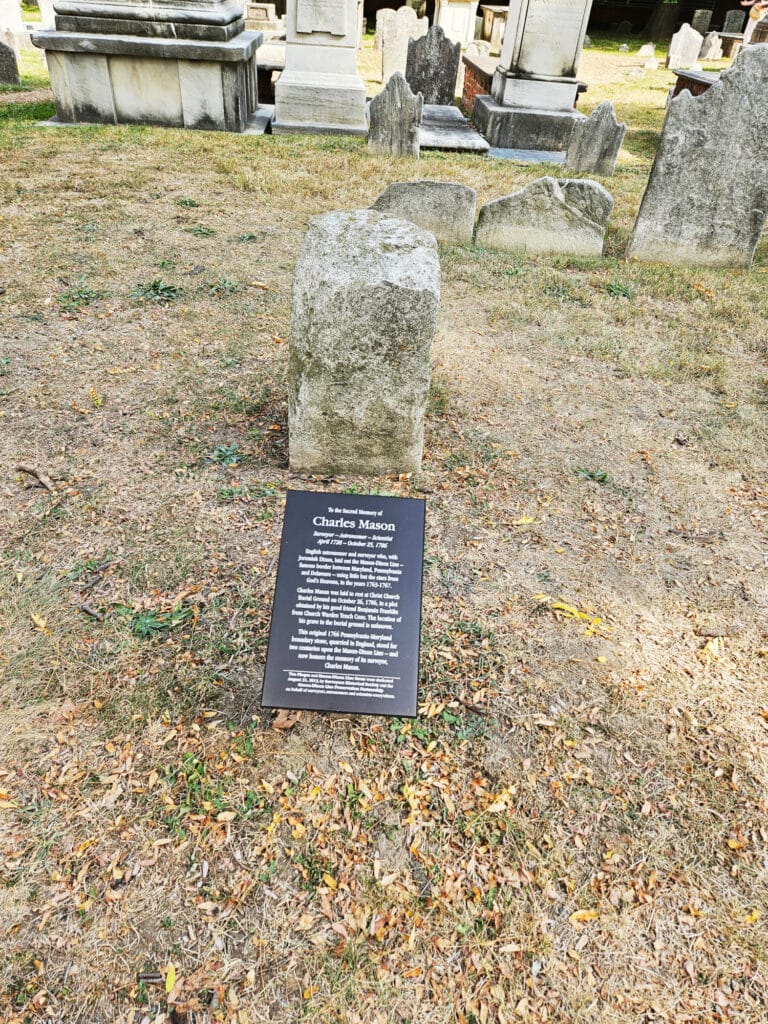
There is another interesting gravestone near the entrance to the burial ground. It reads “Charles Mason”. He drew together with Jeremiah Dixon the famous Mason-Dixon-Line. It was originally merely the boundary between Maryland and Pennsylvania and became during the Civil War the dividing line between the South and the North.
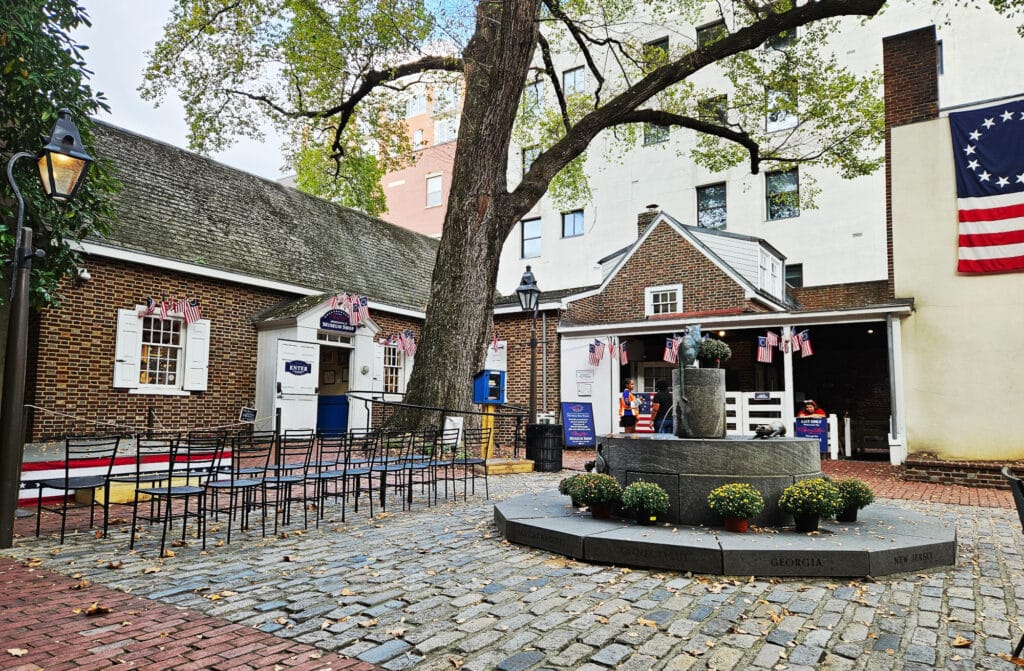
Betsy Ross House
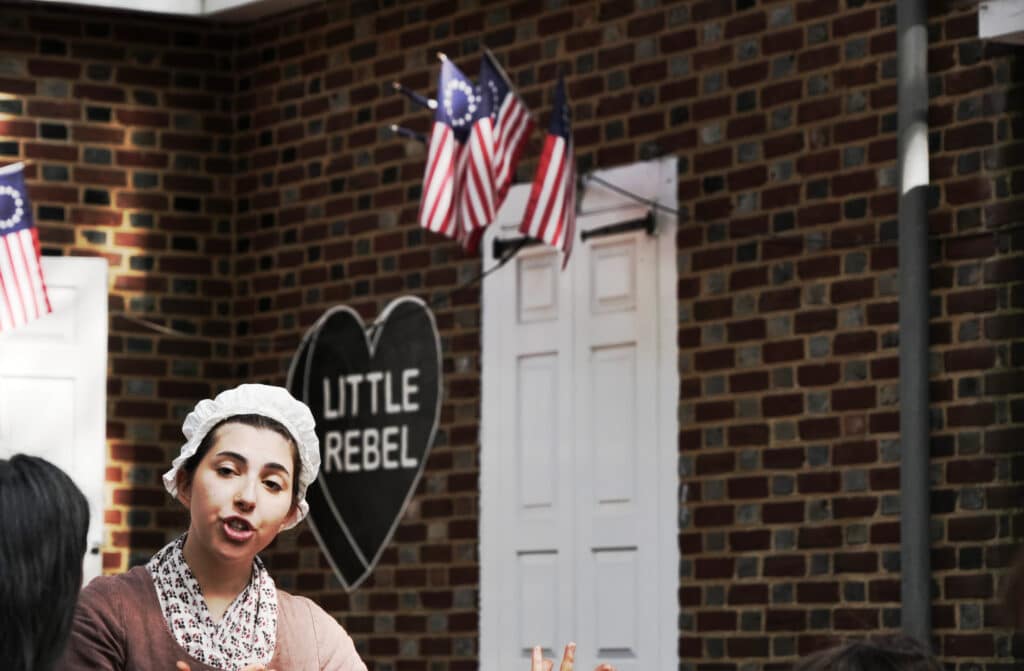
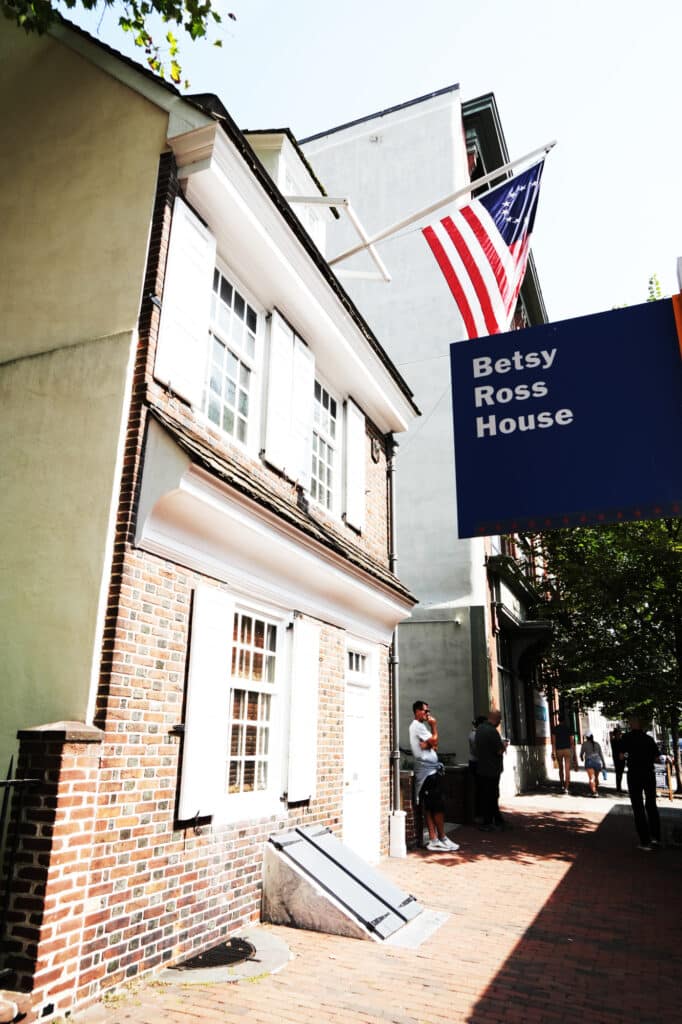
Although it is mostly a myth and easily could have been a PR-stunt, Betsy Ross is said to have been the person who sewed the first US flag. The only thing historians are sure about though is that she recommended for the stars to be 5-pointed. The house and museum can be visited for 10 dollars.
Elfreth’s Alley
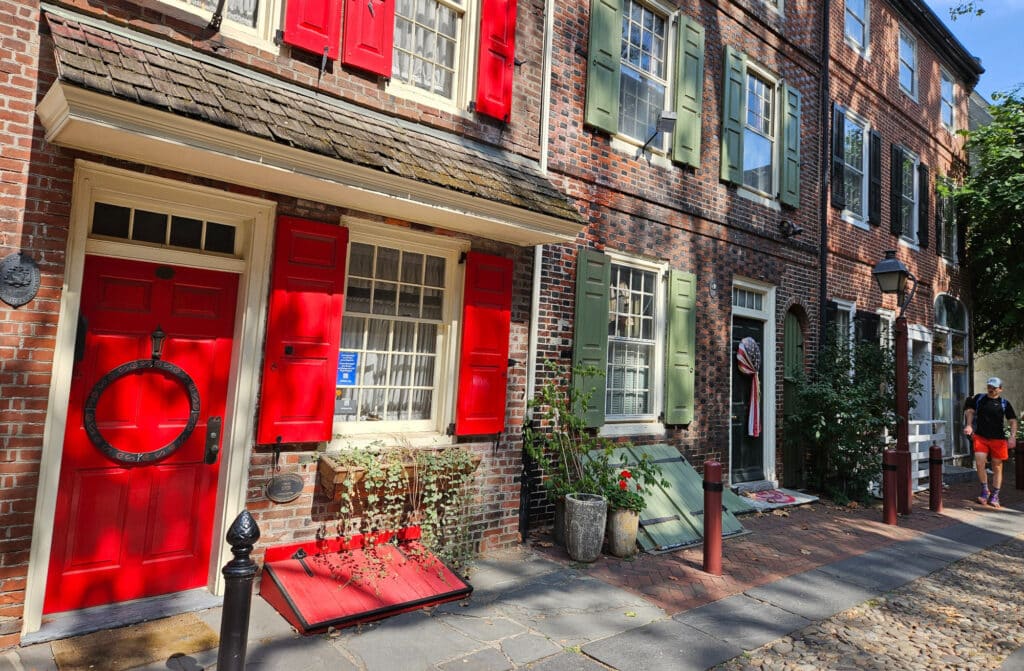
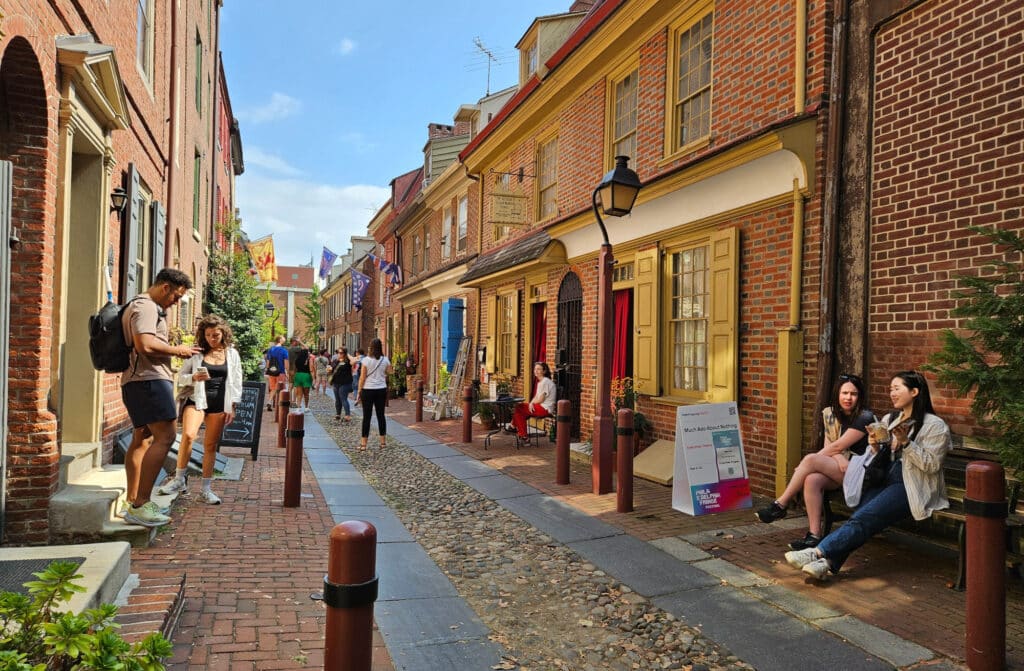
Not far from the Betsy Ross House is a small alley that still looks like the streets of Philadelphia in the 18th century. It could be taken right out of a Charles Dickens story. Yes, it looks like Victorian England.
What else is there to see in Philadelphia?
Charlie did another walking tour in the Old City about True Crime in Philadelphia. Next to serial killers like Herman Webster Mudgett and the Frankford Slasher, it also involved stories of Vampirism, witch trials and the yellow fever. The guide made it very entertaining, and Charlie can highly recommend this alternative walking tour.
During her visit in “Philly” she didn’t have time to go there, however, there is one more thing not to be missed from this list: the steps at the Philadelphia Museum of Art and the Rocky Statue. Charlie will have to return one day.